Bill· HRH.R. 17689 (93rd)referred
A bill for the relief of Frances Dwane McGill.
United States · United States Congress · 20 December 1974
Provides for the relief of Frances Dwane McGill.
The world's political record
Person
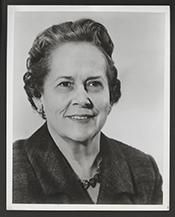
United States · Official source
102 records where Rep. Green, Edith [D-OR-3] is listed as a sponsor, author, or other actor. Search with topics and years
United States · United States Congress · 20 December 1974
Provides for the relief of Frances Dwane McGill.
United States · United States Congress · 4 December 1974
Department of Education Act - Establishes an executive department to be known as the Department of Education to be headed by a Secretary of Education to whom shall be transferred all functions of the Office of Education and of the Commissioner of Education. Transfers to the Secretary of Education specified functions of the Director of the Office of Economic Opportunity, the Secretary of Health, Education, and Welfare, and the Assistant Secretary of Education. Provides for the redesignation of the Department of Health, Education, and Welfare as the Department of Health and Welfare. Grants to the Secretary of Education the administrative powers necessary to the performance of his functions. Makes amendments to other Federal laws to bring them into conformity with the provisions of this Act. Provides that any matter of legal privilege or prohibition which has become effective under any provision of law amended by this Act shall continue in effect according to its terms until modified, terminated, or superceded by order of the Secretary, court of competent jurisdiction, or operation of law.
United States · United States Congress · 30 September 1974
Prohibits the interstate shipment of dogs trained for or intended to be used in dog fights for purposes of sport, wagering, or entertainment. Specifies punishments for persons involved in such commerce and for promoters of and participants in activities which include such dog fights if at least one of the dogs involved had been moved in such commerce.
United States · United States Congress · 22 July 1974
Provides for television and radio coverage of proceedings in the Chamber of the House of Representatives on any resolution to impeach the President of the United States. Authorizes the Speaker to appoint a committee of five members to provide such arrangements as may be necessary in connection with such a broadcast.
United States · United States Congress · 16 July 1974
Requires reports accompanying each bill or joint resolution in the House of Representatives of a public character (except revenue measures) reported by a committee to contain estimates of the costs, to both public and nonpublic sectors, of carrying out the measure reported.
United States · United States Congress · 27 June 1974
Harry S. Truman Memorial Scholarship Act - Expresses the findings of Congress and declares that it is especially appropriate to honor former President Harry S. Truman through the creation of a perpetual educational scholarship program to develop increased opportunities for young Americans to prepare and pursue careers in public service. Establishes as an independent establishment of the executive branch of the United States Government, the Harry S. Truman Scholarship Foundation, to be subject to the supervision and direction of the Board of Trustees. Authorizes the Foundation to award fifty-one scholarships in any fiscal year beginning after June 30, 1973, for undergraduate study for persons who plan to pursue a career in public service. States that each recipient shall be knows as a Truman scholar. Sets forth provisions governing: (1) the scholarship requirements; (2) the procedures for selection of Truman scholars; (3) stipends and institutional allowances; and (4) the scholarship conditions. Establishes in the Treasury of the United States a trust fund to be known as the Harry S. Truman Memorial Scholarship Trust Fund. Prescribes the procedures for expenditures from the fund. Directs that there shall be an Executive Secretary of the Foundation, appointed by the Board, who shall be the chief executive officer and shall carry out the functions of the Foundation subject to the supervision and direction of the Board. Authorizes to be appropriated $30,000,000 to the fund. Authorizes to be appropriated such sums as may be necessary for administrative expenses incident to carrying out the provisions of this Act.
United States · United States Congress · 13 June 1974
Provides hospital and medical care to members of the armed forces of Poland or Czechoslovakia who participated in armed conflict with an enemy of the United States during World War I or World War II, and who has been a citizen of the United States for not less than 10 years. Provides that such hospital and medical care shall be available to the same extent as if such service had been performed in the Armed Forces of the United States.
United States · United States Congress · 29 May 1974
Makes it unlawful, under the Interstate Commerce Act, for any railroad to refuse to transport any refrigerator car because of the fact that such car is owned or controlled by a shipper or a nonrailroad owner. Makes it the duty of every carrier by railroad to handle all refrigerator equipment in the same manner and subject to the same rules and regulations, regardless of whether such equipment is owned or controlled by railroad or nonrailroad interests.
United States · United States Congress · 29 May 1974
Authorizes the Secretary of Labor to waive the requirements of the Fair Labor Standards Act of 1938 relating to child labor in agriculture whenever he determines that the provisions of that Act have the effect, in a particular area of the country, of disrupting traditional patterns of student employment outside of school hours.
United States · United States Congress · 10 April 1974
Home Health Services Act - Provides, under the Public Health Service Act, for the establishment and initial operation of public and nonprofit private agencies which will provide home health services in areas in which such services are not otherwise available. Authorizes the Secretary of Health, Education, and Welfare to make grants: (1) to meet the initial and expanding costs of such agencies; and (2) for programs for the training of professional and paraprofessional personnel to provide home health services. Authorizes the appropriation of such sums as may be necessary to carry out this Act.
United States · United States Congress · 10 April 1974
Federal Columbia River Transmission System Act - States that the Congress finds that it is desirable, appropriate and in furtherance of existing Federal law that the revenues of the Federal Columbia River Power System and the proceeds of revenue bonds be used to further the operation, maintenance, and further construction of the Federal transmission system in the Pacific Northwest. Defines the terms used in this Act. Directs the Secretary of the Interior, acting by and through the Administrator of the Bonneville Power Administration, to operate and maintain the Federal transmission system within the Pacific Northwest. States that if the Administrator, after good-faith negotiations with a utility in the Pacific Northwest desiring to provide all or a part of such facilities, retains an item in his budget for a transmission facility, such utility may bring suit in the Federal District Court of Oregon for the purpose of determining if the Administrator has complied with the provisions of this Act. Provides for the establishment of rates and charges for the transmission of electric power over the Federal transmission system. Establishes the Bonneville Power Administration Fund in the Treasury of the United States. Specifies the sources of revenue for the Fund, and authorizes expenditures from the Fund for any purpose appropriate to carry out the duties imposed upon the Administrator of the Bonneville Power Administration. Authorizes the Administrator to issue and sell revenue bonds in the name and on behalf of the Bonneville Power Administration, the aggregate principal amount of any such bonds outstanding at any one time not to exceed $1,250,000,000.
United States · United States Congress · 18 March 1974
Provides that advertising of alcoholic beverages is not a tax deductible expense under the Internal Revenue Code.
United States · United States Congress · 13 March 1974
Authorizes the President to issue a proclamation designating the month of May 1974, as "National Arthritis Month".
United States · United States Congress · 6 March 1974
Establishes the National Institute of Aging in the Public Health Service to conduct and support research on the aging process, on preventive measures with respect to health problems of the aged, and on treatment and cures for such problems. Establishes the Natonal Advisory Council on Aging to advise on programs relating to the aged and monitor the Institute. Provides traineeships and fellowships for the study of health problems of the aged.
United States · United States Congress · 5 March 1974
Repeals the Emergency Daylight Saving Time Energy Conservation Act of 1973, effective on the last Sunday of October, 1974.
United States · United States Congress · 27 February 1974
Prohibits the exportation of fertilizer from the United States until the Secretary of Agriculture determines that an adequate domestic supply of fertilizer exists.
United States · United States Congress · 21 February 1974
Provides that, in computing years of active service of any female member of the armed forces, there shall be credited all service performed outside the United States during World War I by any female citizen who was a member of the telephone operating units, Signal Corps, American Expeditionary Forces. (Adds 10 U.S.C. 1039)
United States · United States Congress · 19 February 1974
Expresses the sense of the House of Representatives that any money appropriated for the purpose of celebrating the Bicentennial should only be spent to honor and celebrate the History of this Nation and the people of the United States.
United States · United States Congress · 28 January 1974
Provides for the repeal of the Postal Reorganization Act and reenacts the former postal service provisions of title 39, United States Code. Reestablishes the former Post Office Department as an executive department of the Federal Government.
United States · United States Congress · 23 January 1974
States that it is the purpose of this Act to provide for the immediate and future protection and administration of public lands in the California desert within the framework of a program of multiple use, sustained yield, and maintenance of environmental quality. Establishes the California Desert Advisory Commission which shall consist of Federal and State representatives, representatives of the academic community, representatives of residents of the desert, and representatives of groups which make use of the desert and its resources for recreational, study, or business purposes. States that it shall be the function of the Commission to advise the Secretary of the Interior with respect to the program for the desert under this Act. Establishes the National Conservation Area of the California Desert to carry out the purposes of the Act. Gives the Secretary of the Interior responsibility for the preparation of a long-range program for the management, development, and use of the California Desert. Provides that such program shall include a plan, to be completed and reported to Congress within seven years from the date of enactment of this Act. Requires consultation with the Advisory Commission and with State organizations concerning such plan. Provides for an interim program to manage and protect the desert resources now in danger of destruction, and to provide for the public use of the desert. Authorizes the Secretary to acquire such lands or interests therein as he deems necessary to provide access to the facilities of the desert, to facilitate efficient and beneficial management of the desert. Empowers the Secretary to issue such regulations as he deems necessary to carry out the provisions of this Act. Provides that all mining carried out within the conservation area shall be subject to such reasonable regulations as the Secretary may prescribe to carry out the purposes of this Act. States that such regulations shall provide for such measures as may be reasonable to protect the scenic, scientific, and environmental values of the California Desert against undue impairment.
United States · United States Congress · 21 January 1974
Federal Paperwork Burden Relief Act - Directs the Comptroller General to conduct a study of the reporting requirements of Federal regulatory programs to determine the extent to which these requirements may be revised to lessen the burden upon small and independent business establishments. Requires the Comptroller General to report the results of such study to the Congress one year from the date of enactment of this Act.
United States · United States Congress · 20 December 1973
Military Construction Moratorium Act - Directs the Secretary of Defense to suspend during the period of two years beginning with the date of enactment of this Act any construction, conversion, rehabilitation, or installation of a public work or facility in connection with a military construction project, unless: (1) such construction, conversion, rehabilitation, or installation is being performed under a contract awarded before the date of enactment of this Act; or (2) the Secretary of Defense determines that overriding considerations of national security require that such construction, conversion, rehabilitation, or installation not be suspended. Defines the term "military construction project" for purposes of this Act.
United States · United States Congress · 5 December 1973
Authorizes the House Administration Committee to produce a film on the strengths, problems, accomplishments and potential of the legislative process, to be shown without charge to visitors to the Nation's Capital.
United States · United States Congress · 30 November 1973
Requires that all contracts by the United States Government for services and materials and all contracts financed by Federal funds shall be awarded to the lowest qualified bidder, including contracts for architectural and engineering work.
United States · United States Congress · 15 November 1973
Extends for three years the District of Columbia Medical and Dental Manpower Act of 1970.
United States · United States Congress · 13 November 1973
Solar Heating and Cooling Demonstration Act - Declares it to be the policy of the United States and the purpose of this Act to provide for the demonstration within a three-year period of the practical use of solar heating technology. Defines the terms used in this Act. Directs the National Aeronautics and Space Administration to initiate, support and carry out basic and applied research and development in solar heating and cooling technologies. Provides for the installation of solar heating systems in residential dwellings under the monitoring of the Secretary of Commerce, acting through the National Bureau of Standards and in consultation with the Secretaries of Housing and Urban Development and Defense. Provides that such residential dwellings shall be located in a sufficient number of different geographic areas (not less than three) in the United States to assure a realistic and effective demonstration of solar heating and cooling systems involved. Directs the Director of the National Science Foundation to initiate, support and fund basic and applied research activities related to solar energy in support of the objectives of this Act. Authorizes the appropriation of up to $50,000,000 to carry out this Act.
United States · United States Congress · 6 November 1973
Provides a tax credit under the Internal Revenue Code for security device expenses.
United States · United States Congress · 4 October 1973
Prohibits the importation into the United States of meat or meat products from livestock slaughtered or handled in connection with slaughter by other than humane methods.
United States · United States Congress · 3 October 1973
Menominee Restoration Act - Provides for the repeal of the Act of June 17, 1954 which terminated Federal supervision of the Menominee Tribe. States that as soon as practicable the Secretary of the Interior shall establish a membership role of the tribe which shall include all members listed on the final 1954 role who are still living on the date of enactment of this Act and all descendants of persons listed on the 1954 role if such descendants have at least one-quarter Menominee blood. Provides that all persons on the membership role shall be eligible to receive all Federal services furnished American Indians because of their status as Indians. States that subject to the approval of the Secretary the tribe shall organize a governing body for the tribe's common welfare and shall adopt an appropriate constitution and bylaws. States that subject to the approval of the shareholders as required by the laws of the State of Wisconsin, the board of Directors of Menominee Enterprises Incorporated shall transfer to the Secretary all assets held by such corporation. Provides that such assets shall be held in trust by the Secretary, on behalf of the United States for the tribe. Provides that this Act shall reinstitute all, and shall not abrogate any, water, hunting, fishing, and trapping rights or privileges, and any other rights and privileges of the tribe enjoyed under Federal treaty or otherwise. Authorizes the Secretary to make such rules and regulations as are necessary to carry out the provisions of this Act. Authorizes to be appropriated such sums as may be necessary to carry out the provisions of this Act.
United States · United States Congress · 2 October 1973
District of Columbia Self-Government Act - Title I: Governmental Reorganization; Taxing Authority, Fees, Licensing Federal Payment; District Budget and Financial Management; and City Administrator and Compensation for Council - Establishes, under the District of Columbia Alley Dwelling Act, the National Capital Housing Authority as an agency of the District. Defines the powers of the authority. States that all powers and duties formerly vested in the President under this Act shall be vested in the District Commissioner. Directs the Commissioner to establish and administer a public employment service in the District. Establishes, under the District of Columbia Redevelopment Act, the District of Columbia Redevelopment Land Agency as an agency of the District government, to be composed of five members appointed by the Commissioner with the advice and consent of the District Council. Provides that for the purpose of defraying such expenses of the District as Congress may from time to time appropriate for, there is levied for each fiscal year, taxes (as imposed under specified District tax acts at such rates as will, when added to the other revenues of the District, produce money enough to enable the District to pay all sums directed by Congress to be paid by the District, and for which appropriation has been made. Authorizes the Council to determine and fix annually such rates of taxation as will produce the money needed to defray the share of the expenses of the District during the year for which the rate is fixed. Directs the Council to cause all such taxes and revenues to be promptly collected and to be daily deposited in the Treasury. Authorizes the Council to fix certain fees, as authorized by various District acts. Authorizes the Council, after public hearing, to increase or decrease such fees as may be reasonable in the public interest. Authorizes the Council to make regulations requiring licenses for occupations and businesses, and to impose penalities for violations of such regulations, and to enjoin illegal practice of such occupations or businesses in Superior Court of the District. Repeals certain acts regulating occupations and business when the Council establishes regulations replacing such acts. Provides that any action of the Council taken in setting tax rates and fees relating to the licensing of occupations and businesses shall be effective only if during the forty-day period immediately following the date of such action neither House of Congress adopts a resolution stating that the House does not approve of such action; and if during the ten-day period following such forty-day period the President does not veto such action. Requires the Council Chairman to submit to the Speaker of the House of Representatives, to the President of the Senate, and to the President, a copy of each such action taken by the Council on the day such action is taken. Directs the Commissioner to identify costs and benefits to the District that result from it being the nation's capital, and to reveal such costs and benefits to the Federal Office of Management and Budget, (OMB) for its use in recommending the amount of the annual Federal payment to the District. Identifies specific costs and benefits for the Commissioner to consider. Directs the OMB to determine and recommend each year to the Congress the amount of the appropriation for the annual Federal payment to the District. Directs the Commissioner to prepare and submit through the OMB to the Congress and the Council an annual budget for the District government, and directs what the budget shall include. Requires the Commissioner to prepare and include in the annual budget a multiyear operating plan for all agencies in the District budget, for all sources of funding, and for such program categories as are set out in the budget; and directs him to prepare and include in the budget a multiyear capital improvements plan. Prohibits, unless specifically authorized or directed by the Congress, any change in existing laws, regulations, or basic procedures and practices as they relate to the respective roles of the Congress, the President, the Federal Office of Management and Budget, the United States Department of the Treasury, the Comptroller General of the United States, the District of Columbia Council, and the Commissioner in: (1) the preparation, authorization, and appropriation of the District budget; (2) the establishment of line-item limitations, personnel ceilings, and program or project control amounts by the Congress on proposed obligations or expenditures; (3) the financing of capital projects through the United States Treasury; (4) the apportionment, obligation, expenditure, reprograming, transfer, or reallocation of appropriated funds; and (5) the control of financial transactions. Establishes the Office of City Administrator for the District, to be appointed by the Commissioner. Title II: - Self Government - Provides that the portion of the District ceded to the United States by Maryland and not in the Federal area is retroceded to Maryland. Reserves to the United States the jurisdiction over the portion of the District not retroceded. Directs the President to prepare a reorganization plan to provide a government for the District and to transmit such plan within six months of enactment of this Act. Describes the boundaries of the Federal area, to continue to be known as the District of Columbia. Upon retrocession, Maryland shall be entitled to two additional United States Representatives for the area retroceded until the next reapportionment. Provides for payments for nine years after retrocession to Maryland to defray expenses of providing local government for the retroceded area.
United States · United States Congress · 2 October 1973
District of Columbia Governmental Reorganization Act - Title I: Governmental Reorganization - Provides that the National Capital Housing Authority shall be an agency of the District of Columbia government. Authorizes and directs the Commissioner of the District of Columbia to establish and administer a public employment service in the District, to promote and develop an employment office for men, women, and juniors who are legally qualified to engage in meaningful occupations, including employment counseling and placement services for handicapped persons, and to maintain a veterans' service to be devoted to securing employment for veterans in the District. Transfers the District of Columbia Redevelopment Land Agency to the District of Columbia Government. Title II: Planning - Creates the National Capital Planning Commission as the central planning agency for the Federal Government to plan the appropriate and orderly development and redevelopment of the National Capital and the conservation of its important national and historical features. Places municipal planning duties with the Commissioner of the District of Columbia. Directs the Commissioner to prepare and submit to the Commission for adoption, after approval by the District of Columbia Council, a major thoroughfare plan and a mass transportation plan. Title III: Taxing Authority Fees Licensing - Gives the District of Columbia Council the authority to ascertain, determine, and fix annually rates of taxation. Empowers the Council to make, from time to time, usual and reasonable regulations which require a license for any occupation, profession, business, trade, or calling, including those occupations, professions, businesses, trades, or callings heretofore regulated by Act of Congress. Provides that any action of the Council setting certain tax rates, setting certain fees, or relating to the licensing of certain businesses and professions, shall be effective only if during and until the end of the forty-day period (excluding Saturdays, Sundays, holidays, and days on which either House is not in session) immediately following the date of such action neither House of Congress adopts a resolution stating that that House does not approve of such action; and if during the ten-day period following such forty-day period the President does not veto such action. Title IV: Federal Payment, District Budget and Financial Management - Provides that it shall be the duty of the Commissioner in preparing an annual budget for the government of the District of Columbia, to develop meaningful intercommunity expenditure and revenue comparisons in conjunction with data supplied by the Federal Government's Division of the Bureau of the Census, and to identify elements of cost and benefits to the District of Columbia which result from the unusual role of the District as the Nation's Capital. Requires the Federal Office of Management and Budget to determine and recommend each year to the Congress the amount of the appropriation for the annual Federal payment to the District of Columbia, taking into account the findings and recommendations of the Commissioner. Declares that the fiscal year of the District of Columbia government shall begin on the first day of July and shall end on the thirtieth day of June of the succeeding calendar year. Requires the Commissioner to prepare and submit to the Council and to the Congress and to make available to the public, an annual budget for the District of Columbia government. Title V: The District of Columbia Council - Establishes an eight member District of Columbia Council. Sets forth teams of office, compensation, powers of the Council, and qualifications for holding office.
United States · United States Congress · 2 October 1973
Directs the Secretary of Transportation to prescribe regulations within sixty days of the date of enactment of this Act prohibiting any motor vehicle from being equipped with any starter interlock system associated with seatbelts or upper torso restraints.
United States · United States Congress · 11 September 1973
West Coast Corridor Feasibility Study Act - Directs and authorizes the Secretary of Transportation to make an investigation and study for the purpose of determining the social advisability, technical feasibility, and economic practicability of a high-speed ground transportation system between the cities of Tijuana in the State of Baja California, Mexico, and Vancouver in the Province of British Columbia, Canada, by way of the cities of Seattle in the State of Washington, Portland in the State of Oregon, and Sacramento, San Francisco, Fresno, Los Angeles, and San Diego in the State of California. Authorizes $8,000,000 to be appropriated to carry out the provisions of this Act.
United States · United States Congress · 3 August 1973
Provides that it shall not be unlawful for a person to electronically record or otherwise intercept a wire or oral communication where all parties to such communication have given prior consent unless the interception is for the purpose of criminal or tortious act.
United States · United States Congress · 3 August 1973
Provides under title II of the Social Security Act (Old-Age, Survivors and Disability Insurance) that an individual may qualify for disability insurance benefits and the disability freeze if he has 40 quarters of coverage, regardless of when such quarters were earned.
United States · United States Congress · 3 August 1973
Transfers the functions of the Passport Office to a new agency of the Department of State to be known as the "United States Passport Service". Establishes a Passport Service Fund to finance the operations of the United States Passport Service. Authorizes an initial appropriation of $20,000,000 to capitalize such fund.
United States · United States Congress · 3 August 1973
Constitutional Amendment - States that there shall be such power vested in the Congress of the United States that upon enactment by two-thirds of the Senate and the House of Representatives present of a joint resolution that the President has failed or refused faithfully to execute the laws enacted by Congress; or that he has willfully exceeded the powers vested in him by this Constitution and the laws of the United States; or that he has caused or willfully permitted the rights of citizens of the United States to be trespassed upon in violation of this Constitution, the laws of the United States, or treaties made, or which shall be made, under their authority; the Congress shall by legislation enact a law which shall be excluded from the provisions enumerated in Article I, section 7 of this Constitution requiring presentation to and signature by the President of all laws by Congress; provide for a special election for President and Vice President of the United States, such special election to be held within ninety days from the date of the enactment of the joint resolution. Requires that such special election shall be by direct popular vote of the registered voters of the several States. Provides that the special election shall be held pursuant to law enacted by Congress and necessary campaign funds and allied expenses of the political parties participating in such special election shall be financed exclusively from the funds which the Congress shall appropriate. Permits the incumbent President and Vice President to be eligible for renomination as candidates of their respective political party for reelection; and, if reelected, shall be considered as continuing to fulfill the term of office for which orginally serving.
United States · United States Congress · 2 August 1973
Provides, under the Merchant Marine Act, that the appropriate agencies take steps to assure that at least 20 per cent of the gross tonnage of all petroleum and petroleum products imported into the United States on ocean vessels be transported on privately owned United States flag commercial vessels. Requires that the quantity to be carried in United States-flag commercial vessels be at least 25 per cent after June 30, l975, and at least 30 per cent after June 30, l977. (Amends 46 U.S.C. 1241))
United States · United States Congress · 1 August 1973
Provides for the issuance of a special postage stamp in commemoration of the life and work of Jeannette Ronhin.
United States · United States Congress · 31 July 1973
Provides, under the Internal Revenue Code, that no Federal Agency may inspect any income tax return except upon an order of the President which identifies by name the person who filed such return. Makes it an offense to make unauthorized disclosures to divulge or publish any name, address or occupation.
United States · United States Congress · 31 July 1973
Provides for the establishment of the Clara Barton House National Historic Site in Glen Echo, Maryland. Authorizes to be appropriated such sums as necessary to carry out the purposes of this Act.
United States · United States Congress · 26 July 1973
Provides for the establishment of the Clara Barton House National Historic Site in Glen Echo, Maryland. Authorizes to be appropriated such sums as necessary to carry out the purposes of this Act.
United States · United States Congress · 18 July 1973
Expands, under the Mental Retardation Facilities and Community Mental Health Centers Construction Act, the definition of "developmental disability" to include autism. (Amends 42 U.S.C. 2691)
United States · United States Congress · 17 July 1973
Constitutional Amendment - Vests in the Congress of the United States the power, upon enactment by two-thirds of the Senate and of the House of Representatives present of a joint resolution that the President has failed or refused faithfully to execute the laws enacted by the Congress; or that he has willfully exceeded the powers vested in him; or that he has caused or willfully permitted the rights of citizens to be trespassed upon to (1) enact a law which shall be excluded from the provisions enumerated in article I, section 7 of the Constitution requiring presentation to and signature by the President of all laws by Congress; and (2) provide for a special election for President and Vice President of the United States, to be held within ninety days from the date of enactment of the joint resolution. Provides that such special election shall be by direct popular vote of the registered voters of the States. States that the campaign funds of the political parties participating in such special election shall be financed exclusively from funds which the Congress shall appropriate. Excludes such legislation from the Constitutional requirement of presentation to and signature by the President of all laws by Congress. Makes this article inoperative whenever the date for such special election occurs within one hundred and eighty days prior to the normal date for the election of the President and Vice-President. Provides that the incumbent President and Vice-President shall be eligible to be renominated as candidates for reelection. States that if persons other than the incumbents are elected in the special election, such persons shall serve for the remainder of the unexpired terms of the incumbents. Provides that this article shall not impair impeachment procedures relating to the President and Vice-President.
United States · United States Congress · 29 June 1973
Menominee Restoration Act - Provides for the repeal of the Act of June 17, 1954 which terminated Federal supervision of the Menominee Tribe. States that as soon as practicable the Secretary of the Interior shall establish a membership role of the tribe which shall include all members listed on the final 1954 role who are still living on the date of enactment of this Act and all descendants of persons listed on the 1954 role if such descendants have at least one-quarter Menominee blood. Provides that all persons on the membership role shall be eligible to receive all Federal services furnished American Indians because of their status as Indians. States that subject to the approval of the Secretary the tribe shall organize a governing body for the tribe's common welfare and shall adopt an appropriate constitution and bylaws. States that subject to the approval of the shareholders as required by the laws of the State of Wisconsin, the board of Directors of Menominee Enterprises Incorporated shall transfer to the Secretary all assets held by such corporation. Provides that such assets shall be held in trust by the Secretary, on behalf of the United States, for the tribe. Provides that this Act shall reinstitute all, and shall not abrogate any, water, hunting, fishing, and trapping rights or privileges, and any other rights and privileges of the tribe enjoyed under Federal treaty or otherwise. Authorizes the Secretary to make such rules and regulations as are necessary to carry out the provisions of this Act. Authorizes to be appropriated such sums as may be necessary to carry out the provisions of this Act.
United States · United States Congress · 28 June 1973
Provides that, beginning one year after enactment of this Act, no law enforcement grants under the Omnibus Crime Control and Safe Streets Act of 1968 will be made to State and local governments unless these units of government have instituted a law enforcement officer's grievance system and have enacted into law a "Law Enforcement Officers' Bill of Rights" which will cover all law enforcement officers in the States. Declares that this Bill of Rights shall provide law enforcement officers statutory protection for certain rights enjoyed by other citizens. Requires the bill of rights to provide, at a minimum, the following: (1) law enforcement officers shall not be prohibited from engaging in political activity, except when on duty or acting in an official capacity; (2) when an officer is subject to an investigation that could lead to disciplinary action or criminal charges: (a) the investigation shall be conducted at a reasonable hour, preferably while the officer is on duty, (b) the investigation shall occur at the office of the investigating officer or at the precinct where the incident occurred, (c) there shall be one interrogator asking all questions to the officer and the names of all investigating officers shall be known by him, (d) the officer shall know the nature of the investigation and the names of complainants, (e) all civilian complaints must be duly sworn to before an official authorized to administer oaths, (f) interrogating sessions shall be of reasonable length, (g) the officer under investigation shall not be subject to abuse or threats, (h) all interrogations shall be recorded, (i) if the officer is to be placed under arrest, he shall be fully informed of his rights before interrogation, and (j) the officer shall have a right to counsel who shall be present during any interrogations dealing with the officer's continued fitness for law enforcement service; (3) citizen review boards having porportionate police representation; (r) law enforcement officers shall have recourse to civil actions for damages suffered or for abridgement of their civil rights arising out of the performance of official duties; (5) financial disclosures shall not be required unless obtained under legal procedures or there is evidence of a conflict of interests; (6) notice of and reasons for all disciplinary action is required; and (7) no officer shall be disciplined or discriminated against in any way by reason of his exercise of these rights. Establishes in each State and unit of local government a law enforcement officers grievance commission composed of an equal number of governmental representatives, law enforcement officers, and members of the general public which shall have the authority to receive, investigate, and determine complaints and grievances arising from claimed infringement of rights of any law enforcement officer. Allows employee organizations to act on the officer's behalf, at his request, regarding any complaint before the commission. Permits certified employee organizations to initiate actions on behalf of their members. Provides that, in addition to this grievance procedure, law enforcement officers may institute a civil action for redress of the grievances.
United States · United States Congress · 26 June 1973
Expresses the finding of Congress that an adequate supply of pure, safe human blood is essential to the welfare of the Nation. Establishes the National Blood Bank program within the Department of Health, Education and Welfare. Directs the Secretary of Health, Education and Welfare to perform enumerated duties to assure an adequate supply of blood throughout the Nation. Establishes an Advisory Council to make recommendations to the Secretary regarding: (1) policy goals of the program; (2) motivation and recognition of blood donors; (3) reciprocal transactions between national blood bank systems; and (4) removal of blood purchasing costs from health insurance plan coverage. Declares that only class A blood banks may maintain blood deposit or pledge programs in advance of their needs. Provides criminal penalties for persons violating the provisions of this Act.
United States · United States Congress · 22 June 1973
Creates a non-legislative Select Committee on Aging, consisting of fifteen members of the House of Representatives, and directs the Committee to conduct a full investigation on all matters pertaining to problems of older people, including problems of maintaining health, of assuring adequate income, of finding employment, of engaging in productive retirement activity, of securing proper housing, and when necessary, of assuring adequate care or assistance. Authorizes such committee to hold hearings and subpena witnesses and the production of records in carrying out its duties. Directs the Committee to report to the House the results of its study, together with legislative recommendations, as soon as practicable during the 93rd Congress.
United States · United States Congress · 19 June 1973
Authorizes the President to issue annually a proclamation designating the fourth Sunday of November of each year as "National Grandparents' Day". Calls upon the people of the United States and interested groups and organizations to observe such day with appropriate ceremonies and activities.
United States · United States Congress · 12 June 1973
Authorizes the President to proclaim January 17 of each year as "National Volunteer Firemen Day".