Bill· HRH.R. 6949 (119th)referred
Upward Mobility Act of 2026
United States · United States Congress · 6 January 2026
The world's political record
Person
United States · Official source
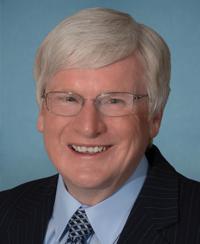
2,213 records where Rep. Grothman, Glenn [R-WI-6] is listed as a sponsor, author, or other actor. Search with topics and years
United States · United States Congress · 6 January 2026
United States · United States Congress · 18 December 2025
United States · United States Congress · 18 December 2025
Debt Solution and Accountability Act This bill requires the Department of the Treasury to submit to Congress a debt report and a statement of intent on (1) any date on which the debt subject to limit reaches 99.5% of the federal debt limit, and (2) the date that is one month before the expiration of a suspension of the debt limit. The debt report must include the historical levels of the debt, current amount and composition of the debt, and future projections of the debt; the drivers and composition of future debt; and how the United States will meet debt obligations. The statement of intent must include a detailed explanation of proposals of the President to reduce or slow the growth of the debt, the impact of increasing the debt limit and of leaving the debt limit unchanged, and projections of the fiscal health and sustainability of major direct-spending entitlement programs (including Social Security, Medicare, and Medicaid). Within 180 days after the effective date of an increase in or suspension of the debt limit, Treasury must submit to Congress a detailed report on the progress of implementing the President's proposals to reduce or slow the growth of the debt. Treasury must make the information required by this bill available to the public on its website. Upon request, Treasury must submit to Congress specified financial and economic data relevant to determining the amount of the public debt.
United States · United States Congress · 17 December 2025
United States · United States Congress · 16 December 2025
Coercion and Sexual Abuse Free Environment Act of 2025 or the CSAFE Act of 2025 This bill establishes a new federal criminal offense for compelling a minor to engage in certain acts: animal crushing, self-harm, obscene speech, sexually explicit conduct, or abusive or degrading nonsexual conduct. An offense, or an attempt or conspiracy to commit an offense, is punishable by a fine, prison term, or both. Additionally, in the case of an offense committed by a minor who is at least 13 years of age, the bill allows the minor to be prosecuted as an adult in federal court if certain criteria are met (e.g., possession of a firearm during the offense).
United States · United States Congress · 11 December 2025
United States · United States Congress · 5 December 2025
Skinny Labels, Big Savings Act This bill provides a statutory safe harbor from patent infringement claims for generic or biosimilar manufacturers that seek or obtain approval for skinny labels of their drugs. Under current law, the Food and Drug Administration (FDA) may approve generic and biosimilar drugs through a process known as skinny labeling, which allows a generic manufacturer to seek approval only for approved uses of the drug that are no longer protected by patents. However, in GlaxoSmithKline LLC v. Teva Pharmaceuticals USA, Inc. , a court held that a generic manufacturer may sometimes be liable for patent infringement when it markets skinny label generics. The bill specifically lists the following as actions that are not considered infringement of a method of use claim in a patent under the Federal Food, Drug, and Cosmetic Act: submitting or seeking approval of a skinny label for a generic or biosimilar drug; promoting or commercially marketing a drug with skinny labeling approved by the FDA; or describing a drug product approved by the FDA as a generic of, or therapeutically equivalent to, the branded drug. The bill also applies the safe harbor to similar actions under the Public Health Service Act.
United States · United States Congress · 4 December 2025
United States · United States Congress · 4 December 2025
United States · United States Congress · 21 November 2025
This resolution honors the victims of an attack during a Christmas parade in Waukesha, Wisconsin, on November 21, 2021.
United States · United States Congress · 21 November 2025
United States · United States Congress · 20 November 2025
United States · United States Congress · 20 November 2025
United States · United States Congress · 20 November 2025
United States · United States Congress · 19 November 2025
Congressional Budget Office Scheduling Reform Act This bill requires the Congressional Budget Office (CBO) to annually publish a schedule of the expected publication dates of its major recurring reports. The schedule must must include, at a minimum, the expected publication dates for the baseline for the budget year and subsequent updates, the report on options to reduce the deficit, the report on the accuracy of budgetary projections for the most recently completed fiscal year, and the report on programs or activities with unauthorized appropriations. CBO must (1) publish the schedule on its public website no later than December 31 of each year, and (2) update the schedule during the following calendar year as necessary.
United States · United States Congress · 19 November 2025
United States · United States Congress · 18 November 2025
This bill designates the facility of the United States Postal Service located at 202 South Chestnut Avenue in Marshfield, Wisconsin, as the "Army Corporal Gordon 'Gordy' Richard Schmoll Post Office Building".
United States · United States Congress · 7 November 2025
National Cemetery Access Act This bill requires that national cemeteries administered by the Department of Defense, Department of Veterans Affairs, or the National Park Service must be open to visitors on the 11 legal public holidays (e.g., Memorial Day).
United States · United States Congress · 4 November 2025
United States · United States Congress · 31 October 2025
Firearm Access During Shutdowns Act This bill requires various federal agencies to continue certain operations, functions, and services related to firearms during a government shutdown. The bill applies to the Federal Bureau of Investigation's National Instant Criminal Background Check System, including the processing of background checks in support of the operations of the Directorate of Enforcement Programs and Services of the Bureau of Alcohol, Tobacco, Firearms and Explosives (ATF); the ATF's Directorate of Enforcement Programs and Services; the activities of the Department of Commerce's Bureau of Industry and Security relating to firearms and firearm-related products, including activities related to processing of applications for export licenses; and the activities of the Department of State's Directorate of Defense Trade Controls relating to firearms and firearm-related products, including activities related to processing of applications for export licenses. Under the bill, (1) these operations, functions, and services are deemed to relate to an emergency involving the safety of human life or the protection of property; and (2) employees carrying out the operations, functions, and services are deemed to be excepted employees. (Under an exception in the Antideficiency Act, an employee whose duties involve the safety of human life or the protection of property may be required to work during a government shutdown. Employees who are required to work during a government shutdown because they fall under this or other exceptions are known as excepted employees.)
United States · United States Congress · 24 October 2025
This bill designates the facility of the United States Postal Service located at 306 South Main Street in Waupaca, Wisconsin, as the "Master Sergeant Melvin O. Handrich Post Office Building".
United States · United States Congress · 10 October 2025
United States · United States Congress · 3 October 2025
United States · United States Congress · 23 September 2025
United States · United States Congress · 23 September 2025
Eliminate Shutdowns Act This bill provides continuing appropriations to prevent a government shutdown if the appropriations bills for a fiscal year have not been enacted before the fiscal year begins and continuing appropriations are not in effect. Specifically, the bill provides appropriations at the rate of operations that was provided for the prior fiscal year to continue programs, projects, and activities that were funded in the preceding fiscal year.
United States · United States Congress · 19 September 2025
United States · United States Congress · 19 September 2025
United States · United States Congress · 19 September 2025
United States · United States Congress · 18 September 2025
United States · United States Congress · 18 September 2025
United States · United States Congress · 18 September 2025
United States · United States Congress · 17 September 2025
United States · United States Congress · 16 September 2025
This resolution (1) condemns the assassination of Charles "Charlie" James Kirk and all forms of political violence; and (2) honors the life, leadership, and legacy of Charlie Kirk.
United States · United States Congress · 15 September 2025
Fair and Accountable IRS Reviews Act This bill provides that an Internal Revenue Service (IRS) employee’s immediate supervisor for purposes of approving certain federal tax penalties is the person to whom such employee reports. The bill also provides that an immediate supervisor’s approval of certain federal tax penalties must be obtained (in writing) before any written communication related to such penalties is sent to the taxpayer. As background, current law requires that the initial determination by an IRS employee to assess certain federal tax penalties be approved (in writing) by such employee’s immediate supervisor (or a designated higher-level official). Under IRS regulations, an immediate supervisor is any individual with responsibility to review another individual’s proposed federal tax penalties (without such proposal being subject to an intermediary’s approval). The IRS regulations also establish requirements for when such approval must be obtained based on whether the federal tax penalty is subject to pre-assessment review or raised in Tax Court proceedings.
United States · United States Congress · 11 September 2025
United States · United States Congress · 11 September 2025
Congressional Money Returned to America Act or the Congressional MRA Act This bill requires funds that were provided to House offices for the Members' Representational Allowance (MRA) and remain in the MRA account after all payments for the year are made to be deposited in the Treasury and used for deficit or debt reduction. The MRA is an allowance that Members of the House of Representatives receive each year to operate their offices. It must be used to support official and representational duties and may not be used for personal or campaign purposes. Annual appropriations acts that fund the legislative branch have generally included a provision that requires unused amounts remaining in the MRA to be used for deficit reduction or to reduce the federal debt. This bill makes this requirement permanent.
United States · United States Congress · 10 September 2025
United States · United States Congress · 10 September 2025
United States · United States Congress · 9 September 2025
United States · United States Congress · 9 September 2025
United States · United States Congress · 3 September 2025
United States · United States Congress · 29 August 2025
United States · United States Congress · 26 August 2025
United States · United States Congress · 26 August 2025
United States · United States Congress · 1 August 2025
United States · United States Congress · 25 July 2025
United States · United States Congress · 23 July 2025
Fixing Emergency Management for Americans Act of 2025 or the FEMA Act of 2025 This bill reestablishes the Federal Emergency Management Agency (FEMA) (currently within the Department of Homeland Security) as an independent, cabinet-level agency. It also makes broad changes to FEMA’s disaster and hazard mitigation assistance programs. The bill generally transfers FEMA’s current functions and authorities to the independent FEMA, except for certain security-related programs. The bill makes various changes to the Public Assistance program, including by establishing new grants for expedited funding to repair or replace disaster-damaged facilities, establishing block grants that recipients may choose instead of Public Assistance for smaller disasters, expediting and expanding uses of funding for emergency response and debris removal, and allowing use of excess administrative funds for increasing recipients’ disaster management capacity. The bill makes various changes to the Individual Assistance program, including by expanding eligibility for housing assistance, expanding mitigation and direct (non-financial) assistance for residences, reducing certain restrictions on funds duplicating program benefits, and establishing a unified disaster application system. The bill makes various changes to FEMA’s mitigation programs, including by establishing mitigation plans with preapproved projects, authorizing an entire Hazard Mitigation Grant Program grant to be provided before costs are incurred, changing pre-disaster mitigation assistance to noncompetitive formula grants, and allowing recipients to combine mitigation project funds from multiple federal programs. Additionally, federal entities must publish various information relating to disaster assistance and conduct various studies on related topics (e.g., preliminary damage assessments, fast-moving disasters, and government emergency alerting systems).
United States · United States Congress · 23 July 2025
Processing Revival and Intrastate Meat Exemption Act or the PRIME Act This bill exempts from federal inspection requirements animals and meats that are slaughtered and prepared at custom animal slaughter facilities for distribution within the state. Under current law, a custom slaughter exemption applies if the meat is slaughtered exclusively for personal, household, guest, or employee uses. Specifically, the bill expands the federal inspection exemption to include the slaughter of animals or the preparation of carcasses, meat, and meat food products that are slaughtered and prepared at a custom slaughter facility in accordance with the laws of the state where the facility is located; and prepared exclusively for distribution to household consumers in the state or restaurants, hotels, boarding houses, grocery stores, or other establishments in the state that either prepare meals served directly to consumers or offer meat and food products for sale directly to consumers in the state. The bill does not preempt any state law concerning (1) the slaughter of animals or the preparation of carcasses, meat, and meat food products at a custom slaughter facility; or (2) the sale of meat or meat food products.
United States · United States Congress · 23 July 2025
Stopping Teachers Unions from Damaging Education Needs Today Act or the STUDENT Act This bill revises the federal charter for the National Education Association. The bill specifies that the corporation and its state and local affiliates may only accept payment of membership dues or fees from a state or local government employee if the employee (1) has been notified of the employee's right under the First Amendment to refrain from membership and payment of associated dues or fees, (2) has clearly and affirmatively consented to membership and payment of associated dues or fees, and (3) has authorized the transmittal of membership dues or fees without the use of payroll deduction. Further, the corporation and its state or local affiliates must process and honor cancellation requests for membership or payment of dues as soon as practicable following receipt of the request. The bill also outlines requirements for the corporation, such as prohibiting the corporation or its directors or officers from contributing to, supporting, or participating in political activities; requiring each officer of the corporation to be a U.S. citizen; requiring the corporation to submit annual reports to Congress; prohibiting the corporation and its affiliates from requiring staff, officers, affiliates, or members to affirm, adopt, or adhere to certain principles related to race or sex; and prohibiting the corporation and its affiliates from calling or participating in a strike, work stoppage, or slowdown affecting a state or local government. The bill repeals the corporation's exemption from District of Columbia property taxes.
United States · United States Congress · 22 July 2025