Bill· HRH.R. 4620 (119th)referred
To amend title 18, United States Code, to include rioting in the definition of racketeering activity.
United States · United States Congress · 22 July 2025
The world's political record
Person
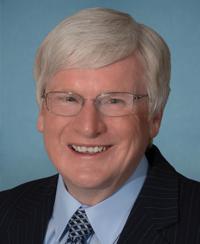
United States · Official source
2,213 records where Rep. Grothman, Glenn [R-WI-6] is listed as a sponsor, author, or other actor. Search with topics and years
United States · United States Congress · 22 July 2025
United States · United States Congress · 21 July 2025
United States · United States Congress · 17 July 2025
United States · United States Congress · 17 July 2025
Holy Sovereignty Protection Act This bill provides that the U.S. citizenship of an individual elected as the Supreme Pontiff of the Roman Catholic Church may not be revoked and exempts such individual from federal income taxes for tax years during which the individual serves in such role for any part of the tax year. (As background, the income of a U.S. citizen generally is subject to U.S. income tax regardless of where such income is earned or received or where the individual resides.)
United States · United States Congress · 17 July 2025
United States · United States Congress · 16 July 2025
United States · United States Congress · 16 July 2025
United States · United States Congress · 16 July 2025
United States · United States Congress · 15 July 2025
United States · United States Congress · 15 July 2025
United States · United States Congress · 14 July 2025
United States · United States Congress · 10 July 2025
Student Compensation and Opportunity through Rights and Endorsements Act or the SCORE Act This bill provides a framework for the compensation of student athletes for the use of their name, image, or likeness (NIL). This includes addressing certain elements of the court approved agreement to settle the In re College Athlete NIL Litigation (i.e., House settlement ). Specifically, the bill statutorily prohibits institutions, conferences, or interstate intercollegiate athletic associations (e.g., the National Collegiate Athletic Association (NCAA)) from restricting the ability of a student athlete to enter an NIL agreement. The bill also requires institutions of higher education that generate $20 million or more in annual revenue from the institution's intercollegiate athletics activities to (1) provide counseling and medical benefits to student athletes, and (2) establish and maintain at least 16 varsity sports teams. Further, the bill authorizes interstate intercollegiate athletic associations to establish rules with respect to athletic eligibility, transfers, recruitment, and the disclosure of NIL agreements. Under the bill, student athletes may not be considered employees of an institution, conference, or interstate intercollegiate athletic association. The bill also preempts state laws with respect to compensation, payments, benefits, employment status, eligibility, and academic standards applicable to student athletes. Compliance with the provisions of this bill is considered lawful under federal and state antitrust laws.
United States · United States Congress · 26 June 2025
United States · United States Congress · 26 June 2025
Enforce the Caps Act This bill establishes annual discretionary spending limits for FY2026-FY2029.
United States · United States Congress · 24 June 2025
United States · United States Congress · 24 June 2025
United States · United States Congress · 17 June 2025
United States · United States Congress · 17 June 2025
United States · United States Congress · 17 June 2025
United States · United States Congress · 12 June 2025
United States · United States Congress · 12 June 2025
United States · United States Congress · 12 June 2025
American Flags to Honor Our Veterans Act of 2025 This bill authorizes the display of the American flag in an upright position directly adjacent to the grave site of a deceased member of the Armed Forces or veteran, regardless of other time and display requirements.
United States · United States Congress · 11 June 2025
Strengthening Transparency and Obligations to Protect Children Suffering from Abuse and Mistreatment Act of 2025 or the STOP CSAM Act of 2025 This bill revises the federal framework governing the prevention of online child sexual exploitation to expand protections for victims, expand requirements for electronic communication service providers and remote computing service providers (providers), and expand related penalties and remedies. The bill extends protections for child victims and witnesses who testify in federal court (e.g., privacy protections) to child victims and witnesses of kidnapping offenses and to child victims and witnesses who were under 18 years of age at the time of the crime, even if they are 18 or older at the time of court proceedings. Additionally, the bill establishes statutory procedures for courts to appoint a trustee to hold restitution payments for certain victims (e.g., minor victims) of offenses involving human trafficking, sexual abuse, child sexual abuse material, illegal sexual activity and related crimes, or crimes of violence. The bill requires providers to report online child sexual exploitation to the CyberTipline (i.e., the national reporting system for online child sexual exploitation) within 60 days. Reports must include specified information, such as information about repeat offenders. The bill establishes criminal and civil penalties for providers who fail to comply with the requirements. Finally, the bill prohibits providers from hosting or storing child pornography or knowingly facilitating the sexual exploitation of children and allows victims to pursue civil remedies.
United States · United States Congress · 11 June 2025
Stop the Baseline Bloat Act of 2025 This bill changes the assumptions that the Congressional Budget Office uses to calculate the baseline for discretionary spending. (A baseline is a projection of federal spending and receipts during a fiscal year under current law.) Specifically, the bill changes the assumptions used for the discretionary spending baseline to exclude (1) resources designated as an emergency requirement, and (2) resources provided in supplemental appropriations laws.
United States · United States Congress · 10 June 2025
United States · United States Congress · 6 June 2025
United States · United States Congress · 6 June 2025
United States · United States Congress · 6 June 2025
This bill designates the women’s health clinic of the Clement J. Zablocki Veterans' Administration Medical Center in Milwaukee, Wisconsin, as the Anna Mae Robertson VA Well Woman Clinic.
United States · United States Congress · 5 June 2025
United States · United States Congress · 4 June 2025
United States · United States Congress · 4 June 2025
Preventing the Abuse of Immigration Parole Act This bill places limits on the authority of the Department of Homeland Security (DHS) to parole individuals into the United States. Currently, DHS is allowed to parole non-U.S. nationals ( aliens under federal law) temporarily into the United States on public benefit or urgent humanitarian grounds. Under the bill, the total number of parolees allowed annually is capped at 3,000. Additionally, parole may not be granted to nationals of China, Russia, Iran, North Korea, Cuba, or Syria without a waiver from the Department of State. The bill also eliminates DHS’s authority to parole refugees into the United States on separate public interest grounds.
United States · United States Congress · 4 June 2025
United States · United States Congress · 3 June 2025
United States · United States Congress · 23 May 2025
United States · United States Congress · 21 May 2025
United States · United States Congress · 20 May 2025
Improving Seniors' Timely Access to Care Act of 2025 This bill establishes several requirements and standards relating to prior authorization processes under Medicare Advantage (MA) plans. Specifically, MA plans must (1) establish an electronic prior authorization program that meets specified standards; (2) annually submit to the CMS for publication specified prior authorization information, including the percentage of requests approved and the average response time; and (3) meet other standards, as set by the Centers for Medicare & Medicaid Services (CMS), relating to the quality and timeliness of prior authorization determinations. The CMS and the Office of the National Coordinator for Health Information Technology must publish on the CMS' website a report that analyzes the information received from MA plans, the feasibility of implementing real-time decision making with respect to prior authorization requests, and the impact of decisions that are made using artificial intelligence on patient access.
United States · United States Congress · 20 May 2025
United States · United States Congress · 20 May 2025
United States · United States Congress · 19 May 2025
Protect Children’s Innocence Act of 2025 This bill establishes federal criminal offenses for providing gender-affirming care to minors. The bill also changes the existing federal criminal offense that prohibits female genital mutilation (FGM) and related conduct. Specifically, the bill makes it a federal crime to knowingly perform or attempt to perform procedures or provide medications (e.g., hormonal treatments) to a minor for the purpose of changing their body to correspond to a sex that differs from their biological sex. The bill provides exceptions for specified types of surgeries or procedures, including those for treating (1) individuals who have both ovarian and testicular tissue or abnormal sex chromosome structure or hormones, or (2) infections or other harms that result from a previous gender-transition procedure. A violation is punishable by a fine, a prison term of up to 10 years, or both. The bill prohibits the arrest or prosecution of an individual who undergoes gender-affirming procedures or medications. Additionally, the bill makes changes to the existing federal criminal prohibition on performing FGM on a minor and related conduct. Among the changes, the bill broadens the scope of prohibited conduct to include the facilitation or consent to FGM by any person (currently, prohibited facilitation or consent applies only to a parent, guardian, or caretaker of the minor). The bill also prohibits the arrest or prosecution of an individual who undergoes FGM. The bill does not change the applicable criminal penalty of a fine, a prison term of up to 10 years, or both.
United States · United States Congress · 15 May 2025
Insurance Data Protection Act This bill limits the ability of federal entities to compel insurance companies to share information. Specifically, the bill eliminates the subpoena power of the Federal Insurance Office. Under current law, the office has the power to subpoena information from insurers to, among other purposes, identify issues that could contribute to a systemic crisis in the insurance industry or the U.S. financial system. The bill also eliminates the ability of the Office of Financial Research to subpoena insurance companies. When seeking to collect insurance company data under specified consumer protection laws, a financial regulator must obtain the data from other regulators or from publicly available sources if possible. Otherwise, the financial regulator may only collect this data directly from the insurance company if the regulator complies with the Paperwork Reduction Act.
United States · United States Congress · 14 May 2025
United States · United States Congress · 13 May 2025
United States · United States Congress · 8 May 2025
United States · United States Congress · 8 May 2025
United States · United States Congress · 8 May 2025
United States · United States Congress · 30 April 2025
United States · United States Congress · 21 April 2025
Guarding Unprotected Aging Retirees from Deception Act of 2026 or the GUARD Act of 2026 This bill allows state, local, and tribal law enforcement agencies and grantees that receive funds from certain law enforcement grant programs to use the funds to investigate general financial fraud, elder financial fraud, and pig butchering. Pig butchering refers to a confidence and investment fraud in which a victim is gradually lured into transferring increasing amounts of money, generally in the form of cryptocurrency, into a fake virtual investment. The bill allows federal law enforcement agencies to assist state, local, and tribal law enforcement agencies and fusion centers in the use of tracing tools for blockchain and related technology tools. Finally, the bill requires the Financial Crimes Enforcement Network (FinCEN) to report on efforts to combat general financial fraud, elder financial fraud, pig butchering, and scams, including an evaluation of any legislative recommendations to improve the efforts. The bill also requires FinCEN to report on the state of general financial fraud, elder financial fraud, pig butchering, and scams in the United States, including trends in the crimes.
United States · United States Congress · 17 April 2025
Vehicle Axle Redistribution Increases Allow New Capacities for Efficiency Act or the VARIANCE Act This bill allows commercial motor vehicles transporting dry bulk goods to operate on the Interstate Highway System with up to 110% of the maximum authorized weight on any axle or axle group.
United States · United States Congress · 10 April 2025
Homebuyers Privacy Protection Act This bill limits the circumstances in which credit reporting agencies may provide consumer credit reports to third parties in connection with residential mortgage transactions. Specifically, the bill prohibits a credit reporting agency from providing a consumer's credit report to a third party in connection with a residential mortgage transaction unless the transaction consists of a firm offer of credit or insurance and (1) the third party provides documentation certifying that it has the consumer's consent; or (2) the third party has originated a mortgage on behalf of the consumer, is a current mortgage loan servicer to the consumer, or has a current specified banking relationship with the consumer. These provisions take effect 180 days after the bill's enactment.
United States · United States Congress · 10 April 2025
Combating Organized Retail Crime Act of 2025 This bill expands federal enforcement of criminal offenses related to organized retail and supply chain crime. The term organized retail and supply chain crime includes criminal offenses involving the interstate transportation of stolen property, the sale or receipt of stolen goods, or theft from an interstate or foreign shipment that is committed by, in coordination with, or at the instruction of an organization. First, with respect to criminal offenses involving the interstate transportation of stolen property or the sale or receipt of stolen goods, the bill broadens the scope of conduct that qualifies as offenses by allowing prosecutions to be based on the aggregate value of stolen items over a 12-month period. Additionally, the bill makes the offenses predicate offenses (i.e., underlying offenses) for prosecutions under the federal money laundering statute and authorizes the criminal forfeiture of any property obtained from the proceeds of an offense. Second, with respect to criminal offenses involving theft from an interstate or foreign shipment, the bill also makes an offense an underlying offense for prosecution under the federal money laundering statute and authorizes the criminal forfeiture of any associated property. Third, the bill expands the federal money laundering statute to include offenses involving general-use prepaid cards, gift certificates, or store gift cards. Finally, the bill temporarily establishes a center within the Department of Homeland Security to coordinate federal law enforcement activities related to organized retail and supply chain crime.