Bill· HRH.R. 9468 (119th)reported
STAR Act
United States · United States Congress · 25 June 2026
The world's political record
Person
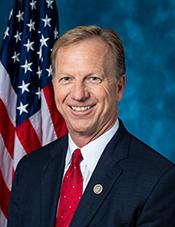
United States · Official source
798 records where Kevin Hern is listed as a sponsor, author, or other actor. Search with topics and years
United States · United States Congress · 25 June 2026
United States · United States Congress · 29 May 2026
United States · United States Congress · 19 May 2026
United States · United States Congress · 9 April 2026
This resolution expresses support for tax policies that support working families and recognizes the tax relief enacted as part of the 2025 reconciliation act.
United States · United States Congress · 26 March 2026
United States · United States Congress · 20 March 2026
United States · United States Congress · 12 March 2026
United States · United States Congress · 12 February 2026
United States · United States Congress · 4 February 2026
United States · United States Congress · 30 January 2026
Safeguard American Voter Eligibility Act or the SAVE America Act This bill requires individuals to provide documentary proof of U.S. citizenship when registering to vote, and requires photo identification to vote, in federal elections. Specifically, the bill prohibits states from accepting and processing an application to register to vote in a federal election unless the applicant presents documentary proof of U.S. citizenship. The bill specifies what documents are considered acceptable proof of U.S. citizenship, such as identification that complies with the REAL ID Act of 2005 that indicates U.S. citizenship. Further, the bill (1) prohibits states from registering an individual to vote in a federal election unless, at the time the individual applies to register to vote, the individual provides documentary proof of U.S. citizenship; and (2) requires states to establish an alternative process to demonstrate U.S. citizenship. Each state must take affirmative steps on an ongoing basis to ensure that only U.S. citizens are registered to vote, which shall include establishing a program to identify individuals who are not U.S. citizens using information supplied by certain sources. Additionally, states must remove noncitizens from their official lists of eligible voters. The bill (1) provides for a private right of action for certain violations, and (2) establishes criminal penalties for certain offenses. Individuals voting in federal elections must present an eligible photo identification document. An individual who votes by absentee ballot must submit a copy of their identification document with both the request for, and the submission of, the absentee ballot.
United States · United States Congress · 30 January 2026
United States · United States Congress · 19 December 2025
United States · United States Congress · 2 December 2025
United States · United States Congress · 19 November 2025
United States · United States Congress · 3 October 2025
United States · United States Congress · 30 September 2025
United States · United States Congress · 19 September 2025
United States · United States Congress · 18 September 2025
United States · United States Congress · 18 September 2025
United States · United States Congress · 18 September 2025
United States · United States Congress · 16 September 2025
This resolution (1) condemns the assassination of Charles "Charlie" James Kirk and all forms of political violence; and (2) honors the life, leadership, and legacy of Charlie Kirk.
United States · United States Congress · 15 September 2025
Ensuring Patient Access to Critical Breakthrough Products Act This bill provides for Medicare coverage of medical devices that are approved under the Food and Drug Administration (FDA) Breakthrough Devices Program. (Under the program, manufacturers work with the FDA to expedite the review and approval of certain medical devices that provide for more effective treatment or diagnosis of life-threatening or irreversibly debilitating human diseases or conditions.) The bill allows designated medical breakthrough devices to be temporarily covered under Medicare during a four-year transitional period. Manufacturers must apply to the Centers for Medicare & Medicaid Services (CMS) to receive this designation. Qualifying devices must (1) have received priority review from the FDA, (2) received premarket approval (if applicable) based on clinical data that includes data from Medicare beneficiaries, (3) already generally qualify for Medicare coverage, and (4) not present an undue risk of harm that outweighs potential clinical benefits for Medicare beneficiaries. The CMS must approve or deny applications within six months of receipt and must provide an explanation in the case of a denial. In addition, the CMS must make permanent coverage decisions before the end of the transitional period upon a timely request to do so, as specified. The bill provides funds through FY2030 for the CMS to implement the bill.
United States · United States Congress · 10 September 2025
United States · United States Congress · 10 September 2025
United States · United States Congress · 4 September 2025
United States · United States Congress · 3 September 2025
United States · United States Congress · 2 September 2025
United States · United States Congress · 1 August 2025
This bill designates the facility of the United States Postal Service located at 201 West Oklahoma Avenue in Guthrie, Oklahoma, as the "Oscar J. Upham Post Office".
United States · United States Congress · 29 July 2025
United States · United States Congress · 23 July 2025
United States · United States Congress · 22 July 2025
United States · United States Congress · 14 July 2025
Save Local Business Act This bill provides that a person may be considered a joint employer of the employees of another employer under federal labor law only if such person directly, actually, and immediately exercises significant control over the essential terms and conditions of employment. Such control may by demonstrated by hiring and discharging employees; determining individual employee rates of pay and benefits; day-to-day supervision of employees; assigning individual work schedules, positions, or tasks; or administering employee discipline.
United States · United States Congress · 14 July 2025
United States · United States Congress · 7 July 2025
United States · United States Congress · 27 June 2025
Treat and Reduce Obesity Act of 2025 This bill expands Medicare coverage of intensive behavioral therapy for obesity. Specifically, the bill allows coverage for therapy that is provided by (1) a physician who is not a primary care physician; or (2) other health care providers (e.g., physician assistants and nurse practitioners) and approved counseling programs, if provided upon a referral from, and in coordination with, a physician or primary care practitioner. Currently, such therapy is covered only if provided by a primary care practitioner. The bill also allows coverage under Medicare's prescription drug benefit of drugs used for the treatment of obesity or for weight loss management for individuals who are overweight.
United States · United States Congress · 27 June 2025
United States · United States Congress · 26 June 2025
United States · United States Congress · 25 June 2025
Pilot and Aircraft Privacy Act or the PAPA Act of 2025 This bill limits how Automatic Dependent Surveillance-Broadcast (ADS-B) data may be used by the Federal Aviation Administration (FAA) and other government agencies. The bill also establishes disclosure requirements for certain user fees imposed on general aviation aircraft at public-use airports and limits the purposes for which the fees may be used. As background, ADS-B transmits information (e.g., location and weather information) between aircraft and air traffic control. The bill prohibits a person or government agency from using ADS-B data to identify an aircraft in order to impose a charge on the aircraft owner or operator. The bill also specifies that air traffic controllers may only use ADS-B data to assist in tracking aircraft and improving air traffic safety and efficiency, or for other purposes determined appropriate by the Department of Transportation after notice and public comment. Further, the bill prohibits any federal, state, local, territorial, or tribal official from initiating an investigation (excluding a criminal investigation) of a person based exclusively on ADS-B data. Under current law, this prohibition only applies to the FAA. In addition, owners and operators of public-use airports must publicly disclose financial information about certain expenses and cost estimates for airside safety projects (e.g., runway or taxiway safety improvements) prior to charging landing or takeoff fees for general aviation aircraft (e.g., aircraft used for personal, recreational, or flight training purposes). Further, any revenue from these fees may only be used for airside safety projects.
United States · United States Congress · 24 June 2025
United States · United States Congress · 12 June 2025
Patient Access to Higher Quality Health Care Act of 2025 This bill repeals provisions under the Stark law (i.e., the Physician Self-Referral Law) that limit, for purposes of Medicare participation, self-referrals by newly constructed or expanded physician-owned hospitals.
United States · United States Congress · 11 June 2025
United States · United States Congress · 10 June 2025
Protecting Health Care for All Patients Act of 2025 This bill prohibits all federal health care programs, including the Federal Employees Health Benefits Program, and federally funded state health care programs (e.g., Medicaid) from using prices that are based on quality-adjusted life years (i.e., measures that discount the value of a life based on disability, age, or terminal illness) to determine relevant thresholds for coverage, reimbursements, or incentive programs. The Government Accountability Office must annually report on how the use of quality-adjusted life years negatively affects individuals with intellectual and developmental disabilities. The bill also reduces funding for the Prevention and Public Health Fund for FY2026-FY2031.
United States · United States Congress · 20 May 2025
Improving Seniors' Timely Access to Care Act of 2025 This bill establishes several requirements and standards relating to prior authorization processes under Medicare Advantage (MA) plans. Specifically, MA plans must (1) establish an electronic prior authorization program that meets specified standards; (2) annually submit to the CMS for publication specified prior authorization information, including the percentage of requests approved and the average response time; and (3) meet other standards, as set by the Centers for Medicare & Medicaid Services (CMS), relating to the quality and timeliness of prior authorization determinations. The CMS and the Office of the National Coordinator for Health Information Technology must publish on the CMS' website a report that analyzes the information received from MA plans, the feasibility of implementing real-time decision making with respect to prior authorization requests, and the impact of decisions that are made using artificial intelligence on patient access.
United States · United States Congress · 20 May 2025
United States · United States Congress · 19 May 2025
Protect Children’s Innocence Act of 2025 This bill establishes federal criminal offenses for providing gender-affirming care to minors. The bill also changes the existing federal criminal offense that prohibits female genital mutilation (FGM) and related conduct. Specifically, the bill makes it a federal crime to knowingly perform or attempt to perform procedures or provide medications (e.g., hormonal treatments) to a minor for the purpose of changing their body to correspond to a sex that differs from their biological sex. The bill provides exceptions for specified types of surgeries or procedures, including those for treating (1) individuals who have both ovarian and testicular tissue or abnormal sex chromosome structure or hormones, or (2) infections or other harms that result from a previous gender-transition procedure. A violation is punishable by a fine, a prison term of up to 10 years, or both. The bill prohibits the arrest or prosecution of an individual who undergoes gender-affirming procedures or medications. Additionally, the bill makes changes to the existing federal criminal prohibition on performing FGM on a minor and related conduct. Among the changes, the bill broadens the scope of prohibited conduct to include the facilitation or consent to FGM by any person (currently, prohibited facilitation or consent applies only to a parent, guardian, or caretaker of the minor). The bill also prohibits the arrest or prosecution of an individual who undergoes FGM. The bill does not change the applicable criminal penalty of a fine, a prison term of up to 10 years, or both.
United States · United States Congress · 8 May 2025
Access to Prescription Digital Therapeutics Act of 2025 This bill provides for Medicare and Medicaid coverage of prescription digital therapeutics (i.e., software applications that are used to prevent, manage, or treat medical conditions). The Centers for Medicare & Medicaid Services must establish a Medicare payment methodology for payments to manufacturers that takes into account certain factors (e.g., ongoing use); manufacturers must report specified information about private payors, subject to civil penalties.
United States · United States Congress · 7 May 2025
United States · United States Congress · 6 May 2025
United States · United States Congress · 1 May 2025
Ensuring Community Access to Pharmacist Services Act This bill provides for permanent coverage under Medicare of certain pharmacist services. Specifically, the bill provides for permanent coverage of testing and treatment services provided by pharmacists relating to (1) COVID-19, influenza, respiratory syncytial virus (RSV), and streptococcal pharyngitis (strep throat); and (2) other public health needs in relation to a declared public health emergency. (Similar authorities were temporarily granted during the COVID-19 public health emergency.) Such services must be provided in accordance with the applicable state laws governing pharmacists' scope of practice.
United States · United States Congress · 10 April 2025