Law· HJRESH.J.Res. 392 (101st)enacted
Designating October 1989 as "Italian-American Heritage and Culture Month".
United States · United States Congress · 4 August 1989
Designates October 1989 as Italian-American Heritage and Culture Month.
The world's political record
Person
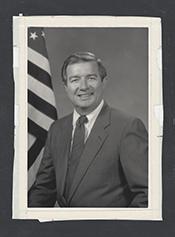
United States · Official source
713 records where Rep. Laughlin, Greg [D-TX-14] is listed as a sponsor, author, or other actor. Search with topics and years
United States · United States Congress · 4 August 1989
Designates October 1989 as Italian-American Heritage and Culture Month.
United States · United States Congress · 4 August 1989
Expresses sorrow to the family of Lieutenant Colonel William Higgins over his reported murder and to the families of hostages of all nationalities being held in Lebanon. Recognizes that Iran is both directly and indirectly responsible for the captivity of the American hostages and the reported murder of Lt. Col. Higgins. Commends the President and the Secretary of State for doing everything in their power to deter further threats to the American hostages. Urges: (1) the President to express to the Government of Iran that the United States holds Iran responsible for Lt. Col. Higgins' death, the captivity of the remaining hostages, and all Hezbollah-sponsored terrorism; and (2) the President and the Secretary of State to continue exploring all possible channels for freeing the hostages and bringing those responsible for such acts to justice.
United States · United States Congress · 3 August 1989
Agricultural Extended Retirement Credit Act of 1990 - Extends creditable service under the Civil Service Retirement System for periods of service in certain Federal-State cooperative programs which had agricultural or related purposes. Establishes a hiring limitation period of four fiscal years after 60 days following enactment of this Act on the replacement of retirees in the United States Department of Agriculture. Prohibits the obligation or expenditure of any budget authority or outlays saved in any fiscal year by reason of reduced pay and personnel resulting from implementation of this Act. Requires that the budget authority and outlays thus saved: (1) be carried to the surplus fund of the Department of Agriculture and deposited by the Secretary of Agriculture in the Treasury to the credit of the Civil Service Retirement Fund, as a Government contribution; and (2) credited against pay and other personnel costs required to be sequestered under the Balanced Budget and Emergency Deficit Control Act of 1985 (Gramm-Rudman-Hollings Act). Requires the Comptroller General to notify the Congress, of of each instance of noncompliance with the requirements of this Act. Directs the Director of the Office of Personnel Management to report to the Congress on an evaluation of the extended credit retirement program and the limitation on replacement of retirees provided under this Act.
United States · United States Congress · 3 August 1989
Title I: Combined Sewer and Storm Water System Overflow Control - Estuarine Zone and Marine Waters Combined Sewer Overflow Control Act - Amends the Federal Water Pollution Control Act to require the Administrator of the Environmental Protection Agency to issue regulations setting forth permit requirements for discharges from combined storm water and sanitary sewer overflows into the estuarine zone and marine waters. Directs the Administrator, in determining the content of such regulations, to take into account; (1) the expected composition, frequency, and volume of each discharge; (2) the anticipated effect of each discharge on the environment, economy, and aesthetic and recreational values of the receiving waters; and (3) the need for a flexible approach in minimizing such discharges. Authorizes the Administrator to issue permits after 1999 for such discharges only if the permittee has taken reasonable efforts to eliminate dry weather discharges and to minimize wet weather discharges. Requires the Administrator to provide technical assistance to State and local governments issued permits under this Act. Directs permittees, as a condition for permit issuance or renewal, to budget and expend an amount of funds for: (1) identifying all discharges of overflows into the estuarine zone and marine waters; (2) implementing technology-based limitations of such discharges; and (3) eliminating such discharges. Waives such requirement if the Administrator determines that the permittee or the State in which such permittee is located has begun to implement a plan that will result in the cessation of dry weather discharges and minimization of wet weather discharges by the year 2000. Makes funds available to permittees to address water quality problems resulting from such discharges. Directs the Administrator to report to the Congress on: (1) the feasibility and cost of establishing a technological clearinghouse to make available to States and local governments information on, and assistance in, controlling and ceasing discharges of overflows from combined storm water and sanitary sewers into the estuarine zone and marine waters; and (2) the major components of discharges which contribute significantly to floating debris and debris which washes up on shores and ways to eliminate the introduction of such debris into combined storm water and sanitary sewer systems. Authorizes appropriations. Title II: National Estuary Program Amendment - National Estuary Program Amendment Act - Requires the Administrator to: (1) identify estuaries where overflow discharges from combined storm water and sanitary sewer systems constitute a major source of pollution; (2) urge that the management conference for each estuary develop a priority action plan to address such overflows; and (3) report to the Congress on the extent of such discharges and the anticipated Federal cost of addressing the problem. Title III: Marine Pollution Discharge Abatement - Marine Discharge Abatement Act - Prohibits the issuance or renewal of permits for pollutant discharges into estuaries, estuarine zones, the territorial sea, the waters of the contiguous zone, or the oceans unless: (1) the need for the discharge has been demonstrated by the applicant and the Administrator has determined there is no environmentally sound alternative; (2) the permittee establishes an on-going monitoring program for each discharge; and (3) the applicant agrees to include within the permit a provision to allow the Administrator to modify or terminate such permit if such action is in the public interest and necessary to prevent the degradation of such waters. Directs the Administrator and the Under Secretary of Commerce for Oceans and Atmosphere to review existing guidelines and to promulgate guidelines necessary to prevent the degradation of such waters. Prohibits the waiver of such requirements for permit issuances or renewals.
United States · United States Congress · 31 July 1989
Benjamin Franklin National Memorial Commemorative Coin Act - Requires the Secretary of the Treasury to issue a specified number of five-dollar gold coins, one-dollar silver coins, and half-dollar clad coins in commemoration of the bicentennial of the death of Benjamin Franklin. Provides that such coins shall be considered legal tender. Requires the Secretary to begin issuing such coins on October 1, 1989. Directs the Secretary to obtain silver for the minting of such coins from stocks of silver held by the Secretary or from any other federally owned stocks of silver and to obtain gold pursuant to authority under existing law. Provides that the design of such coins shall be selected by the Secretary after consultation with the Chairman of the Benjamin Franklin National Memorial at the Franklin Institute and the Chairman of the Commission of Fine Arts. Specifies the sales price of such coins as the face value plus costs. Requires that all sales of such coins include a surcharge of $35 per coin for five-dollar coins, $7 per coin for one-dollar coins, and $2 for half-dollar coins. Requires that all surcharges received by the Secretary from the sale of such coins shall be paid to the Benjamin Franklin National Memorial (The Franklin Institute): (1) to restore and renovate the Memorial; (2) to construct or renovate certain adjoining areas of the Franklin Institute; (3) to establish an endowment to ensure the continued upkeep and maintenance of the Memorial; (4) for exhibits in the Memorial or certain adjoining areas of the Institute; and (5) for funds for construction of certain facilities and for the acquisition and preservation of artifacts relating to Franklin. Authorizes the Comptroller General to audit such payments. Prohibits the minting of such coins under this Act after December 31, 1990. Requires the Secretary to ensure that the minting and issuance of such coins shall not result in any net costs to the Government.
United States · United States Congress · 27 July 1989
Veterans PTSD Treatment and Psychological Readjustment Act of 1989 - Directs the Secretary of Veterans Affairs to increase the number of: (1) vet centers currently in existence by 20 additional units by December 31, 1991, and by 20 more units by December 31, 1994; and (2) post-traumatic stress disorder (PTSD) treatment facilities currently in existence by 15 additional units by December 31, 1991, and by 15 more units by December 31, 1994. Requires new vet centers to be established in cities which do not have such centers. Earmarks a specified amount of FY 1990 PTSD funding for contracts with private facilities and therapists for the provision of PTSD treatment. Requires the Secretary, in administering the Health Professionals Educational Assistance Program, to encourage the participation of individuals in the program who desire to become psychiatrists, psychologists, and psychiatric nurses specializing in the treatment of PTSD. Directs the Secretary to establish the Advisory Committee on Readjustment of Veterans. Requires the Secretary to consult with, and seek the advice of, the Committee with respect to: (1) the administration of Department benefits for veterans, particularly Vietnam veterans; (2) reports and studies pertaining to veterans, particularly Vietnam veterans; and (3) the needs of all veterans with respect to compensation, health care, readjustment, outreach, and other benefits and programs administered by the Department. Requires the Committee to report annually to the Secretary pertaining to the social, economic, educational, and psychological readjustment of veterans. Requires the Secretary to submit such reports to the Congress, along with comments and recommendations. Authorizes the Secretary to conduct a pilot program to contract for care and treatment and rehabilitative services in halfway houses, therapeutic communities, psychiatric residential treatment centers, and other community-based treatment facilities for eligible veterans suffering from PTSD. Requires the Chief Medical Director (CMD) to plan, design, and conduct such program. Requires the Secretary to approve the quality and effectiveness of a program operated by a contract facility before allowing veterans to be furnished treatment there under the pilot program. Directs the Secretary to: (1) urge all public and private entities to provide appropriate employment and training opportunities to veterans who have been provided treatment and rehabilitative services under this Act for PTSD and who have been determined to be sufficiently rehabilitated to be employable; and (2) provide all possible assistance to the Secretary of Labor in placing such veterans in such opportunities. Requires the Secretary to provide referral services and advice to veterans discharged or released from active service who are not eligible for PTSD treatment and services. Outlines provisions concerning the transfer of veterans to contract care facilities for treatment of PTSD, requiring such transfer only within 30 days of such member's enlisted tour of duty and only if such person requests such a transfer while on active duty. Limits the period of such care and rehabilitative services to five years after the fiscal year in which the pilot program is initiated. Requires the Secretary to report to the Senate and House Veterans' Affairs Committees on findings and recommendations pertaining to the operation of the pilot program authorized under this Act. Directs the CMD of the Department to conduct a research program relating to the treatment of PTSD.
United States · United States Congress · 26 July 1989
Designates the second Saturday in August 1989 as Duck Day USA in recognition of the practice of holding duck races as a means of providing support to institutions for learning disabled children.
United States · United States Congress · 25 July 1989
Veterans Agent Orange Exposure and Vietnam Service Benefits Act of 1989 - Provides that the disease of chloracne in Vietnam veterans shall be considered to have been service-connected if such disease became manifest to a ten percent or more degree of disability within one year after the last date on which the veteran performed such service in Vietnam. Presumes the following diseases to be service-connected for veterans who performed active service in Vietnam during the Vietnam era, notwithstanding that there is no record of evidence of such disease during the period of such service: (1) non-Hodgkins lymphoma; (2) soft-tissue sarcoma; and (3) melanoma and basal cell carcinoma. Provides a presumption of service-connection in the case of a Vietnam veteran suffering from a disease associated with effects of exposure to certain dioxins or other herbicide agents during such service in Vietnam. Directs the Secretary to prescribe regulations listing a positive association between any disease and the biological effects of exposure to an herbicide agent in Vietnam. Requires the Secretary to update such list continually. Requires the Secretary, in prescribing and revising such list, to obtain by contract the determinations and estimates of a contract scientific organization. Requires such organization to: (1) determine which diseases have any degree of association with the biological effects of exposure to an herbicide agent; and (2) estimate the extent of association between each such disease and each such biological effects. Requires the organization to determine such association specifically with respect to non-Hodgkins lymphoma, each soft-tissue sarcoma, lung cancer, and each other cancer. Outlines contract provisions required in such agreements between the Secretary and the scientific organization, including surveys, evaluations, and periodic determinations. Requires such scientific organization to provide reports to the Secretary and the Senate and House Veterans' Affairs Committees regarding its determinations and evaluations. Requires such organization to determine, in the effect of a positive association, whether there is a reasonable basis for concluding that a Vietnam veteran with the highest level of exposure to that herbicide agent in Vietnam was exposed to such agent under the circumstances necessary for such biological effects. Requires a report from the organization to the Secretary and the veterans' committees when there is no such reasonable basis found. Requires the Secretary to make certain determinations and follow-up reports after receiving such reports from the contract scientific organization, including the issuance of a report to the veterans' committees and the promulgation of positive association regulations, if necessary. Requires benefits to be continued even though a disease is removed from the regulations listing diseases having positive associations. Terminates such contracting authority ten years after the first day of the fiscal year in which a scientific organization transmits its first report to the Secretary. Provides special effective dates. Directs the Secretary to compile and analyze all clinical data that: (1) is obtained by the Department in connection with examinations and treatment of veterans for disabilities related to exposure to certain herbicides or to service in Vietnam; and (2) is likely to be scientifically useful in determining the association, if any, between the disabilities of such veterans and their exposure to such herbicides and other toxic substances. Requires the Secretary to submit an annual report to the veterans' committees concerning such analysis and its results. Directs the Secretary to consult with the Director of the National Institutes of Health Research and Grants Division (NIH) before compiling and analyzing such information. Requires the Director of NIH to review each annual report submitted by the Secretary and transmit to the Secretary an evaluation of the contents of each report. Directs the Secretary to establish and maintain a system for the collection and storage of voluntarily contributed samples of blood and tissue of veterans who performed active service in Vietnam during the Vietnam era. Outlines provisions concerning the security and authorized uses of such specimens, as well as limitations on the acceptance of such samples. Requires the Secretary to consult with the National Academy of Sciences (NAS) to the extent that an agreement has been reached with the NAS serving as the contract scientific organization for the Secretary. Requires the Secretary to consult with the Director of the Medical Follow-up Agency in the event of no agreement with NAS. Directs the Secretary to establish a program to provide for the conduct of studies of the feasibility of conducting additional scientific research on health hazards resulting from: (1) exposure to dioxin; (2) exposure to other toxic agents in herbicides used in support of U.S. and allied military operations in Vietnam during the Vietnam era; and (3) active military, naval, or air service there. Requires the Secretary to report to the veterans' committees on the results of such studies. Requires the Secretary to consult with the NAS before undertaking such studies and requires the NAS, to review such studies and report recommendations to the Secretary and the veterans' committees, to the extent provided under any agreement between the Secretary and NAS. Amends the Veterans' Benefits Improvement Act of 1988 to require the Secretary to annually furnish updated information to veterans listed in the Department of Veterans Affairs' Agent Orange Registry on health risks resulting from exposure to dioxin or other toxic agents in herbicides as a result of service in Vietnam during the Vietnam era. Directs the Secretary of Health and Human Services to report to the veterans' committees on the research being conducted to develop treatments for psychological absorption of dioxin and other toxic agents used in herbicides by the United States in Vietnam, including research relating to exposure to dioxin and other toxic agents outside Vietnam. Extends through December 31, 2000, the eligibility for hospital and nursing home care for veterans exposed to toxic substances in Vietnam. Amends the Veterans' Benefits Improvement Act of 1988 to authorize direct consultation between the Ranch Hand Advisory Committee and Department of the Air Force scientists conducting the Ranch Hand Study (a study of the long-term health effects of exposure to phenoxy herbicides and contaminants). Requires the preparation and submission of annual reports and a final report in connection with such study.
United States · United States Congress · 21 July 1989
Drug War Bond Act of 1989 - Directs the Secretary of the Treasury to issue: (1) Drug War Bonds for a three-year period with a 12-year maturity date; and (2) Drug War Stamps to evidence payments for or on account of such bonds. Amends the Internal Revenue Code to exclude the interest earned on such War Bonds from an individual's gross income. Authorizes a taxpayer to designate a specified portion of any tax overpayment or make cash contributions to the War on Drugs Trust Fund (established by this Act). Authorizes the Attorney General to make expenditures from the Department of Justice Assets Forfeiture Fund into the War on Drugs Trust Fund. Amends the Internal Revenue Code to establish the War on Drugs Trust Fund. Transfers to such Fund: (1) proceeds from the sale of Drug War Bonds and stamps; and (2) certain cash contributions and portions of tax overpayments. Prescribes expenditures from the War on Drugs Trust Fund, including the construction of Federal prison facilities and education and rehabilitation programs. Precludes the receipts and disbursements from the War on Drugs Trust Fund from being included in either the congressional budget totals or in the budget totals as submitted by the President. Exempts the receipts and expenditures from the War on Drugs Trust Fund from: (1) statutory expenditure and lending limitations; and (2) certain orders issued under the Balanced Budget and Emergency Deficit Control Act of 1985 (Gramm-Rudman-Hollings Act). Requires the Secretary to report to the Congress on programs established by this Act. Directs the Attorney General to make recommendations to the Congress regarding the merits of privatizing Federal prisons.
United States · United States Congress · 21 July 1989
Endangered and Threatened Species Propagation Act of 1989 - Amends the Endangered Species Act of 1973 to require the Secretary of the Interior to establish and implement a program of grants for projects for the propagation of endangered and threatened species. Limits the Federal share to 50 percent of project costs. Authorizes the Secretary to accept and distribute contributions of money, property, and services for supporting projects. Specifies that contributions distributed to a project shall be considered to be part of the non-Federal share of project cost.
United States · United States Congress · 19 July 1989
Designates 1992 as the Year of Clean Water and October 1992 as Clean Water Month.
United States · United States Congress · 19 July 1989
Authorizes the use of the official expenses allowance of each Member of the House of Representatives for production of newsletters containing directories of State, local, and nonprofit private drug counseling, treatment, and information programs.
United States · United States Congress · 18 July 1989
Designates the week of February 11 through February 17, 1990, as Vocational-Technical Education Week.
United States · United States Congress · 29 June 1989
Coastal Barrier Improvement Act of 1989 - Amends the Coastal Barrier Resources Act to remove references to unconsolidated sedimentary materials from the definition of "undeveloped coastal barrier." Establishes the Coastal Barrier Resources System, to consist of those undeveloped coastal barriers on the U.S. coasts identified on specified maps. Directs the Secretary of the Interior to submit such maps to specified congressional committees, each State and county jurisdiction in which a System unit is located, each coastal zone management office, and each appropriate Federal agency. Allows the Secretary to make minor and technical changes to the boundaries of System units within 180 days of filing the maps, as consistent with this Act and necessary to clarify the boundaries. Allows the head of each State coastal zone management agency to submit proposals for such changes. Sets forth exceptions, with regard to existing limitations on expenditures, relating to energy resources, navigation channels, certain publicly owned or operated roads or structures, military activities essential to national security, Coast Guard facilities, and other matters if consistent with the purposes of this Act. Directs the Secretary to submit to specified congressional committees maps identifying the boundaries of those undeveloped coastal barriers along the U.S. Pacific coast appropriate for inclusion in the System. Authorizes appropriations to carry out specified provisions of the Act.
United States · United States Congress · 29 June 1989
Authorizes any Army, Navy, Marine Corps, Air Force, or Coast Guard band to produce recordings for commercial sale. Allows proceeds to be credited to the appropriations of the Departments of the Army, Navy, Air Force, and the Coast Guard for the expenses of such bands. Directs the Secretaries of the Army, Navy, Air Force, and Transportation to prescribe regulations governing the accounting of such proceeds.
United States · United States Congress · 29 June 1989
Directs the American Battle Monuments Commission to establish a memorial on Federal land in the District of Columbia or its immediate area to honor World War II veterans and to commemorate U.S. participation in that conflict. Directs the Commission to plan, design, construct, and oversee the operation of the memorial. Specifies that such design shall provide for accessibility by, and accommodations for, the physically handicapped. Establishes the World War II Memorial Advisory Board to: (1) promote the establishment of the memorial and encourage the donation of private funds for construction maintenance; (2) assist and cooperate with the Commission in the selection of the site and design for the memorial; and (3) transmit annual reports on its activities to the Congress. Authorizes the Commission to solicit private contributions for such memorial. Establishes a fund in the Treasury which shall be made available to the Commission to carry out this Act. Authorizes Federal funding, in addition to such private funds, for site preparation, design, planning, establishment, construction, maintenance, and operation of the memorial. Authorizes assistance from specified Federal departments and agencies, including the Library of Congress. Authorizes Federal property to be transferred to the Commission. Authorizes the Commission to purchase suitable property within the District of Columbia for the establishment of such memorial. Urges the Government to encourage 50th anniversary commemorations of the U.S. role in World War II. Urges the Smithsonian Institution and other Federal museums to develop commemorative exhibitions to be shared with academic institutions.
United States · United States Congress · 29 June 1989
Constitutional Amendment - Declares that the Congress and the States shall have power to prohibit the physical desecration of the U.S. flag.
United States · United States Congress · 29 June 1989
Designates October 1989 as Polish American Heritage Month.
United States · United States Congress · 28 June 1989
Designates the week of March 1 through March 7, 1990, as National Quarter Horse Week.
United States · United States Congress · 22 June 1989
Expresses the sense of the Congress that the authority to issue tax-exempt small issue bonds should be extended through December 31, 1990.
United States · United States Congress · 19 June 1989
Designates July 14, 1989, as National Day to Commemorate the Bastille Day Bicentennial.
United States · United States Congress · 15 June 1989
Condemns the brutal treatment of, and blatant discrimination against, the Turkish minority by the Government of Bulgaria. Calls upon the Bulgarian authorities to cease all such discriminatory practices, release all those imprisoned because of their participation in nonviolent political acts, and honor its obligations concerning the right of all Bulgarians to emigrate. Urges the President and Secretary of State to make strong diplomatic representations to Bulgaria protesting its treatment of its Turkish minority and to raise this issue in all appropriate international fora.
United States · United States Congress · 13 June 1989
Expresses the sense of the House of Representatives that the Committees on Energy and Commerce and Ways and Means should review the Medicare Catastrophic Coverage Act of 1988 and hold hearings in the process of such review.
United States · United States Congress · 13 June 1989
Urges the administration to refrain from submitting any proposal to include maritime transportation in the forthcoming General Agreement on Tariffs and Trade (GATT) discussions regarding trade in services industries and to oppose any proposals by foreign nations which are similar or which could result in a contraction of the U.S.-flag merchant marine.
United States · United States Congress · 25 May 1989
Designates the Ghost Squadron of the Confederate Air Force as the U.S. Ambassador for the Commemoration of the 50th Anniversary of World War II.
United States · United States Congress · 24 May 1989
Title I: General Provisions - Merchant Marine and Defense Act of 1989 - Sets forth congressional findings regarding the maritime industries and national defense. Declares that it is the policy of the United States to develop the necessary maritime resources to meet U.S. national defense and economic security requirements. Title II: Operating Differential Subsidy Reform - Amends provisions of the Merchant Marine Act, 1936 relating to the operating-differential subsidy (ODS) to: (1) allow the Secretary of Transportation, in determining whether to approve an application or revise a contract, to consider the availability of funding; and (2) prohibit the Secretary, in making such determinations, from making a distinction between persons already receiving such aid and new applicants. Revises the definition of "essential service" to include any operation determined by the Secretary to be necessary for national defense or for competitive and economical operation of U.S.-flag vessels in foreign commerce. Requires, for ODS aid, that a vessel be a militarily useful dry cargo vessel less than 20 years old and U.S.-documented. Directs the Secretary, notwithstanding any other law, to allow any qualified U.S. operator to qualify any militarily useful vessels for an ODS if the operator applies within one year of enactment of this Act, meets the requirements for such aid, and meets other requirements. Defines "qualified operator" to mean a U.S. citizen who owned, during the two years ending on the date of enactment of this Act, oceangoing vessels documented in the United States. Ends the Secretary's authority to determine suitable ocean routes and lines to foreign ports. Ends the ODS eligibility requirement that vessels be operating in an essential service. Directs the Secretary to designate ocean services, routes, and lines to not be essential services for purposes of ODS. Prohibits the Secretary from designating a route after two years after enactment of this Act unless operation on that route under an ODS is essential for national security. Repeals provisions excluding certain vessels from eligibility for an ODS. Reduces the maximum period for ODS contracts from 20 to ten years. Modifies the formula for determining the amount of ODS payments. Eliminates ODS coverage for insurance, maintenance and repair, and subsistence of officers and crews. Shields contracts in effect on the date of enactment of this Act from the changes until specified events occur. Changes the definition of "collective bargaining costs." Requires wage subsidies to be paid semimonthly rather than monthly. Prohibits the Secretary from entering into or making payments on ODS contracts for a dry cargo or dry bulk vessel that is more than 25 years old or a tanker vessel that is more than 20 years old. (Current law prohibits ODS payments for vessels that are more than 25 years old.) Directs the Secretary, in awarding and revising ODS contracts, to ensure that disruptions to parties to existing contracts are minimized. Provides for a reduction of ODS payments for a particular voyage in proportion to the amount of revenue payable under cargo preference provisions, subject to exception. Authorizes the Secretary to carry out ODS provisions so as to provide incentives for improving the efficiency of operation of vessels for which an ODS is paid. Allows the Secretary to authorize a contractor receiving an ODS for operations of a line haul vessel to own or operate certain foreign flag vessels that act as feeder vessels for that line hall vessel. Authorizes the Secretary, notwithstanding specified provisions, to enter into ODS contracts with U.S. citizens for the operation of any militarily useful vessel built in a foreign shipyard if the citizen has a foreign vessel acquisition right issued by the Secretary and if other requirements are met. Directs the Secretary to establish a program for the issuance of a foreign vessel acquisition right with respect to each oceangoing merchant vessel over a specified number of deadweight tons for which construction in the United States is started on or after enactment of this Act. Requires the program to provide for the assignment by the Secretary of the rights to any U.S. citizen. Requires amounts received as revenue under the program to be deposited in the Procure and Charter Shipyard Improvement Fund established under title XIV of the Merchant Marine Act, 1936 for use under that title. Declares that these provisions shall not be construed to authorize any vessel built or acquired outside the United States to engage in the coastwise trade. Authorizes the Secretary: (1) notwithstanding specified provisions, to enter into ODS contracts for one year after enactment of this Act with any qualified operator for the operation of any militarily useful vessel built in a foreign shipyard if the vessel meets certain requirements; and (2) on and after the date of enactment of this Act to enter into ODS contracts for operation of any vessels eligible for such subsidies by reason of these provisions, the contracts to be effective after the vessels are delivered and documented under U.S. laws. Amends the Merchant Marine Act, 1936 to modify the definition, for purposes of provisions relating to cargo preference, of the term "privately owned United States-flag commercial vessels" so as to allow certain foreign-built vessels to carry preference cargo, subject to limitation. Authorizes the Secretary, notwithstanding cargo preference limitations, to declare a foreign-built vessel eligible for preference cargo, if the Secretary is authorized to enter into an ODS contract with respect to that vessel and if other conditions are met. Title III: Procure and Charter Program - Part A: Design and Construction of Vessels and Improvement of Shipyards - Directs the Secretary of Transportation (Secretary) and the Secretary of Defense to establish a program under which amounts in the Procure and Charter Revolving Fund (Fund) must be used to: (1) fund contracts for the design in the United States of military useful merchant vessels; (2) fund contracts for the construction of such vessels in privately owned U.S. shipyards; and (3) provide assistance to such shipyards for improvements to equipment, systems, and techniques. Directs the Secretary to enter into contracts for the: (1) design and construction of prototypes of militarily useful merchant vessels; and (2) construction of militarily useful merchant vessels in accordance with such designs and prototypes. Sets forth vessel requirements, contractor eligibility requirements, and contract restrictions. Directs the Secretary to require that, as part of the contract, any person awarded a contract improve facilities and management systems of the person and achieve improvements in productivity and cost reductions through serial construction. Authorizes the Secretary to provide vessel construction contractors under these provisions financial assistance in an amount equal to one-half of the costs of improvements in vessel construction equipment, systems, and techniques to be used in carrying out the contract. Prohibits the assistance unless the Secretary determines that the assistance will result in reduced total costs and increased productivity in carrying out construction under these provisions. Limits the amount of the assistance. Authorizes appropriations from the fund as necessary for constructing an average of 12 vessels in each of the FY 1989 through 2000. Part B: Vessel Charter and Sale - Directs the Secretary to establish a program for the chartering and disposing of vessels constructed under part A of this title. Authorizes the Secretary to enter into contracts with any eligible person for the charter by the person of such vessels. Sets forth charter contract terms. Directs the Secretary, as a condition of a contract, to require: (1) a deposit to ensure the faithful performance of all requirements of the contracts, including indemnity against liens on the vessel; and (2) insurance at the expense of the person entering into the contract. Sets forth contracting procedures. Allows the Secretary to terminate a contract: (1) on a presidential proclamation that termination is required for national defense; and (2) during a national emergency declared by the President. Directs the Secretary, in chartering vessels, to avoid conferring any unfair advantage on a charterer. Authorizes the Secretary of Transportation (Secretary) and the Secretary of Defense to contract for the charter of any vessel constructed under part A of this title, for use by the Department of the Navy, at rates determined by the Secretary (but not less than the prevailing commercial rate) for not more than two years. Authorizes the Secretary of Defense to contract with any private person to subcharter any vessel constructed under part A, unless the operation of the vessel under that contract will adversely affect the commercial operation of a vessel documented under U.S. laws. Authorizes the Secretary of Transportation (Secretary) to sell or otherwise dispose (including by transfer to the National Defense Reserve Fleet) of a vessel constructed under this title if the vessel is not under contract and no reasonable contract offers have been received, and if other conditions are met. Mandates that the Secretary require as compensation for a vessel sold or disposed of an amount at least as much as the U.S. cost in constructing the vessel, less depreciation. Directs the Secretary, in disposing of vessels, to avoid conferring any unfair advantage on any person who acquires the vessel. Authorizes the Secretary to dispose of a vessel to any person for purposes of scrapping the vessel. Part C: Procure and Charter Revolving Fund - Establishes in the Treasury the Procure and Charter Revolving Fund, to consist of amounts deposited in and transferred to the Fund under these provisions. Directs the Secretary of the Treasury to: (1) deposit in the Fund all proceeds of charters, sales, and disposals under part B of this title, all duties under specified provisions of the Tariff Act of 1930, all proceeds of issuance of foreign vessel acquisition rights under provisions of the Merchant Marine Act, 1936 as amended by this Act, and interest on such amounts; and (2) transfer to the Fund, for each of the FY 1990 through 2000, any difference between the deposited amounts and the amount authorized to be appropriated under part A of this title. Makes amounts in the Fund available to the Secretary for vessel design and construction and shipyard assistance. Terminates the Fund, with the balance reverting to the general fund of the Treasury, upon a finding by the Secretary that amounts in the Fund plus anticipated receipts are insufficient for funding construction contracts. Mandates deposit in the general fund of the Treasury of any amounts received after termination of the Fund. Part D: General Provisions - Directs the Secretary to: (1) submit an annual report to the Congress regarding matters under this title; and (2) issue regulations to carry out this title. Title IV: Simplification of Procedure for Long-Term Military Leases - Amends Federal law to exempt noncombatant oceangoing vessels from provisions relating to authorization required for certain long-term leases of vessels and aircraft by military departments. Directs the Secretary of Defense to submit an annual report to specified committees of the Congress describing each case in which the Department of the Navy is seeking, or considering seeking, to enter into a long-term charter of an oceangoing vessel under the provisions amended by this title. Title V: Vessel Prototype Design and Construction Program - Directs the Secretary of Transportation to: (1) establish a program for the design and construction of dry and liquid cargo vessel prototypes and troop carrying vessel prototypes; (2) establish guidelines for such design and construction; and (3) conduct a series of competitions for the selection of designs for vessel prototypes. Sets forth design criteria. Authorizes the Secretary to contract for the production of vessel prototype designs. Directs the Secretary to encourage such cooperation between naval architecture firms and ship building firms as may facilitate the use of modern production techniques. Directs the Secretary to contract for the construction in private U.S. shipyards of one of each vessel prototype design. Sets forth criteria for selection of shipyards. Directs the Secretary to base contract awards, to the maximum extent practicable, on consideration (in addition to other considerations required by law) of maintaining the U.S. ship building mobilization base. Requires prototypes constructed under this title to be chartered or otherwise disposed of under the program established under part B of title III of this Act. Requires information obtained through the design and construction of prototypes to be made available to private shipyards and ship suppliers. Title VI: Federal Ship Mortgage Insurance - Amends the Merchant Marine Act, 1936 to exclude from the definition of "vessel," as used in provisions relating to Federal ship mortgage insurance: (1) any vessel used primarily for offshore exploration or exploitation of petroleum; and (2) barges, tugs, towboats, and workboats. Title VII: Tax Incentives for Modernization of U.S. Shipyards - Amends provisions of the Merchant Marine Act, 1936 and the Internal Revenue Code regarding tax incentives and relating to merchant marine capital construction funds to define "reconstruction" to include general repairs to a qualified vessel to the extent that their costs exceeds a specified amount. Adds references to shipyards to the same provisions of both Acts. (Current law provides the incentives only for certain vessels and related barges or containers.) Amends the Internal Revenue Code to add qualified vessels and qualified shipyards to the list of exceptions to the termination of the regular percentage, for purposes of determining the amount of the investment tax credit. Restores, for such vessels and shipyards, the depreciation schedule which was in effect on the day before the enactment of the Tax Reform Act of 1986. Title VIII: Tariff and Trade Reform for Vessel Construction and Operation - Amends the Tariff Act of 1930 to impose, when purchased or performed in a foreign country, an ad valorem duty on: (1) modifications and permanent additions to the hull, fittings, or superstructure of a vessel, including inspections required by the classifications societies, insurers, and governmental entities; and (2) vessel drydocking and all services necessary for drydocking. Excluding emergency repairs from imposition of such duty. Relieves the owner or operator of a vessel from liability for the duty if the owner or operator elects to spend, in a shipyard in the United States within five years, for equipment, repair parts or materials, or repairs, a cumulative amount at least equal to the duty. Makes an owner or operator who fails to so spend liable for the duty plus accrued interest. Requires amounts received as a duty to be deposited into the Procure and Charter Revolving Fund established by this Act. Title IX: Expansion of Cargo Reserved for U.S. Vessels - Amends cargo preference provisions of the Merchant Marine Act, 1936 to require that 100 percent of the agricultural and nonagricultural ocean-borne cargoes generated by the U.S. Government, including cargoes generated as a result of a foreign aid cash transfer program, be transported on privately owned U.S.-flag commercial vessels, subject to exception. (Current law requires that 50 percent of nonagricultural and 25 percent of certain agricultural commodities be transported on U.S.-flag commercial vessels.) States that, in authorizing a vessel which is not U.S.-registered to transport any cargo which is foreign assistance subject to the provisions being amended, the Secretary of Transportation must require that 50 percent of the cargo be transported on U.S.-registered vessels and the remainder on vessels registered in the country receiving the assistance. Title X: Increasing Defense Readiness of United States Merchant Marine - Amends the Merchant Marine Act, 1936 to direct the Secretary of Transportation, before approving any assistance under such Act for the construction of a vessel intended for use in the coastwise trade, to submit the plans to the Secretary of Defense for review and approval. Directs the Secretary of Defense to either: (1) certify that the plans are suitable for construction of a vessel which is capable of economical and expeditious conversion to use during war or national defense emergency; or (2) request changes in the plans necessary to enable that conversion. Directs the Secretary of Transportation, subject to appropriations, to pay to a person constructing a vessel in the United States after enactment of this Act to be operated in the coastwise trade, before construction begins, the costs of: (1) constructing any national defense features; (2) maintaining the features for 15 years; (3) additional operating expenses because of the features during that period; and (4) lost revenue during that period because of reduced cargo space. Declares that it is the sense of the Congress that: (1) rates paid by the Department of Defense for the carriage of ocean-borne cargoes should fully compensate the vessel owner and could be based on established commercial rates; and (2) contracts for such carriage should be awarded, compatible with sound business practice (including cost minimization), so as to enhance the strategic sealift capabilities of the U.S.-flag commercial merchant fleet. Prohibits the Department of Defense, subject to exception and after enactment of this Act, from entering into any contract for carriage of cargoes on a vessel which was: (1) not U.S.-built; or (2) documented in the United States after enactment of this Act. Directs the Secretary of Transportation (Secretary) and the Secretary of Defense to establish a national maritime industries research and development program to carry out commercial water-borne and commercial intermodal transportation and strategic sealift-related research and development. Makes the Secretary responsible for administering the program and lists areas which must be included in the program. Directs the two Secretaries to jointly establish the Maritime Research and Development Advisory Board. Directs the Secretary, as a condition of a research and development project under these provisions, to require that private industry pay a portion of the cost of the project. Limits the Federal share to 66 percent and the non-Federal share to a specified dollar amount for each fiscal year. Authorizes appropriations for FY 1991 through 2001. Title XI: Maritime Labor Reform - Repeals provisions of Federal law relating to merchant mariners' documents. Authorizes the Secretary of Transportation, notwithstanding any law, to issue regulations to: (1) allow performance of both deck and engine duties on vessels by qualified personnel; (2) establish the numbers and qualifications of the crew and the watch on vessels; (3) create and keep current licensed and unlicensed personnel ratings; and (4) govern the requirements and standards for documentation of licensed and unlicensed personnel of vessel crews. Directs the Secretary to conduct a study and report to the Congress regarding methods for reducing allowable compensation for port and shipyard workers' injuries and disabilities under the Longshoremen's and Harbor Workers' Compensation Act to a level comparable to other industrial occupations. Title XII: Miscellaneous - Directs the Secretary of State, the Secretary of Transportation, the Secretary of Commerce, the Administrator of the Federal Maritime Commission, and the U.S. Trade Representative to jointly submit an annual report to the Congress regarding unfair foreign trade practices that affect the U.S.-flag merchant marine and maritime industries. Directs the Secretary of Defense to submit an annual report to the Congress regarding specified current and projected maritime defense matters. Directs the Secretary of Transportation to include certain information in an annual report to the Congress required by specified provisions of the Merchant Marine Act, 1936.
United States · United States Congress · 24 May 1989
Older Americans' Freedom to Work Act of 1989 - Amends title II (Old Age, Survivors and Disability Insurance) of the Social Security Act to remove the limitation on the amount of outside income which beneficiaries who have attained retirement age may earn without incurring a reduction in benefits.
United States · United States Congress · 22 May 1989
Cable Competition Act - Amends the Communications Act of 1934 to authorize a State or cable television franchising authority to regulate the rates that a cable operator may charge for the provision of lifeline television services for any franchising area which is not provided with cable service by two or more cable operators. Defines the "lifeline television service" as the provision of: (1) channels of the three major networks; (2) a public television channel; and (3) one channel carrying each independent local television station. Repeals a provision of such Act which prohibits a telephone company from providing video programming in its telephone service area. Allows a telephone company to: (1) provide video programming directly to subscribers; or (2) provide rental arrangements to any entity which is owned or controlled by, or under common control with, such telephone company for the provision of such video programming. Directs the Federal Communications Commission (FCC) to prescribe regulations to ensure that: (1) the economic risks of video programming business of a telephone company are not borne by telephone service ratepayers in any way; and (2) a common carrier providing video services allocates costs in a manner which protects basic telephone ratepayers from subsidizing the provision of cable video programming. Prohibits a telephone company from providing video programming services if prohibited from doing so by Federal antitrust laws. Makes it unlawful for any person (including a common carrier) to purchase or otherwise acquire control of a cable system without the permission of the franchising authority for that cable system. Prohibits a franchising authority from granting such authority unless: (1) it determines that cable subscribers will benefit from such acquisition; (2) it determines that the number of channels, the signal quality, and the types of services will be expanded; and (3) the person acquiring the cable system agrees to include an obligation to achieve such expanded benefits and services for its customers. Requires a cable operator to: (1) provide cable system access to any program service, except under specified conditions; (2) provide cable system access to any unaffiliated program service under the same rates, terms, and conditions as provided to an affiliated program; and (3) comply with regulations prescribed by the FCC which ensure such access. States that any regulations prescribed by the FCC shall not relieve a common carrier who provides cable service from any regulations under the above Act or any other regulations concerning open network architecture plans and related requirements. Makes it unlawful for any person affiliated with a cable operator who provides programming to any cable operator to engage in any unjust or unreasonable discrimination in charges, practices, regulations, facilities, or services against any person seeking to obtain such programming for distribution over another capable system or over any other medium capable of making the programming available for private viewing. Empowers U.S. district courts with jurisdiction to enforce such prohibitions. Directs the FCC to initiate a proceeding to investigate: (1) the extent to which affiliated persons are engaged in producing and distributing video programming for carriage on cable television systems; and (2) the degree to which such operations result in higher rates for television service or unfair or anticompetitive acts or practices with respect to such programming. Requires the FCC to report immediately to the Attorney General or the Federal Trade Commission (FTC) any acts or practices found during such investigation that appear to violate any law within the jurisdiction of the Attorney General or the FTC. Directs the FCC to report to the Congress on the results of such investigation within one year after the enactment of this Act. Directs the FCC to initiate a proceeding to investigate: (1) the extent to which video programming is being delivered to residents of rural areas by means of cable television systems and other media; and (2) methods which might be used to improve and extend the delivery of such programming by such media. Directs the FCC to report the results of such investigations to the Congress within one year after enactment of this Act.
United States · United States Congress · 18 May 1989
Designates July 2, 1989, as National Literacy Day.
United States · United States Congress · 16 May 1989
Amends the Internal Revenue Code to allow farmers' cooperatives to elect to treat as ordinary income or loss certain capital gains and losses from the disposition of assets used in conducting business with or for patrons.
United States · United States Congress · 16 May 1989
Expresses the sense of the Congress that: (1) the Exxon Company must dedicate necessary resources and pay all required expenses to compensate affected parties, mitigate impacts, and complete cleanup by September 15, 1989, of Prince William Sound and other Alaska lands and waters damaged by the Exxon Valdez oil spill; and (2) the scope and thoroughness of the cleanup shall be determined by the U.S. Coast Guard to achieve maximum benefit of fish and wildlife habitat and the Alaska environment.
United States · United States Congress · 11 May 1989
Designates the Post Office at 300 East Ninth Street, Austin, Texas, as the Homer Thornberry Judicial Building.
United States · United States Congress · 11 May 1989
Constitutional Amendment - Requires the Congress and the President, prior to each fiscal year, to agree on an estimate of total receipts (except those derived from borrowing) for that fiscal year by enactment of a joint single subject resolution. Prohibits outlays for that year (except those for repayment of debt principal) from exceeding this amount unless the Congress, by a three-fifths roll call vote of each House, authorizes a specific excess of outlays over receipts. Requires a three-fifths roll call vote of each House to increase the public debt. Directs the President to submit a balanced budget to the Congress. Requires the approval of a majority of the total membership of each House by roll call vote before any bill to increase revenue may become law. Waives these provisions when a declaration of war is in effect.
United States · United States Congress · 11 May 1989
Honors the Texas-Israel Exchange program as a historic partnership and an economic and cultural bridge.
United States · United States Congress · 10 May 1989
Recognizes the two centuries of service by the U.S. Coast Guard.
United States · United States Congress · 9 May 1989
Relieves a named corporation of all liability to the United States for a specified amount representing the difference between the amount that should have been paid and the amount actually paid by such corporation for postage. Authorizes and directs the Secretary of the Treasury to pay a certain amount to such corporation on account of such liability.
United States · United States Congress · 9 May 1989
Limits assessments of underpayments with respect to taxable periods beginning before July 1, 1985, in connection with the annual $250 occupational tax on retail liquor and beer dealers. Abates assessments and refunds overpayments of any post-1987 tax.
United States · United States Congress · 9 May 1989
Alternative Fuels Incentive Act of 1989 - Amends the Internal Revenue Code to permit an income tax credit for investments in qualified clean-burning (natural gas, liquefied petroleum gas, or alcohol) motor vehicle fuel property. Permits a 20 percent credit from 1990 through 1999, phasing out the credit in five percent increments annually thereafter to reach zero percent at the end of 2002. Applies the credit to depreciable property that is: (1) equipment designed either to modify a motor vehicle so that it will be propelled only be a clean-burning fuel or to assist in delivering such fuel into such vehicles; or (2) a motor vehicle propelled by clean-burning fuel. Authorizes the Secretary of the Treasury to make credit-equivalent payments to States and to local governments in connection with qualified property.
United States · United States Congress · 3 May 1989
Designates the Labor Day weekend beginning on September 2, 1989, as National Drive for Life Weekend. Calls on people to observe that weekend with a pledge to not drink and drive.
United States · United States Congress · 2 May 1989
National Voter Registration Act of 1989 - Requires each State to establish procedures with respect to elections for Federal office to permit voter registration by: (1) application in person simultaneously with application for a motor vehicle driver's license; (2) mail application; and (3) application in person at designated Federal, State, and private sector locations. Declares that this Act does not apply to any State that has no voter registration requirement with respect to elections for Federal office. Requires each State to establish a uniform and nondiscriminatory program to confirm the registration of voters in such State. States that challenges to the qualifications of an individual to vote in an election for Federal office may be made on the day of the election only as provided by State law. Provides for individuals with and without documentary proof of qualification to vote. Sets forth a special procedure to enable an individual to vote when his registration to vote cannot be verified. Requires each State to: (1) assure that any eligible applicant who submits his or her application 30 days before the election is registered to vote in the election; (2) require the appropriate State election official to notify each applicant of the disposition of the application; (3) provide that the name of a voter may not be removed from the official list of eligible voters for failure to vote or any other reason except death, criminal conviction, mental incapacity, change in residence, or voter request; and (4) inform those who register pursuant to this Act of voter eligibility requirements and penalties provided by law for submission of a false voter registration application. Requires the Federal Election Commission to report on the impact of this Act on the administration of elections for Federal office. Requires each State to designate a chief State election official to coordinate State functions under this Act. Provides a private right of action for an individual aggrieved by a violation of this Act. Provides for the awarding of attorney fees to the prevailing party, other than the United States. Imposes criminal penalties upon any person who: (1) intimidates, threatens, or coerces any person for registering or voting or exercising any right under this Act; or (2) deprives or defrauds the inhabitants of a State of a fair and impartially conducted election process. Authorizes appropriations necessary to carry out this Act.
United States · United States Congress · 2 May 1989
Designates September 8, 1989, as National Pledge of Allegiance Day. Expresses the sense of the Congress that the Christopher Columbus Quincentenary Jubilee Commission should include the centennial observance of the Pledge of Allegiance in its commemorative activities.
United States · United States Congress · 2 May 1989
Designates February 18 through February 24, 1990, as National Visiting Nurse Associations Week.
United States · United States Congress · 27 April 1989
Prince William Sound Oil Spill Response Act of 1989 - Title I: Oil Spill Prevention and Response - Requires the Secretary of the department in which the Coast Guard is operating, in the event of an unlawful discharge of oil into or upon Arctic waters or adjoining shorelines, to take all necessary actions to remove the oil and mitigate damage to living marine resources. Directs the Secretary to require: (1) tank vessels transporting oil from the Trans-Alaska Pipeline within Prince William Sound to be escorted by at least one towing or other appropriate vessel; (2) the use of an additional pilot licensed by the State of Alaska, for all tank vessels navigating between the Port of Valdez, Alaska, and a certain point in the Sound; (3) tank vessels operating in the Sound to carry equipment and materials sufficient to minimize environmental damage and respond quickly in the event of an oil spill. Directs the Secretary to prepare a plan to modify radar coverage of the Sound. Requires such plan to include construction of new radar sites to cover the Vessel Traffic System within the Sound and a review of existing radar surveillance and maintenance policies. Directs the Secretary to issue regulations for the Sound to: (1) require the prepositioning of oil spill containment and cleanup equipment in the Port of Valdez, the City of Cordova, and other locations within the geographic boundaries of the Sound; (2) require the person in charge of the Port to provide adequate reception facilities for oil removed from the Sound; (3) establish an oil spill response team at appropriate locations in the Sound; and (4) conduct periodic oil spill response exercises and provide training in oil spill containment and recovery techniques for individuals engaged in fish cultivation or production in the Sound. Title II: Sanctions - Amends Federal provisions concerning shipping licenses, certificates of registry, or merchant mariners documents to revoke any such document if the holder: (1) has been convicted of an alcohol-related offense within ten years of a hearing under such provisions; or (2) has been addicted to alcohol, unless the holder provides satisfactory proof that the addiction is controlled. Directs the Secretary to report to the House Committee on Merchant Marine and Fisheries and the Senate Committee on Commerce, Science, and Transportation on the adequacy of civil penalties for violations of laws governing the operation of tank vessels by individuals under the influence of alcohol and any proposed changes to such laws. Title III: Environmental Monitoring and Research and Development in Prince William Sound - Requires the Under Secretary for Oceans and Atmosphere of the Department of Commerce to expend at least $5,000,000 annually out of amounts available for FY 1990 through 1992 to conduct living marine resource damage assessments and to monitor the environmental effects on such resources in Arctic waters due to the Exxon Valdez oil spill in the Sound. Directs the Secretary of Commerce, whenever possible, to recover such sums from the owner or operator of the Exxon Valdez. Requires such sums to be credited to the appropriations of the National Oceanic and Atmospheric Administration. Authorizes appropriations for FY 1990 to: (1) the Coast Guard to conduct research on and develop techniques and systems to respond to oil spills in Arctic waters; and (2) the Maritime Administration to conduct technical and program studies on the safety of tank vessels operating in such waters. Title IV: Plans and Recommendations - Directs the Secretary of the department in which the Coast Guard is operating to report to the House Committee on Merchant Marine and Fisheries and the Senate Committee on Commerce, Science, and Transportation on: (1) actions taken by the Secretary to correct inadequacies of existing contingency plans for the Sound; (2) a list of oil pollution exercises conducted in the Port of Valdez and the Sound during the operation of the Trans-Alaska Pipeline; and (3) recommendations for changes in existing plans or laws to provide prompt response to oil spills and any other matters the Secretary considers important regarding oil spills in the Sound.
United States · United States Congress · 26 April 1989
Amends the Federal Meat Inspection Act to authorize the distribution of a meat article or animal without charge to nonprofit private entities or to State, local, and Federal entities engaged in the distribution of food without charge to individuals, if the article or animal: (1) is in violation of the Act; (2) has been seized and condemned; (3) is capable of use as a human food; and (4) has been inspected under the Act. Relieves the United States and the person from whom the meat was seized and condemned from legal responsibility for the article or animal if it was found after inspection under the Act to be capable of use as a human food.
United States · United States Congress · 26 April 1989
Consumer Coal Royalty Rate Amendment Act of 1989 - Amends the Mineral Leasing Act to reduce the statutory minimum ad valorem royalty rate on coal purchase contracts entered into prior to March 1, 1989, from 12 1/2 percent to six percent of the value of coal. Exempts coal leases of Indian tribal or allotted lands from such royalty reduction. Permits the Secretary of the Interior to determine a lesser rate for coal from underground mining operations.
United States · United States Congress · 25 April 1989
Designates October 22 through October 28, 1989, as World Population Awareness Week.
United States · United States Congress · 18 April 1989
Amends the Endangered Species Act Amendments of 1988 to require the Secretary of Commerce to delay the effective date of certain regulations concerning sea turtle conservation to the date two years after the Secretary's submission of an independent review. (Current law delays such regulations until May 1, 1990, for inshore areas and May 1, 1989, for offshore areas.) Provides that such regulations shall not go into effect for inshore areas if determined that other conservation measures are equally effective in reducing sea turtle mortality by shrimp trawling. Requires the Secretary to modify such regulations accordingly.
United States · United States Congress · 18 April 1989
Organ Transportation Good Samaritan Act - Limits to gross negligence the liability of persons who without compensation transport by air in interstate commerce human transplant organs.
United States · United States Congress · 18 April 1989
Expresses the sense of the House of Representatives that Federal excise taxes should not be increased.
United States · United States Congress · 17 April 1989
Title I: National Development Investment - Public Works and Economic Development Act Amendments of 1989 - Amends the Public Works and Economic Development Act of 1965 to cite such Act as the National Development Investment Act and to revise the emphasis of such Act from primary Federal initiative to coordination of investments between the public and the private sectors. Authorizes the Secretary of Commerce to make development investment assistance grants to qualified applicants for: (1) constructing and improving public facilities; (2) revolving loan funds; and (3) employee stock ownership plans. Authorizes the Secretary to provide technical assistance for improving and enhancing economic development. Describes qualified applicants as States, distressed local governments, economic development districts, economic development organizations, and Indian tribes. Describes a distressed local government as one with a population under 50,000 that is located outside an economic development district. Requires an application for a grant under this Act to include: (1) a certification that the area concerned meets certain distress requirements; (2) a certification relative to performance of any responsibilities which the Secretary has agreed to accept; and (3) a development investment strategy prepared in accordance with this Act. Lists as distress requirements any one of which an area must meet in order to be eligible for a grant under this Act: (1) a per capita income of 80 percent or less of the national average; (2) an unemployment rate one percent above the national average for the most recent 24-month period for which statistics are available; or (3) a sudden economic dislocation resulting in job losses. Sets forth information to be contained in a grant applicant's development investment strategy. Authorizes the Secretary to make grants to establish a revolving loan fund for making or guaranteeing loans to small businesses for initial or working capital or for the purchase of facilities or equipment. Limits to $1,000,000 the amount of any such grant. Limits the amount of any grant under this Act to a maximum of 50 percent of the cost of completing the project as determined at the time of the grant application. Permits the Secretary to reduce or waive the non-Federal share of a project in the case of an Indian tribe. Limits expenditures in any one State to a maximum of 15 percent of the appropriations made pursuant to this Act, except for expenditures to Indian tribes. Prohibits the Secretary from obligating more than $4,000,000 in any fiscal year to any person, other than grants for employee ownership organizations. Requires the Secretary, each fiscal year, to obligate minimum amounts of funds for such grants. Authorizes the Secretary to make economic development planning grants to States, economic development districts, Indian tribes, distressed counties, and distressed units of local governments with populations over 50,000 (if located outside an economic development district). Earmarks such grants for coordination of investments for community facilities, economic development, manpower training, and transportation services. Authorizes the Secretary to evaluate Federal, State, and local development investment efforts. Authorizes the Secretary to conduct demonstration programs to test the feasibility of new ways to increase productivity in the steel industry and related industries, foster innovative technology, match labor force with labor markets, or encourage economic diversity and regional balance. Requires a report to the Congress no later than 90 days after completion of any demonstration program. Authorizes the Secretary to make grants to colleges, universities, and other nonprofit educational and research organizations for management and technical assistance. Declares that the Secretary of Commerce shall administer this Act with the assistance of a specified Assistant Secretary of Commerce. Authorizes the Secretary to consult with other persons and agencies. Prohibits the approval of any grant unless the Secretary is satisfied that the project concerned will be properly and efficiently administered, operated, and maintained. Permits the Secretary to discharge responsibilities relative to a project by accepting a certification of the grant applicant's performance of such responsibilities. Requires the Secretary to make comprehensive annual reports to the Congress detailing operations under this Act. Requires all laborers and mechanics employed by contractors or subcontractors on projects assisted under this Act to be paid the prevailing rate of wages. Requires the Secretary to maintain records of approved applications available for public inspection. Requires each recipient of a grant to maintain specified records. Allows the Secretary and the Comptroller General access to all records of such recipients. Prohibits the Secretary from: (1) discriminating in favor of or against any qualified applicant based on whether it is located in an urban or rural area; (2) creating separate allocations of funds for assistance to urban or rural areas unless allocations are based on objective findings or relative levels of distress in areas qualified for assistance; or (3) denying assistance to qualified applicants because the project is located in a State with low unemployment. Authorizes appropriations. Title II: Appalachian Regional Development - Appalachian Regional Development Act Amendments of 1989 - Amends the Appalachian Regional Development Act of 1965 to declare that investments under such Act shall also be made in severely distressed and underdeveloped counties lacking resources for basic services. Authorizes appropriations through FY 1992 for administrative expenses of the Appalachian Regional Commission. Authorizes the Commission to lease office space through FY 1992. Authorizes appropriations through FY 1992 for the Appalachian development highway system. Increases from 70 to 80 percent the subsequent Federal share of an Appalachian development highway segment when a participating State proceeds to construct a segment of such a highway without the aid of Federal funds. Applies such increase to projects approved after March 31, 1979. Removes the restriction on financial assistance for the cost of industrial facilities. Declares that after October 1, 1989, grants shall not exceed 50 percent of the costs of any approved project (except projects concerning Appalachian highways). Requires that energy enterprise development loan funds established with grants previously approved by the Commission be made available for authorized purposes. Authorizes appropriations through FY 1992. Extends the termination date of such Act from 1982 to October 1, 1992.