Bill· HJRESH.J.Res. 517 (101st)referred
Designating May 1990 as "National Physical Fitness and Sports Month".
United States · United States Congress · 14 March 1990
Designates the month of May 1990 as National Physical Fitness and Sports Month.
The world's political record
Person
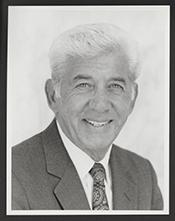
United States · Official source
2,457 records where Rep. Mavroules, Nicholas [D-MA-6] is listed as a sponsor, author, or other actor. Search with topics and years
United States · United States Congress · 14 March 1990
Designates the month of May 1990 as National Physical Fitness and Sports Month.
United States · United States Congress · 14 March 1990
Designates November 16, 1990, as National Philanthropy Day.
United States · United States Congress · 13 March 1990
Amends the Internal Revenue Code to exclude from gross income the value of any subsidy provided by a public utility to a customer for the purchase or installation of energy or water conservation measures.
United States · United States Congress · 13 March 1990
Designates the week of November 11 through 17, 1990, as Geography Awareness Week.
United States · United States Congress · 7 March 1990
Designates August 20 through August 26, 1990, as National Headache and Jaw Joint Disorder Week.
United States · United States Congress · 6 March 1990
Designates May 6 through 13, 1990, as Jewish Heritage Week.
United States · United States Congress · 5 March 1990
Designates April 6, 1990, the 88th birthday of Rabbi Menachem Mendel Schneerson, as Education Day, U.S.A. Calls on heads of state of the world to join the President of the United States in this tribute by signing scrolls of honor commemorating the 40th anniversary of Schneerson's leadership of the Lubavitch movement. Welcomes the cooperation of the Department of State in extending the good office of the U.S. missions to the Lubavitcher emissaries.
United States · United States Congress · 5 March 1990
Designates the month of April 1990 as Actors' Fund of America Appreciation Month.
United States · United States Congress · 1 March 1990
Human Services Reauthorization Act of 1990 - Extends authorized appropriations from FY 1991 through 1994 to carry out programs under the following Acts: (1) the Head Start Act; (2) the Follow Through Act; (3) the State Dependent Care Development Grants Act; (4) the Community Services Block Grant Act; (5) the Child Development Associate Scholarship Assistance Act; and (6) the Low-Income Home Energy Assistance Act of 1981. Amends the Human Services Reauthorization Act of 1986 to extend authorized appropriations from FY 1991 through 1994 to carry out the grant program relating to demonstration partnership agreements addressing the needs of the poor.
United States · United States Congress · 1 March 1990
Nuclear Emergency Planning and Preparedness Improvement Act of 1990 - Amends the Atomic Energy Act of 1954 to prohibit the Nuclear Regulatory Commission from issuing operating licenses or construction or early site permits unless it has determined that the applicant has complied with all established emergency planning and preparedness requirements.
United States · United States Congress · 1 March 1990
Expresses the sense of the Congress that: (1) the 25th anniversary of the enactment of the Older Americans Act of 1965 and its successful implementation should be recognized; (2) contributions at all levels of the aging network should be acknowledged and commended; and (3) support for the Act and its primary goal should be reaffirmed.
United States · United States Congress · 1 March 1990
Urges that: (1) Federal support for local drug enforcement be substantially increased; and (2) a funding mechanism be developed to provide Federal drug enforcement funds directly to local governments to enable a quick response to critical drug enforcement needs.
United States · United States Congress · 28 February 1990
Designates the week of June 10 through June 16, 1990, as Multiple-Use Sustained-Yield Week.
United States · United States Congress · 28 February 1990
Calls for: (1) the United States to reaffirm its unequivocal support for the Polish-German border as set after World War II; (2) Chancellor Helmut Kohl to state unequivocally that such border will be respected and preserved; and (3) Poland to be included as an equal participant with the United States, the Soviet Union, the United Kingdom, and France in German unification discussions relating to the borders of a unified Germany and the security of neighboring countries.
United States · United States Congress · 27 February 1990
Mickey Leland Memorial Domestic Hunger Relief Act - Title I: Reducing Childhood Hunger - Amends the Food Stamp Act of 1977 to revise and increase the excess shelter expense deduction for each fiscal year from FY 1991 through FY 1993. Requires the Secretary of Agriculture to adjust the basic benefit level upwards by specified increments at the beginning of each fiscal year from FY 1991 through FY 1995 until it reaches 105 percent of the cost of the thrifty food plan. Directs the Secretary by regulation to provide for emergency allotments to eligible households to replace food lost in a disaster. Excludes from the computation of household income any State allowance (provided at least annually) for obtaining school clothes for children in school or child care. Provides for allotment increases to cover State or local sales taxes for participants in demonstration projects. Requires alternative systems for delivery or use of food stamp benefits to meet standards issued by the Secretary and, where household participation is not optional, to involve retail food stores serving minority populations, but only if necessary special equipment is operational at all registers. Provides food stamp coverage for prepared meals for homeless households. Permits State agencies to develop standard estimates of the shelter and related expenses which homeless households may reasonably be expected to incur in order to certify such households based on reported expenses not exceeding such an estimate. Title II: Promoting Self-Sufficiency - Excludes the first $50 a month received as child support from consideration as income in determining the food stamp allotments of households also receiving Aid to Families with Dependent Children (AFDC) benefits. Increases from $4,500 to $5,500 from January 1 through September 30, 1991, with annual cost-of-living adjustments to follow, the limit on the fair market value of vehicles that food stamp recipients may own. Directs the Secretary to conduct a sufficient number of demonstration projects to evaluate the effects of excluding from such vehicle calculation the value of: (1) any licensed vehicle used for certain income-producing, transportation, or shelter purposes; and (2) one licensed vehicle used for job-related or job-seeking purposes (including commuting), for pursuing education or training, or for securing food or food stamp benefits. Allows States to use their own agency-designed forms instead of forms approved by the Secretary. Directs State agencies to allow a household to select an adult parent of children in the household as its head where all adult household members agree to do so. Allows four States to give priority in the provision of services to voluntary participants (including both exempt and nonexempt), so long as performance standards are maintained. Authorizes an employment and training program to contain programs designed to increase the self-sufficiency of recipients through self-employment. Excludes from the computation of household financial resources any nonliquid resources necessary to allow the household to carry out an approved plan for self-sufficiency. Increases from $25 to $75 the limit for reimbursements to recipients for costs incurred in employment and training activities. Permits otherwise eligible persons who attend an institution of higher learning to receive food stamp benefits if he or she: (1) attends the institution as part of an employment and training program; or (2) is over 50, registered for employment, and subject to employment or training requirements. Revises the exclusion of educational expenses from the computation of household incomes. Excludes from the computation of household incomes housing assistance payments made to a third party on behalf of a household residing in transitional housing for the homeless. Title III: Simplifying Program Administration - Requires parents and children (regardless of age) who live together to apply for food stamps as a single household. Directs the Secretary to conduct five demonstration projects, in both rural and urban areas, under which households in which each member receives AFDC benefits shall receive monthly food stamp allotments following AFDC rules and procedures, without regard to the eligibility, benefit, and administrative rules of the food stamp program. Requires the Secretary to issue rules under which State agencies must develop standards for identifying (for exclusion as inaccessible resources) those kinds of resources the household is unlikely to sell for any significant return because its interest is so slight or the cost of selling would be so great. Provides that a food stamp office need not consider any resources that the AFDC or supplemental security income benefit programs have already determined to be exempt. Directs State agencies to require only one adult representative of a household to sign all declarations required in the application process on behalf of the household. Makes recipients of State or local general assistance programs categorically eligible for food stamps. Reduces from 30 to ten days the deadline for households convicted of food stamp fraud to decide how to repay their over issuances. Establishes a Commission on the Coordination of Family Support and Food Stamp Policies to report to the President and the Congress on AFDC and food stamp program policies, recommending how to eliminate barriers to participation in both programs. Authorizes appropriations. Title IV: Hunger in Rural America - Requires State agencies to designate rural project areas where low-income persons face substantial difficulties in getting transportation. Requires issuance of coupons by mail in such areas, except where households experience mail losses exceeding certain levels. Allows States to assist households with the food stamp application process. Directs the Secretary to exclude from financial resources the value of a vehicle a household depends upon to carry heating fuel or water for home use where it has no other access to fuel or water. Title V: Promoting Access for the Elderly and Disabled - Declares that State agencies, with respect to the excess medical deduction for the elderly and the disabled, shall not require further verification of a change in medical expenses if the change has been anticipated for the verification period. Requires annual adjustments to the value of the minimum food stamp benefit. Permits State agencies to establish a procedure allowing households whose regular food stamp benefits do not exceed $20 per month to receive up to $60 worth for intervals of up to three months. Requires that any applicant for or recipient of supplemental security income benefits be informed of the availability of food stamp benefits. Title VI: Program Administration by State Agencies - Prohibits the application of disallowances for erroneous issuances or similar actions to any State for a fiscal year before FY 1991. Directs the Secretary, by specified deadlines, to develop standards for initial approval of automated data processing and information retrieval systems for State agencies, as well as written procedures and standards for initial and continued approval reviews. Sets alternative deadlines for full operation of such systems, the later being September 30, 1993. Provides for waivers of ADC system requirements where their application would not significantly improve the efficiency of a State agency's administration. Title VII: Reauthorization of Programs - Reauthorizes through FY 1995: (1) the food stamp program; (2) the nutrition assistance program for Puerto Rico; (3) the temporary emergency food assistance program under the Temporary Emergency Food Assistance Act of 1983; (4) the soup kitchen and food bank programs under the Hunger Prevention Act of 1988; (5) the commodity distribution and supplemental food programs under the Agriculture and Consumer Protection Act of 1973; (6) the distribution of surplus commodities to special nutrition projects under the Agriculture and Food Act of 1981; and (7) the nutrition education program under the Food Security Act of 1985. Title VIII - Amends the Commodity Distribution Reform Act and WIC Amendments of 1987 to require biennial reports to the Congress on food bank projects. Amends the Agriculture and Consumer Protection Act of 1973 to establish a Commodity Supplemental Food Program for the Elderly. Amends the Hunger Prevention Act of 1988 to set forth the National Gleaning Clearinghouse Act of 1990. Establishes a National Gleaning Clearinghouse to share information on available, unused food that could be distributed through the emergency feeding network. Title IX: Effective Dates - Sets forth the effective dates of provisions of this Act.
United States · United States Congress · 27 February 1990
Commemorates May 18, 1990, as the 25th anniversary of Head Start.
United States · United States Congress · 27 February 1990
Designates June 3 through June 9, 1990, as Headache Awareness Week.
United States · United States Congress · 27 February 1990
Designates March 30, 1990, as National Doctor's Day.
United States · United States Congress · 27 February 1990
Designates May 16, 1990, as National Employee Health and Fitness Day.
United States · United States Congress · 22 February 1990
Amends the Labor Management Relations Act of 1947 to permit parties engaged in collective bargaining to bargain over the establishment and administration of trust funds providing financial assistance for employee housing.
United States · United States Congress · 22 February 1990
Benjamin Franklin Memorial Fire Service Bill of Rights Act - Title I: Minting of Benjamin Franklin National Memorial Commemorative Coin - Benjamin Franklin National Memorial Commemorative Coin Act - Provides for the sale of Benjamin Franklin commemorative coins at a surcharge of which 25 percent shall be paid to the Benjamin Franklin National Memorial and the remainder be distributed in specified percentages to the National Fire Center and Museum Account, the National Hero Scholarship Account, the Firefighter Tuition Assistance Account, the Hazardous Materials Response Computer Account, the Research and Education Account, and the Burn Research Grant Account of the Firefighter Assistance Trust Fund (Fund). Prohibits the issuance of such coins from resulting in any net cost to the Federal government. Title II: Fire Service Bill of Rights - Fire Service Bill of Rights Act - Amends the Federal Fire Prevention and Control Act of 1974 to establish a fire service bill of rights. Establishes the National Fire Center and Museum in the District of Columbia to provide information about the fire service and safety to the public and fire services. Establishes a National Hero Scholarship to fund the higher education of a child, spouse, or dependent parent of a deceased firefighter. Establishes a scholarship providing tuition assistance to firefighters for higher education in fire safety or protection. Authorizes the Administrator of the United States Fire Administration to use amounts in the Research and Education Account of the Fund to fund other specified programs under the Fire Prevention and Control Act of 1974 and the provision of information concerning surplus Federal property and infectious diseases pursuant to this Act. Establishes the Firefighter Assistance Trust Fund. Places the National Academy for Fire Prevention and Control within the United States Fire Administration. Directs the Administrator to provide States with funds from the Hazardous Materials Response Computer Account of the fund for distribution to local fire services that wish to purchase computer equipment. Directs the Administrator to make a grant from the Burn Research Grant Account of the Fund to one national firefighter's burn foundation dedicated to reducing burn injuries. Requires the Administrator to prepare and make available to fire services, upon request, a manual describing Federal procedures for disposing of surplus property and highlighting how fire services could obtain such property. Directs the Administrator to distribute to such marshals information on the infectious diseases to which firefighters are particularly vulnerable. Permits the Administrator, in certain circumstances, to award to a domestic firm a contract that, under the use of competitive procedures, would be awarded to a foreign firm.
United States · United States Congress · 22 February 1990
Designates the week beginning on October 7, 1990, and ending on October 13, 1990, as Mental Illness Awareness Week.
United States · United States Congress · 22 February 1990
Calls for the retention of sanctions against South Africa under the Comprehensive Anti-Apartheid Act until all conditions for the termination of sanctions are fulfilled and a democratic political process is established.
United States · United States Congress · 21 February 1990
Designates March 1990 as Irish-American Heritage Month.
United States · United States Congress · 21 February 1990
Designates the second Sunday in October 1990 as National Children's Day.
United States · United States Congress · 21 February 1990
Designates March 10, 1990, as Harriet Tubman Day.
United States · United States Congress · 20 February 1990
Expresses the sense of the Congress regarding gerrymandering and political control by Romania's National Salvation Front. Urges the President to send a U.S. delegation to Romania to monitor the national elections to help ensure that they are free and fair.
United States · United States Congress · 7 February 1990
Federal Employees Pay Comparability Act of 1990 - Creates the Federal Salary Council to define local pay areas and occupational group categories that include professional, administrative, technical, clerical, law enforcement, firefighter, and health care positions. Directs the Bureau of Labor Statistics (BLS) to: (1) survey the Federal employees in such occupational categories in each local pay area at least once every three years to compare Federal rates of pay to non-Federal rates of pay for the same work; and (2) prepare appropriate alternative pay schedules. Directs the President, based on the resulting BLS report, to establish alternative pay schedules or adjust existing pay schedules where necessary to ensure the competitiveness of the Government in recruiting or retaining well-qualified employees. Requires higher rates under such schedules to be implemented through equal percentage increments over three years. Prohibits an alternative pay schedule from applying with respect to any employee who is employed outside the continental United States or elsewhere where an allowance based on living costs or environmental conditions may be paid. Prohibits employees becoming subject to an alternative pay schedule from being paid less than they would otherwise be paid under a statutory pay system schedule. Prohibits any reduction of a rate of pay under an alternative pay schedule as a result of any adjustment under this Act. Provides that if pay surveys determine that no adjustment in pay rates under an alternative pay schedule is required, such rates shall be adjusted at the same time that any pay adjustment occurs and by the overall average percentage of any adjustment in General Schedule pay rates. Provides annual pay adjustments for employees under each statutory pay system equal to the annual increase in the Employment Cost Index (a quarterly measure of the cost of labor in the private sector). Declares that increases in rates of pay under this Act are not equivalent increases in pay under provisions regarding periodic step-increases. Grants the President authority to provide for special pay rates if the Government's efforts to recruit or retain well-qualified individuals are significantly handicapped by: (1) the remoteness of the area or location involved; (2) undesirable working conditions including exposure to toxic substances; or (3) any other circumstances which the President considers appropriate. Prohibits a minimum special pay rate from exceeding the maximum statutory pay rate for the applicable grade or level. Authorizes the Director of the Office of Management and Budget to grant authority to executive department and agency heads to fix the basic pay rate of up to 400 Government-wide positions which such heads determine to be critical positions at an annual rate that does not exceed the rate for level I of the Executive Schedule. Directs agency heads, in determining whether a position is critical, to consider to the extent to which: (1) the position requires scientific, technical, professional, or administrative qualifications; and (2) additional compensation is necessary to recruit or retain exceptionally qualified individuals. Allows such authority to be reexercised when such a position becomes vacant and is refilled if: (1) an agency head determines that the position remains a critical position; and (2) the Director reconfirms his or her original allocation of critical-position pay authority among executive departments and agencies. Eliminates the GS-11 grade requirement for paying new employees above the minimum rate of the appropriate grade. Creates a new pay system for administrative law judges and contract appeals board members consisting of at least three pay rates to be established and thereafter adjusted by the President. Sets the maximum rate at level IV of the Executive Schedule and the minimum rate at a grade GS-16, Step 1. Requires the Office of Personnel Management to determine which of such rates shall be paid to individual administrative law judges or contract appeals board members according to criteria prescribed by the Office.
United States · United States Congress · 7 February 1990
Economic Stabilization, Adjustment, and Defense Industry Conversion Act of 1990 - Title I: The President's Economic Stabilization and Adjustment Council - Establishes the President's Economic Stabilization and Adjustment Council, headed by a Chairperson, to design and establish an economic adjustment program to assist local communities in the alleviation of adverse economic and social effects of defense realignments, including military installation or defense facility closures or realignments and the cancellation or curtailment of major defense contracts (contracts in excess of $10,000,000). Requires the Council: (1) upon receiving notification of the annual budget proposals of the Secretary of Defense, to commence a preliminary study of the potential adverse economic effects of such proposals on any region, locality, or community; (2) to study and prepare a policy to facilitate the conversion of defense facilities, military installations, and other portions of the defense industry which are no longer needed for defense purposes into productive uses in the civilian economy; (3) to take appropriate action to encourage the private sector and State and local governments to develop plans for the conversion of former defense industry facilities into private enterprises and public projects; (4) to establish within the executive office an Office of Economic Stabilization and Adjustment to provide staff support for the Council; and (5) to prepare and submit to the Congress an economic stabilization and adjustment report on an annual basis. Title II: Community Economic Adjustment Planning - Requires the Secretary of Defense, upon release of the President's budget or any announcement of the realignment or closure of any military installation or defense facility, to notify any State or local government which may be affected by such realignment or closure or by the termination or curtailment of a major defense contract. Allows any community which is likely to be substantially and seriously affected to be eligible for economic adjustment planning assistance under this Act. Requires such communities to prepare certain analyses and forecasts in order to receive such assistance. Requires the Council to review such analyses and forecasts to determine which communities are eligible for such assistance. Title III: Economic Planning and Adjustment Assistance - Makes all communities determined eligible for economic adjustment planning assistance eligible for community planning assistance under Federal armed forces provisions and for economic adjustment assistance under the Public Works and Economic Development Act of 1965. Increases the amount of such Federal armed forces community planning assistance. Title IV: Economic Adjustment Assistance for Employees - Subtitle A: Qualification of Group Eligibility - Outlines procedures under which workers may petition the Secretary of Labor for economic adjustment assistance under this Act. Provides for public hearings, a determination by the Secretary that such group meets such requirements, and issuance by the Secretary of a certificate of eligibility. Outlines administrative limitations and procedures in connection with such certification. Requires the Secretary to provide notice and information to affected workers about the benefit allowances, training, and other employment services available and about application procedures in connection with such assistance. Subtitle B: Program Benefits - Chapter 1: Economic Readjustment Allowances - Authorizes the payment of economic readjustment allowances to adversely affected workers who are covered by such a certification, who file appropriate applications, and who meet specified conditions concerning length and amount of former employment in the defense-related industry before the layoff or termination took place. Requires such workers to be enrolled in or have completed a worker retraining program approved by the Secretary of Labor, unless the Secretary or the State or a State agency determines that such a program is not feasible or appropriate. Sets forth amounts of the economic readjustment allowance payable, reduced by any payments received during approved retraining. Requires such payments to be coordinated with benefits provided under other Federal training programs. Limits the dollar and time-period amounts of such assistance. Chapter 2: Training, Other Employment Services, and Allowances - Directs the Secretary of Labor to make every reasonable effort to secure for adversely affected workers covered by a certification under subtitle A counseling, testing, and placement services and supportive and other services provided under any other Federal law. Authorizes the Secretary to approve worker training under specified conditions and give priority to on-the-job training. Limits the maximum amount of payments for such training. Requires such benefits to be coordinated with other Federal training programs. Outlines other training program conditions, requirements, and limitations. Allows any adversely affected worker covered by an appropriate certification to file with the Secretary an application for a job search allowance. Allows such workers to apply for a relocation allowance to cover required relocation expenses, under certain conditions. Subtitle C: General Provisions - Outlines general and administrative provisions concerning: (1) agreements between the Secretary and a State for the provision of economic adjustment assistance under this Act; (2) the determination and provision of economic adjustment assistance by the Secretary in the absence of any State agreement; (3) payments to States under an agreement concerning sums necessary to make economic adjustment assistance payments to affected workers; (4) liabilities of certifying and disbursing officers; (5) fraud and the recovery of overpayments in the provision of such assistance; and (6) penalties in connection with the disclosure of false information in order to receive such assistance. Gives the Secretary subpoena power in order to make eligibility determinations under this Act. Title V: Expansion of Development and Venture Capital Programs - Allows any industry identified by the Council as an industry adversely affected by reductions in the Federal budget for defense production to be eligible for technical assistance under the Trade Act of 1974. Expresses congressional recognition of the success over the past three decades of the small business investment company program established under the Small Business Investment Act of 1958. Directs the President, before the end of FY 1990, to prepare and submit to the Congress a plan for doubling the amount of Federal assistance provided under the small investment company program of such Act. Expresses congressional recognition of the success of the Small Business Innovation Research Program in rewarding inventors. Directs the President, before the end of FY 1990, to develop and submit to the Congress a program for assisting inventors in developing their inventions, including doubling the percentage of the total budgets for research and development of Federal agencies that is devoted to the Small Business Innovation Research Program. Expresses congressional recognition of the success of the certified development company program established under the Small Business Investment Act of 1958. Directs the President, before the end of FY 1990, to transmit to the Congress a program for expanding the amount of assistance provided to the certified development company program under such Act by 50 percent over a five-year period. Amends the Small Business Investment Act to prohibit certain restrictive capital-to-jobs ratios from being imposed upon any certified development company under such Act.
United States · United States Congress · 7 February 1990
Civil Rights Act of 1990 - Amends the Civil Rights Act of 1964 to provide that: (1) once a complainant has demonstrated that an employment practice results in a disparate impact on the basis of race, color, religion, sex, or national origin, the respondent has the burden of proving that the practice is justified by business necessity; (2) a complainant need not demonstrate which of a group of practices results in the demonstrated disparate impact; and (3) a respondent need not show business necessity for a specific practice within a group of practices if the respondent shows that that practice does not contribute to the disparate impact. Declares that an unlawful employment practice is established on a demonstration that race, color, religion, sex, or national origin was a motivating factor for any employment practice, even though such practice was also motivated by other factors, but bars certain types of relief if the respondent establishes that it would have taken the same action in the absence of any discrimination. Prohibits a challenge to an employment practice that implements a litigated or consent judgment or order resolving a claim of employment discrimination: (1) by a person who had certain types of notice and opportunity; (2) by a person whose interests were adequately represented by another person who challenged the judgment or order; or (3) if reasonable efforts were made to provide notice to interested persons. Increases to two years the time limit within which a charge of an unlawful employment practice must be filed. Removes provisions setting a separate time limit for charges initially filed with a State or local agency. Declares that a seniority system or practice which is part of a collective bargaining agreement is an unlawful employment practice if it was included in the agreement with the intent to discriminate. Allows, except for disparate impact cases, for compensatory damages (but not back pay) and, where there is malice or reckless or callous indifference, for punitive damages. Allows any party, where compensatory or punitive damages are sought, to demand a jury trial. Includes expert fees and other litigation expenses in any attorney's fees awarded. Prohibits a consent order or judgment settling a claim unless the parties and their counsel attest that a waiver of attorneys' fees was not compelled as a condition of the settlement. Allows to the prevailing party in the original action an award of attorney's fees and costs in defending a challenged judgment or order. Increases to 90 days after final action by a Federal agency the time limit for a Federal employee to bring a civil action. Allows to Federal employees the same interest to compensate for delay in payment as in cases involving non-public parties. Requires Federal civil rights laws to be broadly construed to effect their purpose to eliminate discrimination and provide effective remedies. Prohibits, except as expressly provided, any Federal civil rights law from being construed to restrict or limit the rights, procedures, or remedies available under any other Federal civil rights law. Declares that, for purposes of provisions relating to equal rights under the law, the right to make and enforce contracts includes the making, performance, modification, and termination of contracts, and the enjoyment of all benefits, privileges, terms, and conditions of the contractual relationship.
United States · United States Congress · 7 February 1990
Comprehensive Services Program for Homeless Veterans Act of 1990 - Directs the Secretary of Veterans Affairs to establish a comprehensive services program to address fully the needs of homeless veterans through housing, medical care, vocational rehabilitation, transportation, and social services provided through this Act and other programs administered by the Department of Veterans Affairs. Requires each director of a medical center of the Department to carry out jointly with the veterans' benefits director of the region concerned an assessment concerning the number of homeless veterans in the area and current services provided. Requires joint preparation, for each of FY 1991 through 1994, of a plan for meeting the needs of homeless veterans in the area, to be submitted to the Secretary. Provides funding from the Secretary to the directors for such assessment and plans. Authorizes appropriations for FY 1991 through 1994. Directs the Secretary to provide for the establishment of outreach service centers in areas where there are significant numbers of homeless veterans. Outlines staffing and services of such centers. Directs the Secretary to provide mobile support teams to assist in the provision of benefits through medically-equipped vans in areas high in homeless veterans and in rural areas lacking adequate access to Department medical facilities. Expands the current veterans' benefits available to homeless veterans to include dental, optometric, and podiatric services. Requires the director of each medical center of the Department to use funds provided by the Secretary for homeless veterans assistance to make monthly assistance available for housing for homeless veterans and their families, under specified conditions. Prohibits such assistance for longer than one year for each homeless veteran. Requires a homeless veteran receiving such assistance to be employed at least 18 hours a week or to be involved in a compensated work therapy program administered by the Department. Requires each director to establish a program for the provision of housing owned or leased by the Department in which veterans with chronic mental illness or veterans recovering from alcohol or drug abuse may reside. Outlines program requirements similar to housing assistance program requirements. Requires each director to establish a revolving fund to make loans for the cost of establishing programs for the provision of housing to mentally ill veterans or veterans recovering from alcohol or drug abuse. Outlines loan conditions and guidelines. Directs the Secretary, for each of FY 1991 through 1994, to carry out evaluations of the programs established under this Act and to make specified congressional reports. Authorizes the Secretary to accept donations of services and equipment in furtherance of the purposes of this Act.
United States · United States Congress · 7 February 1990
Designates March 25, 1990, as Greek Independence Day: A National Day of Celebration of Greek and American Democracy.
United States · United States Congress · 7 February 1990
Designates April 1990 as National Recycling Month.
United States · United States Congress · 7 February 1990
Designates the period of November 18 through November 24, 1990, as National Adoption Week.
United States · United States Congress · 7 February 1990
Calls upon the President to urge Soviet President Gorbachev to publicly condemn the emergence of popular anti-Semitism in the Soviet Union and to protect Soviet Jews from harassment and violence.
United States · United States Congress · 6 February 1990
Directs the Peace Corps to establish a memorial on Federal land in the District of Columbia to honor Peace Corps volunteers. Establishes the Peace Corps Volunteer Memorial Advisory Board to: (1) promote the establishment of the memorial; and (2) with the approval of the Peace Corps, recommend the site and select the design for the memorial. Authorizes the Peace Corps to solicit private contributions for such memorial. Establishes a fund in the Treasury for the sole purpose of carrying out this Act. Prohibits the use of Federal funds for the construction of the memorial, except those received as private contributions. Directs the Secretary of the Interior to be responsible for maintenance and care of the memorial.
United States · United States Congress · 6 February 1990
National Fire Forces Mobilization Act of 1990 - Amends the Cooperative Forestry Assistance Act of 1978 to authorize appropriations to be provided as Federal matching funds to State forestry agencies and rural volunteer fire departments so that they may assist other fire fighting organizations in combatting fires.
United States · United States Congress · 6 February 1990
Federal Victim's Service and Protection Act of 1990 - Title I: Federal Victim's Services and Protections Compliance - Directs the Attorney General to: (1) establish an evaluation system for law enforcement officers which rates such officers on their compliance with specified laws protecting victims of crimes; and (2) use such evaluation system to create standards governing services to victims and witnesses in Federal cases and to serve as a model to States and localities. Requires the Office for Victims of Crime to report periodically to the public, the Congress, and the President on victim protections and on compliance with this Act. Title II: The Federal Child Victim's Bill of Rights - Amends the Federal criminal code to require the court, at the earliest possible stage, to determine whether the appointment of a guardian ad litem for a child who is an alleged victim or witness in a criminal proceeding would be in the best interests of the child and if so, to appoint such guardian. Sets forth provisions with respect to the qualifications, duties and powers, and immunity of such guardian. Grants a child testifying at a criminal proceeding the right to be accompanied by an adult. Authorizes the court to order that a child's testimony be taken by closed-circuit television (TV) if it finds that the child is unable to testify in open court because of: (1) the child's persistent refusal to testify despite judicial requests to do so; (2) the child's total inability to communicate about the offense because of extreme fear, failure of memory, or other similar reasons; or (3) the substantial likelihood that the child will suffer substantial emotional trauma from so testifying. Specifies that the prosecuting attorney and the defense attorney shall be present in the room with the child and the child shall be subject to direct and cross-examination. Requires that: (1) the child's testimony be transmitted by closed-circuit TV into the courtroom; (2) the defendant be provided with the means of private, contemporaneous communication with his attorney during the testimony; and (3) the closed-circuit TV transmission relay the defendant's image into the room in which the child is testifying, and the child's testimony into the room in which the defendant is viewing the proceeding. Sets forth provisions with respect to videotaped depositions of child victims and child witnesses. Authorizes the court to permit the child to use anatomical dolls, puppets, drawings, or any other demonstrative device it deems appropriate to assist a child in testifying. Sets forth requirements with respect to competency examinations for child witnesses. Prohibits: (1) the release to the public of the name, or other identifying information about the child victim or child witness except as authorized by the court; and (2) the name and any identifying information from appearing in any public record. Grants the child victim or witness the same right to submit victim impact statements prior to sentencing as prescribed for an adult victim. Directs that child victims or witnesses be assisted by their court appointed guardian ad litem in preparing victim impact statements. Authorizes the court, in any proceeding where a child is called to give testimony, to designate the case as being of special public importance and to expedite the action. Requires the court to ensure a speedy trial and, in deciding whether or not to grant a continuance, to take into account the child's age and the potential adverse impact the delay may have on the child's well-being. Creates a hearsay exception for an out-of-court statement related to sexual abuse, physical abuse, or sexual exploitation of that or another child if the court finds that: (1) the statement possesses particularized guarantees of trustworthiness; (2) the proponent of the statement has given sufficient notice to adverse parties of the intent to introduce the statement; and (3) there is corroborative evidence of the statement or the truth of the statement. Encourages the use of multidisciplinary teams designed to assist child victims or child witnesses. Delineates the role of such teams. Specifies that there shall be no statute of limitations for the prosecution of any child physical abuse, sexual abuse, or sexual exploitation offense. Requires physicians, social workers, teachers, and specified other individuals who, while involved in any such capacities on Federal land or in a federally operated (or contracted) facility, have reason to suspect that a child is an abused or neglected child to immediately report to the appropriate authorities. Grants civil and criminal immunity to individuals who, acting in good faith, make such a report or otherwise provide information or assistance with a report investigation, or legal intervention. Makes failure to report a misdemeanor. Makes spousal privileges and the privileged nature of any communications between physician (or psychotherapist, psychologist, social worker, and any other health care provider) and patient inapplicable in any criminal proceeding after a report of child abuse, neglect, or sexual exploitation. Title III: Child Care Worker Employee Background Check - Requires: (1) each Federal agency and facility that hires, or contracts for hire, individuals involved with the provision of services to children under age 18 to assure that all existing and newly-hired employees undergo a criminal history background check; and (2) all existing staff to receive such checks within six months and prohibits the hiring of additional staff without a check having been initiated. Sets forth procedures with respect to the conduct of such background checks. Specifies that: (1) any conviction for a sex crime, an offense involving a child victim, or a drug offense shall be grounds for denying employment or for dismissal of an employee engaged in specified child care services; (2) an incident in which an individual has been charged, but where the charge has not yet been disposed of, shall permit the employee's suspension from any job-related contact with children until the case is resolved; and (3) convictions of other crimes may be considered if they bear on an individual's fitness to have responsibility for the safety and well-being of children. Sets forth requirements with respect to questions to be asked in employment applications, criminal history records checks, and access to (and the right to challenge the accuracy of) the criminal history report.
United States · United States Congress · 6 February 1990
Designates August 7, 1990, as National Neighborhood Crime Watch Day.
United States · United States Congress · 1 February 1990
Amends the National Labor Relations Act to make it an unfair labor practice for an employer to offer or grant: (1) permanent replacement employee status during a labor dispute; or (2) any employment preference to an individual who worked or indicated a willingness to work during a labor dispute over an employee who exercised specified rights during such dispute.
United States · United States Congress · 31 January 1990
Requires cost-of-living adjustments to take effect for FY 1991 for persons receiving: (1) civil service retirement pay from the Civil Service Retirement and Disability Fund; (2) military retired pay; or (3) an annuity under a veterans survivors' benefits program. Prohibits any reduction or suspension of such adjustments under any presidential order or any other provision of law, except applicable Federal civil service retirement or armed forces provisions.
United States · United States Congress · 31 January 1990
Requires cost-of-living adjustments to take effect in FY 1991 for persons receiving military retired pay or an annuity under a veterans survivors' benefits program. Prohibits any reduction or suspension of such adjustments under any presidential order or any other provision of law, except applicable Federal armed forces provisions.
United States · United States Congress · 30 January 1990
Attendant Allowance Adjustment Act - Revises the maximum amount the Secretary of Labor may pay for compensation for services of attendants for disabled Federal employees receiving workers' compensation to the amount paid monthly for attendant services under the applicable State Medicaid plan. Requires biennial cost-of-living adjustments in such compensation.
United States · United States Congress · 30 January 1990
Provides for all Federal civilian and military retirees to receive the full cost-of-living adjustment in annuities payable under Federal retirement systems for FY 1991. (Includes benefits payable under the Civil Service Retirement and Disability System, military retirement and survivor benefit programs, the Foreign Service Retirement and Disability System, the Central Intelligence Agency Retirement and Disability System, and railroad retirement programs.)
United States · United States Congress · 30 January 1990
Expresses the sense of the Congress that: (1) the current inquiries into the activities of the British West Midlands Crime Squad must be extended to cover the period of the Birmingham bombings of November 21, 1974; (2) the British Prime Minister should call upon the British Home Secretary to reopen the case of the Birmingham Six (those convicted for the bombings); (3) the convictions of such individuals should be quashed; and (4) the President should raise with the British Prime Minister concern for the basic human rights violations and miscarriage of justice arising from the continued incarceration of such individuals.
United States · United States Congress · 30 January 1990
Expresses the sense of the Congress that: (1) it would be inequitable for Civil Service retirees to receive smaller cost-of-living adjustments to their pensions than Social Security retirement beneficiaries; and (2) any budget adopted by the Congress should provide for full cost-of-living adjustments for all individuals receiving a Federal retirement pension or benefit.
United States · United States Congress · 25 January 1990
Medicare Certified Registered Nurse Anesthetist Payment Amendments of 1990 - Amends part B (Supplementary Medical Insurance) of title XVIII (Medicare) of the Social Security Act to establish uniform national fee schedule payment rates for certified registered nurse anesthetist services.
United States · United States Congress · 25 January 1990
Designates April 22 through April 28, 1990, as National Crime Victims' Rights Week.
United States · United States Congress · 24 January 1990
Medicare Benefit Improvements Act of 1990 - Amends title XVIII (Medicare) of the Social Security Act to cover screening mammographies for women over age 34 at a frequency which varies on the basis of a woman's age and risk of developing breast cancer. Covers up to 80 hours of annual in-home respite care furnished to an individual who has incurred expenses equal to a specified Medicare Part B (Supplementary Medical Insurance) cost-sharing limit and, for the preceding three months, has been unable to perform at least two specified daily living activities without the assistance of an uncompensated primary caregiver with whom he or she resides. Covers nursing care and home health aide services as home health services if such services are needed less than seven days each week or are needed for up to 38 consecutive days. Amends part A (Hospital Insurance) of the Medicare program to create an extension period of hospice care for terminally ill beneficiaries which is to follow the two 90-day periods and the subsequent 30-day period of hospice care coverage currently provided in an individual's lifetime. Increases the Medicare part B premium.
United States · United States Congress · 24 January 1990
Congressional Commitment to Long-Term Care Concurrent Resolution - Expresses the sense of the Congress that payments to long-term care providers under titles XVIII (Medicare) and XIX (Medicaid) of the Social Security Act be sufficient to maintain the highest quality of patient care in nursing homes.