Amendment· HAMDTHAMDT 632 (97th)passed
An amendment on the previous legislative day to reduce from 6,333,300,000 dollars to 5,191,400,000 dollars funds for procurement funds for Air Force missiles.
United States · United States Congress
The world's political record
Person
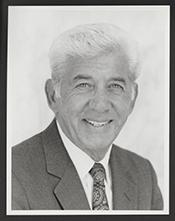
United States · Official source
2,457 records where Rep. Mavroules, Nicholas [D-MA-6] is listed as a sponsor, author, or other actor. Search with topics and years
United States · United States Congress
United States · United States Congress
United States · United States Congress
United States · United States Congress
United States · United States Congress
United States · United States Congress
United States · United States Congress
United States · United States Congress
United States · United States Congress
United States · United States Congress
United States · United States Congress
United States · United States Congress
United States · United States Congress
United States · United States Congress
United States · United States Congress
United States · United States Congress
United States · United States Congress
United States · United States Congress
United States · United States Congress
United States · United States Congress
United States · United States Congress · 16 September 1992
Designates October 4 through 10, 1992, as National Bone Marrow Donor Awareness Week.
United States · United States Congress · 15 September 1992
Designates the week beginning October 18, 1992, as National Radon Action Week.
United States · United States Congress · 12 August 1992
Designates February 4, 1993, and February 3, 1994, as National Women and Girls in Sports Day.
United States · United States Congress · 12 August 1992
Designates May 2 through 8, 1993, as National Walking Week.
United States · United States Congress · 12 August 1992
Designates the week beginning November 8, 1992, as Hire a Veteran Week.
United States · United States Congress · 11 August 1992
Designates December 1, 1992, as World AIDS Day.
United States · United States Congress · 30 July 1992
Designates October 1992 as Polish-American Heritage Month.
United States · United States Congress · 29 July 1992
Designates October 30, 1992, as Refugee Day.
United States · United States Congress · 9 July 1992
Amends the Federal Food, Drug, and Cosmetic Act to deem a malt beverage, wine, or distilled spirit mislabeled unless it bears a label disclosing: (1) the alcoholic content; (2) the number of drinks (defining "drink" as .6 ounces of alcohol); (3) its ingredients and calories; (4) the common name of each ingredient, including additives; and (5) a toll-free number for help with a drinking problem. Authorizes appropriations for the toll-free number.
United States · United States Congress · 9 July 1992
Supports the planting of 500 redwood trees from California on the northwest coast of Spain in commemoration of the quincentenary of the voyage of Christopher Columbus to the New World. Designates such trees as a gift to the people of Spain made in the name of the people of the United States.
United States · United States Congress · 2 July 1992
New England Groundfish Restoration Act - Amends the Magnuson Fishery Conservation and Management Act to establish a New England Groundfish Restoration Program. Requires the New England Fishery Management Council to submit to the Secretary of Commerce (the Secretary) an amendment to the Northeast Multispecies Fishery Management Plan (the Plan) that establishes conservation and management measures for New England groundfish designed to reduce fishing mortality to the extent necessary to eliminate overfishing and achieve optimum yield of cod and yellowtail flounder stocks not later than seven years after the effective date of the amendment, and of haddock stocks not later than ten years after that effective date. Requires the Council to recommend to the Secretary a schedule of civil penalties, including fishing permit sanctions. Requires the Secretary, if the Council does not submit an amendment to the Plan within a reasonable period of time, to prepare such an amendment and issue regulations as necessary for its implementation. Requires such amendment to provide for the immediate suspension of fishing, within five days after receipt of a request from the Council, in areas where New England groundfish are spawning and areas where there are high concentrations of undersized New England groundfish. Sets forth notification requirements for affected fishermen if the amendment establishes a moratorium on the issuance of new permits authorizing participation in the New England groundfish fishery. Directs the Secretary, simultaneously with the issuance of regulations implementing a Plan amendment, to issue a schedule of civil penalties for violations of this Act relating to the New England groundfish fishery. Requires the Secretary to publish in the Federal Register a statement explaining why any part of the Council recommendation is not included in such schedule. Requires the Secretary, not later than one year after the effective date of the regulations implementing any Plan amendment, to review the actions taken by each State represented on the Council to implement the Plan amendment. Authorizes the Secretary to regulate fishing within State boundaries only if the Secretary complies with required exceptions to State jurisdiction. Requires all amounts appropriated for FY 1993 through 1997 for use by the National Oceanic and Atmospheric Administration (NOAA) for information collection and analysis regarding New England stock depletion to be used to carry out the restoration program and certain fisheries research. Requires all amounts appropriated for FY 1993 through 1997 for use by NOAA for National Marine Fisheries Service conservation and management operations regarding fisheries management programs, management of Georges Bank, to be used to carry out the amendments made by this Act. Declares that: (1) the Council shall not be required to approve under the Magnuson Fishery Conservation and Management Act a rebuilding program for New England groundfish; (2) the Secretary of Commerce shall not be required to take any action under such Act to prepare a program for the rebuilding of cod, yellowtail flounder, and haddock stocks in the northwest Atlantic Ocean; and (3) the Council and the Secretary of Commerce shall not be required to perform any other act pursuant to their functions under such Act, based upon any failure, before the enactment of this Act, of them to perform their functions under that Act. Requires the Secretary, not later than 12 months after the date of enactment of this Act, if requested by the Governor of a State represented on the Council, to enter into an agreement that authorizes the marine law enforcement of such State to perform duties of the Secretary relating to enforcement of the Plan. Requires such an agreement to provide, subject to appropriations, for reimbursement of the State for expenses incurred in detection and prosecution of violations of any fishery management plan and for sharing in the disposition of fines, penalties, seizures, and forfeitures. Directs the Commander of the First Coast Guard District to establish an informal fisheries enforcement working group to improve the overall compliance with and effectiveness of the regulations issued under the Plan. Requires the Secretary to use amounts under this Act attributable to fines and penalties for violations of the Plan to enforce that Plan. Authorizes the Secretary to establish the Sea Sampler Program, for stationing individuals on fishing vessels engaged in the fishery for New England groundfish to collect for the Secretary and the Council statistically reliable information necessary for the conservation and management of fisheries managed under the Plan. Makes such program voluntary. Prohibits the use of information collected from being used for enforcement of the Magnuson Act. Treats individuals stationed on vessels as observers for purposes of the Marine Mammal Protection Act of 1972. Authorizes the Secretary of State, in consultation with the Secretary, to enter into an international fishery agreement with Canada for the conservation and management of fisheries of mutual concern in the northwest Atlantic Ocean, with particular emphasis on transboundary stocks of groundfish and ensuring the success of New England groundfish restoration efforts. Sets forth required contents of such an agreement. Requires the Secretary of State, in consultation with the Secretary, to establish a consultative committee to assist in the development and implementation of a fishery agreement. Subjects such an agreement to congressional oversight of governing international fishery agreements. Requires the Secretary of State to annually report to the Congress describing the activities of the Secretary with respect to such agreement. Directs the Secretary, not later than 12 months after the date of enactment of this Act, to establish a program for: (1) promoting development of commercial fisheries and markets for underutilized species of the northwest Atlantic Ocean; (2) developing alternative fishing opportunities for participants in the New England groundfish fishery; and (3) providing technical support and assistance to U.S. fishermen and fish processors to make participation in fisheries for such underutilized species economically viable. Authorizes the Secretary to award contracts, grants, and other financial assistance for activities under the program. Requires owners or operators of fishing vessels permitted to participate in the New England groundfish fishery to temporarily surrender that permit during the duration of the assistance. Provides for funding such program. Directs the Council, in consultation with other appropriate Councils, to develop fishery management plans as soon as possible for any underutilized species of the northwest Atlantic Ocean that is not covered under such a plan, in order to prevent overfishing of that species. Requires the Secretary to include the restoration of New England groundfish stock in developing a strategic plan for fisheries research. Amends the Fishery Conservation Amendments of 1990 (commonly referred to as the Saltonstall-Kennedy Act) to require the Secretary to give priority to projects and activities that promote development of: (1) commercial fisheries for underutilized species; and (2) markets for any species of fish that can promote full utilization of those species. Requires the Secretary to establish a research program at the Northeast Fisheries and Science Center of the National Marine Fisheries Service. Requires the program to include research into conservation gear engineering and technology, groundfish hatcheries and shore-based fish production facilities, and other appropriate activities. Requires the Secretary, acting through the General Counsel of NOAA, to provide a detailed response to any written request from a Council for legal advice regarding whether a management measure or other regulation is consistent with this Act.
United States · United States Congress · 2 July 1992
Designates October 8, 1992, as National Firefighters Day.
United States · United States Congress · 2 July 1992
Denounces the sexual misconduct that occurred at the annual Navy Tailhook Association symposium in September 1991. Calls on the Secretary of Defense to ensure that the ongoing Department of Defense investigation of such misconduct is full and uncompromising. Urges the Secretary of the Navy to recommend and initiate full disciplinary procedures against any culpable individuals. Recognizes the importance of equality of opportunity for women and men in the armed forces to achieving mutual respect between the sexes. Urges the Secretary of Defense to make available to female military personnel the same opportunities available to male personnel, to the extent consistent with the protection and security of the United States.
United States · United States Congress · 17 June 1992
Calls upon the President to urge the United Nations Security Council to direct the Secretary General of the United Nations to provide a plan and budget for intervention as may be necessary to enforce the Security Council resolutions seeking cessation of hostilities in the former republics of Yugoslavia.
United States · United States Congress · 16 June 1992
United States Boxing Commission Act of 1992 - Establishes in the Department of Labor the United States Boxing Commission, which shall establish minimum Federal boxing standards for professional boxing. Requires States seeking to regulate professional boxing to submit to the Commission a State boxing plan meeting specified requirements. Prohibits a professional boxing match from being in a State which: (1) does not have an approved boxing plan; or (2) has an approved boxing plan, if the Commission determines there are reasonable grounds for belief that Federal boxing standards are not being met in connection with such match. Sets forth enforcement provisions. Requires the Commission to determine an appropriate registration fee for funding the Commission. Directs the Commission to make grants, provide technical assistance, or both, to assist States in: (1) implementing their approved boxing plans; and (2) providing for a life, accident, and health insurance fund for professional boxers and others involved in professional boxing. Requires the Commission to establish a national computer data base for the collection, storage, and retrieval of certain boxing information. Directs the Commission to enter into discussions with foreign professional boxing organizations to propose adoption of standards similar to the minimum Federal boxing standards to professional boxing matches in foreign countries. Requires the Commission to reimburse the United States for amounts appropriated to it. Prohibits the Commission from: (1) entering into contracts for the television distribution of professional boxing matches; or (2) promoting professional boxing matches or rank professional boxers. Sets forth Commission powers. Requires the Comptroller General to: (1) conduct, and to submit to the Congress, a study to recommend to the Commission an appropriate amount for its registration fee; and (2) audit annually the finances of the Commission. Requires the Commission to submit annual reports to the Congress. Authorizes appropriations.
United States · United States Congress · 5 June 1992
Title I: Amendment to Title 31, United States Code - Requires the President to submit a budget to the Congress for FY 1994, 1995, 1996, 1997, or 1998 for that fiscal year and the four ensuing fiscal years that provides for a balanced budget for FY 1998 and subsequent fiscal years. Requires any budget submitted for a fiscal year after FY 1998 to be a budget that provides for a balanced budget for that fiscal year and the four ensuing fiscal years. Title II: Amendment to Congressional Budget Act of 1974 - Amends the Congressional Budget Act of 1974 to make conforming requirements with respect to any concurrent resolution on the budget for FY 1994, 1995, 1996, 1997, or 1998 as reported by the Committee on the Budget of each House. Requires the House Committee on Rules, if it reports any rule or order providing for the consideration of any concurrent resolution on the budget for a fiscal year, to provide for: (1) the consideration of the text of any concurrent budget resolution reported by the House Committee on the Budget; and (2) the consideration of the text of each concurrent budget resolution as introduced by the majority leader. Requires such rule or order to assure a separate vote on each budget. Requires the majority leader of the House of Representatives to introduce a concurrent budget resolution reflecting, without substantive revision, the budget submitted by the President, as soon as practicable. Makes it always in order in the Senate to consider an amendment to a concurrent budget resolution comprising the text of any budget submitted by the President. Title III: Clarification of Relationship to Other Laws - Excludes receipts and disbursements of the Federal Old-Age and Survivors Insurance Trust Fund and the Federal Disability Insurance Trust Fund from being counted as new budget authority, outlays, receipts, or deficit or surplus. Requires any final sequestration report for FY 1994 or 1995 to set forth the amount of deficit reduction beyond the enforcement of discretionary spending limits and pay-as-you-go requirements. Provides that the amount of budget-year deficit reduction shall constitute a downward adjustment to the discretionary spending limits for the budget year. Requires, if such limits are adjusted downward for FY 1994, that such limits to be so adjusted for FY 1995 by the same amount. Excludes from the Office of Management and Budget estimates for FY 1994 the amount of budget-year deficit reduction attributable to direct spending and receipts legislation. Requires, if an amount of deficit reduction is excluded from FY 1994 estimates, that an entry of the same amount be made in FY 1995 estimates. Title IV: Effective Date - Requires amendments made by this Act to be reflected in the budget for FY 1994.
United States · United States Congress · 1 June 1992
Designates March 1993 as Irish-American Heritage Month.
United States · United States Congress · 28 May 1992
Every Fifth Child Appropriations Act - Appropriates funds to carry out the special supplemental food program for women, infants, and children (WIC program) authorized in specified provisions of the Child Nutrition Act of 1966. Declares that, in order to achieve full funding for the program, there should be specified amounts appropriated in certain fiscal years. Appropriates funds to carry out the Head Start programs authorized in specified provisions of the Head Start Act. Declares that, in order to achieve full funding for the programs, there should be specified amounts appropriated in certain fiscal years. Appropriates funds to carry out the Job Corps program authorized in specified provisions of the Job Training Partnership Act. Declares that, in order to establish a minimum number of additional centers, serve a minimum additional number of youths, and achieve full funding for the program, there should be specified amounts appropriated in certain fiscal years.
United States · United States Congress · 21 May 1992
Withdraws most favored nation status from the Federal Republic of Yugoslavia. Authorizes the President to restore such status after he certifies to the Congress that: (1) such treatment would promote compliance with the provisions of the Final Act of the Conference on Security and Cooperation in Europe; and (2) Yugoslavia has ceased its armed conflict with the other ethnic peoples of the region, and has agreed to respect the borders of the six republics, that formerly comprised the Socialist Federal Republic of Yugoslavia.
United States · United States Congress · 21 May 1992
Tax Extension Act of 1992 - Amends the Internal Revenue Code to extend from August 1, 1992, until August 1, 1993, the provisions governing the allocation of research and experimental expenditures for purposes of determining sources of income. Extends the following provisions from June 30, 1992, until December 31, 1993: (1) the tax credit for increasing research activities; (2) the targeted jobs credit; (3) the authority to issue qualified mortgage bonds and qualified mortgage credit certificates; (4) the authority to issue qualified small issue bonds to finance manufacturing facilities and farm property; (5) employer-provided educational assistance; (6) the tax exclusion for employer-provided group legal services plans; (7) the energy investment credit for solar and geothermal property; (8) the credit for clinical testing expenses for certain drugs for rare diseases or conditions; and (9) health insurance costs of self-employed individuals. Extends the low-income housing credit until December 31, 1993 with modifications. Expands the ten-year anti-churning rule waiver to certain projects substantially assisted, financed, or operated under the National Housing Act. Allows units occupied by certain full-time students to qualify for such credit. Authorizes the Treasury Department to waive penalties for certain de minimis errors and recertifications. Provides that certain community service facilities in projects in qualified census tracts are included in eligible basis as functionally related and subordinate facilities. Allows certain building owners to elect to use apartment size or family size in determining the credit's gross rent limitation. Provides for the tax treatment of resale price control and subsidy lien programs under mortgage revenue bond provisions. Repeals the tax preference for the appreciated property charitable deduction during 1992 and 1993. Requires a report by the Secretary of the Treasury to certain congressional committees on an advance valuation procedure.
United States · United States Congress · 19 May 1992
Designates September 10, 1992, as National DARE (Drug Abuse Resistance Education) Day.
United States · United States Congress · 18 May 1992
Small Business Equity Enhancement Act of 1992 - Amends the Small Business Investment Act of 1958 to revise provisions with respect to debentures issued by small business investment companies (SBICs) to specify that: (1) the total amount of debentures and participating securities that may be guaranteed by the Small Business Administration (SBA) and outstanding from an SBIC licensed under the Act shall not exceed 300 percent of the private capital of such SBIC; and (2) in no event shall the aggregate amount of outstanding debentures and participating securities purchased or guaranteed by the SBA of any such SBIC which are commonly controlled (as determined by the SBA) exceed $90,000,000. Provides that: (1) nothing under such provisions shall require any such SBIC that on March 31, 1993, has outstanding debentures in excess of 300 percent of its private capital to repay such excess; and (2) any such SBIC may apply for additional debenture guarantee or participating security with the proceeds to be used solely to pay the amount due on such maturing debenture, but the maturity date of the new debenture or security shall not be later than September 30, 2002. Sets forth a formula for determining the maximum amount of outstanding guaranteed debentures and participating securities made available to an SBIC licensed under the Act, to be effective after March 31, 1993. Directs the SBA, not later than December 15, 1994, and in each subsequent calendar year, to apply an inflationary adjustment to the dollar amounts specified in the leverage formula which shall be the percentage (if any) by which the Consumer Price Index (CPI) for the preceding calendar year exceeds the CPI for calendar year 1993. Authorizes the SBA to guarantee the payment of the redemption price and dividends or interest on participating securities issued by SBICs licensed pursuant to the Act, and of a trust or pool acting on behalf of the SBA to purchase such securities. Sets forth: (1) restrictions with respect to redemption of, dividend and interest payments on, and other issues regarding, such securities; and (2) terms and conditions regarding the computation of amounts due the SBA under such securities. Revises provisions of the Act related to the issuance and guarantee of trust certificates to provide for the redemption, whether voluntary or involuntary, of all participating securities residing in the pool, as well as debentures. Bars any Federal, State, or local law from precluding or limiting the exercise by the SBA of its ownership rights in participating securities residing in a trust or pool against which trust certificates are issued. Directs the SBA to contract with an agent or agents to carry out on behalf of the SBA pooling and central registration functions (currently, with an agent to carry out central registration functions), including maintenance on behalf of and under the direction of the SBA of such commercial bank accounts as necessary to facilitate trusts or pools backed by debentures or securities guaranteed or purchased under the Act and the issuance of trust certificates to facilitate such pooling. Authorizes appropriations. Directs the SBA, prior to licensing and approving any request for financing, to determine the ability of an SBIC to make periodic payments on any debt of the SBIC which is interest bearing, taking into consideration the income which the SBIC anticipates on its contemplated investments, the experience of its owners and managers, its history as an entity, and its financial resources. Requires each SBIC to adopt written guidelines for determination of the value of its investments. Makes the board of directors of corporations, the general partners of partnerships, and the owners of proprietorships solely responsible for making a good faith determination of the fair market value of the investments made by such SBIC. Requires that such determinations be made and reported to the SBA at least semiannually or at more frequent intervals as the SBA determines appropriate (but any SBIC which does not have outstanding financial assistance under the Act shall be required to make such determinations and reports annually, unless the SBA determines otherwise). Subjects each SBIC to examinations made by the Investment Division of the SBA (currently, by SBA examiners). Transfers resources related to the examination function under the Act from the Inspector General of the SBA to the SBA's Investment Division. Specifies that if any SBIC has obtained SBA financing which remains outstanding, the aggregate amount of obligations and securities acquired and for which commitments may be issued by such SBIC under the provisions of the Act for any single enterprise shall not exceed 20 percent of the private capital of such SBIC without SBA approval. Permits SBICs with outstanding financings (currently, SBICs) to invest funds, subject to specified conditions. Directs the SBA to: (1) complete a review of regulations intended to provide for the safety and soundness of those SBICs which obtain SBA financing under the Act; and (2) exempt from such regulations, or separately regulate, those SBICs which do not obtain such financing. Sets forth reporting requirements. Increases minimum capital requirements for SBICs licensed on or after October 1, 1992 (currently, 1979). Defines "private capital" to mean the private paid-in capital and paid-in surplus of a corporate licensee, or the private partnership capital of an unincorporated licensee, inclusive of any funds invested in the licensee by a public or private pension fund, and commitments from institutional investors that meet SBA criteria which are funded by such investors prior to the licensee obtaining financing from the SBA based on such commitments, but exclusive of any funds borrowed by the licensee from any source, obtained from the SBA through the sale of preferred securities, or derived directly or indirectly from any Federal source. Directs the SBA to permit those SBICs which have obtained financings pursuant to the Act to charge a maximum rate of interest based upon the cost of such financings determined on an annual basis. Amends the Small Business Act to provide that, subject to approval in appropriations Acts, amounts authorized for preferred stock, debentures, or participating securities under the Small Business Investment Act of 1958 may be obligated in one fiscal year and disbursed or guaranteed in the following fiscal year.
United States · United States Congress · 14 May 1992
Designates the week beginning February 14, 1993, as National Visiting Nurse Associations Week.
United States · United States Congress · 13 May 1992
Earth Summit Leadership Act of 1992 - Title I: Foundation for Sustainable Development - Establishes the Foundation for Sustainable Development to: (1) encourage the growth of development institutions indigenous to developing countries which respond to the needs of the poor and promote environmental protection and conservation of natural resources; (2) support efforts to increase the productivity of the poor; (3) support self-help activities at the local level to enlarge opportunities for community development; (4) support efforts at community-based, environmentally sustainable management of natural resources; (5) stimulate and assist the process of people participating in the processes that affect their lives; (6) replicate successful projects promoting sustainable and equitable development funded by specified foundations; and (7) disseminate insights gained in the Foundation's work to the American public and citizens in developing countries. Authorizes the Foundation to provide grant assistance to indigenous organizations in developing countries or entities working in partnership with such organizations to carry out it purposes. Limits the total amount of assistance for a single project. Authorizes appropriations. Title II: Regional Development Foundations - Amends the Foreign Assistance Act of 1969 to increase the authorization amount for the Inter-American Foundation for FY 1993 and to authorize appropriations for FY 1994. Amends the African Development Foundation Act to authorize appropriations for the African Development Foundation for FY 1993 and 1994. Makes available an additional amount of economic support fund assistance under the Foreign Assistance Act of 1961 for Appropriate Technology International to enable it to emphasize large-scale replication of successful projects and partnerships with major development and financial institutions. Title III: Reduction in International Security Assistance - Places a ceiling on the total amount of international security assistance provided by the United States for FY 1993 and 1994. Expresses the sense of the Congress that international security assistance for FY 1995 and 1996 should be further reduced to promote global demilitarization and make available additional resources for sustainable development programs. Title IV: Multilateral Organizations - Requires the Secretary of the Treasury to instruct the U.S. executive directors of specified multilateral development banks to promote the following actions: (1) to make available to the public information on physical, institutional, and economic details and the environmental, public health, and sociocultural impacts of proposed bank operations; (2) to ensure that poverty reduction becomes a higher priority, including increases for lending for health care and basic education to at least five percent of the bank's lending; (3) to ensure that all structural adjustment loans after July 1993 are presented with documentation on how such loans will affect incomes of the poor, the diversification of industrial and agricultural production, the delivery to low-income people of essential social and technical services, and the integrity of the natural resource base; (4) to ensure the development of sustainable energy systems by ensuring that all energy sector loans are based on end-use efficiency and renewable energy applications; (5) to establish a comprehensive water resource policy that will require a least-cost approach to planning for and investing in water resource development projects; and (6) to purchase commercial debt obligations of developing countries on the secondary market and forgive those debts in return for adoption of sustainable development policies. Expresses the sense of the Congress that the President should follow up U.S. participation in the United Nations Conference on Environment and Development (UNCED) by taking an active role during the General Assembly session to ensure full implementation of UNCED recommendations on institutional reform issues. Title V: Domestic Environmental Policies - Expresses the sense of the Congress that: (1) all budgetary subsidies and tax advantages for unsustainable exploitation of natural resources should be eliminated as long as adequate provision is made to retrain displaced individuals and to assist poor people who are least able to bear the cost implied by such eliminations; (2) the director of the Office of Management and Budget should identify all current budgetary subsidies and tax advantages for the exploitation of nonrenewable energy, forest, and water resources and should estimate their cost to taxpayers as the basis for future congressional action to eliminate them; and (3) each Federal agency should conduct a survey of cost-effective renewable energy technologies which it could adopt for the conduct of its work and should begin conversion to those technologies as soon as possible. Directs the President to: (1) design a plan for reducing, by 2005, U.S. emissions of carbon dioxide to a level no greater than 80 percent of the 1990 level; and (2) formulate a national strategy for sustainable development.
United States · United States Congress · 13 May 1992
Tax Extension Act of 1992 - Amends the Internal Revenue Code to make the low-income housing credit permanent law. Modifies the rule for unused housing credit carryovers allocated among certain States. Expands the ten-year anti-churning rule waiver to certain projects substantially assisted, financed, or operated under the National Housing Act. Allows units occupied by certain full-time students to qualify for such credit. Authorizes the Treasury Department to waive penalties for certain de minimis errors and recertifications. Excludes assistance under the HOME Investment Partnerships Act from the definition whether a building is federally subsidized. Permits the use of tax-exempt bond financing for such purposes. Provides for State housing credit agencies to designate difficult development areas (in lieu of the Secretary of Housing and Urban Development). Allows the use of the rehabilitation investment credit for qualified low-income buildings without regard to whether interior walls are preserved. Prohibit discrimination against section 8 voucher holders in leasing units in qualified low-income buildings. Requires notice before termination of tenancy in such buildings. Allows certain building owners to elect to use apartment size or family size in determining the low-income credit gross rent limitation. Extends the following provisions from June 30, 1992, until December 31, 1993: (1) the authority to issue qualified mortgage bonds and qualified mortgage credit certificates; (2) the authority to issue qualified small issue bonds to finance manufacturing facilities and farm property; (3) employer-provided educational assistance; (4) the tax credit for increasing research activities; (5) the tax exclusion for employer-provided group legal services plans; (6) the targeted jobs credited; and (7) the credit for clinical testing expenses for certain drugs for rare diseases or conditions. Provides for the tax treatment of resale price control and subsidy lien programs under mortgage revenue bond provisions. Excludes from the five-year occupancy requirement under the tax-exempt mortgage revenue bond program any two-family residence which: (1) is a targeted area residence; or (2) is located in an area designated as an economic development zone or enterprise zone by Federal or State law. Suspends, for 1992 and 1993, the tax preference for the appreciated property charitable deduction.
United States · United States Congress · 6 May 1992
Designates November 13, 1992, as Vietnam Veterans Memorial 10th Anniversary Day.
United States · United States Congress · 6 May 1992
Congratulates the residents of Jerusalem and the peopole of Israel on the 25th anniversary of the reunification of that city. Urges that: (1) Jerusalem remain an undivided city in which the rights of every ethnic and religious group are protected; and (2) the President and Secretary of State issue an unequivocal statement in support of such principle.
United States · United States Congress · 5 May 1992
Designates September 18, 1992, as National POW/MIA Recognition Day. Requires the POW/MIA flag to be flown on a flagstaff of the White House, the Departments of State, Defense, and Veterans Affairs, the Selective Service Commission, each national cemetery, and the National Vietnam Veterans Memorial on such day. Requires the flag to be flown on a flagstaff of each national cemetery and the National Vietnam Veterans Memorial on May 30, 1992 (Memorial Day), and on November 11, 1992 (Veterans Day). States that the flag shall be displayed as a symbol of national concern and commitment to resolving the fates of Americans still prisoner, missing, and unaccounted for.
United States · United States Congress · 29 April 1992
Prisoner-of-War Commemorative Coin Act - Directs the Secretary of the Treasury to issue a specified number of one-dollar coins emblematic of the experience of American prisoners of war. Requires that all sales of such coins include a surcharge of $5 per coin. Requires specified proceeds from such surcharges to be paid to the: (1) Secretary of the Interior for construction of the Andersonville Prisoner-of-War Museum in Andersonville, Georgia; (2) endowment fund established by this Act for the maintenance of such Museum; and (3) Secretary of Veterans Affairs to maintain national cemeteries.
United States · United States Congress · 9 April 1992
Designates September 16, 1992, as National Occupational Therapy Day.