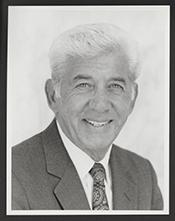
United States · United States Congress · 17 March 1988
Designates January 26, 1989, as Sean MacBride Day, marking the 85th anniversary of the birth of the late Sean MacBride, cofounder of Amnesty International and sponsor of the MacBride Principles opposing religious discrimination in Northern Ireland.
United States · United States Congress · 16 March 1988
Amends the Marine Mammal Protection Act of 1972 to extend through FY 1993 the authorization of appropriations to the Department of Commerce, the Department of the Interior, and the Marine Mammal Commission to carry out specified functions under such Act.
United States · United States Congress · 16 March 1988
Requests the President to issue a proclamation commemorating the 50th anniversary of the Javits-Wagner-O'Day Act, which occurs on June 25, 1988. (The Javits-Wagner-O'Day Act, formerly known as the Wagner-O'Day Act, provides employment and ancillary support services to blind and handicapped individuals.)
United States · United States Congress · 15 March 1988
Postal Reorganization Act of 1988 - Declares that the receipts and disbursements of the Postal Service Fund: (1) shall not be included in the totals of the Federal budget or the congressional budget; (2) shall be exempt from Federal budget limitations on expenditures and net lending; and (3) shall not be counted for purposes of calculating the Federal deficit. Repeals certain limitations on postal borrowing authority. Increases the limitations on postal borrowing authority.
United States · United States Congress · 10 March 1988
Expresses the sense of the Congress that the Secretary of Transportation (the Secretary) should: (1) investigate the management of Texas Air Corporation and Eastern Air Lines since the acquisition of Eastern by Texas Air to determine (according to prescribed guidelines) the effect of such management upon the public interest; (2) use the investigation findings as a basis for decisions in pending and future cases involving proposed changes in domestic and international operations of Eastern; (3) not authorize the operation of any entity as a subsidiary of Texas Air in performing any air transportation operations until completion of a review to determine whether such performance is consistent with the public interest; (4) not authorize any Texas Air subsidiary to engage in air transportation until the application for such certificate has been reviewed; (5) not authorize Orion Air to provide contract services with Eastern unless Orion establishes conclusively its capability of conducting such operations with the highest degree of safety; (6) not expedite consideration of Orion's request to operate under contract with Eastern by diverting employees of the Department of Transportation or the Federal Aviation Administration from their responsibilities of ensuring the safety of previously authorized operations; and (7) require, as a condition of any approval of Orion's request to operate under contract with Eastern, that purchasers of tickets for such service must be informed at the time of making reservations of the identity of the carrier having operational responsibility for such service.
United States · United States Congress · 9 March 1988
American Heritage Trust Act of 1988 - Title I: American Heritage Trust - Establishes the American Heritage Trust, comprised of the Land and Water Conservation Fund and the Historic Preservation Fund, to provide funding for the preservation of America's natural, historical, cultural, and outdoor recreational areas. Title II: Land and Water Conservation Fund - Amends the Land and Water Conservation Fund Act to require the Secretary of the Treasury to invest a portion of the Land and Water Conservation Fund in public debt securities. Requires that the interest from such investments be used to provide for the preservation of the Nation's recreational areas. Sets forth a formula for the allocation of such interest income to the Federal Government and the States. Sets forth specified requirements with respect to the apportionment of such income to local and State governments. Repeals a specified section concerning publicity and signing provisions. Title III: Historic Preservation Fund - Amends the National Historic Preservation Act to extend the Historic Preservation Fund through 2015. Requires the Secretary of the Treasury to invest a portion of such Fund in public debt securities. Requires that the interest from such investments be used for the preservation of historic sites. Title IV: Miscellaneous Provisions - Requires the owner of any site that benefits from moneys derived from the American Heritage Trust to install a sign indicating that fact.
United States · United States Congress · 9 March 1988
Declares that the President should: (1) posthumously award the Presidential Medal of Freedom to Charles E. Thornton, Lee Shapiro, and Jim Lindelof in honor of their efforts to document the Afghan struggle for freedom; and (2) present the award to those individuals' families on March 21, 1988, the start of the new year in Afghanistan.
United States · United States Congress · 3 March 1988
Natural Gas Transition Act of 1988 - Prohibits the Federal Energy Regulatory Commission (Commission) from permitting natural gas distribution service which would displace existing service provided by a local distribution company (or which could be provided by such local company) if: (1) the State or local regulatory authority certifies to the Commission that the displacing service would prejudice the interests of such distribution company's customers; or (2) the proponent of such displacing service fails to demonstrate that the local distribution company protesting the proposed service is unwilling to provide transportation service on terms in effect or acceptable to the State or local commission. Precludes the Commission from permitting such displacing service until 30 days after it has published notice of such service in the Federal Register. Applies this Act to all service not provided before its date of enactment, regardless of whether the Commission had granted permission to provide such service before such date.
United States · United States Congress · 3 March 1988
Designates the week of June 26 through July 2, 1988, as National Safety Belt Use Week. Authorizes and requests the President to: (1) urge the people to wear safety belts and use child safety seats; and (2) encourage State and local governments and concerned organizations and officials to promote greater use of these safety devices.
United States · United States Congress · 2 March 1988
Inspector General Act Amendments of 1988 - Amends the Inspector General Act of 1978 to establish an Office of Inspector General in the Departments of Justice and of the Treasury and in the Federal Emergency Management Agency. Conforms the Offices of Inspector General in the Departments of Energy and Health and Human Services and in the Railroad Retirement Board to the Inspector General Act of 1978. Transfers to the new Offices of Inspector General the functions of specified existing audit and investigation units. Restricts each Federal agency without a statutorily established inspector general to one audit unit. Requires the audit unit director to be appointed by, report to, and be under the general supervision of, the head of each Federal entity governed by this Act. Requires the head of any Federal entity who removes an audit unit director from office to communicate the reasons for such removal to the Congress. Requires the following additional information to be included in the semiannual report of an audit unit director or Inspector General: (1) a detailed statistical analysis of audit reports; (2) a summary of each significant unresolved audit report; (3) an explanation of any revised audit determination; and (4) information concerning any audit determination with which the Inspector General is in disagreement. Authorizes audit unit directors or inspectors general to administer to or take from any person an oath, affirmation, or affidavit when necessary.
United States · United States Congress · 2 March 1988
Emergency Hunger Relief Act of 1988 - Title I: Family Self Sufficiency Improvement - Subtitle A: Food Stamp Program - Amends the Food Stamp Act of 1977 to increase the minimum food stamp program (program) allotments by one percent for the period January 1, 1989, through September 30, 1989, and by one percent during FY 1990. Amends the definition of "household" to repeal the provision providing separate household status for certain parents of minor children and for such children. Makes permanent categorical program eligibility based on eligibility for specified social security programs. Provides an additional excess shelter deduction. States that: (1) households not required to submit monthly income reports shall have their income calculated on a prospective basis; and (2) households required to submit monthly income reports shall have their income calculated on a retrospective basis, except under specified circumstances. Repeals the requirement of prior approval by the Secretary of Agriculture for less than monthly income reporting of certain household. Prohibits a state agency from requiring periodic reporting of households: (1) made up entirely of migrant or seasonal farm workers; (2) made up entirely of homeless persons; or (3) with no earned income and in which all adult members are elderly or disabled. Requires that households reporting monthly be provided with clear and understandable reporting forms. Adjusts the automobile limitation to reflect Consumer Price Index changes. Provides full program benefits for breaks in certification of 30 days or less. Permits households subject to benefit prorating to receive an aggregate benefit allotment. Extends the scope of program informational activities. Amends the HOmeless Eligibility Clarification Act to make permanent the authority for homeless persons in shelters to receive food stamps. Subtitle B: Related Programs - Amends the Temporary Emergency Food Assistance Act of 1983, as amended by the Stewart B. McKinney Homeless Assistance Act, to extend the temporary emergency food assistance program (TEFAP) through FY 1990. Increases the amount of TEFAP funds for emergency feeding organizations. Amends the Community Services Block Grant Act to authorize appropriations through FY 1993 for the community food and nutrition program. Directs the Secretary to: (1) conduct a study (through the National Academy of Sciences) of the kinds of medical problems commonly suffered by program participants and the resulting special diets; and (2) report to the Congress. Title II: Child Nutrition Promotion - Amends the Food Stamps Act of 1977 to exclude foster care and adoption assistance from program income determinations. Amends the Child Nutrition Act of 1966 to increase the school breakfast program reimbursement rate by three cents per meal as of July 1, 1989. Amends the National School Lunch Act to permit specified private nonprofit organizations to participate in the summer food program. Provides an additional meal or snack to children who attend day care centers which are open more than eight hours a day. Repeals the provision tying reduced price lunch eligibility to program eligibility. Title III: Effective Date - Sets forth the effective dates for provisions of this Act.
United States · United States Congress · 1 March 1988
Women in Development Act of 1988 - Requires the Administrator of the Agency for International Development (AID) to take specific steps to strengthen the Agency's women in development policy, including: (1) incorporating the active participation of local women and local women's organizations in its development activities; (2) instructing Agency staff and contractors to collect sex-disaggregated data and to insure that country strategies, projects, and programs are designed so that the percentage of women receiving assistance in proportion to the higher of their traditional participation in the targeted activities or their proportion of the population; (3) insuring that project and program evaluations include an assessment of the extent to which the project integrates women in the development process and of the project's impact on women; (4) increasing the number and responsibility of women in professional positions within AID; and (5) establishing within AID a task force on women in development. Amends the Foreign Assistance Act of 1961 to require that a minimum (currently, maximum) of $10,000,000 in funds made available for foreign assistance programs be used for programs to promote the participation and integration of women in the development process in developing countries. Requires the Administrator to report to the Congress annually on the implementation of this Act. Authorizes appropriations to be made available for the United Nations Development Fund for Women and the United Nations International Research and Training Institute for the Advancement of Women.
United States · United States Congress · 1 March 1988
Community Revitalization Tax Act of 1988 - Amends Internal Revenue Code income tax accounting rules limiting passive activity losses and credits to eliminate the disallowance of credits in this context. Revises the limitation on the general business credit to allow a maximum annual credit equal to the first $20,000 of an individual taxpayer's income tax liability plus 20 percent of any excess liability. Amends provisions that reduce the investment credit base by nonqualified nonrecourse financing amounts to apply them to certain qualified rehabilitation property as if the property were subject to the at-risk rules associated with the low-income housing credit. Permits a tax-exempt organization to offset the amount of any general business credit against its unrelated business income tax liability. Revises the definition of "qualifying distribution" for purposes of the tax on a private foundation's failure to distribute income. Includes as qualifying any amount of interest foregone on a below-market loan made to a tax-exempt organization to operate a qualified low-income building. Includes as a qualified rehabilitation expenditure for tax credit purposes any expenditure in connection with the rehabilitation of a low-income building leased to a tax-exempt entity. Permits a pooled income fund having substantially all of its assets invested exclusively in qualified low-income buildings to have one or more corporations as income beneficiaries, each with a 20-year life.
United States · United States Congress · 29 February 1988
International Security and Satellite Monitoring Act of 1988 - Establishes the Commission on International Security and Satellite Monitoring. Requires the Commission to: (1) study areas in which remote-sensing satellites might be cooperatively employed, including environmental monitoring, disaster preparedness, drug trafficking, and arms reduction verification; (2) identify means to accustom all nations and the general public to the dissemination of information gathered by remote-sensing satellites; and (3) analyze the potential for the United States to solicit support for common security systems based on satellite monitoring arrangements. Sets forth specific factors for the Commission to consider in conducting such study. Prohibits the Commission from making any determinations as to whether restrictions should be placed on applicants or licensees pursuant to the Land Remote-Sensing Commercialization Act of 1984. Requires the Commission to transmit a report to the President and to the Congress containing a detailed statement of its findings, conclusions, and recommendations. Terminates the Commission two years after the enactment of this Act. Authorizes appropriations.
United States · United States Congress · 24 February 1988
Expresses disapproval of the refusal of the U.S.S.R. to recognize the sovereignty of the Baltic Republics. Designates June 14, 1988, as Baltic Freedom Day. Authorizes and requests the President to submit the issue of the Baltic Republics to the United Nations.
United States · United States Congress · 24 February 1988
Designates March 29, 1988, the birthday of Rabbi Menachem Mendel Schneerson, as Education Day, U.S.A. Calls on heads of state of the world to join the President of the United States in this tribute by signing an international scroll of honor.
United States · United States Congress · 22 February 1988
Economic Conversion Act of 1988 - Title I: Economic Stabilization and Revitalization Pilot Program - Amends the Defense Production Act of 1950 to authorize the President to make grants for job retraining programs and planning for alternative production required by the cancellation of major defense contracts (or reductions of $10,000,000 or more in the value of such contracts) during FY 1989 through 1993. Permits one grant for each defense contract cancellation or reduction. Requires the administration of such grants at the local level by a capable unit of general local government or, through default, by the collective bargaining agents of affected employees. Directs the President to make weekly economic adjustment assistance payments to employees affected by such a cancellation or reduction of a contract during FY 1989 through 1993. Sets forth a formula for determining the amount of such assistance, making allowances for unemployment compensation or public assistance received and health insurance coverage needed. Sets forth assistance application procedures and notification requirements. Makes available for such grants and assistance payments the amount of previously-appropriated funds which the United States will save as a result of the cancellation or reduction of a defense contract. Title II: Prenotification of Base Closures and Defense-Related Contract Cancellations - Directs the Secretary of Defense, acting through the Economic Adjustment Committee, to notify State and local governments and regional organizations within a specified period of time of the proposed realignment or closure of a military installation, the cancellation or termination of a defense contract, or the failure to proceed with an approved major weapon system program.
United States · United States Congress · 8 February 1988
Amends the Small Business Act with respect to breakout procurement center representatives. Removes restrictions on the technical data and procurement records available to such representatives, providing access to certain restricted and classified materials. Revises appeals procedures in connection with a representative's appeal of failure to act favorably on his or her recommendations. Revises the definition of "major procurement center" to include entities other than centers of the Department of Defense and to permit the Administrator of the Small Business Administration discretion in determining eligible centers. Adds the following as duties of breakout procurement center representatives: (1) to conduct familiarization sessions for contracting officers and other appropriate personnel of the assigned procurement center; and (2) to prepare and personally deliver an annual briefing and report to the head of the procurement center. Requires this latter individual personally to receive the briefing and report and to respond in writing, within 60 days, to each recommendation.
United States · United States Congress · 8 February 1988
United States Coast Guard Bicentennial Medal Act - Directs the Secretary of the Treasury to design, strike, and sell a medal in commemoration of the bicentennial of the U.S. Coast Guard in 1990. Requires the design of the medal to be selected by the Secretary of the Treasury after consultation with the Secretary of Transportation and the Commission of Fine Arts.
United States · United States Congress · 2 February 1988
Amends the Internal Revenue Code to exempt from the gasoline excise tax any sale of gasoline to a State or local government (or to a purchaser for resale to such government) for its exclusive use.
United States · United States Congress · 2 February 1988
Community Housing Partnership Act - Title I: Housing Education and Organizational Support Grants for Community Based Housing Projects - Authorizes the Secretary of Housing and Urban Development to provide housing education and organizational support grants directly to nonprofit organizations or indirectly to States and cities to assist such organizations. Authorizes permanent appropriations beginning with FY 1989. Title II: Community Housing and Partnership Grants - Authorizes the Secretary to provide community partnership grants directly to nonprofit organizations or indirectly to States and cities to assist such organizations. Divides appropriations among: (1) urban community housing partnership grants (60 percent); (2) State community housing partnership grants (30 percent); and (3) direct community housing partnership grants (ten percent). Sets forth the following eligible activities: (1) technical assistance and site control loans; (2) seed-money loans; (3) matching grants or loans; and (4) program-wide technical and management assistance for nonprofit sponsors. Sets forth rental project and home ownership eligibility provisions, including: (1) occupancy by lower income families; (2) profit limitations; (3) funding coordination; (4) tax treatment; and (5) affirmative action requirements. Authorizes permanent appropriations beginning with FY 1989. Title III: General Provisions - Defines specified terms for purposes of this Act.
United States · United States Congress · 28 January 1988
Air Travel Rights for Blind Individuals Act - Amends the Federal Aviation Act of 1958 to preclude an air carrier from establishing aircraft seating restrictions based upon a passenger's visual acuity or use of a white cane or dog guide or other such means of assistance.
United States · United States Congress · 28 January 1988
Farmers' Market Nutrition Enhancement Act - Amends the Child Nutrition Act of 1966 to authorize three-year demonstration projects in seven States to provide coupons (between ten and 20 dollars' worth) to special supplemental food program (WIC) recipients for use at farmers' markets. Requires State matching funds. Establishes minimum and maximum grant levels. Limits the use of funds for administrative costs. Requires annual State reports to the Secretary of Agriculture. Authorizes FY 1989 through 1991 appropriations.
United States · United States Congress · 27 January 1988
Commends the President, Secretary of State, and Administrator of the Agency for International Development for their response to the drought and food emergency in Ethiopia and other nations of sub-Saharan Africa, and urges them to continue efforts to preclude the onset of famine and to ensure the timely delivery of medical and other emergency relief supplies. Declares that: (1) the Government response to these food emergencies should include initiatives to prevent the dislocation of large numbers of persons across national borders and/or into relief camps; and (2) the plight of the refugees or displaced should be addressed by emphasizing the provision of basic human needs, such as food, water, and shelter.
United States · United States Congress · 18 December 1987
Directs the Caribbean Basin Scholarship Commission (established by this Act) to establish and administer a scholarship program in the form of loans to enable students from eligible countries in the Caribbean Basin to study at an institution of higher education or vocational school in the Commonwealth of Puerto Rico. Provides that repayment of such loans will be forgiven upon the student's prompt return to such student's country of origin for a period which is at least one year longer than the period spent studying in Puerto Rico. Requires Puerto Rico to provide 50 percent of the amount appropriated to the Caribbean Basin Scholarship Fund. Permits such amount to be provided by other than cash. Establishes the Caribbean Basin Scholarship Fund. Appropriates to the Fund five percent of the amounts received in the Treasury on or after enactment of this Act that are attributable to the duties imposed on all articles imported from eligible countries. Establishes the Caribbean Basin Scholarship Commission to distribute scholarships to students in eligible countries, giving consideration to: (1) underserved and underdeveloped areas; (2) students who need financial assistance to pursue an education; and (3) institutions of higher education and vocational schools offering training or education in areas that have the greatest potential for strengthening the workforce in the Caribbean Basin. Specifies conditions for eligibility and selection of scholars.
United States · United States Congress · 8 December 1987
Amends the Internal Revenue Code with respect to the targeted jobs income tax credit. Extends the credit to employees who begin work in 1989 through 1991. (Current law terminates the credit for employees who begin work after December 31, 1988.) Includes as a targeted group individuals aged 65 or older who are members of economically disadvantaged families. Revises the minimum employment period requirement for purposes of this credit.
United States · United States Congress · 3 December 1987
Middle-Income Family Higher Education Savings Act of 1987 - Amends the Internal Revenue Code to allow an individual an income tax deduction for contributions to a savings account established to pay the educational expenses (tuition, supplies, meals, and lodging) of the taxpayer's child at an institution of higher education or a vocational school. Limits the deduction to $1,000 per year per child. Provides that no account may have more than one beneficiary. Permits a deduction with respect to only one account in cases of multiple accounts for the same beneficiary. Disallows the deduction for contributions made to an account after the beneficiary either attains age 25 or graduates from an eligible educational institution. Permits the exclusion from the gross income of the recipient beneficiary of payments and distributions from an education savings account as long as such amounts: (1) are used for the educational expenses of that individual; or (2) are rolled over into an education savings account established for a sibling of that individual. Exempts the education savings accounts themselves from taxation unless they cease to be proper education savings accounts because either the contributor taxpayer or the beneficiary engages in prohibited transactions or the beneficiary pledges the account as security. Establishes penalties in the form of additional tax when account funds or distributions are improperly used. Requires that the trustee of an education savings account report to the Secretary of the Treasury and to the account's benefactor on the maintenance of the account. Identifies the criteria and requirements applicable to an education savings account. Provides that contributions to an education savings account shall not be subject to gift tax. Establishes: (1) a five percent excise tax on amounts connected with any prohibited transaction with respect to an education savings account; and (2) a penalty for failure to file required reports concerning the education savings account.
United States · United States Congress · 19 November 1987
Act for Better Child Care Services of 1987 - Authorizes appropriations for FY 1988 and such sums as necessary for FY 1989 through 1992 to carry out the purposes of this Act. Specifies the manner of making allotments for child care services. Requires the designation of a lead agency in each State which participates in the programs under this Act. Requires States to submit, in order to qualify for assistance under this Act, an application and plan to the Secretary of Health and Human Services. Requires each plan to cover a five-year period and to meet specified requirements for providers of child care services. Authorizes the use of State allotments: (1) by contracts with or grants to eligible child care providers, or public or private nonprofit agencies, to enable such providers or agencies to operate programs directly or by subcontract; or (2) by distributing child care certificates that parents may use as payment for child care services. Requires that a percentage of funds be reserved to enable part-day programs to extend existing hours of operation and provide full-day child care services. Authorizes the Secretary to make planning grants to States which desire to participate under this Act but cannot fully satisfy the requirements of a State plan without financial assistance. Provides for a review of the operation of a State plan during the five-year period to determine its continued eligibility for funds. Requires the Governor of each participating State to establish: (1) a State interagency advisory committee on child care to assist the lead agency in carrying out its responsibilities; and (2) a State committee on licensing to review the licensing requirements, the law, and the policies regulating child care services and programs within the State. Requires each participating State to recognized private nonprofit community-based organizations, or public organizations, as resources and referral agencies for particular geographic areas. Requires each participating State to require that all employed or self-employed persons providing licensed or regulated child care complete at least 15 hours per year of inservice, continuing education, or other training as described in this Act. Directs the Secretary to establish within the Department of Health and Human Services an Administrator of Child Care to carry out the provisions of this Act. Establishes enforcement provisions for review of State plans and monitoring of State compliance. Declares the Federal share of child care programs to be 80 percent and requires the State to demonstrate that the remaining 20 percent will be provided from other sources. Requires the Secretary to establish a National Advisory Committee on Child Care Standards to: (1) review Federal policies on child care services and such other data as appropriate; (2) submit to the Secretary proposed minimum standards for child care programs; and (3) develop and make available to lead agencies model regulations for resources and referral agencies. Terminates the committee 90 days after the date of publication of final minimum child care standards. Prohibits the use of funds under this Act for: (1) sectarian purposes or activities; (2) capital improvements to sectarian institutions; and (3) tuition.
United States · United States Congress · 18 November 1987
Dwight David Eisenhower Commemorative Coin Act of 1987 - Directs the Secretary of the Treasury to mint and issue not more than a specified number of one dollar silver coins in commemoration of the 100th anniversary of the birth of Dwight David Eisenhower. Sets forth certain features of such coins and provides for their design, issuance, and sale. Terminates the minting of the coins after December 31, 1990. Requires the Secretary to deposit in the Treasury all surcharges received from the sale of the coins, to be used to reduce the national debt.
United States · United States Congress · 18 November 1987
Antiterrorism and Arms Export Amendments Act of 1987 - Amends the Arms Export Control Act to prohibit the U.S. Government and U.S. persons from exporting or facilitating the export of any munitions item to any country which: (1) has repeatedly provided support for international terrorism; or (2) grants sanctuary from prosecution to any individual or group which has committed an act of international terrorism. Authorizes the President to waive such prohibition upon making specified certifications. Imposes criminal penalties for willful violations of such prohibition. Imposes civil penalties for violations of such prohibition and provides for enforcement of such civil penalties. Requires that the possibility of supporting international terrorism shall be a consideration in the issuance of arms export licenses or in arms sales. Amends the Export Administration Act of 1979 to provide that a validated license shall be required for the export of goods or technology to a country if the Secretary determines that: (1) such country grants sanctuary to or has repeatedly provided support for acts of international terrorism; and (2) such exports would contribute to the military potential of such country, would be destined to a military end-user or for military end use in such country, or would enhance the ability of such country to support acts of international terrorism. Amends the Foreign Assistance Act of 1961 to prohibit the provision of any assistance under such Act, the Agricultural Trade Development and Assistance Act of 1954, the Peace Corps Act, or the Export-Import Bank Act to any country which the Secretary determines: (1) has repeatedly provided support for international terrorism; or (2) grants sanctuary from prosecution to any individual or group which has committed an act of international terrorism. Authorizes the President to waive such prohibition upon making specified certifications. Prohibits rescinding a determination that a country supports international terrorism, unless the Secretary of State, at least 90 days before the rescission would take effect, certifies to the Congress that: (1) the country has not provided support for international terrorism for the preceding six months; and (2) the country has made explicit assurances that it will not support international terrorism in the future. Amends the Arms Export Control Act and the Foreign Assistance Act of 1961 to require the President to notify the Congress of third country transfers of items: (1) sold under the Foreign Military Sales (FMS) program; (2) exported pursuant to a munitions license; or (3) provided under the Military Assistance Program (MAP). Directs the President to include in required quarterly reports to the Congress concerning military exports a listing of all defense articles or defense services transferred by the Department of Defense to other agencies of the U.S. Government. Prohibits the transfer of any munitions item by the U.S. Government to any foreign country, group, or person under the authority of a presidential determination that such a transfer is important to the national security of the United States as a significant anticipated intelligence activity, unless the President notifies certain congressional committees of such a transfer in accordance with the procedures set forth in the National Security Act of 1947 for the reporting of any intelligence activities. Revises requirements for reporting the use of foreign assistance funds where it is inadvisable to specify the nature of the use of such funds to require that such a report be transmitted to the Committee on Foreign Affairs of the House of Representatives rather than to the Speaker of the House. Amends the Hostage Act to specify that the President may not use any means otherwise prohibited by law in attempting to cause the release of U.S. citizens imprisoned by foreign governments. (Current law specifies that the President may not use any means amounting to acts of war.)
United States · United States Congress · 5 November 1987
Infrastructure Improvement Act of 1987 - Authorizes the Secretary of Commerce to make loans to States (from accounts established by this Act) to enable them to make loans to units of local government to carry out eligible public works construction projects. Sets forth formulae for determining State eligibility for such loans. Requires States to repay such loans, with interest, over a ten-year period. Requires the Secretary to adjust such repayments as required to reflect any deferrals granted or amounts forgiven. Makes a unit of local government eligible for loans under this Act if it has a population of at least 50,000 and can demonstrate at least one economic distress requirement. Describes such requirements. Requires each unit of local government seeking a loan to apply to the chief executive officer of the State specifying the amount to be borrowed and an economic plan for its use. Describes an eligible public works project as one which involves construction of publicly owned facilities located on publicly owned lands. Prohibits the use of loans to local governments to replace funding for infrastructure projects or to provide the non-Federal share of any project under any other Federal law. Requires a State to give priority to projects: (1) which maximize use of the existing pool of labor in the jurisdictional area; (2) for which most employees will be economically disadvantaged, dislocated workers, or certified unemployed; (3) where the employees will reside within the jurisdictional area; (4) which contribute to the creation and maintenance of new jobs and businesses in the area; and (5) which provide retraining and employment opportunities for the economically disadvantaged and dislocated workers. Requires a local government to repay such loans over a ten-year period, with interest. Sets forth circumstances under which repayments may be deferred or 25 percent of the total amount of loans may be forgiven. Establishes in the Treasury the Nondiscretionary Infrastructure Loan Account, for allocations of 95 percent of amounts appropriated to carry out this Act, consisting of: (1) the Above-Average Unemployment Loan Account; (2) the High Unemployment Loan Account; and (3) the Business Failures Loan Account. Establishes the Discretionary Infrastructure Loan Account for allocations of five percent of any amounts appropriated to carry out this Act. Requires the Secretary, not later than 90 days after enactment of this Act, to transmit to the Congress a schedule: (1) for collecting information necessary to carry out this Act, including information regarding unemployment and business failures; and (2) for making loans under this Act. Requires the General Accounting Office to report annually to the Congress and the President on a review of activities carried out by States and units of local governments under this Act. Authorizes appropriations for FY 1989 through 1993.
United States · United States Congress · 3 November 1987
Technology to Educate Children With Handicaps Act - Amends the Education of the Handicapped Act to add provisions for assistive device resource centers. Directs the Secretary of Education to make grants to States to pay the Federal share of the cost of establishing assistive device resource centers. Directs the Secretary to make State allotments based on the number of handicapped children. Sets forth a minimum State allotment. Requires that each center serve severely handicapped: (1) infants and toddlers; (2) children and youth; and (3) individuals who have attained 21 years of age if the State plan prescribes a targeted population of such individuals. Requires each center to: (1) train and assist specialists in local educational agencies and nonprofit community organizations to evaluate a handicapped student's potential to benefit from assistive devices; (2) instruct teachers, therapists, paraprofessionals, parents, and handicapped students in the appropriate use of assistive devices; (3) provide follow-up services and collect data to determine the effectiveness of the services provided; (4) develop a statewide service delivery system for severely handicapped children; (5) be able to assist in the development of assistive devices to meet the needs of handicapped individuals; (6) disseminate information to local educational agencies and nonprofit community organizations; and (7) provide in-service training to specialists, teachers, parents, and others on the benefits of assistive devices to promote improved educational performance and increased interaction between handicapped and nonhandicapped individuals. Requires each State to assure priority of services for handicapped children from birth through age 21. States that nothing in this Act precludes the provision of center services to handicapped individuals who are no longer eligible for services under the Education of the Handicapped Act. Requires each center to establish an Advisory Committee. Prohibits Federal funds from being used for the operations of such Committee. Sets forth required contents of State allotment applications. Allows any public agency or private nonprofit organization or institution to apply to a State for a grant to establish a center. Makes the Federal share of the cost 70 percent in FY 1988, 65 percent in FY 1989, and 60 percent in FY 1990. Authorizes appropriations to carry out this Act.
United States · United States Congress · 30 October 1987
Expresses the sense of the Congress that before November 18, 1987, the Secretary of State should inform the Soviet Government that the United States supports the right of the Latvian people to peacefully assemble to commemorate important dates in their history and should urge the Soviet Government to: (1) allow the Latvian people to publicly commemorate November 18, the anniversary of the founding of the independent Republic of Latvia, without reprisal; (2) allow the Western media access to Riga, Latvia, to report on that day's events; (3) halt harassment of Latvian human rights groups; and (4) release all Latvian prisoners of conscience, including human rights activists Linards Grantins and Gunars Astra, before such date. Urges the President to direct U.S. Government agencies to closely monitor the events of November 18, and to send an appropriate representative to observe that day's events. Urges the President and the Secretary to raise the issue of human rights and self-determination in the Baltic states during the next U.S.-Soviet summit.