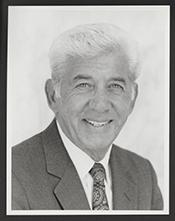
United States · United States Congress · 21 February 1985
Authorizes the President, on behalf of the Congress, to present a gold medal to the family of Harry Chapin in recognition of Harry Chapin's efforts to address issues of world hunger. Authorizes appropriations. Authorizes the Secretary of the Treasury to provide for the sale of bronze duplicates of the medal.
United States · United States Congress · 21 February 1985
Children's Justice Act - Amends the Child Abuse Amendments of 1984 to authorize a Children's Justice Grant program. Authorizes the Secretary of Health and Human Services to make additional grants to States under specified provisions of the Child Abuse Prevention and Treatment Act for identification, treatment, and prevention of sexual abuse. Makes a State eligible for such assistance if the Secretary determines that the State, within one year after the enactment of this Act, has enacted specified legal and administrative changes with respect to the investigation and prosecution of child sexual abuse cases. Requires a State, to be eligible for such assistance, to have in effect a child sexual abuse program which includes at least one statute or administrative procedure to carry out the following categories of reforms: (1) handling such cases so as to reduce the trauma to the child victim; (2) improving the chances of successful prosecution or legal action against child molesters; and (3) improving procedures to protect children from sexual abuse. Directs the Secretary to issue necessary regulations for such assistance program. Authorizes appropriations for FY 1986 and 1987.
United States · United States Congress · 21 February 1985
Administrative Law Judge Corps Act - Amends Federal law to establish, in Washington, D.C., an Administrative Law Judge Corps (the Corps) comprised of all current administrative law judges. States that the chief administrative law judge shall be the chief administrative officer of the Corps as well as its presiding judge. Specifies the qualifications for chief judge. States that such judge shall be appointed by the President, with the advice and consent of the Senate. Directs the chief judge to submit a written report to the President and the Congress. Establishes divisions (to number between four and ten) within the Corps, with each division headed by a division chief judge appointed by the President, with the consent of the Senate. Identifies initial divisions and their respective areas of jurisdiction. Specifies qualifications required for division chief judges. States that the Corps' policymaking body shall be the Council of the Corps (the Council), comprised of the chief judge and the division chief judges. Authorizes the Council to approve or disapprove: (1) the assignment of judges to divisions; (2) creation, abolition, or reorganization of divisions; and (3) re-assignments of division chief judges. Authorizes the Council to determine matters of general Corps policy, including: (1) the issuance of regulations for Corps proceedings; (2) creation or abolition of divisions or regional offices; (3) contractual transactions; and (4) delegation of functions to division chief judges. Establishes a Judicial Nomination Commission (the Commission) to submit a list of qualified nominees for positions of chief judge and division chief judges. Specifies officials who shall appoint a member to the Commission. Sets the terms of initial Corps appointments and the procedure for filling vacancies. Prescribes a procedure for recommending appointments to the President. Directs the Corps to appoint new judges from a register maintained by the Office of Personnel Management. Confers jurisdiction upon members of the Corps to adjudicate cases under specified sections of the Administrative Procedure Act. Requires cases arising under such sections to be referred to the Corps. Directs the Council to issue regulations for assigning such cases. Provides guidelines for the removal and discipline of administrative law judges. Establishes a Complaints Resolution Board within the Corps to recommend action upon complaints against the official conduct of judges. Details the membership of such Board and the procedures to be followed. Declares Board proceedings and the contents of complaints to be privileged and confidential. Exempts documents and reports considered by the Board from the disclosure and publication requirements of the Freedom of Information Act. Exempts the Board from compliance with the public meeting requirements of specified Federal law. Authorizes appropriations.
United States · United States Congress · 21 February 1985
Construction Work in Progress Policy Act of 1985 - Amends the Federal Power Act to provide that nothing in such Act shall be construed to affect the Federal Energy Regulatory Commission's authority to approve the inclusion of the costs of construction work in progress (defined as construction of a facility used to generate electric energy) in the rate base of a public utility with respect to: (1) any pollution control facility; and (2) the conversion of oil or natural gas-fired facilities to the use of other fuels. Permits a public utility whose internal generation of funds during a test period established by the Commission is 30 percent or less of planned construction expenditures during such period to apply for the inclusion of the cost of construction work in progress in the public utility's rate base. Sets forth the items required in such an application. Requires the Commission to hold an evidentiary hearing upon receipt of an application from a public utility. Requires the Commission to approve the inclusion of the costs of construction work in progress in the utility's rate base if: (1) the facility being constructed is reasonably necessary to meet energy demands; and (2) the utility's financial condition would prevent the financing of such facility except at a cost significantly higher than the average cost of financing within the electric utility industry. Sets forth limitations on the amount of the costs of construction work in progress which may be included in a public utility's rate base. Requires public utilities to discontinue the capitalization of allowance for funds used during construction for those construction work in progress costs which are included in the rate base. Requires that revenues derived from construction work in progress be deferred from inclusion in utility rates for a certain period of time when the facility becomes used for public service.
United States · United States Congress · 21 February 1985
High Technology Research and Scientific Education Act of 1985 - Title I: The Credit for Increasing Research Activities - Amends the Internal Revenue Code to make permanent the tax credit for research and development (R&D) expenditures. Modifies the definition of qualified research for purposes of the R&D credit to narrow the category of eligible activities for which the credit is allowable. Provides that in-house and contract research expenses paid or incurred by a regular corporation (not an S corporation, a personal holding company, or a service corporation) will constitute qualified research expenses for R&D credit purposes if the corporation undertakes the research with the intention to use the result thereof in the active conduct of a present or future trade or business. Provides that in the case of research being conducted in partnership form, research expenses will constitute qualified research expenses if they are incurred by the partnership in carrying on a trade or business as applied at the partnership level, and the credit is apportioned among the partners in accordance with general partnership rules. Provides exceptions to this general rule where: (1) there is a joint venture enterprise of regular corporations; or (2) not all of the members of the joint venture are regular corporations, but each member's own trade or business would satisfy the trade or business test with respect to the partnership's research expenditures. Provides that for these two exceptions the research expenses will flow through to the partners, with the trade or business test being applied at the partner level. Title II: Promotion of University Research and Scientific Investigation - Establishes a new income tax credit equal to 20 percent of that portion of a corporation's payments to universities (and other qualified non-profit tax-exempt organizations for basic research) which exceeds a fixed, historical "minimum university basic research" floor. Defines the "minimum university basic research" floor as one percent of the annual average of the corporate taxpayer's combined qualified in-house research expenses, contract research expenses and university basic research payments for the base period composed of the period from 1981 through 1983. Provides that the amounts of research expenses which fall below the floor shall remain eligible for the present R&D credit and are included in the corporation's base period for purposes of calculating the present R&D credit. Treats the amounts which exceed the "minimum university basic research" floor as ineligible for the present R&D credit and excludes such amounts from the corporate taxpayer's base year research expenses for purposes of calculating the corporations R&D credit under present law. Provides that a corporation's payments to universities for basic research that is eligible for the new tax credit shall be reduced to the extent that the corporation's general (i.e., not designated for research purposes) charitable giving to all universities falls below historical levels (the annual average of undesignated payments for three of the immediately preceding four years as selected by the taxpayer). Makes additions to the list of organizations to which corporate payments for basic research may be made and be eligible for the tax credit. Allows a corporation an income tax deduction for contributions of scientific or technical property to an institution of higher education. Defines scientific property to mean tangible personal property (including computer software) used in a trade or business, which is donated for the direct education of students or faculty, for research and experimentation, or for research training in the United States in mathematics, the physical, biological, or chemical sciences, engineering, or advanced computer sciences. Sets forth a formula for determining the amount of the allowable deduction for contributions of scientific property. Provides for an income tax exclusion for the scholarships, fellowship grants, student loan forgiveness, or stipends of a graduate student in mathematics, engineering, computer science, or the physical or biological sciences. Provides that such tax exclusion is not forfeited merely because the student is required, as a condition of the scholarship or fellowship, to perform future service in teaching or research.
United States · United States Congress · 21 February 1985
Declares that the House of Representatives: (1) finds that the Job Corps program has been a cost-effective and successful effort to assist disadvantaged young men and women in obtaining and holding employment; (2) reaffirms its commitment to the Job Corps program; and (3) will not make or accept any reduction in the level of funding for the Job Corps program.
United States · United States Congress · 19 February 1985
Amends the Internal Revenue Code to impose a 50 percent excise tax on any "greenmail profits" paid to certain corporate stockholders. Defines "greenmail profits" as any gain realized by a four-percent shareholder of any stock in a corporation if: (1) the shareholder held such stock for a period of less than two years; and (2) during the two-year period ending on the date of the sale or exchange of such stock there was a public tender offer for such stock or a four-percent shareholder submitted a written proposal for a public tender offer. Disallows an income tax deduction for certain interest paid or accrued with respect to hostile acquisition indebtedness. Defines "hostile acquisition indebtedness" as certain subordinate obligations issued after February 18, 1985, in connection with a hostile acquisition.
United States · United States Congress · 7 February 1985
Changes the name of the Ernest Orlando Lawrence Livermore National Laboratory facilities at Livermore, California, to the Livermore National Laboratory. Amends the Department of Energy National Security and Military Applications of Nuclear Energy Authorization Act of 1980 to conform to provisions of this Act.
United States · United States Congress · 7 February 1985
Summer Youth Employment, Training, and Education Act of 1985 - Amends the Job Training Partnership Act (JTPA) to require the addition of an education component to the summer youth employment and training programs under part B of title II (Training Services for the Disadvantaged) of JTPA. Requires that each service delivery area (SDA) be allotted an amount equal to at least 90 percent of the amount available to such area for the summer youth program in the preceding fiscal year. Requires ratable reductions in the allocation to each SDA if appropriations are not sufficient to provide such amount to each SDA. Requires that allotments to States and allocations to SDAs be: (1) made in accordance with provisions for prompt allocation of funds; and (2) available for planning purposes before the beginning of the summer months for which allotted and allocated. Requires that summer youth program funds be used so that participants spend a portion of their time on individualized, self-paced, remedial and basic academic and functional competency development and achieve specified types of performance standards established and developed in each SDA. Requires that the portion of a participant's time spent on such competency development be in addition to, and not in place of, regular employment under the summer youth program. Prohibits summer youth program funds from being used to provide employment to any individual who fails to comply with attendance standards established by the SDA with respect to such education components. Prohibits summer youth program funds from being used to compensate or reward participants for attendance at such education components, except under specified provisions which require that a portion of matching funds be used to provide bonuses to participants for achievement of academic and functional competence. Specifies that planning for summer youth programs does not have to be conducted during the summer months. Sets forth matching fund requirements for summer youth programs. Requires each private industry council (PIC), for each program year beginning after June 30, 1987, to make available from non-Federal sources an amount for use in such programs equal to at least one and one-half percent of the amount made available under JTPA for such programs in that SDA for the applicable program year. Allows each PIC, for program years beginning July 1, 1985, and July 1, 1986, to make available such matching amounts. Limits, for any program year beginning after June 30, 1987, such matching amounts to not less than $20,000 and not more than $100,000 per SDA. Requires each PIC to notify the State of the PIC's matching amount by April 1 of the preceding program year. Requires each State, for program years beginning after June 30, 1987, to provide to each PIC an amount equal to the PIC matching amount. Allows States to provide such State matching amount from non-Federal sources or to use funds available to them under part A (Adult and Youth Programs) of title II of JTPA and under chapter 2 (Consolidation of Federal Programs for Elementary and Secondary Education) of the Educational Consolidation and Improvement Act of 1981. Requires each State, for program years beginning July 1, 1985, and July 1, 1986, to reserve one and one-half percent of its State allotment under part A, to be allocated to PICs in proportion to the matching amounts made available by such PICs for such program years. Requires that such matching amounts be used to: (1) support the education and training components of the summer youth programs; (2) provide bonuses to participants for achievement of academic and functional competence; and (3) after complying with (1) and (2), create additional employment opportunities under the summer youth programs. Allows matching amounts to be in cash or in-kind, but requires that in-kind matching amounts be in the form of state-of-the-art basic and remedial education materials and equipment suitable for use for summer youth programs for the applicable program year. Requires each SDA to maintain complete records on the improvements in academic and functional competency attained by participants in the summer youth programs. Requires that such records be compiled by reference to State and locally determined general education diploma and basic education competency requirements. Requires each SDA to submit summaries of such records to the State. Requires States to submit annual reports on such summaries to the Secretary of Labor. Directs the Secretary to include an analysis of such reports in the Secretary's annual report to the Congress on employment and training programs. Provides that a specified portion of the State allotment under JTPA which is currently available for State education programs shall also be available to carry out matching requirements for summer youth programs.
United States · United States Congress · 7 February 1985
Economic Conversion Act - Title I: Prenotification of Base Closures and Defense-Related Contract Cancellations - Directs the Secretary of Defense, through the Economic Adjustment Committee, to notify State and local governments and regional organizations within a specified period of time of a proposed realignment or closure of a military installation or of the cancellation or termination of a defense contract or failure to proceed with an approved major weapon system program. Title II: Economic Conversion Pilot Program - Authorizes the Secretary to make grants for job retraining programs and planning for alternative production required by cancellation of defense contracts during FY 1986 through 1990. Permits one grant for each defense contract cancellation or reduction. Requires the administration of such grants at the local level by a capable unit of general local government or, through default, by the collective bargaining agents of affected employees. Directs the Secretary to make weekly assistance payments to such employees affected by a cancellation or reduction of a contract valued at $10,000,000 or more during FY 1986 through 1990. Sets forth a formula for determining the amount of such assistance, making allowances for unemployment compensation or public assistance received and health insurance coverage needed. Sets forth assistance application procedures and notification requirements. Makes available for such grants the amount of previously appropriated funds which the United States will save as a result of the cancellation or reduction of a defense contract.
United States · United States Congress · 7 February 1985
Solar Energy and Energy Conservation Bank Reauthorization Act of 1985 - Title I: Reauthorization of Bank - Amends the Solar Energy and Energy Conservation Bank Act to extend the life of the Solar Energy and Energy Conservation Bank until September 30, 1991. (Under current law, the Bank will cease to exist after September 30, 1987.) Requires that 25 percent of the payments by the Bank to financial institutions to provide financial assistance for the installation of solar energy systems in residential, commercial, and agricultural buildings be allocated for active solar energy. Requires an equitable distribution of financial assistance between residential and multifamily residential buildings. Permits all financial institutions to apply directly to the Bank for financial assistance. Authorizes appropriations for FY 1986 through 1991 for the financial assistance program under the Solar Energy and Energy Conservation Bank Act for the purchase and installation of residential and commercial energy conserving improvements and solar energy systems. Amends the Federal National Mortgage Association Charter Act to eliminate the condition under which the Board of the Bank would not exercise its authority to purchase loans for energy conserving improvements or to purchase mortgages secured by newly constructed homes with solar energy systems. Title II: Financial Assistance to Promote Construction of Highly Energy Efficient Buildings - Amends the Solar Energy and Energy Conservation Bank Act to authorize the Bank to make payments to financial institutions for financial assistance to builders of newly constructed or substantially rehabilitated highly energy efficient buildings (a residential building which utilizes no more than 60 percent of the energy utilized by a building of a similar size that meets the cost-effective energy conservation standards established by the Secretary of Housing and Urban Development in effect as of June 30, 1980). Permits financial assistance to be so provided only if the expenditures for new construction or substantial rehabilitation of highly energy efficient buildings are made after the enactment of this Act. Specifies the maximum amount of financial assistance which may be provided for new construction or substantial rehabilitation of highly energy efficient buildings. Sets forth conditions on such financial assistance which are in addition to the general conditions on financial assistance provided by the Bank under such Act. Amends the Federal National Mortgage Association Charter Act to authorize the Bank to purchase mortgages secured by newly constructed or substantially rehabilitated highly energy efficient buildings.
United States · United States Congress · 7 February 1985
National Acid Deposition Control Act of 1985 - Title I: Acid Deposition Control and Assistance Program - Amends the Clean Air Act to mandate emission reductions and retrofit technology for the 50 fossil fuel fired electric utility generating plants which the Administrator of the Environmental Protection Agency identifies and lists as having had the largest total emissions of sulfur dioxide during the calendar year 1980. Permits the owner or operator of such a plant to substitute a fossil fuel fired steam generating unit in the same State or plant for an identified electric utility, subject to the Administrator's approval. Requires substitute units to meet certain performance standards beyond their useful lives. Requires emission limitations compliance schedules to require the use of technological systems of continuous emission reduction for each steam generating unit in the generating plant (other than steam units serving as substitutes) and the reduction of sulfur dioxide emissions to 90 percent or 70 percent of 1980 emissions levels. Determines compliance on a plantwide basis and on the basis of average annual emissions. Subjects substitute unit compliance schedules to the same requirements but evaluates compliance for the unit rather than plantwide. Directs owners or operators of listed plants and substitute units to submit a compliance schedule to the Administrator for approval. Directs the Administrator to promulgate a schedule for listed plants without an approved schedule. Requires schedules to mandate contracts for technological systems by the start of 1993, system installation by 1995, and compliance with emission standards for 1995 and subsequent years. Directs the Administrator to make available 90 percent of a system's construction and installation costs from the Acid Deposition Control Fund, Conditions payments upon minimizing rate increases to the customers of the utility. Directs the Administrator to compute each State's share of the 12 million ton reduction in sulfur dioxide emissions required within ten years of enactment of this Act. Counts a State's excess tonnage from fossil fuel fired electric utility plants and steam generating units and industrial process emitters of sulfur dioxide. Sets forth the formula for determining a State's share of total reductions using such excess tonnage. Permits States to reallocate reductions among themselves so long as total reductions meet specified requirements. Directs each State to submit a plan for Administrator approval, detailing how such State is going to reduce its share of emissions to compliance levels in ten years. Subjects States without an approved plant to back-up emission limitations which represent between a 75 and 80 percent reduction for 1980 emission levels or the national average best available control technology emissions limit for industrial process emissions. Permits States discretion in means of compliance. Sets forth fund availability conditions, including an approved State plan and funding based upon a State's share of the total required emission reductions. Allows States to use such funds to effect the requirements of this Act in whatever way the State deems appropriate. Establishes in the Treasury the Acid Deposition Control Fund to provide funding for emissions reductions from specified appropriations. Sets forth conditions and administrative provisions for such Fund. Directs the Secretary of the Treasury to report annually to the Congress on the current and five-year projected financial condition of the Fund. Imposes a fee on each kilowatt hour of electric energy generated by an electric utility in the contiguous States. Exempts electricity generated by nuclear or hydroelectric power. Directs the Administrator to make payments to utilities who provide electricity to low-income individuals in order to reduce rates for such customers. Establishes civil and criminal penalties and empowers the Administrator to bring civil actions against an electric utility in violation of the fee requirement. Terminates the fee after ten years. Directs the Administrator to carry out a demonstration project of the limestone injected multistaged burner (LIMB) technology, using limited funds. Directs the Administrator to make grants and contracts to accelerate research for developing other advanced industrial processes to reduce levels of sulfur dioxide and oxides of nitrogen. Authorizes appropriations for FY 1986 through 1991. Title II: Control of Nitrogen Oxide Emissions - Directs the Administrator to revise nitrogen oxides emissions standards for electric utility steam generating units which burn bituminous or subbituminous coal. Sets maximum subbituminous emissions at 0.30 pounds per million Btu's and maximum bituminous coal emissions at 0.40 pounds per million Btu's, based on a 30-day rolling average. Requires the Administrator to promulgate emissions standards for new, large fossil-fuel-fired steam generating units. Establishes oxides of nitrogen emissions standards for light duty trucks after model year 1987. Title III: Acid Deposition Damage Mitigation Program - Establishes a grants program for States with Administrator-approved plans for mitigating water quality damage caused by a acid deposition. Limits such grants to 80 percent of State-expended funds for mitigation. Apportions funds among the States upon the basis of need.
United States · United States Congress · 7 February 1985
Expresses the sense of the Congress that: (1) in order to encourage private investment in developing countries, it is necessary to encourage the private sector to be involved with other nations in efforts to alleviate hunger; and (2) American institutions in the public and private sectors should jointly develop commitments and a plan to end world hunger.
United States · United States Congress · 7 February 1985
Expresses the sense of the Congress that the United States should establish a Cyprus Cooperative Development Fund to provide economic assistance for specified projects in Cyprus. States that a portion of such Fund should be used toward settlement of the Cyprus dispute.
United States · United States Congress · 6 February 1985
Amends the Clayton Act to temporarily prohibit any person engaged in commerce or in any activity affecting commerce from acquiring control of a domestic petroleum corporation if the corporation disapproves the acquisition. Defines "control" as the acquisition of more than four percent of the stock, share capital, or assets of the corporation. Directs the Secretary of Energy, the Federal Trade Commission, the Securities and Exchange Commission, and the Federal Reserve Board to investigate and report to the Congress on the effects of such prohibited corporate takeovers on domestic petroleum supplies, competition in the marketing of petroleum products, petroleum industry financing methods, and credit markets, respectively.
United States · United States Congress · 6 February 1985
Amends the Internal Revenue Code to provide that fishermen who are treated as self-employed for social security tax purposes shall be treated as self-employed for pension plan purposes.
United States · United States Congress · 6 February 1985
Designates May 7, 1985, as Helsinki Human Rights Day. Requests the President to: (1) reassert American commitment to the Helsinki Accords; (2) raise the issue of noncompliance with such Accords with the U.S.S.R. and the Warsaw Pact nations; and (3) convey to U.S. allies the necessity of unity on these points.
United States · United States Congress · 4 February 1985
Amends the Department of Defense Authorization Act, 1985 to repeal the spending limitation for contracted consultant and related services within the Department of Defense. Requires the Secretary of Defense to establish and report to the Congress concerning a procedure for the identification and control of costs of such services.
United States · United States Congress · 31 January 1985
Establishes a presumption of service-connection for disability purposes for former prisoners of war suffering from the following conditions, manifest to a degree of ten percent or more after active service: (1) chronic liver disease; (2) organic residuals of hypothermia; (3) gastro-intestinal disorders; (4) arthritis; (5) cardiovascular conditions; (6) peripheral neuropathy; (7) immunological dysfunctions; or (8) chronic pulmonary disease. Decreases from six months to 30 days the amount of time a former prisoner of war must have been incarcerated to be eligible for outpatient dental services.
United States · United States Congress · 31 January 1985
Professional Sports Franchise Community Protection Act - Title I: Professional Sports Franchise Relocations - Declares that no professional sports franchise may relocate unless: (1) the relevant league determines that the proposed relocation is necessary and appropriate; and (2) the Professional Sports Franchise Arbitration Board (established under this Act) approves. Permits the relevant league, in accordance with rules the league adopts, to decide whether a proposed relocation is necessary and appropriate. List factors to be considered by the league for such a determination, including: (1) the adequacy of the stadium; (2) fan support; and (3) operating losses. Prescribes a notice requirement for clubs seeking relocation. Requires establishment of a Professional Sports Franchise Arbitration Board (Board) within 30 days after notice of a proposed relocation is delivered to the stadium authority and to the local government. Specifies Board membership requirements. Provides for the Board's termination upon reaching a final decision on a proposed relocation or upon the conclusion of litigation involving any proposed relocation in which the Board is named as a defendant. Directs the Board to conduct formal hearings on the record to determine whether the proposed relocation is necessary and appropriate, and to consider any offer of retention submitted to the Board. Directs the Board to disapprove any proposed relocation which is not necessary and appropriate. Permits the Board to disapprove a proposed relocation where the franchise has not submitted requested information. Directs anyone seeking to make an offer of retention to make such an offer to the owner of the franchise and provide notice to the following: (1) the league; (2) the stadium authority; (3) the locality; and (4) the Board. Instructs the Board, where the Board has determined a proposed relocation was necessary, to determine whether the value of any offer of retention is equal to or greater than the value of the proposed relocation. Directs the Board to approve such a relocation where the value of the offer of retention is insufficient. Directs the Board to reject a proposed relocation where: (1) the value of an offer of retention is equal to or greater than the proposed relocation; and (2) the offer of retention would not result in a change of franchise ownership. Directs the Board to forward all necessary and appropriate information to the league where: (1) the value of an offer of retention is equal to or greater than the proposed relocation; and (2) the offer of retention would result in a change of franchise ownership. Instructs the league to review such offers forwarded by the Board and determine whether they satisfy its criteria for a transfer of league membership. Directs the Board to disapprove the proposed relocation where the criteria for a membership transfer have been satisfied, and approve the relocation where the criteria have not been satisfied. Allows the Board to indicate its preference where more than one offer satisfies league criteria. Requires an owner who elects to accept a retention offer to accept any offer preferred by the league. Requires an owner seeking relocation and an offeror making an offer of retention to provide the Board access to all relevant financial information. Permits a community to bring an action seeking judicial review in an appropriate Federal district court solely on the question of whether the league specifically considered the factors identified in this Act in reaching its decision. Permits a franchise or aggrieved party to bring an action in an appropriate Federal district court seeking judicial review of a Board's decision solely on the question of whether the Board specifically considered the factors identified in this Act in reaching that decision. Prohibits a franchise, community, or aggrieved party from seeking judicial review of a league or Board decision on relocation, except as specified above. Provides that any person or community may bring an action to enjoin any failure to comply with any provision of this Act or failure to comply with any league or Board decision under this Act. Applies this title to any proposed relocation of a professional baseball, basketball, football, or hockey franchise. Title II: Access to Facilities - Declares that all publicly owned or operated stadiums shall be available to all professional sports franchises without discrimination. Provides that a public authority may refuse a request under this title where: (1) the date requested is already scheduled; or (2) the requested use would impose a substantial burden on the continued use of such facility by a contracting party. Permits a franchise denied access to a stadium under this Act to bring an action for damages and equitable relief in an appropriate district court of the United States. Title III: Expansion - Declares that the following actions are in violation of the Sherman Act: (1) the failure of Major League Baseball (MLB) to increase its membership for the 1988 season by two; (2) the failure of the National Football League (NFL) to increase its membership for the 1988 season by two, one of which is to be located in Baltimore; and (3) the failure of the NFL to increase its membership for the 1990 season by an additional two teams, one of which is to be located in Oakland. Provides that an action may be brought under the Clayton Act by any person who submits an application to MLB or the NFL for such expansion if the relevant league fails to comply with this title. Provides that MLB is subject to the Sherman Act and any other provision of the antitrust laws for the purposes of this title. Declares that discussions between members of the National and American Leagues of MLB regarding the number and location of teams are not in violation of antitrust laws. Permits the sharing of telecast revenues by member clubs. Provides that any expansion franchise becoming a member of a professional sports league after the date of a revenue sharing agreement shall share in the revenues in the same manner as existing franchises. Allows the league to share such revenues with such expansion franchises only in proportion to the period of time during such contract the franchise is a league member. Title IV: General Provisions - Directs the Senate Committee on Commerce, Science and Transportation and the House Committee on Energy and Commerce to conduct periodic oversight hearings on the effect of this Act. Permits the city of Oakland, California, to pursue its eminent domain proceeding or any other litigation pending on January 1, 1984, against the Los Angeles Raiders.
United States · United States Congress · 31 January 1985
States that the President should: (1) announce to the Soviet Union and other nuclear nations that the United States will suspend testing of nuclear weapons and challenge the Soviet Union to do the same; (2) express to the diplomatic community that U.S. policy is to cease testing such weapons and that such testing will be resumed if the Soviet Union proceeds with further underground testing of such weapons; (3) ensure that upon suspension of U.S. testing the United States will make use of existing technology and equipment to verify that nuclear explosions have ceased; and (4) initiate negotiations for a permanent U.S.-Soviet test ban treaty.
United States · United States Congress · 30 January 1985
Title I: General Accounting Office Investigation and Report - Directs the General Accounting Office to investigate the situation of displaced nationals of El Salvador, including determinations of those Salvadorans in Central America, unlawfully in the United States, or returned from the United States to El Salvador. Requires a report to the Congress. Title II: Congressional Review - Provides that such report shall be referred to the appropriate committees for hearings and committee reports. Title III: Temporary Stay of Deportation - Provides for a temporary stay of detention and deportation for specified Salvadorans presently in the United States.
United States · United States Congress · 30 January 1985
Directs the President to: (1) secure from the Indochina nations a full accounting of Americans captured or missing as a result of the Vietnam conflict; and (2) work for the release of captive Americans and the return of the remains of those American servicemen and civilians who died in Southeast Asia. Requires the President to submit two reports to Congress on American POW/MIAs in Southeast Asia.
United States · United States Congress · 28 January 1985
Effective Schools Development in Education Act of 1985 - Amends the Elementary and Secondary Education Act of 1965 to establish a grants program to promote more effective schools and excellence in education. Authorizes appropriations for FY 1986 through 1990 for such grants program. Allows program grants to be used to: (1) promote State educational agency (SEA) and local educational agency (LEA) awareness of effective schools information through conferences at schools and district and multidistrict offices and through onsite visits to model effective schools; (2) develop and implement systems of data collection, analysis, interpretation, and communication; (3) plan, review, and revise program activities; (4) support related effective schools efforts; (5) obtain technical assistance and consultant services from regional educational laboratories, research and development centers, institutions of higher education, and other nonprofit educational organizations; (6) design, develop, and publish educational materials on effective schools programs; (7) conduct program evaluations; and (8) otherwise identify, document, and disseminate information concerning exemplary effective schools programs. Requires that program grant applications by SEAs or LEAs demonstrate that: (1) the applicant has an effective schools improvement program in effect; (2) grant funds would be used to pay not more than one-half of the cost of any program or activity; (3) grant funds would be supplementary; and (4) independent annual evaluations will be conducted and reported. Directs the Secretary of Education, in selecting grant recipients, to: (1) consider the extent to which grant funds would be used to improve schools in districts with the greatest numbers or percentages of educationally deprived children and the extent to which the applicant's ongoing effective schools program has demonstrated the capacity to improve student achievement or behavior; (2) ensure reasonable geographic distribution of grants; and (3) designate grants as being available for a period of at least one but not more than three years. Sets forth provisions for technical assistance and program evaluation. Requires the Secretary to report to the Congress by September 1, 1987.
United States · United States Congress · 28 January 1985
Authorizes the Secretary of Transportation to make grants to States which enact and enforce laws requiring the use of safety belts by schoolchildren in all school buses. Limits the use of such grants to enforcement of such laws and to implement schoolchildren safety programs. Authorizes appropriations out of the Highway Trust Fund, other than the Mass Transit Account, for FY 1986 through 1988 for such grants. Defines school bus for purposes of this Act, limiting such term to vehicles manufactured after the 90th day following the date of enactment.
United States · United States Congress · 24 January 1985
Civil Rights Restoration Act of 1985 - Amends the Education Amendments of 1972, the Rehabilitation Act of 1973, the Age Discrimination Act of 1975, and the Civil Rights Act of 1964 to provide a definition of the phrase "program or activity." Defines such term as all of the operations of: (1) a department or agency of a State or of a local government; (2) the entity of such State or local government that distributes Federal assistance and each such department or agency to which the assistance is extended; (3) a university or a system of higher education; (4) a local educational agency or other school system; (5) a corporation, partnership, or other private organization; or (6) any other entity consistent with the coverage provided above.
United States · United States Congress · 24 January 1985
Youth Incentive Employment Act - Establishes a program to provide part-time school year employment and full-time (or part-time with training) summer employment to economically disadvantaged youths who pursue further education and training. Provides that an individual may qualify to be an eligible youth for program participation purposes if such individual: (1) is 16 to 19 years of age, inclusive, at the time of assignment to a worksite; (2) is economically disadvantaged; (3) is not employed; (4) resides in the service delivery area (SDA) of the administering entity; and (5) has entered into a commitment to pursue further education and training. Requires such individuals to sign a written commitment to: (1) attend either a secondary school for a diploma, an alternative education program for a high school equivalency certificate, a remedial education program, or a skill training program; and (2) meet attendance and performance standards of such school or program and at the worksite to which the individual is referred for employment under this Act. Gives priority for selection under youth incentive plans to eligible youths who are educationally at risk. Terminates an individual's status as an eligible youth upon a finding by the administering entity, after an opportunity for a hearing, that the individual has failed to comply with the commitment. Requires that funds provided under this Act be used to establish and assist programs which assist eligible youth with qualifying employment in the form of: (1) part-time employment during the regular school year, not to exceed 80 hours per month; (2) part-time employment, during the months between regular school years, which is combined with remediation, classroom instruction, or on-the-job or apprenticeship training; and (3) full-time employment for a period of at least eight weeks during the months between regular school years, not to exceed 40 hours per week. Permits funds provided under this Act to be used to pay up to the following percentages of the wages and benefits and the costs of any employer-provided instruction and training of an eligible youth: (1) 100 percent during the first six months of qualifying employment; and (2) 75 percent during any succeeding months of such qualifying employment. Prohibits the use of funds provided under this Act to pay any portion of the wages and benefits of any individual: (1) for full-time employment during the months between the regular school year with a for-profit institution or organization unless such employment is a continuation of employment with that employer during the regular school year; or (2) if the employer has failed to develop or enforce attendance and performance standards consistent with youth incentive plan provisions. Sets forth general requirements for receipt and restrictions on the use of funds under this Act. Provides that the administering entity for any SDA under this Act is the same entity selected to administer the job training plan for that SDA pursuant to the Job Training Partnership Act (JTPA). Requires administering entities to: (1) develop and submit to the Secretary of Labor (the Secretary) a youth incentive employment plan; and (2) provide from other Federal or State sources, or from local public or private sources, at least 20 percent of program costs for each program year, in cash or in kind. Requires that, of the funds provided to an administering entity for any program year under this Act: (1) at least 70 percent be expended for wages and benefits for qualifying employment, and child care, transportation, or other supportive service expenses for individuals engaged in such employment; (2) not more than 15 percent be expended for provision of basic education services, and of that amount not more than 15 percent be expended for the performance of specified functions. Sets forth requirements relating to youth incentive plans. Requires such plans to contain specified provisions, including: (1) a description of the specific outreach services and programs that will be established to ensure participation in qualifying employment by eligible youths who are school dropouts, as well as by in school youths; (2) assurances that special efforts will be made to recruit youth from families receiving public assistance, including parents of dependent children who meet the age requirement of this Act; and (3) a description of any arrangements made with labor organizations to enable youths to enter into apprenticeship training as part of employment provided under this Act. Requires that such plans, before they are submitted to the Secretary, be: (1) approved by the appropriate chief elected officials and the private industry council for the SDA; and (2) submitted for review and comment to the Governor and the State job training coordinating council, with any comments of the Governor and the council and any reasons for nonconformance with the Governor's and the council's suggestions, as well as a statement that the Governor has reviewed the plan for consistency with the Governor's coordination and special services plan under JTPA. Directs the Secretary, for each of the program years beginning on July 1, 1986, 1987, and 1988, to select a representative sample of SDAs and direct such SDAs to include in their youth incentive plans a description of a performance bonus system to reward those students who show continued improvement in their academic performance. Directs the Secretary to: (1) approve any plan submitted in compliance with the requirements of this Act; and (2) only disapprove a plan after notice and opportunity for a hearing to the administering entity. Requires that specified funds under this Act be used to develop and carry out programs for improving the basic education skills of eligible youth participating in employment and training programs under this Act. Sets forth requirements relating to such basic education services. Provides that no funds shall be awarded to fund such an education program for more than two years unless there is: (1) improved performance on a State or locally approved test of basic academic skills by youth who are enrolled in employment programs under this Act; or (2) a decrease in the drop-out rate of students enrolled in such programs. Sets forth special conditions relating to activities using funds under this Act. Requires certain wage rates under this Act. Authorizes the Secretary to prescribe wage rates for youth participants for projects financed with under $5,000 to which Davis-Bacon Act provisions would otherwise apply. Authorizes appropriations for FY 1986 and succeeding fiscal years for allocation to administering entities for programs under this Act. Directs the Secretary to reserve a specified amount of such appropriations for allotment among Native American eligible entities, on an equitable basis, taking into account the extent to which regular employment opportunities have been lacking for long-term periods among individuals within the jurisdiction of such entities. Requires that the remainder be allocated among administering entities with an approved youth incentive plan on the basis of numbers in each SDA of: (1) economically disadvantaged youth; (2) unemployed residents; and (3) excess unemployed residents (i.e. those in excess of six and one-half percent of the civilian labor force in the SDA). Directs the Secretary to: (1) also reserve one-half of one percent of such appropriations for any fiscal year for evaluation of programs under this Act; and (2) use 60 percent of such reserved funds for general evaluation of programs and 40 percent for an in-depth study by the National Institute of Education of activities and programs designed to serve drop-out youth under this Act. Requires that such allocations to an administering entity for an SDA be paid to the JTPA grant recipient for that SDA. Provides for a program year basis for funding beginning with FY 1987. Makes FY 1986 appropriations available both to funds activities for the period between October 1, 1985, and July 1, 1986, and for the program year beginning July 1, 1986. Authorizes additional appropriations for the transition to program year funding. Makes specified administrative and enforcement provisions of JTPA applicable to programs under this Act. Requires the administering entity to make quarterly reports to the Secretary on the youth incentive projects authorized under this Act. Requires such reports to include specified topics. Directs the Secretary to compile such reports and submit a summary of the findings to the Congress in the annual report for employment and training programs required under JTPA.
United States · United States Congress · 24 January 1985
Amends the Internal Revenue Code to allow a refundable income tax credit for expenses incurred in the care of elderly family members. Sets such credit at 30 percent of the expenses incurred for taxpayers with incomes of $25,000 or less. Reduces the rate of such credit, but not below 20 percent, by one percent for each $2,000 of taxpayer income in excess of $25,000. Limits such credit to taxpayers with an adjusted gross income of less than $75,000. Imposes a maximum $10,000 limit on the amount of elderly care expenses that can be taken into account. Defines "qualified family member" as any individual who: (1) is related to the taxpayer by blood or marriage; (2) is at least 70 years of age, is diagnosed with senile dementia of the Alzheimer type, or is disabled; and (3) has a family income of $15,000 or less. Defines "qualified elderly care expenses" as payments for: (1) home health agency services; (2) homemaker services; (3) adult day care; (4) respite care; or (5) certain health care equipment and supplies.
United States · United States Congress · 24 January 1985
Expresses the sense of the House of Representatives that no changes be enacted in current law that would reduce or delay cost-of-living adjustments for beneficiaries under the Social Security Act.
United States · United States Congress · 24 January 1985
Expresses the sense of the Congress that no law should be enacted which would: (1) increase the costs to be incurred by beneficiaries under titles XVIII (Medicare) or XIX (Medicaid) of the Social Security Act; or (2) make more restrictive the eligibility requirements under such titles.
United States · United States Congress · 22 January 1985
Amends the Juvenile Justice and Delinquency Prevention Act of 1974 to require the Administrator of the Office of Juvenile Justice and Delinquency Prevention in the Department of Justice (Administrator) to make grants to States for the purpose of establishing, operating, or expanding Missing Children Information Clearinghouses. Limits the grants to 50 percent of the costs of establishing and operating the Clearinghouse. Requires any State Clearinghouse to: (1) work in conjunction with the National Crime Information Center; (2) educate parents, children, and community agencies; (3) provide public information to assist in locating missing children; (4) publish a directory of organizations that provide assistance in locating missing children; (5) establish an in-State toll-free line for reporting missing children; (6) work with other public and private organizations; and (7) work with the National Center for Missing and Exploited Children. Allows the Administrator to prescribe rules necessary to carry out this Act. Grants the Comptroller General of the United States access to any books, documents, or records of any State receiving assistance for the purpose of audit. Authorizes appropriations.
United States · United States Congress · 22 January 1985
Veterans' Administration Adjudication Procedure and Judicial Review Act - Title I: Adjudication Procedures - Codifies for Veterans Administration (VA) adjudication purposes the burden of proof and reasonable doubt standards currently provided for by VA regulation. States that a claimant has the burden of submitting sufficient evidence to justify his or her claim, and that if an approximate balance of positive and negative evidence exists regarding the merits of a claim, the VA is to resolve such doubt in favor of the claimant. States that VA subpoenas may be served either by personal delivery or by registered or certified mail. Requires the chairman of the Board of Veterans' Appeals to submit an annual report to the appropriate congressional committees concerning the Board's current handling of cases and projections for the subsequent fiscal year. Requires the Board to: (1) provide notice to a claimant and an opportunity for a hearing before a decision may be based on "additional official information" received after a Board decision has previously been made; and (2) make its decision exclusively on evidence and material of record in the proceeding. Removes the requirement that new material sufficient to allow the Board to reopen a previously disallowed claim be in the form of official reports. Provides that the Board's discretionary authority to reopen a claim will not be diminished by a judicial decision following an appeal as provided for by this Act. Requires the Board to mail to the claimant notice of its decision and the reasons for such decision. Provides that, upon the request of a claimant, the Board shall provide an independent advisory medical opinion when there exists substantial medical disagreement with respect to a material issue in a veteran's appeal. Sets forth new procedural rules for adjudication hearings regarding: (1) oaths, affirmations, and witness examination; (2) admissibility of evidence; (3) procedural rights of claimants; (4) disqualification of a hearing officer; (5) the record of the proceedings and the claimant's right to examine and obtain a copy of such record; and (6) the exclusiveness of veterans' adjudication procedures and rights prescribed by the Administrator. Requires the Administrator to provide at each stage of the appeal proceedings written notice to a claimant of the claimant's procedural rights. Directs the Administrator to conduct a study of two alternative claims resolution methods: one a new intermediate-level adjudication process; the other an enhanced schedule of formal Appeals Board hearings. Directs the Administrator to report to the Congress on such studies. Title II: Veterans Administration Rule Making - Includes the VA's rulemaking procedures under the relevant provisions of the Administrative Procedure Act. Title III: Judicial Review - Provides for judicial review of VA decisions in the Federal court system. States with regard to jurisdiction: (1) the definition of final decision; (2) that judicial review of a final decision in a claim for benefits may be obtained in a civil action brought within 180 days of the Board's mailing of notice of its decision, and that such action shall be brought in Federal district court; (3) that the VA shall file the various materials constituting the record in a case together with its answer to the claimant's complaint; (4) that the court may render a decision on the pleadings; and (5) that the judicial review procedures established under this Act shall not apply to insurance and home loans. States, with regard to the reviewing court's scope of review, that such court: (1) shall decide questions of law and interpret constitutional, statutory, and regulatory provisions, but that questions of fact (unless unsupported by substantial evidence) will not be subject to a trial de novo; and (2) in reviewing a final decision of the VA which is adverse to a party solely because such party failed to comply with VA procedures, may only review questions concerning such procedures. Sets out provisions regarding remand, survival of actions, and appellate review. Title IV: Attorneys' Fees - Authorizes the Administrator to allow attorneys' fees above the present $10 maximum if the appealing party's claim is allowed by the VA after an initial denial. States that such fee shall be the lesser of: (1) the fee agreed upon by the party and attorney; (2) $500, unless the Administrator approves a greater amount; or (3) if the party and attorney have entered into a contingent-fee agreement, not more than 25 percent of the total of any past-due benefits awarded on the basis of such party's claim. Provides for the approval of attorneys' fees in successful veterans' claims brought before a court as provided for under this Act. States that such fees shall be determined by such court, and in contingent-fee agreements such fees shall not exceed 25 percent of the total of any past-due benefits awarded on the basis of such claim. Authorizes attorneys' fees of up to $750 in certain unsuccessful veterans' claims. Prohibits the VA from authorizing payment to a claimant's attorney based on past-due benefits unless such benefits are owed as of the date of the VA's or a court's award. States that such provisions regarding attorneys' fees shall only apply to claims for benefits under the laws administered by the VA and shall not apply in cases in which the VA is the plaintiff or in which other attorneys' fees statutes are otherwise controlling. Title V: Effective Dates - Sets forth the effective dates for this Act.
United States · United States Congress · 22 January 1985
Repeals the requirement added by the Tax Reform Act of 1984 relating to the maintenance of contemporaneous records with respect to: (1) business travel expenses, including automobile expenses; (2) business entertainment expenses; and (3) expenses for gifts.