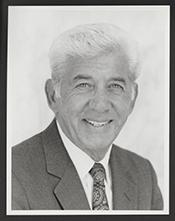
United States · United States Congress · 30 January 1980
Vietnam Era Veterans Agent Orange Act - Establishes a presumption of service-connected disability for certain diseases arising in Vietnam-era veterans (and for birth defects in their children) exposed to agent orange.
United States · United States Congress · 30 January 1980
Expresses appreciation to Canada for: (1) its historic close relations and cooperation with the United States in conducting foreign policy; (2) its support for U.S. efforts to obtain the safe release of the hostages in Iran; and (3) its efforts to protect and arrange the safe departure of certain U.S. citizens from Iran.
United States · United States Congress · 28 January 1980
Fusion Energy Research, Development, and Demonstration Act of 1980 - Directs the Secretary of Energy to establish research, development, and demonstration programs involving magnetic fusion energy systems to: (1) construct and operate a fusion engineering test facility by 1986; (2) construct and operate a magnetic fusion demonstration facility before the end of this century; (3) maintain and expand the base programs for fusion energy research and the development and testing of appropriate alternative confinement technologies; (4) maintain a strong research and development program in advanced fusion fuels; and (5) ensure an uninterrupted source of scientific and engineering talent from institutions of higher learning to support such effort. Requires such programs to include a study of the potential of using fusion energy for the production of synthetic fuels and the electrification of ground transportation systems. Directs the Secretary to disseminate information promoting the practical uses of fusion energy.
United States · United States Congress · 22 January 1980
Amends the Foreign Assistance Act of 1961 to authorize the President to furnish disaster relief and reconstruction assistance to the Azores to alleviate the suffering caused by a recent earthquake. Authorizes additional appropriations for such purposes. Permits obligations incurred prior to enactment of appropriations to be charged to appropriations authorized by this Act.
United States · United States Congress · 22 January 1980
Expresses the sense of Congress that: (1) the International Olympic Committee should withdraw the 1980 summer Olympic games from the Soviet Union; and (2) there should be a boycott of such games, if they are not withdrawn and Soviet troops have not been withdrawn from Afghanistan.
United States · United States Congress · 20 December 1979
Expresses the sense of Congress that the United States call upon the Soviet Union to intervene in the Cambodian crisis by advising Cambodia and Vietnam to cooperate with international relief efforts.
United States · United States Congress · 19 December 1979
Medicaid Community Care Act of 1980 - Authorizes a State with a plan approved under title XIX (Medicaid) of the Social Security Act to apply to the Secretary of Health and Human Services (formerly, the Secretary of Health, Education, and Welfare) to have Federal payments for home health care services, nursing services, home health aid services, medical equipment for use in the home, physical therapy, occupational therapy, speech pathology services, endiology services, adult day health services, respite care, short-term full-term nursing care, homemaker services, and nutrition counseling made at a higher rate the the rate for other care and services provided under the State plan. Specifies that the Federal medical assistance percentage for such services and the comprehensive assessments provided for in this Act shall be the lesser of: (1) the Federal medical assistance percentage determined under title XIX plus 25 percent; or (2) 90 percent of the cost of such services and assessments. Requires an application to be accompanied by a community care plan which: (1) provides for a comprehensive assessment of each individual eligible or applying for Medicaid who is likely to need long-term skilled nursing facility or intermediate care facility services; (2) makes available, under title XIX, the care and services for which the higher Federal payment may be made to individuals determined pursuant to a comprehensive assessment to be in need of long-term facility services and for whom such assistance is a feasible alternative to long-term facility services; and (3) coordinates the services provided under this Act with similar services provided under the Older Americans Act of 1965, and under titles XVIII (Medicare) and XX (Grants to States for Services) of the Social Security Act. Requires the Secretary to report to Congress with respect to the program established under this Act. Permits a State, for the purposes of title XIX, to treat a noninstitutionalized individual the same as an individual who is in a long-term care facility if the noninstitutionalized individual meets the income and resources standards for long-term facility residents and has been determined, pursuant to an assessment under this Act, to need long-term facility services.
United States · United States Congress · 18 December 1979
Used Machinery Investment Credit Adjustment Act of 1979 - Amends the Internal Revenue Code to increase from $100,000 to $200,000 the cost of used property which is eligible for the investment tax credit.
United States · United States Congress · 3 December 1979
Small Business Export Expansion Act of 1979 - Title I: Small Business Export Expansion Assistance - Amends the Small Business Act to authorize the Small Business Administration (SBA) to make grants to qualified applicants to encourage the development and implementation of a small business international marketing program. Stipulates that not more than one-third of such grants be used for the purpose of hiring personnel. Sets forth eligibility requirements for applicants. Requires each small business international marketing program to: (1) have a full-time staff director to manage program activities; (2) have access to export specialists to counsel and assist small business clients; and (3) establish an advisory board of nine members appointed by the Governor of the State in which the applicant is located. Sets forth operational procedures for such advisory board. Directs the SBA to maintain a central clearinghouse for the collection, dissemination, and exchange of information between small business international marketing programs. Authorizes appropriations through fiscal year 1982 for such programs. Title II: Export Promotion Centers - Directs the Administrator of SBA, after consultation with specified agencies, to establish an Export Promotion Center in each regional office of the Department of Commerce. Requires the Export-Import Bank of the United States, the Internal Revenue Service, the Overseas Private Investment Corporation, and the SBA to each designate at least one full-time employee to serve as the agency representative in each Center. Directs the Administrator to report to the Senate Select Committee on Small Business and the House Small Business Committee on the progress made in imprementing this title, not later than six months after enactment of this Act. Directs the Administration to establish a plan for the evaluation of the international marketing program to be submitted annually to the appropriate congressional committees. Title III: Small Business Export Financing Assistance - Authorizes the Administration to make loans to small businesses for export purposes of 90 percent of the balance of such loans outstanding at the time of disbursement. Title IV: Small Business Investment Companies - Amends the Small Business Investment Act of 1958 to authorize the Administration to make commitments, by contract, to guarantee qualifying investments by small business investment companies licensed pursuant to this Act. Limits such contracts to specified aggregate amounts of guarantee eligibility. Provides that such guarantees be granted with respect to initial and subsequent (to the effective date of this Act) investments made in eligible small business concerns, and shall not exceed 50 percent of each net investment loss. Directs that such guarantees be granted to such concerns which are or will be engaged in continuous export business operations, giving preference to new-to-export small businesses. Sets forth requirements for qualifying investments and terms and conditions under which the Administration may void or suspend any such contractual commitments.
United States · United States Congress · 28 November 1979
Establishes the Barrier Islands National Parks. Authorizes the Secretary of the Interior to acquire lands and interests in land within the boundaries of the barrier islands units by donation, purchase with donated or appropriated funds, or exchange, except that in the case of developed land, the Secretary may acquire such land only with the consent of the owner thereof, or following a determination by the Secretary that an actual or proposed change in the use of such land after the date of enactment of this Act would impair the quality of the unit. Withdraws lands within the barrier islands units from entry or appropriation under the mining laws of the United States and from the operation of the mineral leasing laws. Prohibits any Federal financial assistance from being made available under any authority of Federal law, and no Federal license, permit, or other form of approval may be issued by any Federal agency for: (1) the construction of any structure, road, or facility of any type on any barrier island unit of the Atlantic or gulf coast of the United States; (2) any road, airport, boat landing facility, or other facility to be used for providing access to any such barrier island contrary to the purposes of this Act; and (3) any project to prevent the erosion of, or to otherwise stabilize, any shoreline or inshore area of such a barrier island.
United States · United States Congress · 14 November 1979
Wind Energy Systems Research, Development, and Demonstration Act of 1979 - Declares it to be the policy of the United States and the purpose of this Act to establish a research, development, and demonstration program for converting wind energy into electricity. Sets as a goal of such program the attainment of a total megawatt capacity of at least 800 megawatts from wind energy systems by fiscal year 1988 and the reduction of the average cost of electricity produced by such systems to a level competitive with conventional energy sources by the end of fiscal year 1986. Authorizes the Secretary of Energy to enter into agreements with public and private entities to obtain scientific, technological, and economic information on the design, fabrication, purchase, installation, and testing of wind energy systems. Authorizes the Secretary to provide financial assistance to entities seeking to install wind energy systems upon submission of the proper application. Sets forth terms and conditions for receiving such assistance. Terminates any Federal subsidization of purchases of such equipment upon the determination that such systems have become competitive with conventional energy sources or by a specified date. Sets forth the amount of such assistance, taking into consideration any tax credits allowed under the Internal Revenue Code for renewable energy source expenditures. Allocates a portion of the funds appropriated to carry out such assistance program for accelerated procurement and installation of wind energy systems by Federal agencies for demonstration purposes. Directs the Secretary to promulgate voluntary performance standards for such systems. Directs the Secretary to initiate a three-year national wind resource assessment program to: (1) validate existing assessments of known wind resources; (2) perform wind resource assessments in regions where the use of wind energy may prove feasible; (3) initiate a general site prospecting program; (4) establish standard wind data collection and siting techniques; (5) establish, in consultation with the Administrators of the National Oceanic and Atmospheric Administration, the Environmental Protection Agency, and the National Aeronautics and Space Administration, a national wind data center to make public information available on wind energy. Directs the Secretary to prepare a comprehensive program management plan for the research, development, and demonstration activities prescribed under this Act for submission to specified congressional committees. Sets forth criteria for selection of programs consistent with the purposes of this Act. Directs the Secretary to monitor, collect and evaluate data and information, and conduct studies and investigations relating to wind energy systems and programs. Directs the Secretary to assure that information relating to programs, projects and other activities conducted under this Act are widely disseminated to Federal, State, and local authorities, relevant segments of the economy, the scientific community and the public, so as to promote the use of wind energy to the maximum extent feasible. Directs the Secretary to assure that small businesses will have adequate opportunities to participate in the programs conducted under this Act to the maximum extent practicable. Authorizes the appropriation of $100,000,000 for fiscal year 1980 to carry out the purposes of this Act.
United States · United States Congress · 14 November 1979
Limits the applicability of specified penalty provisions relating to failure to answer questions presented in the decennial and mid-decade census to questions approved for the particular census by a concurrent resolution passed by Congress. Prohibits compelling an answer to census questions which apply to persons or families or the farms they occupy, unless such questions have been so approved. Directs the Secretary of Commerce: (1) to study the effect of such removal of penalties upon the accuracy and completeness of responses to census questions; and (2) to report the results of such study to the appropriate committees of Congress.
United States · United States Congress · 9 November 1979
Sunset Review Act of 1979 - Requires the House Committee on Rules and the Senate Committee on Rules and Administration to jointly develop and maintain an inventory of all Federal programs and tax expenditures. Requires such inventory to classify all such programs and expenditures according to the jurisdiction of the various legislative committees of the two Houses. Requires the General Accounting Office, before the beginning of the 97th Congress, after consultation with the appropriate legislative committees, to submit a draft inventory to the House Committee on Rules and the Senate Committee on Rules and Administration. Requires such Committees to notify each legislative committee of the programs and tax expenditures which are classified within its jurisdiction. Allows any legislative committee to propose revisions of such inventory within 30 days after notification. Requires, after a determination that all programs and tax expenditures are accurately classified, that such inventory be published in a single document. Requires that an update be made of such inventory at the beginning of every Congress. Directs the General Accounting Office to maintain and publish a supplement to the inventory. Requires each legislative committee of the House of Representatives and the Senate, on or before March 1 in the first session of each Congress beginning with the 98th Congress, to develop, adopt, and submit to the House Committee on Rules and the Senate Committees on Rules and Administration an agenda for the sunset review of selected Federal programs within its jurisdiction or in the case of the House Committee on Ways and Means and the Senate Committee on Finance, of selected tax expenditures. Requires the committees of each House to develop their sunset review agenda in consultation with any other committee which has concurrent jurisdiction over any programs or tax expenditures involved. Prohibits either the House or the Senate from considering a primary expense resolution for any legislative committee in any Congress until that committee has developed and submitted its sunset review agenda. Requires the House Committee on Rules and the Senate Committee on Rules and Administration to incorporate such agendas into a consolidated sunset review agenda and to report such consolidated agenda to its House in the form of a concurrent resolution, within seven legislative days after all committee sunset review agendas have been submitted. Requires the consolidated sunset review agenda to be adopted in the House and in the Senate no later than March 30 in the first session of each Congress. Sets forth the procedures for adoption. Requires each committee of the House or the Senate, not later than May 15 in the second session of each Congress, to report a bill or bills modifying, continuing, or terminating each program or tax expenditure which it has been directed to review under the consolidated sunset review agenda adopted during the first session. Requires such bill to be accompanied by a report setting forth the committee's findings, recommendations, and justifications. Requires each department, agency, and instrumentality in the executive branch of the Government which is responsible for the administration of a Federal program or tax expenditure selected for sunset review to give assistance to the appropriate Congressional committees. Specifies that nothing in this Act shall affect the authority of any legislative committee to review programs or tax expenditures within its jurisdiction and to report legislation modifying, continuing, or terminating such programs or expenditures at such times and in such manner as it deems appropriate. Amends rule X of the Rules of the House of Representatives to include the consolidated sunset review agendas and the congressional inventory of Federal programs as part of the House Committee on Rules' functions.
United States · United States Congress · 19 October 1979
Expresses the sense of Congress that the Soviet Union should release Ida Nudel and allow her to emigrate to Israel. Urges the President to: (1) express U.S. opposition to the exile of Ida Nudel to Siberia; and (2) inform the Soviet Union that the United States will take into account the extent to which countries honor their commitments under international law, particularly concerning human rights.
United States · United States Congress · 16 October 1979
Amends the Internal Revenue Code to allow an income tax credit for expenditures to replace furnaces with furnaces that meet specified energy efficiency targets established by the Department of Energy. Limits the amount of such credit to 30 percent of expenditures under $2,000 and 20 percent of expenditures between $2,000 and $10,000.
United States · United States Congress · 28 September 1979
Commission on Wartime Relocation and Internment of Civilians Act - Establishes the Commission on Wartime Relocation and Internment of Civilians to: (1) determine whether a wrong was committed against American citizens and permanent resident aliens who were subjected to relocation or internment as a result of Executive Order Numbered 9066 and other associated Government acts; and (2) recommend appropriate remedies. Directs the Commission: (1) to hold public hearings in specified cities; and (2) within 18 months after enactment of this Act, to submit a final report of its findings and recommendations to Congress and the President. Terminates the Commission six months after such report is submitted.
United States · United States Congress · 21 September 1979
Amends the Internal Revenue Code to allow individuals a refundable income tax credit equal to one-third of the total cost during the taxable year of heating oil purchased by such individuals for use in a residence for residential purposes. Limits the dollar amount of such credit to $400 for the taxable year. Reduces the amount of such credit by one percent of the amount by which the taxpayer's adjusted gross income exceeds $20,000. Provides for the termination of the credit for taxable years ending after December 31, 1983.
United States · United States Congress · 19 September 1979
Small Business Innovation Research Act of 1979 - Amends the Small Business Act to direct the Small Business Administration (SBA) to develop an information program to assure that each qualified small business concern has the opportunity to participate in the Federal agency Small Business Innovation Research (SBIR) programs. Requires the SBA to report annually to the appropriate committees of Congress on the SBIR programs. Requires each Federal agency having an annual research and development budget of more than $100,000,000 to establish an SBIR program where one-half of one percent of its 1980 research and development budget and one percent of its subsequent budgets would be reserved for contract awards to small business firms specifically in connection with the SBIR program. Sets forth responsibilities of each such Federal agency with respect to the administration of an SBIR program as follows: (1) determine categories of projects; (2) issue SBIR solicitations; (3) receive and evaluate proposals; (4) select awardees for SBIR contracts; (5) administer such contracts; (6) make payments to SBIR contractors; and (7) make quarterly reports on the SBIR program to the SBA. Requires each Federal agency with a research and development budget in excess of $20,000,000 to establish goals specifically for awards of contracts for research and development to small business concerns. Allows such agencies to include the value of SBIR contracts in determining whether such goals are met. Prohibits contract awards to small business concerns for research and development which result from competitive or single source selections other than under an SBIR program to be counted as meeting any portion of the percentage requirements established pursuant to this Act. Directs the Administrator of the Office of Federal Procurement Policy, in conjunction with the SBA and the National Science Foundation, to issue regulations which shall: (1) provide a simplified acquisition process for the program with SBIR requests for proposals being standardized throughout the Federal Government; and (2) include uniform requirements for patent rights and rights in data.
United States · United States Congress · 11 September 1979
Uniformed Services Health Professionals Special Pay Act of 1979 - Provides special and additional pay for physicians in the Armed Forces or the Public Health Service who are on active duty for a period of not less than one year. Sets forth a schedule for such special pay providing that: (1) physicians below pay grade 0-7 are to receive between $1,200 and $10,000 per year based on years of creditable service; and (2) physicians above pay grade 0-6 are to receive $1,000 per year. Entitles a physician eligible for special pay to an additional $10,000 annual payment for any 12-month period during which he or she is not undergoing medical internship or initial residency training. Requires such a physician to agree in writing to remain on active duty for a period of not less than one year in order to receive such $10,000 additional payment. Authorizes additional special pay (from $2,000 to $5,000 based on years of creditable service) for those physicians eligible for special pay who are board certified (under regulations prescribed by this Act). Sets forth a special pay schedule for dentists in the Armed Forces or in the Public Health Service who are on active duty for not less than one year providing that: (1) dentists below pay grade 0-7 are to receive between $1,200 and $9,000 per year based on years of creditable service; and (2) dentists above pay grade 0-6 are to receive $1,000 per year. Entitles a dentist eligible for special pay to an additional annual payment ($6,000 to $10,000 depending on years of creditable service) for any 12-month period during which he or she is not undergoing dental internship or residency training. Requires such a dentist to agree in writing to remain on active duty for a period of not less than one year in order to receive such payment. Authorizes additional special pay (from $2,000 to $4,000 based on years of creditable service) for those dentists eligible for special pay who are board certified. Sets forth a special pay schedule for optometrists in the Armed Forces or the Public Health Service who are on active duty for not less than one year providing for: (1) payments of $1,000 to $3,000 per year depending on years of creditable service; and (2) additional annual payments of $1,000 for optometrists with at least three years of creditable service. Requires a written agreement for such additional payments. Defines "creditable service" for purposes of this Act to include all time spent in internship or residency while not on active duty, and all time spent on active duty (as a physician, dentist, optometrist or podiatrist). Authorizes special pay of $100 per month to podiatrists in the Armed Forces or in the Public Health Service who are on active duty for not less than one year and who have three or more years of creditable service. Directs the Secretary of Defense to establish standards for determining whether an officer is: (1) undergoing medical, dental, or optometry internship or residency training; and (2) board certified for a medical or dental specialty. Stipulates that any special pay received under this Act may not be included in computing the amount of any increase in pay authorized by any other uniformed services pay provisions, or in computing retired, severance, or readjustment pay. Provides for the refund of a specified percentage of the amount received by an officer who voluntarily terminates active service before the expiration of the one-year written agreement. Directs the Secretary to conduct a review every two years of such special pay authorizations. Requires the first such review to be submitted to the Congress no later than September 30, 1982. Repeals existing provisions of Federal law: (1) prohibiting special pay for veterinarians after September 1980; (2) setting forth guidelines for physicians' and dentists' continuation pay; and (3) regarding special pay for specified physicians below pay grade 0-7 who execute active duty agreements. Directs the Secretary to conduct an evaluation of alternatives for addressing the existing maldistribution of medical and dental specialties within the Armed Forces. Requires a final report to be submitted to the Congress no later than two years after enactment of this Act. Stipulates that health professionals eligible for basic and special pay under existing provisions shall not be paid less than such amounts as a result of amendments made by this Act. Authorizes appropriations of $3,000,000 for fiscal year 1981. Provides that special pay provisions under this Act shall take effect for periods beginning after September 30, 1979, or after date of enactment of this Act, whichever is later.
United States · United States Congress · 2 August 1979
Repeals the requirement, under title II (Old-Age, Survivors and Disability Insurance) of the Social Security Act, that the amount of monthly OASDI benefits payable to a spouse or surviving spouse be reduced by the amount such spouse or surviving spouse receives in monthly payments from a Federal or State pension fund.
United States · United States Congress · 2 August 1979
Sales Representatives Protection Act - Title I: Contracts Between Sales Representatives and Principals - Requires a principal to furnish specified information to a sales representative concerning orders placed through the representative's account and a monthly accounting of commissions due such representative. Enumerates items which must be set forth in any contract between a sales representative and a principal. Title II: Indemnification - Exempts principals conforming with such information requirements from the indemnification provisions set forth in this Act. Requires a principal who, without good cause, terminates a contract between such principal and a sales representative, or reduces the rate of commission for orders solicited on behalf of such principal, to indemnify the representative according to this Act. Requires a principal who reduces the size of the geographic territory assigned to a representative for a specified account, which results in a specified reduction in commissions, to indemnify such representative. Sets forth formulae for the indemnification of such representatives. Title III: Miscellaneous - Allows a plaintiff to bring an action to enforce any rights or liabilities created by this Act in a United States district court. Stipulates the procedure for such action.
United States · United States Congress · 31 July 1979
National Employment Priorities Act of 1979 - Requires a business concern to give notice, with an economic impact statement, to the Secretary of Labor and to affected employees, labor organizations, and local governments whenever such business concern intends a change of operations at an establishment which will result in an employment loss in any 18-month period of the lesser of 100, or of 15 percent, of the employees at such establishment. Requires, with exceptions, that such notice be given within specified periods of time (varying according to the number of employees affected) before such business concern reduces the weekly wages or suspends or terminates the employment of any employee in connection with such change. Directs the Secretary to investigate and hold public hearings on specified matters related to such change upon receipt of a written request for such investigation from an affected labor organization or from at least ten percent of the employees at such establishment. Requires such request to be made within 60 days of receipt of notice. Authorizes the Secretary to investigate and hold closed hearings on such matters, without regard to whether such notice is given, upon: (1) a determination that such investigation would serve the purpose of this Act; or (2) a request from at least 50 percent of such employees. Empowers the Secretary to issue subpoenas for witnesses and evidence in such investigations. Directs the Secretary to prepare and publish a report of such investigation. Makes employees who accept employment with such business concerns, with knowledge that such notice has been given, ineligible for specified assistance under this Act. Requires such business concerns to give written statements of employment status to employees whose weekly wages are lowered by a specified amount or who are suspended or terminated. Stipulates that an employee will be deemed to suffer an employment loss if a business concern fails to: (1) give such a statement of employment status to an employee; or (2) include in such statement an assurance of increased wages or reinstatement. Requires a business concern which gives such assurance, yet fails to prevent such employment loss, to pay such employee a lump sum in a specified amount in addition to other required payments. Requires a business concern, for a 52-week period following an employment loss, to make payments: (1) to the employee in a weekly income maintenance payment equal to 85 percent of such employees's wage rate or 100 percent of such rate while such employee participates in specified training programs; and (2) to specified employment benefit plans for such employees. Sets forth conditions under which such payments may be reduced or limited. Stipulates that such payments are not to be deemed wages for all other purposes, including specified employee benefit plans. Requires such business concerns to pay moving expenses for employees who resume employment with the same business concerns within three years. Requires such business concerns to continue weekly income maintenance payments to employees between 53 and 61 years of age when the 52 week payment period expires. Directs the Secretary to reimburse such business concerns for such continued payments. Directs the Secretary to make transitional assistance payments to employees upon their request whenever a business concern fails to make such payments. Provides that the amount of such payments shall then be owed, with interest, to the United States by such business concern. Makes a business concern which transfers ownership or control of an establishment to avoid liability for transitional assistance payments liable to the United States for a specified amount if the owning or controlling business concern fails to provide such assistance. Requires such business concerns to offer employees, who suffer an employment loss, any available employment, with equivalent wages and benefits, at any establishment of such business concerns for a three-year period after such employment loss. Sets forth such former employees' rights to credits and benefits in employee benefit plans and such business concerns' liability for payments to such plans. Stipulates that specified violations shall be deemed violations of the Employee Retirement Income Security Act of 1974, for which civil actions may be brought. Directs the Secretary, in consultation with specified groups, to implement a comprehensive assistance program (including existing or new programs of job training, job placement, and payments for job search and moving expenses) for employees who suffer or may suffer employment loss. Authorizes the Secretary to develop and implement retraining programs and to condition specified assistance to business concerns upon their implementation or assistance with such programs. Directs the Secretary to issue certificates of Federal procurement credit to business concerns which comply with this Act for appropriate periods if the Secretary finds that such assistance would provide additional employment opportunities through the cooperating concerns. Sets forth conditions of eligibility for assistance of business concerns, local governments, and certain employers or cooperative associations of employees. Authorizes the Secretary to provide specified forms of such assistance, giving priority to those which enable employees to continue at their present establishment. Makes such business concerns liable to local governments which lose revenue because of such changes of operations. Sets forth formulas for determining the amount of such liability. Directs the Secretary to pay such amounts to local governments if a business concern fails to do so (with such amount to be owed, with interest, to the United States by such business concern). Makes business concerns which transfer operations to an establishment outside the United States, when an economically viable alternative to such transfer exists, liable to the United States for lost revenues according to specified formulas. Sets forth criminal and civil violations and penalties. Enumerates violations of employees' rights and remedies for such violators. Directs the Secretary to: (1) recover overpayments for specified Federal assistance to employees obtained through a knowing deception; (2) maintain specified operating reserves; and (3) record mortgage security on specified loans. Provides procedures for Congressional disapproval of rules promulgated by the Secretary to carry out this Act. Directs the Secretary to make specified reports and legislative proposals to the Congress. Sets forth general powers of the Secretary in carrying out this Act. Directs the Secretary to implement this Act through the National Employment Priorities Administration. Authorizes the Secretary to delegate any function, power, or duty under this Act to the Administrator of the National Employment Priorities Administration. Establishes the National Employment Priorities Administration in the Department of Labor to: (1) perform such delegated functions, powers, and duties; (2) conduct research on the relationship between unemployment and changes of business operations; and (3) identify services and products which may profitably be provided by business concerns receiving specified assistance. Establishes the National Employment Priorities Advisory Council to: (1) advise and assist the Secretary in carrying out this Act; (2) evaluate programs under this Act; (3) study and report on those areas of future economic activity in which the United States will be at a competitive disadvantage and on industries in which many businesses may change operations; and (4) research and propose new assistance programs for employees, local governments, and business concerns. Authorizes appropriations to carry out this Act.
United States · United States Congress · 27 July 1979
Consumer Checking Account Equity Act of 1979 - Amends the Federal Reserve Act and the Federal Deposit Insurance Act to authorize member banks in the Federal Reserve System and federally insured nonmember banks to make automatic funds transfers from a savings deposit to a demand deposit pursuant to the written authorization of the depositor to make such transfers in connection with checks or drafts drawn upon the bank. Authorizes federally insured banks and savings and loan associations, State banks and savings and loan associations, savings banks, and mutual savings banks to offer interest-bearing deposits or accounts upon which the depositor may make withdrawals by negotiable instrument for the purpose of making transfers to third parties (NOW accounts). Stipulates that such deposits or accounts may only be held by individuals or nonprofit organizations. Amends the Home Owners' Loan Act of 1933 to permit Federal savings and loan associations and Federal mutual savings banks to establish remote service units pursuant to regulations of the Federal Home Loan Bank Board. Authorizes such associations to extend loans directly related to negotiable order of withdrawal accounts. Amends the Federal Home Loan Bank Act to require any institution which has subscribed for the stock of a Federal Home Loan Bank to maintain reserves against its negotiable order of withdrawal accounts pursuant to regulations prescribed by the Board after consultation with the Board of Governors of the Federal Reserve System. Prescribes the required form of such balances. Amends the Federal Credit Union Act to permit insured credit unions to offer share draft deposits to individuals and nonprofit organizations in accordance with regulations prescribed by the National Credit Union Administration Board. Requires each Federal credit union to maintain reserves against such deposits in amounts and forms prescribed by the Board after consultation with the Board of Governors of the Federal Reserve System.
United States · United States Congress · 26 July 1979
Campaign Contribution Reform Act of 1979 - Amends the Federal Election Campaign Act of 1971 to prohibit any multicandidate political committee (other than a multicandidate committee of a political party) from making contributions to a candidate for the office of Representative in, or Delegate or Resident Commissioner to, the Congress and his or her authorized committees which in any calendar year exceeds: (1) $5,000 with respect to any general or special election and a primary election relating to such election; or (2) $7,500 (but not more than $5,000 for one election) with respect to a general or special election and both a primary and runoff election relating to such election. Prohibits a candidate for the office of Representative in, or Delegate or Resident Commissioner to, the Congress or any authorized political committee from accepting contributions from political committees, other than committees of a political party, aggregating more than $50,000 in any calendar year, except in the case of a candidate who is a candidate in a general election and a special election, such candidate may accept such contributions aggregating: (1) $50,000 with respect to such general and any primary election relating to such general election; and (2) $50,000 with respect to such special election and any primary election relating to such special election. Specifies that any contribution made in a year, other than the calendar year in which the election is held, is considered to be made in the calendar year in which such election is held, and any contribution made after the date of such election shall be considered a contribution with respect to such election only if such contribution is used to pay obligations incurred with respect to such election. Specifies that any extension of credit for goods or services relating to advertising on broadcasting stations, in newspapers or magazines, by direct mail or other similar types of general public political advertising shall be considered a contribution, if such extension of credit is: (1) in an amount of more than $1,000; and (2) for a period of more than 30 days.
United States · United States Congress · 10 July 1979
Declares it the sense of Congress that the Postmaster General and the Citizens Stamp Advisory Committee should give favorable consideration to the issuance of a commemorative postage stamp in honor of Americans of Italian descent and the 250th anniversary of the birth of Philip Mazzei on December 25, 1980, or as soon as possible thereafter. States that the Postmaster General and the Committee should honor other foreign-born contributors to the revolutionary cause, from countries which have not yet been commemorated, prior to the conclusion of the American Bicentennial celebration in 1983.
United States · United States Congress · 28 June 1979
Amends the National Aeronautics and Space Act of 1958 to establish within the National Aeronautics and Space Administration (NASA) a program to advance the state of automotive research and technology. Requires such program to achieve one or more of the following goals: (1) preservation and enhancement of personal mobility at reasonable cost; (2) reduction of the Nation's dependence on foreign oil; (3) increased motor vehicle safety; (4) reduction of motor vehicle environmental effects; (5) improvement of motor vehicle reliability; (6) conservation of scarce resources; and (7) enhancement of the international competitive position of the Nation's automotive products. Charges NASA with the overall responsibility for planning and managing activities designed to achieve the goals set forth by this Act. Denies the Administrator of NASA any power to promulgate any regulations concerning the commercial development or use of the automotive products resulting from the research and development programs provided for by this Act. Requires the President to transmit annual reports to Congress setting forth a description of the activities of all Federal agencies in the field of automotive research and technology development and an evaluation of the progress of such agencies in reaching the goals established by this Act. Establishes a Motor Vehicle and Fuels Coordination Committee to advise the Administrator of NASA and the Secretary of Energy on matters relating the conduct of the program of automotive research and technology development and of programs within the Department of Energy to develop alternative fuels for use by motor vehicles. Transfers to the Administrator of NASA: (1) all automotive research and technology development programs currently being conducted by other Federal agencies; (2) all functions, powers, and duties of the Secretaries of Energy and Transportation, and any other officer or employee of the United States which relate to automotive research and technology; and (3) so much of the costs and funding as are allocable to the programs which are transferred to the Administrator. Requires the Administrator to assure that small business concerns will have realistic and adequate opportunities to participate in the automotive research and development programs established by this Act. Requires the Administrator to report to Congress with respect to all activities relating to the research programs established pursuant to this Act.
United States · United States Congress · 28 June 1979
Establishes the Boston Harbor National Recreation Area, and describes its boundaries. Directs the Secretary of the Interior to establish a Commission to prepare a plan for the development, maintenance, and management of the recreation area within one year after enactment. Authorizes the appropriation of not to exceed $200,000 for each fiscal year for the preparation of such plan. Requires the plan to include recommendations: (1) for the development of public recreational facilities; (2) for the preservation of significant natural and historic resource areas; (3) for expanded public water access to and between the Boston Harbor Islands; and (4) for the identification of the units of State or local government which will be responsible for implementing the plan. Prohibits the plan from proposing an expenditure of Federal funds in excess of $20,000 (exclusive of funds available under any existing Federal plan) for such implementation. Requires the Commission to submit its plan to the Secretary within one year after its establishment. Specifies the standards and procedure for approval or disapproval of such draft plan. Establishes a special account in the Treasury of the United States to hold moneys for grants to State or local governmental units implementing such plan. Requires that $20,000,000 from revenues due and payable to the United States under the Outer Continental Shelf Lands Act or under the Act of June 4, 1920 (41 Stat. 813) be covered into such account.
United States · United States Congress · 27 June 1979
Capital Cost Recovery Act of 1979 - Amends the Internal Revenue Code to revise the method for determining useful lives of business assets for purposes of computing allowable depreciation deductions. Replaces the asset depreciation range (ADR) method with a schedule of capital cost recovery periods for three classes of business property. Establishes capital cost recovery periods for the following classes of business property: (1) buildings and their structural components, ten years; (2) tangible property, five years; and (3) automobiles, taxis, and light-duty trucks (up to $100,000), three years. Allows a ten percent investment tax credit for buildings and tangible property, and a six percent credit for automobiles, taxis, and light duty trucks. Requires the recapture of depreciation amounts and investment tax credit amounts applicable to assets which are sold or otherwise disposed of prior to the expiration of the capital cost recovery period. Permits taxpayer to deduct less than the full allowance for capital cost recovery in any taxable year. Permits a carryover to succeeding taxable years of any unused depreciation amounts. Disqualifies capital cost recovery property from the allowance for first year depreciation. Treats amounts claimed as the capital cost recovery of noncorporate lessors as an item of tax preference for purposes of the minimum tax. Adopts as an accounting practice the "half year convention" under which investments eligible for capital cost recovery treatment or the investment tax credit which are made at any time during the taxable year are deemed to be made in the middle of such year.
United States · United States Congress · 15 June 1979
National Energy Self-Sufficiency Act of 1979 - Title I: Duty on Imported Crude Oil - Imposes on imported crude oil an additional duty equal to the amount by which the average synthetic fossil fuel price is greater than the imported crude oil price. Directs the Secretary of the Treasury, in consultation with the Secretary of Energy, to establish methods for the determination of such prices. Provides for the monthly redetermination of such prices. Title II: Synthetic Fossil Fuel Fund - Establishes the Synthetic Fossil Fuel Fund in the U.S. Treasury. Stipulates that such Fund shall consist of the equivalent of amounts received from the duty imposed under title I, in addition to such other amounts as may be appropriated. Directs the Secretary to report annually to Congress concerning such Fund. Requires the Secretary to invest the portion of such Fund, not required to meet current withdrawals, in interest-bearing obligations of the United States. Declares that such Fund shall be available for making loans for synthetic fossil fuel production. Establishes the Synthetic Fossil Fuel Board to make loans for the construction of synthetic fuel production facilities. Sets forth the criteria to be used by the Board in making such loans.
United States · United States Congress · 7 June 1979
Amends the Internal Revenue Code to qualify a replacement oil boiler whose energy savings cost can reasonably be expected to exceed its cost over a ten year period for the investment tax credit.
United States · United States Congress · 5 June 1979
Forest Fuel Utilization Act of 1979 - Authorizes the Secretary of Agriculture to make grants through the rural forestry assistance program of the Forest Service to States for the employment of additional State foresters or equivalent State officials. Requires the Secretary to determine the number of woodlot owners in each State. Authorizes the Secretary to make forest fuel utilization training programs available to State foresters, or equivalent State officials, in States in which forest growth is underutilized and in which there is a potential for the utilization of wood as a fuel in place of oil. Directs: (1) the Secretary of Energy to develop a plan to increase the assistance and information provided to the Forest Service by the Department of Energy; and (2) the Administrator of the Small Business Administration to develop a plan to increase the managerial assistance and information provided to small woodlot owners and wood fuel distributors and marketers by the Small Business Administration.
United States · United States Congress · 5 June 1979
Congratulates the men and women of the Apollo program upon the tenth anniversary of the first manned landing on the Moon and requests the President to designate the period of July 16 through July 24, 1979, as "United States Space Observance" in honor of such event.
United States · United States Congress · 31 May 1979
Amends the Internal Revenue Code to allow homeowners a nonrefundable income tax credit for expenses paid or incurred to make alterations to their residences for the purpose of making such residences more accessible to, and usable by, a handicapped individual who is either the taxpayer, his spouse, or a dependent of the taxpayer. Limits the amount of such credit, for each such handicapped individual, to the lesser of $1,000 or an amount which, when added to previous year's credits, does not exceed $5,000. Reduces the amount of such credit by one-half of the amount by which the adjusted gross income of the taxpayer exceeds $20,000 ($35,000 in the case of married individuals filing jointly). Defines "handicapped individual" as any individual who has a medically identifiable mental or physical impairment which can be expected to result in death or which can be expected to last for a continuous period of at least 12 months, and which substantially limits one or more of the major life activities of such individual. Requires the handicapped individual to live in the principal residence for which the alterations are made for not less than a nine month period during the taxable year.
United States · United States Congress · 31 May 1979
Crude Oil Windfall Profit Tax Act of 1979 - Amends the Internal Revenue Code to impose upon producers of domestic crude oil an excise tax on the windfall profits from oil removed from the premises during each taxable period. Sets the rate of such tax at 85 percent of the windfall profit on each barrel of taxable crude oil. Defines "windfall profit" as the excess of the removal price of a barrel of crude oil (amount for which barrel is sold) over the sum of the adjusted base price of such barrel (the base price, plus the base price multiplied by a cost of living adjustment for the calendar quarter in which the crude oil is removed from the premises) and the amount by which any severance tax imposed with respect to such barrel exceeds the severance tax which would have been imposed if the barrel had been extracted and sold on March 31, 1979, at the base price. Specifies base prices for three tiers or types of crude oil subject to the 1979 energy regulations. Provides that the windfall profit on any barrel of crude oil shall not exceed the net income attributable to such barrel. Requires oil producers to maintain such records with respect to oil production as the Secretary of the Treasury may require. Specifies that windfall profit tax returns must be filed not later than the last day of the second month following the close of the taxable period. Requires the purchaser of taxable crude oil to furnish to the individual responsible for the payment of the windfall profits tax a monthly statement containing information with respect to: (1) the amount of taxable crude oil purchased during such month; (2) the removal price of such oil; (3) the base price and the adjusted base price of such oil; (4) the amount of such taxpayer's liability for tax; and (5) other information which the Secretary may require. Imposes fines and criminal penalties for willful failure to provide such information. Requires each partnership, estate, and trust producing domestic crude oil for any taxable period to furnish to each partner or beneficiary a written statement showing: (1) the name of such partner or beneficiary; (2) information received by the partnership, trust, or estate from the purchaser of crude oil; and (3) each partner's or beneficiary's share from the sale of crude oil.