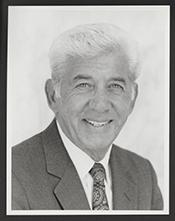
United States · United States Congress · 23 April 1991
Expresses the sense of the House of Representatives that it should be U.S. policy to reduce national emissions of carbon dioxide in the next ten years by 20 percent from the 1988 baseline level and to assume a leadership position in negotiating an international climate protection treaty that includes establishing: (1) agreements by industrialized nations to reduce their current carbon dioxide emissions by 20 percent over 1988 levels in the next ten years, by developing nations to reduce their growth in carbon dioxide emissions from fossil fuel combustion, and by all countries to reduce emissions of greenhouse gases; (2) an international fund and other financial mechanisms to help developing countries achieve such objectives; (3) mechanisms for continuing international cooperation for the development of policies for future emissions reductions; and (4) commitments to cease the destruction of primary forests.
United States · United States Congress · 18 April 1991
Grants an eight percent interim geographic pay adjustment as provided under the Federal Employees Pay Comparability Act of 1990 to General Schedule employees who work in certain metropolitan areas in Massachusetts and Rhode Island. Provides for an eight percent increase in the basic pay rate for prevailing rate employees working in the Narragansett Bay and Boston, Massachusetts, Wage Areas.
United States · United States Congress · 17 April 1991
Expresses the sense of the Congress that employers resume normal business travel that was suspended during the Persian Gulf War and that travel and tourism-related businesses intensify efforts to promote travel both to and within the United States.
United States · United States Congress · 16 April 1991
Federal Employees Retirement Incentive Act - Allows certain Federal employees serving in entities undergoing a major reorganization, reduction in force, or transfer of functions to elect to have four years added to their age upon separation, their total creditable service, or a combination thereof (not to exceed four years) for purposes of determining retirement eligibility and benefits under the Civil Service and Federal Employees' Retirement Systems. Amends provisions governing early or immediate retirement for Government employees to consider certain requirements for entitlement to annuities to have been met (with respect to agency reorganization, reduction in force, or transfer of functions conditions) if: (1) at least five percent of the employees within the agency and geographic area involved will be separated; or (2) at least 20 percent of such employees will be subject to an immediate reduction in the rate of basic pay. Waives such minimum percentages under certain circumstances.
United States · United States Congress · 16 April 1991
Federal Employees Health Benefits Reform Act of 1991 - Revises the Federal Employees Health Benefits Program (the Program) to: (1) establish the Federal Employees Health Benefits Board (the Board); (2) replace current service and indemnity health benefit plans with a new Government-wide health insurance plan that offers both a standard and a high option for either self or family coverage; (3) require group- and individual-practice prepayment plans and mixed model prepayment plans to offer the same types of benefits offered under the standard option; (4) allow employee organization sponsored health plans to offer supplementary benefits; (5) establish flexible spending plans to allow employees to set aside a portion of their salary on a pretax basis to pay out-of-pocket health care expenses; and (6) allow annuitants whose annuities are insufficient to cover the full amount of required withholdings to elect to be covered under health benefits plans if they pay an amount equal to such withholdings to the Employees Health Benefits Fund (the Fund) through the retirement system that administers their health benefits enrollment. Directs the Board to: (1) prescribe regulations governing the provision of health insurance benefits to Federal employees, their families, and retirees under the Government-wide plan in consultation with the Office of Personnel Management (OPM); and (2) establish procedures for reviewing the utilization of health care services under such plan and controlling service costs. Declares that the service providers shall not be eligible for payments under the plan unless they comply with such procedures. Specifies the benefits required to be provided under each option of the plan and the extent to which they are covered. Requires such individuals to meet specified annual deductions under each option of the plan before any benefits will be paid, except in the case of a family enrollment when the deduction will be waived once it is met by any two family members. Establishes maximum out-of-pocket expense limitations for self and family coverage under each option. Requires the plan to pay all covered expenses after out-of-pocket expenses have exceeded their appropriate maximum limitation. Revises provisions for computing Government contributions. Establishes different requirements for each respective basic health benefits plan. Provides for the following with respect to the Government-wide plan: (1) establishment of specified biweekly employee contributions for the first administrative year to be increased for later years by the lesser of the increase in the medical care component of the consumer price index or the increase in the average enrollment charges; (2) procedures for determining average annual enrollment charges (the costs for providing benefits and administering the plan and any amounts necessary to maintain an adequate contingency reserve) in consultation with the Board for the first administrative year and for adjusting such charges for later years; (3) allocation of such costs to each option in a manner which is reasonable and equitable; (4) publication of new enrollment charges in the Federal Register and the Code of Federal Regulations; and (5) continued individual and family coverage for employees who are placed in a leave without pay status. Revises provisions regarding contracting authority to establish separate authority for awarding competitive three-year contracts to nongovernmental organizations to administer the Government-wide plan on a regional basis in areas established by OPM. Requires plan administrators to review the utilization of health care services and implement the cost-control procedures established by the Board. Permits certain employee organizations which currently self-insure to serve as the plan administrators for employees within their bargaining unit. Repeals provisions regarding payment or reimbursement for services by: (1) psychologists or optometrists; and (2) any person licensed under State law in a State where a specified percentage of the population is located in primary medical care manpower shortage areas. Revises provisions concerning election of coverage to: (1) provide automatic coverage under the Government-wide plan's standard option for self alone to an employee becoming eligible for Federal health insurance coverage unless the employee elects alternative coverage or to be excluded from coverage; (2) revise criteria for continuation of coverage for annuitants; and (3) extend coverage to unmarried dependent natural or adopted children of the former spouse and the employee who are students over age 22 but under age 23. Allows temporary employees to enroll in the Government-wide plan provided they pay both employee and Government contributions. Provides that if an individual eligible to enroll in a basic health benefits plan has a spouse who is also eligible, either may enroll for self and family or each may enroll as an individual, but no individual may be covered both as an enrollee and as a family member. Sets forth rules to apply in administering provisions regarding: (1) election of coverage: (2) continued coverage; (3) coverage of restored employees and survivor or disability annuitants; (4) double coverage; and (5) changes in family status. Requires any amounts forfeited under flexible spending plans to be transferred to a separate account which shall be within the Fund. Allows such amounts to be used for wellness programs for Federal employees. Revises provisions regarding contribution set-asides in the Fund to establish new set-aside requirements for contributions to the basic health benefits plans. Directs OPM to: (1) prescribe regulations to provide eligible individuals with an opportunity to elect coverage under the health benefits plans, to terminate their enrollment, to transfer to another such plan, or to make any other allowable changes in the terms or conditions of their enrollment; (2) on an annual basis compile statistics and submit to the Board a report on the use of the different benefits of the basic and supplemental plans and their costs to the Government as part of a continuing study of the operation and administration of the Program; (3) prescribe Program regulations providing for the establishment of wellness programs for Federal employees; and (4) prescribe regulations to ensure that, for any annuitant eligible to receive Medicare (title XVIII of the Social Security Act) and Federal health insurance benefits, deductibles and coinsurance or copayment amounts under the Program shall be waived to the same extent as before the enactment of this Act and that when an individual is eligible for Federal health insurance benefits which would be duplicative of Medicare benefits, the primary payer shall be the same as it would have been before the enactment of this Act.
United States · United States Congress · 15 April 1991
Pornography Victims Protection Act of 1991 - Amends the Federal criminal code with respect to the prohibition against the sexual exploitation of children to add as a condition triggering Federal penalties that the person concerned knows that a minor was transported in interstate or foreign commerce for the purpose of producing pornography. Makes it a criminal offense for any person to coerce, intimidate, or fraudulently induce an individual 18 years or older to engage in any sexually explicit conduct for the purposes of producing any visual depiction of such conduct. Grants the U.S. district courts jurisdiction to prevent and restrain violations of this Act. Authorizes the Attorney General or any person threatened with loss or damage by such conduct to institute a civil suit. Provides for treble damages for a victim who suffers physical injury, emotional distress, or property damage. Imposes civil penalties for violation of the prohibition against sexual exploitation of children.
United States · United States Congress · 15 April 1991
Amends the Internal Revenue Code and title II of the Social Security Act (Old-Age, Survivors and Disability Insurance) with respect to the social security exemption for election officials and election workers employed by State and local governments to increase the allowed remuneration paid to such workers.
United States · United States Congress · 11 April 1991
Amends title XVIII (Medicare) of the Social Security Act to cover colon cancer preventive screening examinations and an annual physical examination performed by a physician or nurse practitioner if a demonstration project to be conducted by the Secretary of Health and Human Services proves such examinations to be cost-effective or of moderate cost but measurably health-enhancing.
United States · United States Congress · 22 March 1991
Directs the American Battle Monuments Commission to establish a memorial on Federal land in the District of Columbia or its environs to honor World War II veterans and to commemorate U.S. participation in that conflict. Directs the Commission to plan, design, construct, and oversee the operation of the memorial. Specifies that such design shall provide for accessibility by, and accommodations for, the physically handicapped. Establishes the World War II Memorial Advisory Board to: (1) promote the establishment of the memorial and encourage the donation of private funds for construction and maintenance; (2) assist and cooperate with the Commission in the selection of the site and design for the memorial; and (3) transmit annual reports on its activities to the Congress. Authorizes the Commission to solicit private contributions for such memorial. Establishes a fund in the Treasury which shall be made available to the Commission to carry out this Act. Authorizes Federal funding, in addition to such private funds, for: (1) site preparation, design, planning, and associated administrative costs for establishment of the memorial; and (2) construction, maintenance, and operation of the memorial. Authorizes assistance from specified Federal departments and agencies, including the Library of Congress. Authorizes the transfer of Federal property to the Commission. Authorizes the Commission to purchase suitable property within the District of Columbia for the establishment of such memorial. Urges the Government to encourage 50th anniversary commemorations of the U.S. role in World War II. Urges the Smithsonian Institution and other Federal museums to develop commemorative exhibitions to be shared with academic institutions.
United States · United States Congress · 22 March 1991
National Historic Preservation Act Amendments of 1991 - Amends the National Historic Preservation Act to: (1) require the Secretary of the Interior to report, at least once every four years, to the President and to the Congress, on a review of threats to properties included in or eligible for the National Register of Historic Places; (2) revise requirements for Federal and State historic preservation programs; (3) provide for tribal and Native Hawaiian historic preservation programs; (4) provide for matching grants to States and direct grants to Indian tribes and Native Hawaiian organizations to carry out this Act; (5) require development of a comprehensive preservation education and training program; (6) revise requirements for awarding and apportioning grants under this Act; (7) require adaptive use alternatives for Federal agency historic properties; and (8) provide for disposition of archaeological materials. Requires the Advisory Council on Historic Preservation to study and report to the Congress on the feasibility of establishing a registration program for artifacts removed from domestic and foreign archaeological sites. Authorizes appropriations. Requires the Council to call for and organize U.S. leadership and participation in an international conference on the international antiquities trade. Provides that the conference shall be held in 1992 as part of the commemoration of the 500th anniversary of the Columbus Discovery Voyage. Amends the National Historic Preservation Act to include within the membership of the council one member of an Indian tribe or Native Hawaiian organization appointed by the President. Prohibits public access to certain information about historic resources in specified circumstances. Establishes in the National Park Service a National Center for Preservation Technology. Establishes a Preservation Technology Board to: (1) provide leadership, policy advice, coordination, and professional oversight to the Center; (2) advise on priorities and the allocation of funds among Center activities; and (3) submit an annual report to the President and the Congress. Authorizes appropriations. Requires the Secretary to study and report to the Congress on: (1) the status of the inclusion of artifacts, records, and material remains on the National Register of Historic Places; and (2) the advisability of including traditional cultural practices and lifeways on it.
United States · United States Congress · 22 March 1991
World War II 50th Anniversary Commemorative Coin Act - Expresses the sense of the Congress that the United States should recognize the 50th anniversary of World War II by minting and issuing commemorative coins. Directs the Secretary of the Treasury to issue and mint such coins in five dollar, one dollar, and half dollar denominations. Mandates that surcharges received from the sale of such coins be deposited in a coinage profit fund and allocated, upon separate congressional authorization, to the American Battle Monuments Commission to establish a World War II memorial. Directs the Secretary to report semiannually to the Congress regarding implementation of this Act.
United States · United States Congress · 22 March 1991
World Summit for Children Implementation Act of 1991 - Provides for assistance in implementing the plan of action adopted by the World Summit for Children. Expresses the sense of the Congress that: (1) the U.S. Government should commit to increasing participation in the special supplemental food program for women, infants, and children under the Child Nutrition Act (the WIC program) by 20 percent per year in FY 1992 through 1996, to reach full participation by the end of FY 1996; and (2) specified minimum amounts should be appropriated for the WIC program in FY 1992 and 1993 to reach such full participation goal. Expresses the sense of the Congress that the commitment to provide full funding for the Head Start Program, contained in the Human Services Reauthorization Act of 1990, should be implemented in order that the goal of full participation of all eligible three- and four-year-old children can be reached by FY 1994. Amends the Public Health Service Act to direct the Secretary of Health and Human Services to undertake a Children's Vaccine Initiative. Requires that the Director of the National Vaccine Program: (1) plan and coordinate the Initiative; and (2) ensure that the Public Health Service conducts vaccine research, production, and delivery activities under the Initiative in collaboration with non-governmental institutions and with other Federal agencies to ensure the full use of U.S. scientific and industrial capacity to prevent infectious disease. Authorizes appropriations for FY 1992 and 1993. Authorizes appropriations for FY 1992 and 1993 for contributions to the United Nations Children's Fund for activities to promote child health and other assistance programs for children (to carry out specified provisions of the Foreign Assistance Act of 1961). Amends the Foreign Assistance Act of 1961 (the Act) to authorize appropriations for FY 1992 and 1993 for special health needs of children and mothers under the Child Survival Fund. Requires that specified minimum amounts of funds under various provisions for FY 1992 and 1993 be reserved only for such specified child survival activities. Expresses the sense of the Congress that authorization, in such amounts as may be required, should be granted to the President to exercise the (Public Law 480) debt authority with respect to least developed countries that are pursuing reforms to promote long-term economic development (as provided in specified provisions of the Agricultural Trade Development and Assistance Act of 1954, as amended by the Food, Agriculture, Conservation, and Trade Act of 1990). Amends the Act to establish a Vitamin A Deficiency Program. Reserves for such Program specified amounts in FY 1992 and 1993 from funds for development assistance for agriculture, rural development, and nutrition. Amends the Act to direct the President, in carrying out provisions for development assistance for health-related activities, to promote, encourage, and undertake activities relating to research on, and treatment and control of, acquired immune deficiency syndrome (AIDS) in developing countries. Authorizes appropriations for FY 1992 and 1993, for such purpose, to the International AIDS Prevention and Control Fund. Provides that such amounts shall be in addition to other amounts available for such purpose. Amends the Act to reserve specified amounts in FY 1992 and 1993, from funds for development assistance for education and under other provisions of the Act, for international basic education, including early childhood education, primary education, teacher training, other support activities, and adult literacy training. Expresses the sense of the Congress that at least specified minimum amounts should be appropriated for the Migration and Refugee Assistance account, and that at least specified minimum portions of such funds should be reserved for programs of refugee assistance overseas (in addition to amounts available for programs for Soviet, Eastern European, and other refugees resettling in Israel). Amends the Act to replace provisions for certain disadvantaged children in Asia with provisions for assistance to children in exceptionally difficult circumstances. Includes among such children street children, AIDS orphans, other orphaned and abandoned children, and children displaced by armed conflict, poverty, famine, or other disasters. Reserves specified minimum portions of certain funds under the Act in FY 1992 and 1993 for assistance for such children. Requires that such assistance be made available in accordance with policies and general authorities under certain disaster assistance provisions. Directs the President to report annually to the Congress on U.S. contributions to the achievement of the goals of the World Summit for Children, including U.S. efforts to achieve such goals in the United States and in other countries, with an analysis of past, current, and planned funding levels.
United States · United States Congress · 22 March 1991
Amends the Internal Revenue Code to: (1) extend for five years, through 1996, the investment tax credit in connection with depreciable solar energy property and geothermal property; and (2) permit this credit against the taxpayer's entire regular tax liability and minimum tax liability.
United States · United States Congress · 22 March 1991
Supports the efforts of the Bush Administration to obtain the release of hostages in Lebanon and urges the President to continue to give high priority to working for the release of such hostages and to seek the recovery of the remains of William Buckley and Lieutenant Colonel Higgins. Encourages senior Government officials to emphasize the plight of the hostages in discussions with foreign governments and appeals to governments which have influence with hostage captors to use such influence to win the release of the hostages. Condemns those holding hostages for the violation of human rights. Calls upon the international community to cooperate in establishing mechanisms for holding individuals who engage in international terrorism accountable. Encourages all nations and international organizations to accelerate efforts to obtain the safe and unconditional release of all hostages.
United States · United States Congress · 21 March 1991
Amends the Internal Revenue Code with respect to the offset for rental real estate activities under passive activity rules to increase the low-income housing credit and the rehabilitation credit under such rules.
United States · United States Congress · 21 March 1991
Amends the Internal Revenue Code to remove charitable contributions of appreciated capital gain property as an item of tax preference for purposes of the alternative minimum tax.
United States · United States Congress · 21 March 1991
Taxpayer Regulatory Relief Act of 1991 - Amends the Internal Revenue Code to repeal the authority of the Secretary of the Treasury to prescribe the extent to which rules and regulations may be applied without retroactive effect (or with it). Requires all final, temporary, or proposed regulations and rulings issued by the Secretary to apply prospectively from the date of publication in the Federal Register, unless the Congress supersedes such treatment.
United States · United States Congress · 21 March 1991
Expresses the sense of the Congress that the United States should: (1) promote the maximum conservation and protection of whale, dolphin, and porpoise populations; (2) work to strengthen and maintain the current International Whaling Commission moratorium on the commercial killing of whales; (3) work to strengthen the Commission by reaffirming its competence to regulate whaling on all species of cetaceans and take actions to assure global protection for small cetaceans; and (4) in promoting protection, make use of diplomatic channels, domestic and international law, and all other means.
United States · United States Congress · 20 March 1991
Violence Against Women Act of 1991 - Title I: Safe Streets for Women - Safe Streets for Women Act of 1991 - Subtitle A: Mandatory Restitution, Treatment, and Rehabilitation for Sex Offenses - Requires that a court order restitution, treatment, and rehabilitation for violations of Federal sexual abuse laws, including participation in a psychotherapeutic treatment program by a licensed therapist for specified persons who committed sexual or sexual-related offenses. Specifies that: (1) the treatment program shall be designed to rehabilitate the affected person and to deter such person from committing a sexual offense after being released from the institution; and (2) treatment for a substance abuse-related condition shall be made available to such person in addition to, but not as a substitute for, counseling under such program. Sets forth provisions with respect to the period of treatment, the requirement of a complete forensic psychological assessment prior to the commencement of the treatment program, termination of treatment, supplemental chemical treatment (but the affected person may refuse to participate, or continue to participate, in supplementary chemical treatment), and the responsibilities of the Attorney General (such as contracting for treatment and documenting subsequent criminal sexual abuse). Directs the Attorney General to establish an advisory committee on therapeutic treatment for sex offenders. Authorizes appropriations. Subtitle B: Law Enforcement and Prosecution Grants to Reduce Violent Crime Against Women - Amends the Omnibus Crime Control and Safe Streets Act of 1968 to require the Director of the Bureau of Justice Assistance to make grants to areas of high intensity crime against women. Requires that the grants be used for personnel, training, technical assistance, data collection, and other equipment for the more widespread apprehension, prosecution, and adjudication of persons committing violent crimes against women. Authorizes the Director to make grants to States, for use by States and their subdivisions, to be used for the same purposes as the high intensity area grants and to reduce the rate of violent crimes against women. Authorizes the Director to make general grants to: (1) States to reduce violent crimes against women; and (2) Indian tribes to reduce violent crimes against women in Indian country. Authorizes the Director, in addition to the grants under this subtitle, to direct any Federal agency, with or without reimbursement, to use its authorities and resources in support of State and local assistance efforts. Authorizes appropriations. Bars any State or other grantee (recipient) from receiving funds under this title unless such recipient incurs the full cost of forensic medical exams for victims of sexual assault when such exams are required under this title. Specifies that a recipient does not incur the full medical cost of such exams if it chooses to reimburse the victim after the fact unless the reimbursement program waives any minimum loss or deductible requirement, provides victim reimbursement within a reasonable time (90 days), permits applications for reimbursement within one year from the date of the exam, and provides information to all subjects of such exams about how to obtain reimbursement. Subtitle C: Safety for Women in Public Transit and Public Parks - Directs the Secretary of Transportation, from funds authorized under existing provisions, to make capital grants for the prevention of crime and to increase security in existing and future public transportation systems. Authorizes the Secretary to make grants and loans to States and local public bodies to increase the safety of public transportation through lighting, camera surveillance, security phones, or other projects. Sets the Federal share of each project at 90 percent of the net cost. Directs the Secretary to provide grants and loans to study ways to reduce violent crimes against women in public transit through better design or operation of public transit systems. Amends the National Park System Improvements in Administration Act to authorize the Secretary of the Interior to provide assistance to reduce violent crime in the National Park System (NPS). Provides for the compilation of a list of areas within the NPS with the highest rates of violent crime. Allows funds to be used, around public parks and recreation areas, for increasing lighting, providing emergency phone lines, increasing security or law enforcement personnel, and any other project to increase security and safety. Amends the Land and Water Conservation Act of 1965 to direct the Secretary of the Interior to provide grants for capital improvements and other measures to increase safety in public parks and recreation areas. Subtitle D: National Commission on Violent Crime Against Women - Establishes the National Commission on Violent Crime Against Women to promote a national policy on violent crime against women and to make recommendations on reducing such crime. Authorizes appropriations. Terminates the Commission after submission of its final report, subject to extension by the President for up to one more year. Subtitle E: New Evidentiary Rules - Amends the Federal Rules of Evidence to exclude, notwithstanding any other provision of law and in criminal cases other than a sex offense case, reputation or opinion evidence of the past sexual behavior of a victim from admission into evidence. Allows other types of evidence of a victim's past sexual behavior in accordance with specified procedures if its probative value outweighs the danger of unfair prejudice. Makes reputation or opinion evidence of the plaintiff's past sexual behavior, notwithstanding any other provisions of law, inadmissible in a civil action involving allegations of actionable sexual misconduct. Makes other types of evidence of a plaintiff's past sexual behavior admissible in accordance with specified procedures if its probative value outweighs the danger of unfair prejudice. Defines actionable sexual misconduct to include sex harassment or discrimination claims under title VII (Equal Employment Opportunity) of the Civil Rights Act of 1964 and gender bias claims under title III of this Act. Makes evidentiary rulings made under specified Federal Rules of Evidence relating to sex offense cases and the relevance of a victim's past behavior subject to interlocutory appeal by the Government or by the alleged victim. Allows the alleged victim to waive those rules if the prosecution seeks to offer evidence of prior sexual history. Makes evidence of an alleged victim's clothing, notwithstanding any other provision of law and in a criminal case under Federal laws relating to sexual abuse, inadmissible to show the victim incited or invited the offense. Subtitle F: Assistance to Victims of Sexual Assault - Amends the Public Health Service Act (PHSA) to allow States to use amounts transferred by the State under block grant provisions for rape prevention and education programs conducted by rape crisis centers or similar nongovernmental nonprofit entities. Authorizes appropriations. Removes a requirement that a minimum amount from the block grants under the PHSA be allotted to States on the basis of population. Authorizes the Secretary of Health and Human Services (Secretary) to make grants for research and service demonstration projects to develop and evaluate techniques for lowering the overall incidence of rape by 20 percent by the year 2000 and for reducing the trauma and long-term impact of rape. Authorizes appropriations. Title II: Safe Homes for Women - Safe Homes for Women Act - Subtitle A: Interstate Enforcement - Provides for a Federal term of imprisonment or fine, in addition to any State penalties, for any person who travels or causes another (including the intended victim) to travel across State lines or in interstate commerce with intent to injure a spouse or intimate partner and who, during the travel or thereafter, injures his or her spouse or intimate partner in violation of a criminal law of the State where the injury occurs, or in violation of a State protection order. Provides for temporary protection orders while a case under these provisions is pending. Mandates that a court order restitution to the victim of an offense under this Act. Requires, provided certain conditions are met, that a protection order issued by the court of one State be accorded full faith and credit by the court of another State. Makes a protection order issued against a person who filed a written pleading for protection not entitled to full faith and credit if no cross or counter petition, complaint, or other written pleading was filed seeking such a protection order or, if a cross or counter petition was filed, the court did not specifically find each party entitled to such an order. Subtitle B: Arrest in Spousal Abuse Cases - Amends the Family Violence Prevention and Services Act (FVPSA) to authorize the Secretary to make grants, with regard to spousal abuse, to: (1) implement pro-arrest programs and policies in police departments and improve case tracking; (2) centralize and coordinate police enforcement, prosecution, or judicial responsibility for cases in one group of officers, prosecutors, or judges; and (3) educate judges to improve judicial handling of cases. Directs the Secretary to delegate to the Attorney General responsibility to carry out these provisions. Authorizes appropriations. Subtitle C: Funding for Shelters - Amends the FVPSA to authorize appropriations to carry out that Act, earmarking at least 85 percent of funds appropriated for States, and at least ten percent for Indian tribes and tribal organizations, for grants (under current law, demonstration grants) to prevent family violence and provide immediate shelter and related assistance. Limits the percentage which may be used to provide training and technical assistance to State, Indian tribal, and local domestic violence programs and to other professionals who provide services to victims of domestic violence. Subtitle D: Family Violence Prevention and Services Act Amendments - Amends the FVPSA to: (1) specify that the purpose of such Act is to increase public awareness of, as well as to prevent, family violence, and to provide for training to the courts, and legal, social service, and health professionals (current law specifies only local public agencies, nonprofit private organizations, and others seeking such assistance); and (2) grant preference in the distribution of funds to States that give special emphasis to projects including counseling and self-help services to victims and their children (current law covers counseling, alcohol and drug abuse treatment, and self-help services to abusers and victims.) Directs the Secretary to provide for the funding of domestic violence coalitions that shall further the purposes of domestic violence intervention and prevention through activities such as: (1) working with judicial and law enforcement agencies to encourage appropriate response to domestic violence cases and specified issues, such as the use of mandatory arrest of accused offenders and the use of interstate extradition in cases of domestic violence crimes; (2) working with family law judges, Child Protective Services agencies, and children's advocates to develop appropriate responses to child custody and visitation issues in domestic violence cases, and where domestic violence and child abuse are both present; and (3) conducting public education campaigns regarding domestic violence through the use of public service announcements and informative materials designed for print and electronic broadcast media, billboards, and public transit advertising. Authorizes appropriations. Sets forth provisions with respect to the allotment of funds. Requires: (1) that any State domestic violence coalition have standing to challenge whether a grantee is in compliance with the eligibility requirements, or to seek enforcement, of provisions of the FVPSA; and (2) that each such coalition submit a report to the Secretary detailing the coordination, training, technical assistance, and public education services performed, and evaluating the effectiveness of such services. Raises the limit on funding of grants in any fiscal year to any single entity (other than to a State) to $75,000 (currently, $50,000, and a $150,000 limit on the total amount of such grants to any such single entity). Modifies provisions with respect to grants to entities other than States to require that the local share as a proportion of the total amount of funds provided under such Act to the project involved be 35 percent for new programs for the first year of the program and 20 percent for each year therafter for existing programs. (Current law specifies 35 percent in the first year such project receives a grant under such Act, 55 percent in the second such year, and 65 percent in the third such year.) Repeals a provision requiring that a specified portion of State demonstration grant funds for preventing, and assisting victims of, family violence be distributed to provide shelter for victims. Includes shelter as "related assistance" that may be funded under grants for such purposes, as well as medical services, legal assistance, technical assistance with respect to obtaining financial assistance under Federal and State programs, employment training, and educational and preventive health services. Increases the minimum allotment to States for grants under the FVPSA. Requires the General Accounting Office, within 120 days, to complete a study of, and submit to the Congress a report and recommendations on, problems of recordkeeping of criminal complaints involving domestic violence. Directs the Secretary to: (1) award to not less than ten States model State leadership grants for domestic violence intervention; and (2) provide grants or contracts with public or private nonprofit organizations for the establishment and maintenance of a national resource center and six specialty resource centers focusing on one or more specified issues of concern to domestic violence victims. Sets forth eligibility requirements, funding provisions, and, with respect to the latter, reporting requirements. Subtitle E: Confidentiality for Abused Persons - Requires the Postmaster General to promulgate regulations to secure the confidentiality of abused persons' addresses. Title III: Civil Rights - Declares that all persons within the United States shall have the same rights, privileges, and immunities in every State as are enjoyed by all other persons to be free from crimes of violence motivated by the victim's gender (defined as any crime of violence, including rape, sexual assault, sexual abuse, abusive sexual contact, or any other crime of violence committed because of or on the basis of gender). Makes any person, including a person who acts under color of any statute, ordinance, regulation, custom, or usage of any State, who deprives another of the rights, privileges, and immunities secured by the Constitution and laws as enumerated by this Act liable to the injured party in an action for compensatory and punitive damages, injunctive and declaratory relief, or other relief as the court deems appropriate. Amends the Civil Rights Attorney's Fees Awards Act of 1976 to allow the awarding of attorney's fees in actions to enforce this title. Title IV: Safe Campuses for Women - Safe Campuses for Women Act - Amends the Higher Education Act of 1965 to authorize the Secretary of Education to make, on a competitive basis, grants to and contracts with institutions of higher education for rape education and prevention programs. Requires that the grants be used to educate and provide support services to student victims of rape or sexual assault, with 25 percent of the funds available for model demonstration programs for rape prevention and education curricula and for local programs to provide services to student rape victims. Authorizes appropriations to carry out title X (Fund for the Improvement of Postsecondary Education) of the Act. Amends the General Education Provisions Act to add sexual assault to the list of criminal offenses about which statistics must be disclosed by institutions participating in certain programs. Title V: Equal Justice for Women in the Courts - Equal Justice for Women in the Courts Act - Subtitle A: Education and Training for Judges and Court Personnel in State Courts - Authorizes the State Justice Institute to make grants for model programs to be used by States in training judges and court personnel in State laws on rape, sexual assault, domestic violence, and other crimes of violence motivated by the victim's gender. Authorizes appropriations. Requires the State Justice Institute to expend at least: (1) 40 percent of appropriated funds on programs regarding domestic violence; and (2) 40 percent on programs regarding rape and assault. Subtitle B: Education and Training for Judges and Court Personnel in Federal Courts - Directs the Federal Judicial Center to study and report on the nature and extent of gender bias in the Federal courts. Requires the Center to develop and disseminate model programs to be used in training Federal judges and court personnel in the laws on rape, sexual assault, domestic violence, and other crimes of violence motivated by the victim's gender. Authorizes appropriations. Requires between 25 and 40 percent of such funds to be used for the study required by this subtitle.
United States · United States Congress · 20 March 1991
Utah BLM Wilderness Act of 1991 - Title I: Designation of Wilderness - Designates specified lands in the following areas of Utah as components of the National Wilderness Preservation System: (1) Great Basin wilderness areas; (2) Zion and Mojave Desert wilderness areas; (3) the Grand Staircase Wilderness and the Kaiparowits Plateau Wilderness; (4) Escalante Canyon wilderness areas; (5) the Henry Mountains Wilderness; (6) the Dirty Devil River Wilderness; (7) Cedar Mesa wilderness areas; (8) Canyonlands wilderness areas; (9) San Rafael Swell wilderness areas; and (10) Book Cliffs and Uinta Basin wilderness areas. Title II: Administrative Provisions - Directs the Secretary of the Interior to administer the wilderness areas designated under this Act. Reserves the Federal Government's rights to a quantity of water sufficient for each wilderness area designated by this Act.
United States · United States Congress · 19 March 1991
Amends part B (Supplementary Medical Insurance) of title XVIII (Medicare) of the Social Security Act to reduce from one year to 30 days the deadline for submitting claims for services provided under such part.
United States · United States Congress · 19 March 1991
Amends the Internal Revenue Code to restore prior law for determining wages subject to employer social security taxes for certain employers whose employees receive income from tips.
United States · United States Congress · 19 March 1991
Repeals a Federal provision prohibiting the payment of veterans' disability compensation to an incompetent veteran having no spouse, child, or dependent when such veteran's estate value exceeds $25,000, until such estate value is reduced to less than $10,000.
United States · United States Congress · 18 March 1991
Intangibles Amortization Clarification Act of 1991 - Amends the Internal Revenue Code to allow the amortization of customer based, market share and similar intangible items for purposes of the depreciation deduction.
United States · United States Congress · 14 March 1991
Horn of Africa Recovery and Food Security Act of 1991 - Amends the Foreign Assistance Act of 1961 to authorize the President to provide assistance for civil strife relief and rehabilitation in the Horn of Africa (Ethiopia, Somalia, and Sudan). Amends the Agricultural Trade Development and Assistance Act of 1954 to authorize the President to provide supplemental emergency food assistance for civilian victims of civil strife in the Horn of Africa. Permits the President to transfer funds from unobligated amounts in the economic support fund (ESF) and military assistance to carry out this Act. Makes available a percentage of assistance for management support activities of the Agency for International Development. Requires the President to consult with other nations, armed and unarmed parties in the Horn of Africa, and the United Nations Secretary General to bring about negotiated settlements of the wars in the region. Expresses the sense of the Congress that the President should: (1) direct the U.S. representative to the United Nations to take specified steps with respect to peace and the implementation of an arms embargo in the region; (2) play an active role in other fora in pressing for settlements to such wars; and (3) participate in regional and international peace consultations. Declares that development assistance in the Horn of Africa should be targeted to aid the poor. States that U.S. Government aid institutions should seek to: (1) build upon the capabilities and experiences of organizations active in local grassroots relief, rehabilitation, and development efforts; (2) consult with such organizations and incorporate their views into the policymaking process; and (3) support the expansion of their activities without compromising their private nature. Declares that current legislative provisions that restrict assistance to Ethiopia, Somalia, and Sudan should be retained until concrete steps toward peace, democracy, and human rights are achieved. States that development assistance should be: (1) targeted to the voluntary relocation and repatriation of displaced persons and refugees; and (2) carried out in coordination with strategies for debt relief of countries in the region and with efforts to establish an International Fund for Reconstruction of developing nations which settle civil wars. Prohibits assistance appropriated under this Act from being available for involuntary or forced resettlement of persons. Prohibits development assistance to Ethiopia, Somalia, or Sudan unless the President certifies that the government of the country has: (1) begun to implement peace or national reconciliation agreements; (2) demonstrated a commitment to human rights; (3) manifested a commitment to democracy and has held or scheduled free and fair elections; and (4) agreed to distribute development assistance without discrimination. Requires the Secretary of the Treasury to instruct the U.S. executive directors of the multilateral development banks to oppose any loan or other funds, except to meet basic human needs, to or for Ethiopia, Somalia, or Sudan until the President makes such certification. Prohibits ESF assistance, grant military assistance, or international military education and training assistance to Ethiopia, Somalia, or Sudan unless the President certifies that the government of the country has: (1) begun to implement peace or national reconciliation agreements; (2) demonstrated a commitment to human rights; and (3) held or scheduled free and fair elections.
United States · United States Congress · 14 March 1991
Amends the Comprehensive Environmental Response, Compensation, and Liability Act of 1980 to exclude from the definition of "owner or operator," for purposes of limiting liability for releases of hazardous substances, a person who, without participating in the management of a vessel or facility, holds indicia of ownership primarily to protect a security interest in such vessel or facility. Defines "indicia of ownership" as an interest in a vessel or facility acquired either for: (1) securing payment of a loan or indebtedness or the performance of an obligation; or (2) protecting a security interest. Makes liable for any release or threatened release of a hazardous substance attributable to their activities: (1) any person who causes the transfer of a vessel or facility subject to a security interest; or (2) a fiduciary or trustee who acquires ownership or control of a vessel or facility. Makes conforming amendments to the Resource Conservation and Recovery Act of 1976.
United States · United States Congress · 14 March 1991
Declares it to be an unfair or deceptive act or practice under the Federal Trade Commission Act to advertise or cause to be advertised through magazines, newspapers, brochures, promotional displays, radio or television broadcasting (including cable broadcasting) any alcoholic beverage unless the advertising includes one of specified warnings. Makes the Secretary of Health and Human Services responsible for establishing and maintaining toll free numbers referred to in some of the warnings. Sets forth requirements for the warnings, including rotating between the warnings.
United States · United States Congress · 13 March 1991
Civil Rights Amendments Act of 1991 - Amends the Civil Rights Act of 1964 and the Civil Rights Act of 1968 to prohibit discrimination on the basis of affectional or sexual orientation. Provides that this Act shall not be construed to permit a finding of discrimination based on statistical differences or the fashioning of any remedy requiring a quota.
United States · United States Congress · 13 March 1991
Silicone Safety and Information Act - Amends the Federal Food, Drug, and Cosmetic Act to require a physician performing a silicone gel implant to provide the patient in advance with a summary prepared by the Secretary of Health and Human Services respecting the associated advantages, disadvantages, and risks. Directs the Secretary to provide such a summary to physicians. Sets forth a civil monetary penalty for violations by physicians.
United States · United States Congress · 13 March 1991
Amends the Internal Revenue Code to provide for the treatment of rental and nonrental real estate activities under the limitations on losses from passive activities.
United States · United States Congress · 12 March 1991
National Sea Grant College Program Authorization Act of 1991 - Amends the National Sea Grant College Program Act to require that the National Sea Grant College Program be administered by a National Sea Grant Office within the National Oceanic and Atmospheric Administration. Authorizes appropriations to carry out specified provisions of the Act and for administration of the Act. Repeals provisions authorizing grants relating to marine affairs and resource management.
United States · United States Congress · 12 March 1991
Savings and Investment Incentive Act of 1991 - Title I: Retirement Savings Incentives - Amends the Internal Revenue Code to remove the limitations on deductions for individual retirement plans and provides a cost-of-living adjustment for deductible amounts. Establishes special individual retirement accounts that are nondeductible. Makes such accounts nontaxable if earnings on contributions are held for at least five years. Applies the early withdrawal penalty to distributions made before the end of the five year-period. Title II: Penalty-Free Distributions - Provides exemptions from the ten-percent penalty on early withdrawals from individual retirement plans for: (1) first home purchases; (2) higher education expenses; and (2) financially devastating medical expenses.