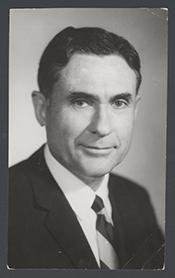
United States · United States Congress · 1 June 1977
World War I Pension Act - Requires the Administrator of Veterans' Affairs to pay (in addition to any already paid) a monthly pension of $150 to each veteran of World War I who meets specified service requirements, or to the surviving spouse of each such veteran, or when there is no surviving spouse, to the child or children of each such veteran.
United States · United States Congress · 11 May 1977
Federal Power Commission Reform Act - Amends the Federal Power Act to direct the Federal Power Commission to require public utilities to report anticipated shortages of power and to file plans to provide for curtailment by retail consumers on a nondiscriminatory basis. Requires that rate increases for the interstate sale of electricity not become effective until public hearings on such increases have been completed by the Commission. Authorizes the Commission to issue orders prohibiting unfair methods of competition by public utilities. Stipulates that rates charged by public utilities shall be approved by the Commission only if based on known and measurable costs. Directs the Commission to audit the fuel acquisition practices of public utilities with a view to eliminating discriminatory or anticompetitive practices.
United States · United States Congress · 3 May 1977
Repeals provisions granting lands in Mono County, California, to the city of Los Angeles, California, for designated uses; and granting rights-of-way over public lands and reserved land to the city of Los Angeles.
United States · United States Congress · 22 April 1977
Amends the Internal Revenue Code to allow individuals a limited income tax deduction for uncompensated repairs to certain residential water wells damaged by drought.
United States · United States Congress · 6 April 1977
Amends the National Environmental Policy Act of 1969 to require Federal agencies to set forth specific environmental impact findings which shall be subject to review in appropriate Federal circuit court of appeals in accordance with prescribed criteria.
United States · United States Congress · 6 April 1977
Amends the Internal Revenue Code to allow as a deduction an amount equal to 25 percent of the gross income from geothermal steam and geothermal resources property. Limits such deduction to a maximum of 50 percent of the taxpayer's taxable income from the geothermal steam and geothermal resources property for the taxable year. Directs the Secretary of the Treasury to adopt regulations which allow the same deduction for intangible drilling and development costs for geothermal steam and geothermal resources as are presently available for the development of oil and gas wells.
United States · United States Congress · 5 April 1977
Amends the Internal Revenue Code to allow an income tax exclusion for the interest on governmental bonds the proceeds of which are used for facilities to furnish hydroelectric energy.
United States · United States Congress · 17 March 1977
Directs the Secretary of the Interior, acting through the Bureau of Reclamation, to implement a program of interest-free emergency drought assistance loans to irrigators in order to mitigate losses and damages resulting from the 1976-77 drought period. Stipulates that actions taken pursuant to this Act shall not be deemed major Federal actions significantly affecting the quality of the human environment for purposes of the National Environmental Policy Act of 1969. Authorizes the appropriation of $200,000,000 in emergency funds in fiscal year 1977 to carry out the purposes of this Act.
United States · United States Congress · 15 March 1977
Federal Power Commission Reform Act - Amends the Federal Power Act to direct the Federal Power Commission to require public utilities to report anticipated shortages of power and to file plans to provide for curtailment by retail consumers on a nondiscriminatory basis. Requires that rate increases for the interstate sale of electricity not become effective until public hearings on such increases have been completed by the Commission. Authorizes the Commission to issue orders prohibiting unfair methods of competition by public utilities. Stipulates that rates charged by public utilities shall be approved by the Commission only if based on known and measurable costs. Directs the Commission to audit the fuel acquisition practices of public utilities with a view to eliminating discriminatory or anticompetitive practices.
United States · United States Congress · 15 March 1977
Amends Title XVIII (Medicare) of the Social Security Act to authorize payment for specified services performed by chiropractors, including x-rays and physical examinations, and related routine laboratory tests.
United States · United States Congress · 14 March 1977
Establishes the price support for milk, under the Agricultural Act of 1949, at not less than 80 percent of parity, adjusted quarterly, for the period beginning on the date of enactment and ending on March 31, 1978.
United States · United States Congress · 10 March 1977
Directs the President to appoint a specified number of additional judges to designated United States district courts and courts of appeals. Authorizes the Director of the Administrative Office of the United States Courts to place an additional eight positions in grades 16, 17, and 18 of the General Schedule.
United States · United States Congress · 9 March 1977
Industrial Energy Conservation Act - Directs the Administrator of Energy Research and Development to establish and maintain a comprehensive program for research, development, and demonstration of industrial energy conserving technologies. Specifies criteria that the Administrator is required to apply in reaching decisions regarding the directions, priorities activities, and operations of the industrial energy conservation program. Authorizes the Administrator to make loans and loan guarantees for the purchase, construction, operation, or maintenance of energy-efficient equipment or facilities. Directs the Administrator to give special priority to loan recipients in depressed industrial areas. Establishes limits on the amount of outstanding indebtedness to be guaranteed under this Act. Stipulates that no guarantee or commitment to guarantee shall be undertaken after September 30, 1977. Details procedures in the event of a default on guaranteed obligations. Authorizes the appropriation of the following amounts for research and development programs authorized by this Act: (1) $35,000,000 for fiscal year 1976; and (2) $50,000,000 for fiscal year 1979. Authorizes the appropriation of the following amounts for the purpose of making loans under this Act: (1) $30,000,000 for fiscal year 1978; and (2) $45,000,000 for fiscal year 1979. Authorizes the appropriation of up to $500,000,000 to be paid in the event of a default on obligations guaranteed under this Act.
United States · United States Congress · 8 March 1977
Authorizes the Secretary of the Interior to study methods of preserving critical scenic, environmental, and outdoor recreational values of the Lake Tahoe Basin in California and Nevada. Authorizes the Secretary of Agriculture to acquire, by purchase, any lands within the boundaries of the Eldorado, Tahoe, and Toiyabe National Forests in the States of California and Nevada in order to further such preservation.
United States · United States Congress · 8 March 1977
Permits the Secretary of Agriculture to implement an emergency feed program for assistance in the preservation and maintenance of livestock in any area of the United States including Puerto Rico and the Virgin Islands, where, because of natural catastrophe, the Secretary determines that an emergency exists. Requires that for any person to receive such assistance he: (1) must have suffered a substantial loss in the livestock feed normally produced on his farm for his livestock; (2) must not have sufficient feed for his livestock for the projected period of the emergency; and (3) must make feed purchases in quantities larger than the quantities of feed purchases that he would normally make. Limits reimbursement of eligible persons to 50 percent of the cost of the feed purchased. Directs the Commodity Credit Corporation to administer the program. Establishes civil and criminal penalties for unauthorized disposal of any feed for which a person has been reimbursed under this program. Repeals specified current provisions of The Agricultural Act of 1949 dealing with: (1) distress relief assistance in the preservation and maintenance of foundation herds; (2) limitations on the costs borne by the Commodity Credit Corporation in the administration of distress relief assistance; and (3) civil and criminal penalties for unauthorized disposal of any feed grains furnished under such relief program.
United States · United States Congress · 8 March 1977
Allows any Federal employee or Member of Congress who was a Japanese-American World War II internee to credit, for civil service retirement purposes, the period during which such individual was detained or interned in a camp or similar facility.
United States · United States Congress · 1 March 1977
Grants the consent of Congress to the California-Nevada Interstate Compact, designed to provide for the equitable apportionment of water within the Lake Tahoe, Truckee River, Carson River, and Walker River Basins.
United States · United States Congress · 1 March 1977
Amends the Internal Revenue Code to limit the application of the Tax Reform Act's elimination of the sick pay exclusion for persons who have not retired on total disability, to taxable years beginning after December 31, 1976.
United States · United States Congress · 24 February 1977
National Energy and Conservation Corporation (AMPOWER) Act - Establishes a National Energy and Conservation Corporation (AMPOWER) to achieve specified goals, including: (1) the exploration, development, and production of public lands and tideland oil, natural gas, oil shale, and coal either independently or in partnership with private industry; and (2) the acceleration of creation and demonstration of specified technologies. Declares it the policy of Congress that production costs in excess of market prices should be funded through appropriations as a cost of national security. Stipulates that fuels produced by the Corporation shall be sold by competitive bid, with 50 percent of such production reserved for bids from publicly owned utilities and governmental entities. Specifies procedures and requirements governing the operation of the Corporation. Authorizes the Corporation to issue bonds not to exceed an aggregate of $30,000,000,000 outstanding at any one time. Authorizes the Corporation to institute condemnation proceedings to acquire easements or rights-of-way necessary to further the purposes of this Act. Imposes criminal penalties for persons who make false statements with an intent to defraud the Corporation. Imposes criminal penalties for conspiracy to defraud the Corporation. Directs the Corporation to consider environmental factors in decisions regarding the construction and siting of facilities under this Act. Requires public hearings on siting proposals by the Corporation. Authorizes the appropriation of $5,000,000,000, to carry out the provisions of this Act.
United States · United States Congress · 23 February 1977
Declares it the sense of the House of Representatives: (1) that the President should obtain removal of the trade impairments placed on dried prunes by the European Economic Community and should seek agreement with the European Economic Community that similar restrictive measures will not be imposed in the future, and (2) that the European Economic Community should be placed on notice that retaliatory measures will be taken if restrictive import regulations are placed on walnuts.
United States · United States Congress · 22 February 1977
Amends the Internal Revenue Code to allow an income tax exclusion for the interest on governmental bonds the proceeds of which are used for facilities to furnish hydroelectric energy.
United States · United States Congress · 21 February 1977
Full Employment and Balanced Growth Act - Title I: Establishment of Goals, Planning, and General Economic Policies - Amends the Employment Act of 1946 to declare that all adult Americans able, willing, and seeking work have the right to useful paid employment at fair rates of compensation. States that, in moving toward the goal of full employment, it shall be an objective to maintain trends in the ratio of private employment civilian public employment and first priority is to expand conventional private jobs through policies made available under this Act. Directs the President in each annual Economic Report to recommend numerical goals for employment, production, and purchasing power, as well as policies to support these goals and achieve balanced growth and full employment. Requires the preparation of a Full Employment and Balanced Growth Plan, prepared with the assistance of Economic Advisers and in consultation with the Office of Management and Budget. Requires that such plan set forth foreseeable social and economic goals; provide estimates of unmet social and economic needs; identify available and needed resources; and contain long-term economic goals including (1) full employment goals set at the number of jobs to be provided in order to reduce unemployment to the minimum level of functional unemployment consistent with efficient job search and labor mobility, (2) full production goals set at levels of output estimated to be yielded by achievement of full employment goals, and (3) full purchasing power goals set at levels estimated to be necessary for attaining and maintaining full employment and production while contributing to an equitable distribution of purchasing power. States that in achieving such goals the President shall include the objective of holding the annual rate of price increases to levels consistent with reasonable price stability. Requires the full employment goal to be consistent with an adult unemployment rate not in excess of three percent. Requires that the plan propose priority policies and programs to support full employment and balanced growth and enumerates sectors of the economy to be included in such policies and programs. Directs the President to submit proposals improving the efficiency and economy of the Federal Government. Requires the Presidents' Budget and Economic Report to set forth the level and composition of Federal expenditures, tax policy, and monetary policy consistent with and in promotion of the goals and policies contained in this Act. Directs the Federal Reserve Board to report to the President and Congress, identifying the extent to which the Federal Reserve will support the economic goals recommended by the President. Stipulates that each Economic Report contain a comprehensive set of anti-inflation policies to supplement monetary and fiscal policy. Establishes an Advisory Committee on Full Employment and Balanced Growth to advise and assist the Council of Economic Advisers. Directs the Council of Economic Advisers to prepare the Full Employment and Balanced Growth Plan and to consult with the Advisory Committee. Title II: Countercyclical, Structural, and Youth Employment Policies - Directs the President to transmit to Congress within 90 days of the enactment of this Act a proposal, together with necessary legislation, establishing permanent supplementary employment policies and programs required to reduce high unemployment arising from cyclical movements in the economy. Specifies types of programs which should be considered by the President in establishing component parts of such proposal and the means to be utilized in coordinating them. Requires the President to also transmit to Congress within such period legislation creating a permanent grant program related to the stabilization and needed growth of State and local budgets. Directs the President to transmit to Congress within 180 days of the enactment of this Act (1) a comprehensive regional and structural employment proposal designed to reduce chronic underutilization of human and capital resources in certain areas of the country and in groups within the labor force, and (2) legislation providing institutional means to encourage public and private investment in areas with substantial unemployment and to provide an alternative source of capital funds for local and State governments to finance public facilities. Directs the President to transmit to Congress legislation creating a comprehensive youth employment program which utilizes existing resources and facilities and provides additional employment programs. Directs the President to provide job opportunities through reservoirs of federally operated public employment projects and approved private nonprofit employment projects to the extent, and only to the extent, that willing able adults are not otherwise provided job opportunities. Establishes, within the Department of Labor, a Full Employment Office to assist in creating such employment opportunities. Directs the President to transmit to Congress a proposal, together with such legislation as is necessary, on how the income maintenance and employment policies can be integrated to insure that employment is substituted for income maintenance to the maximum extent feasible. Title III: Policies and Procedures for Congressional Review - Requires the Joint Economic Committee to carry out overall review of executive branch policies under this Act. Requires the Committee on the Budget of the Senate and the Committee on the Budget of the House of Representatives to review the fiscal policy, economy in government policies, and Federal budget priorities recommended by the President. Requires the Joint Economic Committee to review and make recommendations to Congress on annual numerical goals for employment, production, and purchasing power proposed by the President. Provides for Congressional review of the Full Employment and Balanced Growth Plan, including reports to the Joint Economic Committee from the Standing Committees of Congress on matters that relate to the plan, public hearings before the Joint Economic Committee, and consideration of State and local views on the plan. Establishes a Division of Full Employment and Balanced Growth within the Congressional Budget Office to assist the Joint Economic Committee in the discharge of its duties under this Act. Provides that the provisions of this title, with specified exceptions, be incorporated into the rules of the House of Representatives and Senate, respectively. Title IV: General Provisions - Makes general provisions with respect to nondiscrimination, labor standards, and authorizations of appropriations.
United States · United States Congress · 8 February 1977
Establishes the overtime hourly rate of pay for an employee of the Animal and Plant Health Service, Department of Agriculture at an amount equal to one and one-half times the hourly rate of basic pay of such employee if the Secretary of Agriculture determines that: (1) the duties of such employee are critical to certain inspection and disease-control services; (2) the operating requirements cannot be met without overtime; and (3) the overtime work is performed at a time not subject to control of the Department or employee, or is required by an emergency disease outbreak.
United States · United States Congress · 2 February 1977
Pay-As-You-Go Social Security and Prosperity Insurance Act - Amends Title II (Old-Age, Survivors, and Disability Insurance) of the Social Security Act to permit the retirement of all persons in the United States at the age of 60 years with benefits sufficient, in the absence of any other resources, to assure elderly persons freedom from poverty and to assure elderly persons full participation in prevailing national standards of living. Provides Social Security benefits for physically, mentally, or vocationally disabled persons aged 18 and over. Provides benefits for eligible full-time students aged 18 to 25. Provides benefits for eligible female heads of families and for certain children. Creates within the Treasury an account to be known as the 'pay-as-you-go, social security and prosperity insurance account" and authorizes the appropriation to it of revenues derived under this Act. Sets forth a schedule for reduction of benefits on the basis of earnings of income received from beneficiaries. Provides that payments to recipients shall be made on a monthly basis. Provides that payments to recipients shall be made on a monthly basis. Provides that, in addition to all other excises, duties, and taxes, there shall be levied a tax on the gross income of all persons and companies, except that all personal gross income up to $500 per month shall be exempt. Provides that all personal gross income of more than $500 per month and the total monthly gross income of all companies shall be taxed at the rate of one percent for the first six months after the adoption of this Act. Increases such tax rate to two and one-half percent after 22 months. Exempts certain organizations from taxation. Directs the Secretary of the Treasury to prepare and make available United States social security bonds in varying denominations. States that such bonds may be purchased by anyone on his own behalf on the behalf of any other person and may be redeemed only by such persons upon becoming qualified for benefits under the provisions of this Act.
United States · United States Congress · 2 February 1977
Creates a Select House Committee on Population to conduct an investigation and study of: (1) the major adverse effects of current population growth throughout the world; (2) approaches which have been shown to be effective in coping with excessive population growth; and (3) means to encourage countries with excessive population growth rates to adopt methods proven to be successful in reducing population growth rates.
United States · United States Congress · 2 February 1977
Declares it the sense of the House of Representatives: (1) that the President should obtain removal of the trade impairments placed on dried prunes by the European Economic Community and should seek agreement with the European Economic Community that similar restrictive measures will not be imposed in the future, and (2) that the European Economic Community should be placed on notice that retaliatory measures will be taken if restrictive import regulations are placed on walnuts.
United States · United States Congress · 26 January 1977
Amends Title II (Old-Age, Survivors, and Disability Insurance) of the Social Security Act to provide that the remarriage of a widow, widower, or parent shall not terminate his or her entitlement to widow's, widower's or parent's insurance benefits or reduce the amount thereof.
United States · United States Congress · 13 January 1977
Directs the Secretary of the Treasury to pay a specified sum to a certain corporation in full settlement of such corporation's claims against the United States.
United States · United States Congress · 6 January 1977
Amends the Small Business Act to allow the Small Business Administration to provide disaster loans to small business in areas which the Administrator declares to have been struck by impacted disasters, upon request of the Governor of the State where such area is located. Defines "impacted disaster" for purposes of this Act to mean any hurricane, tornado, storm, flood, high water, wind-driven water tidal wave, or other specified natural catastrophe.
United States · United States Congress · 6 January 1977
Amends the Rules of the House of Representatives to remove the 25-member limit to the number of sponsors of any House of Representatives bill. Permits the addition or deletion of any Member's name as the sponsor of any legislation by a request made by a Member to the Speaker on behalf of such Member.
United States · United States Congress · 4 January 1977
Title I: Authorizations and Limitations - Amends the Small Business Investment Act of 1958 to increase the appropriation for surety bond guarantees from $56,500,000 to $71,000,000. Increases from $6,000,000,000 to $8,000,000,000 the amount appropriated for the business loan and investment fund of the Small Business Administration. Increases from $450,000,000 to $525,000,000 the amount appropriated for economic opportunity loans. Increases the funds for small business investment companies from $725,000,000 to $1,100,000,000. Authorizes appropriations and sets program levels for various programs under the Small Business Act for fiscal years 1978 and 1979. Title II: Miscellaneous, Conforming and Technical Amendments - Requires that reports to the President and Congress concerning minority small businesses include: the proportion of loans and other assistance under this Act; the goals of the Administration for the next fiscal year with respect to such concerns: and recommendations for improving assistance. Title III: Amendments to Small Business Administration Loan Authority - Amends the Small Business Act to allow loans to be used for the financing of residential or commercial construction or rehabilitation for sale. States that no payments will be required of the small business while payments are being made by the Small Business Administration pursuant to the assumption of such business's obligation or while the Administration has suspended payment on its own loan. Limits the period of such assumption or suspension to five years. Sets the prerequisites for receiving the loan and the conditions for repayment of such loan. Title IV: Amendments to Small Business Administration Disaster Loan Authority - Expands the coverage of disaster loans to situations which the Small Business Administration determines to be disasters and where no disaster has been declared upon the certification by the Governor of a State to the Small Business Administration that small business concerns have suffered economic injury as a result of such disaster and that financial assistance is not available on reasonable terms in the disaster-stricken area. Title V: Certificate of Competency - Amends the elements to be considered in certification of any small business for the receipt or performance of a specific Government contract. Requires that final disposition of contract awards be made by the Administration. Describes the role of Government procurement officers and officers engaged in the sale and disposal of Federal property. Title VI: Small Business Set-Asides - Provides that any contracting agency, under the Small Business Act, shall place contracts to allow more than one small business concern to perform work, if the amount of a proposed small business set-aside contract exceeds the maximum amount of a contract for which a surety may be guaranteed against loss under the Small Business Administration's surety bond guarantee program.
United States · United States Congress · 4 January 1977
Amends the Local Public Works Capital Development and Investment Act of 1976 to increase the amount authorized to be appropriated under such Act to $6,000,000,000.
United States · United States Congress · 4 January 1977
Health Security Act - Title I: Health Security Benefits - Makes every resident of the U.S. (and every non-resident citizen when in the U.S.) eligible for covered services. Permits reciprocal and "buy-in" agreements for groups or non-resident aliens, and in some cases benefits to U.S. residents when visiting in other countries. Entitles every eligible person to have payments made by the Health Security Board for covered services provided within the United States by a participating provider. Extends coverage to all necessary professional services of physicians, wherever furnished. Extends coverage to: (1) comprehensive dental services (exclusive of most orthodontic services) for children under age 15, with the covered age group increasing by two years each year until all those under age 25 are covered; (2) inpatient and outpatient hospital services and services of a home health agency; and (3) pathology and radiology services as parts of institutional services. Limits payment for skilled nursing home care. Limits the psychiatric hospital benefit to 45 consecutive days of active treatment during a spell of illness. Extends coverage to two categories of drug use: prescribed medicines administered to inpatients or outpatients within participating hospitals; or to enrollees of comprehensive health service organizations, and drugs necessary for the treatment of specified chronic illnesses or conditions requiring long or expensive therapy. Requires the Board and the Secretary of Health, Education, and Welfare to establish two lists of approved drugs, taking into account the safety, efficacy and cost of each drug. Lists approved medicines available for use in institutions and by comprehensive health service organizations and those available for use outside such organized settings. Declares that the appliances benefit is similar in concept and operation to the drug benefit, subject to a limitation on aggregate cost. Extends coverage to professional services of optometrists and podiatrists, subject to regulations, and diagnostic or therapeutic services furnished by independent pathology laboratories and radiology services. Excludes from coverage: (1) health services furnished or paid for under a workmen's compensation law; and (2) services of a professional practitioner if they are furnished in a hospital which is not a participating provider. Requires that participating providers meet standards established in this title or by the Board. Makes professional practitioners licensed when the program becomes eligible to practice in the State where they are licensed and requires that all newly licensed applicants for participation meet national standards established by the Board in addition to existing State standards. Establishes conditions of participation for general hospitals. Makes psychiatric hospitals eligible to participate only if the Board finds that the hospital is engaged in furnishing active diagnostic, therapeutic and rehabilitative services to mentally ill patients. Establishes conditions of participation for skilled nursing homes similar to those established for extended care facilities under Medicare. Makes provisions for the participation of home health service agencies. Allows the participation of the following as providers of health services under this Act: (1) a health maintenance organization which undertakes to provide an enrolled population either with complete health care or, at least, with complete health security services (other than institutional services, mental health or dental services) for the maintenance of health and the care of ambulatory patients; (2) a foundation sponsored by a county or other local medical society; and (3) community health centers or the like which, though furnishing services as comprehensive as are required by this Act, do not serve an enrolled or otherwise predetermined population and may not meet other requirements of this Act. Authorizes the Board to deal separately with the primary care portion of a system of comprehensive health care where it is necessary to rely on arrangements with other providers. Permits the Board to contract directly with public or other nonprofit mental health centers and mental health day care services. Specifies the conditions under which independent pathology laboratories, independent radiological services, and providers of drugs, devices, appliances, equipment, or ambulance services may qualify as providers under Health Security. Requires that a participating skilled nursing home have in effect an agreement with at least one participating hospital for the transfer of patients and medical and other information as medically appropriate. Prohibits in malpractice judgments any damages to be awarded to the injured party for the cost of medical services which he is entitled to receive under this Act. Excludes the institutions of the Department of Defense and the Veterans Administration, and institutions of the Department of Health, Education, and Welfare serving merchant seamen or Indians or Alaskan natives, from serving as participating providers, as well as any employee of these institutions when acting as an employee. Allows reimbursement for any services furnished by such institutions or agencies to eligible persons who are not a part of their normal clientele. Permits a physician, dentist, optometrist, or podiatrist, licensed in one State and meeting the national standards, to furnish Health Security benefits in any other State. Grants similar authority to other professional and nonprofessional health personnel. Establishes the Health Security Trust Fund, to receive the net assets of existing (Medicare) funds taken over by the Health Security program, the yield of the Health Security taxes, and the Government's contribution from general revenues amounting to 100 percent of the yield from these taxes. Directs that three separate accounts be established in the Health Security Trust Fund: a Health Service Account, a Health Resources Development Account, and an Administration Account. Make provision for allocation of the Health Services account among the regions of the country. Stipulates that the allocation to each region shall be based on the aggregate sum expended during the most recent 12-month period for covered services (with appropriate modification for estimated changes in the consumer price index, the expected number of eligible beneficiaries, and estimated changes in the number of participating providers). Directs the Board to divide the allocation to each region into funds available to pay: institutional services; physician services; dental services; furnishing of drugs; furnishing of devices, appliances, equipment; and miscellaneous services. Stipulates that payments for covered services provided to eligible persons by participating providers shall be made from the Health Service Account in the Trust Fund. Authorizes the Board to experiment with other methods of reimbursement so long as the experimental method does not increase the cost of service or lead to overutilization or underutilization of services. Stipulates that skilled nursing homes and home health agencies shall be paid in the same manner as a general hospital (on an approved annual budget basis). Stipulates that a health organization shall be paid for covered services, on the basis of a fixed capitation rate multiplied by the number of eligible enrollees. Authorizes special improvement grants: (1) to any public or other nonprofit health agency or institution to establish improved coordination and linkages with other providers of services; and (2) to organizations providing comprehensive ambulatory care, to improve their utilization review, budget, statistical, or records and information retrieval systems, to acquire equipment needed for those purposes, or to acquire equipment useful for mass screening or for other diagnostic or therapeutic purposes. Sets forth the responsibilities and duties of the Secretary of HEW and the Board with regard to this title. Creates an administrative structure within the Department of Health, Education, and Welfare with exclusive responsibility for the administration of the Health Security program. Establishes a five-member, full-time Health Security Board serving under the Secretary of Health, Education, and Welfare. Requires that the members be appointed by the President with the advice and consent of the Senate, for five-year overlapping terms. Establishes a National Health Security Advisory Council, with the Chairman of the Board serving as the Council's Chairman and 20 additional members not in the employ of the Federal Government. Authorizes the Advisory Council to appoint professional or technical committees to assist in its functions. Directs the Advisory Council to advise the Board on matters of general policy in the administration of the program, the formulation of regulations and the allocation of funds for services. Charges the Board with responsibility for informing the public and providers about the administration and operation of the Health Security program. Requires the Board to make a continuing study and evaluation of the program, including adequacy, quality and costs of services. Authorizes the Board to make detailed statistical and other studies on a national, regional, or local basis of any aspect of the title; to develop and test incentive systems for improving quality of care, methods of peer review of drug utilization and of other service performances; to develop and test systems of information retrieval, budget programs, instrumentation for multiphasic screening or patient services, and reimbursement systems for drugs; and to make such other studies which it considers would improve the quality of services and the administration of the program. Grants authority to the Board, in accordance with regulations, to make determinations of who are participating providers of services, determinations of eligibility, of whether services are covered, and the amount to be paid to providers. Allows a provider of services who is dissatisfied with a final Board determination to obtain a hearing before a Board panel, and judicial review of a final decision. Authorizes the Board, with the advice and assistance of the Commission on the Quality of Health Care, to issue and review regulations assuring the quality of care furnished under this Act. Requires continuing professional education by physicians, dentists, optometrists, and podiatrists. Authorizes the appointment of a Deputy Secretary of HEW and an Under Secretary for Health and Science. Stipulates that no provision of this Act shall alter any contractual obligation of an employer to provide health services to his employees and their dependents. Title II: Health Security Taxes - Converts the existing Medicare hospital insurance payroll taxes into Health Security taxes, and raises the rates to one percent on employees and 3.5 percent on employers. Excludes from the gross income of employees, for income tax purposes, payment by their employers of part or all of the Health Security taxes on the employees. Converts the existing Medicare self-employment tax into a Health Security self-employment tax, raising the rate to 2.5 percent. Adds a new one percent Health Security Tax on unearned income (unless such income is less than $400 a year), subject to the same maximum on taxable income as is applicable to the employee and self-employment taxes. Title III: Commission on the Quality of Health Care - Establishes in the Department of HEW a Commission on the Quality of Health Care, with the primary responsibility of: (1) initiating and continuing development of methods of assessing the quality of health care furnished under the Health Security Act; and (2) submitting to the Secretary and the Health Security Board its findings and recommendations. Stipulates that in carrying out its duties the Commission shall emphasize, and give first consideration to, care furnished for those illnesses and conditions which have relatively high incidence in the population and which are relatively amenable to medical or other care. Title IV: Repeal or Amendment of Other Acts - Requires that after the effective date of benefits received under this Act no State shall be required to furnish any service covered under Health Security as a part of its State plan for participation under Medicaid. Title V: Studies Related to Health Security - Authorizes the Secretary of Health, Education, and Welfare in consultation with the Secretary of State and the Secretary of the Treasury to study the coverage of health services for U.S. residents in other countries. Directs the Secretary of HEW to study the feasibility and desirability of coordinating the Federal health benefit programs for merchant seamen and Indians and Alaskan natives and also veterans and members of the Armed Forces, with the Health Security Benefit Program.
United States · United States Congress · 1 October 1976
Directs that, notwithstanding the sine die adjournment of the House of Representatives, the reports of the Comptroller General of the United States made to the Congress pursuant to the Government Corporation Control Act shall be printed as House Documents of the 94th Congress, second session.
United States · United States Congress · 1 October 1976
Appoints a Committee of the House consisting of two Members to join a similar committee appointed by the Senate to inform the President of the United States that the two Houses of Congress have completed their business and are ready to adjourn, unless the President has some other communication to make to them.
United States · United States Congress · 1 October 1976
Authorizes printing of a revised edition of the Rules and Manual of the House of Representatives for the 95th Congress as a House Document. Specifies the number of copies, format, and distribution of this printing.
United States · United States Congress · 15 September 1976
Permits the acceptance by the House of Representatives of a gift of a portrait of Leslie C. Arends of the State of Illinois, a former member. Provides that such portrait shall be displayed at a location in the United States Capitol Building, subject to approval of the Speaker of the House.
United States · United States Congress · 13 September 1976
Emergency Federal Power Act Amendments - Amends the Federal Power Act to require that the operation of proposed rate schedules become effective only upon a determination by the Federal Power Commission that such schedules are lawful. Authorizes the use of special interim proceedings whereby the Commission may order parts of proposed rate schedules into effect pending results of a final determination. Prohibits public utilities from proposing additional rate increases where such proposed increases were part of a rate schedule pending before the Commission for 18 months or less. Directs the Commission to require public utilities to report anticipated shortages of electric energy. Authorizes the Commission to order such utilities to take actions necessary to alleviate the effects of such shortages.
United States · United States Congress · 10 September 1976
Expresses the sense of the House of Representatives that the President of the United States should use all means at his disposal to obtain removal of trade barriers imposed on imports of American dried prunes by European Economic Community countries, and that the member countries be placed on notice that corresponding retaliatory measures will be taken if similar restrictions are placed on imports of American walnuts.