Law· HJRESH.J.Res. 82 (101st)enacted
To designate February 2, 1989, as "National Women and Girls in Sports Day".
United States · United States Congress · 19 January 1989
Designates February 2, 1989, as National Women and Girls in Sports Day.
The world's political record
Person
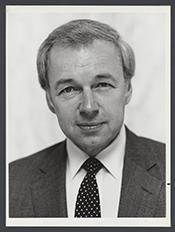
United States · Official source
1,647 records where Rep. Morrison, Sid [R-WA-4] is listed as a sponsor, author, or other actor. Search with topics and years
United States · United States Congress · 19 January 1989
Designates February 2, 1989, as National Women and Girls in Sports Day.
United States · United States Congress · 19 January 1989
Constitutional Amendment - Proclaims the English language to be the official language of the United States. Prohibits the United States or any State from requiring the use of any other language. States that this article shall not prohibit any law, program, or policy to: (1) provide educational instruction in a language other than English for the purpose of making students proficient in English; (2) teach a foreign language to students who are already proficient in English; (3) protect public health and safety; or (4) allow translators for litigants, defendants, or witnesses. Authorizes the Congress and the States to enforce this article by appropriate legislation.
United States · United States Congress · 19 January 1989
Expresses the sense of the House of Representatives that the Federal excise taxes on gasoline and diesel fuel should not be increased as a means of reducing the Federal deficit.
United States · United States Congress · 4 January 1989
Repeals a provision of the Omnibus Budget Reconciliation Act of 1987 that includes employee tips within the employer social security tax base.
United States · United States Congress · 4 January 1989
Designates the month of May 1989 as National Stroke Awareness Month.
United States · United States Congress · 3 January 1989
Coal Pipeline Act of 1989 - Amends the Mineral Lands Leasing Act of 1920 to authorize a person who has secured specified water rights under State law to apply to the Secretary of the Interior for certification that it is in the national interest to construct, operate, or extend a coal pipeline. Conditions such certification upon an applicant's reservation of a specified portion of total pipeline capacity for small, independent producers located in the geographic region served by such pipeline. Makes all Federal and State environmental laws applicable to the issuance or denial of such certification. Proscribes the granting of any right-of-way through lands: (1) designated as wilderness areas; (2) administered as part of the national park system; or (3) which are part of a historic site (unless there is no reasonable alternative and reasonable planning is made to minimize the harm of such site). Prohibits any person or entity (including the United States) from claiming any right or interest in water within any State for a coal pipeline unless such claim takes place under the law of the affected State. Delegates to the States all power regarding water rights for a coal pipeline. States that this Act does not: (1) impair the validity of any State law (or interstate compact) regarding any claim to water rights; (2) alter the rights of any State to its apportioned share of water under past or future allocation or interstate compact; (3) affect any Indian water rights; or (4) preempt or otherwise affect any State or Federal law or interstate compact regarding water quality or disposal. Prohibits any State acting under authority of this Act from restricting the movement through such State of water acquired in another State and within a coal pipeline. Authorizes certain persons who have received a certification from the Secretary that it is in the national interest to operate or extend a coal pipeline to acquire rights-of-way through private lands by the power of eminent domain. States this Act shall not be construed to permit any person (including the United States) to acquire any water rights through the power of eminent domain. Prohibits the acquisition of any right-of-way through the power of eminent domain if such right-of-way is upon land which is part of a historic site unless there is no prudent alternative and reasonable planning is made to minimize harm to such site. Provides for an antitrust review of applications for certification by the Attorney General. Requires each pipeline carrier for which a certification has been issued to provide service on reasonable request. Prohibits such carriers from unreasonably discriminating or refusing to enter into contracts with coal shippers under similar conditions in a contemporaneous period. States that this Act shall not be construed to modify or preempt the ratemaking authority of any State utility regulatory agency. Requires the Secretary to establish uniform Federal standards for coal pipeline safety. Establishes penalties for failure to comply with such safety standards.
United States · United States Congress · 3 January 1989
Deceptive Mailings Prevention Act of 1989 - Amends Federal law to declare as nonmailable any mail matter which is designed to resemble a bill, invoice, or statement of account due, but which in fact constitutes a solicitation of donations. Requires such mail matter to bear on its face in conspicuous type that it is a solicitation of donations and that the addressee is under no obligation to make any payment. Declares as nonmailable any mail matter which constitutes a solicitation by a non-governmental entity: (1) for the purchase of products or services which are provided free of charge or at a lower price by the Federal Government, or which are substantially the same as such products or services; (2) for the purchase of products or services and which contains a seal, insignia, trade or brand name, or any other term or symbol which reasonably could be interpreted or construed as implying Federal Government connection, approval, or endorsement; and (3) for the contribution of funds and which contains a seal, insignia, trade or brand name, or any other term which could reasonably be interpreted or construed as implying Federal Government connection, approval, or endorsement. Allows the mailing of such matter if it contains a conspicuous disclaimer that it is not a Government document. Establishes penalties for violations of this Act.
United States · United States Congress · 3 January 1989
Biennial Budgeting Act of 1989 - Amends the Congressional Budget Act of 1974, the Congressional Budget and Impoundment Control Act of 1974, and other Federal law to revise the Federal budget process by: (1) establishing a two-year budgeting and appropriations cycle and timetable, beginning in the 102d Congress; and (2) requiring separate consideration of authorizations, appropriations, the concurrent resolution on the budget, and the reconciliation bill or resolution. Devotes the first session of any Congress to committee work and includes the following deadlines: (1) June 30 for completion of oversight hearings and reports; (2) July 1 for beginning legislative work for the two-year budget period; (3) November 30 for the Budget Committee report of the concurrent resolution on the budget; and (4) December 1 for committee reports of legislation authorizing new budget authority and providing new spending authority. Establishes the following deadlines, among others, with respect to the second session: (1) March 10 for completion of congressional action on authorization legislation; (2) March 31 for completion of congressional action on the concurrent resolution on the budget; (3) April 15 for Appropriations Committee reports of legislation providing new budget authority; (4) the week following Labor Day for completion of congressional action on legislation involving new budget and entitlement authority; and (5) September 25 for completion of congressional action on reconciliation legislation implementing the budget resolution. Directs each standing committee of the Congress to review the laws and programs under its jurisdiction in every odd-numbered year to determine whether they should be continued, curtailed, or eliminated and whether new legislation is necessary to comply with congressional intent. Conforms provisions governing the President's budget to the biennial framework. Directs the President to transmit to the Congress during the first 15 days of the second session any budget revisions with respect to the budget transmitted in the first session.
United States · United States Congress · 3 January 1989
Defers until the first day of the 102nd Congress the rates of pay for Members of Congress which became effective in February 1989 under the provisions of the Federal Salary Act of 1967.
United States · United States Congress · 3 January 1989
Standardization of Measurement Act of 1989 - Establishes a system of standardization of measurement of high strength steel bolts. Requires the Director of the National Institute of Standards and Technology (NIST) to: (1) issue regulations to establish an approval program for accreditation of laboratories inspecting and testing bolts; (2) publish notice that NIST is prepared to accept applications for accreditation of such laboratories; and (3) set forth conditions under which accreditation of foreign laboratories by their governments meets requirements of this Act. Provides that, during its first year, such approval program shall use standards issued by one or more voluntary consensus standards organization selected by the Director, who shall notify the Congress of such choice. Authorizes the Director, after such year, to substitute other standards and to modify or update them as necessary. Requires that costs of such approval program be fully reimbursable to NIST through fees or other charges for accreditation services. Requires the Director to transmit recommendations and information to appropriate standards organizations. Prohibits, effective January 1, 1991, any bolt from being certified as a high strength steel bolt unless it: (1) comes from a lot conforming to the standards and specifications to which the manufacturer represents it has been manufactured or to which it was ordered by the purchaser; and (2) is evaluated by accredited laboratories or, if a foreign laboratory, is deemed to satisfy accreditation requirements of this Act.
United States · United States Congress · 3 January 1989
Social Security Work Incentives Act of 1989 - Title I: Disabled and Working Status under Title II of the Social Security Act - Amends title II (Old Age, Survivors and Disability Insurance) (OASDI) of the Social Security Act to reduce monthly disability benefits by 50 percent of a beneficiary's monthly earnings in excess of $85. Limits the total amount by which an individual's OASDI disability benefits may be reduced if such individual is also eligible for benefits provided under title XVI (Supplemental Security Income) (SSI) of the Act to individuals who perform substantial gainful activity despite severe medical impairment. Prohibits deductions from disability-based child insurance benefits for the recovery of prior overpayments resulting from a failure to reduce such benefits on the basis of earnings. Extends to current OASDI disability beneficiaries the rule preventing reductions in the primary insurance amount for prior recipients. Continues an individual's entitlement to disability benefits while such individual is under disabled and working status, meaning that such individual is earning enough to be considered engaged in substantial gainful activity, but would otherwise continue to satisfy eligibility requirements. Sets a four-year limit on the Medicare hospital insurance eligibility (under part A of title XVIII of the Act) of individuals who owe their eligibility to their disabled and working status under the OASDI program. Amends the Medicare program to authorize such individuals to enroll for hospital insurance benefits upon the termination of such four-year limit. Amends title XIX (Medicaid) of the Act to cover Medicare cost-sharing amounts for individuals of disabled and working status who are entitled to enroll for Medicare hospital insurance benefits and whose income and resources do not exceed 300 percent of the Federal poverty level and the SSI resource eligibility limit, respectively. Requires States to collect a coinsurance percentage from such individuals pursuant to a sliding scale which increases such percentage from 0 to 100 percent in reasonable increments as incomes move from 150 to 300 percent of the Federal poverty level. Extends to all recipients of disability-based child's insurance benefits the rule permitting continued entitlement to Medicaid benefits of individuals who would remain eligible for SSI benefits but for their receipt of such child's insurance benefits. Title II: Amendments Relating to the Disabled and Working Status Program Under Title XVI of the Social Security Act - Amends the SSI program to exclude spousal income in determining a disabled and working individual's eligibility for SSI and Medicaid benefits. Excludes from such an individual's income, for SSI eligibility determinations: (1) earned income necessary for the costs of attendant care services; and (2) if such individual receives a State supplementary payment, impairment-related work expenses. Provides Medicaid coverage to individuals who become ineligible for SSI benefits by reason of a cost of living increase in OASDI benefits. Precludes the attainment of age 65 from serving as a basis for the termination of Medicaid eligibility under the SSI program. Includes State supplementary payments in determining a disabled and working individual's eligibility for SSI and Medicaid benefits. Treats royalties from the publication of an individual's work and scholarships which have not been excluded from income as earned income in determining the SSI and Medicaid eligibility of a disabled and working individual.
United States · United States Congress · 3 January 1989
Amends title V (Administration and Coordination of the National Institute of Mental Health, the National Institute on Alcohol Abuse and Alcoholism, and the National Institute on Drug Abuse) of the Public Health Service Act to direct the Secretary of Health and Human Services to establish a program for the certification of laboratories engaging in the performance of toxicological urinalysis conducted for drug testing programs. Sets forth certification program requirements. Sets forth allowed and prohibited acts related to testing under the certification program. Establishes civil monetary penalties and terms of imprisonment for violations. Allows standards which are more stringent than those in this Act. Directs the Secretary to require the payment of fees by a laboratory to recover the costs of certification, recertification, and other activities under the certification program.
United States · United States Congress · 3 January 1989
Federal Employees' Political Activities Act of 1989 - Prohibits an employee from using or attempting to use official authority or influence to interfere with or affect the result of any election. Prohibits an employee from using or attempting to use official authority to intimidate, threaten, coerce, command, or influence: (1) any individual for the purpose of interfering with the right of any individual to vote as the individual may choose, or of causing any individual to vote, or not to vote, for any candidate or measure in any election; (2) any person to give or withhold any political contribution; or (3) any person to engage, or not to engage, in any form of political activity. Prohibits an employee from using, attempting to use, or permitting the use of any official information, unless such information is available to the general public. Prohibits an employee from: (1) giving or offering to give a political contribution to any individual either to vote or to refrain from voting, or to vote for or against any candidate or measure, in any election; (2) soliciting, accepting, or receiving a political contribution to vote or refrain from voting, or to vote for or against any candidate or measure, in any election; or (3) giving or handing over a political contribution to a superior of the employee. Prohibits an employee from soliciting, accepting, or receiving, or from being in any manner concerned with soliciting, accepting, or receiving, a political contribution: (1) from another employee (or a member of another employee's immediate family) with respect to whom the employee is a superior; or (2) in any room or building occupied in the discharge of official duties by a Federal employee or official or an individual receiving salary or compensation from the Treasury. Prohibits an employee from soliciting, accepting, or receiving a political contribution from, or giving a political contribution to, any person who: (1) has, or is seeking to obtain, contractual or other business or financial relations with the employing agency; (2) conducts operations or activities which are regulated by that agency; or (3) has interests which may be substantially affected by the performance of the employee's official duties. Directs the Special Counsel of the Merit Systems Protection Board to prescribe regulations which exempt employees from such prohibitions. Prohibits an employee from engaging in political activity: (1) while on duty; (2) in any room or building occupied in the discharge of official duties by a Federal employee or official; (3) while wearing a uniform or official insignia identifying the office or position of the employee; or (4) while using any vehicle owned or leased by the Government. Exempts certain high level political appointees from such prohibitions if the costs associated with the political activity are not paid for by money derived from the Treasury. Authorizes leave without pay or accrued annual leave to an employee who is a candidate, upon request, to allow such employee to engage in activities relating to that candidacy. Declares that such request may be denied if the exigencies of the public business so require. Declares that such employee may be required to take leave without pay or accrued annual leave in order to be a candidate if activities relating to the candidacy interfere with the employee's performance of duties. Applies this Act to postal employees and employees of the Postal Rate Commission.
United States · United States Congress · 3 January 1989
Guam Commonwealth Act - Title I: Political Relationship - Creates the Commonwealth of Guam. Grants the people of Guam the right of full self-government through adoption of a Constitution, consistent with U.S. sovereignty over Guam and the supremacy of U.S. law applicable to Guam, and within specified guidelines. Recognizes the right of self-determination of the people of Guam. Directs the U.S. Government, through additional federally-funded programs, to promote preservation of the Chamorro culture, enhanced economic, social, and educational opportunities for Chamorros, and training of Chamorros for employment. Provides that nothing in this Act or the Constitution of Guam shall impair the U.S. citizenship of the residents of Guam or their descendants or their rights and privileges as U.S. citizens under the 14th amendment to the U.S. Constitution. Directs Guam to establish a land trust for the benefit of the indigenous Chamorro people and to establish residency requirements under the Constitution of Guam for voting and holding elective office. Allows this Act to be modified only with the mutual consent of the Governments of the United States and Guam. Title II: Applicability of Federal Law - Makes specified provisions of, and amendments to, the U.S. Constitution applicable to Guam, in addition to those portions which currently apply. Makes Federal laws, rules, or regulations passed after the date of this Act inapplicable unless mutually consented to by the Governments of the United States and Guam. Creates the Joint Commission on the Applicability of Federal Law. Specifies its duties, including: (1) participating in consultations between the Governments of the United States and Guam; (2) studying existing statutes and regulations affecting the U.S.-Guam relationship; (3) reviewing policies and procedures of Federal agencies relating to such relationship; (4) compiling data; (5) drafting modifications in existing laws, regulations, policies, and procedures and obtaining such modifications by negotiation and mediation concerning issues such as land claims and war claims; and (6) seeking to obtain maximum economic development and political autonomy for Guam, consistent with U.S. security interests. Provides that the United States will bear the cost of the work of the Commission. Authorizes the President or his designee to delegate to the Governor of Guam total or partial performance of functions now vested in Federal administrative agencies. Title III: Foreign Affairs and Defense - Grants the United States responsibility for authority with respect to matters relating to foreign affairs and defense that affect Guam. Provides for U.S. consultation with Guam in advance of negotiations toward any treaties or international or executive agreements affecting Guam, and with respect to proposals to increase or decrease Department of Defense activities within Guam. Prohibits the establishment of military security zones or the stationing of foreign military personnel on the Island of Guam without the approval of the Government of Guam except in time of declared war, or the establishment of military bases without consultation with the Governor. Provides for U.S. assistance to Guam in the establishment of offices in the United States and abroad, in becoming a member or participant in appropriate regional and international organizations, and in obtaining from other countries favorable treatment for exports. Prohibits the United States from utilizing the Island of Guam or the water surrounding it for the dumping or storage of nuclear waste or hazardous chemicals. Provides for the clean up by the United States of chemical dump sites used by the military in the past. Requires the United States to compensate any person injured as a result of hazardous materials stored, used, or disposed of by the U.S. Government in Guam or its waters. Title IV: Courts - Specifies provisions governing the relations between U.S. courts and the local courts of Guam, the jurisdiction of the District Court of Guam, and the applicable district court rules. Provides for the appointment of a judge for the District Court of Guam, a U.S. attorney, and a U.S. marshal for Guam. Title V: Trade - Establishes a Guam-United States free trade area, under which neither party may impose duties, quotas, or other restrictions on each other's products, nor shall the United States treat products of Guam as having originated in any other country. Defines "products of Guam" to mean articles that contain at least 30 percent value added in Guam, and specifies costs included in value added. Authorizes Guam to impose, increase, reduce, or eliminate duties and other restrictions on: (1) products that originate outside the customs territory of the United States and that are imported into Guam; and (2) exports from Guam, whether or not products of Guam. Requires the Governor of Guam to certify that the origin of "products of Guam" is, in fact, Guam, and provides for customs inspections of products brought into the United States. Title VI: Taxation - Makes U.S. income tax laws applicable to Guam. Deems such laws to impose a separate tax, payable to the Government of Guam, to be known as the Guam Commonwealth income tax. Grants the Governor the same administrative and enforcement powers and remedies with regard to such tax (pursuant to the laws of Guam) as the Secretary of the Treasury and other executive branch officials have with respect to U.S. income tax. Sets forth similar enforcement authority with respect to criminal violations, tax liens, and suits to recover erroneously or illegally assessed taxes. Grants the District Court of Guam exclusive jurisdiction over all judicial proceedings in Guam, both criminal and civil, with respect to such tax. Allows the Government of Guam to provide for the rebate or reduction of taxes in order to assist new industries or economic development. Grants Guam the power to determine the nature and amount of taxes imposed upon the income and property of persons within its jurisdiction. Repeals applicable U.S. tax laws one year after Guam has enacted a replacement comprehensive local income tax. Exempts all bonds or other obligations issued by Guam from taxation by Federal, State, or local governments of the United States. Title VII: Immigration - Applies the Immigration and Nationality Act and pertinent Federal regulations to Guam for two years from enactment of this Act. Directs Guam to enact a comprehensive law on immigration to become effective at the end of the two-year period. Provides that such law shall not impair the free movement of U.S. citizens to and from Guam, include the authority to naturalize aliens for U.S. citizenship, or alter the Governor's authority to issue U.S. passports. Authorizes U.S. consular officials to issue visas for travel only to Guam for any alien seeking to enter Guam as a non-immigrant in order to encourage investors and tourists to come to Guam. Title VIII: Labor - Grants preference to qualified residents of Guam in all Federal civil service vacancies occurring in Guam. Grants Guam the authority to enact and enforce all laws regulating or affecting employment in Guam. Provides that all pertinent U.S. laws regulating employment on Guam on the effective date of this Act shall remain applicable until replaced by duly enacted law of the Guam Legislature. Title IX: Transportation and Telecommunications - Precludes application of any U.S. law barring the U.S. registration and use of any foreign-built vessel within the waters around Guam for any purpose. Exempts from the coastwise laws of the United States any shipment of fish or fish products from Guam to any U.S. coastwise destination. Directs the Commission periodically to examine the applicability of such laws and to recommend termination of their applicability upon determining that such laws constrain Guam's economic development. Authorizes the Governor of Guam to sponsor any qualified air service carrier to come to Guam, subject to presidential consultation concerning U.S. foreign policy and security interests. Exempts Guam from all bilateral treaties between the United States and foreign states with respect to scheduling and technical specifications of aircraft, other than safety requirements. Provides that Guam shall remain an "eligible point" for purposes of being ensured essential air transportation to and from the United States. Defines Guam as "domestic" for Federal Communications Commission rate setting purposes. Title X: Land, Natural Resources and Utilities - Grants the Government of Guam the power of eminent domain. Grants Guam jurisdiction over all natural resources of the seabed, subsoil, tidelands, and adjacent territorial waters of the Island of Guam. Sets limits on U.S. acquisition of real property on Guam. Exempts Guam from Federal regulations governing the transfer or sale of excess Federal real property. Provides for the transfer of all excess Federal property to Guam, with specified exceptions. Provides for access and use by the residents of Guam of certain retained Federal property, subject to military security requirements. Authorizes the granting of easements on such property to the Government of Guam in specified circumstances. Directs the United States to transfer ownership of island utilities to Guam. Title XI: United States Financial Assistance - Provides for the return of U.S. revenues from taxes and fees collected in Guam or from its residents or products to the Government of Guam. Makes U.S. laws providing Federal benefits and financial assistance which are applicable to the States likewise applicable to Guam on an equal basis. Directs the Governor of Guam, in preparing an annual budget, to identify the costs and benefits to Guam brought about by its role as one of the principal U.S. military bases. Requires the Governor to submit such information to the Guam Legislature and the Office of Management and Budget for use in reviewing the Governor's request for appropriations for the annual Federal payment to Guam, which request the Governor shall submit to the President for transmission to the Congress each year. Provides for assistance to aid Guam's transition to a Commonwealth, including: (1) U.S. financing of the costs of institutional changes connected with the change in Guam's political relationship with the United States; (2) help in meeting the capital needs of Guam necessary for long-term, self-sustaining development; and (3) establishing an economic development fund to assist expansion of the private sector. Title XII: Technical Amendments and Interpretation - Makes technical and conforming amendments. Calls for this Act to be interpreted liberally to accomplish its purpose of providing for complete, internal self-government for Guam. Requires this Act to be submitted to the registered voters of Guam for ratification after being passed by the Congress. Repeals the Organic Act of Guam.
United States · United States Congress · 3 January 1989
Tech-Prep Education Act - Amends the Carl D. Perkins Vocational Education Act to establish a program of grants to consortia of local educational agencies and community colleges to provide tech-prep education programs. Defines "tech-prep education program" as a combined secondary and postsecondary program which: (1) leads to an associate degree or two-year certificate; (2) provides technical preparation in at least one field of engineering technology, applied science, or mechanical, industrial, or practical art or trade; (3) provides competence in mathematics, science, and communications (including through applied academics); and (4) leads to placement in employment. Directs the Secretary of Education to make grants to pay the Federal share of the cost of activities carried out under this Act to consortia of: (1) local educational agencies or area vocational schools serving secondary school students; and (2) community colleges or postsecondary vocational technical schools. Sets forth the Federal share. Requires each grant recipient to use the grant funds to develop and operate a four-year technical preparation education program with specified curricula. Sets forth application and reporting requirements. Authorizes appropriations for FY 1990 through 1994.
United States · United States Congress · 3 January 1989
Fairness in America Health Care Act of 1989 - Title I: One-Year Delay in Implementation of Medicare Catastrophic Coverage Act of 1988 - Delays, for one year, the implementation of the Medicare Catastrophic Coverage Act of 1988, except for provisions of such Act expanding benefits under part A (Hospital Insurance) of title XVIII (Medicare) of the Social Security Act. Title II: Bipartisan Commission to Review the Medicare Catastrophic Coverage Act - Establishes the Commission to Review the Medicare Catastrophic Coverage Act to study: (1) the effect implementation of such Act will have on Medicare beneficiaries who currently have supplementary coverage; (2) how such Act's benefits compare with the benefits provided by supplementary coverage; (3) the access Medicare beneficiaries who do not have supplementary or Medicaid (title XIX of the Social Security Act) coverage have to necessary health services; (4) the feasibility and likely cost of implementing such Act's drug benefits; and (5) the benefits and financing mechanisms which Medicare beneficiaries prefer. Directs the Commission to report its findings and recommendations to the Congress within six months of this Act's enactment or by September 1, 1989, whichever is earlier.
United States · United States Congress · 3 January 1989
Repeals estate tax provisions of the Internal Revenue Code with respect to inclusion in the gross estate of the value of certain types of transfers with a retained life estate. Applies the repeal retroactively in connection with property transferred after December 17, 1987.
United States · United States Congress · 3 January 1989
Constitutional Amendment - Requires the Congress and the President, prior to each fiscal year, to agree on an estimate of total receipts (except those derived from borrowing) for that fiscal year by enactment of a joint single subject resolution. Prohibits outlays for that year (except those for repayment of debt principal) from exceeding this amount unless the Congress, by a three-fifths rollcall vote of each House, authorizes a specific excess of outlays over receipts. Requires the Congress, whenever actual outlays exceed actual receipts for any fiscal year, to provide by law for the repayment of the excess in the ensuing fiscal year. Requires a three-fifths rollcall vote of each House to increase the public debt. Directs the President to submit a balanced budget to the Congress. Requires the approval of a majority of the total membership of each House by rollcall vote before any bill to increase revenue may become law. Waives these provisions when a declaration of war is in effect.
United States · United States Congress · 3 January 1989
Designates the week of November 5 through November 11, 1989, as National Women Veterans Recognition Week.
United States · United States Congress · 3 January 1989
Constitutional Amendment - Declares that equality of rights under the law shall not be denied or abridged by the United States or any State on account of sex.
United States · United States Congress · 3 January 1989
Amends rule XXI of the Rules of the House of Representatives to prohibit consideration of bills or resolutions making appropriations under the jurisdiction of more than one subcommittee of the Appropriations Committee for periods after November 30 of a fiscal year, unless three-fifths of the House votes to waive or suspend this provision.
United States · United States Congress · 3 January 1989
Amends rule XXIV and rule I of the Rules of the House of Representatives to require the rendering of the Pledge of Allegiance in the House at the start of each legislative day.
United States · United States Congress · 3 January 1989
Establishes in the House of Representatives the Select Committee on Narcotics Abuse and Control to conduct continuing oversight and review of the problems of narcotics, drug, and polydrug abuse and control.
United States · United States Congress · 3 January 1989
Establishes in the House of Representatives the Select Committee on Hunger to conduct a continuing comprehensive study of the problems of hunger and malnutrition.
United States · United States Congress · 3 January 1989
Authorizes and requests the President to designate the last Friday of April each year as National Arbor Day.
United States · United States Congress · 3 January 1989
Declares that the Secretary of Transportation should refrain from adopting regulations to implement Essential Air Service reductions for 1989 and from taking action that would result in a reduction in Essential Air Service subsidies, until the Congress has had the opportunity to appropriate supplemental funding for the Essential Air Service Program for FY 1989.
United States · United States Congress · 29 September 1988
Designates October 14, 1988, as National Day of Remembrance for Political Prisoners in Iran.
United States · United States Congress · 23 September 1988
Amends Federal bankruptcy provisions relating to the adjustment of debts of a municipality to revise rules relating to the treatment of special revenue bonds. Treats as an administrative expense any claim against a debtor municipality if the debtor provides adequate protection of the interest of the holder of a claim secured by a lien on property of the debtor and if the creditor has a claim from a stay of action against such property. Specifies that the filing of a bankruptcy petition does not operate as a stay of application of pledged special revenues to payment of indebtedness secured by such revenues. Specifies that the transfer of property of the debtor to or for the benefit of any holder of a bond or note, on account of such bond or note, may not be avoided. Provides that the holder of a claim payable solely from special revenues of a municipality under applicable nonbankruptcy law shall not be treated as having recourse against the debtor as an unsecured creditor. Provides that special revenues acquired by the debtor after the commencement of the case shall remain subject to any lien resulting from any security agreement entered into by the debtor before the commencement of the case. Specifies that any such lien on special revenues derived from a project or system shall be subject to the necessary operating expenses of such project or system. Specifies that a lease to a municipality shall not be treated as an executory contract or unexpired lease by reason of its being subject to termination in the event the debtor fails to appropriate rent.
United States · United States Congress · 16 September 1988
Federal Crop Insurance Commission Act of 1988 - States that the purpose of this Act is to: (1) ensure the review of the Federal crop insurance program; and (2) recommend changes necessary to lessen or eliminate the need for additional disaster payment programs in order to reduce Federal costs and provide farmers with equitable and predictable natural disaster protection. Establishes the Commission for the Improvement of the Federal Crop Insurance Program. Sets forth membership and operating provisions. Directs the Commission to: (1) determine why crop insurance program participation is lower than anticipated; (2) identify States and commodities with low participation; and (3) recommend program improvements. Sets forth particular areas to be examined, including: (1) program insurance coverage; (2) use of crop field information; (3)related government subsidies; (4) sales commission rates; (5) claims adjustment services; (6) information collection; (7) compliance efforts; and (8) premium pools. Requires the Commission to submit: (1) an interim report to the appropriate congressional committees by April 1, 1989; (2) a final report to such committees by July 1, 1989; and (3) monthly reports to such committees from the period beginning July 1, 1989, through December 31, 1990. Terminates the Commission as of December 31, 1990, except that the Secretary of Agriculture may extend the Commission's life beyond such date. Directs the Federal Crop Insurance Corporation to make specified FY 1989 funds available to the Commission.
United States · United States Congress · 13 September 1988
Omnibus National Parks and Public Lands Act of 1988 - Title I: Public Lands - Authorizes the Secretary of the Interior (Secretary) to take necessary actions to exchange specified lands with Phillips County, Montana, if the Secretary determines such exchange to be in the public interest. Disclaims any intent to enlarge or diminish the responsibility of any party under State or Federal law for proper management of such lands or for management or actions related to hazardous substances or materials located on such lands. Requires the Secretary to advise appropriate Federal, State, and county officials, prior to consummating the exchange, of any information the Secretary has concerning hazardous substances or materials located on such lands. Directs the Secretary to: (1) resurvey and prepare a new plat for the townsite of Veteran, Wyoming, to take into account the actual use of streets and alleys on such lands for designation as public reservations; and (2) patent such reservation lands to Goshen County. Provides for an exchange of forest lands between Farmington City, Utah, and the Secretary of Agriculture. Directs the the Secretary of Agriculture, within three years of the date of enactment of this Act, to identify city or State lands which are suitable for transfer to the United States for national forest purposes. Specifies that any such lands exchanged shall be of equal value (as determined by the Secretary of Agriculture) or equalized by payment to or by the Secretary of Agriculture, as long as the payment does not exceed 25 percent of the total value of the lands transferred out of Federal ownership. Authorizes the Secretary of Agriculture, in lieu of such an exchange, to transfer by sale for fair market value such Federal lands to the city or State of Utah, as appropriate. Withdraws all public lands within Kanab City, Utah, from all forms of entry and appropriation under the public lands laws, including the mining laws, and from operation of the mineral and geothermal leasing laws. Terminates such withdrawal five years after the date of the enactment of this Act. Directs the Secretary of the Interior to determine which public lands withdrawn meet the disposal criteria specified in the Federal Land Policy and Management Act of 1976 and to notify Kanab City concerning such determination. Grants Kanab City, for the four-year period beginning on the date of enactment, the exclusive right to purchase any such withdrawn lands that the Secretary has determined to be suitable for disposal. Provides for the public sale of such lands after the expiration of such period, but gives Kanab City the opportunity to meet the high bid offered by any other party. Specifies that all such sales of public lands shall be for fair market value and subject to valid existing rights, as well as subject to any conditions to (or any patent issued in consequence of) such sale as the Secretary determines necessary or appropriate. Authorizes the Secretary to release and quitclaim to the city of Riverdale, Utah, for fair market value all right, title, and interest of the United States in specified property, provided that the city requests such action within one year after the enactment of this Act. Provides that all funds received by the United States shall be credited to the Land and Water Conservation Fund of the Treasury and shall be available for expenditure under the Land and Water Conservation Fund Act of 1965. Directs the Secretary to: (1) conduct a study to determine the feasibility and desirability of protecting and preserving lands and resources associated with the western terminus of the Oregon Trail in Oregon City, Oregon; (2) consult with interested Federal agencies and State and local bodies; (3) coordinate the study with applicable outdoor recreation plans and related plans for the preservation of historic and natural resources in the area; and (4) report his or her findings and recommendations to specified congressional committees. Authorizes appropriations. Directs the Secretary to convey specified lands to the Catholic Diocese of Reno/Las Vegas, Nevada, for administrative cost. Reserves a right-of-way and construction easement to the United States. Directs the Secretary to: (1) conduct a study to determine the feasibility of protecting and preserving certain cultural, historic, and natural resources associated with the coal mining heritage of southern West Virginia; (2) consult with interested Federal agencies, State and local government authorities, and nonprofit organizations; and (3) report to specified congressional committees. Specifies the area to be studied. Authorizes appropriations. Authorizes the Secretary of the Interior to permit entry on desert lands which are part of scenic easement areas of the Dinosaur National Monument, Utah, to certain applicants who convey certain scenic easements to the United States. Michigan Public Lands Improvement Act of 1988 - Grants to the State of Michigan the right, title, and interest of the United States in and to certain public uplands and islands in Michigan waters which were not subject to any claim on January 1, 1988. Allows the Secretary of the Interior to sell certain other lands which were subject to a claim identified on the records of the Bureau of Land Management as of that date to the claimants following resolution on conflicting claims. Deems title to public lands which, on the date of enactment of this Act, was subject to leases issued to the State of Michigan under the Recreation and Public Purposes Act to have vested in the State and to be exempt from Department of the Interior regulations governing leases under such Act. Allows the State to receive, under this Act, lands previously patented to the State under such Act by notifying the Secretary that it intends to relinquish such lands to the United States. Requires the Secretary to transfer such lands back to the State subject to the provisions of this Act, effective simultaneously with the States relinquishment of such lands. Authorizes the Secretary to sell and issue a patent to a tract of public land located in Michigan where the Secretary determines that: (1) such tract does not exceed 1,500 acres and is difficult and uneconomic to manage as part of the public lands and is not suitable for management by another Federal department or agency; and (2) such sale would not be inconsistent with land use plans developed in accordance with the Federal Land Policy and Management Act of 1976. Allows the Secretary, following adjudication of any claims, to convey such land at fair market value, less equities presented by an applicant for such conveyance (such as the amount paid for the land, longevity of the applicant's claim, and taxes paid on the land) and less the value of any improvements. Provides for the description of tracts of such land conveyed on the approved Federal plat of survey. Authorizes the Secretary to either: (1) convey title to a qualified trustee, where a tract does not conform to an existing survey plat, in order to conform the legal description to such plat; or (2) require the applicant to reimburse the United States for the cost of preparing a plat of survey. Prohibits the sale of such lands unless the Secretary, before 30 days prior to such sale, publishes notice in a newspaper of general circulation in the county where the tract is located. Reserves to the United States all mineral rights in the lands transferred under this Act. Prohibits the conveyance or transfer of such lands by Michigan to any person or entity other than a political subdivision of the State. Authorizes the use of such lands only for purposes of public recreation or protection of fish, wildlife, plants, or other natural resources and values. Directs the Secretary to take steps to notify Michigan residents of the uplands and islands to be granted or otherwise transferred to the State. Requires Michigan to notify the Secretary with regard to any grant or transfer or conveyance of such lands by the State to a political subdivision. Requires the State to submit to the Secretary a report within five years of enactment of this Act, and every five years thereafter, as to the present ownership, management, and use of the lands granted or otherwise transferred. Sets forth enforcement procedures. Declares that nothing in this Act shall be construed as affecting the jurisdiction or responsibilities of the State with respect to fish and wildlife in any lands granted to or transferred to the State under this Act. Makes a private land survey conducted in 1955 the legal boundary survey for specified lands in Riverside, County, California. Provides for the reinstatement of the canceled entry of William A. Wright to certain lands in Lamar County, Alabama. Waives the 160-acre limitation on conveyances under the Color-of-Title Act for any claim for a patent that may be filed under such Act for a specified parcel of land in Sumter County, Alabama. Declares that the Southern Pacific Transportation Company has abandoned certain real property situated in Alameda County, California, forming a part of the right-of-way granted by the United States to the Central Pacific Railway Company. Retains all Federal right, title, and interest in such property for management by the Secretary of the Interior as a public recreational trail, and for other recreational purposes compatible with trail use. Exempts specified property embraced within a certain public highway from such Federal interest. Reserves to the United States all oil, coal, or other minerals in such property, including prospecting, mining, and removal rights. Restricts to public highway and related uses under California law that portion of the property embraced within a certain public highway. States that all rights and interests revert back to the United States if: (1) any portion of such property is used for purposes unauthorized by this Act; or (2) if an attempt is made to transfer ownership of such property to any party other than the State of California. Mandates that lands within the Toiyabe National Forest (California) which have been used for purposes of the U.S. Marine Corps Mountain Corps Mountain Warfare Training Center be retained as part of such National Forest. Directs the Secretary of Agriculture to continue to make such lands available to the Marine Corps for such training center. Directs that such lands be open to public recreation and other uses consistent with the primary purpose of the Mountain Warfare Training Center. Directs the Secretary of the Interior, subject to valid existing rights, to transfer specified lands to Clark County, Nevada, for use as a mobile home park for low-income senior citizens. Reserves mineral rights and the right of reversion to the United States. Directs the Secretary to take such actions as appropriate to: (1) reserve rights-of-way and easements for road, public utility, and flood control purposes; and (2) protect the public interest. Transfers specified public lands in Nevada to the Secretary of Agriculture for inclusion in the Toiyabe or the Inyo National Forest. Transfers specified national forest lands to the Secretary of the Interior. Requires lands designed for inclusion in such Forests to be managed so as not to impair their suitability for wilderness designation. Excludes such additional national forest lands from calculations for interstate (California and Nevada) but not intrastate (Nevada) distribution of the Twenty-Five Percent Fund. Authorizes the Secretary to transfer land known as Wilbur Square to Boulder City, Nevada. Amends the Federal Land Policy and Management Act of 1976 (FLPMA) to authorize the Secretary of the Interior to allow the temporary use for specified military purposes of certain public lands in Alaska for up to three years. Limits the use of public lands to areas where such use would not be inconsistent with the plans prepared pursuant to the FLPMA. Makes the using department responsible for any necessary cleanup and decontamination of the lands used and for any other terms and conditions which the Secretary may impose to minimize adverse impacts on the resources and values of such lands. Provides for notification of the public where public safety may require closure to public use of any portion of such lands. Recreation and Public Purposes Amendment Act of 1988 - Allows the Secretary of the Interior to convey lands which may be used by the applicant for the disposal of solid wastes or hazardous substances only if: (1) the Secretary determines that no hazardous substance is present on such land; (2) the applicant furnishes evidence that a copy of the application and information concerning the proposed use of such land has been provided to the Environmental Protection Agency and certain other State and Federal agencies; (3) the applicant gives a warranty that use of such land will be consistent with applicable State and Federal laws and that the applicant will hold the United States harmless from any liability; and (4) the applicant demonstrates that the land meets applicable State and local requirements and needs for solid waste or hazardous substance disposal. Provides for a limited reverter which shall become permanent unless the lands have been used for the purposes specified in the application within five years after the date of conveyance. Requires any party who has transferred ownership of any conveyed lands not used for such specified purposes to pay to the Secretary fair market value for such lands. Provides that no lands covered by an issued patent shall revert to the United States if such lands have been used for the disposal of solid waste or hazardous substances. Authorizes the Secretary, with respect to lands conveyed prior to enactment of this Act, to renounce the United States' reversionary interests in such lands upon finding that lands have been used for the disposal of solid waste or hazardous substances. Authorizes the Secretary, with respect to lands leased prior to enactment of this Act, to convey in fee such leased lands without any provision for reversion to the United States upon finding that such lands have been used for the disposal of solid waste or hazardous substances. Establishes the San Pedro Riparian National Conservation Area, Arizona. Directs the Secretary of the Interior to develop, within two years, a comprehensive management plan for such area to protect the natural riparian, wildlife, cultural, and recreational resources. Prohibits the issuing of new grazing permits for such area for 15 years. Directs the Secretary to establish a San Pedro Riparian National Conservation Area Advisory Committee. Permits the Secretary to acquire land interests within the Area. Requires the Secretary to report within five years, and every ten years thereafter, to the House Interior and Insular Affairs Committee and the Senate Energy and Natural Resources Committee on the implementation of this Act. Authorizes appropriations. Title II: Rivers and Trails - Amends the Wild and Scenic Rivers Act to designate Wildcat River, New Hampshire, as a component of the National Wild and Scenic Rivers System. Directs the Secretary of Agriculture to establish a Wildcat River Advisory Commission to assist in implementing this Act. Terminates such commission ten years after enactment of this Act. Authorizes appropriations. Directs the Secretary of the Interior to permit access across the Buffalo National Park, Arkansas, to certain owners of privately owned lands (as of September 1, 1987) outside the park on an annual basis. Amends the National Trails System Act to provide for a study of the Coronado Trail, the route taken by the Spanish explorer through Arizona, New Mexico, Texas, Oklahoma, and Kansas, for inclusion in such System. Requires the Secretary of the Interior to prepare a comprehensive river conservation study for a specified segment of the Columbia River, Washington. Requires the study to identify and evaluate the outstanding features of the river segment, including fish and wildlife, scenic, recreational, natural, historical, and cultural values, and examine alternatives for their preservation. Requires the Secretary to consult with State, local, and tribal governments with respect to the study and to provide for public comment. Prohibits any Federal agency, for a period of eight years after enactment of this Act, from constructing any dam, channel, or related navigation project on the river segment. Authorizes appropriations. Title III: National Park System - Designates certain lands within the Congaree Swamp National Monument, South Carolina, as the Congaree Swamp National Monument Wilderness. Designates certain other lands within the Monument as potential wilderness additions. Increases the acreage of the Monument to include an area known as the "Citizens Boundary Proposal for Congaree Swamp National Monument." Provides additional funds for the acquisition of additional lands for such Monument. Authorizes appropriations for construction and development within the Monument. Establishes the Zuni-Cibola National Historical Park in New Mexico. Authorizes the Secretary of the Interior to accept a leasehold interest in trust lands of the Zuni Indian Reservation which are necessary for the establishment of such park. Provides for the management of the park by the Secretary. Authorizes the Secretary to accept concurrent jurisdiction from the Zuni Tribe with respect to law enforcement within the park. Exempts all enrolled members of the Tribe from the payment of park admission fees. Authorizes the Secretary to enter into cooperative agreements with the Tribe for the purpose of providing training to Zuni members in the management and preservation of historical properties and needed public services on the Reservation. Directs the Secretary to give employment preference to tribal members with respect to park management. Sets forth requirements with respect to Federal agency activities affecting the park. Establishes the Zuni-Cibola National Historical Park Advisory Commission within the Department of the Interior. Provides that such Commission shall advise the Director of the National Park Service in the planning, management, and administration of the park. Authorizes the Commission to employ an administrative director. Directs the Secretary to develop and transmit a park management plan to the House Committee on Interior and Insular Affairs, the Senate Committee on Energy and Natural Resources, and the Senate Select Committee on Indian Affairs. Authorizes the Secretary to close the park to the public when tribal religious activities are scheduled. Includes the Zuni-Cibola National Historical Park as an area to be accessed by the Masau Trail. Authorizes appropriations. Establishes the Mississippi National River and Recreation Area along the Mississippi River in the St. Paul-Minneapolis Metropolitan Area, Minnesota. Establishes the Mississippi River Coordinating Commission to assist Government authorities in developing and implementing a management plan for such lands and waters. Requires the Commission to submit a plan, within three years, to the Governor of Minnesota and the Secretary of the Interior for review and approval. Requires the Secretary to monitor such Area in the interim. Terminates the Commission after ten years. Authorizes the State, following the termination, to establish a State Commission to take over such Commission's functions. Transfers Federal property within the Area to the Secretary, except for Army Engineer facilities for navigation and other buildings or structures currently in use. Requires Federal entities to notify and receive the approval of the Secretary before engaging in any activities in or affecting such Area. Authorizes the Secretary to acquire land and interests in such Area, as specified. Requires the Secretary to review local plans and ordinances and their enforcement to assure conformance to the plan. Permits the Secretary to acquire lands without the owner's consent after appropriate notice and opportunity to cure a nonconforming plan or ordinance. Permits owners of acquired improved residential property to retain the right to residential use for 25 years or the owner's death. Sets forth other terms and conditions for such use. Authorizes the Secretary to make grants for land acquisition and to provide technical assistance for programs. Authorizes appropriations. Directs the Secretaries of the Army and the Interior to appoint representatives to a Tri-Rivers Management Board to coordinate development of the Mississippi, St.-Croix, and Minnesota Rivers within the St. Paul-Minneapolis Metropolitan Area, Minnesota. Authorizes appropriations. Establishes the Natchez National Historical Park in Mississippi. Authorizes the Secretary of the Interior to acquire land for such park by donations or exchange. Requires the Secretary to transmit to the House Committee on Interior and Insular Affairs and the Senate Committee on Energy and Natural Resources a study of historic properties in the city of Natchez. Directs the Secretary, following completion of such study, but not later than one year after enactment of this Act, to establish historic districts in the city of Natchez. Authorizes the Secretary to enter into cooperative agreements with owners of properties located within such historic districts. Requires the Secretary, within three complete fiscal years after enactment of this Act, to submit to such congressional committees a general management plan for the park. Requires the Secretary to study the feasibility of extending the Natchez Trace within the city of Natchez, including acceptance of donations of rights-of-way. Requires the Secretary, within one year after enactment of this Act, to transmit such study to such congressional committees. Establishes the Natchez National Historical Park Advisory Commission to consult with the Secretary on the management and development of the park. Authorizes appropriations. Directs the Secretary of the Interior to acquire two parcels of land in Florida under authority of the Act to establish the Canaveral National Seashore. Directs the Secretary to manage such parcels for: (1) the protection and interpretation of Seminole Indian archaeological and historic resources; and (2) the establishment of an administrative headquarters and visitor center for the Seashore. Increases appropriations authorized for the development of public facilities for the Seashore. Authorizes appropriations to carry out this Act. Removes the restriction which prohibits the Secretary of the Interior from acquiring in fee by purchase or condemnation more than 600 acres of Antietam National Battlefield, Maryland. Amends the National Parks and Recreation Act of 1978 to remove additional restrictions which authorized only certain scenic easement acquisitions. Establishes the Hamilton Grange National Memorial in the State of New York. Authorizes the Secretary of the Interior to: (1) acquire land, interests therein, and improvements thereon within the boundaries of the memorial by donation; (2) reimburse the owner of such property a specified amount for administrative costs for the transfer; and (3) acquire associated personal property. Directs the Secretary to: (1) administer the memorial as a unit of the National Park System; and (2) submit a general management plan to specified congressional committees within three complete fiscal years after enactment of this Act. Authorizes appropriations. Establishes the Poverty Point National Monument in Louisiana. Requires the Secretary of the Interior, within two years after enactment of this Act, to develop and implement a management plan for such monument. Authorizes the Secretary to enter into cooperative agreements with institutions of higher education and professional societies to conduct further research on Poverty Point, its people, and their culture. Authorizes the Secretary to acquire lands for the establishment of such monument. Establishes the Poverty Point National Monument Advisory Commission. Authorizes appropriations. Prohibits the use of Federal lands to expand any reservoir within Yosemite National Park without specific congressional authorization. Establishes the Delaware and Lehigh Navigation Canal National Heritage Corridor in the Commonwealth of Pennsylvania. Establishes the Delaware and Lehigh Navigation Canal National Heritage Corridor Commission to assist appropriate Federal, State, and local authorities in the development and implementation of an integrated resource management plan for the Corridor. Directs the Commission, within one year after it conducts its first meeting, to submit to the Secretary of the Interior a Cultural Heritage and Corridor Management Plan which: (1) provides an inventory of Corridor property to be preserved and restored because of its national historic or cultural significance; (2) develops a historic interpretive plan; and (3) recommends policies for resource management of the Corridor. Terminates the Commission in five years, with a possible five-year extension. Requires the Secretary to approve or disapprove the Commission's Plan within 60 days after its receipt. Directs the Secretary, following plan approval, to assist the Commission in producing interpretive materials. Requires any Federal entity conducting activities affecting Canal flows or Corridor natural resources to consult and cooperate with the Secretary and the Commission. Authorizes appropriations. Authorizes the Secretary of the Interior to designate the New Jersey Coastal Heritage Route, a vehicular tour route along existing public roads linking natural and cultural sites in New Jersey. Directs the Secretary to complete and report to the appropriate congressional committees within one year a comprehensive inventory of route sites and a general plan. Requires intergovernmental consultation and public participation in the preparation of such inventory and plan. Authorizes the Secretary to provide technical assistance in the development of interpretive materials and conservation methods. Requires that the route be marked with appropriate markers for the public. Authorizes appropriations. Directs the Secretary of the Interior to establish the National Park of American Samoa. Provides for the management of such park. Directs the Secretary to establish an Advisory Board to provide advice on such management. Requires the Secretary and the Governor of American Samoa to review, at least once every ten years, the operation and management of the park. Authorizes appropriations. Amends the National Parks and Recreation Act of 1978 to direct the Secretary of the Interior to study and recommend appropriate initiatives to provide an educational and interpretative program for the Pinelands National Reserve, New Jersey. Requires the Secretary to study New Jersey's Pinelands Development Credit Bank, Pinelands Development Credit System, and Pinelands Municipal Council and submit to the Congress any recommendations for the improvement of their operations. Provides Federal lands for 50 percent of the cost for land acquisition within the Reserve. Establishes in the Department of the Interior the Southwestern Pennsylvania Heritage Preservation Commission to make loans or grants to preserve and protect sites which are related to the industrial development of southwestern Pennsylvania. Requires the Commission to coordinate government activities and develop project guidelines and standards consistent with standards established by the National Park Service for the preservation of historic properties. Requires the Commission to report annually to the Secretary of the Interior on loans, grants, expenses, and income. Requires the Secretary to report annually to the Congress on loans, grants, and other technical assistance provided under this Act. Directs the Commission to require and submit to appropriate congressional committees detailed cost estimates for projects to be funded. Terminates the Commission in ten years. Authorizes appropriations. Makes such funds available only to the extent they are matched by equivalent funds from non-Federal sources. Directs the Secretary of the Interior to designate a vehicular tour route in southwestern Pennsylvania, to be known as the Southwestern Pennsylvania Industrial Heritage Route, linking sites of historic, cultural, natural, and recreational interest. Authorizes the Secretary to erect informational markers, to accept donations of informational devices, and to provide technical assistance in the development of interpretive devices and materials. Authorizes appropriations. Prohibits using such funds for the maintenance of roads or related structures. Includes specified lands within the boundary of the Guadalupe Mountains National Park, Texas. Authorizes appropriations for the construction of a fence to protect the natural and cultural resources of such lands. Redesignates the Salinas National Monument, New Mexico, as the Salinas Pueblo Missions National Monument. Authorizes the Secretary of the Interior to acquire certain lands within the John Muir National Historic Site, California, to be administered as part of the Site. Directs the Secretary to acquire only such interests in the John Muir grave Site as may be necessary to preserve the Site in its present undeveloped condition and to provide maintenance of the Site. Authorizes appropriations. Authorizes the Secretary, acting through the Director of the National Park Service, to enter into a cooperative agreement with the East Bay Regional Park District of Oakland, California, for the operation and maintenance by such District of trails on lands within such historical site. Increases the authorization of appropriations for the acquisition of land for the Women's Rights National Historical Park in Seneca Falls and Waterloo, New York. Title IV: Miscellaneous Provisions - Authorizes the Secretary of Agriculture to establish the Lewis and Clark National Historic Trail Interpretive Center. Specifies lands to be donated by the State of Montana for the establishment of such center. Provides that such lands shall revert to the State of Montana if the Secretary uses such lands for any purpose other than those authorized under this Act. Requires the Secretary to administer the Center in a manner that will best provide for the interpretation of the accomplishments of the Lewis and Clark Expedition along the Lewis and Clark National Historic Trail in Montana. Directs the Secretary, within two years after the establishment of the Center, to submit to specified House and Senate committees a plan for development and interpretation of the Center. Authorizes the Secretary to enter into: (1) cooperative agreements with the State of Montana for rescue, firefighting, and law enforcement services with respect to the Center; and (2) cooperative agreements with Federal, State, or local public agencies for the development and operation of facilities and services in furtherance of this Act. Encourages the Secretary, with Montana, to develop a cooperative management plan for the entire Giant Springs Park. Authorizes and directs the Secretary to enter into an agreement with the Portage Route chapter of the Lewis and Clark Heritage Foundation or a similarly affiliated organization to provide educational materials to the public that highlight the travels of Lewis and Clark or other historical features of the area. Authorizes appropriations, including specified sums for the construction of the Center. Requires the Secretary of the Interior to act through the Bureau of Land Management (the National Park Service under current law) to construct and operate a visitor facility in or near Fort Benton under the Missouri River area management plan. Amends the Archaeological Resources Protection Act of 1979 (the Act) to revise the definition of "archaeological resource" to eliminate the condition that an item be "of archaeological interest." Prohibits attempts at (as well as acts of) excavation, removal, damage, or other alteration or defacement of any archaeological resource located on public or Indian lands, without a permit. Lowers to $500 (currently $5,000) the threshold commercial or archaeological value of an archaeological resource (including cost of restoration or repair) above which, for certain violations of the Act, specified criminal penalties are mandated. Directs each Federal land manager to: (1) establish a program to increase public awareness of the significance of, and the need to protect, archaeological resources located on public lands and Indian lands; and (2) report annually to specified congressional committees on actions taken under such program. Designates specified lands in the Olympic National Park, Washington, as the Olympic Wilderness and a component of the National Wilderness Preservation System. Authorizes the Secretary of the Interior to maintain and replace, as appropriate, the Wolf Creek underground powerline to Hurricane Ridge. Authorizes funds to the Secretary to make payment to the Clallam County Historical Society and Museum of Port Angeles, Washington, as compensation for: (1) its interest in the National Park Service visitor center, Pioneer Memorial Museum, and Olympic National Park, Washington; and (2) its participation in the construction of the Pioneer Memorial Museum. Revises provisions relating to the forfeiture of property used in connection with killing, trapping, capturing, or damaging animals or plants in the Park. Directs the Secretary to complete a study for the location of a year-round visitor center in the Kalaloch area of the Olympic National Park. Designates specified lands in the North Cascades National Park, Ross Lake National Recreation Area, and Lake Chelan National Recreation Area, Washington, as the Stephen Mather Wilderness and a component of the National Wilderness Preservation System. Provides that no law shall affect the jurisdiction of the Federal Power Commission to proceed with specified hydroelectric projects within the Park. Authorizes the Secretary to acquire lands outside of the Park for the construction of a back country information center and a headquarters site for such park, Ross Lake National Recreation Area, and Lake Chelan National Recreation Area. Authorizes appropriations. Revises provisions relating to mineral resources and renewable natural resource use within the recreation areas of the Park. Designates specified lands in the Mount Rainier National Park, Washington, as the Mount Rainier Wilderness and as a component of the National Wilderness Preservation System. Sets forth provisions relating to the administration of the wilderness areas and Park lands. Authorizes the Secretary to maintain and replace as necessary the powerline from Longmire to Paradise. Amends the Wild and Scenic Rivers Act to set forth provisions regarding the boundaries of the Klickitat River, Washington. Directs the Secretary of Agriculture or the Secretary of the Interior, as appropriate, to take such actions as are necessary to protect cave resources on Federal lands, including: (1) restricting the use of such resources; (2) entering into volunteer management agreements with the caving community; and (3) appointing advisory committees. Requires that such resources be considered in subsequent land management plans. Authorizes the Secretary to disturb such resources and to exempt certain caves on Federal or Indian lands from the protections of this Act if deemed appropriate. Restricts the release of information concerning the nature or location of any Federal cave. Requires the Secretary to provide such information to the Governor of a State in which a cave resource is located and permits such release to a bona fide research institution if requested in writing along with a commitment to protect the confidentiality of such information. Establishes a permit program for the collection or removal of natural resources from caves on Federal or Indian lands. Requires a permittee to post a bond or cash deposit to offset potential damage and to ensure compliance with this Act. Revokes permits for violations of this Act or permit conditions. Requires the Secretary of the Interior to delegate permit authority to an Indian tribe for caves on Indian lands at a tribe's request. Requires a tribe's permission before the removal of any cave resource on such tribe's land. Entitles a tribe to notice before the issuance of a permit if the Secretary determines that possible harm or destruction of a religious or cultural site may occur. Excludes Federal cave resources within the National Park or Wildlife Refuge Systems from this program. Imposes criminal penalties for the alteration of a cave or interference with cave resources, including the sale or exchange of cave resources removed without permission. Establishes civil penalties for violations of this Act or permit conditions. Authorizes appropriations. Places permit fees and fines in a special fund in the Treasury for cave resource management. Requires each Secretary to issue regulations implementing the provisions of this Act.
United States · United States Congress · 8 September 1988
Temporary Emergency Wildfire Suppression Act - Authorizes the Secretary of Agriculture or the Secretary of the Interior to enter into reciprocal agreements with foreign fire organizations to provide wildfire protection resources for lands and other properties for which such Secretaries or organizations normally provide such protection. Requires that such agreements allow for termination of the agreement by any party thereto after reasonable notice. Authorizes the Secretary of Agriculture or the Secretary of the Interior, in the absence of such agreement, to furnish emergency wildfire protection resources to any foreign nation and to accept such assistance from any foreign fire organization when to do so is in the best interest of the United States. Authorizes the reimbursement of Canada or Canadian fire organizations for U.S. wildfire protection pursuant to a specified memorandum and arrangement with Canada. Requires the Secretary of Agriculture or the Secretary of the Interior to determine that no U.S. fire organization is reasonably available to provide such protection before spending funds for foreign wildfire protection.
United States · United States Congress · 8 September 1988
Commodity Exchange Option Reform Amendments of 1988 - Amends the Commodity Exchange Act to state that the Commodity Futures Trading Commission shall have exclusive jurisdiction to designate a board of trade for any put, call, or option. Repeals the provision regarding Commission submission of certain contract market designation applications for Securities and Exchange Commission review.
United States · United States Congress · 2 August 1988
National Laboratory Competitiveness Act of 1988 - Amends the Federal Nonnuclear Energy Research and Development Act of 1974 to direct the Secretary of Energy to promulgate: (1) model cooperative research and development agreements not subject to the approval of managers of Department of Energy Operations Offices; (2) generic terms and conditions for inclusion in negotiated (nonmodel) cooperative research and development agreements; and (3) authority for any Director of a National Laboratory to enter into certain cooperative research and development agreements. Instructs the Secretary to delegate to each manager of a Department of Energy Operations Office authority to approve negotiated (nongeneric) terms and conditions of research and development contract agreements recommended by a Director of a National Laboratory. Authorizes Directors to enter into model agreements or to negotiate cooperative agreements with both Federal and non-Federal parties. Sets forth guidelines and requirements applicable to these agreements, including a requirement that the Director give preference to persons who agree to manufacture the relevant property substantially in the United States. Enumerates permitted provisions in connection with cooperative agreements. Describes the approval process, as well as procedures to apply when the manager of an Operations Office requires modification of an agreement. Limits amounts that may be spent by a laboratory manager or operator on cooperative research and development agreements entered into by the Director of a National Laboratory to 20 percent of funds received from the Department of Energy in any fiscal year, unless the appropriate Operations Office Manager approves the expenditure. Sets forth: (1) recordkeeping requirements, including public disclosure policy; (2) provisions to govern disposition of title to property developed by laboratory managers or operators and provisions to ensure the confidentiality of computer software or technical data they obtain or generate; and (3) provisions to ensure that all Department of Energy contracts to operate a National Laboratory conform to standards consistent with this Act, including language making technology transfer a mission of the National Laboratories. Directs the Secretary of Energy to explore innovative ways to cooperate with other Government agencies, including the National Bureau of Standards (now the National Institute of Standards and Technology).
United States · United States Congress · 2 August 1988
Directs the Administrator of the Environmental Protection Agency to make grants to the State of Washington Puget Sound Water Quality Authority for use in: (1) implementing and updating the Puget Sound Water Quality Management Plan; (2) implementing a program for ambient monitoring of the water quality of Puget Sound; (3) supporting research which will increase understanding of Puget Sound and human impacts on the Sound; and (4) conducting other activities related to improving the water quality of Puget Sound. Limits Federal funding to no more than 75 percent of the costs of grant activities. Requires the Authority to report to the Administrator by January 31 of each year on the grant activities of the preceding year. Authorizes appropriations.
United States · United States Congress · 14 July 1988
Eliminates post-1968 service in the National Guard as a prerequisite to civil service retirement credit for former National Guard technicians. Amends the National Guard Technicians Act of 1968 to eliminate post-1968 service as a prerequisite for National Guard technicians to receiving credit in the determination of length of Federal civil service for purposes of leave, Federal employees' death and disability compensation, group life and health insurance, severance pay, tenure, and status. Sets forth rules for applying provisions of this Act to affected individuals.
United States · United States Congress · 14 July 1988
Resolves that the Congress should implement policies under which: (1) the Bell operating companies would be permitted to provide information services, conduct research, design and market software, and design, manufacture, and market telecommunications equipment and customer premises equipment; and (2) statutory safeguards would ensure that these Bell activities would not harm telephone service customers or competition in the information services or manufacturing industries and would prevent cross subsidies between regulated and unregulated service offerings.
United States · United States Congress · 12 July 1988
Drought Assistance Act of 1988 - Title I: Emergency Livestock Assistance - Amends the Agricultural Act of 1949 to add a new title VI which may be cited as the "Emergency Livestock Feed Assistance Act of 1988." Directs the Secretary of Agriculture to provide emergency feed assistance in any State, county, or area of a State where disease or other natural disaster has created a livestock emergency. States that the Governor of a State or a county committee may request the Secretary to make a livestock emergency determination and to provide assistance. Authorizes the Secretary to make such determination on his own initiative. Requires the Secretary to make such determination within 30 days of request and to notify the requesting party of any proposed action. States that producers in counties eligible for the emergency feed or emergency feed assistance programs in 1988 shall maintain such eligibility and be eligible for assistance under this title. Directs the Secretary to determine such counties' eligibility for assistance under this title. States that an eligible producer may receive assistance as follows: (1) assistance to offset inadequate feed stocks resulting from on-farm losses; and (2) assistance to maintain foundation herds if the producer does not have, and is unable to obtain through normal channels without undue cost, necessary feed stocks. Sets forth the following assistance programs available under this title: (1) Commodity Credit Corporation (CCC) feed donations and reduced price sales; (2) partial reimbursement of feed purchase expenses; and (3) partial reimbursement of transportation and handling costs for such CCC feed, for hay, and for transporting livestock to and from available grazing areas (not to exceed $24 a head). Permits the Secretary to: (1) make in-kind payments; and (2) provide assistance through feed dealers or manufacturers. Authorizes the Secretary to provide the following additional assistance if necessary: (1) CCC feed donations for stranded and unidentified livestock, including transportation costs; (2) water assistance; and (3) CCC catalog commodities in lots appropriate to family farmers. Limits total assistance under this title for each livestock disaster to any one person to $50,000. Subjects each person (including individual members of a cooperative producer association) to the overall payment limitation ($100,000) under this Act. Prohibits a person from receiving assistance under this title for lost feed production due to the 1988 drought to the extent that such person receives production disaster payments under this Act. Subjects persons who misuse such assistance to a civil penalty equal to the market value of the involved fee, and a fine of up to $1000 or imprisonment for up to one year, or both. Amends the Agricultural Act of 1949 to repeal the Secretary's authority to reduce 1989 milk price supports (50-cents per hundredweight). Title II: Disaster Payment - Provides that, for producers of the 1988 crops of wheat, feed grains, upland cotton, extra long staple cotton, or rice who participated in the production adjustment program under the Agricultural Act of 1949, the Secretary shall make disaster payments to those producers who have suffered at least 35 percent production losses due to the 1988 drought or related condition. States that such payments shall be made at a rate equal to 65 percent of the established price for deficiencies below 65 percent. Exempts such producers from advance deficiency repayments for up to 35 percent of crop losses. Permits eligible producers who had elected not to receive such payments prior to enactment of this Act to change their decision. Provides similar disaster payments to producers who did not participate in such production adjustment program. Bases payments on the basic county loan rate (or comparable price). Provides similar disaster payments to producers of the 1988 crops of peanuts, tobacco, sugar beets, and sugarcane. Bases payments for peanuts and tobacco on the basic county loan rate (or comparable price), and for sugar beets and sugarcane on 1988 price support levels. Provides for prevented planting credit. Sets forth special payment provisions for peanuts, including deficiency payments based on quota and additional peanuts. Provides similar disaster payments to producers of the 1988 soybean and nonprogram crops. Bases payments on a specified percentage of the average market price received in three of the last five years (excluding high and low years). Provides for prevented planting credit. Reduces payments to producers with Federal crop insurance under a specified crop-type determination. Authorizes the Secretary to transfer CCC funds during FY 1988 to the Agricultural Stabilization and Conservation Service to carry out the provisions of this title. Directs the Secretary, within 15 days after enactment of this Act, to announce the terms by which producers may prove their yield on crops harvested for silage or other forage uses. Directs the Secretary to make disaster payments under this title in the form of cash, commodities, or commodity certificates. Limits individuals to $100,000 in disaster payments. Limits a person to $100,000 of combined assistance for crop disaster assistance and livestock disaster assistance. Permits a person to elect which form of assistance to receive. Prohibits a person from receiving disaster payments attributable to 1988 drought-caused crop losses to the extent that such person receives livestock emergency benefits for such lost production under the Agricultural Act of 1949. Title III: General Provisions - Subtitle A: Commodity Stock Adjustment - Amends the Agricultural Act of 1949 to authorize the Secretary, if an acreage limitation program is in effect for 1989 and 1990, to permit producers to plant soybeans or sunflowers on between ten percent and 35 percent of permitted crop acreage. Expresses the sense of the Congress that the Secretary should provide export assistance for cottonseeds and sunflower seeds if such crop prices are adversely affected by soybean and sunflower plantings under this title. Directs the Secretary to permit producers to designate any portion of their 1989 or 1990 farm acreage base for oats if the feed grain acreage base for such years is less than 12.5 percent. Expresses the sense of the Congress that, with respect to the 1989 and 1990 feed grain crops, if such crops' acreage limitation percentage exceeds 12.5 percent the Secretary should establish the lowest possible oats acreage limitation if market imbalances for barley and oats exist. Provides that, effective for the 1988 marketing year for wheat and feed grains, producers may repay specified commodity loans without additional interest or other specified charges if the producer reserve program trigger level has been met. Provides that, if during the 1988 marketing year the Secretary permits producers to place wheat and feed grains into the producer reserve, no storage payments nor interest forgiveness shall be permitted on such stored commodities during the marketing year. Subtitle B: Disaster Credit and Forbearance - Directs the Secretary to ensure, to the maximum extent practicable, that Farmers Home Administration direct operating loans for 1989 crop production are made available to producers suffering major losses resulting from the 1988 drought or related condition. Directs the Secretary to make available in FY 1989 specified operating loan guarantees, in addition to existing purposes for such guarantees, to refinance and reamortize 1988 operating debt resulting from major farming or ranching losses resulting from the drought or related condition. Expresses the sense of the Congress that the Secretary should exercise forbearance in debt collection and encourage similar actions by commercial lenders and expedited loan restructuring with respect to producers suffering major drought losses. Subtitle C: Conservation and Water Assistance - Provides that with respect to a producer who harvested hay during the 1988 crop year on conservation reserve program acreage, such producer's rental payments shall not be reduced to the extent that he or she shares the cost of carrying out practices designed to enhance soil, water, and wildlife conservation on such land (or in the vicinity of such land) in accordance with a Soil Conservation Service approved plan. Authorizes the Secretary to: (1) undertake water-problem related projects, including research, grants, technical assistance, loans, and extension services; (2) cooperate with other Federal agencies, State or local units, or public or private entities; and (3) accept funds from non-Federal sources to carry out such activities. Authorizes appropriations. Subtitle D: Rural Businesses - Directs the Secretary to make rural industrialization loans or loan guarantees during FY 1989 to assist rural businesses (including cooperatives) adversely affected by the 1988 drought or related condition. Requires any such loan to meet applicable Consolidated Farm and Rural Development Act eligibility requirements. Directs the Secretary, within 90 days of enactment of this Act, to conduct a survey of agriculture-related rural businesses to determine the adverse effects of the 1988 drought and report to the appropriate congressional committees.
United States · United States Congress · 12 July 1988
Designates October 8, 1988, as National Day of Outreach to the Rural Disabled.
United States · United States Congress · 7 July 1988
Statehood Centennial Commemorative Coin Act of 1989 - Directs the Secretary of the Treasury to mint and issue not more than a specified number of five dollar palladium coins in commemoration of the 100th anniversary of the statehood of Idaho, Montana, North Dakota, South Dakota, Washington, and Wyoming. Sets forth restrictions on the procurement of palladium for such coins. Sets forth certain features of such coins and provides for their design, issuance, and sale. Requires the Secretary to deposit in the Treasury all surcharges received from the sale of the coins, to be used to reduce the national debt.
United States · United States Congress · 30 June 1988
Statehood Centennial Commemorative Coin Act of 1989 - Directs the Secretary of the Treasury to mint and issue not more than a specified number of five-dollar silver coins in commemoration of the 100th anniversary of the statehood of Idaho, Montana, North Dakota, South Dakota, Washington, and Wyoming. Sets forth certain features of such coins and provides for their design, issuance, and sale. Requires the Secretary to deposit in the Treasury all surcharges received from the sale of the coins, to be used to reduce the national debt. Requires the Secretary to obtain silver for the coins only from stockpiles established under the Strategic and Critical Materials Stock Piling Act.
United States · United States Congress · 30 June 1988
Federal Retirement Applications Processing Act of 1988 - Requires Federal agencies to ensure that employee personnel files include information of all Federal employment for retirement purposes within 180 days after an employee begins service with an agency. Requires an agency, if an employee gives at least four months to one year's notice of intent to retire, to: (1) inform such employee of the agency retirement counselor and applicable seminars; and (2) begin processing disability retirement applications not later than 30 days after the date of the application. Requires the Office of Personnel Management (OPM) to compile quarterly information on the number of retirement applications submitted by agencies and their timeliness and accuracy. Requires agencies that are less than 90 percent timely or more than ten percent inaccurate to prepare corrective action plans to achieve compliance. Directs OPM to report to the Congress annually on such compliance. Requires the agency retirement counselor to conduct seminars at least twice a year.
United States · United States Congress · 30 June 1988
Expresses the sense of the Congress that the Government of Nicaragua should: (1) fulfill its pledge in the Esquipulas II agreement to grant a general amnesty to all political prisoners; (2) cease inhumane torture and holding prisoners incommunicado; (3) end random arrests for purposes of political intimidation; (4) allow human rights observers in all parts of prison facilities; (5) compensate former political prisoners; and (6) cease human rights violations.
United States · United States Congress · 28 June 1988
Wildfire Protection Assistance Act of 1988 - Authorizes agency heads to enter into reciprocal agreements with foreign fire organizations to provide wildfire protection for lands, resources, and other properties for which the agency normally provides such protection. Requires that such agreements allow for termination of the agreement by any party thereto after reasonable notice. Authorizes each agency head, in the absence of such agreement, to furnish emergency wildfire protection resources to any foreign nation and to accept such assistance from any any foreign fire organization when to do so is in the best interest of the United States. Requires an agency head to determine that no U.S. fire organization is reasonably available to provide such protection before spending funds for foreign wildfire protection.
United States · United States Congress · 23 June 1988
Designates the week of October 2 through October 8, 1988, as National Wild and Scenic Rivers Act Week, marking the 20th anniversary of the Act.
United States · United States Congress · 16 June 1988
Comprehensive Anti-Drugs Act of 1988 - Title I: Demand Reduction and User Accountability - Subtitle A: User Accountability Act of 1988 - Makes any individual who is convicted of two or more drug or narcotic offenses, or any offense consisting of the distribution of a controlled substance, ineligible for Federal benefits for a specified period. Authorizes the Attorney General to assess a civil penalty on any person who violates the Controlled Substances Act (CSA), the Controlled Substances Import and Export Act (CSIEA), or the Maritime Drug Law Enforcement Act. Directs that the proceeds from any penalty be allocated equally to drug education, treatment, and State and local narcotics assistance as the Attorney General shall prescribe. Limits the amount of such penalty. Directs the Attorney General to study the feasibility of prosecuting Federal drug-related offenses in a manner alternative or supplemental to the current criminal justice system and to report the results of such study to the Congress. Provides for the withholding of Federal highway funds to States which do not have in effect and enforce a law which revokes or suspends for a period of not less than: (1) six months the driver's license of a person who is convicted after the date of the enactment of this Act of a violation of the CSA, or for any drug or narcotic offense chargeable under the law of such State or any other State; and (2) one year the driver's license of a person who, in a five-year period, is convicted of more than one of certain offenses. Provides for the apportionment of withheld funds after compliance and for the use of such funds for other projects in the event of noncompliance. Subtitle B: Drug-Free Schools and Businesses Act of 1988 - Requires, as a condition of receiving any Federal contract or assistance, that the recipient maintain a drug-free workplace or activity. Requires the Federal agency administering such contract or assistance to make the recipient aware of such requirement. Requires the agency to terminate the contract or assistance and not to enter into any further contract or assistance with the recipient until such recipient demonstrates effective compliance if the agency, after an opportunity for an agency hearing on the record, determines that a recipient has not complied with such requirement. Specifies that a good faith effort to maintain a drug-free workplace or activity is sufficient to satisfy the requirement. Subtitle C: Drug Testing in the Federal Criminal Justice System - Requires the Attorney General to provide for the mandatory drug testing and retesting of all arrestees for Federal drug-related offenses. Makes it a mandatory condition of release that the individual refrain from the illegal use of any controlled substance. Makes it a mandatory condition of parole that: (1) the parolee submit to regular drug tests administered under the authority of the person supervising the parolee; and (2) the parolee refrain from the use of any controlled substance without a prescription. Makes the latter requirement a mandatory condition of probation. Provides for the random testing of probationers by each probation officer. Subtitle D: Increased and Expanded Treatment of Drug Abuse - Amends the Public Health Service Act (PHSA) to provide for the reduction of the waiting period for drug abuse treatment. Directs the Secretary of Health and Human Services to make grants to public and nonprofit private entities for the purpose of expanding the capacity of grantees to carry out drug abuse treatment programs. Prohibits the Secretary from making a grant to an applicant unless such applicant: (1) is experienced in the delivery of drug abuse treatment services; (2) is, on the date the application is submitted, carrying out a program for the delivery of such services; (3) as a result of the number of requests for admission into the program, is unable to admit any individual any earlier than one month after the date on which the individual makes a request for such admission; and (4) provides satisfactory assurances to the Secretary that, after funding is no longer available under this Act, the applicant will have access to financial resources sufficient to continue the program. Sets forth further conditions on the making of grants under this Act. Requires independent evaluations of federally-funded drug treatment programs and research into methods of such treatment. Requires the Secretary, in carrying out such evaluations, to: (1) assess the comparative effectiveness and costs of the various methods of treatment utilized for specific patient groups; (2) clarify research and treatment objectives and methodologies; and (3) determine whether entities carrying out such programs have organizational biases with respect to such treatment and the extent to which they are contributing to progress in the development of effective methods of treatment. Directs the Secretary to complete the required evaluation and submit a report of the findings to the Congress within one year. Requires the Director of the Office for Substance Abuse Prevention of the Public Health Service to make grants and enter into contracts to establish: (1) support groups for parents and families of individuals who abuse drugs; and (2) counseling and referral services for such parents and families. Authorizes appropriations. Authorizes appropriations for prevention, treatment, and rehabilitation model projects for high risk groups. Authorizes appropriations for a preventive health services block grant. Authorizes appropriations for emergency substance abuse treatment and preventive rehabilitation. Provides for increased State grants for demonstration projects for the provision to expectant mothers of outpatient residential treatment services. Amends the Rehabilitation Act of 1973 to exclude from the definition of the term "individual with handicaps" any individual who uses, or is addicted to, illegal drugs, with exceptions. Subtitle E: Drug Education Amendments - Amends the Drug-Free Schools and Communities Act of 1986 to authorize appropriations and require that local applications for grants under such Act describe: (1) the extent and nature of the current illegal drug and alcohol problem in each school of the applicant; (2) the applicant's drug and alcohol policy; and (3) how the applicant will monitor the effectiveness of its program. Requires an applicant to submit to the State educational agency a progress report on the first two fiscal years of its plan in order to receive the third year's funding. Prohibits such agency from awarding funds for the third year unless it determines that such report shows reasonable progress toward accomplishing the objectives of its plan and of this Act. Requires each State to submit an annual report containing specified information on State or local programs. Restricts the amount of funds allocated for use by a State for the administrative costs of the chief executive officer of such State. Allows a small number of individuals who are not high risk youth to participate in programs for high risk youth if their participation does not significantly diminish the amount or quality of services provided. Subtitle F: Drug-Free Public Housing Act of 1988 - Drug-Free Public Housing Act of 1988 - Directs the Secretary of the Department of Housing and Urban Development (HUD) to establish a clearinghouse to collect information regarding drug abuse in public housing projects in order to respond to public inquiries for assistance and provide referrals. Directs the Secretary to establish a regional program for the training of public housing officials to educate them to the widespread abuse of controlled substances in the communities in which they work. Requires that such program be conducted within 12 months after enactment of this Act by a national training unit established by the Secretary. Title II: Drug Law Enforcement - Subtitle A: Death Penalty for Drug Kingpins - Drug Kingpin Act of 1988 - Amends the CSA to subject to the death penalty any individual who intentionally engages in conduct during the course of a continuing criminal enterprise that results in the death of another individual and who is the principal organizer of the enterprise, if the violation involves a specified quantity of a controlled substance. Sets forth procedural safeguards, such as the right of the accused to reasonable notice that the Government will seek the death penalty. Requires the Government to set forth the aggravating factors which it will seek to prove as the basis for such sentence. Authorizes the court to permit the Government attorney to amend such notice upon a showing of good cause. Provides for a separate sentencing hearing to determine punishment in cases where the Government has filed such a notice and the defendant is found or pleads guilty to an offense which might subject him to the death penalty. Permits information to be presented at the sentencing hearing as to any matter relevant to the sentence or to mitigating or aggravating factors, regardless of its admissibility as evidence at criminal trials, unless its probative value is substantially outweighed by the danger of prejudice, confusion of the issues, or misleading the jury. Grants the Government and the defendant the opportunity to present and rebut information. Specifies the order and burden of proof. Establishes guidelines for the jury or court to follow in considering the information and returning its findings. Directs the court to sentence the defendant to death upon a finding that such a sentence is justified. Specifies mitigating and aggravating factors to be considered. Directs the judge to instruct the jury that it shall not consider the defendant's race, color, national origin, creed, or sex in reaching its decision. Authorizes the court to impose a sentence of life imprisonment without the possibility of parole. Sets forth procedures and standards of review for appeals of the death sentence. Subtitle B: Exclusionary Rule Reform - Amends the Federal criminal code to permit otherwise admissible evidence obtained as a result of a search or seizure to be admitted into evidence if such search or seizure was undertaken in an objective, reasonable, good faith belief that it was in conformity with the Fourth Amendment to the Constitution. Specifies that a showing that evidence was obtained pursuant to, and within the scope of, a warrant constitutes prima facie evidence of such good faith belief, unless obtained through intentional and material misrepresentation. Subtitle C: Authorization of Appropriations for Prisons and Prosecutors - Authorizes appropriations for FY 1989 and 1990 of such sums (and for such purposes) as are specified in the respective budgets transmitted by the President to the Congress for the Federal prison system and U.S. attorneys. Authorizes the Bureau of Prisons to lease prison facilities subject to approval in advance in appropriations Acts. Authorizes the Attorney General to issue debt instruments for purchase by the Secretary of the Treasury to finance the acquisition or construction of a facility to be used for penal or correctional purposes by the Bureau. Subtitle D: Elimination of Diversity Jurisdiction - Eliminates district court jurisdiction based on diversity of citizenship. Subtitle E: State and Local Narcotics Control Assistance - Amends the Omnibus Crime Control and Safe Streets Act to expand the purposes of the grant program to include: (1) introducing innovations in penalties for possession of a controlled substance, such as revocation or suspension of drivers' licenses, ineligibility for State grants, increased criminal and civil fines, and cost recovery of governmental expenses incurred in rehabilitation programs; (2) reducing delays in time between arrest, prosecution, adjudication, and detention of persons accused of violating State or local drug laws, including the development of an alternative or supplemental judicial system for drug-related offenses; and (3) increasing participation in multi-jurisdictional task forces for enforcing drug laws. Prohibits the use of any such grant to provide counsel to assist defendants accused of violations of the CSA or of State or local laws that establish offenses similar to those established in the CSA. Restricts expenditures of drug law enforcement grants to no more than 50% (currently, 75%) of the cost of the identified uses for which such grants are received. Authorizes appropriations. Subtitle F: Drug Enforcement Agency Personnel Support Act of 1988 - Authorizes the Attorney General to use Department of Justice (DOJ) appropriations to pay benefits to Drug Enforcement Agency (DEA) overseas personnel. Directs the Attorney General to report to the Congress within 120 days on the implementation of this subtitle. Subtitle G: Anti-Drug Manufacturing Act of 1988 - Establishes criminal penalties for: (1) polluting U.S. lands while manufacturing, distributing, or dispensing a controlled substance; and (2) creating a substantial risk of harm to human life while possessing or manufacturing a controlled substance. Subtitle H: Chemical Diversion and Trafficking Act of 1988 - Chemical Diversion and Trafficking Act of 1988 - Amends the CSA to establish recordkeeping and reporting requirements for the distribution, receipt, sale, importation, and exportation of listed precursor and essential chemicals. Prohibits the distribution of such chemicals unless the recipient provides a certification of lawful use and proper identification. Establishes exemptions from such requirements: (1) for the distribution of such chemicals between agents or employees within a single facility; (2) for the delivery of such chemicals to or by common carriers; (3) where the Attorney General determines that such requirements are not necessary for the enforcement of this Act; and (4) where products containing such chemicals are lawfully marketed under the Federal Food, Drug, and Cosmetic Act. Establishes an import-export notice and declaration requirement for listed precursors and essential chemicals. Includes as precursor chemicals: (1) N-Acetylanthranilic acid; (2) Anthranilic acid; (3) Ergotamine tartrate; (4) Ergonovine maleate; (5) Phenylacetic acid; (6) Ephedrine; (7) Pseudoephedrine; (8) Benzyl cyanide; (9) Benzyl chloride; and (10) Piperidine. Includes as essential chemicals: (1) Potassium permanganate; (2) Acetic anhydride; (3) Acetone; and (4) Ethyl ether. Establishes a mechanism and criteria for adding or deleting chemicals from such lists. Prohibits the transfer of commercial tableting and encapsulating machines unless a certification of lawful use and proper identification are provided. Establishes reporting requirements for such transfers. Establishes criminal penalties for the unlawful: (1) possession, manufacture, distribution, sale, importation, or exportation of a precursor or essential chemical; and (2) possession, manufacture, distribution, or importation of drug manufacturing equipment, tableting or encapsulating machines, and gelatin capsules. Subjects all listed precursor and essential chemicals, drug manufacturing equipment, tableting and encapsulating machines, and gelatin capsules which have been imported, exported, manufactured, possessed, or distributed in violation of such Act (as well as all conveyances and equipment) to forfeiture to the United States. Directs the Attorney General to maintain an active program, both domestic and international, to curtail the diversion of precursor and essential chemicals. Grants the Attorney General subpoena power with respect to precursor and essential chemicals. Subtitle I: Law Enforcement Officer Protection Act of 1988 - Provides a mandatory penalty (ten years imprisonment, to run concurrently with any other term, and/or a fine) for using a firearm in committing assaults on Federal officers. Establishes penalties for the possession of firearms or dangerous weapons in a Federal courthouse. Permits the court to consider pretrial detention for certain firearms and explosives offenses. Extends the possession of explosives offense to certain airports and increases penalties for possessing explosives in such airports and in Federal buildings. Increases penalties for using an explosive in the commission of a Federal felony. Makes it unlawful for any person to transfer a firearm to any business that does not maintain a place of business in the State in which the transferor resides. Deletes the requirement that stolen firearms and ammunition be in interstate commerce to be a Federal offense. Makes trafficking in firearms without serial numbers unlawful. Authorizes the Attorney General to: (1) make payments from DOJ appropriations for expenses necessary for hosting the General Assembly of INTERPOL's annual meeting and for the periodic sponsorship of INTERPOL conferences relating to international crime; and (2) solicit, accept, and make gifts in connection with certain INTERPOL activities, with specified restrictions. Requires the Attorney General to: (1) promulgate rules for such soliciting, accepting, and giving gifts to avoid creating a conflict of interest; and (2) report annually to the Congress regarding all such gifts. Authorizes electronic communications providers to disclose specified information to a governmental entity under certain circumstances. Subtitle J: Anti-Public Corruption Act of 1988 - Anti-Public Corruption Act of 1988 - Establishes the offense of public corruption and sets penalties for individuals who endeavor by scheme or artifice to deprive the inhabitants of a a State (or political subdivision thereof): (1) of the honest services of a State official or employee; or (2) of a fair and impartial election through fraud. Specifies that, in the case of a conviction under this subtitle for which the motive was to facilitate or further a violation of the CSA or CSIEA, if the maximum imprisonment otherwise provided is less than 20 years, such maximum imprisonment shall be 20 years. Adds public corruption as a predicate offense under the Racketeer Influenced and Corrupt Organizations Act (RICO) and as a basis for authorizing a wiretap. Subtitle K: Increased Penalties - Amends the CSA to provide increased penalties for crack violations. Amends the CSA and CSIEA to provide civil penalties for certain violations involving heroin or cocaine. Subtitle L: Amendments to the Money Laundering Control Act - Amends the Money Laundering Control Act to: (1) include electronic fund transfers in the definition of "monetary instruments"; and (2) encompass property that has been represented to be the proceeds of unlawful activity. Subtitle M: National Forest System Drug Control - Amends the National Forest System Drug Control Act to grant certain powers to special agents and law enforcement officers within and outside the boundaries of the National Forest System if in hot pursuit. Directs the U.S. Forest Service to: (1) oversee investigations and enforcement activities and prepare national and regional strategy plans in coordination with the DEA and the Federal Bureau of Investigation (FBI); and (2) cooperate with the Attorney General in carrying out the seizure and forfeiture provisions of the CSA as such activity relates to the manufacture, distribution, or dispensing of marijuana or other controlled substances within the National Forest System. Subtitle N: United States Postal Service Authority Expansion - Amends the Comprehensive Drug Abuse Prevention and Control Act of 1970 to grant: (1) the U.S. Postal Service authority to subject to forfeiture specified drugs and drug-related contraband articles; and (2) certain Postal Service officers and employees authority to perform enforcement functions performed by DEA officers or employees. Subtitle O: United States Marshals Service Act of 1988 - United States Marshals Service Act of 1988 - Establishes the United States Marshals Service as a bureau within the Department of Justice. Directs the President to appoint a United States marshal for each judicial district of the United States and for the Superior Court of the District of Columbia. Sets forth procedures for filling vacancies in the office of a U.S. marshal. Specifies the powers and duties of the Service. Allows the Attorney General to exempt the procurement of contract services under the Department of Justice Assets Forfeiture Fund from certain procurement guidelines if necessary to maintain the security and confidentiality of related criminal investigations. Prescribes a schedule of fees that the Service may collect. Authorizes the Attorney General to use funds appropriated to the Service for the support of U.S. prisoners in non-Federal institutions. Subtitle P: Assimilative Crimes Act Amendments of 1988 - Amends the Federal criminal code to provide that the criminal penalty for operating a motor vehicle under the influence of a drug or alcohol in a special maritime or territorial jurisdiction of the United States shall be the punishment provided under the law of that State, territory, possession, or district. States that whoever operates a motor vehicle in such a jurisdiction consents to certain tests if arrested for driving under the influence of a drug or alcohol. States that any person refusing to submit to such tests shall be denied the privilege of operating a motor vehicle for one year. Subtitle Q: National Guard Drug Law Enforcement Assistance Act of 1988 - Provides that the consent of a Governor may not be withheld with regard to the provision of National Guard assistance to civilian law enforcement officials. Subtitle R: Drug Law Enforcement in Public Housing Projects - Authorizes the Secretary of HUD to establish a demonstration project providing grants to public housing agencies to permit such agencies to prevent drug-related crimes in public housing projects through: (1) the establishment and operation of public housing security and protective services for such projects; or (2) the reimbursement of local law enforcement agencies for additional security and protective services for such projects. Subtitle S: Study of Improvements to Monetary Rewards - Directs the Attorney General to study and report to the Congress concerning: (1) ways to increase cooperation and assistance for drug law enforcement from informants eligible for rewards from the Asset Forfeiture Fund; and (2) the feasibility of establishing a bounty system for alternative rewards. Subtitle T: Deportation of Aliens Amendment - Allows a court, on motion of the Government, to exempt from deportation provisions of the Immigration and Nationality Act an alien who has provided substantial assistance in the investigation or prosecution of a person who has committed a drug offense under the CSA. Subtitle U: Steroid Control Act - Amends the CSA to include methandrosterolone as a Schedule I substance (a drug or substance with a high potential for abuse, which has no currently accepted medical use in treatment in the United States, and which lacks any accepted safety use under medical supervision). Subtitle V: Task Force on Clandestine Drug Laboratories - Joint Federal Task Force on Clandestine Drug Laboratories Establishment Act of 1988 - Establishes the Joint Federal Task Force on Clandestine Drug Laboratories. Directs the Task Force to formulate, establish, and implement a program for the cleanup and disposal of hazardous waste produced by clandestine drug laboratories. Provides for periodic reports by the Task Force to the President and to each House of the Congress. Subtitle W: Additional Penalties for Operation of a Locomotive or Common Carrier While Under the Influence of Alcohol or Drugs - Provides penalties for the operation of a locomotive common carrier while under the influence of alcohol or drugs. Subtitle X: Miscellaneous Technical Amendments - Sets a mandatory minimum penalty for trafficking in a specified quantity of methamphetamine. Prohibits and establishes penalties for conducting a financial transaction involving the proceeds of specified unlawful activity with the intent to violate the Internal Revenue Code. Title III: International Drug Control - Subtitle A: Multinational Anti-Drug Strike Force - Directs the President to develop a plan to establish a multinational strike force to combat illicit narcotics production and trafficking in the Americas and in Asia. Encourages the President to enter into negotiations with other nations to implement such strike forces. Requires the President to submit to the Congress a report describing such plan and detailing actions taken to implement such strike forces. Subtitle B: Amendments to the Foreign Assistance Act - Amends the Foreign Assistance Act of 1961 (FAA) to provide for exemptions from the prohibition on using international narcotics control assistance to procure weapons or train foreign police forces if the President determines that such assistance or training is necessary to combat illicit drug production or trafficking. Subtitle C: Sense of Congress on the Convening of a Summit of Western Hemisphere Nations Concerning Drug Abuse - Urges the President to convene a meeting of the heads of government of countries in the Western Hemisphere in which illicit drug production, transit, or use is a problem to reach agreement on enhancing international cooperation and information sharing. Subtitle D: Sense of Congress on Suppression of International Narcotics Trafficking - Expresses the sense of the Congress that the suppression of international narcotics trafficking is the most important national security objective within the Western Hemisphere. Subtitle E: Authorization of Appropriations for Assisting Law Enforcement Authorities in Certain Foreign Countries - Authorizes appropriations for FY 1989 for: (1) education and training of law enforcement authorities in certain foreign countries to enhance drug interdiction and eradication efforts; and (2) military assistance for such efforts, especially with respect to rapid deployment capabilities. Subtitle F: Extradition and Mutual Legal Assistance Treaties - Directs the Secretary of State to place greater emphasis on updating extradition treaties and on negotiating mutual legal assistance treaties with major illicit drug producing and drug-transit countries. Subtitle G: Export-Import Bank Financing for Defense Against Narco-Terrorists - Authorizes the Export-Import Bank of the United States to guarantee, insure, and extend credit in connection with a credit sale of defense articles or services to a major illicit drug producing or drug-transit country if the President certifies to the Congress that such country needs such articles or services in combatting illicit drug production or trafficking. Subtitle H: Increased Intelligence Capabilities - Amends the National Security Act of 1947 to provide that a special activity directed at illicit international drug trafficking shall be deemed to be important to national security for purposes of requirements for presidential approval. Amends the Foreign Intelligence Surveillance Act of 1978 to authorize the use of information concerning illicit drug trafficking obtained by electronic surveillance conducted for foreign intelligence purposes to combat such trafficking. Subtitle I: Mexico-United States Intergovernmental Commission - Amends the International Narcotics Control Act of 1986 to provide for the appointment of Members of Congress to and funding, reporting requirements, and the initial meeting of the Mexico-United States Intergovernmental Commission on Narcotics and Psychotropic Drug Abuse and Control. Title IV: Interdiction Improvement - Subtitle A: Use of Armed Forces for Interdiction of Narcotics at United States Borders - Requires the President to use the U.S. armed forces to locate, pursue, and seize aircraft and vessels carrying narcotics, deploy radar and pursuit aircraft, and use the National Guard and Reserves to halt the unlawful penetration of U.S. borders within 45 days after the enactment of this Act. Directs the President to: (1) report to the Congress on the impact and costs of this Act and recommendations for changes in existing law; and (2) submit to the Congress a request for the amount of funds spent and the amount needed to continue the program through FY 1988 and 1989. Provides for a separate budget request, beginning with FY 1990, for funds for the drug interdiction program. Subtitle B: Department of Transportation Study of Establishing Flight Corridors - Directs the Secretary of Transportation to: (1) study the feasibility of establishing flight corridors across the sourthern borders of the United States, including the policy of interdicting aircraft which deviate from such corridors; and (2) report the results of such study to the Congress within 180 days. Subtitle C: Maritime Drug Law Enforcement and Enhancement Act of 1988 - Maritime Drug Law Enforcement and Enhancement Act of 1988 - Chapter 1: Drug Enforcement Budget Improvement - Requires: (1) the President to submit annual reports on Federal drug enforcement expenditures; and (2) each congressional committee to issue a report, by March 15 of each year, describing estimates of the budget required by each agency for the following fiscal year to effectively implement illegal drug enforcement programs within such committee's jurisdiction. Chapter 2: Coast Guard Drug Interdiction Enhancement - Expands the Coast Guard's maritime air surveillance and interdiction authority. Authorizes the Secretary of the department in which the Coast Guard is operating (currently, the Coast Guard) to make inquiries, examinations, inspections, searches, and seizures of aircraft subject to U.S. jurisdiction or law (current law applies only to vessels), order such aircraft to a landing area, and take any other lawful action. Amends the Tariff Act of 1930, as amended, to make moneys from the Customs Forfeiture Fund available to the Coast Guard. Authorizes the commanding officer of a Coast Guard vessel or aircraft, or of a surface naval vessel on which a Coast Guard member is assigned, to fire upon a vessel which does not stop upon being ordered to do so or on being chased. Provides for indemnification of: (1) all persons acting under such commanding officer from any penalties or actions for damages for firing upon such vessel; and (2) Coast Guard members and employees against any claim or judgment which arises out of an act committed within the scope of their official duties in carrying out drug enforcement activities. Authorizes appropriations for the Coast Guard. Directs the Secretary of Transportation to submit to the Congress a draft of legislation relating to special restrictions and inspections for vessels arriving from drug producing countries. Amends the CSA to prohibit the forfeiture of specified vessels under such Act unless it appears that the owner was a consenting party to a violation of such Act. Chapter 3: Great Lakes Drug Interdiction - Directs the Secretary of Transportation and the Commissioner of Customs to enter into an agreement to increase the effectiveness of maritime drug interdiction activities in the Great Lakes area. Provides for increased use of long-range surveillance aircraft in such area. Directs the Secretary of State to enter into negotiations with the Government of Canada to establish an agreement for increased cooperation and information sharing with respect to illegal drug interdiction efforts along the U.S.-Canadian border. Chapter 4: Vessel Identification - Defines "United States vessel" and "documented vessel." Requires the identification of the individual designated as the agent of the owner of the vessel on the certificate of documentation for such vessel. Directs the Secretary of Transportation to establish and maintain a central depository of information relating to the ownership of U.S. vessels. Chapter 5: Reorganization to Coordinate Maritime Law Enforcement Programs - Federal Maritime Administration Act - Establishes the Federal Maritime Administration (FMA) with the Department of Transportation, consisting of the Coast Guard and the National Maritime Service and headed by the Under Secretary for Maritime Affairs and Readiness. Specifies the duties of the Under Secretary. Provides for an Office of Drug Interdiction Coordination within the FMA. Renames the existing Maritime Administration. Transfers certain maritime functions of the National Ocean Service and National Weather Service. Redesignates the Commissioned Officer Corps of the National Oceanic and Atmospheric Administration as the Commissioned Officer Corps of FMA. Provides for incidental transfers, terminations, and miscellaneous provisions. Establishes the Merchant Marine Reserve within the Coast Guard Reserve. Directs the Secretary of Transportation to: (1) issue final regulations to implement this chapter within one year; and (2) make recommendations to the Congress regarding the consolidation of budget authority. Subtitle D: Prohibition on Reissuance of Airman Certificates - Amends the Federal Aviation Act of 1958 to prohibit the issuance of an airman certificate to any person whose certificate has been revoked.
United States · United States Congress · 1 June 1988
National Gleaning Clearinghouse Act of 1988 - Establishes in the Extension Service of the Department of Agriculture a National Gleaning Clearinghouse to promote the collection and distribution of gleaned agricultural products and crops to assist persons in need.
United States · United States Congress · 26 May 1988
Forest Wildfire Emergency Pay Equity Act of 1988 - Allows Federal forest firefighters to be paid overtime without limitation while serving during forest wildfire emergencies.
United States · United States Congress · 26 May 1988
Designates the week beginning May 21, 1989, as National Tourism Week.
United States · United States Congress · 26 May 1988
Designates February 1989 as America Loves Its Kids Month.
United States · United States Congress · 19 May 1988
Agricultural Research Commercialization Act of 1988 - Establishes the Agricultural Research Commercialization Corporation (Corporation) in the Department of Agriculture to facilitate the commercialization of new industrial products and processes using traditional and new agricultural and forestry crops. Directs the Corporation to establish between ten and 12 regional centers. Provides for the appointment of regional advisory councils whose primary duty shall be project application review. Sets forth center activities, including: (1) identification of new products and of areas for new product commercialization; (2) coordination of research and development programs; (3) provision of technical assistance; (4) dissemination of information; and (5) coordination of private sector, university, and government needs and activities. Sets forth Corporation operating and administrative provisions, including financial disclosure and public access to Corporation information requirements. Directs the Corporation to provide grants, loans, and loan guarantees to eligible projects. States that the Corporation shall not receive proprietary or patent rights to any project proposal in return for such financial assistance. Sets forth financial assistance criteria. Requires a successful venture to repay the regional center the amount of financial assistance received for such project. Exempts unsuccessful ventures from such repayment, except that they must transfer any loan collateral to the Corporation. Establishes a revolving fund for the Corporation. Authorizes the establishment of regional revolving funds. Authorizes FY 1989 through 1999 appropriations. Authorizes a trust fund for the Corporation.