Records
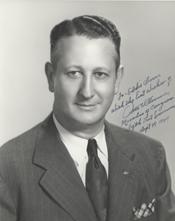
49 records where Rep. Passman, Otto E. [D-LA-5] is listed as a sponsor, author, or other actor. Search with topics and years
Resolution· HRESH.Res. 1493 (94th)referred
United States · United States Congress · 25 August 1976
Condemns North Korea for its continued acts of treachery culminating in the axe murders of two American officers and the wounding of five others. Directs the Speaker of the House to make known the regrets of the House to the wives and children and other survivors of Major Bonifas and Lieutenant Barrett.
Resolution· HRESH.Res. 1491 (94th)referred
United States · United States Congress · 25 August 1976
Directs the House Committee on Armed Services to make a study of the murder by members of the North Korean Armed Forces serving as guards at Panmunjom of two American Army officers attached to the United Nations Command, and other recent North Korean violations of the armistice agreement. Requires the committee to transmit a report to the House containing a statement of the findings of the committee no later than January 3, 1977.
Resolution· HCONRESH.Con.Res. 721 (94th)referred
United States · United States Congress · 25 August 1976
Expresses the sense of the Congress that the President should take such steps as may be necessary to place the threat to the peace created by the murder of two American Army officers attached to the United Nations Command by members of the North Korean Armed Forces serving as guards at Panmunjom, and other recent North Korean violations of the armistice agreement, on the agenda of the United Nations.
Bill· HRH.R. 14567 (94th)referred
United States · United States Congress · 25 June 1976
Amends the Internal Revenue Code to allow a charitable deduction against the income, estate, and gift tax for contributions by an individual to a domestic fraternal society operating under the lodge system for the purpose of constructing or maintaining a building the principal purpose of which is to house such organization.
Resolution· HRESH.Res. 1323 (94th)referred
United States · United States Congress · 18 June 1976
Expresses the sense of the House of Representatives that the United States Postal Service shall not close or suspend the operation of any post offices, unless there is a clear and compelling need to do so. Encourages the service to continue cost-cutting programs which do not affect levels of service.
Law· HRH.R. 14260 (94th)open
United States · United States Congress · 8 June 1976
Foreign Assistance and Related Programs Appropriations Act - Title I: Foreign Assistance Act Activities - Makes specified appropriations to the President, for the period ending September 30, 1977, under the Foreign Assistance Act of 1961, for enumerated foreign assistance activities. Prohibits funds appropriated under the Foreign Military Sales Act from being transferred by the President of the International Development Association and other multilateral lending and development institutions. Restricts the amount which may be used for centrally funded research programs under certain development programs. Limits the use of such foreign assistance funds for water resource programs, and loans. Prohibits the use of such funds (1) to compensate persons serving in the armed forces of any recipient country, (2) to make payments on specified procurement contracts, (3) to pay dues or assessments of any member of the United Nations, or (4) to assist North Vietnam, South Vietnam, Cambodia, or Laos. Title II: Foreign Military Credit Sales - Make specified appropriations to the President, for foreign military credit sales. Title III: Foreign Assistance (Other) - Makes appropriations for specified periods (1) to ACTION for purposes of the Peace Corps Act, (2) to the Department of Health, Education, and Welfare for the Cuban refugees program, under the Migration and Refugee Assistance Act of 1962, (3) to the Department of State for migration and refugee assistance, under the Foreign Service Act of 1946, the Foreign Relations Authorization Act, Fiscal Year 1976, and other legislation, (4) to the President for international investments authorized by the Asian Development Bank Act of 1974, the Foreign Assistance and Related Appropriations Act of 1975, and the International Development Association Act of 1974 and (5) for assistance to refugees from Cambodia, Vietnam, Laos, the Soviet Union, or Communist countries of Eastern Europe. Title IV: Export-Import Bank of the United States - Authorizes the Export-Import Bank of the United States to make expenditures to carry out the budget program for the current fiscal year. Makes appropriations for the program activities and the administrative expenses of the Bank with certain limitations. Title V: General Provisions - Prohibits the use of funds appropriated by this Act (1) for publicity propaganda in the United States not previously authorized by Congress, (2) for specified expenses of the Inspector General, Foreign Assistance, (3) for obligations beyond the current fiscal year unless expressly authorized, (4) for assistance to any country which is in default for more than one year on a loan made by the United States, (5) for military assistance, training, or credit to Uruguay, and (6) by any international financial institution whose United States representatives cannot obtain the amounts and names of borrowers for all loans of the institution. Permits the funds of this Act to be available notwithstanding whether previously authorized by law, or whether it is in excess of an amount previously prescribed.
Bill· HRH.R. 13656 (94th)referred
United States · United States Congress · 10 May 1976
Directs State boards receiving funds under the Vocational Education Act of 1963 to use a portion of such funds for grants for research into the areas of inservice training in vocational education program development and the recruitment of skilled craftsmen and technicians employed in the community into the vocational education teaching profession.
Bill· HRH.R. 13539 (94th)referred
United States · United States Congress · 4 May 1976
Consumer Communications Reform Act - States that Congress finds that the revenues from integrated interstate and foreign common carrier telecommunications services helped maintain a level of charges for telephone exchange service which is lower than otherwise would be required. Expresses the sense of Congress that the authorization of lines, facilities, or services of specialized carriers which duplicate the lines, facilities, or services of other telecommunications common carriers is contrary to the public interest. Reaffirms the intent of Congress that the complete authority to regulate terminal and station equipment used for telephone exchange service shall rest with the States even though such terminal and station equipment also may be used in connection with interstate services. Amends the Communications Act of 1934 to provide that no compensatory charges for or in connection with such communication service may be found to be unjust or unreasonable on the ground that it is to low. Prohibits the Federal Communications Commission from holding the charge of a carrier up to a particular level to protect the traffic or revenues from a communication service offered or provided by another carrier if such charge proposed by the carrier is compensatory. Grants the Commission jurisdiction to approve the acquisition of control by a domestic common carrier of any other domestic common carrier or to approve the acquisition by a person which is not a common carrier of control of any domestic common carrier or the acquisition of the whole or any part of the property of a domestic common carrier after determining that the acquisition is in the public interest. Provides that the Commission shall not grant or authorize any construction permit, station license, or certificate, for the construction, acquisition, or operation of any communication or transmission line or facility, or extension thereof, or any modification or renewal thereof, unless the Commission shall find, after full opportunity for evidentiary hearing on the record, that such permit, license, or certificate will not result in increased charges or unnecessary duplication of communication lines.
Bill· HJRESH.J.Res. 904 (94th)referred
United States · United States Congress · 1 April 1976
Designates April 13, 1976 as "Thomas Jefferson Day."
Bill· HRH.R. 12524 (94th)referred
United States · United States Congress · 15 March 1976
Amends the Housing Act of 1949 to expand the definitions of "rural" and "rural areas" to include places not part of or associated with an urban area which have a population of between 10,000 and 20,000 people and which have a serious lack of mortgage credit for lower- and moderate-income families.
Law· HRH.R. 12203 (94th)open
United States · United States Congress · 1 March 1976
Foreign Assistance and Related Programs Appropriations Act - Makes specified appropirations to the President, for fiscal year 1976 and the period ending September 30, 1976, (1) under the Foreign Assistance Act of 1961, for enumerated foreign assistance activities, and (2) under the Foreign Military Sales Act, for foreign military credit sales. Limits the use of such foreign assistance funds for water resource programs, for research construction of facilities in underdeveloped countries, and for loans. Prohibits the use of such funds, (1) to compensate persons serving in the armed forces of any recipient country, (2) to make payments on specified procurement contracts, (3) to make payments on specified capital projects, (4) to pay dues or assessments of any member of the United Nations, (5) to assist North Vietnam, South Vietnam, Cambodia, or Laos, or (6) to give military assistance to Angola. Prohibits the availability of specified funds, under the Foreign Assistance Act of 1961, unless the Committees on Appropriations of the Senate and the House of Representatives have prior notice of such obligations. Waives for purposes of these appropriations the prohibition against obligation or expenditure of foreign assistance appropriations without previous authorization by law or in excess of amounts previously prescibed by law. Prohibits the transfer of such funds to specified international development banks or the loan of such funds for projects recommended by the Inter-American Committee for the Alliance for Progress. Postpones payments due on loans made to specified institutions and organizations in Israel. Extends to Laotian refugees special assistance appropriated for refugees of Cambodia and Vietnam. Makes appropriations for specified periods (1) to Action for purposes of the Peace Corps Act, (2) to the Department of Health, Education, and Welfare for the Cuban refugees program, under the Migration and Refugee Assistance Act of 1962, (3) to the Department of State for migration and refugee assistance, under the Foreign Service Act of 1946, the Foreign Relations Authorization Act, Fiscal Year 1976, and other legislation, and (4) to the President for international investments authorized by the Asian Development Bank Act of 1974, the Foreign Assistance and Related Appropriations Act 1975, and the International Development Association Act of 1974. Authorizes the Export-Import Bank of the United States to make expenditures to carry out the budget program through September 30, 1976. Makes appropriations for the program activities and the administrative expenses of the Bank. Prohibits the use of funds appropriated by this Act (1) for publicity or propaganda in the United States not previously authorized by Congress, (2) for specified expenses of the Inspector General, Foreign Assistance, (3) for obligations beyond the current fiscal year unless expressly authorized, and (4) for payment to the Administrator of the General Services Administration in excess of 90 percent of the standard level user charge for space and services, under the Federal Property and Administrative Services Act of 1949.
Bill· HRH.R. 11615 (94th)referred
United States · United States Congress · 29 January 1976
National Food Stamp Reform Act - Defines "household" under the Food Stamp Act as meaning a group of individuals who are sharing common living quarters, but who are not residents of an institution or boarding house, and who have access to cooking facilities and for whom food is customarily purchased in common. Provides that the Secretary of Agriculture may not approve any plan which permits any household to simultaneously participate in both the food stamp program and the distribution of federally donated foods. Requires the Secretary to establish uniform national standards of eligibility for participation by households in the food stamp program. States that the income standards of eligibility shall be the income poverty guidelines prescribed by the Office of Management and Budget adjusted pursuant to the Economic Opportunity Act. Directs the Secretary to prescribe additional standards of eligibility which shall include, but not be limited to, the amounts of liquid and nonliquid assets. Provides that household income for purposes of the food stamp program shall be the gross income of the household less: (1) a standard deduction of $100 a month applicable to all households; and (2) an additional deduction of $25 a month for any household in which there is at least one member who is age 65 or older. Limits eligibility to participate in the food stamp program to citizens and aliens lawfully admitted for permanent residency. States that no individual shall be considered eligible for the food stamp program as a member of a household if he is: (1) over 18; (2) is enrolled at an institution of higher education; and (3) is a dependent child for income tax purposes of a taxpayer who is not a member of an eligible household. Prohibits households which transfer liquid or nonliquid assets for the purpose of qualifying for the food stamp program from becoming eligible for at least a 90-day period. Requires the Secretary to issue photo identification cards to households certified eligible to participate in the program. States that households shall be charged 30 percent of their income for the coupon allotment issued to them. Provides that if a State agency does not comply with the provisions of the Food Stamp Act, the Secretary may refer the matter to the Attorney General with a request for an injunction, or he may direct that there be no further issuance of coupons in the political subdivisions where such failure has occurred until such time as satisfactory corrective action has been taken. Directs the Secretary to pay to each State agency out of funds appropriated by Congress an amount equal to 75 percent of all direct costs of State food stamp program investigations, prosecutions, and State activities related to recovering losses sustained in the food stamp program. Provides for a civil penalty of up to $10,000 for each violation of the Food Stamp Act.
Bill· HRH.R. 11146 (94th)referred
United States · United States Congress · 12 December 1975
Extends from February 1, 1976, to October 1, 1977, the period during which payment may be made for child day care services under titles IV (Aid to Dependent Children) and XX (Grants to States for Social Services) of the Social Security Act without regard to new staffing standards imposed by or under title XX.
Resolution· HRESH.Res. 834 (94th)referred
United States · United States Congress · 29 October 1975
Condemns the resolution adopted by the Third Committee of the United Nations General Assembly which equates Zionism with racism, and urges the U.N. General Assembly to disapprove such resolution.
Bill· HJRESH.J.Res. 697 (94th)referred
United States · United States Congress · 9 October 1975
Authorizes the President to issue a proclamation designating the week in November which includes Thanksgiving Day in each year as "National Family Week."
Resolution· HCONRESH.Con.Res. 419 (94th)referred
United States · United States Congress · 7 October 1975
Expresses the sense of Congress that the United States Government while engaged in a lessening of tensions with the People's Republic of China, do nothing to compromise continued close relations with the Republic of China.
Bill· HRH.R. 9750 (94th)referred
United States · United States Congress · 19 September 1975
Postpones for six months the application of Federal standards governing the provision of child day care services under the new social services program of the Social Security Act.
Resolution· HRESH.Res. 674 (94th)referred
United States · United States Congress · 1 August 1975
Expresses the House of Representatives strong disapproval of efforts to expel Israel from the United Nations. States that if Israel is expelled the United States should reassess its relationship with the United Nations General Assembly. Provides that such reassessment shall include possible withdrawal from that body.
Bill· HJRESH.J.Res. 516 (94th)referred
United States · United States Congress · 18 June 1975
Removes the numerical limitation on Allen J. Ellender Fellowships to disadvantaged secondary school students. Authorizes $750,000 each for fiscal years 1977 and 1978 and $1,000,000 each for fiscal years 1979 and 1980.
Bill· HRH.R. 7957 (94th)referred
United States · United States Congress · 17 June 1975
Broadcast License Renewal Act - Permits the Federal Communications Commission to extend three-year broadcast licenses for an additional two years upon a finding of public interest. Requires in making such determination, considerations of whether different term lengths for radio and television stations and for different categories of licensees are in the public interest. Limits other class licenses to a five-year maximum, prescribing the renewal procedures for such licenses and the criteria to be considered in renewal, including responsiveness and lack of serious deficiencies. Sets guidelines for expeditious action on applications for renewal of broadcasting station licenses by limiting material required to be filed. Requires the Commission to examine the renewal process and report within six months on methods of reducing and consolidating filings and supporting documents.
Resolution· HRESH.Res. 518 (94th)referred
United States · United States Congress · 9 June 1975
Creates a select committee in the House of Representatives with authority to conduct a full and complete investigation of the problem of United States servicemen missing in action or known to be dead whose bodies have not been recovered, as a result of military operations in North Vietnam, South Vietnam, Laos and Cambodia. Provides that such investigation shall include an examination of the need for additional international inspection teams to determine whether there are servicemen still held as prisoner of war. Authorizes the Committee to hold hearings, issue subpenas, and maintain a staff as necessary to carry out its responsibilities under this resolution. Directs the committee to report to the House the results of its investigation no later than one year after adoption of this resolution. Provides that the committee's authority shall expire 30 days after the filing of such report. Directs that the expenses of the select committee shall be paid from the contingent fund of the House of Representatives upon vouchers signed by the Chairman.
Resolution· HRESH.Res. 496 (94th)referred
United States · United States Congress · 21 May 1975
Creates a select committee in the House of Representatives with authority to conduct a full and complete investigation of the problem of United States servicemen missing in action or known to be dead whose bodies have not been recovered, as a result of military operations in North Vietnam, South Vietnam, Laos and Cambodia. Provides that such investigation shall include an examination of the need for additional international inspection teams to determine whether there are servicemen still held as prisoner of war. Authorizes the Committee to hold hearings, issue subpenas, and maintain a staff as necessary to carry out its responsibilities under this resolution. Directs the committee to report to the House the results of its investigation no later than one year after adoption of this resolution. Provides that the committee's authority shall expire 30 days after the filing of such report. Directs that the expenses of the select committee shall be paid from the contingent fund of the House of Representatives upon vouchers signed by the Chairman.
Law· HRH.R. 4592 (94th)open
United States · United States Congress · 10 March 1975
Foreign Assistance and Related Programs Appropriations Act - Title I: Foreign Assistance Act Activities - Makes appropriations for fiscal year 1975 for economic, military, and Indochina Postwar Reconstruction Assistance. States that no part of such funds may be used to provide assistance to North Vietnam, or for police, prison, or criminal matters in South Vietnam. Expresses the sense of Congress that excess foreign currencies on deposit with the United States Treasury should be used to underwrite local costs of United States foreign assistance programs. Directs the President to enter into negotiations with OPEC (Organization of Petroleum Exporting Countries) in order to provide for the accelerated repayment of any outstanding loans or debts. Title II: Foreign Military Credit Sales - Makes appropriations to enable the President to carry out the Foreign Military Sales Act. Title III: Foreign Assistance - Makes appropriations for the Pease Corps; assistance to refugees in the United States; refugees from the Soviet Union; investment in the Asian Development Bank, the Inter-American Development Bank, and the International Development Association. Title IV: Export-Import Bank of the United States - Authorizes the Export-Import Bank to make expenditures within the limits of funds and borrowing authority available to it. Title V: General Provision - States no part of any appropriations in this Act may be used for publicity or propaganda purposes within the United States not previously authorized by Congress.
Bill· HRH.R. 4488 (94th)referred
United States · United States Congress · 10 March 1975
Exempts the first sale of the share of a State or local government or a subdivision thereof in crude oil produced in the United States from the mineral or leasehold estate of any State or local government or subdivision-owned lands for purposes of the Emergency Petroleum Allocation Act of 1973.
Bill· HRH.R. 15688 (93rd)referred
United States · United States Congress · 27 June 1974
Harry S. Truman Memorial Scholarship Act - Expresses the findings of Congress and declares that it is especially appropriate to honor former President Harry S. Truman through the creation of a perpetual educational scholarship program to develop increased opportunities for young Americans to prepare and pursue careers in public service. Establishes as an independent establishment of the executive branch of the United States Government, the Harry S. Truman Scholarship Foundation, to be subject to the supervision and direction of the Board of Trustees. Authorizes the Foundation to award fifty-one scholarships in any fiscal year beginning after June 30, 1973, for undergraduate study for persons who plan to pursue a career in public service. States that each recipient shall be knows as a Truman scholar. Sets forth provisions governing: (1) the scholarship requirements; (2) the procedures for selection of Truman scholars; (3) stipends and institutional allowances; and (4) the scholarship conditions. Establishes in the Treasury of the United States a trust fund to be known as the Harry S. Truman Memorial Scholarship Trust Fund. Prescribes the procedures for expenditures from the fund. Directs that there shall be an Executive Secretary of the Foundation, appointed by the Board, who shall be the chief executive officer and shall carry out the functions of the Foundation subject to the supervision and direction of the Board. Authorizes to be appropriated $30,000,000 to the fund. Authorizes to be appropriated such sums as may be necessary for administrative expenses incident to carrying out the provisions of this Act.
Bill· HRH.R. 15397 (93rd)referred
United States · United States Congress · 13 June 1974
Provides, under the Foreign Assistance Act of 1961, that whenever the President deems it to be in the national interest, he shall endeavor to insure that, to the maximum extent practicable, such assistance shall be furnished only pursuant to agreements which provide for the exchange of necessary strategic or critical raw materials for such assistance. Defines the term "necessary strategic or critical raw materials" to include petroleum, fossil fuels, metals, minerals, or other substances which: (1) are in short supply in the United States or (2) the United States requirements of which are not produced in the United States.
Bill· HRH.R. 15320 (93rd)reported
United States · United States Congress · 11 June 1974
Exempts, in recognition of the direct benefits to the United States from the construction of the Toledo Bend Dam and Reservoir project, the Sabine River Authority, State of Louisiana, and the Sabine River Authority of Texas, from further charges for the use, occupancy, and enjoyment of specified lands of the United States within the Sabine National Forest, Texas.
Resolution· HRESH.Res. 1125 (93rd)referred
United States · United States Congress · 16 May 1974
Expresses the sense of the House of Representatives that (1) it most strongly condemns all acts of terrorism in the Middle East; (2) the President and the Secretary of State should and are hereby urged and requested to (a) call upon all governments to condemn this inhuman act of violence against innocent victims; and (b) strongly urge the governments who harbor these groups and individuals to take appropriate action to rid their countries of those who subvert the peace through terrorism and senseless violence; and (3) the President should request the American Ambassador to the United Nations to take appropriate action before that body in order to have introduced a Security Council resolution condemning this brutal act of violence.
Bill· HRH.R. 14497 (93rd)referred
United States · United States Congress · 30 April 1974
Allows a deduction from gross income under the Internal Revenue Code for social agency, legal, and related expenses incurred in connection with the adoption of a child by a taxpayer. Defines, for purposes of this Act, the term "adoption expense". (Adds 26 U.S.C. 219)
Resolution· HCONRESH.Con.Res. 434 (93rd)referred
United States · United States Congress · 21 February 1974
Expresses the sense of Congress that the United States Government, while engaged in a lessening of tensions with the People's Republic of China, do nothing to compromise continued close relations with the Republic of China.
Bill· HRH.R. 12691 (93rd)referred
United States · United States Congress · 6 February 1974
Suspends emissions controls on motor vehicles and engines in the continental United States except vehicles registered to residents of designated air quality regions until June 30, 1977, or sixty days after the President determines there is no significant shortage of petroleum fuels, whichever is later. Directs the Administrator of the Environmental Protection Agency to designate, subject to the limitations of the Act, geographic areas of the United States in which there is significant auto emissions related air pollution. Provides that each State shall, not later than sixty days following enactment of this Act, submit to the Administrator a plan for implementing the Act. Provides that if a State fails to submit a plan under the Act or if the Administrator determines (after notice and opportunity for hearing) that such State is not adequately enforcing such a plan, then such State shall lose its entitlement to, and may not thereafter receive, any Federal grant or loan assistance under this Act or under the Federal Water Pollution Control Act. Declares that willful and deliberate violation of any provision of this Act shall be punishable by a fine of up to $1,000, or imprisonment for up to one year, or both.
Bill· HRH.R. 12374 (93rd)referred
United States · United States Congress · 29 January 1974
Provides that the sale of livestock sold as a result of flood shall be treated as an involuntary conversion eligible for replacement or nonrecognition of gain treatment under the Internal Revenue Code.
Law· HRH.R. 11771 (93rd)open
United States · United States Congress · 4 December 1973
Foreign Assistance and Related Programs Appropriations Act - Title I: Foreign Assistance Act Activities - Makes appropriations for fiscal year 1974 for economic, military, and Indochina Postwar Reconstruction Assistance. States that no part of such appropriations may go to Ecuador (except at Presidential discretion), to North Vietnam, or to South Vietnam if used for support of police or prison construction or administration. Title II: Foreign Military Credit Sales - Makes appropriations to enable the President to carry out the Foreign Military Sales Act. Title III: Foreign Assistance - Makes appropriations for the Peace Corps; assistance to refugees in the United States; investment in the Asian Development Bank, the Inter-American Development Bank, and the International Development Association. Title IV: Emergency Security Assistance and Disaster Relief Assistance - Makes authorizations for emergency assistance to Israel, Cambodia, Pakistan, Africa's Sahel region, and Nicaragua. Title V: Export-Import Bank of the United States - Prescribes expenditures for such bank. Title VI: General Provisions - States that no part of any appropriations in this Act may be used for publicity or propaganda purposes within the United States not previously authorized by Congress.
Bill· HRH.R. 11622 (93rd)referred
United States · United States Congress · 28 November 1973
Names the Federal office building, south, in New Orleans, Louisiana, as the "F. Edward Herbert Federal Building".
Resolution· HRESH.Res. 707 (93rd)referred
United States · United States Congress · 15 November 1973
Commends the President of the United States for his actions in the Middle East, particularly his efforts through the United Nations to create the atmosphere in which the negotiations could take place and his dialogue with the Soviet Union in an effort to reduce tensions.
Bill· HRH.R. 11157 (93rd)referred
United States · United States Congress · 29 October 1973
Community Mental Health Centers Extension Act - Declares the finding of Congress that community care is the most effective and humane form of care for the majority of mentally ill and retarded individuals. States that it is the Federal Government's responsibility to insure the expansion of the community mental health center concept. Authorizes appropriations for grants for facilities of public and nonprofit community mental health centers. Provides for grants for specified portions of the costs of operation of such centers, under the Community Mental Health Centers Act. States that where an application for a grant is made, the applicant must provide specified assurances, including that specialized services will be provided for the mental health of children and of the elderly. Sets forth requirements for an applicant providing programs for alcoholism and drug abuse. Limits the amount of appropriations which may be used for the evaluation of programs under this Act. Distinguishes, for purposes of granting assistance, between community mental health centers serving poverty areas and those not serving poverty areas. Provides for grants to community mental health centers for consultation and education services. Authorizes appropriations of such sums as may be necessary for funding such grants . States that no individual, especially alcoholics, narcotic addicts and other persons with drug dependence problems, shall be made the subject of any research carried out with funds provided by specified portions of this Act unless such individual explicitly agrees to become a subject of such research. Repeals specified provisions of the Community Mental Health Centers Act.
Resolution· HRESH.Res. 619 (93rd)referred
United States · United States Congress · 18 October 1973
Declares it to be the sense of the House that the President, acting in accordance with the announced policy of the United States Government to maintain Israel's deterrent strength, and under existing authority, should continue to transfer to Israel the Phantom aircraft and other equipment in the quantities needed by Israel to repel the attack and to offset the military equipment and supplies furnished to the Arab States by the Soviet Union.
Law· HRH.R. 10701 (93rd)open
United States · United States Congress · 3 October 1973
States that the purpose of this Act is to authorize and provide for the construction and operation of deepwater port facilities. Prohibits any person from constructing or operating to such a facility without a license. Authorizes the Deepwater Port Facilities Licensing Commission to issue such licenses if: (1) applicants are financially able and willing to comply with applicable requirements; (2) the facility will not unreasonably interfere with international navigation; and (3) the facility will be constructed and operated to minimize or prevent any adverse significant environmental effetcts. Provides that licenses may be issued for 30 years with right to renew. Prohibits granting of a lincene over the objection of a governor of an adjacent State. Exempts such licenses from antitrust laws. Establishes the Deepwater Port Facilities Licensing Commission and lists its members. Provides that license applications must meet all requirements of law. Requires the Commission to notify, upon license application, governors of adjacent States, Federal agencies, and interested persons and groups. Provides for public hearings concerning licenses. Establishes methods of appeal from a license application decision made by the Commission. Establishes penalties for license violators and violators of this title. Permits States to fix reasonable fees, tolls, and charges for the use of adjacent deepwater port facilities.
Bill· HRH.R. 9913 (93rd)referred
United States · United States Congress · 3 August 1973
Provides, under the Merchant Marine Act, that the appropriate agencies take steps to assure that at least 20 per cent of the gross tonnage of all petroleum and petroleum products imported into the United States on ocean vessels be transported on privately owned United States flag commercial vessels. Requires that the quantity to be carried in United States-flag commercial vessels be at least 25 per cent after June 30, l975, and at least 30 per cent after June 30, l977. (Amends 46 U.S.C. 1241))
Bill· HRH.R. 9430 (93rd)passed
United States · United States Congress · 19 July 1973
Provides that the United States courthouse and Federal office building under construction in New Orleans, Louisiana be designated as the "Hale Boggs Federal Building".
Law· HRH.R. 9295 (93rd)open
United States · United States Congress · 16 July 1973
Requires the Secretary of Agriculture to convey specified lands of the United States to the State of Louisiana for the use of Louisiana State University.
Bill· HJRESH.J.Res. 628 (93rd)referred
United States · United States Congress · 19 June 1973
Authorizes the President to issue annually a proclamation designating the fourth Sunday of November of each year as "National Grandparents' Day". Calls upon the people of the United States and interested groups and organizations to observe such day with appropriate ceremonies and activities.
Bill· HRH.R. 8653 (93rd)referred
United States · United States Congress · 13 June 1973
Requires the Secretary of Agriculture to convey specified lands of the United States to the State of Louisiana for the use of Louisiana State University.
Resolution· HCONRESH.Con.Res. 230 (93rd)referred
United States · United States Congress · 30 May 1973
Makes it the policy of the Congress that our fishing industry be afforded all support necessary to have it strengthened, and all steps be taken to provide adequate protection for our coastal fisheries against excessive foreign fishing. Declares that the Congress recognizes, encourages, and intends to support the key responsibilities of the several States for conservation and scientific management of fisheries resources within United States territorial waters, and that the Congress particularly commends Federal programs designed to improve coordinated protection, enhancement, and scientific management of all United States fisheries, both coastal and distant, including presently successful Federal aid programs under the Commercial Fisheries, Research and Development Act of 1964, and the newly developing Federal-State fisheries management programs.
Law· HRH.R. 6883 (93rd)open
United States · United States Congress · 12 April 1973
Authorizes the Secretary of Agriculture, because of natural disaster to a farm or portion thereof, to transfer land alloted to peanut acreage to another farm in the county when each crop cannot be timely planted or replanted in such year. Authorizes the Secretary of Agriculture to transfer all or a part of the rice acreage allotment for any farm in the county or adjoining county affected by natural disaster.
Bill· HRH.R. 6164 (93rd)referred
United States · United States Congress · 27 March 1973
Act for Freedom of Emigration in East-West Trade - States that after October 15, 1972, products from any nonmarket economy country shall not be eligible to receive most-favored-nation treatment, such country shall not participate in any program of the Government of the United States which extends credits or credit guarantees or investment guarantees, directly or indirectly, and the President of the United States shall not conclude any commercial agreement with any such country during the period beginning with the date on which the President determines that such country: (1) denies its citizens the right or opportunity to emigrate; (2) imposes more than a nominal tax on emigration or on the visas or other documents required for emigration, for any purpose or cause whatsoever; or (3) imposes more than a nominal tax, levy, fine, fee, or other charge on any citizen as a consequence of the desire of such citizen to emigrate to the country of his choice. Provides that, before any of the aforementioned commercial agreements are entered into with any foreign country, the President shall submit to the Congress a report indicating that such country is not in violation of any of the requirements of the preceding paragraph.
Bill· HRH.R. 5076 (93rd)referred
United States · United States Congress · 1 March 1973
Provides that no license granted for the operation of a broadcasting station under the Communications Act of 1934 shall be for a longer term than five years. Provides for renewal of such license where the Federal Communications Commission finds that the public interest, convenience, and necessity would be served. Provides that an applicant for renewal who is legally, financially and technically qualified shall be awarded the license if such applicant shows that its broadcast service during the preceding license period has reflected a good-faith effort to serve the needs and interests of its area as represented in its immediately preceding and pending license renewal application and if it has not demonstrated a callous disregard for law or the Commission's regulations.
Bill· HRH.R. 4606 (93rd)referred
United States · United States Congress · 22 February 1973
Extends specified transitional rules, under the Internal Revenue Code of 1954, for allowing a charitable contribution deduction for purposes of the estate tax in the case of certain charitable remainder trusts. (Adds 26 U.S.C. 2055(e)(3)
Bill· HRH.R. 4046 (93rd)referred
United States · United States Congress · 7 February 1973
Fair International Trade Act - Declares it to be the purpose of this Act to prevent the destructive effects of an undue increase of imports on the domestic economy while providing for the expansion of imports in proportion as the domestic market for the same or similar products may expand. Provides that the President shall, within one hundred and twenty days after the effective date of this Act, except as otherwise provided, limit the total quantity of each category of goods produced in any foreign country that may be entered in any calendar year of any specified part thereof, beginning with the year 1973, to the average annual quantity of such category of goods as was imported during the three-year period of 1970-1972, as determined by the Tariff Commission. Provides that, no article the production and sale of which an unexpired patent has been issued by the United States Patent Office to a domestic producer shall be imported in an amount by quantity or value that shall exceed 5 percent of the annual apparent domestic consumption of the same article in the United States during the first five years after the issuance of the patent, or more than 10 percent of such consumption during the second five-year period, or more than 15 percent after the third five-year period after issuance of the patent. Provides that if the share of the domestic market supplied by imports of the article or category of articles has increased by more than 10 percent in the most recent three-year period over the share supplied during the next preceding three-year period but not more than 20 percent, the base quantity for the imposition of the quantitative limitation shall be the average imports of the article during the three-year period of 1970-1972. Provides that the President shall treat the share of domestic consumption supplied by imports in any given region of the country as if such share were national in scope and proclaim any quantitative import limitations accordingly by region. Provides that the President shall proclaim a quantitative limitation on imports of agricultural products under the same conditions with respect to the share of domestic consumption supplied by imports as govern other articles under this Act.