Law· HJRESH.J.Res. 425 (102nd)enacted
Designating May 10, 1992, as "Infant Mortality Awareness Day".
United States · United States Congress · 26 February 1992
Designates May 10, 1992, as Infant Mortality Awareness Day.
The world's political record
Person
United States · Official source
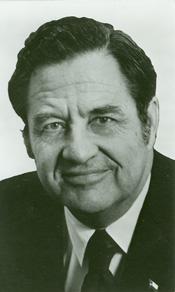
1,600 records where Rep. Pickle, J. J. [D-TX-10] is listed as a sponsor, author, or other actor. Search with topics and years
United States · United States Congress · 26 February 1992
Designates May 10, 1992, as Infant Mortality Awareness Day.
United States · United States Congress · 19 February 1992
Designates September 13, 1992, as Commodore John Barry Day.
United States · United States Congress · 5 February 1992
Designates January 16, 1993, as National Good Teen Day.
United States · United States Congress · 5 February 1992
Designates May 1992 as National Huntington's Disease Awareness Month.
United States · United States Congress · 5 February 1992
Designates June 11, 1992, as National Alcoholism and Drug Abuse Counselors Day.
United States · United States Congress · 24 January 1992
Designates the week beginning August 16, 1992, as National Convenience Store Appreciation Week.
United States · United States Congress · 22 January 1992
Amends the Emergency Unemployment Compensation Act of 1991 (Public Law 102-164) to add 13 weeks to the number of weeks of benefits payable under the emergency unemployment compensation program. Provides for a total number of weeks of such emergency benefits as follows: (1) 33 weeks (currently 20) in higher unemployment States (with a total unemployment rate of nine percent or higher or an adjusted insured unemployment rate of five percent or higher, for specified periods); and (2) 26 weeks (currently 13) for all other States. Extends to October 3, 1992, the expiration date of the emergency unemployment program (currently June 13, 1992). (Makes a conforming amendment extending provisions for unemployment insurance benefits for certain railroad workers during periods of high national unemployment.) Requires that the provisions of (and amendments made by) this Act be treated as emergency requirements designated by the President and the Congress under the Balanced Budget and Emergency Deficit Control Act of 1985 (Gramm-Rudman-Hollings Act). Requires that any amount of new budget authority, outlays, or receipts resulting from the provisions of (and amendments made by) this Act not be considered for any purpose under the Balanced Budget and Emergency Deficit Control Act of 1985.
United States · United States Congress · 3 January 1992
Designates the month of May 1992 as National Foster Care Month.
United States · United States Congress · 22 November 1991
Commends: (1) the people of Guam for their patriotism, bravery, loyalty to the United States, and many sacrifices during World War II, particularly during the invasion and occupation of the Guam territory; (2) the members of the Navy Insular Force and U.S. Navy and Marine Corps for the efforts and sacrifices they made in defense of the U.S.; (3) the Hawaiians for their sacrifices and contributions to the U.S. war effort during the attack on Pearl Harbor on December 7, 1941; and (4) the Hawaii Territorial Guard members, Varsity Victory Volunteers, the civilian workers at the Pearl Harbor Naval Ship Yard and other Hawaiian military installations, 100th Infantry Battalion, Military Intelligence Service, and 442nd Regimental Combat Team for their sacrifices and contributions to the U.S. war effort during such attack.
United States · United States Congress · 21 November 1991
Federal Program Improvement Act of 1991 - Title I: Provisions Relating To The Medicare Program - Subtitle A: Durable Medical Equipment - Amends the Social Security Act to: (1) prohibit unsolicited telephone contacts from suppliers of items of durable medical equipment to Medicare (title XVIII of the Social Security Act) beneficiaries; (2) require suppliers to provide information to the Secretary of Health and Human Services (HHS) on sales and billing practices; (3) prohibit carrier forum shopping; (4) prohibit issuance of multiple provider numbers; (5) require a description of such items in forms explaining benefits; (6) require the Secretary to develop a standardized prescription for such items; (7) mandate adjustments to final payments amounts which the Secretary determines are not inherently reasonable; (8) require an advanced determination for decubitus care mattresses; (9) require the Secretary to report to specified congressional committees on implementation of advanced determination requirements; and (10) set forth miscellaneous study and reporting requirements respecting item definitions and quality standards, supplier costs, and items treated as prosthetics devices. Subtitle B: Secondary Payer Identification and Enforcement - Amends the Social Security Act to: (1) make changes to aid the identification of Medicare secondary payer situations and the recovery of erroneous payments from primary payers; and (2) set forth miscellaneous study and reporting requirements respecting carrier recovery efforts and contractor eligibility requirements. Title II: Customs Overtime Pay Reform - Revises the overtime pay system for U.S. Customs Service inspectors. Amends the Customs Procedural Reform and Simplification Act of 1978 to require the authorization for the Customs Service to specify the maximum amount available for payment of overtime. Amends the Consolidated Omnibus Budget Reconciliation Act of 1985 to terminate reimbursement of appropriations for overtime costs. Requires a General Accounting office study and report to specified congressional committees on overtime costs. Title III: Availability And Use of Death Information Under The Old-Age, Survivors, And Disability Insurance Program - Amends title II (Old Age, Survivors and Disability Insurance) (OASDI) of the Social Security Act to: (1) eliminate State restrictions on the use of death certificates to correct OASDI and other Federal benefit program information; (2) provide for the provision of Social Security Administration death information to States free of charge; and (3) restrict the use of social security account numbers by States which have not contracted to participate in the program providing for the exchange of death information. Requires an HHS study and report to specified congressional committees on improvements in gathering and reporting such information. Title IV: PBGC Report On Employers With Underfunded Plans - Requires the Pension Benefit Guaranty Corporation to submit an annual report to the Congress on employers with underfunded pension plans.
United States · United States Congress · 21 November 1991
Taxpayer Bill of Rights Act of 1991 - Title I: Additional Safeguards to Protect Taxpayers' Rights - Subtitle A: Taxpayers' Advocate - Amends the Internal Revenue Code to establish in the Internal Revenue Service (IRS) the Office of Taxpayers' Advocate, headed by the Taxpayers' Advocate, appointed by the President, by and with the advice and consent of the Senate. Requires the Office to: (1) assist taxpayers in resolving problems with the IRS; (2) identify areas in which taxpayers have problems in dealings with the IRS; (3) propose changes in the administrative practices of the IRS to mitigate such problems; and (4) identify potential legislative changes which may be appropriate to mitigate such problems. Requires the Taxpayers' Advocate to annually report to specified congressional committees on Office activities. Requires the Commissioner of Internal Revenue to establish procedures requiring a formal response to all recommendations submitted to the Commissioner by the Taxpayers' Advocate. Authorizes the terms of a Taxpayer Assistance Order to require the Secretary of the Treasury to take certain actions (currently, only to cease or refrain from taking such actions). Subtitle B: Modifications to Installment Agreement Provisions - Requires prior notification to taxpayers under an installment agreement to pay tax liability before altering, modifying, or terminating such an agreement. Provides for administrative review of denials of requests for installment agreements. Suspends the failure to pay penalty during any period an installment agreement is in effect. Subtitle C: Interest - Extends from ten days to 21 days the period for which interest will not be imposed after notice and demand for payment, if such payment is less than $100,000. Provides for the abatement of interest in the case of an assessment due to the error or delay of an IRS managerial act. Increases the interest rate for overpayment of tax from two percent to three percent (making such rate equal to the interest rate for underpayment of tax). Waives interest on all overpayments refunded within 45 days after a return is filed. Subtitle D: Joint Returns - Requires separate deficiency notices in the case of a joint income tax return if the most recent data available to the IRS shows that such spouses did not file a joint return with each other. Allows the disclosure of collection activities to an individual requesting such information in the case of a joint return where such individual is no longer married to or resides in the same household as the other joint filer. Removes limitations on filing a joint return after filing separate returns. Subtitle E: Collection Activities - Authorizes the Secretary, if it is determined to be in the best interest of the taxpayer and the United States, to: (1) withdraw a notice of a lien; (2) return property that has been levied upon; and (3) offer compromises in civil or criminal cases. Requires the Secretary, at the request of the taxpayer, to make reasonable efforts to notify credit reporting agencies and financial institutions of such withdrawal notice. Subtitle E (sic): Erroneous and Fraudulent Information Returns - Requires payee statements to provide the phone number of the person providing payment. Establishes civil damages for the fraudulent filing of information returns. Requires the Secretary to take reasonable steps to corroborate the accuracy of an information return when making a determination of a deficiency by a third party, when such return is disputed by the taxpayer. Subtitle F: Modifications to Penalty for Failure to Collect and Pay Over Tax - Declares that a person shall not be liable for any penalty for failure to collect and pay over tax if such person: (1) is not a significant owner, or highly compensated employee of the trade or business; (2) notifies the Secretary within ten days after such failure; and (3) such notification was before any notice by the Secretary with respect to such failure. Requires the Secretary to disclose certain information where more than one person is liable for a penalty. Subtitle G: Awarding of Costs and Certain Fees - Repeals the "substantially justified" test for determining whether a taxpayer may recover costs and fees incurred as part of an administrative or court proceeding. Provides for the awarding of reasonable litigation or administrative costs to a prevailing party who represents himself in an administrative or court proceeding. Makes IRS employees personally liable in certain cases. Provides that any failure to agree to an extension of time for the assessment of any tax shall not be taken into account in determining whether a prevailing party has exhausted all administrative remedies. Subtitle H: Other Provisions - Revises provisions on the required content of tax due, deficiency, and other notices. Provides for the treatment of returns prepared for or executed by the Secretary for purposes of certain tax penalties. Provides protection for taxpayers who rely on certain guidance published by the IRS. Title II: Form Modifications, Studies - Subtitle A: Form Modifications - Directs the Secretary to: (1) ensure that taxpayers are aware of permission to pay tax in installments, extensions of time for payment of tax, and compromises of tax liability; (2) improve procedures for taxpayers to notify the Secretary of changes in names and addresses; (3) include in a specified publication a section on the rights and responsibilities of divorced individuals; (4) ensure that employees are aware of their responsibilities under the Federal tax system and that the public is aware of penalties for failure to collect and pay over tax; and (5) notify taxpayers any payments that cannot be associated with any outstanding tax liability. Subtitle B: Studies - Requires the Secretary to report to the tax-writing committees on: (1) a pilot program for appeals of certain enforcement actions (including lien, levy, and seizure actions; (2) a study on ways to assist the elderly, physically impaired, foreign-language speaking, and other taxpayers with special needs to comply with IRS laws; (3) the scope and content of the IRS taxpayer-rights education program for its officers and employees; and (4) cases involving complaints about misconduct of IRS employees and the disposition of such complaints. Requires the Comptroller General to report to the tax-writing committees on: (1) a study of notices of deficiency; (2) the accuracy and clarity of 25 of the most commonly used IRS forms, notices, and publications; and (3) a study of IRS employee-suggestion programs.
United States · United States Congress · 20 November 1991
Earned Income Credit Simplification Act of 1991 - Amends the Internal Revenue Code to revise the calculation of the earned income credit by: (1) repealing the supplemental young child credit and the health insurance credit; and (2) increasing the credit percentage of the taxpayer's earned income.
United States · United States Congress · 19 November 1991
Second National Blue Ribbon Commission to Eliminate Waste in Government Act - Establishes the Second National Blue Ribbon Commission to Eliminate Waste in Government to: (1) conduct a private sector survey on management and cost control in the Federal Government; (2) review executive agency operations and existing General Accounting Office, Congressional Budget Office, Inspector General Reports, and other existing governmental and nongovernmental recommendations for reducing waste; and (3) submit to the President and the Congress a list of those recommendations with estimated savings that the Commission determines are most significant and recommendations for improving the budget process, management, and reducing waste and costs in the Government. Requires the Commission to identify, address, and to report to the President and the Congress on: (1) opportunities for increased efficiency and reduced costs in the Government that can be realized by executive action or legislation; (2) areas in the Government where managerial accountability can be enhanced and administrative control can be improved; (3) specific Federal programs that have accomplished their objectives and ought to be terminated; (4) specific Federal program services that could be provided at a lower cost by the private sector; (5) specific reforms of the budget process that would yield savings, increase accountability and efficiency, and enhance public confidence in the budget process; (6) specific areas in the Government where further study can be justified by potential savings; and (7) specific recommendations for legislative and administrative actions. Requires the Commission to be funded, staffed, and equipped, to the extent practicable and permitted by law, by the private sector without cost to the Government.
United States · United States Congress · 19 November 1991
Designates December 1, 1991, as World AIDS Day.
United States · United States Congress · 18 November 1991
Expresses the sense of the House of Representatives that: (1) there is a need for the development of a comprehensive, coordinated strategy to encourage investment in human and material resources, to harness our inventive genius to the marketplace, to secure the education and training of a competitive citizenry and workforce, and to stimulate cooperative efforts between the private and public sectors at all levels of business, education, and government; and (2) such a strategy will help the United States achieve its goal of being the strongest Nation on Earth economically and militarily, so that it remains the greatest Nation in support of human dignity, freedom, and democratic ideals.
United States · United States Congress · 14 November 1991
Breast Implant Surgery Informed Consent Act - Mandates that any State receiving funds under titles V (Maternal and Child Health Services Block Grant) or XIX (Medicaid) of the Social Security Act or title XIX (Block Grants) of the Public Health Service Act require by law that any physician or surgeon inform each patient for whom the physician or surgeon intends to perform breast implant surgery of the risks associated with and the potential complications arising from the surgery.
United States · United States Congress · 7 November 1991
Enterprise Capital Formation Act of 1991 - Amends the Internal Revenue Code to allow a deduction for gain on investments in new small business stock (seed capital) held for at least five years. Establishes special rules for such investments. Provides for determining the maximum capital gains rate for small business net capital gain or seed capital gain. Treats capital gains on the sale of such stock as a preference item for purposes of the minimum tax.
United States · United States Congress · 7 November 1991
Designates December 21, 1991, as Basketball Centennial Day.
United States · United States Congress · 5 November 1991
Designates December 4, 1991, as Federal Civilian Employee Remembrance Day to recognize contributions provided by Federal civilian employees during the attack on Pearl Harbor and during World War II.
United States · United States Congress · 24 October 1991
Authorizes the Air Force Association to establish a memorial on Federal land in the District of Columbia or its environs to honor the men and women who have served in the U.S. Air Force.
United States · United States Congress · 24 October 1991
Nuclear Testing Moratorium Act - Prohibits the Secretary of Energy from conducting any explosive nuclear weapons test during the one-year period following the enactment of this Act unless the President certifies to the Congress that the Soviet Union has conducted such a test during such period.
United States · United States Congress · 21 October 1991
Medicaid Moratorium Amendments of 1991 - Amends the Technical and Miscellaneous Revenues Act of 1988 to: (1) delay until September 30, 1992, the issuance of regulations changing the treatment under the Medicaid program (title XIX of the Social Security Act) of voluntary contributions and provider-specific taxes; and (2) maintain current regulations that allow intergovernmental transfers as a source of a State's expenditures for which Federal matching funds are available under the Medicaid program. Directs the Secretary of Health and Human Services to submit to specified congressional committees a report on: (1) regulations to limit the use of voluntary contributions and provider-specific taxes to obtain Federal financial participation; (2) specific types of voluntary contributions and provider-specific taxes that may be used as sources of State expenditures for which Federal financial participation is available; and (3) any legislation that the Secretary believes is appropriate. Sets forth budget compliance provisions.
United States · United States Congress · 3 October 1991
Designates March 12, 1992, as Girl Scouts of the United States of America 80th Anniversary Day.
United States · United States Congress · 3 October 1991
Designates 1992 as The Year of the American Indian.
United States · United States Congress · 24 September 1991
Medicare EKG Payment Restoration Act of 1991 - Amends part B (Supplementary Medical Insurance) of title XVIII (Medicare) of the Social Security Act to: (1) reestablish separate payment for the interpretation of electrocardiograms (EKGs) that are ordered or performed during an office visit or consultation with a physician; and (2) require the Secretary of Health and Human Services to establish separate fee schedule amounts for EKG interpretations and to adjust the relative values established for office visits to or consultations with a physician to reflect the establishment of such separate fee schedule amounts. Directs the Secretary to: (1) establish practice guidelines for the use of EKGs for dissemination along with other educational information relating to the use of EKGs to physicians; (2) develop a profile of the use of EKGs by physicians; and (3) conduct a study and report to the Congress on the utilization and costs of EKGs.
United States · United States Congress · 19 September 1991
Federal Debt Management Responsibility Act of 1991 - Amends Federal law to limit the issuance of proceeds of Treasury obligations to lend any amount to a newly established Government-related corporation, unless: (1) such corporation is a designated qualified corporation; or (2) such borrowing is approved in advance in an appropriations Act. Directs the Secretary of the Treasury to annually report to the Congress on the impact on the public debt of borrowing by Government-related corporations.
United States · United States Congress · 17 September 1991
Designates 1992 as the Year of the Gulf of Mexico. Directs all Federal and State agencies which have responsibility for matters affecting the Gulf to work to increase public awareness regarding the immeasurable value of this resource and current conditions which threaten its aesthetic and economic value.
United States · United States Congress · 16 September 1991
1992 White House Commemorative Coin Act - Directs the Secretary of the Treasury to issue one dollar silver coins emblematic of the White House. Mandates that the total surcharges received from the sale of such coins shall be promptly paid to the White House Endowment Fund to assist its efforts to raise an endowment as a permanent source of support for the White House Collection of fine art and historic furnishings, and for the maintenance of the historic public rooms of the White House.
United States · United States Congress · 11 September 1991
Area Health Education Centers Reauthorization Act of 1991 - Amends the Public Health Service Act to specify a term of six years for agreements establishing area health education centers (AHECs). Modifies the purposes of AHECs, including serving high-impact areas and States as well as border areas close to Mexico. Mandates, if available in the area, participation of a school of public health. Authorizes agreements for the planning, development, and operation of State-supported AHECs. Authorizes appropriations.
United States · United States Congress · 2 August 1991
Amends the Federal Aviation Act of 1958 to direct the Administrator of the Federal Aviation Administration to publish and update clearly defined arrival and departure routes leading to and from airports located within and in close proximity to terminal control areas and airport radar service areas for the optional use of pilots operating under visual flight rules.
United States · United States Congress · 2 August 1991
Semiconductor Investment Act of 1991 - Amends the Internal Revenue Code to classify the depreciable life for semiconductor manufacturing equipment as three-year property.
United States · United States Congress · 30 July 1991
Base Community Recovery Act of 1991 - Amends the Internal Revenue Code to treat any former employee of a Federal military installation whose job was terminated by reason of its closing or realignment as a member of a targeted group for purposes of the target jobs credit allowed to employers. Allows such employees a terminated employee tax credit of up to ten percent of wages attributable to private employment within the base closure region for one year. Reduces the depreciation recapture rate for businesses that acquire buildings on such bases, and increases the amount which may be expensed for the cost of new equipment placed in service. Prescribes the treatment of qualified base closure bonds by: (1) making termination dates for qualified small issue bonds inapplicable to them; (2) not taking into account certain capital expenditures; and (3) increasing the State ceiling on the volume cap.
United States · United States Congress · 29 July 1991
Medicare Physician Payment Reform Amendments of 1991 - Amends title XVIII (Medicare) of the Social Security Act to revise the transition rules for phasing in the resource-based relative value scale (RB RVS) method of payment for physician services to prohibit adjustments for asymmetry in the transition and for behavioral responses. Declares spending under this Act to be an emergency requirement under the Balanced Budget and Emergency Deficit Control Act of 1985 (Gramm-Rudman-Hollings Act) and exempt from sequestration.
United States · United States Congress · 18 July 1991
Designates August 29, 1991, as National Sarcoidosis Awareness Day.
United States · United States Congress · 17 July 1991
Designates October 1991 as Country Music Month.
United States · United States Congress · 11 July 1991
Community Right-To-Know More Act of 1991 - Amends the Solid Waste Disposal Act to revise congressional findings, objectives, and national policy provisions. Title I: Expansion of Toxics Release Inventory - Requires owners or operators of facilities subject to toxic chemical release requirements under the Emergency Planning and Community Right-To-Know Act of 1986 that meet threshold requirements under this Act to include supplemental information comparable to that required in toxic chemical release forms for transfers or releases of chemicals that are: (1) priority pollutants relating to steam electric power point source pollutants under the Federal Water Pollution Control Act; (2) specified hazardous wastes listed under the Solid Waste Disposal Act; (3) specified chemicals listed under the Clean Air Act; (4) pesticides with respect to which the registration has been denied, cancelled, or is under suspension or pesticides undergoing administrative review or that are classified for restricted use; (5) chemicals listed under the Safe Drinking Water Act for which maximum contaminant levels have been proposed; (6) chemicals identified as carcinogens by the Carcinogen Assessment Group of the Environmental Protection Agency (EPA), the International Agency for Research on Cancer, or the National Toxicology Program; (7) extremely hazardous substances listed pursuant to the Emergency Planning and Community Right-To-Know Act of 1986; (8) chemicals listed in 90 California Regulatory Notice Register 990 as reproductive toxins; or (9) listed under the Emergency Planning and Community Right-To-Know Act of 1986 that are not used at a level that meets threshold requirements for reporting but are released to the environment or transferred to an offsite waste management facility in amounts meeting the threshold under this Act. Provides that a facility meets the threshold requirements with respect to a chemical listed under this Act if the facility: (1) uses the chemical at a level that meets the threshold requirement for reporting under the Emergency Planning and Community Right-To-Know Act of 1986; or (2) releases to the environment or transfers to an offsite waste management facility a chemical in an amount greater than or equal to 100 pounds annually in the case of metals or metal compounds or 2,000 pounds annually for any other chemical. Authorizes the EPA Administrator to establish lower thresholds for any chemical, user segment, or facility. Permits authorized States to establish lower thresholds for facilities in their jurisdictions. Authorizes the Administrator to delete a carcinogen or reproductive toxin from the list under this Act if it is not otherwise listed under this Act or the Emergency Planning and Community Right-To-Know Act of 1986. Applies toxic chemical release reporting requirements to facilities employing at least ten full-time employees that are not currently subject to such requirements, but meet threshold reporting requirements under this Act or the Emergency Planning and Community Right-To-Know Act of 1986. Title II: Toxics Use Reduction - Requires owners or operators of covered facilities to submit: (1) annual toxics use reduction reports for each covered chemical for which such facilities are required to file toxic chemical release forms or supplemental information pursuant to title I; and (2) annual plans for reducing the use of covered chemicals. Sets forth report and plan requirements and submission deadlines. Authorizes the Administrator to modify such plans. Requires the Administrator to establish an advisory board to determine a professional code of practice for toxics use reduction materials accounting and planning. Directs owners or operators of facilities in violation of standards, permit conditions, or regulations pertaining to the management or release of covered chemicals, upon the request of 50 citizens or employees, to establish a workplace toxic use reduction committee to provide ongoing dialogue and appraisal of the progress toward pollution prevention. Requires the committee to meet at least quarterly to review a facility's progress on toxics use reduction. Directs the Administrator to implement a strategy to promote toxics use reduction. Requires the Administrator, Federal agencies, and States or political subdivisions, in issuing or approving regulatory action under specified environmental, consumer protection, occupational health and safety, and energy Acts, to make toxics use reduction an integral part of the planning, decisionmaking, and rulemaking process. Authorizes the Administrator to require owners or operators of facilities to provide records and information and grants the Administrator access to records, products, or raw materials. Requires the Administrator to establish a technical assistance and research program to promote and study toxics use reduction. Directs the Administrator to analyze information on production units reported by facilities for purposes of classifying such units into groups that use similar production processes and covered chemicals. Authorizes the Administrator to classify such units into groups on the basis of industrial categories according to Standard Industrial Classification codes. Requires the Administrator to: (1) classify ten groups, to be referred to as user segments; (2) evaluate the reduction in the use and generation of covered chemicals by each production unit in each user segment; and (3) prepare and make available to the public an annual percentile ranking of each unit according to use and generation as byproduct. Authorizes the Administrator to promulgate regulations to establish minimum toxics use reduction performance requirements for production units in user segments. Sets forth regulation requirements. Applies provisions of the Emergency Planning and Community Right-To-Know Act of 1986 concerning trade secrets, the provision of information to health professionals, and public availability of information to toxics information under this Act. Waives Federal facility compliance with toxics use reduction and reporting requirements upon the request of the Secretary of Defense and the President's determination that such waiver is in the interest of national security. Directs the Administrator to study and report to the appropriate congressional committees on methods of encouraging the reporting of toxics information through the use of computer telecommunication and other means. Requires the Director of the Office of Technology Assessment to study and report to the Administrator and the Congress on the provision to the public of toxic release inventory information and related information required to be submitted to the Administrator. Prescribes civil and administrative penalties for violations of toxics use reduction and reporting requirements. Sets forth provisions concering civil actions with respect to such violations. Requires the Administrator to establish a grant program to assist States and local governments in establishing innovative toxics use reduction programs. Directs States to make 75 percent of a grant available to local governments for carrying out toxics use reduction. Bases the awarding of grants on the extent to which chemical substances are manufactured, processed, used, and disposed of in a State, the extent of exposure to such substances in a State, and the population density of a State. Authorizes appropriations for such grants and for toxics use reduction under this Act. Requires the Administrator to: (1) implement a procurement policy that reduces, avoids, or eliminates the acquisition of agency procurement items made with or containing covered chemicals and hazardous secondary materials; and (2) make recommendations to the Congress for a national toxics use reduction procurement policy covering all procuring agencies, Federal facilities, and government contractors. Amends the Pollution Prevention Act of 1990 to increase the amounts authorized to be appropriated for functions under such Act and to increase and extend the authorization of appropriations for technical assistance grants to States. Title III: Waste Stream Reporting - Amends the Solid Waste Disposal Act to revise recordkeeping and reporting requirements for hazardous waste generators. Directs hazardous waste generators to report annually to the Administrator and authorized State agencies on the quantity of hazardous waste generated from each catastrophic event, remedial action, or one-time event not associated with production processes. Sets forth reporting requirements for generators of solid waste in amounts in excess of 11,000 pounds a month and for facilities managing solid and certain special wastes generated by fossil fuels combustion, mining, and activities involving cement kilns. Reqiures the Administrator to: (1) maintain publicly accessible databases for hazardous, solid, and special waste stream data reported under this Act; (2) make the data accessible on a cost reimbursable basis; and (3) report to the Congress on links between EPA databases and changes that would facilitate links between all major EPA operations.
United States · United States Congress · 10 July 1991
Social Security Trust Fund Integrity and Benefits Improvement Act of 1991 - Title I: Benefit Improvements - Amends title II (Old Age, Survivors and Disability Insurance) (OASDI) of the Social Security Act to: (1) increase the amount of outside income which beneficiaries who have attained retirement age may earn without incurring a reduction in benefits; (2) increase survivors' benefits for those widows and widowers whose spouses died before they reached age 65; (3) repeal provisions which require that a widow or widower must have become disabled within seven years of their spouse's death or within seven years of the end of their eligibility for benefits as the surviving parent of a young child in order to be eligible for disability benefits; (4) raise the social security payroll tax exemption for State election officials and workers, and index the exempt amount beginning in 1993; and (5) increase the OASDI contribution and benefit base on a graduated basis beginning in 1992. Directs the Comptroller General to conduct a study and report to the Congress on the disability determination process and the appeals process applicable to disability determinations under the OASDI program and title XVI (Supplemental Security Income) (SSI) of the Social Security Act. Title II: Clarification of Budgetary Provisions - Amends the Balanced Budget and Emergency Deficit Control Act of 1985 (Gramm-Rudman-Hollings Act) to exclude the appropriations for the administration of the Federal Old-Age and Survivors Insurance Trust Fund and the Federal Disability Insurance Trust Fund from Federal budget deficit calculations and to exempt such appropriations from sequestration under such Act. Title III: Social Security Administration - Amends title VII (Administration) of the Social Security Act to establish the Social Security Administration as an independent executive agency. Transfers to the Administration all functions carried out by the Secretary of Health and Human Services pertaining to such programs.
United States · United States Congress · 26 June 1991
Constitutional Amendment - Requires the Congress and the President, prior to each fiscal year, to agree on an estimate of total receipts (except those derived from borrowing) for that fiscal year by enactment of a law devoted solely to that subject. Prohibits outlays for that year (except those for repayment of debt principal) from exceeding this amount unless the Congress, by a three-fifths roll call vote of each House, authorizes a specific excess of outlays over receipts. Requires a three-fifths roll call vote of each House to increase the public debt. Directs the President to submit a balanced budget to the Congress. Requires the approval of a majority of the total membership of each House by roll call vote before any bill to increase revenue may become law. Waives these provisions when a declaration of war is in effect. Makes this article effective beginning with FY 1995 or with the second fiscal year after its ratification, whichever is later.
United States · United States Congress · 24 June 1991
Amends the Federal judicial code to allow Federal tort claims against a Customs or other law enforcement officer based on the negligent destruction, injury, or loss of goods or merchandise while in the possession of such officer. Extends to the Secretary of the Treasury the authority to settle claims for damages resulting from law enforcement activities of the Customs Service.
United States · United States Congress · 18 June 1991
Energy Security and Price Stability Act of 1991 - Amends the Harmonized Tariff Schedule of the United States to direct the Secretary of Energy to: (1) determine monthly whether a crude petroleum floor price adjustment factor based upon the average West Texas price of a barrel of crude petroleum is attributable to such monthly period; and (2) calculate and certify to the Secretary of the Treasury the applicable floor price adjustment surcharges. Establishes the Energy Security Investment Fund for: (1) acquisition of crude petroleum and petroleum products (including home heating oil) in the Strategic Petroleum Reserve; (2) low-income weatherization; and (3) the promotion of energy efficiency, energy efficiency commercialization, and domestic oil and gas recovery. Authorizes the President to waive import duties from Western Hemisphere countries under specified circumstances. Directs the President to report to the Congress on ways in which the United States and the Western Hemisphere petroleum producing countries can cooperate regarding energy production and conservation.
United States · United States Congress · 18 June 1991
Designates March 20, 1992, as National Agriculture Day.
United States · United States Congress · 6 June 1991
Medicare Preventive Benefits Act of 1991 - Amends part B (Supplementary Medical Insurance) of title XVIII (Medicare) of the Social Security Act to provide for coverage of fecal-occult blood tests (FOBTs) and screening flexible sigmoidoscopies for the early detection of colorectal cancer. Covers FOBTs on an annual basis for individuals aged 50 or over. Covers screening sigmoidoscopies provided every five years for individuals aged 50 or over. Provides payment for FOBTs under the laboratory fee schedule, subject to a five dollar limit in 1992. Provides payment for screening sigmoidoscopies under the relative value scale in 1992. Permits the Secretary to modify the frequency criteria after 1994. Provides for Medicare coverage of annual influenza vaccinations and for tetanus-diptheria vaccinations administered every ten years. Provides for Medicare coverage up to age seven according to a frequency schedule to be established by the Secretary of Health and Human Services (HHS) in consultation with appropriate entities. Provides for Medicare coverage of annual screening mammography for the early detection of breast cancer for women over age 64. (Currently, such women are covered for such screening performed every other year.) Requires HHS demonstration projects for the coverage of additional specified preventive care services and reports to specified congressional committees on such projects. Authorizes appropriations. Authorizes an Office of Technology Assessment study and report to the Congress on the development of a process evaluating possible Medicare coverage of other preventive care services.
United States · United States Congress · 6 June 1991
Federal Aid Surface Transportation Act of 1991 - Title I: Federal-Aid Highway Act of 1991 - Federal-Aid Highway Act of 1991 - Authorizes appropriations out of the Highway Account of the Highway Trust Fund (HTF) for: (1) the National Highway and Bridge System; (2) the Urban and Rural Highway and Bridge Program; (3) emergency relief; (4) the Federal Lands Highway Program; (5) the University Transportation Centers Program; (6) the Right-of-Way Revolving Fund; and (7) the Territorial Highway Program. Specifies that unobligated balances of funds apportioned or allocated to a State under Federal highway provisions before October 1, 1991, shall be available for obligation in such State under the law, regulations, policies, and procedures relating to the obligation and expenditure of those funds in effect on September 30, 1991. Repeals the FY 1993 authorization under the Federal-Aid Highway Act of 1956. Authorizes appropriations for Interstate construction to complete the Interstate System out of the Highway Account of the HTF for each of FY 1992 through 1995. Provides for certain allocations for Massachusetts for such fiscal years. Sets forth a formula for the apportionment of authorized funds for such fiscal years among the States. Authorizes appropriations out of the Highway Account of the HTF for highway projects for the Interstate Substitution Program. Sets forth provisions with respect to obligation ceilings for Federal-aid highway programs, distribution of and limitations on obligation authority, and redistribution of unused obligation authority. Declares that national resources should be focused upon preserving the nation's investment in its Interstate systems, that broad national defense, economic, safety, and international policy goals are advanced by efficient transportation systems, that national transportation investments should increasingly encourage domestic and international commerce and trade, and that, based on congressionally established national transportation policy and objectives, a new Federal high priority highway network should be designated. Establishes the National Highway and Bridge System, to consist of all currently designated Interstate highways, an appropriate portion of the rural and urban principal arterial routes, including toll facilities, and national defense highways, and routes which meet specified criteria (including nationally significant truck routes, routes that provide nationally significant commodities with access to markets, access points to significant national parks, facilities that will provide logical connection between major population centers and the National Highway and Bridge System, and major urban corridors). Specifies that the National Highway System shall be based on a functional reclassification of roads and streets in each State which shall be designated not later than September 30, 1993, in accordance with guidelines issued by the Secretary of Transportation, and that the Secretary may add segments to the National Highway System as necessary to meet National Highway Program objectives. Directs the Secretary to establish criteria for reviewing projects to be funded as part of the National Highway and Bridge System which: (1) define eligible projects to include rehabilitation, resurfacing, restoration, capacity expansion, operational improvement, safety, and new highway construction; (2) ensure as a first priority for the use of available funds the protection of investments made in the Interstate highways in each State and the provision of suitable traveling quality by such highways; (3) permit funding in urbanized areas to be used to improve highway and transit systems, where it can be shown that the improvement will increase the level of service within the corridor of the National Highway and Bridge System; and (4) permit the use of such funds for intercity rail projects and projects for access to ports, airports, and related facilities. Sets forth additional provisions with respect to the discharge of responsibilities by the Secretary for National Highway and Bridge System projects. Directs the Secretary to establish an Urban and Rural Highway and Bridge Program to provide a category of funds that minimizes Federal requirements and provides flexibility in the use of available funds for either highway or transit projects. Specifies: (1) that the Urban and Rural Highway and Bridge Program shall consist of all public highways (including bridges) functionally classified as arterials, urban collectors, and rural collectors other than those designated as part of the National Highway and Bridge System; (2) that each State shall establish guidelines for implementing this program; and (3) eligible highways and projects. Sets forth provisions with respect to the obligation of funds, and the Federal share of projects, for the construction of toll roads, bridges, tunnels, and ferries. Requires the Secretary, in each fiscal year, to allocate among the States amounts sufficient to ensure that: (1) the total of apportionments and minimum allocation for each State in each such fiscal year shall not be less than 90 percent (currently, 85 percent) of the percentage of estimated tax payments into the Highway Account of the HTF attributable to highway users in the State of total apportionments in each such fiscal year and allocations for the prior year; and (2) each State's total apportionment from the Highway Account of the HTF for the year is not less than that made during FY 1991 (excluding any Interstate construction funds in excess of FY 1992 one-half percent minimum, Interstate substitution, and amounts for demonstration or discretionary funding programs or projects). Directs the Secretary to cooperate with State and local officials in urbanized areas in the development of transportation plans and programs which are formulated with due consideration to comprehensive long-range land use plans, development objectives, innovative financing mechanisms, overall social, economic, environmental, and system performance, energy conservation goals and objectives and with due consideration to their probable effect on the future development of the area. Specifies that the transportation planning process, at a minimum, shall cover the existing urbanized area and the area expected to become urbanized within the forecast period, and that it may encompass the entire Metropolitan Statistical Area/Consolidated Metropolitan Statistical Area at the discretion of the Governor and the affected units of local government. Requires that transportation plans and programs in urbanized areas of more than 200,000 population be based on a continuing transportation planning process which: (1) is carried out by a metropolitan planning organization and is comprehensive to the degree appropriate based on the complexity of transportation problems in the area, including transportation-related air quality problems; and (2) considers all modes of transportation, including intermodal connectivity, the balance between future development and transportation needs, and an areawide multimodal congestion management system. Specifies that in nonattainment areas for transportation-related pollutants the multimodal congestion management system shall address air quality considerations and be coordinated with the process for development of the transportation element of the State Implementation Plan required by the Clean Air Act. Requires that the costs and impacts of proposed action on both mobility and air quality be evaluated. Bars the Secretary from approving any highway project in urbanized areas of more than 200,000 population that by reconstruction or new construction significantly increases the vehicle carrying capacity of a transportation corridor unless the project is consistent with the congestion management system. Directs the metropolitan planning organization to cooperate with the State in the development of a congestion management, bridge management, pavement management, safety management, and traffic monitoring system. Requires that: (1) a metropolitan planning organization be designated in each urbanized area by agreement among the units of general purpose local government and the Governor to carry out such transportation planning process; (2) such organization develop a transportation improvement program that includes all projects proposed for funding within the study area under the National Highway and Bridge Program, the Urban and Rural Highway and Bridge Program, and the Bridge Program; and (3) in urbanized areas of 200,000 population or less, such organization, the State, and transit operators, at a minimum, meet the requirements of this Act by the development of such a transportation improvement program (including consideration of transportation-related air quality problems.) Requires the Federal highway research program to include coordinated long-term programs of research: (1) on Intelligent Vehicle Highway Systems; and (2) for the development, use, and dissemination of performance indicators to measure the performance of the surface transportation system. Requires such program to continue those portions of the Strategic Highway Research Program that the Secretary deems important. Directs the Secretary to create and administer the Dwight David Eisenhower Transportation Fellowship Program, a program to attract qualified students to the field of transportation engineering and research. Provides for the funding of such program. Directs the Secretary to cooperate with the States in carrying out: (1) statewide transportation planning; and (2) State highway research. Sets forth provisions regarding State matching fund requirements and waiver of such requirements. Directs the Secretary: (1) in the Secretary's reports regarding future highway needs of the nation, to report as well on the condition and performance of the existing system and on the bridge needs of the nation; and (2) beginning with the report due in January 1995, to include the results of studies of the air quality impacts of transportation programs including the air quality benefits realized from transportation control measures required under the Clear Air Act. Establishes within the Department of Transportation a Bureau of Transportation Statistics, which shall pursue a comprehensive, long-term program for the collection and analysis of data relating to the performance of the national transportation system. Requires the Director of such Bureau to: (1) produce annually unbiased and comparable estimates of factors including productivity in the various portions of the transportation sector, traffic flow, travel times, travel costs of intracity commuting and intercity trips, frequency of vehicle and transportation facility repairs, accidents, and collateral damage to the human and natural environment; and (2) submit reports beginning on October 1, 1992, and every 12 months thereafter, to specified congressional committees describing the status of the U.S. transportation system. Authorizes the Secretary to: (1) undertake, on a cost-shared basis, collaborative research and development with non-Federal entities, including State, local, and foreign governments; and (2) enter into cooperative research and development agreements, except that the average Federal share in such agreements shall not exceed 50 percent (but allows the Secretary to approve a higher Federal level of participation where there is substantial public interest or benefit). Authorizes the Secretary to withhold project approvals on National Highway and Bridge Program projects for failure of a State to have a bridge management, pavement management, safety management, and congestion management system. Requires each State to have a traffic monitoring system to provide statistically-based traffic data. Sets forth provisions regarding: (1) acquisition of rights-of-way; (2) private, State, and local donations; (3) access to rights-of-way to accommodate needed passenger or commuter rail, high speed ground transportation systems (including magnetic levitation systems), and highway and nonhighway public mass transit facilities; and (4) the definition and scope of the Interstate System. Declares that: (1) the nation must redirect its efforts toward moving people, information, and goods rather than moving vehicles; (2) the new Federal program shall refocus national policies to respond to increasing inter-regional travel, relieving urban congestion, improving rural access, fostering intermodalism, enhancing air quality, conserving energy, and giving priority to projects that offer the best solutions to the transportation problems and environmental considerations of each region; and (3) the essential element for an effective future program is a new Federal, State, and local partnership that provides more funding, greater program flexibility, and greater program management and resource contribution responsibilities at the State and local levels. Sets forth provisions with respect to the apportionment of funds, including apportionment formulas under the: (1) National Highway and Bridge Program, based on the State's rural and urban lane miles, rural vehicle miles traveled, and diesel fuel consumption; and (2) Urban and Rural Highway and Bridge Program, in the ratio of tax payments of the Highway Account of the HTF attributable to the highway users of each State. Sets forth provisions with respect to: (1) project agreements and obligations of funds; (2) availability of funds; (3) the Federal share payable with respect to certain projects; (4) project litigation expenses; and (5) the allocation and administration of Federal lands highways funds, and the establishment of a coordinated Federal Lands Highways Program. Authorizes (subject to specified limitations): (1) States to use Federal highway funds to construct improved lanes, paths, or shoulders, traffic control devices, shelters, and parking facilities for bicycles and pedestrians, and carry out nonconstruction projects related to safe bicycle and pedestrian use; (2) the Secretary, where a highway bridge deck being replaced or rehabilitated with Federal financial participation is located on a highway on which bicycles or pedestrians are permitted to operate at each end of the bridge and the Secretary determines that the safe accommodation of bicycles or pedestrians can be provided at reasonable cost, to replace or rehabilitate such bridge, making such accommodations; (3) Federal lands highways funds to be used for the construction of pedestrian walkways and bicycle routes; and (4) a State to expend Urban and Rural Highway and Bridge Program funds for such construction. Provides for: (1) a functional reclassification of all public roads; (2) the transfer of funds for transit projects to, for administration by, the Urban Mass Transportation Administration; and (3) a recodification of Federal highway-related provisions. Requires that construction standards adopted for the National Highway and Bridge System be those approved by the Secretary in cooperation with the State highway departments and the American Association of State Highway and Transportation Officials (currently, with respect to construction standards for the Interstate System, cooperation with such Association is not required). Directs the Secretary to issue guidelines for minimizing soil erosion from highway construction. Bars the Secretary from approving projects that will result in the severance or destruction of an existing major route for nonmotorized transportation traffic and light motorcycles, unless the project provides a reasonable alternative route or an alternative route exists. Requires: (1) projects for resurfacing, restoring, or rehabilitating specified highways to be constructed in accordance with standards to preserve and extend highway service life and enhance highway safety; and (2) States to charge, at a minimum, fair market value for the sale, use, lease, or lease renewals of right-of-way airspace acquired as a result of a project funded in whole or in part with Federal assistance made available from the Highway Account of the HTF, with exceptions. Provides that: (1) Indian contractors certified by State transportation or highway departments shall receive preference in the award of contracts on Indian reservations to the maximum extent practicable; and (2) contracts for Urban and Rural Highway and Bridge Program projects may be entered into with the prior concurrence of the Secretary in the award. Authorizes: (1) the State transportation or highway department to include warranty or guarantee provisions in construction contracts which, if used, shall be for a specified construction product or feature and may not include routine maintenance; and (2) projects (currently, requires projects) approved to include the amount of any interest earned and payable on bonds issued by the State to the extent that the proceeds of the bonds have actually been expended in the construction of the project. Authorizes the Secretary, except for projects administered under the Urban and Rural Highway and Bridge Program, to make payments to a State for costs incurred on a project. (Current law authorizes payment to States for construction.) Specifies that total payments shall not exceed total costs incurred by the State for the project. Requires any State transportation or highway (currently, highway) department which submits plans for a National Highway and Bridge Program or Interstate System project (currently, Interstate System project) to make its certification and report, indicating that consideration was given to the economic, social, environmental, and other effects of the plan, highway location or design, and various alternatives which were raised during the hearing or which were otherwise considered (current law does not mention the latter requirement). Authorizes the Secretary to approve for Federal financial assistance from National Highway and Bridge Program funds: (1) projects designed to encourage the use of carpools, subject to specified limitations; and (2) the construction of exclusive or preferential high occupacy vehicle (HOV) lanes, highway traffic control devices, intercity and urban bus passenger loading areas and facilities, and fringe and transportation corridor parking to serve HOV, intercity bus, and public transportation passengers. Specifies that if fees are charged for the use of any carpool or other publicly owned parking facility constructed pursuant to Federal highway provisions, the revenue in excess of that required for maintenance and operation of the facility and the cost of providing shuttle service to and from the facility including compensation to any person for operating the facility and for providing shuttle service shall be used for purposes authorized under Federal highway provisions. Requires that National Highway and Bridge System funds be made available to finance the Federal share of projects for exclusive or preferential HOV, truck, and emergency vehicle routes or lanes. Permits such routes on the Interstate System to have less than four lanes of traffic. Prohibits the approval of HOV projects unless the Secretary has received assurances from the owner or operator of the facility that HOV vehicles will fully utilize the proposed project and that essential operations and enforcement support of the facility will be provided. Specifies that, in any case where sufficient land exists within the publicly acquired rights-of-way of the National Highway System to accommodate needed nonhighway public mass transit facilities and where the accommodation can be accomplished without impairing automotive safety or future highway improvements, the Secretary may authorize a State to make those lands and rights-of-way available without charge to a publicly owned mass transit authority for such purposes wherever the public interest will be served. Directs the Secretary to require assurance from any State desiring to avail itself of benefits under Federal highway provisions that employment in connection with proposed projects be provided without discrimination based on race, color, religion, national origin, age, disability, or sex (currently, specifies "without regard to race, color, creed, national origin, or sex"). Requires that not to exceed one fourth of one percent of the funds apportioned to a State be available for highway construction training. Prohibits discrimination on the basis of sex under programs or activities receiving Federal assistance. Repeals a requirement that each State certify that it is enforcing all speed limits on public highways and that the Secretary not approve projects in States failing to make such certification. Requires each State to establish a procedure to certify that highway bridge inspectors meet national qualifications. (Current law requires that standards established by the Secretary include a procedure for national certification of such inspectors.) Directs the Secretary to withhold ten percent of the amount to be appropriated to any State on the first day of each fiscal year in which the purchase or public possession in that State of any alcoholic beverage by a person who is less than 21 years of age is lawful (current law specifies five percent on the first day of the fiscal year succeeding the first fiscal year beginning after September 30, 1985, and ten percent after the second fiscal year beginning after such date). Specifies that funds withheld from apportionment shall be apportioned to the other States in compliance and remain available for the period of time applicable to the category of funds withheld (currently, treatment of such funds varies based on whether funds were withheld on or before September 30, 1988). Directs that construction estimated to cost $50,000 (currently, $15,000) or more per mile or per project for projects with a length of less than one mile on forest development roads and trails be advertised and let to contract, and allows projects with less than such cost, if no acceptable bid is received, to be done by the Secretary of Agriculture. Repeals provisions under the Territorial Highway Program: (1) that Federal financial assistance be granted on the basis of a Federal contribution of 100 percent of the cost of any project; and (2) under which the Governor must agree not to impose any toll, or permit any such toll to be charged, for use by vehicles or persons of any portion of the facilities constructed or operated to qualify for funding. Provides that, in addition to a specified percentage, sums provided (currently, two percent) for each fiscal year may be expended upon request of the Governor with the Secretary's approval under such Program. Requires (currently, authorizes the Secretary to make) expenditures with respect to the reconstruction of the Alaska-Canada international highway. Authorizes the Secretary to give priority of approval to, and expedite the construction of, projects that are recommended as important to the national defense. Modifies provisions regarding the National Highway Institute to: (1) require that private agencies and individuals pay the full cost of any education and training received by them; and (2) authorize the Institute to engage in all phases of contract authority for training purposes authorized under Federal highway provisions and to carry out its authority independently or in cooperation with any other branch of Government, authority, association, or person. Authorizes the Institute to establish and collect fees from any entity and place them in a special account.
United States · United States Congress · 3 June 1991
Expresses the sense of the Congress that: (1) the American public should observe the 100th anniversary of filmmaking; and (2) the American Film Institute has a leadership role in preserving the art of film.
United States · United States Congress · 23 May 1991
Benjamin Franklin Memorial Fire Service Bill of Rights Act - Title I: Minting of Benjamin Franklin National Memorial Commemorative Coin - Benjamin Franklin National Memorial Commemorative Coin Act - Directs the Secretary of the Treasury to issue: (1) five dollar gold coins emblematic of Benjamin Franklin's contributions to the advancement of science; (2) one dollar silver coins emblematic of Benjamin Franklin's contributions to the American Fire Service. Sets forth sale and issuance guidelines, including a general waiver of procurement regulations and surcharge distributions. Title II: Fire Service Bill of Rights - Fire Service Bill of Rights Act - Amends the Federal Fire Prevention and Control Act of 1974 to set forth a fire service bill of rights, including the right of responding fire services to: (1) know the kind of danger presented by hazardous materials they face in emergency responses; and (2) be fully informed of infectious diseases their members face during the course of life safety activities. Declares that the bill of rights does not create any private right of action.
United States · United States Congress · 23 May 1991
Designates the week beginning October 20, 1991, as World Population Awareness Week.
United States · United States Congress · 21 May 1991
ESOP Promotion and Improvement Act of 1991 - Amends the Internal Revenue Code to allow S corporations (certain small business corporations) to participate in employee stock ownership plans (ESOPs). Extends the ESOP exception to the ten percent early withdrawal penalty tax to certain ESOP distributions to employees made at any time. Permits ESOP participants whose compensation does not exceed a certain amount to contribute up to 50 percent of it to the plan. Allows ESOP closely-held corporate sponsors to pay estate tax if an estate transferred the stock of the corporation to an ESOP. Provides that ESOPs and cash or deferred arrangement plans may be combined for the benefit of employees. Amends the Securities Exchange Act of 1934 to allow employees additional time to bid for ownership of their employer if foreign interests are trying to buy such employer.
United States · United States Congress · 20 May 1991
Farm Animal and Research Facilities Protection Act of 1991 - Amends title XIV of the Food Security Act of 1985 to add a new subtitle prohibiting (and establishing criminal penalties for) specified acts of destruction, theft, or damage to farm animal, research, and educational facilities. Directs the Secretary of Agriculture and the Attorney General to jointly conduct a study of the extent and effect of terrorism on animal research, production, and processing facilities. Grants jurisdiction for cases arising under these provisions to U.S. district courts. Establishes a private right of action.
United States · United States Congress · 17 May 1991
Pledge of Allegiance Commemorative Coin Act - Establishes the Pledge of Allegiance Commemorative Coin Advisory Board to: (1) consult with the Secretary of the Treasury (the Secretary) regarding coin design; (2) oversee the expenditure of funds provided to the U.S. Capitol Historical Society for assisting its educational programs and providing non-operating improvements to the Capitol; and (3) establish rules and operating procedures to implement this Act. Directs the Secretary to issue five-dollar gold coins, one-dollar silver coins, and half dollar clad coins emblematic of the Pledge of Allegiance to the Flag. Declares a general waiver of public contract procurement regulations governing coin mintage under this Act. Mandates that surcharges be distributed equally between the Treasury and the U.S. Capitol Historical Society. Provides for audits by the Comptroller General. Requires that: (1) all amounts received from the sale of coins be deposited in the coinage profit fund; and (2) the Secretary take actions to ensure that coin mintage and issuance under this Act will not result in any net cost to the Federal Government.
United States · United States Congress · 16 May 1991
Designates October 1991 as National Breast Cancer Awareness Month.