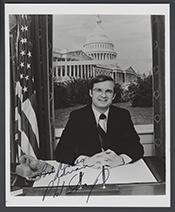
United States · United States Congress · 25 September 1984
Expresses the sense of the Congress that the Federal Home Loan Bank Board should delay until June 30, 1985, the effective date of its proposed regulations regarding limitations on direct investment in real estate, service corporations, and equity securities by federally insured savings and loan associations. Directs the Committee on Banking, Housing, and Urban Affairs of the Senate and the Committee on Banking, Finance, and Urban Affairs of the House of Representatives to examine alternatives to the proposed regulations which will ensure safety and sound investment activities.
United States · United States Congress · 10 August 1984
Low-Income Home Energy Assistance Amendments of 1984 - Amends the Low-Income Home Energy Assistance Act of 1981 (the Act) to increase the authorization of appropriations for low-income home energy assistance for FY 1984 and to extend such authorization through FY 1988. Revises the term "poverty level" for purposes of such Act to mean, with respect to any household in a State, the income poverty line as prescribed and revised pursuant to the Community Services Block Grant Act. Provides that the State median income promulgated by the Secretary of Health and Human Services shall be adjusted to prevent any change in income calculation procedures which would result in the reduction in or exclusion from participation of households in programs under the Act. Prohibits the allotment of funds to a State for low-income home energy assistance unless the Secretary determines that the State's application for funds satisfies the requirements of the Act and reviews such application for completeness. Provides that such applications will be considered to have satisfied such requirements unless the Secretary decides to the contrary within 30 days. Requires at least five percent of a State's allotment to be reserved until May 15 of each year for energy crisis intervention. Requires that a State's annual application for funds for low-income home energy assistance indicate: (1) the number and type of households in the State eligible for such assistance; (2) the level of and method for determining household benefits under the assistance program; and (3) the method of program administration to be used. Requires as part of such application that a State agree to: (1) provide assurances that such State, except as otherwise provided in this Act, will not differentiate between specified households when administering such assistance; (2) provide that such State may not use more than ten percent of its low-income energy assistance allotment (based on the amount of funds remaining for a State after funds for such assistance are reserved by the Secretary for Indian tribes) for planning and administering of such assistance; (3) describe energy usage and the average cost of home energy in the State; (4) designate local community-based public or nonprofit entities to administer energy crisis intervention programs; (5) indicate the amount which the State will reserve for energy crisis intervention and the administrative procedures for designating an energy crisis, for determining the amount of assistance to be provided during such a crisis, and for determining the use of funds reserved for energy crisis intervention but not so used; and (6) cooperate with the Secretary with respect to data collecting and reporting relating to home energy consumption and use. Requires that the State plan which is part of the annual application contain funding estimates for the State's low-income home energy assistance programs, describe the eligibility requirements to be used under such programs, and describe weatherization and other energy-related home repair the State will provide. Requires any substantial revisions of a State plan to be made available for public inspection. Provides that a State shall expend funds in accordance with a State plan reviewed by the Secretary. Requires that the periodic evaluation by the Comptroller General of State expenditures of grants received under the Low-Income Home Energy Assistance Act of 1981 occur at least every three years. Increases the maximum amount of funds received under the Act which a State may use for low-cost residential weatherization or other energy-related home repair for low-income households. Decreases the maximum amount of grant money allotted for a fiscal year to a State for low-income home energy assistance which a State may request to be held available for the next fiscal year. Provides that such request shall include a statement of the reasons that such amount allotted to such State for a fiscal year will not be used by such State during such fiscal year and a description of the types of assistance to be provided with the amount held available for the following fiscal year. Provides that an amount allotted to a State for a fiscal year shall be determined on the amount of funds remaining for such State after funds for energy assistance are reserved by the Secretary for Indian tribes. Specifies additional home energy and home energy assistance data which the Secretary is required to collect on a State-by-State basis. Requires the Secretary to report to Congress on such data by June 30 of each year.
United States · United States Congress · 2 August 1984
Requires the President to transmit to Congress for FY 1986 and each fiscal year thereafter a balanced budget. Permits the transmittal of alternate budget proposals which, if implemented, would result in a deficit or surplus if the President determines that a balanced budget is inappropriate for any fiscal year. Urges the President to submit to the House and the Senate, not later than September 30, 1984, a comprehensive plan to balance the Federal budget. Requires the Committee on the Budget of each House to report, by April 15, 1985, and by April 15 of each year, a balanced budget for the upcoming fiscal year. Requires the chairmen of the budget committees and an individual designated by the President to meet from time to time and agree upon common economic and technical estimating assumptions which shall be used for the preparation and reestimation of the President's budget. Establishes a commission which shall: (1) review, with respect to FY 1986, the balanced budget proposal submitted by the President and the budgets reported by the Committees on the Budget; (2) study the effectiveness of the provisions of this Act in achieving balanced Federal budgets; and (3) make recommendations for further changes which may be necessary to achieve balanced Federal budgets. Requires the commission to transmit to the President and Congress a report not later then December 31, 1986, containing a detailed statement of its findings, conclusions, and recommendations for such legislation and administrative actions as it considers appropriate. Terminates the commission 30 days after the submission of such report.
United States · United States Congress · 28 June 1984
Expresses the sense of the Congress that in light of the Helsinki Final Act of the Conference on Security and Cooperation in Europe and other specified human rights agreements, the Soviet Union should: (1) provide the signatories of the Helsinki Final Act with information on the whereabouts, health, and legal status of Andrei Sakharov and Yelena Bonner; (2) void all charges against Yelena Bonner and issue her an exit visa in order to obtain medical care outside of the Soviet Union; and (3) allow them to live in the country of their choice. Urges the President to: (1) protest the Soviet Government's continued refusal to provide such information and to issue Yelena Bonner an exits visa; and (2) call upon all other signatory nations of the Helsinki Final Act to join in such protests.
United States · United States Congress · 26 June 1984
Expresses the sense of the Congress that the Assembly of El Salvador should extend the deadline for new applications under phase III of the land reform program.
United States · United States Congress · 18 June 1984
Designates the week beginning February 17, 1985, as a time to recognize the contributions of volunteers who give their time to become Big Brothers and Big Sisters to youths in need of adult companionship.
United States · United States Congress · 14 June 1984
Law Enforcement Officers Protection Act of 1984 - Amends the Federal criminal code to define "armor piercing ammunition." Excludes from the definition: (1) shot gun shot required by Federal or State regulations for hunting; (2) frangible projectiles for target shooting; and (3) projectiles that the Secretary of Treasury determines are primarily intended for sporting purposes. Makes it unlawful for any person to manufacture or import armor piercing ammunition. Allows for: (1) the manufacture or importation of armor piercing ammunition for the use of the United States or any State or local government; and (2) manufacture for the sole purpose of exportation. Establishes a licensing fee of $1,000 per year for manufacturers and importers of armor piercing ammunition. Imposes an additional mandatory sentence of not less than five years for any person who uses or carries a firearm and is in possession of armor piercing ammunition during the commission of a violent felony. Provides that such sentence shall not be suspended nor probation nor parole granted.
United States · United States Congress · 4 April 1984
Equal Access Act - Prohibits federally-funded public secondary schools which allow non-school-sponsored groups of students to meet from discriminating against any meeting of students on the basis of religious content if: (1) the meeting is voluntary and student initiated; (2) there is no government sponsorship; and (3) no unlawful activity is permitted.
United States · United States Congress · 30 March 1984
Amends the Natural Gas Pipeline Safety Act of 1968 and the Hazardous Liquid Pipeline Safety Act of 1979 to authorize amounts to be appropriated for FY 1985. Directs the Secretary of Transportation to: (1) study issues relating to the transportation of methanol through the interstate liquid pipeline system and make recommendations for the safe and efficient transportation of methanol through such pipeline, and report the results of the study to Congress; and (2) study the feasibility of and costs connected with requiring various methods of testing and inspecting hazardous liquid pipeline facilities subject to provisions of the Hazardous Liquid Pipeline Safety Act of 1979, and to report the results to Congress.
United States · United States Congress · 29 March 1984
Compassionate Pain Relief Act - Directs the Secretary of Health and Human Services to establish a 60-month program under which parenteral diacetylmorphine shall be made available through qualified pharmacies for the relief of pain from cancer. Directs the Secretary to provide for the manufacture of such drug. Permits physicians registered under the Controlled Substances Act to prescribe such drug. States that for purposes of such program the Federal Food, Drug, and Cosmetic Act and titles II and III of the Comprehensive Drug Abuse Prevention and Control Act of 1970 shall not apply with respect to: (1) the importing of opium; and (2) the manufacture, distribution, and dispensing of parenteral diacetylmorphine. Requires: (1) the Secretary to make program reports to the appropriate congressional committees; and (2) the Comptroller General of the United States to make a four-year program report to such committees.
United States · United States Congress · 8 March 1984
Fair Trade in Steel Act of 1984 - Declares that it is the policy of Congress that access to the U.S. market for foreign-produced carbon, alloy, and specialty steel mill products should be on an equitable basis to safeguard national security, insure orderly trade in steel mill products, reduce unfair trade in steel mill products, and alleviate U.S. balance-of-payments problems. Expresses the intent of Congress to: (1) expand the economic viability of the U.S. steel industry and the jobs of its workers; (2) prevent the further decline of the domestic steel industry; and (3) temper the economic hardships resulting from unemployment in steel industry communities by encouraging reinvestment in existing steelmaking facilities. Limits annual imports of specified steel mill product categories to specified percentages of the apparent domestic supply which are based on adjusted average import penetration levels for each such product category for the years 1979, 1980, and 1981. Directs the Secretary of Commerce to allocate global product limitations among foreign countries, groups of countries, or areas. Sets forth guidelines for making such allocations. Requires the Secretary to make an annual determination of the expected apparent domestic supply in each steel mill product category. Requires the Secretary to revise such determination periodically during the year. Directs the Secretary to determine, within 90 days after the effective date of this Act, whether the steel industry companies have plans to use substantially all of the cash flow from the steel sector for reinvestment in and the modernization of the steel sector. Prohibits the import restrictions from taking effect until the Secretary determines that the steel companies have such plans. Directs the Secretary to monitor steel sector investments made and announced by the steel industry and to consult with steel industry representatives and employees in the course of such monitoring. Directs the Secretary to determine annually whether steel companies are using substantially all the cash flow from the steel sector for reinvestment in and modernization of the steel sector. Directs the Secretary to modify or suspend the relevant import restrictions if the Secretary determines that substantially less than all the cash flow from the steel sector is being used for such reinvestment and modernization and that the level of investment is not demonstrably justified by adverse financial conditions within the industry. Directs the Secretary to publish: (1) each annual determination and its rationale; and (2) the total amount of cash flow from the steel sector and the total amount used for reinvestment in and modernization of the steel sector. Requires the steel companies to provide the Secretary with the information necessary for making such determinations. Directs the Secretary to examine the supply and demand situation in the United States for a specified steel product category if requested by affected steel consumers. Sets forth criteria to be used in determining short supply. Directs the Secretary to monitor imports of fabricated steel mill products. Sets forth the method of investigating whether imports of fabricated steel products are rendering ineffective or materially interfering with the objectives of this Act. Limits the quantity of iron ore that may be entered from all sources during any calendar year after the effective date of this Act. Directs the Secretary to allocate global iron ore limitations among foreign countries, groups of countries or areas. Sets forth guidelines for making such allocation. Directs the Secretary, in making such allocations, to attempt first to accommodate the requirements of individual steel mills which have been traditionally dependent on ocean sourced foreign iron ore and the requirements of contractual obligations incurred before January 1, 1984. Authorizes the Secretary to waive the import restrictions on iron ore if necessary to meet the needs of such individual steel mills. Provides for the enforcement and implementation of this Act.
United States · United States Congress · 8 March 1984
Methanol Policy Act of 1984 - Amends the Energy Policy and Conservation Act to require that 1,000 of the total number of passenger automobiles acquired by executive agencies during FY 1985 be methanol-powered vehicles. Requires the Secretary of Energy to demonstrate the performance of methanol-powered vehicles so acquired and to conduct studies with respect to the operation and maintenance of such vehicles. Provides that methanol shall be offered for sale to the public through September 30, 1987, at locations where it is supplied to vehicles acquired by executive agencies. Sets forth reporting requirements which apply to the Secretary. Authorizes appropriations for FY 1985 through 1987 for this program. Provides that the following percentages of all automobiles acquired by executive agencies shall be methanol- powered vehicles: (1) ten percent of the automobiles acquired in FY 1988; (2) 20 percent of the automobiles acquired in FY 1989; and (3) 35 percent of the automobiles acquired in each of the fiscal years thereafter. Requires the Secretary to promulgate rules to implement such requirements unless there is evidence of substantial operating and maintenance problems, increases in tailpipe emissions, or increases in operation and maintenance costs with respect to methanol-powered vehicles. Requires the Administrator of the Environmental Protection Agency to purchase at least five methanol-powered buses during FY 1985 and to use them in urban settings for emissions and fuel economy testing. Sets forth reporting requirements which apply to the Administrator. Authorizes appropriations for FY 1985 through 1987 for this program. Provides that buses purchased by State or local governments with Federal funds after September 30, 1987, must be methanol-powered. Requires the Secretary to provide supplemental grants equal to 100 percent of the amount by which the purchase, operation, and maintenance of such methanol-powered buses exceeds the costs of comparable diesel-powered buses. Requires the Secretary to promulgate rules to implement this program unless there is evidence of substantial operating and maintenance problems, increases in tailpipe emissions, or increases in operation and maintenance costs with respect to methanol-powered buses. Authorizes appropriations for FY 1988 through 1990 for this program. Requires the Administrator to administer a program to study and conduct demonstration projects with respect to the use of methanol in stationary turbines and boilers. Sets forth reporting requirements which apply to the Administrator. Authorizes appropriations for FY 1985 through 1987 for this program. Establishes the Interagency Commission on Methanol to coordinate efforts to promote methanol usage. Requires the Commission to: (1) perform various studies with respect to the production, use, and promotion of methanol as a fuel; (2) develop a plan for the commercialization of methanol; (3) develop a public-awareness program on the use of methanol as a fuel; and (4) coordinate all Federal efforts with respect to methanol. Requires the Chairman of the Commission to establish a private sector advisory panel to inform the Commission about methanol-related matters. Sets forth reporting requirements which apply to the Commission. Terminates the Commission and the advisory panel on September 30, 1989. Authorizes appropriations for FY 1985 through 1989 for this program. Requires the Administrator to: (1) publish test procedures for emissions testing of new methanol-powered vehicles and engines; and (2) promulgate a rule for determining the quantity of methanol which is equivalent to one gallon of gasoline. Amends the Motor Vehicle Information and Cost Savings Act to include methanol in the definition of "fuel" for purposes of such Act.
United States · United States Congress · 1 March 1984
Amends title XVIII (Medicare) of the Social Security Act to provide that a hospital shall be considered to be located in an urban area for purposes of the prospective payment system if the wage level within the county (or equivalent area) in which the hospital is located is not less than the average wage level for urban areas in the State.
United States · United States Congress · 29 February 1984
Amends title XVIII (Medicare) of the Social Security Act to provide for an additional transitional year in which to implement the hospital prospective payment system. Directs the Secretary of Health and Human Services to conduct a study and make recommendations to Congress concerning refinements in the prospective payment system.
United States · United States Congress · 29 February 1984
Amends the Internal Revenue Code to reduce from nine cents to four and one-half cents per gallon the special fuels excise tax on any liquid at least 85 percent of which consists of methanol produced from natural gas.
United States · United States Congress · 9 February 1984
Methanol Energy Policy Act of 1984 - Title I: Methanol Demonstration Program for Federal Vehicles - Requires the Secretary of Energy to acquire at least 1,000 methanol-powered passenger automobiles during FY 1985 and conduct studies with respect to the performance and maintenance of such vehicles. Requires that methanol be offered for sale to the public for use in other vehicles through September 30, 1989. Authorizes the Secretary to provide Federal agencies with such methanol-powered vehicles at their request. Requires the agencies to cooperate with the Secretary in studies related to such vehicles. Sets forth reporting requirements which apply to the Secretary. Title II: Demonstration Program for Methanol- Powered Buses - Amends the Urban Mass Transportation Act of 1964 to permit State and local entities which are eligible for grants under any other provision of such Act to apply to the Secretary of Transportation for grants for the acquisition of methanol-powered buses. Requires grant recipients to participate in a demonstration program under which the Secretary shall conduct studies and tests with respect to the performance and maintenance of such buses. Authorizes appropriations for FY 1985 for supplemental grants. Authorizes appropriations for FY 1985 through 1989 for the demonstration program. Sets forth reporting requirements which apply to the Secretary. Title III: Interagency Commission on Methanol - Establishes the Interagency Commission on Methanol to develop and coordinate implementation of a national methanol energy policy. Requires the Commission to: (1) perform various studies with respect to the production, use, and promotion of methanol as a fuel; (2) develop a plan for the commercialization of methanol; (3) develop a public-awareness program on methanol as a transportation fuel; (4) coordinate Federal efforts with respect to methanol research and commercialization; and (5) ensure communication between Federal agencies involved in methanol demonstration projects and establish an information clearinghouse for parties working with or interested in methanol and related projects. Requires the Chairman of the Commission to establish a private sector advisory panel to inform the Commission about methanol-related matters. Sets forth reporting requirements which apply to the Commission. Terminates the Commission upon the submission of its last report. Authorizes appropriations for FY 1985 through 1989 to carry out this title. Title IV: Pipeline Study - Requires the Secretary of Transportation to study and report to Congress on the transportation of methanol through the interstate liquid pipeline system in the United States. Title V: Allocation of Highway Revenues - Provides that for purposes of the minimum allocation of highway revenues to States, the amount of estimated tax payments attributable to highway users in any State shall be increased by the estimated amount of tax such users would have paid if there were no special tax rate or tax exemption under the Internal Revenue Code for any liquid which is at least 85 percent methanol, ethanol, or other alcohol. Title VI: Tax Incentives for the Use of Methanol As A Fuel - Amends the Internal Revenue Code to allow a tax credit of $1,000 for each passenger automobile purchased by the taxpayer the primary fuel for which is methanol, which is domestically manufactured, and the original use of which commences with the taxpayer. Imposes a tax of four and a half cents a gallon in the case of methanol or ethanol fuel: (1) sold by a person to an operator of a motor vehicle or motorboat as fuel; or (2) used by any person as a fuel in a motor vehicle or motorboat unless there was already a taxable sale of such liquid. Permits a tax exemption for methanol produced from natural gas if such methanol is used for an off-highway business use.
United States · United States Congress · 9 February 1984
Authorizes the Law Enforcement Officers Memorial Fund, Incorporated to erect a National Law Enforcement Heroes Memorial on public grounds in the District of Columbia or its environs in honor and recognition of law enforcement officials in the United States who died in the line of duty. Directs the Secretary of the Interior, in consultation with the Fund, to select with the approval of the Commission of Fine Arts and the National Capital Planning Commission, a suitable site on public grounds for such memorial. Subjects the design and any plans for the memorial to the approval of the Secretary of the Interior, the Commission of Fine Arts, and the National Capital Planning Commission. Declares that no moneys belonging to the United States or the District of Columbia shall be expended for the erection of such memorial other than expenses incurred in the process of site selection and approval of design and plans.
United States · United States Congress · 6 February 1984
Compassionate Pain Relief Act - Directs the Secretary of Health and Human Services to establish a 60-month program under which diacetylmorphine shall be made available through qualified pharmacies for the relief of pain from cancer. Directs the Secretary to provide for the manufacture of such drug. Permits physicians registered under the Controlled Substances Act to prescribe such drug. States that for purposes of such program the Federal Food, Drug, and Cosmetic Act and titles II and III of the Comprehensive Drug Abuse Prevention and Control Act of 1970 shall not apply with respect to: (1) the importing of opium; and (2) the manufacture, distribution, and dispensing of diacetylmorphine. Requires: (1) the Secretary to make program reports to the appropriate congressional committees; and (2) the Comptroller General of the United States to make a four-year program report to such committees.
United States · United States Congress · 26 January 1984
Recognizes the important contribution of the arts to a complete education. Urges all citizens to support efforts which strengthen artistic training and appreciation within schools.
United States · United States Congress · 25 January 1984
Fair Insurance Coverage Act - Prohibits any insurer from discriminating in an insurance contract against any person because of blindness. Includes within the prohibition refusing to make or negotiate a contract for insurance or giving different treatment with respect to terms, conditions, rates, or benefits because of blindness. Establishes a preference for State actions prior to judicial enforcement under this Act. Authorizes any aggrieved person, in the absence of State actions or jurisdiction, to bring an action under this Act for individual relief. Authorizes the Attorney General of the United States to bring an action for injunctive relief whenever there is reasonable cause to believe a person is engaged in a pattern or practice of discrimination or when an individual is aggrieved and an issue of general public importance is raised. Grants the Federal district courts jurisdiction of such actions regardless of the amount in controversy. Allows a court to order monetary, equitable, or other appropriate relief, including punitive damages.
United States · United States Congress · 18 November 1983
Authorizes the President, notwithstanding any time limitations, to award a medal of honor to a named individual for acts of valor performed as a naval officer during World War II.
United States · United States Congress · 18 November 1983
Expresses the sense of Congress that the public and private sectors should establish programs to assist low-income individuals in meeting heating fuel and weatherization costs.
United States · United States Congress · 16 November 1983
Expresses the sense of Congress that: (1) the news media should voluntarily refrain from projecting election results before the polls close; and (2) the news media and industry, trade and professional organizations should voluntarily adopt guidelines to assure that exit interview data is not used to project election results before the polls close.
United States · United States Congress · 8 November 1983
Amends the Communications Act of 1934 to require a broadcast licensee to provide any person whose personal qualities are attacked during the presentation of views in a broadcast on a controversial issue of public importance with: (1) notification of the time, date, and identification of the broadcast; (2) a script or tape of the attack; and (3) an offer of a reasonable opportunity to respond over the licensee's facilities. Excludes from such requirement any attack: (1) on a foreign group or foreign public figure; (2) made by a legally qualified candidate for public office during the use of a broadcast station; (3) made by such a candidate on another such candidate; or (4) made on a bona fide news show. Requires any licensee which endorses or opposes any candidate in an editorial to transmit to the opposing candidates (in the case of an endorsing editorial) or to the candidate (in the case of an opposing editorial): (1) notification of the date and time of the editorial; (2) a script or tape of the editorial; and (3) an offer of a reasonable opportunity to respond over the licensee's facilities. Terminates the application of this Act on December 31, 1984. Suspends the personal attack rule and the political editorial rule of the Federal Communications Commission until after such date. Prohibits the Commission from repealing or modifying such rules after October 31, 1983, and before January 1, 1985. Voids any such action taken by the Commission after October 31, 1983, and before enactment of this Act. Allows the Commission to repeal or modify such rules beginning on January 1, 1985, provided that no repeal or modification shall become effective until 120 days of continuous session of Congress after it is published as final.
United States · United States Congress · 3 November 1983
Interstate Compact - Grants the consent of Congress to the Interstate High Speed Intercity Rail Passenger Network Compact as participated in by Illinois, Indiana, Michigan, Ohio, and Pennsylvania.
United States · United States Congress · 2 November 1983
Natural Gas Policy Adjustments Act of 1983 - Title I: National Gas Pipeline Accountability - Amends the Natural Gas Policy Act of 1978 to provide that for purposes of the denial by the Federal Energy Regulatory Commission (FERC) of the cost passthroughs to interstate pipelines, the term "abuse" includes misrepresentation, imprudence on the part of the pipeline, the pipeline's failure to bargain at arm's-length with any producer, and the entering into or operating pursuant to a contract by a pipeline with a producer or other seller if the contract materially prevents a response to changes in customer demand or other market forces. Permits any interested persons to request a hearing before the Federal Energy Regulatory Commission (FERC) concerning a pipeline's request for a rate increase which reflects the cost of purchased gas. Prohibits an interstate pipeline from selling in interstate commerce during any month to an affiliate intrastate pipeline, Hinshaw pipeline, or local distribution company a greater percentage of the quantities of natural gas contractually available for sale during the month by the interstate pipeline to its affiliate than the percentage of contractually available lower average-priced natural gas which such affiliate buyer is purchasing during the same month from nonaffiliate interstate pipelines. Prohibits FERC from approving any rate or charge under the Natural Gas Act unless it determines that the rate design incorporated in such rate or charge fully places the pipeline at risk that it will not collect its allowed return on equity unless its purchasing and operating practices are designed to meet the demands of its market and prevent curtailment. Title II: Natural Gas Wellhead Pricing - Provides that following enactment of this Act, wellhead price controls shall not apply to any first sale of natural gas if the surface drilling of the well commenced on or after enactment. Eliminates price controls for the first sale of new enhancement natural gas. Defines "new enhancement natural gas" as natural gas produced as a result of production enhancement work. States that natural gas produced as a result of production enhancement work shall be: (1) the natural gas produced from the well involved after the completion of such work; less (2) the natural gas which would have been produced if such work were not performed. Defines "enhanced recovery production work" to mean work performed for one or more of the following purposes: (1) reentry into a well which has been plugged or reentry to drill deeper; (2) recompletion by reperforation of a zone from which natural gas has been produced or by perforation of a different zone; (3) repair; (4) installation of certain equipment; (5) workover operations to reduce excessive water or sand; (6) disposal or water or brine; (7) injection of inert gas; and (8) production enhancement if the enhancement technique will significantly increase production. Defines "unenhanced natural gas" as gas which is from the same well as new enhancement gas and which is not new enhancement gas. Requires the producer of new enhancement natural gas, before selling such gas, to provide any buyer of unenhanced gas 30 days' notice of the producer's intention to sell such new enhancement natural gas. Permits a producer to sell to any person at any price natural gas: (1) from a well the surface drilling of which began after enactment of this Act; (2) which meets applicable well spacing requirements; and (3) which is covered by a contract in effect as of enactment. Requires a seller, before any first sale of such gas, to give a buyer 30 days' notice of the seller's intention to sell such gas. Provides that maximum price provisions shall be inapplicable to the first sale of gas produced if: (1) the purchaser agrees; and (2) such production is necessary to prolong the productive life of a well. Repeals provisions: (1) allowing the reimposition of price controls; and (2) requiring a report from the Department of Energy concerning gas prices, supplies, and demand. Title III: Certain Contract Provisions - Provides that, for the three-year period following enactment of this Act, in the case of a covered contract containing a clause (commonly referred to as a take-or-pay clause) requiring the purchaser to take delivery of, or if not taken, to pay for, volumes of gas in excess of 50 percent of the contracted volume, the purchaser may elect not to accept delivery of any portion of the total volume exceeding 50 percent of the contracted volume without obligation to pay for volumes not taken pursuant to such election. Provides that a covered contract is one which: (1) is for the first sale of natural gas for resale; (2) is in effect as of enactment of this Act; and (3) has not been amended after enactment of this Act to exclude it from coverage. Permits the seller to terminate a contract with respect to amounts of natural gas not taken by the purchaser. Exempts released natural gas from maximum pricing limitations. Defines "released natural gas" as natural gas subject to a first sale contract for resale which the purchaser is not obligated to take (or pay for) by reason of: (1) the election described above; (2) the doctrine of force majeure; or (3) any law or contract provision which results in the purchaser taking or paying for 50 percent or less of the volume contracted to be taken (determined without regard to the preceding paragraph). Requires a seller, before any first sale of released natural gas, to give the buyer 30 days' notice of the seller's intention to sell such natural gas. Provides the buyer, within such period, with the option to buy the released gas. Revises the limitation on indefinite price escalators. Prohibits the price of any natural gas not subject to any maximum lawful price because of the elimination of price controls and which is sold under any contract for resale at a price established by an indefinite price escalator from exceeding the natural gas price indicator for the month of delivery. Defines the term "natural gas price indicator" to mean, with respect to any month, the determination under this paragraph of the volume weighted average price per million Btu's for deliveries to interstate pipelines, during the three-month period preceding the month prior to the month involved, of natural gas: (1) which is decontrolled natural gas sold under any first sale contract entered into during the twelve month period preceding the month involved; and (2) which was not previously subject to a first sale contract or, if so, the parties to the contract involved are not identical to those of the immediately preceding contract. Directs the Energy Information Administration to: (1) establish procedures for the collection of data regarding prices paid and volumes delivered under the contracts described above; and (2) determine the monthly natural gas price indicator. Provides that, any purchaser of natural gas from an interstate pipeline under a contract in effect as of the enactment of this Act, during the one year period beginning on the first day of the sixth month following enactment of this Act, may, without obligation to pay, exercise a right not to accept any portion of natural gas subject to such contract which would otherwise be deliverable on or after such election, provided the purchaser gives the seller at least 30 days' notice prior to the delivery date. Provides that after such right is exercised, the minimum commodity bill requirement applicable to any volumes of natural gas subject to such election shall be against public policy and unenforceable. Declares a minimum commodity bill requirement applicable to any sale of natural gas by any interstate pipeline to any purchaser to be against public policy and unenforceable if the requirement does not entitle a purchaser who makes a payment under such requirement to take delivery of the natural gas involved during such minimum period of time as FERC prescribes. Defines "minimum commodity bill requirement" to mean any contract or tariff requirement requiring payment for the minimum quantity of natural gas contracted for in the event the purchaser fails to take delivery. Title IV: Contract Carriage - Requires, as a general rule, a pipeline to transport natural gas at the request of a shipper, to the extent the pipeline has firm or interruptible available capacity, if: (1) the shipper submits a written request within a certain time period prior to transportation for the transportation of a certain amount of gas; and (2) the shipper agrees to compensate the pipeline in accordance with applicable tariff rates. Sets forth: (1) a special rule for intrastate pipelines; and (2) a method to determine available capacity. Requires a pipeline, whenever it does not have sufficient available capacity to satisfy both the transportation obligations undertaken pursuant to this paragraph and its other obligations, to allocate its capacity as prescribed by FERC. Sets forth requirements for such regulations. Sets forth provisions relating to: (1) contract carriage compensation; (2) the construction of new facilities by a pipeline upon request of a shipper; (3) the reduction of a pipeline's service obligation and a shipper's minimum bill obligation; (4) termination or reduction of contract carriage services; (5) the issuance of regulations by FERC; and (6) procedures for filing transportation requests, protesting a request, and hearings concerning a protest. Requires a pipeline to report to FERC every three months concerning: (1) its total capacity, current available capacity, and projected available capacity; (2) all transactions under this paragraph either requested or undertaken; and (3) the amount of gas actually used by its existing customers by month during the preceding five years. Requires: (1) each pipeline to file tariffs with FERC within 30 days of issuance of interim implementing regulations; (2) FERC to approve or modify the tariffs within 90 days; and (3) FERC to thereafter require the filing of and determine charges in such tariffs pursuant to procedures of its final regulations. Revises provisions relating to the authorization of sales and transportation. Authorizes FERC to authorize: (1) any interstate pipeline to transport natural gas on behalf of any person; and (2) any pipeline or local distribution company to sell natural gas to any pipeline or local distribution company. Revises provisions relating to assignments. Authorizes FERC to authorize a pipeline or local distribution company to assign, without compensation, to any other pipeline or local distribution company, all or any portion of the assignor's right to receive surplus natural gas at any first sale, upon such terms and conditions as FERC determines appropriate. Redefines the term "surplus natural gas" to mean with respect to any pipeline or local distribution company, any natural which exceeds the then current demands of such person for natural gas, as determind by FERC or the State regulatory agency. Declares a provision of any contract for sale (currently, first sale) of covered natural gas to be against public policy and unenforceable if such provision: (1) prohibits specified commingling of gas; (2) prohibits sales to any person subject to FERC's jurisdiction or prohibits transportation in interstate commerce; or (3) terminates any obligation under such contract as a result of such commingling, sale, or transportation. Provides that "natural gas covered by the Act" shall include for any contract natural gas the sale or transportation of which under the contract is not in interstate commerce because of provisions of this Act excluding (as a general rule) an intrastate pipeline or local distribution company from FERC's jurisdiction by reason of purchasing natural gas in a covered transaction. Defines a "covered transaction." Title V: Repeal of Certain Restrictions on Natural Gas and Petroleum Use and Pricing - Repeals restrictions under the Powerplant and Industrial Fuel Use Act of 1978 on the use of natural gas or petroleum in new facilities, existing major fuel-burning installation, certain boilers used for space heating, decorative outdoor lighting, and existing electric powerplants. Repeals the incremental pricing program of the Natural Gas Policy Act of 1978. Title VI: Imports - Prohibits the importation of natural gas (including liquefied natural gas) beginning 270 days following enactment of this Act, unless: (1) the price and terms of the contract applicable to such importation have been renegotiated by the exporting and importing authorities to be responsive to the current natural gas market; and (2) the renegotiated contract and tariff adjustment to reflect any cost savings achieved by the renegotiation have been filed with FERC. Exempts from such prohibition a natural gas company all of whose sales to customers other than affiliates are from a supply made up solely of imported liquefied natural gas. Permits the recovery of costs prudently incurred for the construction in the United States of any terminal for the importation of Algerian natural gas. Title VII: Miscellaneous Provisions - Limits FERC's jurisdiction with respect to the first sale of natural gas which is committed or dedicated as of the day before enactment of the Natural Gas Policy Act of 1978 and which is exempted from price controls.
United States · United States Congress · 1 November 1983
Prohibits the Federal Communications Commission from repealing, amending, or otherwise modifying specified rules regarding network television syndication, network television financial interests, and prime time access after August 1, 1983, and before July 1, 1988. Voids any action taken in violation of this Act. Declares that such prohibition shall not apply to any such rule with respect to any network that has fewer than 150 affiliated television licensees which carry not more than 25 hours of network programming per week.
United States · United States Congress · 1 November 1983
Designates November 12, 1983, as Anti-Defamation League Day in honor of the 70th anniversary of the founding of the Anti-Defamation League of the B'nai B'rith.
United States · United States Congress · 21 October 1983
Amends the Energy Policy and Conservation Act to extend until June 30, 1985: (1) the authority for oil companies to carry out voluntary agreements for implementing the allocation and information provisions of the international energy program; and (2) the antitrust exemption for oil companies participating in such program.
United States · United States Congress · 29 September 1983
Expresses the sense of the Congress that the President should urge the Japanese to extend the current voluntary auto export limits beyond March 31, 1984.
United States · United States Congress · 28 September 1983
Declares that the President shall convene a domestic economic summit conference to address the economic situation created by projected large deficits. Requires that such conference convene within 45 days to develop and report to Congress a comprehensive plan to reduce the projected deficits in the United States budget.
United States · United States Congress · 27 September 1983
National Archives and Records Administration Act of 1983 - Title I: Establishment of An Independent National Archives and Records Administration - Establishes the National Archives and Records Administration as an independent establishment in the executive branch to be directed by the Archivist of the United States. Requires the Archivist to be appointed by the President with the advice and consent of the Senate. Directs the Archivist to appoint a Deputy Archivist. Sets forth the administrative duties and authority of the Archivist. Requires the Archivist to submit to Congress an annual report concerning the administration of functions of the Archivist and the Administration. Transfers to the Administration and the Archivist the functions, duties, and authority of the General Services Administration (GSA) and its Administrator, respectively, concerning: (1) congressional printing and binding; (2) the Federal Register and the Code of Federal Regulations; (3) the distribution and sale of public documents; (4) archival administration; (5) presidential records; (6) the National Archives Trust Fund Board; (7) the National Historical Publications and Records Commission; (8) records management; (9) the disposal of records; (10) official territorial papers; (11) Indian records placed with the Oklahoma Historical Society; (12) public laws, Constitutional amendments, and the United States Statutes at Large; and (13) electoral credentials and certificates. Transfers to the Administration the National Archives and Records Service. Title II: Administrative Provisions - Limits the fee that the Archivist may charge for making or authenticating copies of materials to the amount necessary to recover actual costs. (Currently such fee may exceed such costs by up to ten percent.) Requires such fees to be deposited to the credit of the appropriation against which they are charged. (Currently such fees are paid into the National Archives Trust Fund.) Requires the National Archives Trust Fund Board to use the services and personnel of the Administration to assist the Board in performing its functions. (Currently the Board may appoint necessary employees.) Directs the Board to submit to Congress an annual report on its operations and on the moneys, securities, and personal property received and held by it. Authorizes the Board to authorize the transfer of funds to the Administration to be expended on an archival or records activity approved by the Board or to accomplish the purpose of a gift or bequest. Prohibits expenditures for purposes for which appropriated funds could not be expended, unless required by the instrument of gift or bequest. Permits the Board to solicit gifts or bequests. Requires that moneys received for the Fund be deposited within five working days. Allows disbursements from the Fund only for activities approved by the Board, including the publication of special works and the release of historical photographs and recordings. Authorizes the Archivist to sell such publications and releases at a price which will cover their cost (currently, cost plus ten percent). Authorizes the Archivist to initiate action for the recovery of agency records unlawfully removed or for other legal redress against persons who remove or destroy agency records if the agency fails to take such action within a reasonable period of time after being informed of its necessity by the Archivist. Directs the Archivist to report any such agency failure to the appropriate committees of Congress. Directs the Archivist to establish detailed criteria for determining whether material should be classified as agency records. Grants the Archivist access to any material made or received by an agency to determine whether the agency is in compliance with regulations governing records disposal. Permits the Archivist to authorize an agency to dispose of records only after publishing notice of, and providing an opportunity for public comment on, such disposal.
United States · United States Congress · 21 September 1983
Expresses the sense of the Congress that: (1) the proposed United States Steel-British Steel purchase agreement is adverse to the interests of the United States, the steel industry, and U.S. steel workers; and (2) the Secretary of Commerce take action under existing laws, including the United States-European Community Steel arrangement, to determine if there are any violations.
United States · United States Congress · 19 September 1983
Amends the Agricultural Act of 1949 as amended by the Omnibus Budget Reconciliation Act of 1982 to require the Secretary of Agriculture to announce the 1984 feed grain program by September 30, 1983, the 1985 feed grain program by September 30, 1984, and the 1985 wheat program by July 1, 1984 (under present law announcement deadlines are November 15 for feed grains, and August 15 for wheat). Authorizes the Secretary to make adjustments in the program announcement within 30 days if a significant supply change occurs.