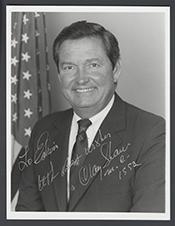
United States · United States Congress · 30 October 1985
Fair Furniture Trade Act of 1985 - Amends the Trade Act of 1974 to authorize the President to enter into a trade agreement with Canada which provides for changes in the Canadian tariff treatment for U.S. furniture products. Requires such agreement to provide for the elimination of: (1) differing tariff levels on furniture trade between the United States and Canada; and (2) any Canadian nontariff barrier to U.S. furniture products. Sets forth factors the President shall consider in negotiating such agreement. Provides for staged increases in the tariff on imports of Canadian furniture until such a trade agreement is implemented. Directs the President to consult with specified congressional and other committees in negotiating such agreement. Directs the President to proclaim the necessary changes in the Tariff Schedules of the United States in order to implement such a trade agreement.
United States · United States Congress · 29 October 1985
Expresses the sense of the House of Representatives that the antitrust enforcement policy guidelines stated in "Vertical Restraints Guidelines" published by the Department of Justice on January 23, 1985: (1) are not an accurate expression of the Federal antitrust laws or of congressional intent for the application of such laws to vertical restraints of trade; (2) should not be accorded any force of law or be treated by U.S. courts as binding or persuasive; and (3) should be recalled by the Attorney General.
United States · United States Congress · 28 October 1985
Requires the Secretary of the Treasury to deposit in Government trust funds amounts equal to interest lost to such trust funds through disinvestment of Federal or federally-insured obligations by the Secretary during FY 1986 for the purpose of avoiding any violation of the public debt limit.
United States · United States Congress · 28 October 1985
Reaffirms congressional support for the Medicare Program and for the right of all Medicare beneficiaries to receive accurate and timely information regarding their benefits. Urges the Secretary of Health and Human Services to: (1) convene a group of program participants to draft a simple statement of the rights and responsibilities of Medicare patients; and (2) transmit copies of the statement to all Members of Congress and hospitals and physicians participating in the program; and (3) urge participating hospitals to distribute copies of the statement to Medicare beneficiaries upon their hospitalization and to their families upon request.
United States · United States Congress · 24 October 1985
Expresses the sense of the Senate that the United States: (1) should not sell advanced weapons to Jordan; (2) should ensure that Israel retains its qualitative military edge in the Middle East; and (3) should focus its efforts on bringing Jordan into direct peace negotiations with Israel.
United States · United States Congress · 23 October 1985
Authorizes the President to provide military assistance to the National Union for the Total Independence of Angola (UNITA). Authorizes appropriations for such purpose for FY 1986.
United States · United States Congress · 16 October 1985
Judicial Improvements Act of 1985 - Amends the judicial code to increase the amount that a judicial official has withheld from his or her salary for purposes of the Judicial Survivors' Annuities Fund. Requires funding for the fund in amounts necessary to reduce to zero the unfunded liability of such fund. Increases the amount of the annuity received by a surviving widow or widower with children. Increases the amount of the annuity received by the surviving children of a judicial official leaving no widow or widower. Revises the formula used to determine the amount of the annuity given a widow or widower of a judicial official. Makes survivors of the Deputy Director of the Administrative Office of the United States Courts eligible for annuities under such Act. Makes the benefits conferred by this Act available to any eligible individual. Permits a judicial officer who has participated in the present annuity program to withdraw, in writing, according to specified procedures. Allows such officer, if eligible, to subsequently join the judicial survivors' annuities program created by this Act. Allows a Federal district court to hear and determine cases removed from State courts even where the State court lacked original jurisdiction. Requires the Director of the Administrative Office of the United States Courts to pay all actual travel expenses for justices and judges. Requires that filing and miscellaneous fees for the U.S. District Court for the District of Columbia be collected in the same manner as other fees are collected for the other U.S. district courts. Grants the United States Courts of Appeals jurisdiction to review all rules, regulations or final orders of the Secretary of Transportation with regard to any act or transaction lawful under the Shipping Act, 1916 or any rule, regulation, or final order of the Federal Maritime Commission issued pursuant to: (1) the Shipping Act, 1916; (2) the Merchant Marine Act, 1920; (3) the Intercoastal Shipping Act, 1933; (4) the Shipping Act of 1984; and (5) the Act of November 6, 1966.
United States · United States Congress · 8 October 1985
Trade Partnership Act - Title I: International Trade - Directs the President to establish the Commission on Trade which shall: (1) evaluate existing U.S. trade laws and policies; (2) develop recommendations on monetary and fiscal policies for the United States and its chief trading partners; (3) evaluate the export financing practices of major trading partners and of international agencies; and (4) review existing trade agreements to assess their effect on U.S. long-term trading interests. Requires the Commission to report its findings and recommendations to the President and to the Congress. Expresses the sense of the Congress that the President should evaluate such findings and recommendations and take into account the results of an international monetary conference to determine the propriety of convening a summit conference on international trade in order to develop changes in international trade and monetary practices. Expresses the sense of the Congress that the President should call for an international monetary conference to develop: (1) options for reforming institutional mechanisms in order to decrease the disparity among, and to prevent dramatic fluctuations in the value of, the currencies of the major economic powers; and (2) means for reducing interest rates, promoting national and world economic growth, assuring price stability, and promoting higher levels of international trade. Expresses the sense of the Congress that the President should initiate multilateral trade negotiations under the auspices of the General Agreement on Tariffs and Trade (GATT) in order to: (1) resolve the issues not resolved in earlier negotiations; (2) develop multilateral disciplines in those areas where trade problems have emerged or are becoming more acute; (3) focus on improving the dispute settlement mechanisms of the GATT; (4) place a high priority on bringing developing countries into full participation in the international trading community; (5) ensure that all developed countries share equally the responsibility for advancing the economies of developing countries; and (6) increase efforts to bring countries now outside the GATT under accepted multilateral disciplines governing trade. Directs the President to begin negotiations immediately if Canada requests the negotiation of a trade agreement that provides for the elimination or reduction of any duty imposed by the United States. Directs the U.S. Trade Representative (USTR) to review the bilateral relationships between the United States and its major trading partners in order to determine those countries that offer the most potential for the establishment of free trade areas with the United States. Sets forth factors to be considered in making such review. Authorizes the President, during the year following enactment of this Act, to negotiate with Japan on a trade agreement under which the United States will permit the exportation to Japan of Alaskan petroleum and natural gas in return for substantial concessions by Japan regarding the importation into Japan of agricultural products, wood products, and other kinds of export products that are important to the United States. Amends the Trade Act of 1974 to transfer to the USTR specified functions relating to import relief that are currently performed by the President. Directs the President to review the USTR's determination on whether to provide import relief and what form such relief should take. Requires the President to complete such review within 15 days of receiving the USTR's determination. Directs the President to notify the Congress of the President's decision and of the USTR's determination. Directs the USTR to take action to implement the import relief which the USTR decided to provide if the President concurs in the USTR's decision. Directs the USTR to take action to implement the President's decision on import relief if it differs from the USTR's decision and no joint resolution disapproving the President's decision is enacted. Directs the USTR to order the implementation of the import relief recommended by the International Trade Commission if the decision of the President differs from the decision of the USTR and a joint resolution disapproving the President's decision is enacted. Authorizes interim relief after a petition for import relief is filed if the USTR determines that: (1) it is likely that the article is being imported in such increased quantities as to be a substantial cause of serious injury or threat thereof to the competing domestic industry; and (2) the absence of such interim relief would result in irreparable harm to the domestic industry. Authorizes emergency relief from imports of perishable products (other than perishable products from a beneficiary country under the Caribbean Basin Economic Recovery Act) after a petition for such relief is filed if the USTR, after consultation with the Secretary of Agriculture, decides that: (1) there is a reasonable indication that the perishable product is being imported in such increased quantities as to be a substantial cause of serious injury, or threat thereof, to the competing domestic industry; and (2) emergency action is warranted. Directs the USTR, upon deciding to grant interim relief or emergency relief, to: (1) determine the method and extent of such relief; (2) notify the President of such decision; and (3) unless the President decides within 15 days that such relief is not in the national economic interest, order the Commissioner of Customs to impose such relief. Declares that such relief may consist of tariff increases or import limitations. Provides for the termination of such relief. Directs the USTR to order the Commissioner of Customs to implement actions necessary to enforce U.S. rights under any trade agreement if: (1) the President and the USTR agree on the appropriate action; or (2) the President differs with the USTR on the appropriate action but a joint resolution disapproving such action is not enacted. Reduces the number of days from 21 to 15 between the President's receipt of the USTR's recommendation of appropriate action and the President's decision on what action is appropriate. Requires the President to determine during such 15 day period if: (1) the President concurs in the USTR's recommendation; or (2) it is in the national economic interest not to take any action or to take action different from the action determined by the USTR. Requires the President to notify the Congress of such decision. Provides that if 90 days after the Congress receives notice of such decision no joint resolution is enacted disapproving it then such decision shall take effect. Reduces the amount of time the USTR may take to make a recommendation on a petition for enforcement of U.S. trade rights. Sets forth the actions the USTR may recommend to the President based on such petition. Directs the USTR to include in the annual report to the Congress on foreign barriers to market access an analysis and assessment of the overall reciprocity accorded U.S. products, services, and investment by each of the major trading partners of the United States and the impact on major U.S. product sectors of the failure to provide reciprocity. Requires specified congressional committees, within 90 days of receiving such report, after consultation with the USTR and conducting public hearings, to issue a joint report on: (1) the priorities for negotiations regarding reducing or eliminating trade barriers; and (2) the committees' recommendations on actions to enforce U.S. trade rights. Directs the Secretary of Labor to pay to private firms 80 percent of the cost of providing job training if the training is certified as trade readjustment training and if the trainees are not charged for the training. Extends the job training, job search, and job relocation allowance provisions of the trade adjustment assistance programs through October 1, 1987. Amends the Trade Expansion Act of 1962 to set a one year deadline for the President to take action on the advice of the Secretary of Commerce on imports that are suspected of impairing national security. Amends the Tariff Act of 1930 to reduce the time limit for decisions by the International Trade Commission on allegations of unfair practices in import trade from one year (18 months in more complicated cases) to eight months (ten months in more complicated cases). Declares that the USTR should expedite the issuance of notices requesting the negotiation of periodic adjustments to the bilateral limitations on shipments of textiles and apparel contained in the Multi-Fiber Arrangement. Directs the Commissioner of Customs to: (1) increase the number of inspectors, import specialists, and customs patrol officers in the Customs Service by at least 800; (2) implement the Automated Commercial System at all ports of entry; and (3) implement a program for detecting, investigating, and prosecuting patent and copyright infringement cases. Requires the Commissioner to report quarterly to specified congressional committees on the operation and effect of the patent and copyright infringement program. Imposes a penalty for multiple customs law offenders who import or attempt to import merchandise during the three years following the date of the third of the offenders' convictions. Title II: Protection of Patents and Transfer of Technology - Part A: Protection of Patents - Amends the patent laws to make it an infringement of patent to use, sell, or import into the United States without authority a product produced by a patented process. Places the burden of proof upon the party asserting that a product was not produced with the patented process in an infringement action where the court finds a substantial likelihood that the product was so produced and the claimant has exhausted all means of discovery. Part B: Transfer of Technology - Federal Laboratory Technology Utilization Act of 1985 - Authorizes Federal agencies to permit their laboratories to enter into cooperative research and development arrangements with other Federal, State, and local agencies, universities, industrial organizations, or other persons including licensees of inventions owned by the Federal agency or general partners of research and development limited partnerships. Permits such laboratories to exchange funds, services, and property with collaborators, grant such collaborators patent licenses or assignments, waive Federal ownership of inventions made by a collaborator, and negotiate licensing agreements for federally owned inventions. Sets forth a formula for the distribution of royalties or other income received by such laboratories from the licensing of cooperatively produced inventions to Federal agency employee inventors, the laboratories themselves, and the Treasury. Requires affected Federal agencies to report annually to the appropriate congressional committees on the income from and distribution of royalties. Directs the Secretary of Commerce to provide procedures, training, and advice to Federal laboratories on recognizing the commercial potential of new technologies and inventions. Requires the Secretary to report biannually to the President and the Congress on Federal agency participation in this program. Makes it the policy of the Government to encourage the commercialization of inventions by Federal or former Federal employees made by them during their Federal employment and exempts such efforts from otherwise applicable violations. Permits such an employee to retain title to an invention (subject to retention by the Government of a nonexclusive license) unless the agency intends to file a patent application itself in order to promote commercialization. Sets forth other permissible conditions on such an inventor's title. Part C: Protection of Proprietary Information - Exempts commercial and financial information that is proprietary or sensitive from the sunshine provisions applied to Federal agencies if the proprietor is notified of the request for release of the information and given 60 days to present arguments on why the information should be exempt. Title III: Export Promotion - Amends the Bank Holding Company Act of 1956 to increase, from five percent to ten percent, the percentage of shares that: (1) a bank holding company may hold in an export trading company; and (2) an Edge Act corporation may hold in an export trading company from five to ten percent. Increases the amount of credit that a bank owning stock in a bank holding company with investments in an export trading company may extend to an export trading company. Amends the Export Trading Company Act of 1982 to direct the Board of Directors of the Export-Import Bank to try to insure that a "significant share" (currently a "major share") of any loan guarantees ultimately serves to promote exports from small, medium-size, and minority businesses or agricultural concerns. Requires the Board to report to the Congress on implementation of such requirement within one year of its effective date. Directs the Secretary of the Treasury to develop a program consisting of mixed credit financing for exports to compensate for the effects of subsidized financing by U.S. trading partners. Declares that the Export-Import Bank should expand its promotion programs for small- and medium-sized banks. Amends the Federal Reserve Act to give Edge Act corporations the same discount and borrowing privileges as Federal Reserve banks. Repeals the limitation on bank investments in Edge Act corporations. Directs the Board of Governors of the Federal Reserve System to require periodic reports from every corporation of the total amount of capital stocks and paid up surplus of the corporation, the name of any stockholder who holds more than ten percent of the shares of the stock of such corporation, and the share holdings of such stockholder. Directs the U.S. Executive Director of each of the multilateral development banks to promote procurement opportunities relating to the assistance provided by such banks in recipient countries for U.S. firms. Sets forth actions the Executive Directors should take with respect to such opportunities. Declares that the Secretary of Commerce should continue to assign one foreign commercial service officer to the office of the U.S. Executive Director of the International Bank for Reconstruction and Development. Directs the Secretary of Commerce to assign such an officer on a part-time basis to each of the offices of the U.S. Executive Director of the Inter-American Development Bank, the Asian Development Bank, and the African Development Bank. Requires the U.S. Ambassadors to those countries that are important trading partners of the United States to report annually to the President and to the Congress on their efforts to help U.S. industries in expanding export sales to, and improving their market positions in, such countries. Authorizes the seven Bell operating companies, effective September 1, 1986, to manufacture telecommunications equipment and customer premises equipment in the United States if specified conditions are met. Title IV: Foreign Corrupt Practices - Business Accounting and Foreign Trade Simplification Act - Changes the name of the Foreign Corrupt Practices Act of 1977 (FCPA) to the Business Practices and Records Act. Amends the Securities Exchange Act of 1934 to require securities issuers to maintain an internal accounting system that provides reasonable assurance that specified accountability and accuracy goals are met. Prohibits imposing criminal liability for failing to maintain such an accounting system. Prohibits imposing civil injunctive relief with respect to: (1) an issuer who fails to maintain the required accounting system if the issuer tried in good faith to meet the requirements; or (2) any person other than an issuer in connection with an issuer's failure to comply with such requirements, unless such person knowingly caused the issuer to fail to comply. Prohibits anyone from knowingly circumventing such an accounting system for a purpose inconsistent with the accountability and accuracy goals of such system. Requires only good faith efforts at ensuring compliance by issuers who hold 50 percent or less of the equity of domestic or foreign firms. Transfers from the Securities and Exchange Commission to the Department of Justice jurisdiction to enforce the bribery prohibitions of the FCPA with respect to issuers. Revises the prohibition against domestic concerns using any means of interstate commerce to further payments to obtain business with a foreign official. States that such a payment made "directly or indirectly" to a foreign official is illegal. Prohibits such payments that are made to: (1) influence a foreign official's act or induce such an official to violate a legal duty; or (2) induce a foreign official to affect a foreign government's act. Prohibits domestic concerns from using interstate commerce to direct or authorize an agent to further such a payment to a foreign official. Exempts from such prohibitions: (1) payments to foreign officials to expedite or to secure the performance of routine governmental action; (2) payments to such officials that are lawful under the foreign country's laws; (3) payments which constitute tokens of regard or esteem; (4) expenditures associated with selling, purchasing, or demonstrating goods; or (5) ordinary expenditures associated with performing a contract with a foreign government. Revises the fines and criminal penalties for violations of such Act. Empowers the Attorney General to undertake all civil investigations necessary to enforce the Act. Prohibits prosecution of a domestic concern or specified agents of such concern for violating the Federal mail or wire fraud provisions by making a payment to a foreign official if the prosecution is based on the theory that the official, by receiving the payment, violated a duty to or defrauded the foreign government or the citizens of a foreign country. Authorizes the Attorney General to issue guidelines specifying: (1) permissible conduct associated with common types of export sales arrangements; and (2) precautionary procedures which would create a rebuttable presumption of compliance. Provides for the establishment of a Business Practices and Records Act Review Procedure to answer specific inquiries concerning enforcement of such Act. Requires the Attorney General to issue opinions regarding compliance. Makes such opinions final and binding on all parties if the opinion states that the conduct does not involve a violation. Directs the Attorney General to protect the confidentiality of materials submitted in the review procedure. Requires annual reports to the Congress by: (1) the Attorney General concerning actions taken pursuant to such Act; and (2) the Chairman of the Securities and Exchange Commission concerning the reporting requirements. Title V: Related Tax Provisions - High Technology Research and Scientific Education Act of 1985 - Part A: The Credit for Increasing Research Activities - Amends the Internal Revenue Code to make permanent the tax credit for research and development (R&D) expenditures. Modifies the definition of qualified research for purposes of the R&D credit to narrow the category of eligible activities for which the credit is allowable. Provides that in-house and contract research expenses paid or incurred by a regular corporation (not an S corporation, a personal holding company, or a service corporation) will constitute qualified research expenses for R&D credit purposes if the corporation undertakes the research with the intention to use the result thereof in the active conduct of a present or future trade or business. Provides that in the case of research being conducted in partnership form, research expenses will constitute qualified research expenses if they are incurred by the partnership in carrying on a trade or business as applied at the partnership level, and the credit is apportioned among the partners in accordance with general partnership rules. Provides exceptions to this general rule where: (1) there is a joint venture enterprise of regular corporations; or (2) not all of the members of the joint venture are regular corporations, but each member's own trade or business would satisfy the trade or business test with respect to the partnership's research expenditures. Provides that for these two exceptions the research expenses will flow through to the partners, with the trade or business test being applied at the partner level. Part B: Promotion of University Research and Scientific Investigation - Establishes a new income tax credit equal to 20 percent of that portion of a corporation's payments to universities (and other qualified non-profit tax-exempt organizations for basic research) which exceeds a fixed, historical "minimum university basic research" floor. Defines the "minimum university basic research" floor as one percent of the annual average of the corporate taxpayer's combined qualified in-house research expenses, contract research expenses, and university basic research payments for the base period composed of the period from 1981 through 1983. Provides that the amounts of research expenses which fall below the floor shall remain eligible for the present R&D credit and are included in the corporation's base period for purposes of calculating the present R&D credit. Treats the amounts which exceed the "minimum university basic research" floor as ineligible for the present R&D credit and excludes such amounts from the corporate taxpayer's base year research expenses for purposes of calculating the corporation's R&D credit under present law. Provides that a corporation's payments to universities for basic research that is eligible for the new tax credit shall be reduced to the extent that the corporation's general (i.e., not designated for research purposes) charitable giving to all universities falls below historical levels (the annual average of undesignated payments for three of the immediately preceding four years as selected by the taxpayer). Makes additions to the list of organizations to which corporate payments for basic research may be made and be eligible for the tax credit. Allows a corporation an income tax deduction for contributions of scientific or technical property to an institution of higher education. Defines scientific property to mean tangible personal property (including computer software) used in a trade or business, which is donated for the direct education of students or faculty, for research and experimentation, or for research training in the United States in mathematics, the physical, biological, or chemical sciences, engineering, or advanced computer sciences. Sets forth a formula for determining the amount of the allowable deduction for contributions of scientific property. Provides for an income tax exclusion for the scholarships, fellowship grants, student loan forgiveness, or stipends of a graduate student in mathematics, engineering, computer science, or the physical or biological sciences. Provides that such tax exclusion is not forfeited merely because the student is required, as a condition of the scholarship or fellowship, to perform future service in teaching or research.
United States · United States Congress · 7 October 1985
Balanced Budget and Emergency Deficit Control Act of 1985 - Amends the Congressional Budget Act of 1974 to eliminate the second concurrent resolution on the budget and thus provide for annual adoption of a single concurrent resolution on the budget (budget resolution). Sets forth maximum Federal budget deficit amounts for each of fiscal years 1986 through 1991 providing for the incremental reduction of the deficit to zero by 1991. Requires Old Age, Survivors and Disability Insurance (OASDI) revenues and expenditures to be included in the calculation of such deficit amounts. Prohibits either House of Congress from considering or adopting a budget resolution or a revision thereof providing for budget outlays exceeding revenues by more than the prescribed maximum deficit amount. Requires the Congress to complete action on any reconciliation bill or resolution to: (1) an original budget resolution by June 15 of each year; or (2) a revised budget resolution within 30 days after the revision is adopted. Provides that no amendment that would increase specific budget outlays or reduce specific revenues set forth in a budget resolution or reconciliation bill shall be in order in the House or the Senate, unless such amendment provides for offsetting adjustments in other outlays and revenues to ensure that the deficit set forth in the budget resolution is not increased or exceeded. Requires each Senate and House committee to report its subdivisions of allocated budget outlays and new budget authority within ten days of session after the budget resolution is agreed to. Makes it out of order for the House or the Senate, after the Congress has completed action on the budget resolution for a fiscal year, to consider legislation that, if enacted, would: (1) provide for or require budget outlays or new budget authority in excess of the appropriate committee allocation reported in connection with such resolution, unless legislation is favorably reported by the Committee on Appropriations of the House involved with a certification that the appropriate committee will take actions necessary to assure that enactment of such legislation will not result in a deficit exceeding the maximum deficit amount applicable; or (2) provide for new budget authority or spending authority or reduce revenues so that the resulting deficit would exceed the level set forth in such budget resolution or the applicable maximum deficit amount. Permits a congressional committee to report alterations to its reported allocations of budget outlays and authority, provided that such alterations are consistent with any actions taken by its House on legislation within its jurisdiction. Requires the conference report on any legislation providing new budget authority or new or increased tax expenditures to disclose the information required to be disclosed in committee reports on such legislation. Requires the Federal budget transmitted to the Congress by the President each year, and revisions thereof, to set forth levels of outlays and revenues resulting in a deficit not in excess of the applicable maximum deficit amount. Requires the Director of the Office of Management and Budget and the Director of the Congressional Budget Office: (1) to estimate the levels of total revenues and budget levels for each fiscal year; (2) to estimate the rate of real economic growth during that year; (3) to determine whether the deficit for such year will exceed the applicable maximum deficit amount and whether such excess is statistically significant; and (4) to submit a report to the President and the Congress specifying the amount of any excess, whether it is statistically significant, the estimated rate of real economic growth for that year, and the percentages by which automatic spending increases (excluding increases in OASDI benefits) and relatively controllable expenditures shall be reduced during such year in order to eliminate such excess. Requires the President, upon receiving such a report which identifies a statistically significant excesss, to issue an order which eliminates one-half of such excess by suspending or uniformly reducing (not below zero) automatic spending increases under Federal law for such year, and which eliminates the other half by sequestering amounts of budget authority, obligation limitations, and loan limitations, and by adjusting Federal payments, to the extent necessary to reduce each relatively controllable expenditure by a uniform percentage. Directs the President to send a message to both Houses of Congress identifying: (1) the total amount and the percentage by which automatic spending increases are to be reduced; (2) the amount of budget authority, obligation limitations, and loan limitations to be sequestered and payments to be adjusted for all, and each, relatively controllable expenditure; and (3) the account, department, establishment, project, or function affected by such revision of expenditures. Prohibits such an order from eliminating any Federal program, project, or activity. Directs the President to issue such order: (1) within 14 days after receiving such report if the estimate for real economic growth for the fiscal year is zero or greater; or (2) within 30 days if the estimate for real economic growth is less than zero. Authorizes the President, during such 30-day period, to submit to the Congress a joint resolution to: (1) reduce the deficit to an amount not exceeding the applicable maximum deficit amount; or (2) suspend the requirements of this Act for such fiscal year. Permits the President's message to the Congress to include alternative ways to reduce the deficit to an amount not exceeding the maximum deficit amount. Permits the Committee on the Budget of the House or the Senate, within ten days after the President has issued such an order, to report a joint resolution superseding such order. Makes it out of order for the House or the Senate to consider or agree to any such resolution which, if enacted, would cause the fiscal year deficit to exceed the deficit set forth in the budget resolution most recently agreed to, or the applicable maximum deficit amount. Sets forth House and Senate procedures for consideration of such a resolution. Amends the Social Security Act to provide that OASDI revenues and expenditures shall be excluded from the Federal budget transmitted by the President to the Congress and from the congressional budget, and shall be exempt from general budget limitations imposed on Federal expenditures and net lending. Prohibits any law enacted after enactment of this Act from providing for payments between the Treasury and the Federal Old-Age and Survivors Insurance Trust Fund or the Federal Disability Insurance Trust Fund. Changes the date by which the President must submit to the Congress a supplemental summary of the budget for a fiscal year from July 16 to September 16. Waives specified provisions of this Act in any fiscal year for which a declaration of war has been enacted.
United States · United States Congress · 2 October 1985
Anti-Smuggling Act of 1985 - Title I: Amendments to the Tariff Act of 1930 - Amends the Tariff Act of 1930 to include monetary instruments within the meaning of "merchandise." Requires any vessel which has visited any hovering vessel, or has received merchandise while such vessel is in customs waters beyond the territorial sea, or has received merchandise on the high seas, to be treated as having arrived from a foreign port or place. Requires the owner of any vessel from a foreign port or place, any foreign vessel from a domestic port or place, or any U.S. vessel carrying bonded merchandise or foreign merchandise for which entry has not been made, to immediately report such vessels's arrival (currently within 24 hours after the arrival of such vessel) at a U.S. or Virgin Islands port or place to the nearest customs facility or to such other place as may be prescribed by the Secretary of the Treasury. Authorizes the Secretary to prescribe regulations which provide the manner in which arrivals are to be reported and which extend the time (not beyond 24 hours) after the arrival of any vessel in which to report such arrival. Restricts the arrival of vehicles in the United States at border crossing points designated by the Secretary. Requires a person in charge of such vehicle (immediately upon the arrival of such vehicle in the United States) to report such arrival to, and present such vehicle, and all persons and merchandise (including baggage) on board such vehicle, for inspection to the customs officer at the customs facility. Requires the pilot of any aircraft arriving in the United States from a foreign airport or place to comply with such advance notification, arrival reporting, and landing requirements as the Secretary may prescribe by regulations. Authorizes any vessel, vehicle, or aircraft which has arrived in the United States to depart from the port, airport, or place of arrival and from any custom facility designated to serve such places and discharge passengers and merchandise (including baggage), only in accordance with such regulations as the Secretary may prescribe. Requires any owner of a ship, person in charge of a vehicle, or pilot of an aircraft which arrives in the United States to present to the appropriate customs officer such documents, papers, and manifests as the Secretary may prescribe by regulations. Sets forth both civil and criminal penalties for violations of such arrival, reporting, and entry requirements. Increases the fine from $500 to $5,000 (and $10,000 for each subsequent violation) for persons in charge of a vessel or vehicle who fail to make a report or entry to the appropriate customs officials before departure from any collection district. Increases the fine from $500 to $1,000 (for the first passenger and $500 for each additional) for such persons who permit the unloading of passengers from such vessels or vehicles without a special license or permit issued by the appropriate customs officer. Sets forth both civil and criminal penalties for persons in charge of a vessel or vehicle (arriving in the United States from a contiguous country) who: (1) depart from a designated customs facility without appropriate authorization; or (2) present a forged, altered or false manifest, document, or paper to a customs officer. Increases the fines for persons in charge of any vehicle who: (1) lack or falsify a manifest; or (2) transport specified controlled substances. Increases both the civil and criminal penalties for such persons who allow any merchandise (including sea stores) to be illegally unladen within the customs waters of the United States. Prohibits: (1) any U.S. citizen on board any aircraft to manufacture or distribute, or possess with the intent to manufacture or distribute a controlled substance (including the introduction of such substances into the United States, any of its territories or possessions, or within a 12 mile distance of the U.S. coast); and (2) any person from transferring any controlled substances, spirits, wines, or other alcoholic liquors between an aircraft, or vessel (that is owned by a U.S. citizen, or is registered in the United States) on the high seas or U.S. customs waters, or regardless of the nationality of such vessel or aircraft. Prohibits any such transfer with the intent to introduce such substances into the United States. Sets forth civil penalties. Provides for the seizure, forfeiture, and sale of merchandise (that is involved in a conveyance) whenever any vessel, vehicle, or aircraft, or the owner, driver, or pilot of such vessel has violated the customs laws of the United States. Prohibits any conveyance used by a person as a common carrier (in the transaction of business as a common carrier) from being subject to seizure or forfeiture under the customs laws for violations relating to merchandise that is contained in baggage belonging to a legally transported passenger, or that is in the conveyance's cargo, if such cargo is listed on the carrier's manifest. Provides for the seizure and forfeiture of any controlled substance (on board a conveyance that is used as a common carrier in the transaction of business as a common carrier) which is not manifested, or whose markings disagree with such manifest, or is found concealed in or on the conveyance (but not in the cargo). Permits a person authorized to make searches and seizures (in any dwelling house or building) to apply for a warrant from the appropriate authorities if such person suspects the presence of any property that is subject to forfeiture under the customs laws or any documents, containers, or other articles which evidence violations of such laws. Provides for the seizure and forfeiture of merchandise that is or has been introduced, or attempted to be introduced, into the United States contrary to law. Sets forth specified procedures with respect to the disposition of property forfeited under the customs laws. Sets the compensation of informers who report violations of such laws to not more than 25 percent (currently 25 percent). Provides that such compensation shall be paid from the net amount recovered before such net amount is deposited in the general fund of the Treasury or the Customs Forfeiture Fund (currently it is paid out of any appropriations available for the collection of the revenues from customs). Provides (with respect to the tolling of the statute of limitations) that an action to recover a pecuniary penalty is deemed to have been commenced when the appropriate customs officer issues a penalty notice. Authorizes the Secretary to prescribe regulations that authorize customs officers to exchange information with foreign customs agencies and law enforcement agencies with respect to the enforcement of the customs laws. Provides, when authorized by treaty or executive agreement, that the Secretary may station customs personnel in foreign countries. Title II: Miscellaneous Provisions - Amends the Federal Aviation Act of 1958 to provide a fine of not more than $5,000 or imprisonment not to exceed two years, or both, of persons (owners of aircraft) who operate an aircraft: (1) that is not registered; (2) during any period the aircraft certificate or registration has been suspended or revoked by the Secretary of Transportation; (3) without a valid airman certificate; (4) without navigation and/or anticollision lights; and (5) with an illegal fuel tank or system installation aboard such aircraft. Subjects any unlawful fuel taken, or system installation, and aircraft to seizure and forfeiture. Increases the fine from $500 to $5,000 for any person who violates specified entry requirements relating to civil aircraft and vessels. Subjects owners of aircraft who transport any controlled substances to specified penalties. Requires any person having an ownership interest in an aircraft for which a certificate of registration has been issued to, upon the sale, transfer, or conveyance of such interest, file within 15 days such notice as the Secretary of the Treasury may provide. Amends Federal law to subject all pleasure vessels, including all persons aboard, to applicable customs regulations under the Tariff Act of 1930. Replaces specified provisions (regarding the smuggling of controlled substances) with provisions relating to the importation or exportation of merchandise, the reporting or transportation of monetary instruments, or the enforcement of the Bank Secrecy Act. Requires every customs officer, in the exercise of his duties, to: (1) make known his character as a customs officer; and (2) have the authority to demand assistance in executing any arrest, search, or seizure. Increases the fine to $1,000 (currently $200, not less than $5) for persons who refuse, without reasonable excuse, to assist a customs officer. Provides that any person (other than an officer or employer of the United States) who renders assistance in good faith shall not be liable for any civil damages as a result of rendering such assistance (provided such person acts as an ordinary, reasonably prudent person). Permits funds appropriated for the U.S. Customs Service to be used for the leasing of space (within the United States) to carry out undercover investigative operations for the detection and prosecution of offenses against the United States that are within the jurisdiction of the Secretary of the Treasury.
United States · United States Congress · 1 October 1985
Social Security Budget and Administrative Reorganization Act of 1985 - Title I: Establishment of the Social Security Administration - Amends title VII (Administration) of the Social Security Act to establish as an independent executive agency a Social Security Administration, headed by a Social Security Board. Provides that it shall be the duty of the Administration to administer the programs established by titles II (Old Age, Survivors and Disability Insurance) and XVI (Supplemental Security Income) of the Social Security Act. Requires the Board to study and make recommendations as to the most effective methods of providing economic security through social insurance and as to legislation and matters of administrative policy. Establishes in the Administration: (1) a Commissioner of Social Security; (2) a Deputy Commissioner of Social Security; (3) a General Counsel; (4) an Inspector General; and (5) an Office of the Beneficiary Ombudsman, to be headed by a Beneficiary Ombudsman who shall represent the interests of beneficiaries under the Old Age, Survivors and Disability Insurance program and the Supplemental Security Income Program within the Administration. Requires the annual report of the Board to include a description of the activities of the Beneficiary Ombudsman. Requires the Board to make annual budgetary recommendations relating to the Administration. Requires that appropriations requests by the Administration for staffing and personnel be based upon a comprehensive workforce plan as established by the Board. Provides for the apportionment of administrative costs. Requires the annual report of the Board to include a section reflecting the use of budget authority provided to the Administration. Requires that authority for automated data processing procurement and facilities construction be provided in the form of contract authority covering the total cost of such acquisitions. Makes amounts needed for the liquidation of contract authority so provided available from the Federal Old-Age and Survivors Insurance Trust Fund and the Federal Disability Insurance Trust Fund to the extent that such amounts are not needed to meet current obligations for benefit payments. Requires the Board and the Director of the Office of Personnel Management to implement demonstration projects relating to personnel matters. Directs the Board and the Administrator of General Services to implement such projects relating to delegations from the Administrator. Specifies the authorities which are to be delegated to the Board from the Administrator and the Director. Requires the Comptroller General to report to specified congressional committees concerning such projects, including an evaluation of the Board's readiness to assume full and permanent authority. Requires the Board to cause a seal of office to be made and judicial notice taken thereof. Provides for the transfer to the Administration of all functions carried out by the Secretary of Health and Human Services with respect to the programs and activities to be carried out by the Administration under this Act. Abolishes the position of Commissioner of Social Security in the Department of Health and Human Services. Sets forth effective date and transitional rule provisions. Title II: Conforming Amendments and Rules of Construction - Requires the Secretary and the Board to report to Congress within 120 days after the beginning of each regular session on their administration under this Act. Requires the Secretary to study and make recommendations on the most effective methods of providing economic security and on the administrative policy for the programs which he or she administers. Directs the Board to appoint, quadrennially, an Advisory Council on the Old-Age, Survivors, and Disability Insurance program and an Advisory Council on Health and Supplementary Medical Insurance to review the relation of the trust funds supporting the Old-Age, Survivors and Disability Insurance program and the Medicare program and the long-term commitments of those programs. Requires each council to submit a report to the Board for transmittal to the Congress and the Board of Trustees of each Trust Fund. Sets forth the effective dates of this title. Title III: Budgetary Treatment of Old-Age, Survivors, and Disability Insurance Program - Provides for off-budget treatment of the Federal Old-Age and Survivors Insurance Trust Fund and the Federal Disability Insurance Trust Fund beginning with FY 1987.
United States · United States Congress · 20 September 1985
Credit Card Interest Rate Limitation Act of 1985 - Amends the Truth in Lending Act to establish a national ceiling on credit card interest rates. Directs the Board of Governors of the Federal Reserve System to conduct a study of: (1) the relationship between credit card interest rates and the cost of extending such credit; and (2) the degree to which such interest rates reflected competition for new credit card accounts. Requires such report to be submitted to specified congressional committees by June 1, 1986. Provides that such ceiling shall not take effect if such study reveals that the credit rates are competitive with the cost of extending credit.
United States · United States Congress · 18 September 1985
False Claims Act Amendments of 1985 - Amends the False Claims Act to increase the civil penalties for false claims. Provides that "knowing," for purposes of the prohibition concerning false claims means that the defendant: (1) had actual knowledge; or (2) had constructive knowledge, in that the defendant acted in reckless disregard of the truth. Defines "claim" to include any request or demand whether under a contract or otherwise for money or property made to a contractor or grantee if the Government provides any portion of such money or property or if the Government will reimburse such contractor or grantee for any portion of such money or property. Allows the Attorney General to apply for provisional relief to any U.S. District Court having jurisdiction whenever there is reasonable cause to believe that a false claim has been made. Revises the statute of limitations for a false claims civil action to allow such an action to be brought within three years from when the material facts became known or should have become known to the official within the Department of Justice charged with the responsibility to act in the circumstances. Establishes as the burden of proof in civil false claim cases proof by a preponderance of the evidence. Provides that a final judgment rendered in favor of the United States in any criminal proceeding charging fraud or false statements shall prohibit the defendant from denying the essential elements of the offense in any civil action concerning false claims. Allows a civil action concerning false claims to be brought in the judicial district where the defendant (or, in the case of multiple defendants, where any one defendant) is found, resides, transacts business, or where the violation allegedly occurred. Provides that the U.S. Court of Claims shall also have jurisdiction of any such action if the action is asserted by way of counterclaim by the United States. Authorizes the Attorney General to conduct False Claims Act investigations for the purpose of ascertaining whether any person has been engaged in any violations of a False Claims Act law. Provides that prior to the institution of a civil proceeding the Attorney General may require any person who may be in possession or control of any documentary material or who may have information relevant to a False Claims investigation to produce such documentary material for inspection, to answer written interrogatories, or to give oral testimony. Authorizes the Attorney General to issue in writing and cause to be served upon a person a civil investigative demand requiring the production of such information. Sets forth standards and procedures for the issuance and service of a civil investigative demand. Sets forth standards and procedures for the uses of any information obtained through a civil investigation.
United States · United States Congress · 18 September 1985
Contract Savings Act of 1985 - Amends the Office of Federal Procurement Policy Act to require the procurement of property and services from the private sector when the costs are lower than those of providing such property and services by the Federal Government. Requires the Administrator of General Services to prescribe regulations for such cost comparisons. Makes greater reliance on private sector sources a part of Federal procurement policy.
United States · United States Congress · 12 September 1985
Eliminates the requirement that individuals who are owner-employees with pension or profit-sharing plans (Keogh plans) must file a specified informational return (form 5500-c) in order to comply with certain provisions of the Internal Revenue Code. Requires the Secretary of the Treasury to prescribe a simplified information return.
United States · United States Congress · 4 September 1985
Expresses the sense of the House of Representatives that the President should establish a bipartisan commission on the budget deficit with the express charter to recommend appropriate policy to enable the Nation to achieve a balanced Federal budget by the end of FY 1989.
United States · United States Congress · 1 August 1985
Prohibits the Secretary of Health and Human Services from changing reimbursement levels or methodologies for home health services under title XVIII (Medicare) of the Social Security Act prior to the later of: (1) October 1, 1986; or (2) any freeze period beginning after June 30, 1985, and before October 1, 1986.
United States · United States Congress · 31 July 1985
Surface Transportation and Uniform Relocation Assistance Act of 1985 - Title I: Federal-Aid Highway Act of 1985 - Federal-Aid Highway Act of 1985 - Directs the Secretary of Transportation to: (1) apportion for FY 1987 and 1988 the sums authorized to be appropriated for such years for expenditure on the National System of Interstate and Defense Highways; (2) transmit to the Congress within ten days after January 2, 1989, a revised cost estimate for completing the Interstate System; (3) use the Federal share of congressionally approved estimates in making apportionments for FY 1991; and (4) apportion for FY 1986 and 1987 certain sums for substitute highway and urban mass transit projects. Reduces the authorized appropriations per fiscal year for highway assistance programs for FY 1986 through 1990. States that 25 percent of substitute highway project funds for FY 1987 through 1990 shall be distributed at the Secretary's discretion. Directs the Secretary to use the Federal share of certain congressionally approved substitute highway cost estimates in making apportionments for FY 1987 through 1990. Sets distribution guidelines for the apportionment of substitute transit funds for FY 1987 through 1990. Amends the Federal-Aid Highway Act of 1956 to authorize appropriations for the Interstate System through FY 1991. Sets a ceiling, with specified exceptions, for the total of all obligations for Federal-Aid Highways and highway safety construction programs for FY 1986 through 1990. Sets guidelines for redistribution by the Secretary of unused obligational authority among the States. Authorizes appropriations out of the Highway Trust Fund for FY 1986 through 1990 for: (1) the Federal-aid primary system in rural areas; (2) the Federal-aid secondary system in rural areas; (3) the Federal-aid urban system; (4) Indian reservation roads; (5) forest highways; (6) public lands highways; and (7) parkways and park highways. Requires that a minimum of ten percent of the authorized appropriations be expended with small businesses owned and controlled by socially and economically disadvantaged individuals. Revises the apportionment ratios for resurfacing, restoring, rehabilitating, and reconstructing the Interstate System. Extends the authorization formula for Federal-aid primary systems from FY 1986 to 1990. Prohibits Federal approval of State projects on any Federal-aid system unless: (1) the State agrees to provide displaced owners with relocation assistance equal to Federal relocation assistance; (2) the displacement is authorized by State law and is in accordance with the terms of the rental agreement; and (3) the displacement is directly necessitated by such project. Requires contracts relating to State highway department construction projects upon the Federal-aid system to include a standard clause concerning site conditions which differ from those specified in the contract. Permits the use of convict labor and convict-produced materials in highway construction on Federal-aid systems: (1) if such convicts are on supervised release; or (2) if the materials are produced by convicts in a qualified prison facility, but the amount of materials produced in any 12-month period does not exceed the amount previously produced in such facility during the 12-month period ending July 1, 1985. Provides that apportioned funds not obligated within the authorized fiscal year for the Interstate System within a State shall be made available by the Secretary according to certain priorities (including high cost projects for construction of high occupancy vehicle lanes and other lanes on any highway in Los Angeles County, California, designated as part of the Interstate System). Authorizes the Secretary to make discretionary funds available to California for construction of high occupancy vehicle lanes, even if such State does not meet certain eligibility criteria. Makes funds available to Puerto Rico for construction of access and development roads on a Federal-aid system. Makes the Virgin Islands, Guam, American Samoa, and the Northern Mariana Islands eligible for emergency relief funding. Exempts tank trucks and ocean transport containers from vehicle weight and length limitations until September 1, 1988. Allows Federal participation in a State toll road which is part of the Interstate System even though the State highway department and the toll road authority have incurred an indebtedness to finance certain ineligible construction expenses for a feature recommended by a final environmental impact statement. Authorizes appropriations out of the Highway Trust Fund for FY 1986 through 1990 for highway beautification. Extends from March 9, 1984, to July 1, 1985, the deadline by which States may use certain Federal-aid highway funds for additional route designations on the Interstate System. Exempts a certain route designation in Weirton, West Virginia, from such deadline. Increases the amounts available for FY 1986 through 1990 for the discretionary bridge program. Authorizes the Secretary to approve, upon application by Arkansas, Federal assistance for construction of a highway bridge to replace ferryboat service. Limits the Federal share of such construction cost to 80 percent. Limits the amount of certain Interstate highway funds which the States may expend for purposes of transportation planning. Authorizes appropriations out of the Highway Trust Fund for Federal-aid highway purposes for FY 1986 through 1990. Directs the Secretary to establish national bridge safety inspection standards for all highway bridges. Prescribes guidelines for such standards. Directs the Secretary to establish a training program for bridge inspectors. Directs the Secretary to: (1) implement a strategic highway research program; and (2) set aside specified funds for FY 1987 through 1991 to implement such program. Changes Buy American provisions to increase from 50 percent to 85 percent the domestic content requirements for certain manufacturers of buses and other rolling stock. Makes eligible for Federal-aid highway funds the construction costs of a certain alternative interstate route in Massachusetts which provides access to an international airport. Authorizes Arkansas to use apportioned funds for the planning, design, and construction of a specified highway. Limits the amount of apportioned funds available for FY 1987 through 1989 for rehabilitation of elevated toll roads in Chicago, Illinois. Prohibits the obligation of Federal funds for: (1) route construction on the National System of Interstate and Defense Highways located mainly in a landfill placed in a river after May 1, 1985; and (2) substitute highway or transit projects which include landfill construction (exempts landfills necessary to preserve existing waterfront character and facilities). Sets guidelines for the obligation of Federal funds for alternative interstate projects. Makes certain interstate lane construction projects eligible for certain Federal-aid highway funds. Authorizes the Secretary to approve (upon the joint request of the Governor of California and the local governments concerned) a substitute transit construction project for a fixed guideway system in lieu of eligible interstate lane construction if the substitute project is in or adjacent to the proposed right-of-way for such lanes. Directs the Secretary to approve certain transfer concept plan modifications requested by the Governors of Maryland and Connecticut which include substitute highway and mass transit projects. Prescribes criteria for such approval. Exempts a certain privately-owned facility located on specified Interstate routes in Michigan from Federal prohibitions against commercial establishments on commercial rights-of-way of the Interstate System. Declares that the fair market value of any lands donated to California for the right-of-way for relocation and construction of a certain highway in Orange County shall be credited to the non-Federal share of such project costs. Authorizes the Secretary to approve construction of a certain Interstate route section in Hawaii. Releases the State of Maryland from certain road conveyance requirements under the Federal-Aid Highway Act of 1970. Authorizes appropriations for railroad-highway crossing demonstration projects for FY 1986 through 1990. Authorizes appropriations out of the Highway Trust Fund for FY 1986 for rights-of-way acquisition and railroad construction costs in the vicinity of Carbondale, Illinois. Requires the Secretary to: (1) make a grant to each State within which the Consolidated Rail Corporation operates a rail vehicle safety demonstration program over railroad-highway crossings; and (2) report to the Congress regarding such program's effectiveness in improving railroad-highway crossing safety. Authorizes appropriations for such programs for FY 1986 through 1990. Directs the Secretary to complete a gap on the Federal-aid primary system in an urban area in Passaic County, New Jersey, utilizing procedures to accelerate design and construction. Requires the Secretary to report to the Congress, not later than 180 days after the completion of such project, on its results, including specified analyses. Directs the Secretary to carry out the following demonstration projects: (1) in Brick Township, New Jersey, to demonstrate methods of improving traffic operations and reducing accidents at a high-volume rotary intersection; (2) in the vicinity of Johnstown, Pennsylvania, to demonstrate methods by which a highway construction project on the Federal-aid primary system will enhance highway safety and economic development in an area of high unemployment; (3) in the vicinity of Fort Smith, Arkansas, to demonstrate the economic growth and development benefits of widening a segment of the Federal-aid urban system connecting a community college and a large commercial center, and of improving traffic signalization on such segment; (4) in the vicinity of Moorhead, Minnesota, to demonstrate the economic and safety benefits of constructing a grade separation between a railroad line and a highway on the Federal-aid urban system; (5) in the vicinities of Fosston and Bagley, Minnesota, to demonstrate the economic and safety benefits of reconstructing two segments of a major highway on the Federal-aid primary system; (6) in Kentucky, to demonstrate methods of improving traffic flow and safety on a State highway which connects an Interstate route in the vicinity of the City of Dry Ridge with a highway on the Federal-aid primary system in the vicinity of the City of Owentown; (7) in San Bernardino County, California, in the vicinity of the Ontario International Airport, to demonstrate methods of improving highway access to an airport which is projected to incur a substantial increase in air service; (8) in Pennsylvania, to demonstrate the state of the art delineation technology by closing a gap in a multi-lane limited access road connecting the City of Altoona to the Borough of Tyrone in Blair County; (9) in Lafayette, Louisiana, to demonstrate the benefits on traffic flow and transportation of labor and materials by construction of a highway to provide limited continuous access between an Interstate route and a highway on the Federal-aid primary system; (10) in Shreveport, Louisiana, to demonstrate methods of reducing traffic congestion in the central business district, improving access to such district, providing highway continuity, and satisfying national defense requirements by connecting two Interstate routes; (11) in Miami, Florida, to demonstrate the most cost-effective method of improving interstate motor vehicle access for passengers and cargo moving to and from the port of Miami; (12) in Arkansas and Missouri, to demonstrate methods of improving highway safety and of accelerating highway construction on specified segments on the Federal-aid primary system; (13) in the vicinity of Sanford, Florida, to demonstrate methods of reducing costs and expediting construction of an interchange by contracting with a private consultant to design and construct such project; (14) in the vicinity of San Jose and Santa Clara, California, to demonstrate a unified method of reducing traffic congestion where a Federal-aid urban highway intersects with two other of such highways on a railroad crossing; (15) in the vicinity of the C&O Canal in the District of Columbia, to improve motor vehicle access at a major traffic generator without decreasing the efficiency of a Federal-aid primary highway; (16) in the vicinity of Pardee, West Virginia, to demonstrate the improvement in motor vehicle transportation of energy resources resulting from the completion of a consolidated network of modern highway; (17) in Modesto, California, to demonstrate methods by which construction of a grade separation for a railroad crossing of a primary highway enhances urban redevelopment and the effectiveness of a planned transportation center; (18) in Kalamazoo, Michigan, to demonstrate the benefits of cooperation between the private sector and the government in relieving traffic congestion caused by a railroad crossing a Federal-aid highway through construction of a highway overpass; (19) in East Milton, Massachusetts, to demonstrate the advantages of joint development and use of air rights in the construction of a deck over a depressed portion of an Interstate route; (20) in Alabama, to demonstrate methods of accelerating the widening of a high volume segment of a primary highway necessary for rapid evacuation of individuals during emergency weather conditions; (21) in the vicinity of Wilder, Kentucky, to demonstrate the economic benefits to a port facility, industrial complex, and foreign trade zone by reconstruction of a segment of an urban highway which connects an Interstate route with a port facility; (22) in Illinois, to demonstrate the safety benefits of providing additional and improved vehicular passing opportunities on, adding truck climbing lanes to, and straightening a segment of a primary highway which carries a high volume of traffic in Jo Daviess and Stephenson Counties; (23) in Allentown, Pennsylvania, to demonstrate methods of accelerating construction to eliminate a major rail-highway crossing at grade, reducing traffic delays for rail and vehicular traffic, and minimizing the impact on the surrounding urban environment; (24) in Riverside, California, to demonstrate methods of improving safety on a specified highway; (25) in Buffalo, New York, to demonstrate methods of facilitating redevelopment of a waterfront area by construction of a connector off a primary highway; (26) in Cleveland, Ohio, to demonstrate the relationship between infrastructure improvement and economic vitality; (27) in Lauderdale and Colbert Counties, Alabama, to demonstrate methods of improving highway transportation and enhancing economic development through construction of a bridge to cross the Tennessee River; (28) in the vicinity of Huron, Ohio, to demonstrate methods of enhancing highway safety and economic development in an area of high unemployment through construction of a bypass segment to provide access to an amusement park; (29) in Chicago, Illinois, to demonstrate the cost savings to be obtained by converting a fixed-span bridge to a movable bridge; (30) in Harney County, Oregon, to demonstrate methods of protecting roadways against damage and destruction due to wave erosion; (31) in Wayne County, Michigan, to demonstrate the benefits of enhancing safety and improving economic vitality of a depressed area; (32) in Cook County, Illinois, to demonstrate the benefits from specified highway reconstruction; (33) in Erie County, New York, to demonstrate methods of enhancing safety and reducing traffic congestion by relocating an interstate route terminus; (34) in the vicinity of Mount Vernon, Kentucky, to demonstrate methods of improving highway safety and traffic flow and access to a national river and recreation area; (35) in Pine City, Minnesota, to demonstrate methods of improving highway safety and traffic flow by constructing an interchange between certain highways; (36) in Paso Robles, California, to demonstrate methods of improving highway safety and traffic flow and enhancing economic development through the construction of a two-lane bridge spanning the Salinas River, a highway, and a railroad line; (37) in Columbus, Ohio, to demonstrate methods of relieving traffic congestion through reconstruction of highway portions in an interstate route connecting Columbia with its airport; (38) in Suffolk County, New York, to demonstrate construction techniques to accelerate upgrading an existing highway to freeway standards with minimum traffic disruption; (39) in the vicinity of Southington, Connecticut, to demonstrate the latest construction techniques in reconstructing a segment of urban highway, and in the vicinity of Kent Center, to demonstrate methods of solving safety and flooding problems on a primary highway; (40) in Dover, New Jersey, to demonstrate traffic congestion reduction methods on an existing bridge and facilitating the redevelopment of the central business district; (41) in Los Angeles County, California, to demonstrate methods of improving vehicular circulation related to intermodal transportation or port-related traffic and alleviating congestion caused by increased port activities; (42) in the vicinity of the Greater Pittsburgh International Airport to demonstrate methods of improving economic development and airport terminal placement; (43) in Steuben County, New York, to demonstrate how the economy of an industrialized high unemployment area can be improved by completing key elements of a controlled highway which serves such area; (44) in Santa Rosa and Petaluma, California, to demonstrate how traffic congestion can be relieved by reconstructing a certain arterial which connects the two cities; (45) in the vicinity of Tampa, Florida, to demonstrate motor vehicle congestion relief measures and improve motor vehicle access between rapidly growing urban areas; (46) in Savannah, Georgia, to demonstrate how replacing an obsolete bridge with a modern highway-level structure will improve vehicular and waterborne traffic flow; (47) in New Sewickly, Pennsylvania, to demonstrate methods of accommodating increasing truck traffic and improving highway safety; (48) in the vicinity of Croyle Township, Pennsylvania, to demonstrate methods of improving public access to a flood memorial; (49) in Orange, Texas, to demonstrate how rail line consolidation will reduce motor vehicle traffic congestion and increase jobs in a high unemployment area; (50) in Baton Rouge and East Baton Rouge, Louisiana, to demonstrate traffic congestion alleviation methods; (51) in Minden, Louisiana, to demonstrate enhanced economic development by providing Minden with alternative highway access to the Interstate System; (52) in the area of Brunswick-Topsham, Maine, to demonstrate increased access to defense related facilities by the construction of a limited access highway connecting a major interstate highway corridor with a naval air station and a shipyard engaged in defense production activities; (53) in Isle of Palms, South Carolina, to demonstrate increased accessibility to a sea island by construction of a high-level fixed span bridge over a high-volume intracoastal waterway segment; (54) in Clarksville, Tennessee, to demonstrate highway safety improvement methods by providing direct access from the Fort Campbell Military Reservation; (55) between Clarinda and Shenandoah, Iowa, to demonstrate how highway rehabilitation in an economically depressed rural area will increase economic activity; (56) in the vicinity of Oceanside and Escondido, California, to demonstrate methods of reducing traffic congestion by expanding an interstate route connection; (57) in St. Charles County, Missouri, to demonstrate methods of alleviating commuter traffic congestion by construction of a bypass highway; (58) in Hammond, Indiana, to relocate railroad lines in order to eliminate railroad-highway grade crossings; (59) in Shawnee, Oklahoma, to demonstrate small community air service improvement by extending a runway over a depressed road; (60) between Concord and West Pittsburg, California, to demonstrate improved highway safety through highway modification; (61) in Georgia, to demonstrate improved highway safety by reconstructing as a six-lane controlled access freeway a certain highway segment between a specified State route and Interstate routes; (62) in Pike County, Kentucky, to demonstrate highway safety improvement in a mountainous area; (63) in Madison County, Illinois, to demonstrate the economic benefits of reconstructing a road segment serving a high-growth industrial area; and (64) in Erwin, Tennessee, to extend a certain highway on the Appalachian development system for transportation improvement purposes. Directs the Secretary to submit status reports to the Congress regarding the highway demonstration projects. Authorizes appropriations for such demonstration projects for FY 1986 through 1990. Authorizes the Secretary to implement highway projects on the Federal-aid system in Wheeling, West Virginia, at full Federal expense, upon the request of local officials. Authorizes appropriations for such projects from sums appropriated to implement a certain railroad-highway demonstration project. Amends the Federal-Aid Highway Act of 1978 to direct the Secretary to implement specified state-of-the-art bridge construction technology projects in Ohio. Requires the Secretary to report to the Congress regarding such projects. Authorizes the Secretary to prepare an environmental impact statement regarding additional highway capacity in Staten Island, New York. Authorizes appropriations. Designates a certain portion of an Oklahoma State Route which lies on the Federal-aid primary system as United States Highway 377. Designates a certain bridge crossing the Mississippi River near Le Claire, Iowa, as the Fred Schwengel Bridge. Directs the Secretary to conduct feasibility studies and report to the Congress regarding: (1) highway expenditures, revenues and relative needs; (2) highway apportionment and allocation formulas; (3) enforcement of vehicle weight limitation on bridges; (4) highway bridges which cross rail lines; (5) improvement of the Theodore Roosevelt Bridge connecting the District of Columbia and Virginia; (6) flood prevention methods on an Interstate route between Galveston and Houston, Texas; (7) constructing a highway between Aurora-Hoyt Lakes and Silver Bay, Minnesota; (8) the cost-effectiveness of upgrading a certain highway between Pennsylvania and New York State; (9) State bridge management programs; (10) establishing minimum Federal guidelines for maintenance of the Federal-aid primary, secondary and urban systems; (11) a proposed highway from Shreveport, Louisiana, to Texarkana, Fort Smith, and Fayetteville, Arkansas, and Carthage and Kansas City, Missouri; (12) a highway connecting Santa Fe, New Mexico, and the Los Alamos National Laboratory. Authorizes appropriations. Requires the Secretary to make a grant to the California Department of Transportation to determine the feasibility of using a highway electrification system as an energy source for highway vehicles. Authorizes appropriations. Title II: Highway Safety Act of 1985 - Highway Safety Act of 1985 - Authorizes appropriations out of the Highway Trust Fund (other than the Mass Transit Account) for FY 1986-1990 for the following programs: (1) bridge replacement and rehabilitation; (2) hazard elimination; (3) highway safety research and development under the auspices of the National Highway Traffic Safety Administration and the Federal Highway Administration. Authorizes appropriations for highway safety programs for: (1) FY 1988 through 1990 implemented by the National Highway Traffic Safety Administration (NHTSA); and (2) FY 1987-1990 implemented by the Federal Highway Administration (FHWA). Amends the Surface Transportation Assistance Act of 1982 to authorize appropriations for FY 1987 for highway safety programs implemented by the NHTSA. Sets forth minimum amount of authorized funds which must be obligated for enforcement of the national speed limit and for safety belt programs. Sets an obligation ceiling for highway safety programs for FY 1986 through 1990. Amends the Surface Transportation Assistance Act of 1982 to authorize appropriations for FY 1984 through 1990 to make grants to the States for enforcement of commercial motor vehicle safety standards. Sets forth a weighted compliance formula to be used by the Secretary in determining a State's apportionment of Federal-aid highway funds based upon State enforcement of the national speed limit. Amends the penalty for a State's non-compliance with the national minimum drinking age laws to require the Secretary to withhold certain apportioned amounts from such State on the first of each fiscal year after the second fiscal year beginning after September 30, 1985, in which purchase or public possession of alcoholic beverages by a person under 21 years of age is lawful. Sets forth guidelines under which withheld funds shall be available subject to State compliance. Revises the State eligibility criteria under which the States may receive alcohol traffic safety program grants. Declares that State reports regarding certain hazard elimination programs and rail-highway crossings are inadmissible evidence in any action for damages arising out of matters referred to in such reports. Revises the definition of "highway safety improvement project" to include a project which installs emergency motorist-aid call boxes. Amends the Highway Safety Act of 1973 to authorize appropriations for FY 1985 through 1990. Amends the National Driver Register Act of 1982 to extend the deadline by which the Secretary is required to: (1) promulgate final rules regarding establishment of the National Driver Register; and (2) begin a pilot test program for an electronic information retrieval system regarding individual motor vehicle driving records; and (3) report to the Congress regarding the Register. Amends the Highway Safety Act of 1978 to prohibit the obligation of certain authorized funds for any education or information program conducted in connection with the implementation of Federal Motor Vehicle Safety Standard 208. Directs the Secretary to conduct a comprehensive investigation of railroad-highway crossing needs (in consultation with specified groups) and to report to the Congress regarding such investigation. Directs the Secretary to: (1) arrange with the National Academy of Sciences to conduct a study of problems facing older drivers; and (2) request the Academy to report to the Secretary and the Congress regarding such study. Title III: Federal Mass Transportation Act of 1985 - Federal Mass Transportation Act of 1985 - Amends the Urban Mass Transportation Act of 1964 to replace the letters of intent procedure with provisions which authorize the Secretary to enter into multi-year contracts for the construction of mass transportation facilities. Requires the Secretary, starting January 1986, to annually submit to the appropriate congressional committees: (1) a proposal on the total amount of funding needed to finance grants and loans for bus and bus-related activities, rail modernization, and the construction and extension of fixed guideway systems; and (2) a proposal on the allocation of such funds to finance grants and loans for rail modernization and fixed guideway construction and extension projects. Makes such proposals effective upon approval by law. Sets forth the circumstances under which the Secretary is authorized to approve advance construction for certain mass transportation projects. Prohibits the issuance of funds for new fixed guideway systems or extensions unless such projects are determined to be: (1) based on the results of alternatives analysis and preliminary engineering; (2) cost-effective; and (3) supported by local financial commitment. States that any public body which receives Federal financial assistance for mass transportation may not displace a structure from the mass transportation system property for which such public body receives rent from a private owner unless: (1) such displacement is necessary; (2) the owner receives relocation assistance in a certain amount; or (3) such displacement is authorized by State statute and is in accordance with the terms of the rental agreement. Sets a limit upon the amount of funds which the Secretary may use to enter into a construction management oversight contract. Authorizes appropriations for FY 1982 through 1990 for public transportation projects substituted for withdrawn Interstate segments. Authorizes certain funds apportioned for expenditure in an urbanized area with a population of less than 200,000 to be expended in an urbanized area with a population of more than 200,000. Permits certain grant recipients to continue the preferential fare collection system for elderly and handicapped persons in lieu of the collection of half-fares for such persons. Permits block grants to be made to implement an urban mass transportation program of projects in whole or in part. Excludes certain advertising and concession revenues from consideration as a revenue source for purposes of the Federal block grant program for urban mass transportation. Requires Federal block grant recipients to submit an annual report to the Secretary regarding revenues derived from the sale of advertising and concessions relating to the operation of a public mass transportation system. Revises the limitations placed upon the use of certain apportioned funds by small urbanized areas for operating assistance. Extends from 1984 to 1990 the authority for (block grant) recipients to transfer capital assistance for operating assistance. Limits the use of discretionary amounts resulting from such transfer to the replacement, rehabilitation, and purchase of buses and related equipment and the construction of bus-related facilities. Prohibits certain grant recipients after FY 1985 from making such transfers except for emergency repairs or pursuant to predated authority. Sets a deadline by which funds appropriated for the block grant program must be apportioned. Directs the Secretary to make grants to nonprofit institutions of higher learning to establish and operate one regional transportation center in each of the ten Federal regions. Sets forth criteria to be met by grant recipients. Establishes in the Department of Transportation a national advisory council to: (1) coordinate the research and training to be carried out by grant recipients; (2) disseminate the results of such research; (3) act as a clearinghouse between such centers and the transportation industry; and (4) review and evaluate programs carried out by such centers. Authorizes appropriations for such centers for FY 1986 through 1990. Makes eligible for construction assistance: (1) any bus remanufacturing project which extends the economic life of a bus eight years or more; and (2) any project for the overhaul of rolling stock, whether or not such overhaul increases the useful life of the rolling stock. Lowers the expense threshold for associated capital maintenance items which are eligible for certain mass transportation block grants. Makes the Federal grant for any mass transportation construction project 80 percent of the net project cost. Directs the Secretary to issue regulations requiring a prebid and postdelivery audit regarding any grant under this Act for the purchase of buses. Authorizes appropriations for FY 1986 through 1990 for block grants and for a formula grant program for areas other than urbanized areas. Authorizes appropriations out of the Mass Transit Account of the Highway Trust Fund for FY 1986 through 1990 for specified activities, and authorizes appropriations for certain projects for FY 1985 through 1990. Requires the Secretary to: (1) enter into a multi-year contract with the Southern California Rapid Transit District to complete a specified segment of a certain Los Angeles Metro Rail Project; and (2) make a grant to an eligible local public body to conduct an electric trolley bus line feasibility study using a certain bus technology being developed in California. Directs the Secretary to develop a comprehensive mass transportation plan for the Virgin Islands and report to the Congress on it within one year of enactment of this Act. Prescribes guidelines under which the Interstate Commerce Commission shall issue bus carrier certificates to recipients of governmental assistance. Subjects the issuance of intrastate passenger transportation certificates to the condition that any intrastate transportation service be provided only as part of a regularly scheduled interstate transportation service on the route. Title IV: Uniform Relocation Act Amendments of 1985 - Amends the Uniform Relocation Assistance and Real Property Acquisition Policies Act of 1970 to revise various definitions for purposes of such Act. Permits a Federal agency to discharge its responsibilities by accepting the certification by a State agency that it will implement State law to carry out the Federal relocation assistance program, provided that the lead agency determines that such State law will accomplish the purpose and effect of the Uniform Relocation Assistance and Real Property Acquisition Policies Act of 1970. Requires the head of such agency, prior to accepting certification, to provide interested parties with an opportunity for public review and comment, and to consult with interested local governments. Directs the head of the lead agency to monitor and report biennially to the Congress on State agency implementation of such certification. Permits an agency to withdraw acceptance of a certification after providing the State government with notice. Permits a Federal agency to withhold approval of any grant, contract, or cooperative agreement with any displacing agency found to have failed to comply with certification or State law. Requires the payment to displaced persons of actual expenses, not exceeding $10,000, necessary to reestablish a displaced small business, nonprofit organization, or displaced farm at its new site. Removes the limitation on the moving expense allowance and the fixed amount of the dislocation allowance that a person displaced from a dwelling may elect to receive in lieu of itemized expenses. Declares that such allowances shall be determined according to a schedule established by the head of a lead agency. Increases the maximum and decreases the minimum limitations on the payment a person displaced from a business or farm operation may elect to receive in lieu of itemized deductions. Declares that such amount shall be determined according to criteria established by the lead agency. (Currently, such amount is based on the annual earnings of the farm or business.) Increases the maximum amount of assistance that a displacing agency may provide to a displaced homeowner for replacement housing. Requires such assistance to include an amount necessary to: (1) meet the reasonable cost of a comparable replacement dwelling as defined in this Act; and (2) compensate the displaced person for any increased financing costs. Authorizes a displacing agency to extend the one-year period, following payment for an acquired home, during which the displaced person must purchase and occupy a replacement dwelling in order to qualify for housing replacement payments, but limits such payments to the costs of relocating such person within that one-year period. Increases the ceiling (currently $4,000) on the amount of rental housing replacement assistance provided to displaced tenants to $6,000. Permits eligible displaced tenants to apply such rental assistance toward the downpayment on a decent, safe, and sanitary replacement dwelling. Declares that displaced homeowners who meet the residency requirement for rental housing replacement assistance but not for homeowner's housing replacement assistance may qualify for rental assistance, at the discretion of the lead agency. Requires that all relocation assistance advisory programs: (1) provide information on suitable locations for displaced farming (and business) operations; and (2) assure that no person is required to move before being given a reasonable choice of comparable replacement dwellings. Provides for the designation of a single, cognizant Federal agency to establish procedures to be used by a non-Federal displacing agency to implement related activities funded by two or more Federal agencies. Authorizes advisory services to certain renters in properties acquired by a displacing agency. Directs the lead agency to require that provisions authorizing a displacing agency to use project funds to provide dwellings for displaced persons, if the project would be delayed because suitable replacement housing is not otherwise available, be used to exceed housing replacement assistance ceilings only on a case-by-case basis and for good cause. Provides that any payment a displaced person receives under State law shall replace a housing replacement or real property acquisition payment for substantially the same purpose under the Uniform Relocation Assistance and Real Property Acquisition Policies Act. Requires the head of the lead agency to: (1) promulgate rules to carry out such Act; (2) coordinate relocation assistance activities with Federal and federally-financed low-income housing programs; (3) monitor the implementation of such Act; and (4) perform such other duties as necessary. Declares low-income housing assistance as income for purposes of determining eligibility for assistance under the Social Security Act or any other Federal law. Requires a State agency to pay the United States all net amounts (currently all amounts) received from the sale of surplus Federal property transferred to the agency for the purpose of providing replacement housing. Repeals the authority of any displacing agency to make loans to various organizations for planning and obtaining federally-insured mortgage financing for housing for displaced persons. Authorizes the lead agency to prescribe a procedure under which Federal agencies may acquire real property without having it appraised. Permits a displaced person to donate the real property being acquired or any of the compensation paid for such property to the acquiring agency. Sets forth effective dates of specified provisions of this Act.
United States · United States Congress · 31 July 1985
Amends the Airport and Airway Improvement Act of 1982 to prohibit the owners or operators of an airport that has received certain Federal assistance from discriminating against a business located off airport property in the following manner: (1) imposing a tax or charge upon the receipts of such a business which picks up and discharges customers at the airport; (2) prohibiting telephone line installation in the baggage discharge area with a direct connection to such a business; (3) prohibiting advertising for such a business; or (4) requiring such a business to maintain a list of customers picked up or discharged at the airport. Confers jurisdiction upon Federal district courts to restrain violations of this Act and to require compliance.
United States · United States Congress · 31 July 1985
Law Enforcement Officers Protection Act of 1985 - Amends the Federal criminal code to define "armor-piercing ammunition." Excludes from the definition: (1) shotgun shot composed in order to comply with Federal or State law; (2) frangible projectiles for target shooting; (3) ammunition containing frangible projectiles; and (4) any ammunition or projectiles which the Secretary of the Treasury determines are primarily intended for sporting purposes. Makes it unlawful for any person to manufacture or import armor-piercing ammunition. Allows: (1) the manufacture or importation of armor-piercing ammunition for the use of the United States or any State or local government; (2) manufacture for the sole purpose of exportation; or (3) manufacture or importation for the purposes of testing and experimentation authorized by the Secretary. Establishes a licensing fee of $1,000 per year for manufacturers and importers of armor piercing ammunition. Authorizes the Secretary to revoke a license from a dealer for violating this Act. Requires the Secretary of the Treasury to promulgate regulations allowing for special marking on armor-piercing communication and packaging. Establishes an additional mandatory sentence for any person who during and in relation to the commission of a violent crime carries a firearm and is in possession of armor-piercing ammunition capable of being fired by such firearm.
United States · United States Congress · 31 July 1985
Amends the Migratory Bird Hunting and Conservation Stamp Act to direct the Secretary of the Interior to conduct an annual contest to select the design for the duck hunting stamp to be issued each year. Requires proceeds received from contest entry fees to be deposited in the Migratory Bird Conservation Fund established under such Act.
United States · United States Congress · 31 July 1985
Expresses the sense of the Congress that the Internal Revenue Code provisions dealing with the Puerto Rico and possession tax credit (allowing domestic corporations a tax credit if certain percentages of gross income are derived from sources within a possession or from the active conduct of a trade or business within a possession) should not be revised and should be allowed to continue to operate in their present form.
United States · United States Congress · 24 July 1985
Authorizes the Architect of the Capitol to redesign and reconstruct the East Plaza of the United States Capitol in order to provide increased security and for esthetic purposes. Requires the Architect to submit plans and cost estimates for such project to specified congressional committees. Authorizes appropriations.
United States · United States Congress · 18 July 1985
Authorizes the President, on behalf of the Congress, to present a gold medal to Aaron Copland in recognition of his contributions to American musical composition. Authorizes the Secretary of the Treasury to provide for the sale of bronze duplicates of the medal. Authorizes appropriations.
United States · United States Congress · 18 July 1985
American Passbook Savings Act of 1985 - Amends the Internal Revenue Code to exclude from gross income up to $5,000 ($10,000 in the case of a joint return) of interest earned on a savings account maintained in a bank, savings and loan, or similar institution.
United States · United States Congress · 10 July 1985
Controlled Substances Penalties Act of 1985 - Amends the Controlled Substances Act and the Controlled Substances Import and Export Act to increase the penalties for offenses involving: (1) a kilogram or more of cocaine; (2) two or more kilograms of any other narcotic drug in schedules I or II; (3) a kilogram or more of phencyclidine (PCP); or (4) 25 grams or more of lysergic acid diethylamide (LSD). Provides for a fine of not more than $500,000 and/or imprisonment for not more than 30 years. Prohibits any person from being released on bail pending trial for or appeal with respect to an offense under such Act. Requires first offenders to serve at least one half of their sentences before they become eligible for parole. Makes second drug offenders subject to life imprisonment.
United States · United States Congress · 10 July 1985
Amends the Racketeer Influenced and Corrupt Organizations Statute (RICO) to allow a civil action to be brought by a plaintiff only when the private suit rests on an injury caused by conduct that led to the defendant's conviction of one of the predicate offenses listed in the statute or of a criminal violation of RICO itself. Requires the plaintiff to bring such action within one year of the defendant's conviction.
United States · United States Congress · 10 July 1985
Comprehensive Smokeless Tobacco Education Act - Requires specified warning labels on all smokeless tobacco products and advertisements. Declares that the failure to comply with provisions of this Act shall be in violation of the Federal Trade Commission Act. Grants district courts of the United States jurisdiction and injunctive powers to prevent and restrain violations of this Act. Directs the Federal Trade Commission to promulgate regulations to implement this Act. Directs the Federal Trade Commission to report to the Congress annually on the use and health effects of smokeless tobacco products.
United States · United States Congress · 25 June 1985
States that the Congress supports the Ethiopian people in their efforts to end the policy of genocide conducted by the government of Ethiopia and calls upon such Government to agree to a ceasefire and to begin negotiations with the opposition leading to the establishment of a government of national reconciliation. Prohibits both the importation into the United States of Ethiopian goods and services and, except for emergency relief assistance, the exportation of U.S. goods and services to Ethiopia until such time as the President determines that the Ethiopian regime has ceased to conduct a policy of starvation of its people and has granted them fundamental human rights and the Congress has enacted a joint resolution approving such determination. Requires the President to suspend all economic assistance and to deny any security assistance to the Government of Ethiopia. Requires the President to submit a report to the Congress on the progress by the Ethiopian regime to end such policies.
United States · United States Congress · 21 June 1985
Supports U.S. policy which rejects capitulating to international terrorist demands. Expresses the House of Representatives' hope for the safe return of all U.S. hostages (in Lebanon), just compensation for their suffering, and just punishment and retribution for the crimes and atrocities committed by the terrorists.
United States · United States Congress · 18 June 1985
Money Laundering and Related Crimes Act of 1985 - Amends the Federal criminal code to establish money laundering as a Federal offense. Sets forth fines and penalties to be imposed on anyone who conducts transactions involving the movement of funds by wire or other electronic means, or involving monetary instruments, through a financial institution engaged in or affecting interstate commerce: (1) with the intention of carrying out specified types of unlawful activity; or (2) with knowledge or reckless disregard of the fact that such a monetary instrument represents income derived from such unlawful activity. Provides for a fine of not more than $250,000 or twice the value of the monetary instrument, whichever is greater, or imprisonment for not more than 20 years, or both. Imposes a civil penalty of the greater of the value of the funds or the monetary instrument involved or $10,000. Authorizes components of the Department of Justice and the Department of the Treasury to investigate such an offense, as appropriate. Establishes extraterritorial jurisdiction if certain conditions are met. Amends the Right to Financial Privacy Act of 1978 to permit a financial institution to provide records to law enforcement agencies without notice to customers when it has reason to believe that those records are relevant to the commission of a crime. Permits a financial institution to alert a law enforcement agency that it has information relevant to a possible violation. Provides as a defense for a financial institution in a civil suit under the Right to Financial Privacy Act that it provided records in a good faith belief that they were relevant to a possible violation of law. Amends the Federal Rules of Criminal Procedure to allow the court to prohibit any person to whom a subpoena is directed from notifying any other person of the existence of the subpoena. Authorizes the Secretary of the Treasury to: (1) examine books, papers, and records of domestic financial institutions; and (2) summon an officer or employee having possession or custody of reports or records to appear before the Secretary and give testimony under oath. Allows the Secretary to disclose such information when relevant to a matter within the jurisdiction of the receiving agency or for national security reasons. Increases the civil penalties for violations of the Bank Secrecy Act's reporting rules. Provides in the case of a reporting violation for a maximum penalty of $1,000,000 and a minimum penalty of $25,000. Imposes a $10,000 fine in any other case. Reduces the civil penalty by any amount forfeited to the United States. Imposes a civil penalty for the criminal violation of such section, in the amount of the transaction or $25,000, whichever is greater, where the violation involves a transaction. Provides for a fine of the entire amount deposited in an account during the reporting year or $250,000, whichever is greater, where the violation involves the failure to report or omissions in such report. Imposes a civil penalty of not more than $10,000 in the case of a negligent violation. Increases the penalty, if such violation is in conjunction with violations of other laws, or if it is part of a pattern of illegal activity involving more than $100,000 in a year, to imprisonment for not more than ten years. Lists money laundering as a predicate offense for purposes of the Racketeer Influenced and Corrupt Organizations statute. Authorizes wiretapping for purposes of the investigation of money laundering. Makes whoever knowingly facilitates, by providing substantial assistance, the commission by another person of an offense against the United States punishable as a principal. Makes it a Federal offense for any person to receive, possess, or conceal any money or property which has been obtained in connection with a violation of any law of the United States or to bring or transfer into the United States any money or other property which has been obtained in connection with a violation of any law of a foreign country concerning the manufacturing of or trafficking in a controlled substance. Provides for a fine of not more than $250,000 and imprisonment for not more than ten years or both. Establishes civil and criminal forfeiture procedures for the offenses of money laundering and of receiving the proceeds of a crime.
United States · United States Congress · 13 June 1985
Narcoterrorism Information Rewards Act of 1985 - Authorizes the Attorney General to reward any individual who furnishes information leading to the arrest or conviction of any individual who killed or kidnapped, or conspired to do so, any U.S. officer or employee (or family member) on account of his or her official duty involving drug enforcement. Grants a reward to any individual who furnishes information leading to the prevention or frustration of such a kidnapping or killing. Authorizes the Attorney General to determine the amount of such reward. Allows the Attorney General to protect the identity of a recipient, if necessary. Authorizes appropriations.
United States · United States Congress · 11 June 1985
Coal Pipeline Act of 1985 - Amends the Mineral Lands Leasing Act of 1920 to authorize the Secretary of the Interior to grant rights-of-way over Federal lands to certain persons for coal pipeline purposes. Proscribes the granting of any right-of-way through Federal land which is part of a historic site of national, State, or local significance unless there is no reasonable alternative and reasonable planning is made to minimize the harm to such site. Prohibits any person or entity (including the United States) from claiming any right or interest in water within any State for a coal pipeline unless such claim takes places under the law of the affected State. Delegates to the States all power regarding water rights for a coal pipeline in spite of any otherwise impermissible burden which may thereby be imposed upon interstate commerce. States that this Act does not: (1) impair the validity of any State law (or interstate compact) regarding any claim to water rights; (2) alter the rights of any State to its apportioned share of water under past or future allocation or interstate compact; (3) affect any Indian water rights; or (4) preempt or otherwise affect any State or Federal law or interstate compact regarding water quality or disposal. Prohibits any State acting under authority of this Act from restricting the movement through such State of water acquired in another State and within a coal pipeline. Authorizes certain persons who have received a certification from the Secretary that it is in the national interest to operate or extend a coal pipeline to acquire rights-of-way through private lands by the power of eminent domain. States this Act shall not be construed to permit any person (including the United States) to acquire any water rights through the power of eminent domain. Prohibits the acquisition of any right-of-way through the power of eminent domain if such right-of-way is upon land which is part of a historic site of national, State, or local significance, unless there is no prudent alternative and reasonable planning is made to minimize harm to such site. Sets forth certification guidelines under which the Secretary shall determine whether construction, operation, or extension of a coal pipeline is in the national interest. Requires each pipeline carrier for which a certification has been issued to provide service on reasonable request. Prohibits such carriers from unreasonably discriminating or refusing to enter into contracts with coal shippers under similar conditions in a contemporaneous period. Requires the Secretary to publish notice of coal pipeline certifications in the Federal Register. States that this Act shall not be construed to modify or preempt the ratemaking authority of any State utility regulatory agency. Requires the Secretary to establish uniform Federal standards for coal pipeline safety. Establishes penalties for failure to comply with such safety standards.