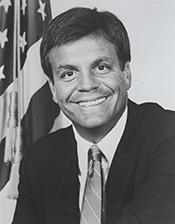
United States · United States Congress · 7 May 1991
Improving Access to Health Care Through Telecommunications Act - Mandates grants to rural health care consortia for acquisition and operation of interactive telecommunications systems to improve delivery of health care services. Allows information uses to include consultations, x-ray transfers, professional education programs, patient record transfers, and claims processing. Limits grants to one consortium per State, subject to waiver for consortia serving two or more States. Authorizes appropriations.
United States · United States Congress · 7 May 1991
Expresses the sense of the Congress that the Departments of Veterans Affairs and Health and Human Services should explore, expand, and promote opportunities for shared services in all areas, including alcohol and drug treatment, gerontology, mental health, pharmacy services, radiology, and other diagnostic specialties.
United States · United States Congress · 2 May 1991
Federal Facilities Compliance Act of 1991 - Amends the Solid Waste Disposal Act to waive the sovereign immunity of the United States for purposes of enforcing Federal, State, interstate, and local requirements with respect to solid and hazardous waste management. Absolves Federal employees from personal liability for civil penalties under any Federal or State solid or hazardous waste law if the act or omission was within the scope of official duties. Makes such employees subject to criminal sanctions under such laws. Prohibits Federal agencies from being subject to such sanctions. Authorizes the Administrator of the Environmental Protection Agency to commence an administrative enforcement action against any Federal agency pursuant to the authorities of the Solid Waste Disposal Act. Requires fines collected by States from the Federal Government for violations of hazardous and solid waste management requirements to be used only for projects to improve or protect the environment or to defray the costs of environmental protection or enforcement.
United States · United States Congress · 25 April 1991
Federal Recycling Incentive Act - Amends the Solid Waste Disposal Act to direct the Administrator of General Services to: (1) establish, and periodically modify, a program requiring each Federal department, agency, or instrumentality to separate and collect solid waste (including high-grade paper, newspapers, aluminum, bottles, and containers) for recycling; (2) establish and implement a system for monitoring and enforcing the provisions of this Act; and (3) report periodically to the Congress as to the extent of compliance for the preceding 12-month period. Authorizes any such entity to retain any moneys received from the sale of such waste for use in carrying out its functions. Authorizes appropriations.
United States · United States Congress · 24 April 1991
Circle of Poison Prevention Act of 1991 - Title I: Exported Pesticides - Amends the Federal Insecticide, Fungicide, and Rodenticide Act (FIFRA) to require pesticide producers operating registered establishments to inform the Administrator of the Environmental Protection Agency of: (1) the types and quantities of pesticides and active ingredients used in producing pesticides for export to a foreign country; and (2) the date of export and quantity of such materials exported to each foreign country to which the producer has exported during the past 365-day period. Provides that specified information on exported pesticides shall not be entitled to confidential trade secret treatment. Makes it unlawful to export a pesticide or device in violation of FIFRA export requirements. Prohibits the exportation of a pesticide or device unless: (1) such materials are prepared and packaged according to the specifications of the foreign purchaser and the legal requirements of the country of use; and (2) the label of the pesticide is written in the official language of the country of use and contains all information required to be included in the labeling for such pesticide in the United States. Prohibits the exportation of a pesticide to a country of use if: (1) the registrations for pesticides containing an active ingredient that is included in such pesticide that account for nearly all of the uses of such ingredient have been canceled; (2) the tolerances for an active ingredient in such pesticide that account for nearly all the uses of such ingredient have been revoked; or (3) an active ingredient of the pesticide is ineligible for reregistration. Prohibits such exports (including pesticides used for agricultural production) unless: (1) the pesticide is registered; or (2) all of the active ingredients in the pesticide are the subject of a food tolerance. Requires exporters, prior to the shipment of certain pesticides, to provide specified information to the Administrator. Prohibits the exportation of any pesticide to a country of use that: (1) has refused consent; or (2) has given conditional consent unless the conditions on which the consent was given are met. Prohibits refusals to consent unless the country certifies that it is not producing or importing and will not produce or import the pesticide or a similar product with the same active ingredient. Waives certain requirements, upon the request of a country of use and subject to certain determinations by the Administrator, to permit the export of pesticides not meeting FIFRA requirements to: (1) prevent or arrest the spread of a communicable disease; or (2) stop or prevent the spread of a pest that is destroying or will destroy quantities of the country's food supply so as to result in widespread famine. Permits the export of pesticides for experimental use in foreign countries if specified conditions are met. Directs the Administrator to submit information to the Secretary of Health and Human Services concerning inspections for pesticide residues in imported foods conducted by the Department of Health and Human Services. Requires the Administrator to notify foreign countries and the International Register of Potentially Toxic Chemicals whenever regulatory action is taken with respect to a pesticide. Directs the Administrator to: (1) convene meetings with foreign governments and other interested parties to promote the implementation of improved research and regulatory programs for pest management and strategies for sustainable agriculture and to encourage the adoption of a multilateral convention requiring standard notice and pesticide export control measures; and (2) provide foreign countries with technical assistance to develop pesticide regulatory programs. Permits persons to bring civil actions to secure the imposition of penalties on persons who violate pesticide export requirements. Prohibits civil actions from being initiated on the basis of the same unlawful acts that form the basis of existing proceedings for criminal violations. Requires the Comptroller General to report to the Congress every four years on: (1) the operation and effect of this Act; and (2) how exported pesticides and their containers are used and disposed of and on their impact on the public health and the environment of countries of use. Title II: Pesticide Residue Monitoring - Amends the Omnibus Trade and Competitiveness Act of 1988 to direct the Food and Drug Administration to summarize the volume of each food product subject to the requirements of the Federal Food, Drug, and Cosmetic Act imported into the United States in quantities determined by the Secretary of Health and Human Services to be commercial quantities (currently, products having an entry value exceeding an amount established by the Secretary). Requires the summary to: (1) be made by food product, country of origin, port of entry, pesticides monitored by the Secretary, pesticide residues detected, and the quantity of each pesticide exported from the United States for agricultural use; and (2) indicate the volume of each type of food tested for pesticide residues, arranged by pesticide, food, and country of origin. Title III: Pesticide Tolerances - Amends the Federal Food, Drug, and Cosmetic Act to require the Administrator, if a registration under FIFRA for a pesticide to be used on food is canceled or modified to prohibit its use in connection with food, to revoke any tolerance or exemption that permits the presence of the pesticide on the food. Suspends tolerances or exemptions for pesticides used on food if such use is suspended under FIFRA. Authorizes the Administrator, if a residue of a canceled or suspended pesticide will persist in the environment and be present on a food, to establish a tolerance for the pesticide at a level that permits the residue to remain and will protect public health. Requires the Administrator to reduce the tolerance for any suspended or canceled pesticide annually if any decrease in the pesticide's residual environmental contamination or residues on food has occurred. Prohibits the Administrator from establishing or continuing a tolerance for a pesticide chemical residue unless the best available, practical method for detecting and measuring the levels of the residue on a food exists. Title IV: Pesticide Information - Prohibits the importation of a raw agricultural commodity into U.S. customs territory unless the commodity importer files with the Secretary and the Secretary of the Treasury a document identifying each pesticide chemical used in connection with the commodity. Requires such importers, if unreported pesticides are detected in such commodities, to submit residue analyses for such pesticides. Waives reporting requirements for unreported pesticides if the presence of such pesticides is attributable to long-term environmental persistence and does not pose a health risk. Amends the Federal Meat Inspection Act, the Poultry Products Inspection Act, and the Egg Products Inspection Act to apply such requirements to importers of meat, poultry, and eggs. Amends the Agricultural Act of 1954 to add to the list of annual reporting requirements of agricultural attaches a report on the customary use of pesticides in the production of agricultural commodities in foreign countries. Title V: Effective Dates - Sets forth the effective dates for provisions of this Act.
United States · United States Congress · 24 April 1991
Declares that it is the sense of the House of Representatives that the United States implement the recommendations of the National Academy of Sciences in its report "Policy Implications of Greenhouse Warming."
United States · United States Congress · 17 April 1991
Limited Partnership Rollup Reform Act of 1991 - Amends the Securities and Exchange Act of 1934 to revise proxy solicitation rules with respect to partnership rollup transactions (in which general partners combine several limited partnerships into one unit that trades on a stock exchange). Requires any proxy rules prescribed by the Securities Exchange Commission (SEC) to: (1) permit dissenting shareholders in a proposed rollup to contact other limited partners before the transaction date without first having to file a written proxy statement with the SEC; (2) prohibit any general partner from paying directly or indirectly any person providing solicitation services (a broker-dealer) if the rate of compensation for soliciting approval is higher than the rate for soliciting disapproval, or the compensation is contingent on the transaction's approval or completion; (3) provide that the SEC will issue a cease and desist order suspending a rollup if the general partner proposing it fails to timely provide, upon request, to a shareholder (limited partner) a list of all limited and general partners involved in the proposed rollup; (4) require the rollup prospectus to be clear, concise, and understandable and summarize all effects of the proposed transaction, conflicts of interest, changes in voting rights and ownership interests, dissenters' rights, and other pertinent information; (5) require that each prospectus be accompanied by an independent opinion on the rollup's fairness; and (6) give each shareholder at least 60 days to review the prospectus. Requires the rules of a national securities association to prevent association members from participating in any rollup transaction unless it protects certain dissenters' rights, including: (1) the right to an appraisal and compensation, or to retain a security under the same terms as the original issue; (2) the right not to have dissenters' voting power unfairly reduced or abridged; (3) the right not to bear the costs of a rejected rollup; and (4) restrictions on the conversion of management profit-sharing interests and incentive fees into asset-based management fees. Requires a national securities exchange to prohibit the listing of any security resulting from a rollup transaction unless it provided for such dissenters' rights. Requires SEC rules to prohibit any national market system from trading any security resulting from a rollup transaction unless it provided for such dissenters' rights.
United States · United States Congress · 17 April 1991
National Commemorative Events Advisory Act - Establishes the President's Advisory Commission on National Commemorative Events to: (1) establish criteria for recommending to the President that a proposed commemorative event be approved or disapproved; (2) review proposals for national commemorative events submitted in accordance with procedures published by the Commission; and (3) issue recommendations to the President concerning each proposal reviewed. Terminates the Commission within five years after the date of its first meeting.
United States · United States Congress · 17 April 1991
Expresses the sense of the Congress that employers resume normal business travel that was suspended during the Persian Gulf War and that travel and tourism-related businesses intensify efforts to promote travel both to and within the United States.
United States · United States Congress · 15 April 1991
Amends the Internal Revenue Code and title II of the Social Security Act (Old-Age, Survivors and Disability Insurance) with respect to the social security exemption for election officials and election workers employed by State and local governments to increase the allowed remuneration paid to such workers.
United States · United States Congress · 11 April 1991
RICO Amendments Act of 1991 - Amends the Racketeer Influenced and Corrupt Organizations Act (RICO) to provide that: (1) a pattern of racketeering activity requires at least two acts of racketeering activity which are related to one another or to a common external organizing principle and which constitute a threat of continuing activity; and (2) two or more acts which are part of a single episode constitute a single racketeering act. Provides that a specified civil remedy that allows persons injured by racketeering violations to recover treble damages and the cost of the suit shall be available only upon proof by clear and convincing evidence and when its use serves the public interest and provides appropriate deterrence against the repetition of egregious criminal conduct. Requires particularity in pleadings in RICO cases. Grants U.S. district courts exclusive jurisdiction of civil RICO proceedings. Excludes various forms of nonviolent public speech from the definition of "racketeering activity."
United States · United States Congress · 11 April 1991
Native American Trust Fund Equity Act of 1991 - Amends Federal law to change from discretionary to mandatory the authority of the Secretary of the Interior to invest Indian trust funds in debt obligations issued or guaranteed by the United States, or in mutual funds. Requires the Secretary to pay interest periodically on such deposited or invested funds to the appropriate Indian tribe or individual Indian. Repeals Federal law that relieves the United States from any liability relating to the interest payable on such invested funds. Authorizes the Secretary to make payments to an Indian tribe or individual Indian in full satisfaction of any claim of such tribe or Indian for any interest owed on amounts deposited or invested on their behalf before the enactment of this Act.
United States · United States Congress · 10 April 1991
Amends the Omnibus Crime Control and Safe Streets Act of 1968 to increase (from 50 to 75 percent) the Federal share of funds provided under the drug control and system improvement grant program.
United States · United States Congress · 22 March 1991
Directs the American Battle Monuments Commission to establish a memorial on Federal land in the District of Columbia or its environs to honor World War II veterans and to commemorate U.S. participation in that conflict. Directs the Commission to plan, design, construct, and oversee the operation of the memorial. Specifies that such design shall provide for accessibility by, and accommodations for, the physically handicapped. Establishes the World War II Memorial Advisory Board to: (1) promote the establishment of the memorial and encourage the donation of private funds for construction and maintenance; (2) assist and cooperate with the Commission in the selection of the site and design for the memorial; and (3) transmit annual reports on its activities to the Congress. Authorizes the Commission to solicit private contributions for such memorial. Establishes a fund in the Treasury which shall be made available to the Commission to carry out this Act. Authorizes Federal funding, in addition to such private funds, for: (1) site preparation, design, planning, and associated administrative costs for establishment of the memorial; and (2) construction, maintenance, and operation of the memorial. Authorizes assistance from specified Federal departments and agencies, including the Library of Congress. Authorizes the transfer of Federal property to the Commission. Authorizes the Commission to purchase suitable property within the District of Columbia for the establishment of such memorial. Urges the Government to encourage 50th anniversary commemorations of the U.S. role in World War II. Urges the Smithsonian Institution and other Federal museums to develop commemorative exhibitions to be shared with academic institutions.
United States · United States Congress · 22 March 1991
World War II 50th Anniversary Commemorative Coin Act - Expresses the sense of the Congress that the United States should recognize the 50th anniversary of World War II by minting and issuing commemorative coins. Directs the Secretary of the Treasury to issue and mint such coins in five dollar, one dollar, and half dollar denominations. Mandates that surcharges received from the sale of such coins be deposited in a coinage profit fund and allocated, upon separate congressional authorization, to the American Battle Monuments Commission to establish a World War II memorial. Directs the Secretary to report semiannually to the Congress regarding implementation of this Act.
United States · United States Congress · 22 March 1991
Microenterprise Development Act of 1991 - Authorizes the President, acting through the Administrator of the Agency for International Development (AID), to provide assistance for microenterprises in developing countries. Directs AID to establish specified criteria for determining the financial intermediaries that will receive such assistance. Requires a significant portion of such assistance to be used to support direct credit assistance by, and the institutional development of, financial intermediaries with a primary emphasis on assisting people living in absolute poverty, especially women. Outlines funding sources for such assistance. Permits the President, in order to generate local currencies for providing such assistance, to use development and economic support fund assistance to provide assistance to developing countries on a loan basis repayable in local currencies. Sets forth minimum levels of assistance to be provided under this Act. Requires the Administrator to develop a monitoring system to evaluate AID's microenterprise development activities.
United States · United States Congress · 22 March 1991
World Summit for Children Implementation Act of 1991 - Provides for assistance in implementing the plan of action adopted by the World Summit for Children. Expresses the sense of the Congress that: (1) the U.S. Government should commit to increasing participation in the special supplemental food program for women, infants, and children under the Child Nutrition Act (the WIC program) by 20 percent per year in FY 1992 through 1996, to reach full participation by the end of FY 1996; and (2) specified minimum amounts should be appropriated for the WIC program in FY 1992 and 1993 to reach such full participation goal. Expresses the sense of the Congress that the commitment to provide full funding for the Head Start Program, contained in the Human Services Reauthorization Act of 1990, should be implemented in order that the goal of full participation of all eligible three- and four-year-old children can be reached by FY 1994. Amends the Public Health Service Act to direct the Secretary of Health and Human Services to undertake a Children's Vaccine Initiative. Requires that the Director of the National Vaccine Program: (1) plan and coordinate the Initiative; and (2) ensure that the Public Health Service conducts vaccine research, production, and delivery activities under the Initiative in collaboration with non-governmental institutions and with other Federal agencies to ensure the full use of U.S. scientific and industrial capacity to prevent infectious disease. Authorizes appropriations for FY 1992 and 1993. Authorizes appropriations for FY 1992 and 1993 for contributions to the United Nations Children's Fund for activities to promote child health and other assistance programs for children (to carry out specified provisions of the Foreign Assistance Act of 1961). Amends the Foreign Assistance Act of 1961 (the Act) to authorize appropriations for FY 1992 and 1993 for special health needs of children and mothers under the Child Survival Fund. Requires that specified minimum amounts of funds under various provisions for FY 1992 and 1993 be reserved only for such specified child survival activities. Expresses the sense of the Congress that authorization, in such amounts as may be required, should be granted to the President to exercise the (Public Law 480) debt authority with respect to least developed countries that are pursuing reforms to promote long-term economic development (as provided in specified provisions of the Agricultural Trade Development and Assistance Act of 1954, as amended by the Food, Agriculture, Conservation, and Trade Act of 1990). Amends the Act to establish a Vitamin A Deficiency Program. Reserves for such Program specified amounts in FY 1992 and 1993 from funds for development assistance for agriculture, rural development, and nutrition. Amends the Act to direct the President, in carrying out provisions for development assistance for health-related activities, to promote, encourage, and undertake activities relating to research on, and treatment and control of, acquired immune deficiency syndrome (AIDS) in developing countries. Authorizes appropriations for FY 1992 and 1993, for such purpose, to the International AIDS Prevention and Control Fund. Provides that such amounts shall be in addition to other amounts available for such purpose. Amends the Act to reserve specified amounts in FY 1992 and 1993, from funds for development assistance for education and under other provisions of the Act, for international basic education, including early childhood education, primary education, teacher training, other support activities, and adult literacy training. Expresses the sense of the Congress that at least specified minimum amounts should be appropriated for the Migration and Refugee Assistance account, and that at least specified minimum portions of such funds should be reserved for programs of refugee assistance overseas (in addition to amounts available for programs for Soviet, Eastern European, and other refugees resettling in Israel). Amends the Act to replace provisions for certain disadvantaged children in Asia with provisions for assistance to children in exceptionally difficult circumstances. Includes among such children street children, AIDS orphans, other orphaned and abandoned children, and children displaced by armed conflict, poverty, famine, or other disasters. Reserves specified minimum portions of certain funds under the Act in FY 1992 and 1993 for assistance for such children. Requires that such assistance be made available in accordance with policies and general authorities under certain disaster assistance provisions. Directs the President to report annually to the Congress on U.S. contributions to the achievement of the goals of the World Summit for Children, including U.S. efforts to achieve such goals in the United States and in other countries, with an analysis of past, current, and planned funding levels.
United States · United States Congress · 21 March 1991
Federal Alternative Fuel Fleet Act - Requires a certain percentage of motor vehicles acquired by the Federal Government for use in a metropolitan or consolidated metropolitan statistical area with a 1990 population of more than 250,000 to be alternative fuel vehicles by specified dates. Amends the Motor Vehicle Information and Cost Savings Act to prohibit the Secretary of Transportation from considering the fuel economy of such alternative fuel vehicles with respect to the enforcement of fuel economy standards under such Act. Prescribes circumstances under which alternative fuels shall be offered for sale to the public. Mandates that the incremental costs of alternative fuel vehicles shall not be applied to any calculation with respect to a limitation under law on the maximum cost of individual vehicles which may be acquired by the United States. Requires the Secretary of Defense to study the feasibility of increasing the use of alternative fuel vehicles in the Department of Defense's motor vehicle fleet. Authorizes appropriations.
United States · United States Congress · 20 March 1991
Alternative Fuels Incentive Act of 1991 - Amends the Internal Revenue Code to permit an income tax credit for investments in qualified clean-burning (natural gas, liquefied petroleum gas, or alcohol) motor vehicle fuel property. Permits a 20 percent credit from 1992 through 2001, phasing out the credit in five percent increments annually thereafter to reach zero percent at the end of 2004. Applies the credit to tangible property that is: (1) equipment designed either to modify a motor vehicle so that it will be propelled by a clean-burning fuel or to assist in delivering such fuel into such vehicles; or (2) a motor vehicle propelled by clean-burning fuel. Authorizes the Secretary of the Treasury to make credit-equivalent payments to States and to local governments in connection with qualified property.
United States · United States Congress · 19 March 1991
Price Fixing Prevention Act of 1991 - Provides that in any civil action alleging a contract, combination, or conspiracy to set, change, or maintain prices (other than a maximum price) under the Sherman Antitrust Act: (1) evidence that a person who sells a good or service to the claimant for resale received from a competitor a communication regarding price competition by the claimant and in response terminated the claimant as a buyer (or refused to supply such goods or services) shall be sufficient to raise the inference that such person and such competitor engaged in concerted action to set, change, or maintain prices in violation of such Act (in such case, a termination or refusal to supply is in response to a communication if such communication is a substantial contributing cause of such termination or refusal to supply); (2) the fact that the seller and the purchaser of a good or service entered into an agreement to set, change, or maintain prices shall be sufficient to constitute a violation of such Act; and (3) an agreement between the seller and the purchaser to terminate another purchaser as a dealer or to refuse to supply such other purchaser because of that purchaser's pricing policies shall constitute a violation of such Act, whether or not a specific price level is agreed upon. Provides that the provisions with respect to agreements to set, change, or maintain prices (other than a maximum price) shall apply to civil actions commenced before enactment of this Act.
United States · United States Congress · 19 March 1991
Allied Health Professionals Promotion Act of 1991 - Amends provisions of the Public Health Service Act relating to grants and contracts concerning training of allied health personnel to direct the Secretary of Health and Human Services to allocate 75 percent of the funds authorized to those allied health fields the Secretary determines to have: (1) the most significant shortages of practitioners; and (2) a significant role in the care and rehabilitation of patients who are elderly or disabled. Authorizes appropriations. Authorizes the Secretary to make grants and contracts to assist allied health students in meeting the costs of entry level education, allocating 75 percent of the funds as above. Makes payments of tuition to, or on behalf of, a participating student tax-exempt. Authorizes appropriations for traineeships for advanced training of allied health personnel, making the traineeships available for postgraduate (currently, doctoral) programs and students. Establishes within the Health Resources and Services Administration the Advisory Council on Allied Health. Excludes registered nurses from the definition of "allied health personnel."
United States · United States Congress · 14 March 1991
Telephone Privacy Act of 1991 - Amends the Electronic Communications Privacy Act of 1986 to permit the use of caller identification systems (i.e., devices which allow the recipient of a telephone call to determine individually identifying information about the caller or the originating number) if the provider enables the telephone call originator to block receipt of the identifying information. Authorizes civil suits against providers who provide caller identification systems to call recipients without providing blocking capability to call originators.
United States · United States Congress · 14 March 1991
Horn of Africa Recovery and Food Security Act of 1991 - Amends the Foreign Assistance Act of 1961 to authorize the President to provide assistance for civil strife relief and rehabilitation in the Horn of Africa (Ethiopia, Somalia, and Sudan). Amends the Agricultural Trade Development and Assistance Act of 1954 to authorize the President to provide supplemental emergency food assistance for civilian victims of civil strife in the Horn of Africa. Permits the President to transfer funds from unobligated amounts in the economic support fund (ESF) and military assistance to carry out this Act. Makes available a percentage of assistance for management support activities of the Agency for International Development. Requires the President to consult with other nations, armed and unarmed parties in the Horn of Africa, and the United Nations Secretary General to bring about negotiated settlements of the wars in the region. Expresses the sense of the Congress that the President should: (1) direct the U.S. representative to the United Nations to take specified steps with respect to peace and the implementation of an arms embargo in the region; (2) play an active role in other fora in pressing for settlements to such wars; and (3) participate in regional and international peace consultations. Declares that development assistance in the Horn of Africa should be targeted to aid the poor. States that U.S. Government aid institutions should seek to: (1) build upon the capabilities and experiences of organizations active in local grassroots relief, rehabilitation, and development efforts; (2) consult with such organizations and incorporate their views into the policymaking process; and (3) support the expansion of their activities without compromising their private nature. Declares that current legislative provisions that restrict assistance to Ethiopia, Somalia, and Sudan should be retained until concrete steps toward peace, democracy, and human rights are achieved. States that development assistance should be: (1) targeted to the voluntary relocation and repatriation of displaced persons and refugees; and (2) carried out in coordination with strategies for debt relief of countries in the region and with efforts to establish an International Fund for Reconstruction of developing nations which settle civil wars. Prohibits assistance appropriated under this Act from being available for involuntary or forced resettlement of persons. Prohibits development assistance to Ethiopia, Somalia, or Sudan unless the President certifies that the government of the country has: (1) begun to implement peace or national reconciliation agreements; (2) demonstrated a commitment to human rights; (3) manifested a commitment to democracy and has held or scheduled free and fair elections; and (4) agreed to distribute development assistance without discrimination. Requires the Secretary of the Treasury to instruct the U.S. executive directors of the multilateral development banks to oppose any loan or other funds, except to meet basic human needs, to or for Ethiopia, Somalia, or Sudan until the President makes such certification. Prohibits ESF assistance, grant military assistance, or international military education and training assistance to Ethiopia, Somalia, or Sudan unless the President certifies that the government of the country has: (1) begun to implement peace or national reconciliation agreements; (2) demonstrated a commitment to human rights; and (3) held or scheduled free and fair elections.
United States · United States Congress · 13 March 1991
Biotechnology Patent Protection Act of 1991 - Amends Federal patent law to provide for the patentability of certain processes which are sought to be patented in the same application as the machine, manufacture, or composition of matter with which they are associated.
United States · United States Congress · 13 March 1991
Permits the transfer of military equipment captured during Operation Desert Storm to a foreign government: (1) only to the extent that military equipment in Department of Defense stocks could be so transferred; and (2) subject to the same requirements applicable to the transfer of equipment in such stocks. Prohibits the transfer of equipment to a country whose government has repeatedly provided support for acts of international terrorism.
United States · United States Congress · 12 March 1991
Medicaid Breast and Cervical Cancer Amendments of 1991 - Amends title XIX (Medicaid) of the Social Security Act to require States to provide Medicaid coverage of: (1) screening mammograms for women who are at least 35, but under 65, years of age according to frequency guidelines similar to those imposed by the Omnibus Budget Reconciliation Act of 1990 under the Medicare program (title XVIII of the Social Security Act); and (2) screening pap smears. Provides for Federal assumption of 100 percent of the cost of providing such screening services.
United States · United States Congress · 12 March 1991
Medicaid Child Health Amendments of 1991 - Amends title XIX (Medicaid) of the Social Security Act to permit States to provide Medicaid coverage to all children who have attained age six but not age 19 and whose family income does not exceed 185 percent of the Federal poverty level. (Currently, States are required to cover only certain children between such ages, and only those whose family income does not exceed 133 percent of the Federal poverty level.) Permits States to provide an additional 12 months (currently, 12 months total) of extended Medicaid coverage to families whose AFDC eligibility ends due to the caretaker relative's employment. Requires States which provide prospective Medicaid payments to hospitals to reimburse hospitals which serve a disproportionate share of low-income patients for exceptionally costly or lengthy stays by children up to age 19. Directs States to provide Medicaid coverage for disabled children under age 19 but who are not eligible for benefits under title XVI (Supplemental Security Income) of the Social Security Act. Prohibits the discontinuance of the Medicaid benefits of a child under age 19 until he or she is determined to be ineligible for such benefits on any basis. Allows States to extend Medicaid coverage to: (1) foster care children under age 19 whose incomes are above State cash assistance eligibility levels but below the Federal poverty level; and (2) migratory agricultural workers and their families.
United States · United States Congress · 12 March 1991
Medicaid Infant Mortality Amendments of 1991 - Amends title XIX (Medicaid) of the Social Security Act to require mandatory State coverage of pregnant women and infants whose family income is below 185 percent of the Federal poverty level. Provides 100 percent Federal financing of the costs of services to pregnant women and infants whose family income is between 133 and 185 percent of the Federal poverty level. Prohibits application of resource testing to pregnant women and infants. Authorizes States to provide Medicaid coverage of home visitation services with respect to high-risk infants. Provides for flexibility in determining the limitation on Federal payments to States for Medicaid services provided to pregnant women and infants. Requires States to include in their Medicaid benefit packages primary health services for residents of public housing provided by an entity which meets the requirements to receive a grant under the Public Health Service Act to fund the provision of such services.
United States · United States Congress · 12 March 1991
Savings and Investment Incentive Act of 1991 - Title I: Retirement Savings Incentives - Amends the Internal Revenue Code to remove the limitations on deductions for individual retirement plans and provides a cost-of-living adjustment for deductible amounts. Establishes special individual retirement accounts that are nondeductible. Makes such accounts nontaxable if earnings on contributions are held for at least five years. Applies the early withdrawal penalty to distributions made before the end of the five year-period. Title II: Penalty-Free Distributions - Provides exemptions from the ten-percent penalty on early withdrawals from individual retirement plans for: (1) first home purchases; (2) higher education expenses; and (2) financially devastating medical expenses.
United States · United States Congress · 7 March 1991
Peace, Democracy and Development in El Salvador Act of 1991 - Expresses the sense of the Congress that the United States shall use diplomacy to encourage the Government of El Salvador and the Farabundo Marti National Liberation Front (FMLN) to: (1) participate in good-faith negotiations to achieve a cease-fire and permanent settlement of the conflict in El Salvador; (2) adhere to the terms of agreements signed in Geneva, Switzerland, Caracas, Venezuela, and San Jose, Costa Rica; and (3) support the role of the Secretary General of the United Nations in advancing proposals on the outstanding issues defined in the Caracas accords to resolve the conflict. Withholds from El Salvador unobligated military assistance for FY 1991 and prior fiscal years and military assistance allocated for FY 1992 and 1993 until the Congress enacts a joint resolution authorizing the provision of such assistance and the President reports to the Congress that: (1) those responsible for ordering and carrying out, or obstructing the investigation into, the November 1989 murders of certain priests and civilians have been apprehended and brought to justice; (2) internationally recognized workers' rights have been extended to Salvadoran workers; (3) the El Salvadoran Government has pursued legal avenues to bring to trial and obtain verdicts for those responsible for the murders of Archbishop Romero and certain land reformers and for the bombings of the FENASTRAS headquarters; (4) the El Salvadoran Government is complying with international standards of respect for humanitarian and medical workers; (5) steps have been taken to place the El Salvadoran military under the control of the civilian government; (6) the El Salvadoran Government is negotiating to achieve a cease-fire and a settlement of the conflict and has not rejected a plan for the settlement of the conflict put forth by the United Nations Secretary General; and (7) the El Salvadoran Government, through its military and security forces, has not engaged in assassinations of, or acts of violence against, civilians and has not failed to control such activities by elements subject to the control of such forces. Prohibits funding for: (1) the stationing of U.S. military personnel in El Salvador as trainers or advisors to the El Salvadoran armed forces; and (2) the financing of covert operations in El Salvador or for covert military assistance to the El Salvadoran Government. Establishes the Demobilization, Transition, and Reconstruction Fund to assist with the cost of monitoring a permanent settlement of the conflict, the demobilization of combatants in the conflict and their transition to peaceful pursuits, and the reconstruction of El Salvador. Makes the Fund available only upon the President's notification to the Congress that the El Salvadoran Government and the FMLN have reached a permanent settlement to the conflict. Requires the President, upon notification of a permanent settlement or on September 30, 1992, if no notification has occurred prior to such date, to transfer withheld military assistance to the Fund. Prohibits economic support fund (ESF) assistance from being obligated as balance-of-payments or cash assistance for El Salvador. Makes ESF assistance for El Salvador available only for projects for child nutrition, health, clean water, basic education, agrarian reform, and other human needs of the people of El Salvador. Requires such assistance to be used only for programs implemented solely by civilian agencies. Subjects ESF assistance for El Salvador to reprogramming notifications under the Foreign Assistance Act of 1961.
United States · United States Congress · 7 March 1991
Women in Development Act of 1991 - Requires the Administrator of the Agency for International Development (AID) to ensure actions are taken to strengthen the AID's women in development policy, including: (1) incorporating the active participation of local women and local women's organizations in its development activities; (2) instructing AID staff to collect and analyze sex-disaggregated data and to insure that country strategies, projects, and programs are designed to reflect the impact on women in proportion to the higher of their traditional participation in the targeted activities or their proportion of the population; (3) insuring that project and program evaluations include an assessment of the extent to which the project integrates women in the development process and of the project's impact on women; (4) increasing the number and responsibility of women in positions within AID; and (5) establishing within AID a task force on women in development. Amends the Foreign Assistance Act of 1961 to require that specified amounts be made available for programs to integrate women into the agency responsible for integrating women into the development process and for administrative expenses of such agency. Authorizes appropriations for the United Nations Development Fund for Women and the United Nations International Research and Training Institute for the Advancement of Women. Requires the Director of the Peace Corps to take specified actions to strengthen the Peace Corps' women in development policy. Earmarks funding for the Peace Corps Office of Coordinator of Women in Development.
United States · United States Congress · 5 March 1991
Women's Health and Mental Health Research Act - Amends the Public Health Service Act to establish in the Office of the Administrator of the Alcohol, Drug Abuse, and Mental Health Administration (ADAMHA) the Office of Research on Women's Health and Mental Health (Office) to ensure that women's health and mental health research is identified and addressed by ADAMHA. Establishes in the Office the Coordinating Committee for Research on Women's Health and the Advisory Committee for Research on Women's Health. Requires that the Administrator establish: (1) a single data system for the collection, analysis, and dissemination of information regarding women's health and mental health research, including a registry of clinical trials of experimental treatments; and (2) a program to provide information on women's health and mental health research. Provides for grants or contracts for the development and operation of Centers of Excellence in Women's Health and Mental Health Research using a single institution or a consortium for each Center. Provides, subject to appropriations, for three centers, with support covering five years. Allows extension of support if recommended by a technical and scientific peer review group. Authorizes appropriations.
United States · United States Congress · 5 March 1991
Women's Health Research Act - Amends the Public Health Service Act to establish within the Office of the Director of the National Institutes of Health (NIH) the Office of Research on Women's Health (Office) to ensure that women's health research is identified and addressed by NIH. Establishes in the Office the Coordinating Committee for Research on Women's Health and the Advisory Committee for Research on Women's Health. Mandates that the Director of the Office prepare and annually review a plan for establishing a program for clinical research on obstetrics and gynecology to be conducted by the Director of the National Institute of Child Health and Human Development (NICHHD). Requires the NICHHD Director to establish a program of contracts with individuals who agree to conduct obstetrics and gynecology research in return for the Federal Government paying, to a specified maximum, the educational loans of the individuals. Requires the NIH Director to establish a single data system for the collection, analysis, and dissemination of information regarding women's health research conducted or supported by NIH, including a registry of clinical trials of experimental treatments. Requires the NIH Director to establish and operate a program to provide information on research and prevention activities relating to women's health research. Provides for grants or contracts for the development and operation of Centers of Excellence in Women's Health Research using a single institution or a consortium for each Center. Provides, subject to appropriations, for three centers, with support covering five years. Allows extension of support if recommended by a technical and scientific peer review group. Authorizes appropriations for specified provisions of this Act.