Amendment· HAMDTHAMDT 3 (102nd)failed
Amendment sought to delete $650 million in foreign aid appropriated to Israel to provide for additional costs resulting from the conflict in the Persian Gulf.
United States · United States Congress
The world's political record
Person
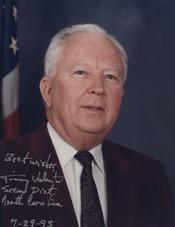
United States · Official source
No stored named vote for this person. House roll-calls come from Congress.gov; Senate member lists come from senate.gov LIS XML.
United States · United States Congress
United States · United States Congress
United States · United States Congress
United States · United States Congress
United States · United States Congress
United States · United States Congress
United States · United States Congress
United States · United States Congress · 7 October 1994
Amends the Harmonized Tariff Schedule of the United States to reduce the duty on pharmaceutical grade phospholipids.
United States · United States Congress · 28 September 1994
Designates October 19, 1994, as National Mammography Day.
United States · United States Congress · 27 September 1994
Amends the Internal Revenue Code to extend the special rules for the deduction of health insurance costs of self-employed individuals from December 31, 1993, until December 31, 1994.
United States · United States Congress · 22 September 1994
Centennial of Flight Commemoration Act - Establishes the Centennial of Flight Commission to commemorate the first manned airplane flight by the Wright brothers. Authorizes appropriations.
United States · United States Congress · 20 September 1994
Designates October 29, 1994, as National Firefighters Day.
United States · United States Congress · 13 September 1994
Designates the week of October 23 through 31, 1994, as National Red Ribbon Week for a Drug-Free America.
United States · United States Congress · 21 August 1994
TABLE OF CONTENTS: Title I: Grants for Correctional Facilities Title II: State and Local Law Enforcement Grants Title III: Protection Against Sexually Violent Predators Title IV: Eliminating Excessive and Redundant Appeals Title V: Reform of 'Exclusionary Rule' Title VI: Truth-In-Sentencing Title VII: Prison Work Required; Luxuries Abolished Title VIII: Improving Border Controls Title IX: Enhanced Gun Penalties Title X: Violent Crime Reduction Trust Fund Title XI: Mandatory Life Imprisonment for Persons Convicted of Certain Felonies Back-To-Basics Crime Control Act of 1994 - Title I: Grants for Correctional Facilities - Directs the Attorney General to make grants to States to construct, expand, and improve prisons and jails. Authorizes specified sums to each State without conditions imposed by the Federal Government, except requirements to comply with this title and to use such funds exclusively for the construction of prisons and jails. Authorizes appropriations. Sets forth formulas for the distribution of funds in FY 1995 and in FY 1996 through 1999 based on violent crimes reported by the States to the Federal Bureau of Investigation (FBI). (Sec. 102) Specifies that 25 percent of total funds appropriated under this title shall be allocated to each eligible State according to a formula which takes into account the percentage change in the time to be served by persons convicted of violent crimes. Directs that States which have achieved a truth in sentencing standard of violent criminals serving 85 percent of prison time assessed receive the incentive funds, subject to specified requirements. Title II: State and Local Law Enforcement Grants - Requires the Attorney General to make grants to States to increase the number of law enforcement officers in service. Authorizes specified funds, without conditions imposed by the Federal Government (except that the funds be used exclusively to increase the number of law enforcement officers in service). Requires States to allocate 80 percent of their grants to local government for use by local law enforcement, as nearly as possible in proportion to the populations served by such local law enforcement agencies (LEAs). Title III: Protection Against Sexually Violent Predators - Directs the Attorney General to: (1) establish guidelines for State programs to require a sexually violent predator to register a current address with a designated State LEA upon being released from prison or being placed on parole or supervised release; and (2) approve each State program that complies with the guidelines. Makes States that do not implement and maintain such programs ineligible to receive ten percent of the funds that would otherwise be allocated to the State in drug control and system improvement grants under the Omnibus Crime Control and Safe Streets Act of 1968. Requires: (1) the determination that a person is, or is no longer, a sexually violent predator to be made by the sentencing court after receiving a report by a board of experts on sexual offenses; and (2) each State to establish a board composed of experts in the field of the behavior and treatment of sexual offenders. Sets forth provisions regarding: (1) notification regarding the duty of an offender to register and to provide any new address to a designated State LEA and of a State prison official to obtain specified information; (2) the transfer of information to the State LEA and to the FBI; (3) quarterly verification of the released offender's address; (4) penalties for failing to register and keep the registration current; (5) termination of the obligation to register; (6) community notification concerning a predator required to register; and (7) immunity for good faith conduct by LEAs, their employees, and State officials. Title IV: Eliminating Excessive and Redundant Appeals - Amends the Federal judicial code to establish a one-year statute of limitations for habeas corpus actions brought by State prisoners. Vests authority to issue certificates for probable cause for appeal of habeas corpus orders exclusively in the courts of appeals. Permits denial on the merits of habeas corpus writs notwithstanding the failure to exhaust State remedies. Establishes a two-year statute of limitations for Federal prisoners filing for collateral relief. (Sec. 406) Sets forth special habeas corpus procedures in capital cases brought by prisoners in State custody who are subject to a capital sentence. Makes such procedures contingent upon: (1) a State establishing by rule of its court of last resort or by statute a mechanism for the appointment, compensation, and payment of reasonable litigation expenses of competent counsel in State post convictions and sentences have been upheld on direct appeal to such court or have otherwise become final; and (2) such rule or statute providing standards of competency for the appointment of counsel. Provides for a mandatory stay of execution during the post-conviction review initiated pursuant to this title. Details conditions which will cause such stay to expire. Prohibits a Federal court from entering a stay of execution or granting relief in a capital case unless specified conditions are met. Sets forth lime limits for determining petitions. Authorizes the State or Government to enforce such time limits by applying to the court of appeals or the Supreme Court for a writ of mandamus. Title V: Reform of 'Exclusionary Rule' - Amends the Federal criminal code to prohibit the exclusion of evidence obtained as a result of a search or seizure, in a proceeding in a court of the United States, on the grounds that the search or seizure was in violation of the Fourth Amendment of the Constitution if it was carried out in circumstances justifying an objectively reasonable belief that it was in conformity with such amendment. Makes the fact that evidence was obtained pursuant to and within the scope of a warrant prima facie evidence of the existence of such circumstances. Prohibits the exclusion of evidence, in a proceeding in a U.S. court, on the ground that it was obtained in violation of a statute, administrative rule or regulation, or rule of procedure unless exclusion is expressly authorized by statute or by a rule prescribed by the Supreme Court pursuant to statutory authority. Title VI: Truth in Sentencing - Amends the Federal criminal code to permit the Bureau of Prisons to add, in its discretion, additional time to a prisoner's sentence of up to 15 percent of the prisoner's term for unsatisfactory behavior. Prohibits a sentence from being reduced for satisfactory behavior to a term less than the original sentence nominally imposed. Title VII: Prison Work Required; Luxuries Abolished - Directs the Attorney General to implement and enforce regulations which: (1) mandate prison work for all able-bodied inmates in Federal penal and correctional institutions; and (2) prohibit the Government provision in inmates' cells of television, radio, telephone, stereo, or similar amenities. (Sec. 702) Amends the Higher Education Act of 1965 to prohibit awards of Pell grants to prisoners in Federal or State penal institutions. Title VIII: Improving Border Controls - Authorizes appropriations. Authorizes and directs the Attorney General to use such funds to permit the commander of the Border Patrol to increase by at least 6,000 the number of border patrol agent positions above the number of such positions as July 1, 1994. (Sec. 802) Amends the Immigration and Nationality Act to provide for expedited deportation and exclusion of criminal aliens. Prohibits reentry of an alien into the United States during the minimum period of confinement to which the alien was sentenced. Authorizes the Attorney General to prescribe special regulations for the registration and fingerprinting of aliens on criminal probation or parole. Expands the definitions of "aggravated felony." (Sec. 805) Sets forth deportation procedures for certain criminal aliens who are not permanent residents. Grants a U.S. district court jurisdiction to enter a judicial order of deportation at the time of sentencing against an alien whose criminal conviction causes such alien to be deportable under provisions relating to conviction of an aggravated felony if requested prior to sentencing by the U.S. Attorney. (Sec. 807) Restricts defenses to deportation for certain criminal aliens. Enhances penalties for failing to depart or reentering after a final order of deportation. (Sec. 810) Authorizes appropriations for a criminal alien information system. Title IX: Enhanced Gun Penalties - Amends the Federal criminal code to enhance penalties imposed upon persons convicted of using or carrying a firearm during and in relation to the commission of a felony. (Sec. 902) Sets a mandatory minimum sentence for unlawful possession of a firearm by a convicted felon, fugitive from justice, addict or unlawful user of a controlled substance, or transferor or receiver of a stolen firearm. (Sec. 903) Increases the general penalty for violation of Federal firearms laws. Title X: Violent Crime Reduction Trust Fund - Establishes a Violent Crime Reduction Trust Fund as a separate account in the Treasury into which shall be transferred savings realized from implementation of provisions of the Federal Workforce Restructuring Act of 1994. Sets forth provisions regarding: (1) transfers into, and appropriations from, the Fund; (2) annual reporting requirements on the status of the Fund; and (3) allocation of sums in the Fund. Extends authorizations of appropriations for fiscal years for which the full amount authorized is not appropriated. Title XI: Mandatory Life Imprisonment for Persons Convicted of Certain Felonies - Amends the Federal criminal code to provide for mandatory life imprisonment for persons convicted in Federal court of a serious violent felony if: (1) the person has been convicted (and the conviction has become final) on separate prior occasions in a Federal or State court of two or more serious violent felonies, or one or more serious violent felonies and one or more serious drug offenses; and (2) each serious violent felony or serious drug offense used as a basis for sentencing under this title, other than the first, was committed after the defendant's conviction of the preceding serious violent felony or serious drug offense. Sets forth provisions regarding: (1) persons subject to the criminal jurisdiction of an Indian tribal government; and (2) resentencing upon the overturning of a prior conviction. (Sec. 1102) Prohibits the court from reducing the sentence of a defendant unless specified conditions are met, including that defendant is at least age 70, has served at least 30 years in prison for the offense or offenses for which the defendant is currently imprisoned, and a determination has been made by the Director of the Bureau of Prisons that the defendant is not a danger to the safety of any other person or the community.
United States · United States Congress · 20 August 1994
Commends the U.S. rice industry for its decision to establish an industry organization. Recognizes the success such decision will have in promoting the interests of the rice industry and the rice-consuming public.
United States · United States Congress · 19 August 1994
Captive Exotic Animal Protection Act of 1994 - Amends the Federal criminal code to prohibit and set penalties for the transport or possession of a confined exotic animal for purposes of allowing the killing or injuring of that animal for entertainment or the collection of a trophy.
United States · United States Congress · 12 August 1994
Urges the Secretary of State to: (1) apply consistent criteria in determining whether to restrict the use of U.S. passports in any country; and (2) in deciding whether to extend the ban on the use of such passports in Lebanon, give paramount consideration to the need to ensure the safety of U.S. citizens and full consideration to the improved security situation in Lebanon, the effect of the ban on opportunities for American businesses, to the impact of the ban on American interests in Lebanon and the Middle East, and to whether U.S. interests would be more effectively served by removing the ban and instituting a travel advisory for Lebanon.
United States · United States Congress · 11 August 1994
Designates the months of March 1995 and March 1996 as Irish-American Heritage Month.
United States · United States Congress · 5 August 1994
Establishes the fourth Sunday of every July as Parents' Day.
United States · United States Congress · 5 August 1994
Smithsonian Institution Sesquicentennial Commemorative Coin Act - Directs the Secretary of the Treasury to issue five-dollar gold coins and one-dollar silver coins emblematic of the scientific, educational, and cultural significance of the Smithsonian Institution. Mandates that: (1) all but a certain portion of surcharges received from coin sales be paid by the Secretary to the Smithsonian Institution to support programming related to the 150th anniversary and general activities of the Smithsonian Institution; and (2) a certain portion of such surcharges be dedicated to supporting the operation and activities of the National Numismatic Collection at the National Museum of American History.
United States · United States Congress · 28 July 1994
Amends the Internal Revenue Code, with respect to situations in which unearned income of a minor child is taxed as if it were parental income, to not take into account any income attributable to an amount excluded from the gross income of the child by reason of the child receiving a personal injury award.
United States · United States Congress · 20 July 1994
Expresses the sense of the Congress that any legislation enacted to reform health care delivery should not include price controls and limits on national health care expenditures that would restrict access to medical technology or hinder its development.
United States · United States Congress · 19 July 1994
Designates September 17, 1994, as Constitution Day.
United States · United States Congress · 14 July 1994
Designates the second Sunday in October 1994 as National Children's Day.
Showing the 24 most recent records of 2,097. Browse the full list