Bill· HJRESH.J.Res. 413 (103rd)referred
Designating November 1, 1994, as "National Family Literacy Day".
United States · United States Congress · 22 September 1994
Designates November 1, 1994, as National Family Literacy Day.
The world's political record
Person
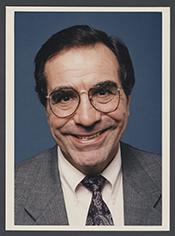
United States · Official source
5,601 records where Rep. Vento, Bruce F. [D-MN-4] is listed as a sponsor, author, or other actor. Search with topics and years
United States · United States Congress · 22 September 1994
Designates November 1, 1994, as National Family Literacy Day.
United States · United States Congress · 20 September 1994
Amends the Internal Revenue Code to make permanent the limited deduction for the health insurance costs of self-employed individuals.
United States · United States Congress · 13 September 1994
TABLE OF CONTENTS: Title I: American Heritage Areas Partnership Program Title II: Designation of American Heritage Areas Title III: Studies Regarding Potential American Heritage Areas Title IV: Blackstone River Valley National Heritage Corridor Amendments Title V: Bramwell National Historic District Title VI: Southwestern Pennsylvania American Heritage Area Amendments American Heritage Areas Act of 1994 - Title I: American Heritage Areas Partnership Program - American Heritage Areas Partnership Program Act of 1994 - Establishes the American Heritage Areas Partnership Program within the Department of the Interior, consisting of such Areas designated by this Act. Authorizes the Secretary of the Interior to: (1) evaluate nominated Areas; (2) advise State and local governments, nonprofit organizations, and other appropriate entities as to suitable methods of recognizing and preserving thematically and geographically linked natural, historic, and cultural resources and recreational opportunities; and (3) consider any designated Heritage Area for nomination to the World Heritage List if the Area meets the nomination qualifications. Provides that an area may be designated as an American Heritage Area only by an Act of the Congress or by the means provided in title II. Conditions such designation on the Secretary of the Interior's approval of an Area feasibility study and compact. (Sec. 106) Sets forth provisions regarding compacts (relating to the objectives and management of Areas proposed for designation) and management plans (which shall present comprehensive recommendations for the conservation, funding, management, and development of such Areas). Authorizes the Secretary to provide technical and financial assistance for early actions that are important to the theme of an Area and that protect resources that would be in imminent danger of irreversible damage otherwise. (Sec. 107) Authorizes the management entities named in the compacts for American Heritage Areas to receive Federal funds in support of cooperative partnerships to prepare and implement the management plans and otherwise perform the functions contemplated in this title. Sets forth provisions regarding: (1) withdrawal of the designation of an Area; (2) matching grants; (3) technical and other assistance; (4) spending Federal funds on non-federally owned property; (5) reporting requirements; (6) duties of Federal entities conducting Area activities; and (7) the lack of effect of this Act on other land use regulation. (Sec. 111) Authorizes appropriations. Specifies funding limitations. Title II: Designation of American Heritage Areas - Designates the following areas, subject to specified requirements, as part of the American Heritage Areas Partnership Program: (1) American Coal Heritage Area, West Virginia and Virginia; (2) Augusta Canal American Heritage Area, Georgia; (3) Cane River American Heritage Area, Louisiana; (4) Essex American Heritage Area, Massachusetts; (5) Hudson River Valley American Heritage Area, New York; (6) Ohio & Erie Canal American Heritage Area, Ohio; (7) Shenandoah Valley Battlefields American Heritage Area, Virginia; (8) Steel Industry American Heritage Area, Pennsylvania; (9) Vancouver American Heritage Area, Washington; and (10) Wheeling American Heritage Area, West Virginia. Title III: Studies Regarding Potential American Heritage Areas - Directs the Secretary to complete a study on the suitability and feasibility of designating the following as American Heritage Areas: (1) Ohio River corridor, from its headwaters in Pennsylvania to its confluence with the Mississippi River; (2) Fox and Lower Wisconsin River corridors, Wisconsin; (3) a corridor formed by Oconee and other specified counties, South Carolina; and (4) Tryon County, in the Mohawk Valley of New York State, and the Country of the Six Nations (Iroquois Confederacy). Title IV: Blackstone River Valley National Heritage Corridor Amendments - Amends the Act establishing the Blackstone River Valley National Heritage Corridor in Massachusetts and Rhode Island to make changes with respect to boundaries, membership and termination of the Blackstone River Valley National Heritage Corridor Commission, and plan revision and implementation. Directs the Commission to revise the Cultural Heritage and Land Management Plan and submit the revised plan to the Secretary and the Governors of Massachusetts and Rhode Island for approval. Specifies that the revision shall address any change in the boundaries of the Corridor that occurs after submission of the plan and shall include a natural resource inventory of areas or features that should be protected, restored, or managed because of the natural and cultural significance of the areas or features. (Sec. 402) Authorizes the Secretary to provide funds for projects in the Corridor that exhibit national significance or provide a wide spectrum of historic, recreational, environmental, educational, or interpretive opportunities, without regard to whether the projects are in public or private ownership. Sets forth provisions regarding: (1) application procedures; and (2) funding and funding limitations. Authorizes appropriations. Title V: Bramwell National Historic District - Designates the Bramwell National Historic District, West Virginia. Authorizes the Secretary to enter into cooperative agreements with the State of West Virginia, or any political subdivision thereof, to further the purposes of the Historic District. Sets forth provisions regarding the ration of non-Federal funds and agreements regarding payments. Authorizes appropriations. Title VI: Southwestern Pennsylvania American Heritage Area Amendments - Southwestern Pennsylvania American Heritage Amendments Act - Amends the Act establishing in the Department of the Interior the Southwestern Pennsylvania Heritage Preservation Commission (the Act) to designate the Southwestern Pennsylvania American Heritage Area. Specifies that such Area shall not be considered an American Heritage Area for purposes of the American Heritage Areas Partnership Program Act of 1994 or the American Heritage Areas Partnership Program. (Sec. 604) Directs the Commission to revise: (1) the management plan developed before the date of enactment of this title to provide for limited Federal involvement; and (2) the scope and cost document developed before such date to reflect the total cost of each project proposed for approval and the Federal portion of such cost. Specifies that both the management plan and the scope and cost document shall be submitted to the Secretary for approval. Bars the Commission from making loans or grants involving Federal funds except as provided in this title. Limits specified funds available for the preservation or restoration of historic properties in an amount not to exceed $100,000 for each project so assisted. Specifies that Federal funds available under the Act with respect to projects may be made available only for projects that are consistent with the Standards and Guidelines for Historic Properties promulgated by the Secretary. Sets forth additional funding limitations. (Sec. 606) Authorizes appropriations. (Sec. 607) Authorizes the Secretary to provide signs, interpretive materials, and other informational devices for a vehicular tour route known as the Path of Progress Heritage Route.
United States · United States Congress · 17 August 1994
Requires the administrative agency to which the Secretary of Labor has delegated the authority to adjudicate Federal workers' compensation claims to select physicians on an impartial basis when seeking a second medical opinion in such a claim.
United States · United States Congress · 17 August 1994
Requires the administrative agency to which the Secretary of Labor has delegated authority to adjudicate workers' compensation claims of Federal employees under civil service law to select only board-certified physicians to provide second opinions.
United States · United States Congress · 17 August 1994
Amends Federal civil service law to revise the appeals process under provisions for workers' compensation for Federal employees.
United States · United States Congress · 16 August 1994
Provides for the concurrence by the House, with an amendment, in the amendment by the Senate to H.R. 1305 (National Park Service).
United States · United States Congress · 11 August 1994
Designates the months of March 1995 and March 1996 as Irish-American Heritage Month.
United States · United States Congress · 5 August 1994
Establishes the fourth Sunday of every July as Parents' Day.
United States · United States Congress · 29 July 1994
Foreign Tax Compliance Act of 1994 - Amends the Internal Revenue Code to include in the taxation of controlled foreign corporations income attributable to imported property. Requires the separate application of limitations on the foreign tax credit for imported property income. Expresses the sense of the Congress that deficit reduction should be achieved in part by eliminating enforcement breakdowns that enable foreign-controlled corporations operating in the United States, and foreign persons investing in the United States, to pay no taxes.
United States · United States Congress · 29 July 1994
Designates August 9, 1994, as Smokey Bear's 50th Anniversary.
United States · United States Congress · 20 July 1994
Reduces the amount required to be transferred from funds to a State for the National Highway System and for congestion mitigation, air quality, and surface transportation programs to funds for highway safety programs if the State has a safety belt use law in effect. (Currently, a State is penalized by having a certain percentage of funds transferred from such programs to highway safety programs if the State does not have motorcycle helmet and safety belt use laws in effect.)
United States · United States Congress · 19 July 1994
Amends the Congressional Budget Act of 1974 to make provisions relating to extraneous matter in reconciliation legislation (popularly known as the Byrd rule) applicable to the Senate only.
United States · United States Congress · 19 July 1994
Designates September 17, 1994, as Constitution Day.
United States · United States Congress · 14 July 1994
Designates the second Sunday in October 1994 as National Children's Day.
United States · United States Congress · 13 July 1994
Amends the Omnibus Trade and Competitiveness Act of 1988 to add as an overall U.S. trade negotiating objective that the United States obtain increased compatibility of trade agreements with environmental protection, conservation, and sustainable development. (Sec. 1) Declares principal U.S. trade negotiating objectives includes ensuring that dispute settlement mechanisms within trade agreements provide for more effective and expeditious resolution of disputes, improve transparency and public participation, and enable better enforcement of U.S. rights, including those relating to environment and conservation; (2) obtaining broader application of the principle of transparency through the observance of open and equitable procedures by GATT Contracting Parties to the GATT in trade matters related to environment and conservation; (3) taking into account the particular needs of developing countries in trade matters relating to environment and conservation; (4) improving the provisions of trade agreements to discipline unfair trade practices having adverse trade effects, including practices potentially harmful to the environment;(5) promoting compatibility of established standards of the World Trade Organization (WTO) relating to intellectual property with existing international biological diversity conventions; and (6) developing internationally agreed rules, including dispute settlement procedures, which will promote environmentally sensitive foreign investment and discourage countries from attracting or maintaining foreign investment by relaxing domestic health, safety, or environmental measures. Declares that the principal U.S. negotiating objectives: (1) regarding environment and conservation issues related to trade and foreign investment are, among other things, to promote compatibility between trade agreements and the protection of the environment and global resources; and (2) regarding trade in wood and wood products are to promote sustainable forestry practices, and to increase market access for value-added wood products and wood products that are produced from timber that is sustainably harvested. (Sec. 2) Amends the Trade Act of 1974 to revise the composition of the Advisory Committee for Trade Policy and Negotiations to include nongovernmental environmental and conservation organizations. Authorizes the President to establish individual general policy and sectoral or functional advisory committees for environment and conservation. Requires a specified report of the appropriate sectoral or functional committees concerning proposed trade agreements to include an advisory opinion as to the significant environmental effects of trade conducted within the sector or functional area. (Sec. 3) Amends the Omnibus Trade and Competitiveness Act of 1988 to declare that the principal U.S. negotiating objectives regarding environment and conservation in the WTO and the Committee on Trade and Environment of the WTO are, among other things, to promote greater compatibility of the rules and agreements of the WTO with international agreements that rely upon trade sanctions for enforcement. Declares that the principal U.S. negotiating objectives with respect to bilateral trade accession to the North American Free Trade Agreement (NAFTA) are to establish for the country seeking accession minimum environmental safeguards that are not less than those contained in NAFTA and the North American Agreement on Environmental Cooperation. Declares that the principal U.S. negotiating objectives with respect to the Asia-pacific Economic Cooperation form (APEC) are to develop a program relating to environment and conservation measures of relevance to member countries of APEC.
United States · United States Congress · 12 July 1994
Designates the second week of August 1994 as National U.S. Seafood Week.
United States · United States Congress · 30 June 1994
Amends the Agricultural Act of 1949 to terminate the tobacco price support program. Amends the Agricultural Adjustment Act of 1938 to terminate the tobacco marketing quota program. Amends the Internal Revenue Code to disallow the deduction for certain advertising expenses for tobacco products. Establishes in the Treasury the Anti-Tobacco Use Trust Fund. Establishes in the Fund: (1) the Anti-Drugs in Schools Account; and (2) the Anti-Tobacco Use Advertising Account. Transfers to the Fund and the Accounts specified revenues resulting from the tobacco advertising deduction disallowance. Amends the Public Health Service Act to establish a public education program about the health risks of tobacco products.
United States · United States Congress · 30 June 1994
Expresses the sense of the Congress that: (1) the President should seek an international agreement prohibiting the production, possession, transfer, and use of antipersonnel landmines; and (2) a moratorium by the United States on the purchase and production of antipersonnel landmines would encourage other nations to adopt similar measures. Prohibits the U.S. Government from purchasing or producing such landmines effective 90 days after this Act's enactment date. Continues such moratorium for one year from this Act's enactment date. Urges the President to encourage other nations which are major producers of such landmines to adopt similar moratoria. Authorizes the President to extend the moratorium if other nations have adopted similar moratoria. Authorizes appropriations to the Department of Defense for: (1) humanitarian activities relating to the clearing and disarming of landmines and the protection of civilians from landmines; and (2) contributions to United Nations funds and nongovernmental organizations to support such activities. Directs the Administrator of the Agency for International Development and the Secretary of State to submit to the Congress a quantitative and qualitative analysis of the social, economic, and environmental costs and effects of antipersonnel landmines. Requires the Secretary of Defense to report to the Congress on the total number of members of the armed forces killed or wounded by antipersonnel landmines during World War II, the Korean conflict, the Vietnam era, and the Persian Gulf War.
United States · United States Congress · 30 June 1994
Child Labor Deterrence Act of 1994 - Urges the President to seek agreement with governments that trade with the United States to secure an international ban on trade in products of child labor. (Sec. 4) Requires the Secretary of Labor (Secretary) to identify foreign industries that: (1) do not comply with national laws prohibiting child labor; (2) utilize child labor in the export of products; and (3) have on a continuing basis exported such products to the United States. Authorizes any person to file a petition with the Secretary requesting that a particular foreign industry and its host country be identified. Requires the Secretary, before making such identification, to: (1) consult with the United States Trade Representative and the Secretaries of State, Commerce, and the Treasury; (2) hold at least one public hearing for public comment; and (3) publish notice in the Federal Register that such identification is being considered and the time and place for public comment. (Sec. 5) Prohibits the importation of products which have been produced by child labor. (Sec. 6) Sets forth civil and criminal penalties. (Sec. 9) Authorizes approriations for a U.S. contribution to: (1) the International Labor Organization for activities of the International Program on the Elimination of Child Labor; and (2) the United Nations Commission on Human Rights for activities relating to bonded child labor that are carried out by the Subcommittee and Working Group on Contemporary Forms of Slavery.
United States · United States Congress · 30 June 1994
Fair International Standards in Trade (FIST) Act - Authorizes the President to enter into a trade agreement only if it requires each country party to the agreement to: (1) adopt laws that afford internationally recognized worker rights to workers and that promote internationally recognized environmental standards in that country; and (2) treat as an actionable unfair trade practice the denial of such rights and standards as a means for such country to gain a competitive trade advantage.
United States · United States Congress · 30 June 1994
Designates February 2, 1995, and February 1, 1996, as National Women and Girls in Sports Day.
United States · United States Congress · 28 June 1994
Bovine Growth Hormone Milk Labeling and Residue Test Act - Amends the Federal Food, Drug, and Cosmetic Act to impose labeling requirements on milk and milk products intended for human consumption produced from cows treated with synthetic bovine growth hormone (BGH). Directs the Secretary of Agriculture to issue regulations for recordkeeping by persons who sell, purchase, distribute, or use synthetic BGH. Directs the Secretary of Health and Human Services to develop a detection test for synthetic BGH residues in milk.
United States · United States Congress · 24 June 1994
Public Pension Parity Act of 1994 - Amends the Internal Revenue Code to provide an exclusion from gross income for that portion of a governmental pension which does not exceed the maximum benefits payable under title II (Old Age, Survivors and Disability Insurance) (OASDI) of the Social Security Act which could have been excluded from income for the taxable year.
United States · United States Congress · 23 June 1994
Employment Non-Discrimination Act of 1994 - Prohibits employment discrimination on the basis of sexual orientation by covered entities, including employing authorities of the House of Representatives, employing offices of the Senate, and instrumentalities of the Congress. Declares that: (1) this Act does not apply to the provision of employee benefits for the benefit of an employee's partner; and (2) a disparate impact does not establish a prima facie violation of this Act. Prohibits quotas and preferential treatment. Declares that this Act does not apply to: (1) religious organizations (except in their for-profit activities); (2) the armed forces; or (3) laws creating special rights or preferences for veterans. Provides for enforcement. Disallows State and Federal immunity. Allows recovery of attorney's fees. Prohibits retaliation and coercion. Requires posting notices for employees and applicants.
United States · United States Congress · 22 June 1994
Commends the United States Labor Attache Corps for its historic role during the past 50 years in nurturing freedom and assisting in the development of democratic values and processes throughout the world. Directs the Secretary of State and the Secretary of Labor to jointly: (1) review the mission of the United States Labor Attache Corps, and determine what reforms are necessary to redesign and assure continued relevance of the Corps in the post-cold war era and to implement them; (2) implement an interagency recruitment and training program to assure sufficient qualified personnel for the Corps, and to enhance the professional development of existing personnel, consistent with the continuing need for monitoring and reporting on the needs, interests, and aspirations of working people in foreign countries; (3) develop a plan to assure that a labor counselor, attache, or reporting officer is assigned to every United States Embassy abroad by January 1, 1997, and determine what additional resources are necessary to achieve this goal; and (4) report to the Speaker of the House of Representatives and the Chairman of the Committee on Foreign Relations on the outcome of the review and the steps taken herein.
United States · United States Congress · 21 June 1994
Bovine Growth Hormone Milk Act - Title I: Labeling - Directs the Secretary of Agriculture (Secretary) to impose labeling requirements on milk and milk products intended for human consumption produced from cows treated with synthetic bovine growth hormone (BGH). Directs the Secretary to issue recordkeeping regulations for persons who sell, buy, distribute, or use synthetic BGH. Establishes civil penalties for labeling, recordkeeping, or related violations. Title II: Reduction in Price - Amends the Agricultural Act of 1949 to reduce the price received for milk produced by cows injected with synthetic BGH. Title III: Residue Test - Directs the Secretary of Health and Human Services to develop a detection test for synthetic BGH residues in milk.
United States · United States Congress · 17 June 1994
Expresses the sense of the House of Representatives that: (1) June 21, 1994, is designated as Freedom Summer Remembrance Day; and (2) it reaffirms the goal of removing remaining barriers to full voter participation in this Nation.
United States · United States Congress · 16 June 1994
United States-China Act of 1994 - Declares that if nondiscriminatory treatment (most-favored-nation treatment) is not granted to China by reason of the enactment of a congressional disapproval resolution, such treatment shall continue to apply to goods that are produced by a person that is not a state-owned Chinese enterprise, but not apply to any goods that are produced by a state-owned Chinese enterprise. Provides that if nondiscriminatory treatment is granted to China for a 12-month period on July 3, 1994, such treatment shall not apply to: (1) any good that is produced by the People's Liberation Army or a Chinese defense industrial trading company; or (2) any nonqualified good that is produced by a state-owned Chinese enterprise. Provides that in order for such treatment to be granted to China, the Secretary of the Treasury shall consult with American businesses that have significant trade with or investment in China, to encourage them to adopt a voluntary code of conduct that: (1) follows internationally recognized human rights principles; (2) ensures the employment of Chinese citizens is not discriminatory in terms of sex, ethnic origin, or political belief; (3) ensures that no convict, forced, or indentured labor is knowingly used; (4) recognizes the rights of workers to freely organize and bargain collectively; and (5) discourages mandatory political indoctrination on business premises. Requires the Secretary to determine, and publish in the Federal Register, which persons are state-owned Chinese enterprises and Chinese defense industrial trading companies. Authorizes the President to waive any condition or prohibition imposed under this Act if he determines and reports to the Congress that its continued imposition would have a serious adverse effect on vital U.S. national security interests. Declares that if the President recommends in 1995 that the waiver of human rights and emigration requirements for nondiscriminatory treatment for China be continued, he shall state in a specified report to the Congress the extent to which China has made progress with respect to: (1) adhering to the provisions of the Universal Declaration of Human Rights; (2) ceasing the exportation to the United States of products made with convict, forced, or indentured labor; (3) ceasing unfair and discriminatory trade practices which restrict and unreasonably burden American businesses; and (4) adhering to the guidelines of the Missile Technology Control Regime and the controls adopted by the Nuclear Suppliers Group and the Australia Group.
United States · United States Congress · 14 June 1994
TABLE OF CONTENTS: Title I: General Provisions Title II: Interagency Council on the Homeless Title III: Federal Emergency Management Agency Food and Shelter Program Title IV: Housing Assistance Subtitle A: Reorganization of Certain McKinney Act Housing Provisions Subtitle B: Other Housing Assistance Programs for the Homeless Under McKinney Act Subtitle C: Miscellaneous Homeless Housing Provisions Title V: Health Care for the Homeless Subtitle A: Categorical Grants for Primary Health Services and Substance Abuse Services Subtitle B: Formula Grants to States for Assistance in Transition from Homelessness Subtitle C: Categorical Grants Regarding Mental Illness and Substance Abuse Title VI: Education, Training, and Community Services Programs Title VII: Homeless Programs Relating to Federal Welfare Assistance Stewart B. McKinney Homeless Assistance Amendments Act of 1994 - Title I: General Provisions - Requires budget compliance. Title II: Interagency Council on the Homeless - Amends the Stewart B. McKinney Homeless Assistance Act (Act) to authorize appropriations for and extend the Interagency Council on the Homeless. Title III: Federal Emergency Management Agency Food and Shelter Program - Amends the Act to authorize appropriations for the Federal Emergency Management Agency food and shelter program. Title IV: Housing Assistance - Subtitle A: Reorganization of Certain McKinney Act Housing Provisions - Amends title IV (Housing Assistance) of the Act to replace the current individual programs of emergency shelter grants, supportive housing program, safe havens for homeless individuals demonstration program, and the shelter plus care program with an inclusive flexible grant program. Sets forth program provisions. Subtitle B: Other Housing Assistance Programs for the Homeless Under McKinney Act - Amends the Act to increase budget authority for section 8 assistance for single room occupancy dwellings. (Sec. 412) Authorizes section 8 assistance for shelter plus care single room occupancy dwellings. (Sec. 413) Authorizes appropriations for the rural homelessness grant program. Transfers such program from the Department of Housing and Urban Development to the Department of Agriculture. Subtitle C: Miscellaneous Homeless Housing Provisions - Amends the HUD Demonstration Act of 1993 to authorize appropriations for and extend the innovative homeless program. Title V: Health Cae for the Homeless - Subtitle A: Categorical Grants for Primary Health Services and Substance Abuse Services - Amends the Public Health Service Act to authorize appropriations for primary health services and substance abuse services grants. (Sec. 502) Authorizes a grant program for prevention and treatment of substance abuse among the homeless. Authorizes appropriations. Subtitle B: Formula Grants to States for Assistance in Transition from Homelessness - Amends the Public Health Service Act to authorize appropriations for formula grants to States for assistance in transition from homelessness. Subtitle C: Categorical Grants Regarding Mental Illness and Substance Abuse - Amends the Public Health Service Act to authorize appropriations for grants to community-based providers of mental illness and substance abuse treatment for the homeless. Title VI: Education, Training, and Community Services Programs - Amends the Act to authorize appropriations for family support centers. Title VII: Homeless Programs Relating to Federal Welfare Assistance - Amends the Act to establish a national homeless advocate demonstration program. Authorizes appropriations. (Sec. 702) Amends the Social Security Act to qualify (for ten years) construction, rehabilitation, purchase, and rental of permanent housing for homeless AFDC families as emergency assistance under the aid to families with dependent children program (AFDC).
United States · United States Congress · 9 June 1994
Designates August 2, 1994, as National Neighborhood Crime Watch Day.
United States · United States Congress · 26 May 1994
National Park Service Entrepreneurial Management Reform Act - Directs the Secretary of the Interior to establish reasonable admission fees to units of the National Park System (NPS). (Sec. 4) Authorizes the Secretary to make annual permits available at reasonable fees for admission or entrance to any NPS unit, into several specific units located in a particular geographic area, or for entrance to all units where an admission fee is charged as designated by the Secretary. Requires the Secretary to establish reasonable fees for: (1) admission for a single visit at any designated NPS unit for persons who choose not to purchase an annual pass; (2) specialized outdoor recreation sites, facilities, equipment, or services that are furnished or provided at Federal expense; and (3) uses of park units that require special arrangements including permits. Requires fees collected for admission and recreational uses to be deposited in the special fund account established in the Land and Water Conservation Fund Act of 1965 with the exception of certain fees to be deposited into the: (1) Fee Collection Support-NPS fund to cover fee collection cost; and (2) National Park Renewal Fund to be available to the Secretary, without further appropriation, for infrastructure needs at the parks. Sets forth provisions regarding: (1) the use of such fees; (2) discounts and fee waivers; and (3) criteria for the establishment of fees. (Sec. 5) Authorizes: (1) the Secretary to solicit donations of money, property, and services from potential donors who the Secretary believes would wish to make such donations as an expression of support for the national parks; and (2) National Park Service (Service) employees to solicit donations under specified conditions. Prohibits acceptance of donations which: (1) attach conditions inconsistent with applicable laws and regulations; (2) are conditioned upon or require the expenditure of appropriated funds that are not available to the Department; or (3) compromise a criminal or civil position of any Federal department or agency or the administrative authority of any Federal agency. Prohibits Service employees from directly conducting or executing major fund raising campaigns. Allows them to cooperate with other whom the Secretary designates to conduct such campaigns on behalf of the Service. (Sec. 6) Authorizes the Secretary to negotiate and enter into challenge cost-share agreements with any State or local government, public or private agency, organization, institution, corporation, individual, or other entity. Authorizes the Secretary, subject to appropriation, to provide the Federal funding share from any funds available to the Service. (Sec. 7) Requires any funds payable to the United States as restitution for damage to park resources or property to be paid to the Secretary. Allows the use of such funds, and any other funds received by the Secretary resulting from forfeiture, compromise, or settlement on account of such damage to be available, without appropriation, and to be expended by the Secretary, without regard to fiscal year limitation, to improve, protect, or rehabilitate any park resources or property which have been damaged by the action of a permittee or any unauthorized person.
United States · United States Congress · 25 May 1994
Authorizes the President to present, on behalf of the Congress, to the Lubavitcher rebbe, Rabbi Menachem Mendel Schneerson, a gold medal in recognition of his outstanding and enduring contributions toward world education, morality, and acts of charity. States that no appropriations are authorized to implement this Act. Declares that the medals struck pursuant to this Act are national medals.
United States · United States Congress · 24 May 1994
TABLE OF CONTENTS: Title I: National Park System Plan Title II: New Area Establishment National Park System Reform Act of 1994 - Title I: National Park System Plan - Requires the Secretary of the Interior, acting through the Director of the National Park Service, to prepare and submit to specified congressional committees a National Park System Plan to guide the direction of the System into the next century. Directs the Secretary to review the existing System to determine whether there are more appropriate alternatives for managing specific units within the System and to develop a report containing a list of areas where National Park Service management should be modified or terminated. Establishes a National Park System Review Commission to make and report such determinations if the Secretary fails to transmit the report within a specified time period. Title II: New Area Establishment - Removes certain reporting requirements concerning additional areas for the National Park System. Directs the Secretary to submit an annual list of areas recommended for study for potential inclusion in the System to specified congressional committees. Bars the initiation of any study of the potential of an area for inclusion in the System after this Act's enactment, except by specific authorization by an Act of the Congress. Requires studies to be completed within three fiscal years of the enactment date of legislation providing for study. Directs the Secretary to submit an annual list of areas which have been studied previously which contain primarily cultural or historical resources and areas which contain primarily natural resources in numerical order of priority for addition to the System.
United States · United States Congress · 24 May 1994
National Aquatic Ecosystem Restoration Act of 1994 - Declares that it is U.S. policy that: (1) Federal, State, and local agencies should plan and implement aquatic ecosystem restoration projects resulting in achievement of the interim goals of a net restoration of ten million acres of wetlands, 400,000 miles of streams and rivers, and one million acres of lakes (excluding the Great Lakes) by the year 2010, and long-term goals published by the National Aquatic Restoration Council (established by this Act); and (2) the Federal Government should provide leadership and technical and financial assistance to State and local governments, tribal organizations, other management entities, and private citizens to plan, implement, monitor, and evaluate aquatic ecosystem restoration. Directs the Council to: (1) monitor achievement of the interim goals; and (2) upon determining that such goals have been achieved, establish and publish long-term goals in the Federal Register. Requires: (1) the President to establish an Aquatic Ecosystem Restoration Task Force to develop a National Aquatic Ecosystem Restoration Strategy; and (2) the Director of the U.S. Fish and Wildlife Service to seek to implement the Strategy. Sets forth the contents of the Strategy. Directs the Task Force, in developing the Strategy, to consider the national policy and recommendations contained in the National Research Council's 1992 report on Restoration of Aquatic Ecosystems and the 1994 National Science Foundation's Freshwater Initiative. Directs the National Fish and Wildlife Foundation, subject to the availability of amounts deposited into the Aquatic Ecosystem Restoration Fund (established by this Act), to provide financial assistance to a management entity to carry out each aquatic restoration project approved by the Council. Sets forth requirements regarding applications for assistance and review and approval of proposed projects. Requires the Task Force to submit to the President and publish in the Federal Register recommendations for sources of amounts for deposit into the Fund, consisting of fees imposed for use or degradation of water resources. Sets forth provisions regarding presidential and congressional review of the recommendations. Directs that amounts received by the United States pursuant to such recommendations be deposited into the Fund. Authorizes appropriations.
United States · United States Congress · 24 May 1994
U.S. Colonias Water Pollution Control Act - Amends the Federal Water Pollution Control Act to authorize the Administrator of the Environmental Protection Agency to provide financial assistance to any U.S. State along the U.S.-Mexican border or to any entity designated by the President for construction of treatment works to serve U.S. colonias in Arizona, California, New Mexico, and Texas. Bases the determination of whether a community is a colonia on objective criteria, including lack of potable water supply or adequate sewage systems. Limits Federal funding to 50 percent of construction costs. Authorizes appropriations.
United States · United States Congress · 24 May 1994
U.S.-Mexico Border Water Pollution Control Act - Amends the Federal Water Pollution Control Act to authorize the Administrator of the Environmental Protection Agency to provide financial and other assistance to the Border Environment Cooperation Commission, Federal, State, or local governmental entities, and the International Boundary and Water Commission, United States and Mexico for planning, design, and construction of wastewater treatment works in the U.S.-Mexican border area. Authorizes appropriations.
United States · United States Congress · 24 May 1994
Designates September 16, 1994, as National POW/MIA Recognition Day. Requires the display of the National League of Families POW/MIA flag at: (1) all national cemeteries and the National Vietnam Veterans Memorial on May 30, 1994 (Memorial Day), September 16, 1994 (National POW/MIA Recognition Day), and November 11, 1994 (Veterans Day); and (2) the White House and the buildings containing the primary offices of the Secretaries of State, Defense, and Veterans Affairs and the Director of the Selective Service System on September 16, 1994 (National POW/MIA Recognition Day).
United States · United States Congress · 23 May 1994
Requires the House of Representatives, when the legislatures of an additional three States ratify the Equal Rights Amendment, to take any legislative action necessary to verify the ratification of the Amendment as a part of the Constitution.
United States · United States Congress · 20 May 1994
National Community Service Commemorative Coin Act - Directs the Secretary of the Treasury to issue one-dollar silver coins to commemorate students who volunteer to perform community service. Mandates that all surcharges received from such coin sales be paid to the National Community Service Trust to fund innovative community service programs at American universities, including the service, research, and teaching activities of the faculty and students involved in such programs.
United States · United States Congress · 18 May 1994
Permanent Housing for Homeless Families Act - Amends part A of title IV (Aid to Families with Dependent Children) (AFDC) of the Social Security Act to deem as emergency assistance to needy families with children any qualified State expenditures for construction, rehabilitation, purchase, or rental by State or local government or a nonprofit organization of permanent rental housing for homeless AFDC families. Requires a State to provide assurances that the average amount the State intends to expend per family for such emergency assistance for the fiscal year would not exceed such average amount for the immediately preceding fiscal year. Encourages the States to combine funds available for such purposes under the AFDC program with funds available under other Federal, State, or local programs, including the Community Development Block Grant program, the Home Investment Partnership program, and the programs under the Stewart B. McKinney Homeless Assistance Act.
United States · United States Congress · 12 May 1994
TABLE OF CONTENTS: Title I: Amendments to Magnuson Fishery Conservation and Management Act Title II: Amendments to the Atlantic Tunas Convention Act Marine Fish Conservation Amendments of 1994 - Title I: Amendments to Magnuson Fishery Conservation and Management Act - Amends the Magnuson Fishery Conservation and Management Act to declare that it is the policy of the Congress to: (1) assure that the national fishery conservation and management program encourages development of practical measures that reduce bycatch (the incidental catch, take, or harvest of certain fish, marine mammals, and other specified animals) to insignificant levels approaching zero; and (2) ensure that all State and Federal actions are consistent with the conservation and management of fisheries under such Act. (Sec. 105) Revises national standards for fishery conservation and management to require conservation and management measures to: (1) provide an adequate margin of safety to act as a buffer against overfishing; and (2) reduce bycatch to the lowest level practicable and avoid unnecessary waste of fish. (Sec. 106) Revises requirements for Regional Fishery Management Councils to direct the Secretary of Commerce to ensure that at least 25 percent of the appointed members of each Council are persons selected for their fisheries expertise, as demonstrated by university, environmental organization, or other non-user group affiliation and by past actions and accomplishments. Provides for removal of a Council member for cause upon the Secretary's determination of a conflict of interest. Requires that each Council decision be recorded by roll call vote registered and forwarded to the Secretary for review. Authorizes each Council to request the Secretary to initiate consultation with a Federal agency about certain agency activity which may affect the essential fishery habitat of a fishery under its jurisdiction designated in a fishery management plan. Revises financial disclosure requirements for Council members to include financial interests held by children, grandchildren, parents, or siblings. Requires any Council member holding a financial interest requiring disclosure to recuse him or herself from voting on or participating in all Council actions that would affect such interest. Authorizes Council members and the public to challenge, in writing to the Secretary, any vote of a Council member alleged to have been made in violation of such recusal requirement. (Sec. 107) Requires any fishery management plan to: (1) specify an objective definition of overfishing for each fish species or population involved in the fishery; (2) contain a recovery plan for any overfished fishery; (3) specify allowable gear types for the fishery, requiring the use of types which minimize bycatch and associated mortality; (4) provide for the stationing on U.S. fishing vessels of observers to gather reliable data; (5) establish a system of fees to pay for plan implementation; (6) assess the bycatch of all gear types used in the fishery; and (7) contain conservation and management measures to minimize or eliminate the adverse impacts of fishing gear and practices on habitat for fish. Requires the Secretary to review each existing fishery management plan for compliance with the definition of overfishing in this Act. (Sec. 108) Specifies plan review, plan preparation, and overfishing determination duties of the Secretary. Mandates the contents of regulations establishing a system to collect fees to pay for fishing vessel observers. Establishes a National Fishery Observer Fund. Directs the Secretary to publish in the Federal Register a list of fish species, populations, and population complexes that are overfished and the objective definition of overfishing used to make that determination. Requires the Secretary to develop a research plan to identify and gather needed data on fish species, populations, and population complexes for which information is insufficient. Revises the approval voting requirements for a management plan for any fishery under the authority of more than one Council. Declares that any Secretary-prepared fishery management plan or amendment addressing a highly migratory species fishery, which was in effect on July 1, 1993, shall remain in effect until superseded by a plan or amendment prepared by the appropriate Councils and approved by the Secretary. Sets forth procedures for adoption of a recovery plan addressing overfishing with respect to fish species, populations, or population complexes subject to a fishery management plan. Directs the Secretary to provide for the elimination of bycatch through fees and incentive programs, including cooperative efforts with the Federal Government on research and development of selective fishing gear and other technological devices for the reduction of bycatch. Directs the Secretary to publish in the Federal Register and submit to the Congress a report on the cumulative impacts on fishery habitats of the actions authorized, funded, or carried out by Federal agencies, including an assessment of how fishery habitats identified in approved fishery management plans are affected. Directs the Secretary to review: (1) the feasibility of establishing a risk sharing pool through a reasonable fee to provide coverage for vessels and vessel owners against liability from civil suits by observers; and (2) the availability of comprehensive commercial insurance for vessel and owner liability against such suits. Requires the Secretary to establish such a pool unless such insurance is available to all fishing vessels and U.S fish processors required to have observers, and it will provide a greater measure of coverage at a lower cost. Requires the Secretary to establish an alternative observation program for vessels on which facilities for quartering of an observer, or for carrying out observer functions, are inadequate to ensure the health or safety of the observer or the safe operation of the vessel. (Sec. 109) Authorizes the Secretary or the appropriate Council (subject to the Secretary's approval) to adopt regulations as an interim measure in the absence of a fishery management plan. Prescribes general requirements for such regulations. Requires the Secretary to comment on and make recommendations concerning any actual or proposed action authorized, funded, or carried out by a State or Federal agency that may result in the destruction or adverse modification of the essential habitat designated in a fishery management plan. Prescribes guidelines for Federal agency response to such comments or recommendations. Authorizes the Secretary to prohibit any such Federal agency actions. Provides for: (1) citizen suits to enforce such Act; and (2) citizen petitions to compel the Secretary to make a finding or determination or take any other action authorized by such Act. Title II: Amendments to the Atlantic Tunas Convention Act - Amends the Atlantic Tunas Convention Act of 1975 to require the Director of the National Marine Fisheries Service (or his or her designee) to be one of the three U.S. Commissioners on the International Commission for the Conservation of Atlantic Tunas. (Sec. 201) Prohibits any U.S. Commissioner from having a financial interest or from serving as an officer, director, trustee, partner, or employee with an organization with a financial interest in any catching, harvesting, processing, or marketing activity undertaken within any fishery over which the Commission has jurisdiction. Repeals certain knowledge and experience requirements, with respect to commercial and recreational fishing, for non-governmental Commissioners. Allows regulations to carry out Commission recommendations which may have the effect of decreasing any allocation or quota of fish to the United States.
United States · United States Congress · 11 May 1994
Comprehensive One-Call Notification Act of 1994 - Requires the Federal Communications Commission (FCC) to establish a nationwide telephone number to be used by local and regional underground facility location services and by one-call systems established under this Act. Requires each State to establish a comprehensive statewide one-call (call before you dig) notification system in order to protect all underground facilities (underground lines of any kind) from damage due to excavation. Authorizes the Secretary of Transportation to impose sanctions against States for nonparticipation. Sets forth required elements of the one-call systems and penalties for system violations. Directs the Office of Pipeline Safety of the Department of Transportation to draft and make available to States a model one-call system program in order to assist States in complying with this Act. Requires approval from the Secretary of an alternative form of one-call system. Requires State status reports.
United States · United States Congress · 11 May 1994
FHA Reform Act of 1994 - Amends the National Housing Act to: (1) revise single family housing insurance mortgage limitations; and (2) authorize a single family risk-sharing mortgage insurance program with State and local agencies.
United States · United States Congress · 11 May 1994
Designates October 16 through 22, 1994, as National Character Counts Week.
United States · United States Congress · 10 May 1994
Chile Free Trade Agreement Negotiating Act of 1994 - Amends the Omnibus Trade and Competitiveness Act of 1988 to authorize the President, before January 1, 1997, to enter into a trade agreement with Chile that provides for the elimination or reduction of duties imposed by the United States, or the elimination or reduction of barriers to, or other distortions of, international trade between Chile or the United States. Subjects the trade agreement to congressional "fast track" procedures only if the President certifies to the Congress, when submitting implementing legislation, that such agreement: (1) requires the parties to adhere to internationally recognized worker rights; (2) requires the enforcement of environmental laws and the adoption of higher environmental standards; and (3) includes dispute resolution mechanisms.
United States · United States Congress · 5 May 1994
Designates June as African-American Music Month.
United States · United States Congress · 4 May 1994
Designates October 1994 as Crime Prevention Month.
United States · United States Congress · 25 April 1994
Public Safety and Recreational Firearms Use Protection Act - Amends the Federal criminal code to prohibit the manufacture, transfer, or possession of a semiautomatic assault weapon as defined or listed under this Act. Sets penalties for violations and for use or possession of such a weapon during a crime of violence or drug trafficking crime. Requires the serial number of any such weapon manufactured after enactment of this Act to clearly show the date on which the weapon was manufactured. Makes such provisions inapplicable to: (1) the transfer or possession of any firearm lawfully possessed before the effective date of this Act; (2) certain hunting and sporting firearms; (3) the United States or a department or agency of the United States, or a State or department, agency, or political subdivision of a State; and (4) the manufacture, transfer, or possession of a firearm by a licensed manufacturer or importer for purposes of testing or experimentation authorized by the Secretary of the Treasury. Prohibits: (1) the sale, shipment, or delivery of an assault weapon to a person who does not fill out a form 4473 (prescribed by the Secretary) in connection with the purchase of an assault weapon; and (2) the purchase, possession, or acceptance of delivery of such weapon by a person who has not completed such form. Sets forth: (1) additional recordkeeping requirements; and (2) penalties for violations. Prohibits the transfer or possession of a large capacity ammunition feeding device, with exceptions. Treats such devices as firearms. Sets penalties for violations. Requires any such device manufactured after the date of this Act's enactment to be identified by a serial number that clearly shows that the device was manufactured or imported after the effective date of this Act. Directs the Attorney General to: (1) investigate and study the effect of this Act and determine its impact, if any, on violent and drug trafficking crime; and (2) report to the Congress. Itemizes firearms under various categories as an appendix to Federal firearms provisions.
United States · United States Congress · 21 April 1994
Waterways Restoration Act of 1994 - Amends the Watershed Protection and Flood Prevention Act to delete the requirement that each watershed improvement under such Act must contain benefits directly related to agriculture that account for at least 20 percent of the total project benefits. Directs the Secretary of Agriculture to establish and implement a Waterways Restoration Program which provides technical assistance and grants, on a competitive basis, to eligible entities for carrying out waterway restoration projects. Requires such projects to achieve ecological restoration or protection and one or more of the following objectives: (1) flood damage reduction; (2) erosion control; (3) stormwater management; or (4) water quality enhancement. Provides project descriptions and priorities, including the location of projects in low-income or economically depressed areas adversely impacted by poor watershed management. Outlines other project requirements, including a cost-benefit analysis. Requires the Secretary to designate Program administrators for each participating State (including a State agency if approved by the Secretary). Requires program grants to be awarded on an annual basis. Provides project application and selection requirements, including the establishment in each participating State of an interdisciplinary team of specialists to assist in reviewing project applications under the Program. Outlines conditions for receiving assistance under the Program, with sponsor and cosponsor requirements. Requires a non-Federal share of 25 percent of project costs, with a waiver for economically depressed communities. Limits the administrative and technical assistance costs of the Program. Requires the governor of each participating State to establish a citizens oversight committee to evaluate management of the Program in that State. Requires program administrators to issue annual reports summarizing the Program evaluations of the oversight committees. Provides funding.