United States · United States Congress · 9 December 1982
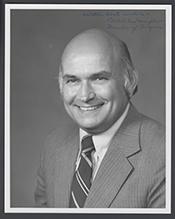
Amends the Small Business Act to define "small agricultural cooperative", for purposes of eligibility for disaster loans under such Act, as an association: (1) acting pursuant to the Agriculture Marketing Act; (2) whose receipts do not exceed the size standard established for other agricultural small business concerns; and (3) whose board members or governing members each qualify as a small business concern.
United States · United States Congress · 19 August 1982
Cooperative State Forestry Research and Extension Amendments of 1982 - Amends the McIntire-Stennis Act of 1962 and the Renewable Resources Extension Act of 1978 to require that a certain minimum amount of appropriated funds be used for forestry research and extension programs. Sets forth factors for dividing such funds among the States. Requires the Secretary of Agriculture to appoint a forest resources council. Requires such council to report annually to the Secretary on the status of regional and national planning of forestry research by Federal and State agencies, forestry schools, and the forest industries. Authorizes: (1) grants for doctorate forestry programs; and (2) appropriations beginning with FY 1984.
United States · United States Congress · 23 July 1982
Expresses the sense of Congress that: (1) national efforts to reduce malnutrition should continue; (2) Federal involvement in nutrition programs should be maintained; and (3) responsibility for Federal child nutrition programs should not be turned back to the States.
United States · United States Congress · 15 July 1982
Residential Mortgage Investment Act of 1982 - Permits employee benefit plans, as defined under this Act, to engage in any qualified mortgage transaction involving any qualified residential mortgage loan, provided transactions between all parties are at arm's length. Permits such plans to participate in any mortgage pool, provided such pool conforms to specified requirements with regard to permitted investments. Authorizes the Secretary of the Treasury to prescribe regulations to carry out this Act. Provides that this Act shall supersede any and all contrary provisions of State law, the Employee Retirement Income Security Act of 1974, and the Internal Revenue Code. Prohibits the imposition of Federal excise tax on a plan or pool that engages in a transaction described under this Act.
United States · United States Congress · 23 June 1982
Amends Federal law to authorize civil penalties for violations of various animal and plant quarantine provisions. Adds specified criminal penalties and increases specified fines for such violations. Eliminates specified conveyance forfeiture provisions.
United States · United States Congress · 23 June 1982
Permits the Secretary of Agriculture to collect fees for services: (1) to exporters requesting phytosanitary certificates for plants and plant products; (2) to importers and exporters of animals (including poultry and birds), animal products, or materials; and (3) for cleaning and disinfecting means of conveyance. Provides that such fees shall be deposited in the Treasury of the United States and used to pay costs incidental to these services.
United States · United States Congress · 22 June 1982
Authorizes the Secretary of the Army, acting through the Chief of Engineers, to construct a project for flood control for the James River Basin at Richmond, Virginia.
United States · United States Congress · 22 June 1982
Expresses the sense of Congress that legislation should be proposed and enacted to: (1) establish parity between the compensation of Government Printing Office (GPO) employees and the compensation of other Federal employees performing similar work; (2) fix the wages of GPO employees in accordance with the prevailing wage rate system applicable to executive branch employees; and (3) strengthen the Public Printer's ability to manage without infringing on the oversight responsibilities of the Joint Committee on Printing.
United States · United States Congress · 27 May 1982
Safe Harbor Leasing Reform Act of 1982 - Amends the Internal Revenue Code to limit the accelerated depreciation deductions and investment tax credit amounts accruing to safe harbor lessors from sale and leaseback arrangements of depreciable property. Allows such lessors a limited income tax credit for the reduction in tax benefits. Exempts safe harbor lessors from at risk requirements for deducting investment losses. Limits the availability of sale and leaseback arrangements in the case of certain lessees with foreign source income. Limits the income tax deduction for interest on investment indebtedness for safe harbor lease property.
United States · United States Congress · 26 May 1982
Amends the Longshoremen's and Harbor Workers' Compensation Act to direct the Secretary of Labor, upon application of the Chairman of the Benefits Review Board, to designate up to four administrative law judges in the Department of Labor to temporarily serve on the Board. Revises procedures for adjudicative actions by the Board.
United States · United States Congress · 21 May 1982
Expresses the sense of the House of Representatives concerning the President's proposed restructuring of the railroad retirement system and abolition of the Railroad Retirement Board. States that no action should be taken that would undermine the retirement security of railroad workers or their beneficiaries.
United States · United States Congress · 18 May 1982
Emergency Dairy Adjustment Act of 1982 - Amends the Agricultural Act of 1949 to replace existing fixed milk price support levels with a flexible level based on farm income and consumer needs and determined at the Secretary of Agriculture's discretion. Authorizes a five-year domestic and foreign program of dairy product donations. Establishes the Dairy Advisory Board. Requires the Board to meet at least once a year.
United States · United States Congress · 12 May 1982
Amends the Immigration and Nationality Act to prohibit the Attorney General from setting the adverse effect wage rate (for temporary agricultural worker admissions) higher than the highest of the Federal or State minimum or the prevailing local wage.
United States · United States Congress · 6 May 1982
Housing and Automobile Industries Recovery Act of 1982 - Title I: Exemption for the Purchase of Certain Bonds by Employee Pension Benefit Plans - Provides a temporary exemption from certain provisions of the Employee Retirement Income Security Act of 1974 and the Internal Revenue Code relating to prohibited transactions for the purchase of certain bonds sold to fund residential mortgages and domestic motor vehicle loans. Title II: Interest Reduction Payments - Provides for interest reduction payments by the Secretary of Housing and Urban Development to assist with the financing of the purchase of certain residences and domestic motor vehicles. Sets forth: (1) requirements and restrictions for eligible loans and mortgages; and (2) guidelines for the allocation of such payments. Authorizes appropriations for FY 1982 through 1988 to carry out this title. Prohibits the Secretary from making any commitments to make interest reduction payments under this title after August 31, 1983.
United States · United States Congress · 27 April 1982
International Carriage of Perishable Foodstuffs Act - Designates the Secretary of Agriculture as the competent authority to implement the Agreement on the International Carriage of Perishable Foodstuffs and on the Special Equipment to be Used for Such Carriage. Lists the duties of the Secretary. Authorizes the Secretary of State, with the concurrence of the Secretary of Agriculture, to take appropriate action to protect U.S. rights under the Agreement. Authorizes inspection and testing organizations designated by the Secretary of Agriculture to establish reasonable fees to cover the costs of inspection or testing. Authorizes appropriations.
United States · United States Congress · 22 April 1982
Expresses the sense of the House of Representatives that the President should notify the Common Market's Council of Ministers that: (1) renegotiation of the Common Market's tariff on corn gluten feed is not in the best interests of the United States; and (2) the imposition of any trade restriction on corn gluten feed would seriously impede U.S. relations with the Common Market. Urges the President to take all other appropriate steps to protect U.S. exports of corn gluten feed.
United States · United States Congress · 6 April 1982
Title I: National Development Investment - National Development Investment Act - Amends the Public Works and Economic Development Act of 1965 to cite such Act as the National Development Investment Act and to revise the emphasis of such Act from primary Federal initiative to coordination of investments between the public and the private sectors. Sets forth the findings of Congress. Authorizes the Secretary of Commerce, upon the application of an eligible State, economic development district, distressed local government (with a population under 50,000 and located outside an economic development district) Indian tribe, or nonprofit economic development organization. to make a grant for a portion of the cost of projects submitted in a development investment strategy. Sets forth eligible activities for such development investment assistance, including repairs, rehabilitation, and small business establishment. Sets forth specific eligibility criteria for applicants for such assistance. Requires an application for a grant under this Act to include: (1) a certification that the area concerned meets certain distress requirements; (2) a certification of any responsibilities which the Secretary has agreed to perform; and (3) a development investment strategy prepared in accordance with this Act. Requires the Secretary to consider specified purposes of this Act in approving applications. Lists as criteria any one of which an area must meet in order to be eligible for a grant under this Act: (1) a per capita income of 80 percent or less of the national average; (2) an employment growth rate below the national average; (3) a population loss over the most recent five-year period; (4) an unemployment rate above the national average for the most recent 24 month period; and (5) a sudden economic dislocation resulting in job loss. Sets forth the information to be contained in a grant applicant's development investment strategy. Authorizes the Secretary to make grants to establish a revolving loan fund for making or guaranteeing loans to small businesses for initial or working capital, or the purchase of facilities or equipment. Limits to $1,000,000 the amount of any such grant. Limits the amount of any grant under this Act to a maximum 50 percent of the cost of completing the project as determined at the time of the grant application. Permits the Secretary to reduce or waive the non-Federal share of a project in the case of an Indian tribe. Limits expenditures in any one State to a maximum 15 percent of the appropriations made pursuant to this Act. Requires the Secretary, each fiscal year, to obligate minimum amounts of funds for such grants. Authorizes the Secretary to make economic development planning grants to States, economic development districts, Indian tribes, distressed counties, and distressed units of local governments with a population over 50,000 (if located outside an econmic development district). Earmarks such grants for coordination of investment for community facilities, economic development, manpower training, and transportation services. Authorizes the Secretary to evaluate Federal, State, and local development investment efforts. Authorizes the Secretary to conduct any demonstration program to test the feasibility of new ways to increase productivity, foster innovative technology, match labor force with labor markets, or encourage economic diversity and regional balance. Limits the amount of any such grant to not more than 75 percent of the cost of economic development planning or of investment strategy preparation. Declares that the Secretary of Commerce shall administer this Act with the assistance of a specified Assistant Secretary of Commerce. Authorizes the Secretary to consult with other persons and agencies. Prohibits the approval of any grant unless the Secretary is satisfied that the project concerned will be properly and efficiently administered, operated, and maintained. Sets forth the powers of the Secretary under this Act. Permits the Secretary to discharge any of his responsibilities relative to a project by accepting a certification of the grant applicant's performance of such responsibilities. Requires the Secretary to make comprehensive annual reports to Congress detailing operations under this Act. Requires all laborers and mechanics employed by contractors or subcontractors on projects assisted under this Act to be paid the prevailing rate of wage. Authorizes appropriations through FY 1985. Title II: Appalachian Regional Development - Appalachian Regional Development Act Amendments of 1982 - Amends the Appalachian Regional Development Act of 1965 to declare that investments under such Act shall also be made in severely distressed and underdeveloped counties lacking resources for basic services. Authorizes appropriations through FY 1987 for the administrative expenses of the Appalachian Regional Commission. Authorizes the Commission to lease office space through FY 1987. Authorizes appropriations through FY 1990 for the Appalachian development highway system. Increases from 70 to 80 percent the subsequent Federal share of an Appalachian development highway segment when a participating State proceeds to construct a segment of such a highway without the aid of Federal funds. Applies such increase to projects approved after March 31, 1979. Authorizes the Commission to make grants to States and public and nonprofit entities for projects which will: (1) assist in the creation or retention of permanent private sector jobs, the upgrading of the region's manpower, or the attraction of private investment; (2) provide special assistance to severely distressed and underdeveloped counties which lack financial resources for improving basic services; (3) assist in achieving the goal of making primary health care accessible in the region; or (4) otherwise serve the purposes of this Act. Prohibits the authorization of any financial assistance to enable plant subcontractors to undertake work previously performed in another area by other subcontractors or contractors. Prohibits grants with funds authorized after October 1, 1982, from exceeding 50 percent of the costs of any approved project. Permits such grants to increase the Federal contribution to any project to such percentage as the Commission determines within specified limitations. Authorizes appropriations through FY 1987. Extends the termination date of such Act from 1982 to October 1, 1987.
United States · United States Congress · 6 April 1982
Amends the Internal Revenue Code to allow a State, at its option, to enter into an agreement with the Secretary of the Treasury and the Secretary of Labor under which the State shall: (1) collect the tax imposed by the Federal Unemployment Tax Act; (2) retain a specified portion of such tax to be used for the administration of the State's unemployment compensation law and public employment offices; and (3) pay to the Treasury the remaining portion of such tax not retained. Allows a State to deposit any unexpended funds into its unemployment fund for use in payment of unemployment compensation. Requires the Secretary of the Treasury and the Secretary of Labor to enter into such an agreement unless: (1) the Secretary of Labor determines that a State does not have an unemployment compensation law which meets the requirements of Federal law; or (2) the Secretary of the Treasury determines that the State is not able to properly collect and pay over the required employment tax. Authorizes the Secretaries to declare a State to be in violation of such arragement if either should determine that the State is not meeting the requirements of this Act. Provides that a refusal to enter into an agreement and a declaration of violation shall be subject to administrative and judicial review. Provides tax penalties for any violation of such an agreement. Provides that any State entering into such an agreement shall not be eligible to receive payments under title III or title IX of the Social Security Act or under the Wagner-Peyser Act. Amends the Internal Revenue Code and titles III and IX of the Social Security Act to allow States, at their option, to maintain and manage their own unemployment funds.
United States · United States Congress · 1 April 1982
Meat, Poultry, and Egg Products Inspection Amendments of 1981 - Title I: To Amend the Federal Meat Inspection Act - Amends the Federal Meat Inspection Act to authorize the Secretary of Agriculture to conduct examinations and inspections as frequently as deemed necessary in meat processing establishments and to label meat products which pass inspection as "prepared in a USDA-inspected establishment." Title II: To Amend the Poultry Products Inspection Act - Amends the Poultry Products Inspection Act to authorize the Secretary to conduct examinations and inspections as frequently as deemed necessary in poultry processing establishments. Title III: To Amend the Egg Products Inspection Act - Amends the Egg Products Inspection Act to authorize the Secretary to conduct inspections of egg processing establishments as frequently as deemed necessary, with the exception of egg-breaking operations which shall be subject to continuous inspection. Changes the inspection schedule for shell egg packers, packing eggs for the ultimate consumer, from at least once each quarter to at least once each year. Title IV: Effective Date - States the effective date of this Act.
United States · United States Congress · 23 March 1982
Amends the Omnibus Budget Reconciliation Act of 1981 to delay until October 1, 1982, the elimination of child's insurance benefits on the basis of student status under title II (Old Age, Survivors and Disability Insurance) of the Social Security Act for children over age 18 in college. (Currently, the elimination of such benefits applies with respect to benefits for months after July 1982.) Extends until September 30, 1982, (currently April 30, 1982) the period within which an individual must have become a full-time student at a postsecondary educational institution in order to receive child's insurance benefits on the basis of student status under the exception permitted under the Omnibus Budget Reconciliation Act of 1981.
United States · United States Congress · 23 March 1982
Amends the Consolidated Farm and Rural Development Act to eliminate the low-income farm ownership loan program. Establishes FY 1983 through 1985 lending limits under the Agricultural Credit Insurance Fund for real estate loans, farm ownership loans, water development and conservation loans, operating loans, and emergency loans. Allocates specified amounts for insured and guaranteed loans (but not for emergency loans). Authorizes fund transfers. Establishes FY 1983 through 1985 lending limits under the Rural Development Insurance Fund for water and waste disposal loans and for community facility loans.
United States · United States Congress · 15 March 1982
Family Housing Production Act of 1982 - Requires the Secretary of Housing and Urban Development, through the Government National Mortgage Association, to enter into five-year contracts to provide periodic assistance payments on behalf of homeowners to mortgagees and other lenders. Directs the Secretary to give priority to assisting persons who have not owned a home within the last three years. Permits payments to be made only to a mortgagor who satisfies requirements for creditworthiness and has a family income not exceeding 140 percent of the area median income and who: (1) is the original owner of a manufactured home the loan for which is incurred under the National Housing Act; or (2) has a fixed-rate 30-year mortgage which is secured by a home built after enactment of this Act, has no prepayment penalty, and requires increased payments beginning with the second year which shall be applied to the principal obligation until it is paid off. Limits the amount of assistance payments to the difference between the amount of the monthly payment for principal, interest, and loan insurance under the first year of the loan and the amount the monthly payment for principal and interest would be if the interest rate on the loan were: (1) ten percent (12 percent for a manufactured home); or (2) four percentage points less than the rate specified in the loan, whichever rate is higher. Requires that the mortgagor pay at least 25 percent of his or her income toward the monthly loan payment. Declares that manufactured homes shall comprise not more than 20 percent of the units assisted under this Act. Directs the Secretary to allocate the amount available to carry out this Act on the basis of the population, decline in housing starts, and unemployment rate in each State relative to all States. Directs the Secretary to recapture the lesser of the amount of assistance provided under this Act or an amount equal to 50 percent of the net appreciation of the property whenever the mortgagor sells the property or rents it for a period exceeding one year. Authorizes the Secretary to insure mortgages assisted under this Act.