Law· HJRESH.J.Res. 82 (101st)enacted
To designate February 2, 1989, as "National Women and Girls in Sports Day".
United States · United States Congress · 19 January 1989
Designates February 2, 1989, as National Women and Girls in Sports Day.
The world's political record
Person
United States · Official source
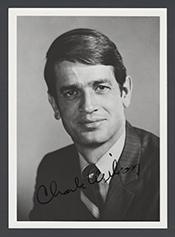
4,688 records where Rep. Wilson, Charles [D-TX-2] is listed as a sponsor, author, or other actor. Search with topics and years
United States · United States Congress · 19 January 1989
Designates February 2, 1989, as National Women and Girls in Sports Day.
United States · United States Congress · 19 January 1989
Designates the week of April 16 through April 22, 1989, as National Minority Cancer Awareness Week.
United States · United States Congress · 19 January 1989
Condemns the Soviet occupation of Afghanistan. Holds the Soviet-backed Afghan regime responsible for continuing human rights abuses. Calls for: (1) a halt to the placement of lethal weapons in the Afghan countryside; (2) the withdrawal of all Soviet forces from Afghanistan by February 15, 1989; (3) restoration of a freely chosen Afghan Government; (4) close scrutiny by the international community of human rights abuses in Afghanistan; and (5) continued support of the Afghan people through the provision of material if Soviet forces are not withdrawn.
United States · United States Congress · 19 January 1989
Expresses the sense of the House of Representatives that the Federal excise taxes on gasoline and diesel fuel should not be increased as a means of reducing the Federal deficit.
United States · United States Congress · 4 January 1989
Recyclable Materials Science and Technology Development Act of 1989 - Directs the Secretary of Commerce to study and report to the Congress concerning: (1) means to increase the use of degradable materials in manufactured goods; (2) technologies for recycling nondurable consumer products; and (3) ways to expand the marketing of recycled products. Directs the Secretary of Health and Human Services to study and report to the Congress on the feasibility of recycling nondegradable medical supplies and of substituting degradable for nondegradable materials in medical equipment and supplies. Directs the Secretary of Defense to study and report to the Congress on the national defense and security implications of requiring the use of degradable materials in defense items. Instructs the Secretary of Agriculture to initiate a pilot project to develop and demonstrate viable technology for composting municipal waste and sewage sludge. Requires the Secretary to report project results to the Congress. Directs the Secretary of Commerce to appoint a Director of Recycling Research and Information to make grants to support research into innovative recycling technology. Authorizes appropriations for such purposes for FY 1990. Prohibits, effective five years after this Act's enactment, the production, manufacture, distribution, sale, or delivery of nonrecycled consumer goods, fast food in nondegradable containers, and packaging for specified purposes that contains any material that is not naturally degradable. Establishes both civil and criminal penalties for violations. Directs the Administrator of the Environmental Protection Agency and the Secretary of Commerce jointly to issue regulations to govern the designation of goods and materials for noncompliance purposes. Directs the Secretary to publish and periodically update lists of items and materials affected by the prohibition on activities involving nonrecyclable items.
United States · United States Congress · 4 January 1989
Korean Veterans National Medal Act - Requires the Secretary of the Treasury to design, coin, and sell a medal in honor of the members of the armed forces of the United States who served in the Korean conflict. Requires the Secretary to offer such medals for public sale at a price sufficient to cover their cost.
United States · United States Congress · 4 January 1989
Repeals a provision of the Omnibus Budget Reconciliation Act of 1987 that includes employee tips within the employer social security tax base.
United States · United States Congress · 4 January 1989
Amends the Internal Revenue Code to make permanent the income tax exclusion of amounts received under qualified group legal services plans. (Under current law the exclusion expired as of January 1, 1989.)
United States · United States Congress · 4 January 1989
Designates the month of May 1989 as National Stroke Awareness Month.
United States · United States Congress · 4 January 1989
Designates August 17, 1989, as Marcus Garvey Recognition Day, in honor of Marcus Garvey's efforts to lead the black community to economic independence.
United States · United States Congress · 3 January 1989
Authorizes the Secretary of the Interior to acquire certain properties in Independence, Missouri, to add to the Harry S Truman National Historic Site. Authorizes the owners of such property to retain the right of use and occupancy of the property for up to 25 years or until death, whichever is later. Requires the Secretary to pay the owners the fair market value for such property. Authorizes appropriations.
United States · United States Congress · 3 January 1989
Coal Pipeline Act of 1989 - Amends the Mineral Lands Leasing Act of 1920 to authorize a person who has secured specified water rights under State law to apply to the Secretary of the Interior for certification that it is in the national interest to construct, operate, or extend a coal pipeline. Conditions such certification upon an applicant's reservation of a specified portion of total pipeline capacity for small, independent producers located in the geographic region served by such pipeline. Makes all Federal and State environmental laws applicable to the issuance or denial of such certification. Proscribes the granting of any right-of-way through lands: (1) designated as wilderness areas; (2) administered as part of the national park system; or (3) which are part of a historic site (unless there is no reasonable alternative and reasonable planning is made to minimize the harm of such site). Prohibits any person or entity (including the United States) from claiming any right or interest in water within any State for a coal pipeline unless such claim takes place under the law of the affected State. Delegates to the States all power regarding water rights for a coal pipeline. States that this Act does not: (1) impair the validity of any State law (or interstate compact) regarding any claim to water rights; (2) alter the rights of any State to its apportioned share of water under past or future allocation or interstate compact; (3) affect any Indian water rights; or (4) preempt or otherwise affect any State or Federal law or interstate compact regarding water quality or disposal. Prohibits any State acting under authority of this Act from restricting the movement through such State of water acquired in another State and within a coal pipeline. Authorizes certain persons who have received a certification from the Secretary that it is in the national interest to operate or extend a coal pipeline to acquire rights-of-way through private lands by the power of eminent domain. States this Act shall not be construed to permit any person (including the United States) to acquire any water rights through the power of eminent domain. Prohibits the acquisition of any right-of-way through the power of eminent domain if such right-of-way is upon land which is part of a historic site unless there is no prudent alternative and reasonable planning is made to minimize harm to such site. Provides for an antitrust review of applications for certification by the Attorney General. Requires each pipeline carrier for which a certification has been issued to provide service on reasonable request. Prohibits such carriers from unreasonably discriminating or refusing to enter into contracts with coal shippers under similar conditions in a contemporaneous period. States that this Act shall not be construed to modify or preempt the ratemaking authority of any State utility regulatory agency. Requires the Secretary to establish uniform Federal standards for coal pipeline safety. Establishes penalties for failure to comply with such safety standards.
United States · United States Congress · 3 January 1989
Deceptive Mailings Prevention Act of 1989 - Amends Federal law to declare as nonmailable any mail matter which is designed to resemble a bill, invoice, or statement of account due, but which in fact constitutes a solicitation of donations. Requires such mail matter to bear on its face in conspicuous type that it is a solicitation of donations and that the addressee is under no obligation to make any payment. Declares as nonmailable any mail matter which constitutes a solicitation by a non-governmental entity: (1) for the purchase of products or services which are provided free of charge or at a lower price by the Federal Government, or which are substantially the same as such products or services; (2) for the purchase of products or services and which contains a seal, insignia, trade or brand name, or any other term or symbol which reasonably could be interpreted or construed as implying Federal Government connection, approval, or endorsement; and (3) for the contribution of funds and which contains a seal, insignia, trade or brand name, or any other term which could reasonably be interpreted or construed as implying Federal Government connection, approval, or endorsement. Allows the mailing of such matter if it contains a conspicuous disclaimer that it is not a Government document. Establishes penalties for violations of this Act.
United States · United States Congress · 3 January 1989
Amends the Congressional Budget and Impoundment Control Act of 1974 to exclude, beginning with FY 1990, Federal Old-Age and Survivors Insurance Trust Fund and Federal Disability Insurance Trust Fund receipts and outlays in Federal deficit determinations for purposes of the Balanced Budget and Emergency Deficit Control Act of 1985 (Gramm-Rudman-Hollings Act).
United States · United States Congress · 3 January 1989
Relinquishes all U.S. interests under a conservation easement in specified lands in Wood County, Texas, whenever a water resource project that will affect such land is started on or by January 1, 2000.
United States · United States Congress · 3 January 1989
Permits certain veterans with service-connected disabilities who are retired members of the uniformed services to receive compensation concurrently with retired pay, without deduction from either.
United States · United States Congress · 3 January 1989
Amends the Immigration and Nationality Act to provide for posthumous naturalization of aliens and noncitizen nationals by reason of death while on active-duty service in the U.S. armed forces during periods of military hostilities.
United States · United States Congress · 3 January 1989
Computer Protection Act of 1989 - Amends the Federal criminal code to impose penalties upon individuals who knowingly sabotage the proper operation of computer system hardware or software. Permits a party who has been harmed by such violation to seek redress in a civil action.
United States · United States Congress · 3 January 1989
Prohibits the Secretary of the Interior from acquiring any water resource land or accepting any conservation easement affecting water resource land for the U.S. Fish and Wildlife Service unless: (1) the acquisition or granting of the easement is specifically approved by the legislature of the affected State; and (2) the acquisition or easement is subject to express written guarantees of access by the general public to the land concerned at all times.
United States · United States Congress · 3 January 1989
Terminates the effectiveness of certain November 22, 1988, amendments to the foreign repair station rules of the Federal Aviation Administration.
United States · United States Congress · 3 January 1989
Amends the Omnibus Crime Control and Safe Streets Act of 1968 to require a 20 percent reduction in certain assistance under such Act for any law enforcement agency which fails to have in effect a law enforcement officer's bill of rights. Sets forth certain rights of State and local law enforcement officers with regard to: (1) engaging in political activity; (2) investigations for alleged malfeasance, misfeasance, or nonfeasance of official duty; (3) the representation of law enforcement officers on police complaint review boards; (4) legal assistance and the recovery of damages for civil suits brought for violations of these rights; (5) the disclosure of personal finances; and (6) notice of disciplinary actions to be taken against such officers.
United States · United States Congress · 3 January 1989
Designates the first Monday of April 1989 as Professional Constructors Day.
United States · United States Congress · 3 January 1989
Visually Impaired Voters Assistance Act of 1987 - Requires each State to make enlarged print voting aids and ballots available to visually impaired voters in Federal elections. Requires the chief election officer of each State to provide public notice, adapted to reach visually impaired voters, of the availability of materials under this Act. Directs the Federal Election Commission to report to the Congress, not later than one year after enactment of this Act, on the voting aids available to blind voters with respect to Federal elections in each State.
United States · United States Congress · 3 January 1989
Amends the Federal Unemployment Tax Act to institute discretionary denial of unemployment benefits between academic terms to employees serving educational institutions in nonprofessional positions. (Under current law denial is mandatory.)
United States · United States Congress · 3 January 1989
Child Development and Education Act of 1989 - Authorizes appropriations for FY 1990 through 1994, if appropriations under specified provisions of the Head Start Act equal or exceed specified amounts in the relevant fiscal years. Allocates the aggregate amount appropriated for this Act, one-third each to carry out: (1) the expanded program under the Head Start Act, as amended by title I of this Act; (2) the School-Based Child Care and Development program under the new title VIII of the Elementary and Secondary Education Act of 1965, as amended by title II of this Act; and (3) the Infant and Toddler Child Care Act, as added by title III of this Act. Title I: Expanded Head Start - Amends the Head Start Act to provide for child care services throughout the year for children who participate or are eligible to participate in Head Start programs. Authorizes Head Start programs to provide child care services. Extends through FY 1994 the authorization of appropriations for Head Start programs. Authorizes Head Start programs to use additional funds under this Act (if the parents are working or attending a job training or educational program) for: (1) full-working-day (at least ten hours) child care services throughout the year to children participating in Head Start programs; and (2) part-day and full-working-day child care services throughout the year to children eligible to participate in Head Start programs. Allows the use of up to 50 percent of such funds to provide Head Start services to children: (1) who are otherwise ineligible under specified provisions; (2) whose family income is greater than the poverty line but less than 150 percent of the lower living standard income level (LLSIL); and (3) whose parents are working or attending a job training or educational program. Requires payment of sliding scale fees for a portion of such services from parents whose income exceeds the LLSIL or whose children receive such services under the expanded eligibility provisions. Title II: School-Based Child Care and Development - Amends the Elementary and Secondary Education Act of 1965 to establish a new title VIII program of grants to States for school-based child care or early childhood development programs. Requires local educational agencies (LEAs) to use such funds to expand or establish a school-based child care or early childhood development programs that meet specified requirements. Mandates provision of such programs: (1) at no cost to families with income not more than 100 percent of the LLSIL; and (2) on an income-based fee schedule to families with income not more than 150 percent of the LLSIL. Requires the early childhood development program to include four-year-olds from such families to the extent such no-cost services are not available under the Head Start Act. Requires the before- and after-school care program to cover such families where: (1) the parent or parents work or are in education or training programs; and (2) the children attend early childhood development programs or regular kindergarten, elementary, or secondary school classes. Requires inclusion of private school children. Sets forth standards for such early childhood development programs, including requirements for adequate and nutritious meals and snacks, and, if practicable, health and social services. Sets forth program requirements for State educational agencies which wish to participate in the program to make specified assurances, including commitment to participate in a State interagency task force on child care. Requires each State to distribute at least 90 percent of grant payments from the Secretary of Education to eligible LEAs. Title III: Infant and Toddler Child Care - Infant and Toddler Child Care Act - Establishes a program of grants to States for infant and toddler child care programs. Makes eligible for such programs children under three whose family income does not exceed 150 percent of the LLSIL and who: (1) reside with one or more parents, each of whom is working, seeking employment, or attending a job training or educational program; or (2) are receiving, or need to receive, protective services and reside with a parent or parents not described in clause (1). Requires an appropriate State agency to act as the lead agency for such program. Requires a State advisory committee on child care and local advisory councils for such program. Requires that providers provide services to a reasonable mix of children, including those from different socioeconomic backgrounds and those with handicapping conditions. Requires States to use at least 75 percent of their allotment to provide child care services to eligible children on a sliding fee scale basis, using specified funding methods and giving priority to children whose families have very low income (and who pay no fee). Requires program funds to be distributed: (1) to a variety of types of child care providers, including center-based, group home, and family providers; and (2) equitably among rural and urban areas. Requires provision of child care services through contracts or grants to eligible providers or through grants to local governments that agree to contract with eligible providers. Authorizes the Secretary of Health and Human Services to make planning grants to States under specified conditions. Makes a State ineligible for assistance under this title five years after the Secretary establishes minimum child care standards, unless the State demonstrates that all child care providers in the State required to be licensed and regulated: (1) are so licensed and regulated; (2) satisfy the minimum standards; and (3) are subject to the enforcement provisions referred to in the State plan. Requires each participating State to establish a State advisory committee on child care. Requires such committees to review State licensing authority and to report to the Governor. Sets forth requirements for State-funded resource and referral programs. Requires participating States to require, within two years, that all employed or self-employed individuals who provide licensed or regulated child care services in the State complete annually at least 15 hours of training in specified areas. Directs States to make grants and contracts with various entities for training and technical assistance for child care providers. Directs States to provide scholarship assistance to: (1) individuals who seek a nationally recognized child development associate credential for child care, and whose income does not exceed the poverty line by more than 50 percent; and (2) caregivers who seek to obtain the required annual training and whose income does not exceed the poverty line. Directs the State lead agency to establish a clearinghouse for training materials. Directs States to use a portion of program funds for various activities to encourage businesses (especially small businesses) to support or provide child care services to a reasonable mix of children of employees and nonemployees. Requires consultation with a business task force and the State economic development agency. Establishes the position of the Administrator of Child Care in the Department of Health and Human Services (HHS). Requires the Administrator to: (1) coordinate all HHS activities relating to child care with similar activities of other Federal agencies; (2) annually collect and publish State child care standards; (3) evaluate activities funded under this title; (4) act as a clearinghouse for materials related to areas of required annual training and to studies of salaries for child care employees; and (5) provide technical assistance to States. Sets forth Federal enforcement provisions. Sets the Federal share of program costs at 80 percent (85 percent if a State makes a required demonstration of compliance throughout a fiscal year). Prohibits States from requiring any private provider of child care to contribute to the State share. Establishes the National Advisory Committee on Child Care Standards. Requires the Committee to: (1) review Federal policies with respect to child care services; (2) submit to the Secretary proposed minimum standards; and (3) develop and make available model requirements for resource and referral agencies. Sets forth guidelines for minimum child care standards. Terminates the Committee 90 days after the Secretary establishes such standards. Makes applicable to this title specified provisions of the Head Start Act relating to nondiscrimination and restrictions on sectarian activities. Provides for preservation of parental rights and responsibilities.
United States · United States Congress · 3 January 1989
Federal Employees' Political Activities Act of 1989 - Prohibits an employee from using or attempting to use official authority or influence to interfere with or affect the result of any election. Prohibits an employee from using or attempting to use official authority to intimidate, threaten, coerce, command, or influence: (1) any individual for the purpose of interfering with the right of any individual to vote as the individual may choose, or of causing any individual to vote, or not to vote, for any candidate or measure in any election; (2) any person to give or withhold any political contribution; or (3) any person to engage, or not to engage, in any form of political activity. Prohibits an employee from using, attempting to use, or permitting the use of any official information, unless such information is available to the general public. Prohibits an employee from: (1) giving or offering to give a political contribution to any individual either to vote or to refrain from voting, or to vote for or against any candidate or measure, in any election; (2) soliciting, accepting, or receiving a political contribution to vote or refrain from voting, or to vote for or against any candidate or measure, in any election; or (3) giving or handing over a political contribution to a superior of the employee. Prohibits an employee from soliciting, accepting, or receiving, or from being in any manner concerned with soliciting, accepting, or receiving, a political contribution: (1) from another employee (or a member of another employee's immediate family) with respect to whom the employee is a superior; or (2) in any room or building occupied in the discharge of official duties by a Federal employee or official or an individual receiving salary or compensation from the Treasury. Prohibits an employee from soliciting, accepting, or receiving a political contribution from, or giving a political contribution to, any person who: (1) has, or is seeking to obtain, contractual or other business or financial relations with the employing agency; (2) conducts operations or activities which are regulated by that agency; or (3) has interests which may be substantially affected by the performance of the employee's official duties. Directs the Special Counsel of the Merit Systems Protection Board to prescribe regulations which exempt employees from such prohibitions. Prohibits an employee from engaging in political activity: (1) while on duty; (2) in any room or building occupied in the discharge of official duties by a Federal employee or official; (3) while wearing a uniform or official insignia identifying the office or position of the employee; or (4) while using any vehicle owned or leased by the Government. Exempts certain high level political appointees from such prohibitions if the costs associated with the political activity are not paid for by money derived from the Treasury. Authorizes leave without pay or accrued annual leave to an employee who is a candidate, upon request, to allow such employee to engage in activities relating to that candidacy. Declares that such request may be denied if the exigencies of the public business so require. Declares that such employee may be required to take leave without pay or accrued annual leave in order to be a candidate if activities relating to the candidacy interfere with the employee's performance of duties. Applies this Act to postal employees and employees of the Postal Rate Commission.
United States · United States Congress · 3 January 1989
Amends the Child Nutrition Act of 1966 to extend through FY 1995 the authorization of appropriations for, and other provisions relating to: (1) State administrative expenses; (2) the special supplemental food program; and (3) nutrition education and training. Amends the National School Lunch Act to extend through FY 1995 the authorization of appropriations for, and other provisions relating to: (1) the summer food service program for children; and (2) the commodity distribution program.
United States · United States Congress · 3 January 1989
Computer Virus Eradication Act of 1989 - Amends the Federal criminal code to impose penalties upon any individual who, in interstate or foreign commerce, knowingly: (1) inserts into a computer or a computer program information or commands that may cause loss, expense, or risk to health or welfare for users of the computer, the program, or the processed information; or (2) provides such computer or program to a person who does not know of the insertion or its effects. Provides a civil remedy for injured parties.
United States · United States Congress · 3 January 1989
Enterprise Zone Improvements Act of 1989 - Title I: Housing and Community Development Provisions - Amends the Housing and Community Development Act of 1987 to require each Federal agency that provides special assistance to enterprise zones or that waives or modifies rules within such zones to report to the Congress and to the Secretary of Housing and Urban Development identifying its actions. Broadens the scope of funding sources for State and local government actions required in connection with tax relief and regulatory simplification in enterprise zones. Directs Federal agencies to seek to provide special assistance to enterprise zones, including expedited processing, priority funding, program set-asides, and technical assistance. Authorizes all Federal agencies to waive or modify rules within enterprise zones. (Under current law, only the Secretary of Housing and Urban Development and, in some cases, the Secretary of Agriculture may do so.) Adds the promotion of affordable housing and law enforcement as objectives justifying waiver or modification of Federal agency rules in an enterprise zone. Title II: Federal Income Tax Incentives - Subtitle A: Credits for Employers and Employees - Allows employers located in enterprise zones a nonrefundable income tax credit for qualified increased employment expenditures and employment of the disadvantaged. Sets the credit amount at ten percent of the increase in payroll plus a specified percentage of wages paid to certain disadvantaged workers through the first 20 years of the enterprise zone designation. Allows a nonrefundable income tax credit to enterprise zone employees for five percent of wages earned. Phases out both credits in the last four years of the enterprise zone designation. Subtitle B: Credits for Investment in Tangible Property in Enterprise Zones - Allows businesses an additional investment tax credit for investments made in certain enterprise zone construction property. Limits the credit to ten percent for new property, including rental property. Requires the recapture of credit amounts upon the early disposition of the property. Subtitle C: Nonrecognition of Qualified Enterprise Zone Capital Gain Where Acquisition of Enterprise Zone Business Property - Provides for the nonrecognition of capital gain on the sale of enterprise zone property if, within one year after the sale, the taxpayer acquires qualified replacement property (generally defined as property related to an enterprise zone or to a business within a zone). Subtitle D: Deduction for Purchase of Enterprise Stock - Allows a taxpayer to deduct up to $100,000 of the aggregate amount paid for the purchase of enterprise stock on its original issue by a qualified issuer. Treats any gain from the disposition of the stock as ordinary income. Subtitle E: Rules Relating to Private Activity Bonds - Declares that: (1) limitations on the cost recovery deductions for property financed with tax-exempt bonds shall not apply to enterprise zone property; and (2) the termination of the small issue exemption shall not apply to bonds whose proceeds are used to finance facilities in enterprise zones. Subtitle F: Ordinary Loss Deduction for Securities of Enterprise Zone Business Which Become Worthless - Permits an ordinary loss deduction for securities of enterprise zone business that become worthless during the taxable year. Subtitle G: Increase in Research Credit for Research Conducted in Enterprise Zones - Increases from 20 percent to 37 1/2 percent the tax credit for increasing research conducted in enterprise zones. Subtitle H: Sense of the Congress with Respect to Tax Simplification - Expresses the sense of the Congress that the Secretary of the Treasury should simplify the administration and enforcement of any provision of the Internal Revenue Code affected by this Act. Subtitle I: Regulations - Directs the Secretary to issue regulations to carry out the provisions of this Act not later than six months after enactment. Title III: Establishment of Foreign-Trade Zones in Enterprise Zones - Requires the Foreign-Trade Zone Board to consider on a priority basis and to expedite the processing of applications for the establishment of foreign-trade zones within enterprise zones. Requires the Secretary of the Treasury to give priority to, and expedite applications for, the establishment of ports of entry necessary to establish such zones.
United States · United States Congress · 3 January 1989
Veal Calf Protection Act - Prohibits certain practices in the raising of calves for veal. Describes the practices as the confining of calves in small crates and the feeding of calves with diets deficient in solid foods. Fixes penalties and permits civil actions with respect to prohibited acts.
United States · United States Congress · 3 January 1989
Amends the Congressional Budget Act of 1974 to prohibit Federal expenditures from exceeding revenues during any fiscal year, except in time of war declared by the Congress or in a period of economic necessity declared by congressional joint resolution. States that it shall not be in order in either the House of Representatives or the Senate to consider or adopt a concurrent resolution on the budget that does not meet this standard. Requires the President's budget to comply with the same standard. Directs the President to take action (by placing funds in reserve, by apportionment of funds, or otherwise) necessary to ensure such compliance, notwithstanding obligational authority or appropriations made within the executive branch.
United States · United States Congress · 3 January 1989
Grants a Federal charter to the 82nd Airborne Division Association, Incorporated.
United States · United States Congress · 3 January 1989
Hunger Emergency Assistance and Relief Trust Act of 1989 - Amends the Internal Revenue Code to allow individuals to designate on their income tax returns a contribution of all or part of their tax refunds to the Hunger Emergency Assistance and Relief Trust. Establishes in the Treasury the Hunger Emergency Assistance and Relief Trust (trust fund) to distribute hunger relief funds to qualified nonprofit hunger relief services organizations. Appropriates to the trust fund amounts equal to those designated on tax returns. Describes standards and procedures for the distribution of trust fund monies. Specifies a number of restrictions with respect to the activities of recipient organizations, including limitations on administrative expenses. Requires the Hunger Commission to submit to specified congressional committees an annual report detailing trust fund expenditures. Establishes a Hunger Commission to administer the distribution of funds to qualified hunger relief services organizations on a matching grant basis. Permits a maximum award of $100,000 to any single qualified organization in any fiscal year. Requires that: (1) at least 50 percent of amounts received into the trust fund in any year be paid to qualified organizations; and (2) monies in the trust fund be distributed within 180 days of their receipt there. Authorizes appropriations.
United States · United States Congress · 3 January 1989
Permanent Housing for Homeless Americans Act of 1989 - Directs the Secretary of Housing and Urban Development to provide FY 1990 and 1991 housing assistance for homeless or low-income individuals and families under the following programs: (1) section 8 assistance under the United States Housing Act of 1937; (2) section 8 moderate rehabilitation assistance under the United States Housing Act of 1937; (3) modernization of vacant public housing under the United States Housing Act of 1937; (4) rental rehabilitation under the United States Housing Act of 1937; and (5) funding for the rehabilitation of State and local government in rem properties under the Housing and Community Development Act of 1974. Requires an annual program report to the Congress.
United States · United States Congress · 3 January 1989
Arctic Coastal Plain Leasing Act of 1987 - Directs the Secretary of the Interior to implement a competitive oil and gas leasing program for the Coastal Plain of the Arctic National Wildlife Refuge. States that this Act shall be considered the primary land management authorization for all exploration and production activities on the Coastal Plain. Provides that no land management review shall be required except as specifically authorized by this Act. Mandates that all receipts from sales, rentals, bonuses, and royalties on leases under this Act be deposited into the Treasury. Directs the Secretary to promulgate regulations to ensure that oil and gas exploration and transportation activities are conducted to achieve the reasonable protection of animal and environmental resources (including subsistence uses of the Coastal Plain). States that the "Arctic National Wildlife Refuge, Alaska, Coastal Plain Resource Assessment," prepared by the Secretary, satisfies all legal requirements for such promulgation and that no further studies or assessments shall be required. Directs the Secretary to provide impact aid and other assistance to communities on the North Slope and elsewhere in Alaska in order to ensure the public services needed to accommodate oil and gas production and transportation activities on the Coastal Plain.
United States · United States Congress · 3 January 1989
Federal Election Campaign Amendments of 1989 - Amends the Federal Election Campaign Act of 1971 to provide for voluntary expenditure limitations and partial public financing for House of Representatives general elections. Sets forth eligibility requirements for public financing, including that a candidate: (1) has not and will not make expenditures or accept contributions in excess of specified limitations; (2) will deposit all payments in a separate checking account; (3) will furnish campaign records, evidence of contributions, and other appropriate information to the Federal Election Commission; and (4) will cooperate in any audit and examination conducted by the Commission. Requires eligible candidates to certify to the Commission that: (1) during the period beginning on January 1 of the calendar year preceding the year of a general election, such candidate and the authorized committees of the candidate have received contributions aggregating ten percent of the spending limitation; (2) 80 percent of such contributions have come from individuals residing in the candidate's State; and (3) at least one other candidate has qualified for the ballot. Makes special rules for special elections. Provides that a contribution may not be counted unless: (1) it is made on a written instrument identifying the person making the contribution; (2) it is not considered a contribution by an intermediary or conduit; (3) it is made by an individual and does not exceed the aggregate of $250; and (4) it was received after January 1 of the year preceding the election. Makes special rules for special elections. Prohibits candidates who receive payments from spending more than $40,000 from personal funds during the election cycle. Prohibits such candidates from spending more than $400,000 in the aggregate during the election cycle, or additional expenditures of not more than $150,000 in a primary runoff election. Declares that if independent expenditures which exceed $10,000 are made during an election cycle in opposition to an eligible candidate or for the opponent of a eligible candidate, the eligible candidate may make additional expenditures above the spending limit in an equal amount. Entitles eligible candidates to: (1) matching payments of up to 50 percent of the spending limit in amounts equal to contributions in amounts of $250 or less from individuals, not given through intermediaries or conduits; (2) additional payments when $10,000 or more of independent expenditures are made in the general election in opposition to, or on behalf of an opponent of, such candidate; (3) additional payments if any candidate in the general election receives contributions or makes expenditures in excess of limitations; and (4) reduced rates for mailings made during the general election period. Declares that payments to eligible candidates may only be used to defray expenditures incurred with respect to the general election period. Requires the Commission to certify the eligibility of a candidate to the Secretary of the Treasury for payments under this Act. Directs the Secretary to maintain the House of Representatives Election Campaign Account in the Presidential Election Campaign Fund to make payments of certified amounts. Requires the Commission, after each general election, to audit ten percent of the eligible candidates by random selection. Requires the Commission to audit each eligible candidate after a special election. Provides for candidates to repay the Commission for excess expenditures. Provides for judicial review of Commission actions by the United States District Court for the District of Columbia, and for the Commission to participate in judicial proceedings. Directs the Commission to report to the House of Representatives after each election setting forth: (1) expenditures made by the candidates and their authorized committees; (2) payments made by the Commission; (3) the amounts of any repayments; and (4) the balance in the Presidential Election Campaign Fund and any account maintained in such Fund. Authorizes appropriations. Requires each candidate to file a declaration with the Commission of whether or not such candidate intends to make expenditures in excess of limitations. Requires each candidate who is not an eligible candidate and who receives aggregate contributions or makes aggregate expenditures which would exceed the spending limits to report to the Commission within a specified time schedule. Directs the Commission to notify each eligible candidate about such report and certify to the Secretary any additional payments to which an eligible candidate is entitled. Authorizes the Commission to make its own determinations as to whether or not a candidate has exceeded spending limitations. Requires any person who makes independent expenditures in excess of $5,000 to report to the Commission within 24 hours after making them. Requires the Commission to notify each eligible candidate of such expenditures. Requires, when two or more persons make an independent expenditure in coordination, consultation, or concert with regard to a House election, that each person report to the Commission when such amount exceeds $5,000. Requires each political committee which maintains a separate account for activities in non-Federal elections to file with the Commission reports of funds received into and disbursements made from such account for activities which may influence an election to a Federal office. Describes such activities as: (1) voter registration and get-out-the-vote drives; (2) general public political advertising; and (3) any other activities which require an allocation of costs between a political committee's Federal and non-Federal accounts. Applies the limitations on expenditures by national party committees to general public political advertising which clearly identifies by name an individual who is, or is seeking nomination to be, a candidate in the general election for President, Senator, or Representative. Declares that such limitations do not apply to direct mail communications designed primarily for fundraising purposes which only make incidental reference to Federal candidates. Prohibits a candidate for the House from accepting any contribution from a nonparty multicandidate political committee with respect to an election cycle which exceeds $100,000 ($125,000 if at least two candidates qualify for the primary and the general election). Limits such contributions to $40,000 for any primary runoff election. Prohibits a candidate for Federal office from establishing, maintaining, or controlling a political committee, other than the candidate's authorized committees or a committee of a political party. Provides for the accountability of contributions made by intermediaries or conduits. Describes when an independent expenditure is not an independent expenditure if there is any type of arrangement, coordination, direction, advice, or counseling directly or indirectly between a candidate and the person making the expenditure. Requires, when independent expenditures are made for television broadcast communications, that a statement appear continuously during such broadcast showing the name of the person or committee making such expenditure. Requires any type of general public print communication paid for by independent expenditure to include such a statement, plus a statement that the cost of presenting such statement is not subject to contribution limits. Amends the Internal Revenue Code to increase the amount an individual may designate to the Presidential Election Campaign Fund from $1 to $2 (and in the case of joint returns, from $2 to $4). Amends the Communications Act of 1934 to require House candidates, in order to qualify for special broadcast rates, to be clearly identifiable during a substantial portion of the time of broadcast.
United States · United States Congress · 3 January 1989
Fairness in America Health Care Act of 1989 - Title I: One-Year Delay in Implementation of Medicare Catastrophic Coverage Act of 1988 - Delays, for one year, the implementation of the Medicare Catastrophic Coverage Act of 1988, except for provisions of such Act expanding benefits under part A (Hospital Insurance) of title XVIII (Medicare) of the Social Security Act. Title II: Bipartisan Commission to Review the Medicare Catastrophic Coverage Act - Establishes the Commission to Review the Medicare Catastrophic Coverage Act to study: (1) the effect implementation of such Act will have on Medicare beneficiaries who currently have supplementary coverage; (2) how such Act's benefits compare with the benefits provided by supplementary coverage; (3) the access Medicare beneficiaries who do not have supplementary or Medicaid (title XIX of the Social Security Act) coverage have to necessary health services; (4) the feasibility and likely cost of implementing such Act's drug benefits; and (5) the benefits and financing mechanisms which Medicare beneficiaries prefer. Directs the Commission to report its findings and recommendations to the Congress within six months of this Act's enactment or by September 1, 1989, whichever is earlier.
United States · United States Congress · 3 January 1989
Constitutional Amendment - Requires the Congress, prior to each fiscal year, to adopt a statement in which total Federal outlays (except those for repayment of debt principal) do not exceed total receipts (except those derived from borrowing), unless a three-fifths vote of both Houses authorizes a specific excess. Limits the rate of increase in receipts in the statement to that of the increase in national income in the previous calendar year, unless law is enacted solely to approve specific additional receipts. Directs the President to submit a balanced budget. Authorizes waiver of these provisions in time of war. Sets a permanent limit on the amount of Federal public debt, prohibiting any increase unless legislation enacted by a three-fifths majority of both Houses becomes law.
United States · United States Congress · 3 January 1989
Constitutional Amendment - Requires the Congress and the President, prior to each fiscal year, to agree on an estimate of total receipts (except those derived from borrowing) for that fiscal year by enactment of a joint single subject resolution. Prohibits outlays for that year (except those for repayment of debt principal) from exceeding this amount unless the Congress, by a three-fifths rollcall vote of each House, authorizes a specific excess of outlays over receipts. Requires the Congress, whenever actual outlays exceed actual receipts for any fiscal year, to provide by law for the repayment of the excess in the ensuing fiscal year. Requires a three-fifths rollcall vote of each House to increase the public debt. Directs the President to submit a balanced budget to the Congress. Requires the approval of a majority of the total membership of each House by rollcall vote before any bill to increase revenue may become law. Waives these provisions when a declaration of war is in effect.
United States · United States Congress · 3 January 1989
Designates October 5, 1989, as Raoul Wallenberg Recognition Day.
United States · United States Congress · 3 January 1989
Authorizes and requests the President to designate May 1989 as Older Americans Month.
United States · United States Congress · 3 January 1989
Constitutional Amendment - Declares that equality of rights under the law shall not be denied or abridged by the United States or any State on account of sex.
United States · United States Congress · 3 January 1989
Urges the President to negotiate with member countries of the North Atlantic Treaty Organization and Japan for the purpose of reducing the global defense burden of the United States relative to its allies.
United States · United States Congress · 3 January 1989
Establishes in the House of Representatives the Select Committee on Children, Youth, and Families to conduct a comprehensive study and review of the problems of children, youth, and families.
United States · United States Congress · 3 January 1989
Amends the Rules of the House of Representatives to limit Members to six consecutive terms of office.
United States · United States Congress · 3 January 1989
Authorizes and requests the President to designate the last Friday of April each year as National Arbor Day.
United States · United States Congress · 19 October 1988
Designates December 7, 1988, as National Pearl Harbor Remembrance Day.
United States · United States Congress · 19 October 1988
Expresses the sense of the House of Representatives that: (1) the Soviet Union should remove land mines placed in Afghanistan by Soviet military forces and the United Nations should facilitate such removal; (2) the nations of the world should call on the Soviet Union to cooperate in the removal of such land mines; and (3) the United States should offer assistance in removing such land mines.
United States · United States Congress · 4 October 1988
Expresses the sense of the Congress that: (1) the Amateur Basketball Association United States of America and the U.S. Olympic Committee should promote the adoption of rules that would make all basketball players eligible to compete in the Olympic games; and (2) the U.S. Olympic Committee should promote the elimination of the distinction between amateur and professional athletes in all sports for purposes of eligibility to compete in the Olympic games.
United States · United States Congress · 29 September 1988
Steel Import Stabilization Extension Act - Amends the Steel Import Stabilization Act to extend such Act for a five year period.