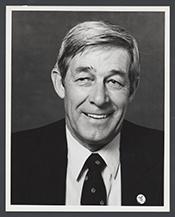
United States · United States Congress · 27 February 1979
Act to Combat International Terrorism - Directs the President to report biannually to Congress regarding acts of international terrorism and to submit lists of countries supporting international terrorism. Specifies the sanctions to be imposed against such countries, which includes: (1) no foreign assistance other than disaster assistance; (2) no sales of defense articles or services; and (3) denying export licenses for defense articles or services or for goods with potential military application, if the President determines such denial would reduce the support of the particular country for terrorist actions. Permits the President to suspend application of such sanctions in the interests of national security after consulting with the appropriate congressional committees. Authorizes the President to exercise other sanctions, including the suspension of air services between the United States and the country supporting terrorist activities. Amends the Federal Aviation Act of 1958 to require the Secretary of Transportation to assess the effectiveness of security measures maintained at foreign airports and report such assessments to Congress. Authorizes the Secretary to restrict operations at those foreign airports failing to bring their security measures to a standard level of effectiveness. Requires the Federal Aviation Administration Administrator to include in the Administrator's report to Congress assessments of the effectiveness of security measures maintained at foreign airports. Authorizes the Secretary to provide technical aviation assistance to foreign governments. Amends the provisions of Federal law which relate to the manufacture of explosive materials to require such manufacturers to add an identification taggant and a detection taggant to the explosive materials. Prohibits the distribution, importation, or sale of explosive materials without such taggants. Sets forth the time periods in which such requirements must be met. Specifies penalties for violations of these provisions. Amends the provisions of title 18 of the U.S. Code that specify prohibited acts regarding the destruction of aircraft or aircraft facilities to, among other revisions, set forth penalties for committing violence against a passenger which is likely to endanger an aircraft in service, and for communicating false information which results in endangering the safety of an aircraft in flight. Authorizes civil penalties for carrying an accessible weapon aboard an aircraft and for imparting or conveying information known to be false regarding specified crimes aboard an aircraft. Specifies criminal penalties for threatening to commit air piracy, and placing a loaded firearm in baggage on board an aircraft. Urges the President to seek international agreements to assure more effective cooperation in combating international terrorism. Specifies agreements which should receive high priority.
United States · United States Congress · 27 February 1979
Department of Education Organization Act - Title I: Findings and Purpose - Declares the purpose of this Act to be: (1) to strengthen the Federal commitment ensuring access to equal educational opportunity for every American; (2) to support more effectively States, localities and public and private institutions in carrying out their responsibilities for education; (3) to promote improvements in the quality and usefulness of education through federally supported research, evaluation, and the sharing of information; (4) to improve the management and efficiency of Federal education activities; (5) to increase the accountability of Federal education programs to the President, the Congress, and the public; (6) to encourage the involvement of the public, parents, and students in Federal education programs; (7) to improve the coordination of Federal education programs; and (8) to prohibit Federal control of education. Title II: Establishment of the Department - Establishes an executive department to be known as the Department of Education to be headed by a Secretary of Education. Establishes within such Department: (1) a position of Under Secretary of Education; (2) six Assistant Secretary positions; (3) an Office for Civil Rights headed by an Assistant Secretary; (4) an Office of Postsecondary Education headed by an Assistant Secretary; (5) an Office of Elementary and Secondary Education headed by an Assistant Secretary; (6) an Office of Educational Research and Improvement headed by an Assistant Secretary; (7) an office to administer functions relating to the education of overseas dependents of Department of Defense personnel; (8) a General Counsel; (9) an Office of Inspector General; (10) an Intergovernmental Advisory Council on Education to provide an educational forum and to promote better intergovernmental relations; and (11) an Interdepartmental Education Coordinating Committee to assure effective coordination of Federal educational programs and practices. Title III: Transfers - Transfers from the Department of Health, Education, and Welfare (HEW) educational functions and offices vested in: (1) the Assistant Secretary for Education; (2) the Education Division; (3) the Office for Civil Rights; (4) any statutory advisory committee or authority giving advice primarily concerning functions transferred under this Act; (5) the Institute of Museum Services; (6) the Advisory Council on Education Statistics; (7) the Federal Education Data Acquisition Council; and (8) certain functions of the Office of Inspector General. Transfers from HEW educational functions vested in the Secretary under: (1) the General Education Provisions Act; (2) the Emergency School Aid Act; (3) the Higher Education Act of 1965; (4) the Education Amendments of 1978; (5) the Act of August 30, 1898; (6) the Elementary and Secondary Education Act of 1965; (7) the Alcohol and Drug Abuse Education Act; (8) the Environmental Education Act; (9) the National Defense Education Act of 1958; (10) the Education of the Handicapped Act; (11) the National Commission on Libraries and Information Science Act; (12) the Vocational Education Act of 1963; (13) certain provisions of the Economic Opportunity Act of 1964; (14) certain parts of the Public Health Service Act regarding student aid; (15) the Model Secondary School for the Deaf Act; (16) certain telecommunications grants under the Communications Act of 1934; and (17) certain provisions of the Federal Property and Administrative Services Act of 1949. Transfers from HEW educational functions relating to Gallaudet College, Howard University, the American Printing House for the Blind, and the National Technical Institute for the Deaf. Transfers to the Department of Education from the Departments of: (1) Labor, certain functions regarding migrant and seasonal farmworker employment and training programs under the Comprehensive Employment and Training Act of 1973; (2) Defense, the administration and operation of overseas dependents schools under the Defense Dependents' Education Act of 1978; (3) Justice, the student loan and grant programs known as the law enforcement education program and the law enforcement intern program under the Omnibus Crime Control and Safe Streets Act of 1968; and (4) Housing and Urban Development, the administration of college housing loans under the Housing Act of 1950. Transfers to the Department of Education specified science education programs of the National Science Foundation. Title IV: Administrative Provisions - Authorizes the Secretary to appoint and fix the salaries for the Department's employees in accordance with the Civil Service laws. Allows certain higher level appointments to be made by the Secretary without Civil Service Commission approval if the individual so appointed is transferred to the Department in connection with a transfer of functions under this Act. Grants rulemaking authority to the Secretary. Requires such rules to be in accordance with the Administrative Procedures Act and specified provisions of the General Education Provisions Act. Authorizes the Secretary to: (1) employ experts and consultants; (2) enter into contracts with public agencies and private persons and organizations; (3) provide technical advice to participants or potential participants in Departmental programs; (4) establish, maintain, alter, or discontinue field offices; (5) acquire and maintain schools, laboratories, and related facilities; (6) provide and maintain various facilities for employees and their dependents at remote locations; (7) utilize, with their consent, Federal, State, or foreign facilities; (8) acquire necessary copyrights and patents; (9) accept and utilize gifts and requests of real and personal property; (10) establish a working capital fund for administrative expenses; and (11) transfer funds within the Department. Directs the Secretary to submit an annual report to the Congress concerning the Department's activities. Stipulates that such report include a statement of goals and priorities and an assessment of progress. Authorizes the appropriations of such sums as may be necessary to carry out the provisions of this Act and additional functions that may be vested in the Department, to remain available until expended. Title V: Transitional, Savings, and Conforming Provisions - Redesignates the Department of Health, Education, and Welfare as the Department of Health and Human Services, and the Secretary of Health, Education, and Welfare as the Secretary of Health and Human Services. Title VI: Effective Date and Interim Appointment - Directs that this Act shall take effect 180 days after the Secretary of Education takes office. Allows the President to make initial interim appointments to the Department of Education under specified conditions.
United States · United States Congress · 27 February 1979
Directs the Secretary of the Army to pay to each person who served as a Philippine Scout between December 6, 1941, and December 31, 1946, or the survivors of such an individual the difference between the basic pay received by such an individual and the pay received by other members of the Army of corresponding grades and length of service. Requires that the retired pay of such individuals be computed using the rate of basic pay applicable to other members of the Army of corresponding grades and length of service.
United States · United States Congress · 27 February 1979
Small Business Procurement Reform Act of 1979 - Requires any Government procurement contract to which a notice for bidding is published in the Commerce Business Daily to remain open for bidding for at least 30 days. Establishes exceptions to such requirement in specified circumstances. Amends the Small Business Act to establish a goal of 20 percent participation by small business concerns within each Federal agency for the procurement of items which the Small Business Administration determines can be produced by small business. Directs each Federal agency to take all feasible steps to subdivide large procurements into smaller components on which small businesses can bid. Requires any Federal agency to provide small business concerns, upon request, copies and summaries of laws and regulations materially affecting the performance of contracts open for bids under $100,000. Establishes Government contract arbitration panels within the Small Business Administration to facilitate the resolution of disputes between any small business concern and any Federal agency having procurement authority. Establishes the Small Business Procurement Advisory Committee.
United States · United States Congress · 22 February 1979
Solar Power Satellite Research, Development and Evaluation Program Act of 1979 - Establishes a Solar Power Satellite Research, Development and Evaluation Program to determine the feasibility of a satellite-based solar energy system. Establishes an office within the Department of Energy to manage the Program.
United States · United States Congress · 22 February 1979
Space Industrialization Act of 1979 - Title I: Establishment of Space Industrialization Corporation - Establishes, as a Federal agency, the Space Industrialization Corporation which shall promote the development of new processes and industries in space and encourage private industry to invest in such activities. Directs the Corporation to provide funds to industrial space ventures under negotiated management plans. Specifies that such funds shall be repaid with a profit if the venture is profitable and that full documentation is required if it is unprofitable. Establishes in the United States Treasury the Space Industrialization Trust Fund which shall be held and administered by the Secretary of the Treasury and made available to the Corporation for use in funding industrial space ventures. Authorizes to the Trust Fund, effective October 1, 1979, appropriations not to exceed $50,000,000 per year for the first two fiscal years after enactment. Directs the President to aid in the planning, development, and review of a national program for the establishment and operation of a space industrial system. Directs the National Aeronautics and Space Administration to advise, assist, and cooperate with the Corporation in the development of the space industrial system. Title II: Public Ownership of Space Industrialization Corporation - Provides that at such time as the Board of Directors and the President approve, the Corporation shall become a publicly owned entity, which shall be authorized to issue shares of capital stock, nonvoting securities, bonds, debentures, and other certificates of indebtedness as the corporation may determine. Requires all proceeds from such securities to be deposited in the Trust Fund established by Title I.
United States · United States Congress · 21 February 1979
Extends through fiscal year 1984 the entitlement periods for the authorization of appropriations under the State and Local Fiscal Assistance Act of 1972.
United States · United States Congress · 15 February 1979
Congressional Award Program Act - Establishes the Congressional Award Program in the United States and its territories to recognize and promote youth leadership and excellence in the areas of expedition fitness, personal creative development, and public service. Creates a Congressional Award Board with a Director to supervise such program. Authorizes the appointment of State award directors under this Act. Exempts the Board, its property, and its income from present and future Federal, State, and local taxation, with specified exceptions. Creates three Congressional Award Medals to be awarded under this Act.
United States · United States Congress · 15 February 1979
Robert A. Taft Institute of Government Trust Fund Act - Establishes in the United States Treasury the Robert A. Taft Institute Trust Fund. Authorizes the Commissioner of Education to make grants from such fund to develop the Robert A. Taft Institute of Government, New York, New York. Authorizes the Secretary of the Treasury to invest portions of the Fund not required to meet current withdrawals. Appropriates $15,000,000 to the Fund.
United States · United States Congress · 15 February 1979
Sales Representatives Protection Act - Requires a principal who, without good cause, terminates or fails to renew a contract between such principal and a sales representative, reduces the size of the geographic territory assigned to a representative for a specified account by more than 25 percent, or reduces the rate of commission for orders solicited on behalf of such principal, to indemnify the representative according to this Act. Sets forth formulae for the indemnification of such representatives. Requires a principal to furnish specified information to a sales representative concerning orders placed through the representative's account and a monthly accounting of commissions due such representative. Allows a plaintiff to bring an action to enforce any rights or liabilities created by this Act in a United States district court. Stipulates the procedure for such action.
United States · United States Congress · 15 February 1979
Amends the Internal Revenue Code to allow renters of their principal residence an income tax credit for 25 percent of their proportionate share of the State and local real property taxes imposed upon the property on which their residence is located. Stipulates that the amount of the allowable credit may not exceed the amount of rent paid by the taxpayer during the taxable year.
United States · United States Congress · 15 February 1979
National Fuel Alcohol and Farm Commodity Production Act of 1979 - Amends the Rural Development Act of 1972 to replace the current program of loan guarantees for pilot project production of industrial hydrocarbons from agricultural commodities with a program under which the Secretary of Agriculture may guarantee payment of 50 percent of loans made by private lenders to persons constructing and maintaining plants for the production of fuel alcohol derived from corn and other agricultural commodities. Authorizes the Secretary to sell corn to such loan recipients and to acquire and use distilled dried grain from them. Specifies conditions for such loan guarantees and sets the maximum cumulative total of outstanding principal and interest during the period from October 1, 1979, through September 30, 1984, at $600,000,000. Establishes in the Treasury of the United States the Fuel Alcohol Plant Loan Guarantee Fund, and authorizes the appropriation of $60,000,000 for deposit in such Fund for fiscal year 1980. Amends the Agricultural Act of 1949 to set the loan level for the 1980 crop of corn at $2.10 per bushel, and the established price at $2.50 per bushel. Amends the Food and Agriculture Act of 1977 to require that at least 25 percent of the amount appropriated in any fiscal year for grants for research in the production of industrial hydrocarbons from agricultural commodities be reserved for research relating to the identification and development of agricultural commodities which are usable in the production of agricultural chemicals and fuel alcohol. Removes the $50,000 limit from the total amount of payments which a person shall be entitled to receive for annual feed grains programs.
United States · United States Congress · 8 February 1979
Amends the Public Works and Economic Development Act of 1965 to extend the authorizations of appropriations to September 30, 1982, for: (1) grants for the operation of health projects; (2) grants for public works and development facilities; (3) public works and development facility loans; (4) the redevelopment area loan program; (5) technical assistance and economic development planning; (6) supplemental and basic grants; (7) economic development districts; (8) Indian economic development; (9) supplements to Federal grant programs; and (10) special economic development and adjustment assistance. Permits the termination or modification, prior to September 30, 1982, (formerly 1979) of a designated redevelopment area only at the request of the local governing body.
United States · United States Congress · 8 February 1979
Amends the Internal Revenue Code to allow handicapped individuals an income tax deduction for expenses incurred in commuting between their residence and their principal place of employment.
United States · United States Congress · 8 February 1979
Amends the Administrative Procedure Act to require Federal agencies to prepare and publish in the Federal Register an economic impact analysis of all proposed and final rules subject to the provisions of the Act.
United States · United States Congress · 8 February 1979
Taxpayer Relief Amendments to Panama Treaty Legislation - Specifies that all expenses incurred implementing the Panama Canal Treaty of 1977 shall be treated as an expense of the Panama Canal Commission. Prohibits payments to Panama out of U.S. Treasury revenues. Requires the Panama Canal Company to pay its cash assets to the U.S. Treasury to be applied against its debt. Directs the Commission to continue repaying its debt to the United States. Amends the Panama Canal Code to require the Commission to pay: (1) all canal operating revenues to the U.S. Treasury; and (2) the payments required under the Treaty to Panama only with express congressional authorization. Directs the General Accounting Office to monitor all costs incurred by the Commission and report annually to Congress on the differences in costs to the U.S. taxpayer. Prohibits unless expressly authorized by Congress: (1) the use of U.S. funds to implement the Treaty; (2) the transfer of U.S. property in the Canal Zone to Panama; and (3) the cessation of the Panama Canal Company and the Canal Zone Government.
United States · United States Congress · 8 February 1979
Amends the Communications Act of 1934 to prohibit the Federal Communications Commission from prescribing rules to permit increased duplication of radio broadcasting station assignments on class I-A clear channels.
United States · United States Congress · 5 February 1979
Directs the Federal Communications Commission to examine the use of the AM radio broadcasting band and to assign such spectrum and distribute licenses so as to ensure that each community, regardless of size, is provided with the maximum local full-time radio broadcasting service.
United States · United States Congress · 1 February 1979
Administrative Rulemaking Reform Act - Requires a Federal agency preparing to hold a rulemaking session to make a reasonable effort to inform those likely to be affected by the proposed rulemaking. Requires that if the affected group is large, representatives of such group must be notified. Requires, in addition to present requirements, that the notice of rulemaking include the projected effective date of the rules, the purpose of the rulemaking, the text of the proposed rules, and the technical or other studies on which the agency intends to rely in the rulemaking proceedings. Applies the requirements of this Act to all rulemaking sessions except: (1) those specifically authorized to be kept secret in the interest of national security, and (2) those relating to agency management. Requires public notice and public opportunity for comment on all rulemaking proceedings under this Act unless the agency finds that the rules to be proposed are emergency rules or are of routine or insignificant impact in which case the rule must be published with reasons for its adoption. Requires Federal agencies to give interested persons at least 45 days to participate in the rulemaking. Requires the agency to maintain a file of each proceeding to be made available to the courts, Congress, and to the public in connection with review of the rule. Limits the period for public comment to a maximum of 90 days. Requires a copy of all proposed rules to be sent to Congress. States that such rule, other than an emergency rule, shall not become effective if it is disapproved within 90 days by both Houses of Congress, or it is disapproved within 60 days by one House and no action is taken on the disapproval resolution by the other House. Provides that either House of Congress may, by resolution, require any agency to reconsider and resubmit any rule to which this Act applies. Requires that such proposed rule be repromulgated anew in accordance with all the provisions of this Act unless it is reconsidered and resubmitted to Congress within 180 days after the adoption of the resolution requiring such reconsideration. Requires the Administrative Conference of the United States to study Congressional review of agency rulemaking under this Act and report the effect of such review on such rulemaking before July 1, 1984. Authorizes to be appropriated $200,000 to finance such study. Makes this Act effective 90 days after enactment. Terminates the Congressional review required by this Act at the adjournment of the Ninety-eight Congress.
United States · United States Congress · 31 January 1979
Amends the Tank Vessel Act, differentiating the minimum safety standards required for the design, construction, alteration, and repair of self-propelled and non-self-propelled vessels covered by such Act. Requires such non-self-propelled vessels to be equipped with full double hulls.
United States · United States Congress · 31 January 1979
Product Liability Tax Assistance Act - Amends the Internal Revenue Code to allow an income tax deduction for amounts contributed to a product liability trust, up to the fair market value of product liability insurance for the taxpayer. Sets forth the requirements such a product liability trust must meet to be tax-exempt. Includes distributions from such a trust other than for payment of product liability claims in the recipient's gross income. Imposes excise taxes on such trusts for self-dealing, unqualified expenditures, and contributions in excess of the fair market value of product liability insurance.
United States · United States Congress · 31 January 1979
Product Liability Partial Self-Insurance Act - Amends the Internal Revenue Code to allow a deduction to any business enterprise engaged in the manufacture, importation, distribution, lease, or sale of any product for contributions to its product liability trust account and for amounts paid to a captive insurer (wholly or partially-owned by the taxpayer) for product liability insurance. Specifies the amount a taxpayer may deduct, based upon the ability of such taxpayer to obtain insurance through conventional channels. Disallows any deductions for product liability losses which do not exceed the sum of the total trust funds in the taxpayer's account at the beginning of the taxable year plus the amount of deductible payments made by the taxpayer to the account during such year. Imposes penalties for the improper use of product liability reserve funds. Treats amounts accumulated in the taxpayer's product liability trust account as amounts accumulated for reasonably anticipated business needs, for purposes of avoiding the accumulated earnings tax.
United States · United States Congress · 31 January 1979
Amends title XVIII (Medicare) of the Social Security Act to authorize payment for specified services performed by chiropractors, including x-rays and for physical examinations, and for related routine laboratory tests.
United States · United States Congress · 29 January 1979
Amends the Federal Mine Safety and Health Amendments Act of 1977 to provide that provisions of such Act shall not apply to stone mining or sand and gravel mining operations.
United States · United States Congress · 25 January 1979
Tuition Tax Credit Act of 1979 - Amends the Internal Revenue Code to allow individual taxpayers an income tax credit for 25 percent of the tuition paid for the elementary, secondary, college, or post-secondary vocational education of the taxpayer, his spouse, or any of his dependents. Sets forth maximum dollar amounts allowable as a credit for calendar years 1979 through 1982, after which the credit expires. Treats tuition payments as paid for calendar year 1979 only if such payments are made on or after August 1, 1979, and before February 1, 1980, for education furnished on or after August 1, 1979, and before January 1, 1980. Treats tuition payments as paid for calendar years 1980 and thereafter only if such payments are made during the particular calendar year or within one month of the beginning or close of such calendar year for education furnished during that year. Defines full-time and qualified half-time student. Excludes from the definition of "tuition" any amounts paid for books, supplies, equipment for coursework, meals, lodging, transportation, or similar personal expenses. Forbids any construction of this Act as granting the Government additional authority to examine the books or activities of any church school except to the extent necessary to determine whether such school is an eligible educational institution within the meaning of this Act. Provides for the immediate certification of any judicial action brought in a United States district court concerning the constitutionality of this Act to the appropriate circuit court of appeals. Authorizes direct appeal to the Supreme Court of any decision by a circuit court. Requires the expedited consideration of such a case at both judicial levels. Requires the disregard of any amount received by the taxpayer as a tuition tax credit for purposes of determining the eligibility of the taxpayer for Federal, State, or local educational assistance.
United States · United States Congress · 25 January 1979
Requires that whoever uses a firearm during the commission of a felony over which a Federal court has original and exclusive jurisdiction, or whoever carries a firearm during the commission of such felony if an element of such felony is the use or threat of violence, shall, in addition to the punishment provided for the commission of such crime, be sentenced to a term of imprisonment of not less than five nor more than ten years. Requires in the care of a second or subsequent conviction the imposition of a term of imprisonment of not less than ten years, or to life imprisonment. Stipulates that the execution or imposition of any term of imprisonment under this Act: (1) may not be suspended; (2) may not run concurrently; and (3) may not include probation.
United States · United States Congress · 25 January 1979
Directs the President to inform Congress of any dangers to Taiwan. Declares the policy of the United States to safeguard its interest and meet any dangers to Taiwan.
United States · United States Congress · 25 January 1979
Expresses congressional concern that Mexico be given full consideration as a major source for imported oil and natural gas in the formulation of our national and international energy policies. Encourages the President to agree to cooperate with Mexico on common concerns, including the mutually beneficial development of Mexico's oil and natural gas reserves.
United States · United States Congress · 24 January 1979
Amends the Small Business Act to extend the date for making the following low interest disaster loans from October 1, 1978, to October 1, 1979: (1) loans for major disasters declared by the President or for natural disasters determined by the Secretary of Agriculture pursuant to the Consolidated Farm and Rural Development Act; and (2) loans for the repair or replacement of primary residences and personal property.
United States · United States Congress · 24 January 1979
Amends the Disaster Relief Act of 1974 to provide that a declaration of a state of emergency is effective as of the date on which the emergency or major disaster commenced.
United States · United States Congress · 23 January 1979
Declares the public policy of the United States to prohibit the manufacture, sale, interstate shipment, and use of leg-hold and steel-jaw traps in the United States and abroad. Prohibits the shipment into interstate or foreign commerce of fur or leather products which come from animals trapped in any State or foreign country which has not banned such traps. Requires the Secretary of Commerce to publish a list of States and foreign countries which have not banned the manufacture, sale, and use of leg-hold and steel-jaw traps. Sets forth penalties for violations of this Act.
United States · United States Congress · 23 January 1979
Parental Kidnapping Act of 1979 - Requires appropriate State authorities to give full faith and credit to a child custody determination by a court of another State which has jurisdiction and meets specified conditions. Authorizes a State court with jurisdiction to modify a custody determination of another State court which no longer has or has declined to exercise jurisdiction. Amends title IV (Child Support and Establishment of Paternity) of the Social Security Act to include as a function of the Parent Locator Service the provision of information to authorized persons about any absent parent or child for the enforcement of a child custody determination or with regard to parental kidnapping. Prohibits the intentional restraint of a child in violation of any other persons' right of custody or visitation arising from: (1) a State custody determination; (2) a valid written agreement between the child's parents, foster parents, or guardians; or (3) a parental or guardian relationship. Specifies (1) the jurisdictional basis for such offense, including the willful transportation of a child in interstate commerce, and (2) Federal investigation procedures.
United States · United States Congress · 22 January 1979
Constitutional Amendment - Declares the term "person," with respect to due process and equal protection, applicable to human beings irrespective of age, health, function or condition of dependency, including the unborn. Prohibits the deprivation of life of an unborn person, except pursuant to laws permitting medical procedures required to prevent the death of the mother.
United States · United States Congress · 18 January 1979
Amends the Clean Air Act to postpone for one year the application of certain restrictions to areas which have failed to attain national ambient air quality standards and to delay for one year the date required for adoption and submission of State implementation plans applicable to these areas.
United States · United States Congress · 18 January 1979
Title I: Nurse Training - Nurse Training Amendments of 1979 - Amends title VIII of the Public Health Service Act to extend the assistance program for nurse training and students, generally at current levels of authorization through fiscal year 1980. Increases and extends the authorization for special project grants and contracts for nurse training programs from $15,000,000 per fiscal year to $20,000,000 for each of fiscal years 1979 and 1980. Establishes a new assistance program for training nurse anesthetists. Authorizes appropriations of $2,000,000 for fiscal year 1979 and $3,000,000 for fiscal year 1980 for such purpose. Directs the Secretary of Health, Education, and Welfare to: (1) arrange for the conduct of a study, either with the National Academy of Sciences (if such body agrees) or with another public or nonprofit private entity (if the Academy declines), to determine the need to continue a specific Federal assistance program for nursing education, taking into account specified factors; and (2) report to Congress on such study by October 1, 1979. Title II: Other Health Professions Programs - Amends title VII of the Public Health Service Act (Health Research and Teaching Facilities and Training of Professional Health Personnel) to authorize the Secretary of Health, Education, and Welfare to increase the ceiling on federally insured loans in any academic year to a medical student in a school of medicine, osteopathy, or dentistry from $10,000 to $15,000 upon a determination that educational costs require such increase. Increases the aggregate insured unpaid principal amount for all such insured loans made to any such borrower from $50,000 to $60,000. Authorizes the Secretary to defer the date used with respect to service requirements for National Health Service Corps scholarships for students of medicine, osteopathy, or dentistry for a period longer than the current three-year limit for such deferment. Exempts a medical or osteopathic school participating in an area health education center program from the requirement that such school conduct a program for training physician assistants or nurse practitioners which emphasizes enrolling individuals from the area served by the center of the program, if another school participating in the same program meets such requirement. Increases from $5,000,000 to $10,000,000 the sums which may be obligated for schools of medicine and other types of health care which are financially distressed or unaccredited, from the total authorizations for start-up assistance, financial distress training, and curriculum development of medical schools. Amends the Health Professions Educational Assistance Act of 1976 to extend authorization of appropriations through fiscal year 1981 for certain area health education programs which were funded under the Public Health Service Act.
United States · United States Congress · 18 January 1979
Permits taxpayers to designate on their income tax returns whether they wish to contribute any portion of their income tax refund or make any additional contribution to the support of either the arts or the humanities. Directs the Secretary of the Treasury to amend income tax return forms to provide a notice to taxpayers of their option to contribute. Authorizes the payment of 50 percent of taxpayer refunds or contributions designated for the arts to the National Endowment for the Arts and 50 percent to State Art Agencies. Specifies purposes for which such funds may be used and imposes restrictions on the use of such funds for administrative purposes or for research projects. Treats payments of funds to State agencies as donations from private persons and not as Federal assistance. Authorizes the payment of 80 percent of taxpayer refunds or contributions designated for the humanities to the National Endowment for the Humanities and 20 percent to State Humanities Entities. Specifies purposes for which such funds may be used and imposes restrictions on the use of such funds for administrative purposes or for research projects. Treats payments of funds to State Humanities Entities as donations from private persons and not as Federal assistance. Prohibits any Endowment or agency to which funds are paid under this Act from requiring any applicant for funds to raise additional funds or meet any matching requirements. Prohibits the use of funds raised by this Act to make grants to any institutions which hold such funds for investment. Limits the amount of funds which any institution may receive under this Act according to a specified percentage of the institution's operating budget.
United States · United States Congress · 18 January 1979
Toxic Tort Act - Title I: Federal Cause of Action - Creates a Federal cause of action for damages to any person physically injured by the negligent manufacture of a toxic pollutant by a manufacturer. Stipulates that this action shall not preempt any other rights or causes of action existing under State or Federal law. Establishes a two-year statute of limitations for actions brought under this title, such period to commence on the date that the Environmental Protection Agency determines the requisite nexus exists between the physical injury complained of and the toxic pollutant alleged to be the cause of such injury. Authorizes the award of exemplary damages upon a finding by the trier of fact that the conduct of the defendant constituted a gross and wanton disregard for public safety. Sets forth certain rules regarding rebuttable presumptions and jurisdiction for any action pursuant to this title. Title II: State Worker's Compensation Law Amendments - Preempts any provision of State law contrary to the provisions, purposes, or intents of this title. Declares that the worker's compensation law of any State shall not deny benefits to any injured person solely for the untimely filing of a claim for benefits where such claim would have been timely under the provisions of this Act. Title III: Toxic Pollutant Compensation Agency - Establishes within the Environmental Protection Agency the Toxic Pollutant Compensation Agency (TPCA). Sets forth the powers and duties of the TPCA, including the power to subpoena any person to provide information deemed relevant to a claim; to promulgate such rules, regulations, and procedures necessary to carry out the provisions of this Act; to employ experts and consultants; and to perform any other administrative activities necessary for the effective fulfillment of its powers and duties under this Act. Outlines the procedure for certification of victims of toxic substance pollution and sets forth criteria upon which the TPCA shall determine whether the toxic pollutant caused the physical injury. Entitles certified victims to benefits not to exceed $50,000 per victim for medical expenses, costs of rehabilitation, and lost wages, where such claims are not provided for by insurance. Directs the TPCA to promulgate, through rules and regulations, appropriate forms and procedures for the filing of claims for benefits. Entitles persons other than the victim to payment of benefits if necessary to secure payment of alimony, maintenance or child support, to insure satisfaction of authenticated claims by those who furnished the victim with products or services constituting medical or rehabilitation benefits, or to insure satisfaction of claims for reasonable attorney's fees. Establishes the Toxic Pollutant Revolving Fund to provide for the payment of benefits. Directs the TPCA to prepare and submit to the Congress and the President annual reports of the activities of the TPCA. Vests jurisdiction for review of any compensation award or other final determination of the TPCA in the United States district court for the district in which the injury, disease, or death allegedly occurred. Authorizes the court to grant appropriate relief to persons petitioning for a review of a TPCA award or order. Title IV: Environmental Protection Agency - Sets forth powers and duties of the Environmental Protection Agency (EPA) in administering this Act. Authorizes the EPA to make studies and investigations to determine whether physical injuries are caused by toxic pollutants, and sets forth procedures for conducting such studies and investigations. Requires the EPA to publish in the Federal Register for public comment any tentative findings of requisite nexus between a physical injury and an allegedly toxic pollutant, and to make and publish a final determination upon a finding of requisite nexus. Authorizes judicial review in the United States district court of such finding upon petition praying that the finding be set aside or modified.
United States · United States Congress · 18 January 1979
Amends the Solid Waste Disposal Act to direct the Administrator of the Environmental Protection Agency to establish a program to identify and monitor abandoned hazardous waste sites. Authorizes the Administrator to make grants to States which submit programs for the maintenance and reclamation of abandoned hazardous waste sites where such programs are approved under rules promulgated by the Administrator intended to protect the public health, safety, and the environment. Authorizes States, pursuant to approved State programs, to enter, study and acquire any land adversely affected by hazardous waste at abandoned hazardous waste disposal sites and to do all things necessary to restore, reclaim, abate, control, or prevent such adverse effects if such action is required in the public interest. Specifies conditions under which a State may acquire such lands. Authorizes the sale of such acquired lands after restoration and reclamation has been accomplished where such lands are deemed to be suitable for specified uses. Directs a State to record a lien against lands not acquired by the State for moneys expended to restore, reclaim or prevent adverse effects of hazardous waste disposal on such lands. Authorizes the Administrator to designate sites for new hazardous waste disposal sites upon a finding that such sites will be safe and environmentally sound. Requires the Administrator to consult with the National Academy of Sciences (NAS) and to take into account results of studies and investigations of such sites initiated under agreements between the Administrator and NAS before designating such sites. Establishes a fund for the maintenance and reclamation of abandoned sites. Provides that fees collected from permit holders, based upon the toxicity of the type of waste involved and the costs of the technology needed to treat, store or dispose of such type of waste accepted by such persons, shall form the basis of such fund. Imposes civil and criminal penalties for failure to comply with requirements of this Act. Authorizes the Administrator to establish and implement programs for maintenance and reclamation of such sites in the event a State fails to receive program approval within one year of enactment of this Act, and stipulates that such Federal programs shall remain in effect until the approval of a State program. Authorizes the Administrator to provide assistance in specified emergencies caused by the release into the environment of any pollutant or other contaminant associated with a hazardous waste facility. Authorizes the appropriation of $25,000,000 to maintain that level, for a contingency fund to carry out such emergency assistance. Imposes liability upon an owner or operator of such facility for such discharges for the actual costs incurred by the United States in such emergency cleanup operations. Makes necessary technical and conforming amendments to the Solid Waste Disposal Act.
United States · United States Congress · 18 January 1979
Gasohol Motor Fuel Act of 1979 - Requires the Secretary of Energy to establish a program to promote the development and use of alcohol-blended fuels in the United States. Directs the Secretary to study the most suitable raw materials for the production of alcohol-blended fuels. Requires that such study emphasize alternative fuel sources to petroleum and natural gas, and evaluate the efficiency of various production and distribution systems. Requires the Secretary to report to Congress within six months after the enactment of this Act concerning the results of such study. Directs the Secretary to set production goals for alcohol-blended fuel development within six months after the completion of the study. Directs the Secretary to require that motor fuel sold in 1981 be one percent alcohol-blended. Sets increasing percentage requirements for succeeding years ending in 1990 where motor fuel shall be ten percent alcohol-blended. Empowers the Secretary to enforce the provisions of this Act and enumerates the enforcement procedures and penalties. Requires that all facilities constructed to distill alcohol for motor fuel use shall use fuel sources which are renewable. Directs the Secretary to establish, within six months after the enactment of this Act, procedures for the certification of alcohol distilling facilities. Requires the Secretary to give first priority for fuel sources to operate such distillation facilities to renewable energy resources. Grants last priority for fuel sources to petroleum, petroleum derivatives and natural gas. Empowers the Secretary to waive the preference for renewable resources upon a finding that they are economically or technically infeasible for use as fuel sources to power distillation facilities.
United States · United States Congress · 18 January 1979
Social Security Refinancing Act - Amends titles II (Old-Age, Survivors and Disability Insurance) and XVIII (Medicare) of the Social Security Act, and the Internal Revenue Code to finance the payment of disability insurance benefits and hospital insurance benefits through general tax revenues, rather than through employment and self-employment tax revenues. Reduces employment and self-employment tax rates below the rates established by the Social Security Financing Amendments of 1977.
United States · United States Congress · 15 January 1979
Solar Energy Bank Act - Establishes a Government corporation in the Department of Housing and Urban Development to be known as the Solar Energy Development Bank to make long-term, low-interest loans to encourage the use of solar energy in commercial and residential structures. Sets forth requirements for loan eligibility concerning the term and amount of the loan and necessary warranties for the solar energy systems covered by such loan. Prohibits conflicts of interest on the part of officers or employees of the Bank. Imposes criminal penalties for the furnishing of false or misleading information by applicants for loans under this Act. Establishes a seven-member Advisory Board to make annual reports to Congress and the President on the operation of the program established by this Act. Prohibits subsidy payments under this Act to any person who has received other Federal assistance for purchase and/or installation of energy systems similar to the solar systems assisted under this Act.
United States · United States Congress · 15 January 1979
Amends the Hazardous Materials Transportation Act of 1975 to prohibit the Secretary of Transportation from permitting the transportation of any radioactive material through or into an area with a population density greater than 12,000 persons per square mile, except where such material is to be used for medical diagnosis or treatment or during a national emergency.
United States · United States Congress · 15 January 1979
Asbestos-Related Disease Screening Act of 1979 - Directs the Secretary of Labor, after consultation with the Secretary of Health, Education, and Welfare, to: (1) make contracts with and grants to reimburse public and private organizations for the reasonable cost of providing screening for asbestos-related diseases to employees who are exposed to asbestos during a period of at least 30 days and for whom a significant risk of developing such a disease exists; and (2) provide for a program to reimburse eligible individuals exposed to asbestos for screening expenses. Disallows reimbursement where such screening is provided from other programs, such as workman's compensation.
United States · United States Congress · 15 January 1979
Mental Health Amendments of 1979 - Amends title XVIII (Medicare) of the Social Security Act: (1) to provide Medicare coverage of mental illness on an equal basis with coverage of physical illness; and (2) to provide payment for certain clinical psychologists' services under the supplementary medical insurance program. Changes from October 1, 1977, to October 1, 1979, the date by which a State is required under title XVI (Supplemental Security Income) of the Social Security Act to establish or designate an authority to establish and insure the enforcement of standards for institutions, foster homes, or group living arrangements in which a significant number of recipients of supplemental security income reside. Directs the Secretary of Health, Education, and Welfare to furnish to the States such information about the residences of such recipients as is necessary for the States to establish, maintain, and enforce such standards. Requires the Secretary to pay to the States an amount equal to the sums spent by each State for inspecting such institutions.