Bill· HRH.R. 5943 (119th)referred
THRIVE Act of 2025
United States · United States Congress · 7 November 2025
The world's political record
Person
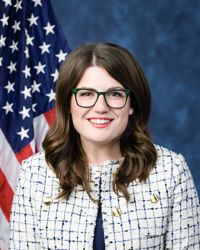
United States · Official source
362 records where Rep. Elfreth, Sarah [D-MD-3] is listed as a sponsor, author, or other actor. Search with topics and years
United States · United States Congress · 7 November 2025
United States · United States Congress · 7 November 2025
United States · United States Congress · 7 November 2025
Keep SNAP and WIC Funded Act of 2025 This bill provides FY2026 appropriations for the Department of Agriculture (USDA) to continue operating the Supplemental Nutrition Assistance Program (SNAP); the Special Supplemental Nutrition Program for Women, Infants, and Children (WIC); and a related block grant program if there is a lapse in FY2026 appropriations for USDA. Specifically, the bill provides appropriations to USDA for any period in which legislation to provide FY2026 interim continuing appropriations or full-year appropriations for USDA has not been enacted. If such a lapse in appropriations occurs, the bill provides the appropriations that are necessary to continue providing uninterrupted SNAP benefits, providing consolidated block grants to Puerto Rico and American Samoa for nutrition assistance programs, and carrying out WIC without interruption. In addition, the bill provides appropriations to pay any benefits under these programs that were missed on or after September 30, 2025, and before this bill is enacted. The appropriations for these purposes are available until the earlier of (1) the enactment into law of legislation to provide FY2026 appropriations for USDA (including continuing appropriations), or (2) September 30, 2026. The bill also requires USDA to use the funds provided by this bill to reimburse state agencies for costs that were incurred to carry out these programs during a lapse in appropriations, to the extent that the programs were carried out in accordance with federal law (including regulations) during the lapse.
United States · United States Congress · 7 November 2025
United States · United States Congress · 31 October 2025
United States · United States Congress · 28 October 2025
United States · United States Congress · 28 October 2025
Uninterrupted Salaries for Capitol Police Act or the USCP Act This bill provides appropriations for the salaries and expenses of employees of the U.S. Capitol Police during any lapse in discretionary appropriations (i.e., government shutdown) that begins on or after the date that this bill is enacted.
United States · United States Congress · 28 October 2025
United States · United States Congress · 28 October 2025
United States · United States Congress · 21 October 2025
FEMA Operations Continuity Act of 2025 This bill authorizes the Federal Emergency Management Agency (FEMA) to continue certain disaster relief, recovery, and mitigation operations during a lapse in appropriations (i.e., government shutdown). Specifically, the bill authorizes FEMA to continue all disaster relief, recovery, and mitigation operations funded through the Disaster Relief Fund (DRF); obligate and disburse DRF balances for all existing and future disaster declarations, including individual and public assistance under the Robert T. Stafford Disaster Relief and Emergency Assistance Act; and maintain personnel and contract support necessary to ensure uninterrupted processing of claims and payments. The bill also (1) requires all unobligated balances in the DRF to remain available to FEMA for expenditure during a lapse in appropriations; and (2) prohibits the funds from being withheld, sequestered, or reprogrammed during a lapse in appropriations, except as necessary to comply with the Antideficiency Act. Finally, the bill specifies that, for the purposes of the Antideficiency Act, the FEMA operations authorized by this bill must be considered essential to protect human life and property and are exempt from government shutdown restrictions.
United States · United States Congress · 17 October 2025
United States · United States Congress · 14 October 2025
This resolution requests that the President submit certain information to Congress regarding a reduction in force or the withholding of pay due to the lapse in appropriations (i.e., government shutdown) that began on October 1, 2025. Specifically, the resolution requests that the President submit to Congress any and all documents and communications related to any proposed reduction in force at a federal agency related to the lapse in appropriations, efforts to create a legal determination at the Office of Management and Budget finding or suggesting that the Government Employee Fair Treatment Act of 2019 does not create a self-executing requirement that furloughed federal employees must receive pay for the period in which they were furloughed during a lapse in appropriations immediately after the lapse in appropriations ends, and efforts or plans to withhold pay for the period of the lapse of appropriations for excepted or furloughed federal or District of Columbia employees. The resolution also requests that the President submit to Congress any documents or communications between the President's office, the Vice President's office, the Office of Personnel Management, the Office of Management and Budget, the Office of Special Counsel, and the Merit System Protection Board regarding these topics.
United States · United States Congress · 10 October 2025
United States · United States Congress · 10 October 2025
Keep Air Travel Safe Act This bill provides continuing appropriations for the Transportation Security Administration (TSA) during any period in which there is a lapse in appropriations for TSA. It also requires the continuing appropriations to be funded using certain unobligated funds that were provided to U.S. Immigration and Customs Enforcement by the One Big Beautiful Bill Act. The bill provides the appropriations for TSA to continue all programs, projects, or activities (including the costs of direct loans and loan guarantees) that were funded in the preceding fiscal year. The appropriations provided by this bill are available from the first day of a lapse in appropriations for TSA until the earlier of the date on which the applicable regular appropriations bill for the fiscal year becomes law or a joint resolution making continuing appropriations becomes law, or the date that is 180 days after the first day of a lapse in appropriations.
United States · United States Congress · 8 October 2025
Federal Employees Civil Relief Act This bill establishes a framework to temporarily suspend certain judicial and administrative proceedings against a federal employee or contractor during a shutdown. Under the bill, a shutdown is a period in which (1) there is more than a 24-hour lapse in appropriations for any federal agency or department because a regular appropriations bill or a continuing resolution has not been enacted, or (2) the debt of the federal government is greater than the statutory limit. A federal worker (i.e., an employee of a government agency or contractor) who is furloughed or required to work without pay during a shutdown may apply to a court for a temporary stay, postponement, or suspension with respect to any payment of rent, mortgage, tax, fine, penalty, insurance premium, student loan repayment, or other civil obligation or liability that the worker owes or would owe during the duration of the shutdown. The bill includes related provisions that restrict evictions, foreclosures, the enforcement of liens, and the termination of insurance policies during a shutdown. It also provides for the deferral of federal income taxes and student loan payments during a shutdown. The Department of Justice may commence a civil action against any person who engages in (1) a pattern or practice of violating the requirements of this bill, or (2) a violation that raises an issue of significant public importance. A person aggrieved by a violation of this bill's requirements may also bring a private right of action.
United States · United States Congress · 8 October 2025
This bill requires the federal government to reimburse state agencies that use state funds to carry out operations necessary to maintain participation in the Special Supplemental Nutrition Program for Women, Infants, and Children (WIC) during a lapse in discretionary appropriations (i.e., government shutdown). WIC provides nutrition-rich foods, nutrition education, and health care and social services referrals to eligible low-income women, infants, and children.
United States · United States Congress · 8 October 2025
United States · United States Congress · 8 October 2025
Federal Worker Childcare Protection Act of 2025 This bill authorizes certain federal employees to be reimbursed for childcare expenses paid during the government shutdown that began on October 1, 2025. Under the bill, any federal employee who was furloughed or worked without receiving a paycheck during the lapse in appropriations (i.e., government shutdown) that began on October 1, 2025, and paid for childcare during the lapse is eligible to be reimbursed for the childcare expenses if (1) appropriations are provided for this purpose, and (2) the employee submits a receipt from a childcare provider to the General Services Administration.
United States · United States Congress · 8 October 2025
United States · United States Congress · 8 October 2025
Federal Agricultural Relief Maintained during Shutdowns And Federal Emergencies Act or the FARM SAFE Act This bill requires the Department of Agriculture (USDA) to continue activities related to agricultural disaster assistance programs during a lapse in appropriations (i.e., government shutdown). Specifically, the bill provides that any USDA employee necessary to carry out an agricultural disaster assistance program (1) must be treated as an excepted employee who is required to perform work during a lapse in appropriations, and (2) may not be removed under a reduction in force.
United States · United States Congress · 3 October 2025
Keep the Heat On Act of 2025 This bill provides appropriations for the Low Income Home Energy Assistance Program (LIHEAP) during any period in FY2026 in which there is a lapse in discretionary appropriations (i.e., a government shutdown). Under LIHEAP, the federal government makes annual grants to states, tribes, and territories to operate home energy assistance programs for low-income households. The bill provides appropriations to continue making LIHEAP payments during a government shutdown in FY2026 at a rate that is equal to the rate for the corresponding month of FY2025.
United States · United States Congress · 3 October 2025
United States · United States Congress · 3 October 2025
United States · United States Congress · 3 October 2025
United States · United States Congress · 30 September 2025
Fair Pay for Federal Contractors Act of 2025 This bill provides back pay to employees of federal contractors who lost pay due to a lapse in appropriations (i.e., government shutdown) in FY2026. Specifically, the bill provides appropriations for federal agencies that are subject to a lapse in appropriations in FY2026 to adjust the price of contracts to compensate federal contractors for providing back pay to employees who were affected by the lapse in appropriations. The agencies must adjust the price of any contract for which the contractor stopped, suspended, delayed, or interrupted all or part of the work under the contract due to the lapse in appropriations. The price adjustment must compensate the contractor for reasonable costs incurred to (1) compensate employees who were furloughed or laid off, were not working, or experienced a reduction of hours or compensation due to the lapse in appropriations; or (2) restore paid leave taken by employees during the lapse in appropriations if the contractor required or permitted employees to use paid leave as a result of the lapse in appropriations. The maximum amount of weekly compensation of an employee for which an adjustment may be made under this bill may not exceed the lesser of (1) the employee's actual weekly compensation, or (2) $1,442 (or a lesser amount pro-rated for an employee who works less than 40 hours per week). The bill also requires the Office of Federal Procurement Policy to submit a report to Congress on the adjustments made under this bill.
United States · United States Congress · 30 September 2025
United States · United States Congress · 30 September 2025
Federal Firefighter Paycheck Protection Act This bill provides continuing FY2026 appropriations to pay federal firefighters if a government shutdown is in effect. It also prohibits the firefighters from being subject to a reduction in force (RIF) during a government shutdown. Specifically, the bill provides continuing FY2026 appropriations to provide pay and allowances to federal firefighters during any period in which interim or full-year appropriations for FY2026 are not in effect (i.e., a government shutdown). The bill provides the appropriations until the earlier of (1) the enactment of specified appropriations legislation, or (2) January 1, 2027. The bill also prohibits federal firefighters from being removed from the civil service due to a RIF during a government shutdown.
United States · United States Congress · 30 September 2025
Pay Our Military Act This bill provides continuing appropriations for military pay for any period during which interim or full-year appropriations for FY2026 are not in effect (i.e., a government shutdown). Specifically, the bill provides FY2026 continuing appropriations for the pay and allowances of (1) members of the Armed Forces, including reserve components, who perform active service or inactive-duty training during the period; and (2) civilian employees and contractors of the Department of Defense (and the Department of Homeland Security in the case of the Coast Guard when the Coast Guard is not operating as a service in the Department of the Navy) who are providing support to such members of the Armed Forces. If a government shutdown occurs, the bill provides the continuing appropriations until the earlier of (1) the enactment into law of specified appropriations legislation, or (2) January 1, 2027.
United States · United States Congress · 26 September 2025
United States · United States Congress · 26 September 2025
United States · United States Congress · 26 September 2025
This bill prohibits the removal of federal employees from the civil service during a government shutdown due to a lapse in discretionary appropriations. If an employee is removed from the civil service in violation of this bill, the employee may elect to be reinstated with back pay on the date on which the lapse in appropriations ends.
United States · United States Congress · 23 September 2025
United States · United States Congress · 19 September 2025
United States · United States Congress · 18 September 2025
United States · United States Congress · 18 September 2025
United States · United States Congress · 18 September 2025
United States · United States Congress · 18 September 2025
Protecting Free Vaccines Act This bill requires Medicare, Medicaid, the Children's Health Insurance Program (CHIP), and private health insurers to cover, without cost-sharing, vaccines that were recommended by the Centers for Disease Control and Prevention's Advisory Committee on Immunization Practices as of October 25, 2024. The requirement ends on January 1, 2030.
United States · United States Congress · 18 September 2025
United States · United States Congress · 17 September 2025
United States · United States Congress · 17 September 2025
No Tariffs on Groceries Act This bill requires the President to receive congressional approval in order to impose duties (i.e., tariffs) on certain articles of food imported into the United States. The bill defines articles of food as (1) articles used for food or drink for man or other animals; (2) articles used for components of any articles used for food or drink for man or other animals; and (3) seeds, fertilizers, manures, and agrochemicals. Specifically, the President may impose duties on these articles of food only if (1) the President submits to Congress a request to impose the duties, and (2) the request is subsequently and specifically approved by an act of Congress. The bill provides an exception to this requirement for existing tariff-rate quotas on articles of food.
United States · United States Congress · 17 September 2025
United States · United States Congress · 17 September 2025
This joint resolution proposes a constitutional amendment authorizing Congress and the states to (1) regulate and impose reasonable viewpoint-neutral limitations on the raising and spending of money by candidates and others to influence elections; and (2) regulate and enact public campaign financing systems, including those designed to restrict the influence of private wealth by offsetting the raising and spending of money by candidates and others with increased public funding. The amendment grants Congress and the states the power to implement and enforce this amendment by legislation. They are allowed to distinguish between natural persons and corporations or other artificial entities created by law, including by prohibiting such entities from spending money to influence elections.
United States · United States Congress · 16 September 2025
United States · United States Congress · 16 September 2025
Pay Our Troops Act of 2026 This bill provides continuing appropriations for military pay for any period during which interim or full-year appropriations for FY2026 are not in effect (i.e., a government shutdown). Specifically, the bill provides FY2026 continuing appropriations for the pay and allowances of (1) members of the Armed Forces, including reserve components, who perform active service during the period; and (2) civilian personnel and contractors of the Department of Defense (and the Department of Homeland Security in the case of the Coast Guard) who are providing support to such members of the Armed Forces. If a government shutdown occurs, the bill provides the continuing appropriations until the earlier of (1) the enactment into law of specified appropriations legislation, or (2) January 1, 2027.
United States · United States Congress · 16 September 2025
Faster Labor Contracts Act This bill establishes mandatory deadlines for parties negotiating an initial collective bargaining agreement (CBA) and provides for mediation and arbitration to finalize CBAs. Under the bill, CBA negotiations must begin within 10 days after an employer receives a written request from a newly recognized or certified bargaining representative. The bill provides that parties must make every reasonable effort to conclude and sign a CBA. Further, the bill provides that, if the parties have not reached an agreement after 90 days, either party may request mediation by the Federal Mediation and Conciliation Service (FMCS). The bill directs FMCS to use its best efforts to secure an agreement. If mediation does not result in an agreement within 30 days (or an additional period agreed to by both parties), FMSC must refer the parties to an arbitration panel to render a decision settling the dispute. The panel must consider specified factors, including the employer's financial prospects and employees' cost of living. The resulting CBA is binding on the parties for two years. (Parties may agree to amend the terms during the two-year period.) The bill specifies that (1) an employer must maintain current wages, hours, terms, and conditions of employment during negotiations; and (2) an employer's duty to collectively bargain continues even if a representative has been decertified. The Government Accountability Office must report to Congress regarding the average number of days between the certification or recognition of a bargaining representative and the date the initial CBA was executed.
United States · United States Congress · 16 September 2025
United States · United States Congress · 15 September 2025
George Floyd Justice in Policing Act of 2025 This bill addresses a wide range of policies and issues regarding policing practices and law enforcement accountability. It increases accountability for law enforcement misconduct, restricts the use of certain policing practices, enhances transparency and data collection, and establishes best practices and training requirements. The bill enhances existing enforcement mechanisms to remedy violations by law enforcement. Among other things, it does the following: lowers the criminal intent standard—from willful to knowing or reckless—to convict a law enforcement officer for misconduct in a federal prosecution, limits qualified immunity as a defense to liability in a private civil action against a law enforcement officer, and grants administrative subpoena power to the Department of Justice (DOJ) in pattern-or-practice investigations. It establishes a framework to prevent and remedy racial profiling by law enforcement at the federal, state, and local levels. It also limits the unnecessary use of force and restricts the use of no-knock warrants, chokeholds, and carotid holds. The bill creates a national registry—the National Police Misconduct Registry—to compile data on complaints and records of police misconduct. It also establishes new reporting requirements, including on the use of force, officer misconduct, and routine policing practices (e.g., stops and searches). Finally, it directs DOJ to create uniform accreditation standards for law enforcement agencies and requires law enforcement officers to complete training on racial profiling, implicit bias, and the duty to intervene when another officer uses excessive force.
United States · United States Congress · 15 September 2025
United States · United States Congress · 11 September 2025
United States · United States Congress · 10 September 2025