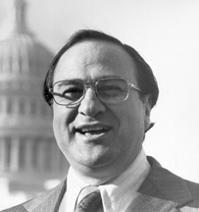
United States · United States Congress · 10 January 1977
Standards and Conduct Resolution - Title I: Provisions Relating to the Select Committee on Standard and Conduct - Amends the resolution creating the Select Committee on Standards and Conduct of the Senate to give the Senate power to appoint members of the committee in accordance with the Standing Rules of the Senate. Limits to six consecutive years the length of service of any Member on the committee. Specifies the composition of the six-member committee based on length of service in the Senate. Makes it a duty of the select committee: (1) to receive complaints and investigate violations of any Code of Conduct applicable to Members, officers or employees of the Senate; and (2) to examine all financial statements filed pursuant to this Resolution, and report to the Senate any person who has filed a statement containing any false statement or any person who has failed to file a statement. Sets forth standards for the investigation of complaints filed with the select committee. Requires each complaint to be in writing. Requires a prompt investigation of all complaints. Sets forth procedures to assure the consideration of a complaint on which no action was taken for the first 30-working days after submission. Prohibits a Member from participating in the investigation of his or her own conduct. Provides for the appointment of a substitute for a disqualified select committee member. Authorizes the select committee to employ a counsel, assistant counsel, and investigators. Title II: Financial Disclosure Requirements - Requires each individual who for a period in excess of 90 days during a calendar year is a Senator or an officer or employee of the Senate and is compensated at an annual rate in excess of $20,000 to file a complete financial statement for the preceding year. Requires individuals who seek nomination for or election to the Senate to file a report containing a complete financial statement for the preceding year. Specifies the following information to be disclosed in a financial statement: (1) the amount and source of each item of income, or reimbursement, and each gift or aggregate thereof from a single source which exceeds $100 in amount or value; (2) the fair market value of any item received in kind if such value exceeds $500; (3) the identity and category of value of each asset other than household goods, jewelry, furniture, or personal vehicle having a value in excess of $1,000; (4) the identity and category of amount of each liability owed in excess of $1,000; (5) the identity and category of value of any securities or commodities transaction in excess of $1,000; (6) the identity and category of value of any real estate transaction in excess of $1,000; (7) any patent right held; and (8) a description of any agreement between the person filing the statement and any other person concerning employment after filing the individual's term of office. Requires officers and employees of the Senate to report the identity of any person who paid such officer or employee compensation in excess of $5,000 in any of the five years before the calendar year of filing. Sets forth increments of value to be used in stating categories of value or amount of property or financial dealings. Directs the select committee to make available to the public each report filed with it. Sets forth exceptions to this requirement. Title III: Code of Conduct - Directs the select committee to recommend to the Senate a Code of Conduct for Members of the Senate. Specifies areas for the select committee to consider when developing such Code.
United States · United States Congress · 1 October 1976
Farm Training Adjustment Program - Authorizes the Secretary of Agriculture to allocate funds to any State, for the purpose of conducting a farm training adjustment program for the farmers of such State who have been adversely affected as a result of a natural disaster. Requires States wishing to participate in such program to submit to the Secretary of Agriculture for approval, a plan for the farm training adjustment program. Requires that such program be carried out by the department of agriculture of such State under the supervision and control of a State-Federal Administrative Committee established under the guidelines set forth in this Act. Requires that the curriculum for such a program include: (1) farm management; (2) livestock marketing; (3) animal nutrition; (4) crop production; (5) conservation principles; (6) welding; (7) artificial insemination of livestock; and (8) first aid. Stipulates that no such program may exceed a 20 week period. Entitles participants in such program to receive a subsistence payment of $1,000 per month under specified conditions. Authorizes appropriations to the Department of Agriculture in such sums as may be necessary to carry out the provisions of this Act.
United States · United States Congress · 29 September 1976
Empowers the House of Representatives, the Senate, or the Congress, for the purpose of asserting the constitutionality of an Act of Congress: (1) to intervene in a Federal court proceeding to which the United States or an agent thereof is a party and in which the constitutionality of an Act is questioned but not defended; and (2) to appeal any Federal court decision involving the United States or an agent thereof which declares an Act of Congress unconstitutional and which the Attorney or Solicitor General decides not to appeal.
United States · United States Congress · 29 September 1976
Indian-Controlled Postsecondary Educational Institution Assistance Act - Amends the Indian Self-Determination and Education Assistance Act to authorize the Secretary of the Interior to make grants to Indian-controlled educational institutions for specified purposes, including: (1) planning of educational programs and activities; (2) basic operational costs; and (3) student services. Prescribes eligibility requirements for receipt of such grants. Authorizes the Secretary, upon the request of any American Indian tribe or community to assist in the planning and development of feasibility studies to determine whether there is justification for the creation of an Indian-controlled postsecondary educational institution. Sets forth a grant formula to be followed by the Secretary in extending funds to qualified applicants. States that eligibility for assistance under this Act shall not supplant eligibility under other Federal financial assistance programs. Requires the Secretary to submit a report to the Congress containing a survey of existing and planned physical facilities of Indian-controlled postsecondary educational institutions. Authorizes appropriations for the three full fiscal years after the enactment of this Act. Provides for adjustment of grants where the sums appropriated for any fiscal year are not sufficient to pay in full the total amounts which all approved grant applicants are eligible to receive under this Act for that fiscal year.
United States · United States Congress · 29 September 1976
Requests the President of the United States to undertake an investigation into the facts and circumstances surrounding the bombing and death of Orlando Letelier in Washington, D.C. on September 21, 1976. Directs the President to transmit an unclassified and public report to Congress giving results of the investigation within 120 days after enactment of this resolution. Stipulates that failure to transmit such a report to Congress will result in suspension of U.S. Government economic assistance to the Government of Chile during the period July 1, 1976 through September 30, 1977.
United States · United States Congress · 21 September 1976
Condemns the murders of Orlando Letelier and Ronni Karpen Moffit and the serious injury of Michael Moffitt. Urges a complete and thorough investigation by Federal authorities of the circumstances surrounding the bombing.
United States · United States Congress · 20 September 1976
Government Economy and Spending Reform Act - Title I: Authorizations of New Budget Authority - Terminates all budget authority for Federal programs on specified dates according to the functional or subfunctional category of each program as set forth in the fiscal year 1977 budget. Requires the Comptroller General to report to Congress by April 1, 1977, on specified programs with respect to the laws under which such program is carried on, the amount of new budget authority received by such program during the four fiscal years ending before April 1, 1977, and to identify programs for which no outlays have been made during the last two fiscal years ending before April 1, 1977. Prohibits providing new budget authority after the applicable review date set forth in this Act unless the provision of such budget authority is specifically authorized by law or the standing rules of either House of Congress. Title II: Zero-Base Program Review - Sets forth a timetable for Congressional zero-base review of new budget authority. Defines "zero-base review" as an evaluation of a given program to determine the merits of its continuation at a level less than, equal to, or more than its existing level. Requires each congressional committee conducting a zero-based program review to adopt tentative and final review plans, receive reports from the Comptroller General and Federal agencies on the program being reviewed, and report to their respective House the results of such zero-base review of the program. Sets forth minimum objectives of inquiry for such reviews. Requires that any committee reporting pursuant to this Act recommend the extent to which any program reviewed should be continued or eliminated. Title III: Continuing Review - Amends the Legislative Reorganization Act of 1970 to require, whenever the Comptroller General issues a report which discloses any substantial deficiency in the achievement of the objectives of any Federal program, the agency conducting such program to report to specified congressional committees 60 days after such report and every six months thereafter to deliniate the actions taken with respect to such deficiency. Requires that such agency continue to issue such reports until such time as the Comptroller General determines that no purpose is served by their submission. Amends the Budget and Accounting Act, 1921, to require the inclusion in the Budget of a statement of the specific objectives of each Government program, and a comparison, in each subsequent Budget, of the achievement of such objectives for the last completed fiscal year with the planned objectives of such year. Title IV: Citizens Bicentennial Commission on the Organization and Operation of Government - Establishes the Citizens' Bicentennial Commission on the Organization and Operation of Government, an independent agency of 18 members to study Federal agencies. Directs the Commission to make recommendations to the President and Congress for the restructuring of such agencies to improve their efficiency. Requires the Commission to submit its final report by September 30, 1979, and terminate it 90 days thereafter. Authorizes to be appropriated without fiscal year limitation $12,000,000 to carry out the provisions of this title. Title V: Miscellaneous - Requires the Director of Management and Budget to study the feasibility of zero-base budgeting for Federal agencies. Requires the Director of the Congressional Budget Office to study the feasibility of personnel ceilings on employees of the United States and their relationships to alternative methods of carrying out the activities of such employees. Requires that such reports be submitted to Congress. Requires Federal agency heads to report requests for new budget authority to Congress. Requires specified committees to study the effectiveness of the zero-base review procedures required by this Act.
United States · United States Congress · 17 September 1976
Expresses the Senate's gratitude to Mike Mansfield of Montana for his participation in the Government and his service on behalf of the Nation's people.
United States · United States Congress · 9 September 1976
Establishes an Antitrust Review and Revision Commission to study the antitrust laws of the United States, their applications, and their consequences, including the effect of antitrust laws on: (1) price levels, product quality and service; (2) employment, productivity, and profits; and (3) economic growth. Specifies the membership, method of appointment, and manner of compensation of the members of the Commission. States that the Commission shall make a report of its findings and conclusions no later than two years after its first meeting, and that the Commission shall cease to exist 60 days after the submission of such report. Authorizes appropriations in such amount as may be necessary to carry out the activities of the Commission. States the effective date of this Act.
United States · United States Congress · 31 August 1976
Rural Energy Office Act - Establishes within the Department of Agriculture an Office of Rural Energy Assessment and Development whose Director shall be appointed by the Secretary of Agriculture. Makes such Office responsible for identifying, developing, and compiling data pertaining to fuel and other energy needs of persons residing in rural areas. Requires the Office to submit biennial reports to Congress containing an accounting of the findings and conclusions of the Office with respect to the following subject matters as they relate to the needs of persons in rural areas: (1) the heating and cooling of residential dwelling units; (2) transportation; (3) the production of agricultural commodities; (4) the energy needs of businesses and industries; (5) sources of electricity; (6) conservation of energy; and (7) energy research and development. Requires the Office to provide such report to specified committees of Congress and directs such committees to cooperate in publishing and making available to the public every six months a document containing the most recent information provided by the Office. Establishes a civil fine to be assessed against the Director of such Office if the Director fails to submit such reports by the dates specified in this Act. Requires specified executive departments and independent regulatory bodies to submit a copy of any proposed regulation which relates to an energy matter referred to in this Act, to the Secretary of Agriculture for such Secretary's comments and recommendations. Authorizes appropriations in such amounts as may be necessary to carry out the provisions of this Act. Terminates the Office and provisions of this Act in five years.
United States · United States Congress · 27 August 1976
Indian Child Welfare Act - Title I: Child Placement Standards - Makes provisions governing the validity of Indian child placement including: (1) that such placement is made pursuant to an order of a tribal court or where there is no such court that the Indian tribe be accorded 30 days notice of such proceeding and the right to intervene as an interested party; (2) that there be overwhelming evidence, including professional testimony, that the continued custody of the child would result in serious physical or emotional damage to the child where there is parental or blood guardian opposition to the loss of custody; and (3) that the voluntariness or consent to the loss of custody be certified by the witnessing judge. States that these provisions shall not effect temporary placements under circumstances where the physical or emotional well-being of the child is immediately threatened. Requires every nontribal government agency to grant a preference to members of the child's extended Indian family when such child is being offered for adoption. States that, absent good cause shown to the contrary, a nontribal government agency must follow the order of preferences stated in this Act. Grants continuing jurisdiction to a tribal court over child placement where the child has not attained the age of 18 and has been placed in a home or institution outside of the reservation of which the child is a resident. Allows an Indian adoptive child who has attained the age of 18, upon application to the court which entered the final adoption decree, to discover the names and last known addresses of his or her natural parents, their tribal affiliation, and the ground for the severance of their family relations. Title II: Indian Family Development - Authorizes the Secretary of the Interior to make grants to, or enter into contract with, Indian tribes for the purpose of assisting such tribes in the establishment and operation of Indian family development programs. States that such programs shall consist of features including: (1) a system for licensing or otherwise regulating Indian foster and adoptive homes; (2) the construction, and operation of family development centers which may include facilities for counseling Indian families and facilities for the temporary custody of Indian children whose parents or guardians are unwilling or unable to care for them; and (4) education of Indians, including tribal judges and staff, in skills relating to child welfare and family assistance programs. Authorizes the Secretary to carry out, or to make grants to or contracts with Indian tribes to carry out, a special home improvement program; one purpose of which is to upgrade the housing conditions of Indian foster and adoptive parents. Provides for off-reservation Indian family development programs to be either directly operated by the Secretary or through grants and contracts with local Indian organizations. States that such programs may include features such as: (1) a system for regulating and supporting Indian foster and adoptive homes; (2) family assistance; and (3) an Indian family defense program which shall provide representation by an attorney for every Indian child or his parents in child placement proceedings. States that no child placement shall be valid, except where the child is immediately threatened, if the Indian child, or his parents, is not represented by counsel. Directs and authorizes the Secretary to undertake a study of the circumstances surrounding all child placements which have occurred during the 16 years preceding the effective date of this Act, where the child so placed is still under the age of 18. Authorizes the Secretary, in his discretion, to institute a habeas corpus action in the name of the United States on behalf of a parent, or blood relative for the purpose of challenging the legality of the placement of a child if such parent or blood relative so requests. States that such action is to be brought in the United States district court for the district in which the child resides and that if the United States Attorney for such district fails or refuses to initiate and prosecute a legal proceeding, the Secretary may employ private counsel. Authorizes funds to be appropriated to carry out the provisions of this Act. Provides for rulemaking necessary for the implementation of the provisions of this Act, including a procedure for revision or amendments for promulgated rules and regulations.
United States · United States Congress · 27 August 1976
Amends the Agricultural Act of 1949 to provide increased disaster relief benefits to farmers who plant wheat, feed grains, cotton or rice in excess of their allotments with respect to the 1976 and 1977 crops of such commodities.
United States · United States Congress · 27 August 1976
Designates the extension of the Senate Office Building presently under construction pursuant to the Supplemental Appropriations Act, 1973, as the "Philip A. Hart Office Building."
United States · United States Congress · 24 August 1976
Earth Resources Information Satellite System Act - Title I: Earth Resources Information System Policies and Management - Declares it the policy of the United States to establish an Earth Resources Information System to aid in the effective management and utilization of the Earth's resources through the use of earth satellites and other observation sources. Title II: Establishment of the Earth Resources Information System - Establishes the Earth Resources Information System, to be implemented immediately by the President in a manner consistent with the purposes of this Act. Title III: Federal Coordination, Planning and Regulation - Establishes an Office of Earth Resources Policy in the Executive Office of the President to aid in the planning, coordination, and review of all phases of the development of the Earth Resources Information System. Directs the National Aeronautics and Space Administration to continue research and development activities and to consult with and assist the Earth Resources Satellite Corporation in order to fulfill the purposes of this Act. Title IV: Creation of an Earth Resources Satellite Corporation - Authorizes the establishment of the Earth Resources Satellite Corporation if the President determines that a corporation is required to operate the domestic ground segment in order to achieve the purposes of this Act. Directs the Corporation to manage the commercial domestic data handling segment of the Earth Resources Information System. Authorizes the Corporation to contract for research and development and services necessary for its operation. Title V: Miscellaneous Provisions - Requires that notification of negotiations between private entities and any foreign businesses, with respect to facilities; operations; or services authorized by this Act, be given to the State Department. Authorizes judicial relief in the United States district court for actions taken which violate any of the provisions of this Act. Directs the President to transmit an annual report to Congress on Federal activities taken to achieve the objectives of this Act. Directs the Corporation to submit annual reports of its activities to the President and Congress. Authorizes the appropriation of $1,000,000 for fiscal year 1976 to implement the provisions of this Act.
United States · United States Congress · 10 August 1976
Appropriates $10,000,000 to the President for assistance to American hospitals and schools abroad for the quarter ending September 30, 1976, under the Foreign Assistance Act of 1961.
United States · United States Congress · 5 August 1976
Authorizes the Secretary of the Interior to construct, operate, and maintain the Allen Camp unit of the Central Valley project in California. Authorizes the Secretary to replace roads and bridges which would be inundated by the project. Places restrictions on the use of water from such project. Authorizes the appropriation of $64,220,000 for construction of the unit. Authorizes appropriations for fiscal year 1977 of $150,000 under the Indian Elementary and Secondary School Assistance Act, $1,200,000 under the Elementary and Secondary School Assistance Act, $1,200,000 under the Elementary and Secondary Education Act of 1965, and $632,000 under the Adult Education Act for the continuation of specified grants authorized under those Acts. Directs the Commissioner of Education to make grants under authorities contained in the Indian Education Act in specified amounts to applicants not yet funded for fiscal year 1976 from the Department of the Interior and Related Agencies Appropriations Act, 1976.
United States · United States Congress · 30 July 1976
Amends the Emergency Livestock Credit Act to extend the authority of the Secretary of Agriculture to guarantee loans under such Act until September 30, 1978.
United States · United States Congress · 23 July 1976
Emergency Livestock Replacement Act - Authorizes the Secretary of Agriculture to designate as disaster areas localities where, as a result of a natural disaster, the farmers and ranchers in such area cannot, without extreme financial hardship, maintain their foundation herds of cattle. Authorizes the Secretary to provide such individuals with foundation herd indemnification protection for up to 100 head of cattle provided such individual sells his foundation herd and purchases a replacement herd within two years. Stipulates that the amount of replacement payment shall be the difference between the cost of the replacement herd and the Secretary's appraised dollar value of the foundation herd sold by the farmer or rancher.
United States · United States Congress · 23 July 1976
Stipulates that no farmer or rancher, who received livestock feed under the emergency livestock feed program of the Agricultural Act of 1949, in connection with a natural disaster which occurred in 1975, shall be charged any amount greater than that charged other farmers or ranchers if such individual was led to believe, by personnel carrying out such program, that because of emergency conditions, he was eligible to receive feed at a price less than the current market price.
United States · United States Congress · 23 July 1976
Professional and Technical Assistance to Exporting Act - Directs the Secretary of Commerce to establish a procedure within the Bureau of Census of the Department of Commerce to insure that shippers' export declarations contain the address of exporters. Directs the semi-annual compilation of total exports by States, country of destination, and schedule B commodity group. Authorizes the appropriation of $500,000 for the fiscal year ending June 30, 1978, to carry out and evaluate this Act. Directs the Secretary to adjust the areas served by the field offices of the Department of Commerce to conform to State boundaries and authorizes the appropriation of $100,000 for the fiscal year ending June 30, 1977, to carry out such adjustment.
United States · United States Congress · 22 July 1976
Emergency Agricultural Relief Act - Title I: Loan Guarantees to Restock Foundation Herds - Authorizes and directs the Secretary of Agriculture to provide financial assistance to qualified individuals, corporations, or partnerships to restock foundation livestock herds depleted as a result of a natural disaster or emergency. Directs the Secretary to guarantee up to 90 percent of the principal and interest on loans made by a legally organized lending agency for such purpose. Allows recipients of such guaranteed loans to receive reimbursement from the Secretary for one-half of the amount of interest payments made by such borrower during the first two years of the loan repayment period. Specifies the criteria which must be met in order to be eligible for such a guaranteed loan. Specifies that loan guarantees outstanding under this title shall not exceed $500,000,000 at any one time. Authorizes the Secretary to issue regulations to carry out the provisions of this title. Title II: Operational Loan Guarantees After Disaster Loss to Crops - Authorizes and directs the Secretary of Agriculture to provide financial assistance for operational expenses in maintaining a farm to bona fide farmers whose farm operations are in areas designated as major disaster or emergency areas by the President or emergency areas by the Secretary and who have suffered a loss of at least one-third of their normal crop as a result of such disaster or emergency. Sets forth eligibility requirements for corporations or partnerships to receive such assistance. Authorizes the Secretary to guarantee loans and to reimburse borrowers for interest payments in a similar manner as set forth in title I. Specifies that loan guarantees outstanding under this title shall not exceed $200,000,000 at any one time. Title III: Direct Loans to Farmers in Disaster Areas - Directs the Secretary of Agriculture to make loans to qualified farmers in areas which have been designated as major disaster or emergency areas on two or more separate occasions since January 1, 1971, if such funds are necessary to the continued existence of their agricultural units. Specifies the authorized uses of such loans. Stipulates that loans made under this title shall not exceed $30,000 and be at an interest rate of one percent per annum with a maximum repayment period of ten years. Authorizes the Secretary to utilize the fund created under the Consolidated Farm and Rural Development Act to carry out the purposes of this title and authorizes appropriations to such fund in such sums as the Congress deems necessary to carry out the purposes of this title.
United States · United States Congress · 2 July 1976
Amends the Federal Water Pollution Control Act to exempt farming, silviculture, ranching, and emergency construction activities from permit requirements for discharge of dredge or fill material. Authorizes the Secretary of the Army, acting through the Chief of Engineers, to issue general permits for discharges of dredged or fill material for activities which have a minimal adverse environmental impact.
United States · United States Congress · 1 July 1976
Amends the Alaska Native Claims Settlement Act to direct the Secretary of the Interior to withdraw 70,000 acres of public lands in order that the Village Corporation for the Villiage of Klukwan may select 23,040 acres.
United States · United States Congress · 1 July 1976
Expresses the sense of the Congress that no individual whose social security benefits are increased should suffer, by reason of such increase, a loss of or reduction in any benefits which he or she is otherwise entitled to receive under any Federal or federally assisted program.
United States · United States Congress · 30 June 1976
Amends the Consolidated Farm and Rural Development Act and the Emergency Livestock Credit Act of 1974 to authorize the Secretary of Agriculture to postpone the principal and interest payments on emergency loans made or insured under such Acts for up to three years. Authorizes the Secretary to extend the repayment period of operating loans under the Consolidated Rural Development Act up to a 20-year period in the event of any disaster occurring between January 1, 1975, and July 1, 1976.
United States · United States Congress · 29 June 1976
Endangered American Wilderness Act - Designates specified lands in the following national forests as components of the National Wilderness Preservation System: (1) Umatilla National Forest, Washington and Oregon; (2) Inyo and Sequoia National Forests, California; (3) Coronado National Forest, Arizona; (4) Tongass National Forest, Alaska; (5) Wasatch and Uinta National Forests, Utah; (6) Cibola National Forest, New Mexico; (7) Los Padres National Forest, California; (8) Mendocino National Forest, California; and (9) Willamette National Forest, Oregon. Directs the Secretary of Agriculture to review the feasibility and suitability of designating as wilderness specified lands in the following national forests: (1) White River National Forest, Colorado; (2) Lolo and Kootenai National Forests, Montana; and (3) Coronado National Forest, Arizona.
United States · United States Congress · 21 June 1976
Veterans' Disability Compensation and Survivor Benefits Act - Title I: Veterans Disability Compensation - Increases generally specified dollar amounts paid to eligible disabled veterans by the Veterans' Administration. Makes an additional payment available to veterans having a wife or child who is helpless or blind, or so nearly helpless or blined as to need or require the regular aid and attendance of another person. Title II: Survivors Dependency and Indemnity Compensation - Increases generally specified dependency and indemnity compensation amounts paid to widows of eligible veterans and to children of deceased veterans not leaving a widow. Directs the Administrator of Veterans' Affairs to carry out a detailed study of the dependency and indemnity compensation program. Title III: Other Disabled Veterans' Program Improvements - Increases the clothing allowance for specifified disabled veterans. Increases the maximum amount of mortgage protection life insurance the Administrator may issue for disabled veterans. Allows the Administrator to provide automobile adaptive equipment to disabled veterans from all wars rather than just wars since World War II. Authorizes the Administrator to pay the cost of transportation of deceased veterans who had service-connected disabilities to a national cemetery for burial. Title IV: Miscellaneous and Technical Amendments and Effective Date Provisions - Makes miscellaneous and technical amendments to title 38 (Veterans' Benefits) of the United States Code. Makes the provisions of this Act effective October 1, 1976.
United States · United States Congress · 15 June 1976
Authorizes the Secretary of Agriculture to reimburse livestock producers or to otherwise pay for the transportation costs they incur for the shipment of hay into counties severly affected by drought, flood, or other natural disaster for their livestock herds. Authorizes the Secretary to designate emergency areas if he determines that as a result of such disaster the hay crop for that county is not more than 50 percent of the estimated crop.
United States · United States Congress · 11 June 1976
Voluntary Standards and Certification Act - Title I: National Standardization - Requires the Federal Trade Commission to promulgate minimum requirements for uniform standards development procedures for those in the private sector who set standards for products including procedures for making appeals from the decisions of any such standards-setting body. Permits the Commission to enforce the procedures set forth pursuant to this Act upon its own initiative or upon written petition filed with it by any interested person. Provides that any appeal decision with respect to a standards setting decision shall consider the effect of such standard upon competition and consumers. Requires any private organization developing standards or certifying products to obtain certification from the Secretary of Commerce. Requires the Secretary to issue such certification if he finds that such organization meets the minimum requirements promulgated by the Commission. Authorizes the Secretary to grant financial assistance to nonprofit standards- development organizations to insure representation of consumers, small business, and other interests in decisions. Requires all Federal agencies to utilize standards set by certified private organizations whenever possible to avoid duplication of effort. States that appeals bodies established by private organizations shall have no powers of enforcement except those given them by the organizations creating such bodies. Title II: International Standardization - Establishes a Division of Standards and Certifications within the Bureau of Standards of the Department of Commerce to develop the resources, facilities, and expertise necessary to assist the Secretary and the Commission. Requires the Secretary, through the Division, to provide for and assist appropriate participation by private nonprofit organizations in international standardization activities as representatives of the United States. Requires the Secretary to make arrangements for direct governmental participation in such international standardization activities where the Secretary determines private participation is insufficient or cannot be established. Requires the Secretary to list all international standards and certification systems unless to do so would not be in the public interest. Establishes an Interagency Committee on International Standardization Policy and a Public Committee on International Standardization Policy to provide policy guidance to the Secretary in carrying out his duties under this Act. Establishes procedures for petitioning the Secretary to delist a particular standard or certification system and for judicial review. Title III: Accreditation - Requires the Secretary, through the Division, to set forth procedures to establish a voluntary national laboratory accreditation program to accredit certification laboratories for a class of technology or a specific product if he finds it is in the public interest. Requires the Secretary to establish a criteria committee to establish criteria to accredit such laboratories. Sets forth procedures for the development of such criteria and the accreditation of such laboratories, both domestic and foreign. Provides procedures for the removal, withdrawal, or termination of accreditation. Title IV: Miscellaneous Provisions - Creates the position of Director of the Division of Standards and Certifications. Authorizes to be appropriated to the Commission: $2,000,000 for fiscal year 1978; $2,500,000 for fiscal year 1979; and $3,000,000 for fiscal year 1980; and to the Secretary of Commerce $6,000,000 for fiscal year 1978; $5,000,000 for fiscal year 1979; and $4,000,000 for fiscal year 1980, to carry out this Act.
United States · United States Congress · 8 June 1976
Directs the Secretary of Commerce to continue the statistical classification of farms which was in effect on January 1, 1975, until June 30, 1976. Terminates the duty of the Secretary of Commerce to take agricultural censuses every five years and directs the Agricultural Stabilization and Conservation Service within the Department of Agriculture to collect comparable information using sampling methods. Authorizes the Secretary of Agriculture, when sampling methods would be inappropriate, to use other statistical methods to collect information relating to the classification of farms. (Amends 13 U.S.C. 142)
United States · United States Congress · 20 May 1976
Extends to former employees of county soil conservation committees who are employed by any Federal agency, specified civil service compensation, leave, and seniority benefits afforded to former employees of such county committees who are employed by the Department of Agriculture.
United States · United States Congress · 13 May 1976
Dairy and Meat Import Inspection and Identification Act - Title I: Dairy Products - Defines terms used in this title. Prohibits the importation of dairy products into the United States unless the Secretary of Agriculture has certified that such products are wholesome and pure and that the plants in which such products were manufactured or processed comply with minimum standards of sanitation prescribed by the Secretary. Requires that the standards established under this title be comparable to those imposed upon domestic dairy products. Directs the Secretary to inspect imported dairy products and to require that such products be accompanied by a certificate of compliance indicating that such products conform to the minimum standards established under this Act. Provides for the assessment of fees on imported dairy products to cover the cost of inspections and certificates required by this title. Title II: Meat and Meat Products - Prohibits the importation of meat or meat products capable of use as human food into the United States unless tests have been conducted to determine whether such articles contain any substance prohibited in any carcass or meat product from any domestically produced animal or contain a level of any substance in excess of the maximum allowable level for domestically produced meat products. Stipulates that such tests may be conducted by persons in the exporting country if such individuals have been certified to do so under the same criteria as persons certified by the Department of Agriculture to conduct such test on articles of animals produced in the United States. Provides for the assessment of fees on such imported products to cover the costs of inspections and testing required under this title. Title III: Study; Effective Date - Directs the Secretary of Health, Education, and Welfare to conduct a study to determine the most practicable and effective method of requiring imported meat and dairy products to bear lables identifying such products as being imported.
United States · United States Congress · 13 May 1976
Expresses the sense of the Senate that the Government and people of the United States welcome the election of a new President by the Assembly of Lebanon. Welcomes the President's request for funds to assist in the relief of victims of the armed strife in that nation. Urges the President to declare the willingness of the United States to participate in multilateral assistance programs to help in the reconstruction of Lebanon. Encourages a ceasefire in Lebanon.
United States · United States Congress · 11 May 1976
Special Lebanon Relief Act - Amends the Foreign Assistance Act of 1961 to authorize the President to furnish assistance, including the issuance of housing guaranties, for the relief and rehabilitation of refugees and other needy people in Lebanon. Authorizes the appropriation of $20,000,000 for such purposes.
United States · United States Congress · 8 April 1976
Grand Jury Reform Act - Authorizes a U.S. district court, whenever a witness in any proceeding before a U.S. grand jury or district court refuses without just cause to comply with an order of the court to testify or provide other information, to confine such witness. Prohibits confinement of a recalcitrant witness for a subsequent refusal to testify concerning the same transaction or event. Directs the Government attorney to apply to the court for an order granting the witness immunity in any proceeding before a U.S. court or grand jury where: (1) the testimony of a witness or the production of evidence by a witness is necessary to the United States; (2) the witness consents; and (3) the Attorney General approves the application. Allows the court to order a witness to testify or produce other evidence even though the witness claims that such testimony or evidence may be incriminating. Declares that testimony given or evidence produced under such grant of immunity may not be used as evidence against such witness in any court and may not subject such witness to any consequent penalty or forfeiture. Requires district courts to give adequate and reasonable notice to a grand jury of its rights and duties, including: (1) its duty to inquire into offenses under U.S. criminal laws alleged to have been committed within the judicial district; (2) its authority to make independent inquiries; (3) its right to call and interrogate witnesses; (4) its right to request production of documents; and (5) such other rights and duties as the court deems advisable. Declares that failure to instruct a grand jury as directed constitutes just cause for a witness's refusal to testify or provide other information and entitles any person indicted by such grand jury to a dismissal of the indictment. Stipulates that the grand jury shall serve for a term of 12 months with specified exceptions. Authorizes, in the event that the Government attorney refuses to assist or hinders a grand jury inquiry, the appointment by the court of a special attorney to assist the grand jury if it so requests. Grants such special attorney the exclusive authority to assist the grand jury in the conduct of an independent investigation and to sign any indictment returned by the grand jury in such investigation. Requires that any subpena summoning a witness to appear before a grand jury advise the witness of: (1) the right to counsel; (2) the privilege against self-incrimination; (3) whether the witness's own conduct is under investigation by the grand jury; (4) the subject matter of the grand jury investigation and the substantive criminal statute, violation of which is under consideration by the grand jury; and (5) other rights and privileges which the court deems necessary and appropriate. Accords grand jury witnesses the right to examine and copy a transcript of the record for the period of such witness's appearance before the grand jury. Gives a grand jury witness the right, prior to testifying, to examine and copy any statement in the possession of the United States which such witness has made relating to the subject matter under inquiry. Excuses a witness subpenaed to testify or to produce evidence from doing so where: (1) the primary purpose or effect would be to secure information regarding the activities of a person already under indictment; (2) compliance would be unreasonable or oppressive; (3) a primary purpose of the subpena is to harass the witness; (4) the witness has already been confined for refusal to testify before any grand jury investigating the same transaction or event; or (5) the witness has not been advised of the rights accorded such witness under this Act. Permits the district court before which the grand jury was legally impaneled to dismiss any indictment where the evidence violates specified requirements of legal sufficiency, competence and admissability, and inclusion of all exculpatory evidence in the Government's possession. Stipulates that a witness may not refuse to testify before a Federal agency or Congress, after a grant of immunity, on the ground that such testimony may be incriminating. Prohibits the use of information compelled under order, after such privilege is claimed, in any criminal case except a prosecution for perjury. Requires the Attorney General or an Assistant Attorney General to report annually to Congress and the Administrative Office of the United States Courts on specified matters relating to grand jury investigations. (Amends 18 U.S.C. 2514, 6001, 28 U.S.C. 1826; Adds 18 U.S.C. 403, 3328, 3330, 6006)
United States · United States Congress · 6 April 1976
Gutzon Borglum National Historic Site Act - Establishes the Gutzon Borglum National Historic Site, South Dakota. Establishes the Gutzon Borglum Memorial Committee to advise and consult with the State of South Dakota on general policies and specific matters related to the administration of the historic site.
United States · United States Congress · 30 March 1976
Solar Energy Act - Title I: Findings, Policy, Purpose and Definitions - Declares it the policy of the United States to reduce national reliance on crude oil imports as an energy source by demonstrating the reliability of solar energy generation facilities. Title II: Solar Energy Fiscal Year 1977 Suggested Budget Outlays for Operating Expenses, Plant and Equipment, and Construction - Recommends budget outlays for fiscal year 1977 in the following areas: solar heating and cooling, agricultural and industrial process heat, solar-thermal electric, photovoltaic, ocean-thermal, wind, solar crop irrigation, resource assessment and technology utilization, and other areas of solar energy research. Includes recommended budget outlays for specific projects. Title III: Responsibilities of the Administration - Amends the Energy Reorganization Act of 1974 to direct the Administrator of the Energy Research and Development Administration to: (1) insure, to the maximum extent possible, that procurement under such Act be on a cost-sharing basis with private business; (2) consult with the Administrator of the Small Business Administration before granting or contracting of any demonstration projects under the Act; and (3) report to the President and the Congress by September 30, 1977 on the integration of existing electric utility systems with decentralized solar-electric generation systems.
United States · United States Congress · 29 March 1976
Removes the time limits within which educational assistance furnished by the Veterans' Administration must be used. Makes eligible for educational assistance any veteran of World War II, the Korean conflict, the Cold War period, or the Vietnam era who: (1) was entitled to educational assistance under any law administered by the Veterans' Administration as a result of active service during such war, conflict or era; and (2) whose entitlement thereto terminated before the date of the enactment of this Act without the veteran concerned availing himself, or only in part using, any such assistance.
United States · United States Congress · 22 March 1976
Extends the authorization for contracts for annual contribution under the United States Housing Act of 1937. Authorizes an additional $850,000,000 to be appropriated in public housing contract authority for fiscal year 1977 and an additional $1,350,000,000 in such authority for fiscal year 1978 and beyond. Requires that at least $250,000,000 of the new public housing contract authority will be made available to finance the construction of new public housing units. Authorizes $60,000,000 to be appropriated for modernization of existing public housing units. Authorizes $600,000,000 per year to be appropriated for operating subsidies for conventional public housing.
United States · United States Congress · 18 March 1976
Authorizes the Secretary of Labor, under the Occupational Safety and Health Act, to make visits to the work place of any employer, upon the request of the employer, to consult with and advise the employer concerning the obligations of the employer under such Act. Directs the Secretary to give priority to small business and hazardous workplaces. Stipulates that no consultative visit made under this Act may serve as an inspection or investigation as otherwise provided for by the Occupational Safety and Health Act, except: (1) in the case of an employer who fails to eliminate a danger disclosed during such a visit; or (2) if conditions are found during such a visit which indicate the probability that death or serious harm could result to employees therefrom, the Secretary may notify the employer of such conditions and afford him a reasonable time to eliminate such conditions. Prohibits the transmission of information obtained during a consultative visit to representatives of the Secretary engaged in enforcement. Directs the Secretary to establish education programs to inform employers and employees of the hazards in particular industries. Authorizes the appropriation of funds through fiscal year 1978 for the purposes of this Act.
United States · United States Congress · 18 March 1976
Black Lung Benefits Reform Act - Amends the Federal Coal Mine Health and Safety Act of 1969 to establish a rebuttable presumption that miners with 25 or more years of coal mine employment shall be entitled to receive benefits under provisions of the Act. Stipulates that claims for benefits may be filed with the Secretary of Labor after the enactment of this Act if the date of the last exposed employment of the eligible miner occurred before December 30, 1969. Stipulates that no claim for benefits shall be denied based on location or nature of employment. Stipulates that decisions by administrative law judges in favor of a claimant are not appealable, except upon motion of the claimant. Directs the Secretary of Labor to establish a program designed to locate and assist individuals who are likely to be eligible for benefits under this Act. Stipulates that individuals so informed shall be eligible to file a claim despite previous failure to file within the specified time frame. Redefines the term "total disability" to prohibit use of the fact that a deceased miner was still a mine employee at the time of death as evidence that such miner was not totally disabled. Stipulates that criteria for determination of total disability shall not be more restrictive than disability insurance criteria listed in the Social Security Act. Requires that all claimants be given an opportunity for a complete medical examination by a physician of the claimant's own choice. Establishes a Black Lung Disability Insurance Fund in the Treasury of the United States. Sets forth provisions governing administration of the Fund. States that amounts in the Fund shall be available for making expenditures to meet the obligations acquired by the Fund, including the expenses of providing medical benefits. Requires coal mine operators to pay premiums into the Fund according to rates prescribed by the Secretary of Labor and based on the number of tons of coal mined by each operator. Authorizes the appropriation of such sums as may be necessary for the initial operating expenses of the Fund. Directs the Secretary to establish procedures for prompt action on claims. Increases the amount of the award for delays beyond the 60-day period established by this Act. Stipulates that payments from the Fund to miners shall include the costs of medical care and services. Authorizes the appropriation of $2,500,000 for fiscal year 1976 for the construction and operation of clinical facilities. Transfers the Division of Coal Mine Workers' Compensation to the Department of Labor.
United States · United States Congress · 18 March 1976
Amends the Farm Labor Registration Act of 1963 to exempt from the registration requirements of such Act, persons who engage solely in the contracting of combine machine operating crews for the harvesting of grain or the contracting of individuals for the shearing of sheep.
United States · United States Congress · 16 March 1976
Energy Conservation Research and Development Act - Declares it the purpose of this Act to establish an energy conservation program through the development of new technologies designed to reduce consumption by small energy consumers and organizations that influence energy consumption. Title I: State Energy Conservation Research and Development Institutes - Authorizes the Administrator of the Energy Research and Development Administration to assist the States in establishing and operating energy research, development, and demonstration institutes. Authorizes the expenditure of additional funds to the institutes for special projects which would not otherwise be undertaken, provided such funds are matched on a dollar-for-dollar basis by non-Federal sources. Lists requirements and qualifications for such institutes. Authorizes the Administrator to establish additional rules and regulations, and to encourage cooperation between the institutes and other organizations. Directs the Administrator to submit an annual progress report to Congress with regard to projects financed under this title. Title II: Cooperative Energy Conservation Extension Service - Directs the Administrator to submit to Congress a cooperative energy conservation plan, including the creation of a Cooperative Energy Conservation Service. Details requirements for such a plan, including a list of services to be offered by the Conservation Service. Requires congressional action before the plan becomes finalized. Title III: Authorizing Appropriations - Authorizes the appropriation of $100,000 to each State for the establishment of the institutes during fiscal year 1977. Authorizes $250,000 to each State for each of the fiscal years 1978 through 1980, inclusive, for such purposes. Authorizes the appropriation of the following sums for special energy conservation projects of such institutes: $5,000,000 for fiscal year 1977, $6,000,000 for fiscal year 1978, $7,000,000 for fiscal year 1979, and $7,500,000 for fiscal year 1980. Authorizes the appropriation of $5,000,000 for each of fiscal years 1977 and 1978, for the establishment of the Cooperative Energy Conservation Extension Service.
United States · United States Congress · 11 March 1976
Requests the Secretary of Agriculture to increase the price support level for milk, wheat, corn, feed grains and soybeans to 90 percent of the parity price.
United States · United States Congress · 3 March 1976
Sets forth the basis for determining the fees to be charged for the commercial grazing of domestic livestock: (1) on public lands under the Taylor Grazing Act; (2) on government timberlands; and (3) within the national forest system.