Bill· SJRESS.J.Res. 224 (102nd)open
A joint resolution designating March 1992 as "Irish-American Heritage Month".
United States · United States Congress · 31 October 1991
Designates March 1992 as Irish-American Heritage Month.
The world's political record
Person
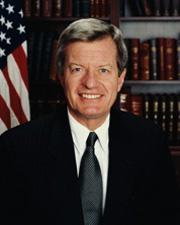
United States · Official source
5,946 records where Sen. Baucus, Max [D-MT] is listed as a sponsor, author, or other actor. Search with topics and years
United States · United States Congress · 31 October 1991
Designates March 1992 as Irish-American Heritage Month.
United States · United States Congress · 30 October 1991
Designates 1992 as the Year of Reconciliation Between American Indians and Non-Indians.
United States · United States Congress · 24 October 1991
Better Access to Affordable Health Care Act of 1991 - Title I: Improvements in Health Insurance Affordability for Small Employers - Amends the Internal Revenue code to raise from 25 to 100 percent the deduction for self-employed individuals for health insurance premiums and makes the deduction permanent. Directs the Secretary of Health and Human Services (the Secretary) to make grants to up to 15 States for the establishment and operation of small employer health insurance purchasing programs. Permits grant funds to be used to finance administrative costs associated with developing and operating a group purchasing program for small employers. Authorizes appropriations. Requires a report to the Congress from the Secretary concerning the feasibility of establishing a requirement that health insurers must make available plans providing that payments to providers be made using Medicare (title XVIII of the Social Security Act) payment rules. Title II: Improvements in Health Insurance for Small Employers - Amends the Social Security Act to add a new title, Title XXI: Standards for Small Employer Health Insurance and Certification of Managed Care Plans. Directs the Secretary to request the National Association of Insurance Commissioners to develop model standards and regulations concerning requirements for health insurance plans for small employers. Requires such plans to provide for: (1) guaranteed eligibility; (2) guaranteed availability; and (3) guaranteed renewability. Prohibits: (1) an insurer from refusing to renew or terminate a plan, except for nonpayment of premiums, fraud, or failure to maintain minimum participation rates; and (2) for certain services, discrimination based on health status. Sets limits controlling the variation of premium charges permitted among all small employers insured by an insurer. Requires the full disclosure of an insurer's rating practices. Requires a health insurance plan for small employers to offer: (1) both a standard and basic benefit package; and (2) a managed care option, if the insurer also offers such an option to other employers. Provides, under both the standard and basic package, for coverage of: (1) inpatient and outpatient hospital care; (2) inpatient and outpatient physician services; (3) diagnostic tests; and (4) preventive services. Provides, in addition, under the standard plan: (1) for the coverage of certain mental health care; (2) that, except as specified, there will be no limits on the amount, scope, or duration of benefits, and (3) for specified limits on deductibles, copayment, coinsurance, and out-of-pocket expenses. Provides under the basic plan that: (1) premiums, deductibles, copayments, or other cost-sharing may be imposed, but does not specify in what amounts; and (2) there shall be an out-of-pocket limit, but does not specify such limit. Amends the Internal Revenue Code to impose an excise tax of 25 percent of gross premiums on the issuer of any health insurance plan to a small employer, if the plan does not meet the requirements of title XXI. Sets forth study and reporting requirements. Title III: Improvements in Portability of Private Health Insurance - Imposes an excise tax of $100 per day, with respect to a covered individual, on a group health plan for its failure to provide coverage for a preexisting condition, subject to stated exceptions. Title IV: Health Care Cost Containment - Establishes a Health Care Cost Commission which shall report annually to the President and the Congress on national health care costs. Authorizes appropriations. Requires the Secretary of Health and Human Services, under title XXI of the Social Security Act, to establish a process for the certification of managed care plans and utilization review programs. Sets forth requirements for certification. Amends the Public Health Service Act to direct the Administrator of the Agency for Health Care Policy and Research to develop outcomes research and practice parameters for mental health services, including at least the diagnosis and treatment of childhood attention deficit syndrome disorders and manic depression. Amends Part A (General Provisions) of title XI of the Social Security Act to authorize appropriations for research outcomes of health care services and procedures. Title V: Medicare Prevention Benefits - Amends part B (Supplementary Medical Insurance) of title XVIII (Medicare) of the Social Security Act to establish frequency and payment limits for screening for fecal-occult blood tests and screening flexible sigmoidoscopies. Amends Medicare part C (Miscellaneous Provisions) to provide coverage for tetanus-diphtheria boosters and their administration. Provides Medicare coverage for well-child services, which include routine office visits, immunizations, laboratory tests, and preventive dental care. Expands the coverage of a screening mammography to provide for one such screening annually for all covered women over age 49. Directs the Secretary to establish and provide for a series of ongoing demonstration projects which provide coverage for specified preventive services, including: (1) glaucoma screening; (2) cholesterol screening; (3) osteoporosis screening and treatment; (4) screening services for pregnant women; (5) assessments for individuals beginning at age 65 or 75; and (5) other appropriate services. Authorizes appropriations.
United States · United States Congress · 22 October 1991
Amends the Trade Act of 1974 to change the period for the U.S. Trade Representative to identify trade liberalization priorities to no later than September 30 of each of the calendar years 1992 through 1997. Sets forth the procedure for a congressional committee to file a petition with the Trade Representative to investigate barriers and market distorting practices of a foreign country.
United States · United States Congress · 22 October 1991
Designates 1992 as The Year of the American Indian.
United States · United States Congress · 22 October 1991
Expresses the sense of the House of Representatives that: (1) the United States Trade Representative should take action under the Trade Act of 1974 to compensate for any trade losses caused by the European Community's (EC) failure to adopt by October 31, 1991, a new oilseeds regime that conforms with the General Agreement on Tariffs and Trade (GATT) panel oilseed ruling; and (2) such actions should remain in effect until the EC's oilseed regime conforms with its GATT obligations.
United States · United States Congress · 16 October 1991
Beginning Farmer and Rancher Credit Act of 1991 - Amends the Consolidated Farm and Rural Development Act to direct the Secretary of Agriculture to establish a farm ownership down payment loan program. Provides for: (1) Federal-State assistance coordination for beginning farmers and ranchers; and (2) the establishment of an Advisory Committee on Beginning Farmers and Ranchers. Targets farm ownership loans, and interest rate assistance to beginning farmers and ranchers. Reduces maximum amounts for farm ownership and operating loans and loan guarantees.
United States · United States Congress · 4 October 1991
Medicare Physician Payment Reform Implementation Act of 1991 - Amends title XVIII (Medicare) of the Social Security Act to: (1) direct the Secretary of Health and Human Services to increase the conversion factor for physicians' services for each of the years after 1993 through 1996 by one-fourth of the percentage by which the conversion factor may have been decreased due to an adjustment for asymmetry in 1992; (2) prohibit the Secretary, in determining the conversion factor for 1992, from assuming that changes in the volume and intensity of physician services in response to the implementation of the new payment system for such services would increase the estimated aggregate physician expenditures by more than one percent; (3) make any reduction to the conversion factor due to assumed volume and intensity changes equally applicable to the adjusted historical payment base; (4) permit separate payment to physicians for interpretation of electrocardiograms (EKGs) provided during office vists; (5) direct the Secretary to: (a) establish separate fee schedule amounts for the interpretation of EKGs; (b) adjust the relative values in the fee schedule for physician visits to reflect separate payments for EKG interpretation; (c) establish EKG practice guidelines for dissemination to physicians along with other educational information relating to EKG use; (d) develop a profile for EKG use by physicians; and (e) study EKG utilization and costs for a report to the Congress; and (6) make the new payment system for physicians nonapplicable to services furnished on or after January 1, 1992, by a physician who was in his or her first, second, or third year of practice in 1991 and to whom the payment rules under the new system did not apply in that year. Prohibits the Secretary from issuing final regulations before July 1, 1993, which change the methodology for determining: (1) the amount of time that may be billed for anesthesia services; and (2) the amount paid for drugs and biologicals furnished incident to physicians' services. Requires the Director of the Office of Technology Assessment to conduct a study and report to the Congress on whether payments for anesthesia services should be based on a particular unit of time according to the medical procedure with respect to which the service is furnished. Requires the Secretary to: (1) conduct a study and report to the Congress with respect to payment for drugs and biologicals furnished incident to physicians' services and payment for multiple surgical procedures; and (2) provide for pilot projects for developing Medicare volume performance standards other than at the national level. Authorizes appropriations to carry out the pilot projects.
United States · United States Congress · 1 October 1991
Breast Cancer Screening Safety Act of 1991 - Amends the Public Health Service Act to require certification in order for a facility to perform or interpret mammograms, inspect equipment, perform needle localizations or other procedures using mammography equipment, or conduct quality assurance oversight related to mammography. Authorizes the Secretary of Health and Human Services to issue and renew certificates for up to two years. Allows the Secretary to approve a private nonprofit organization to be an accreditation body which meets certain requirements, including inspecting facilities. Directs the Secretary to: (1) establish standards for facilities to assure the safety and accuracy of mammography; (2) specify organizations eligible to certify individuals to perform radiological procedures; (3) specify boards eligible to certify individuals to interpret screening mammograms; (4) establish standards regarding the qualifications for individuals to interpret screening mammograms; and (5) specify boards eligible to certify individuals to inspect screening mammography equipment and oversee quality assurance practices. Directs the Secretary to conduct annual announced and unannounced inspections of certified facilities. Provides for: (1) intermediate sanctions for certain violations; (2) suspension, revocation, and limitation of certificates; and (3) injunctions. Requires fees for certificate issuance and renewal, and for inspections, sufficient to cover costs. Requires annual publication of a list of facilities convicted of fraud and abuse, false billings, or kickbacks, facilities that have had certificates revoked, suspended, or limited, and facilities that have been the subject of a sanction or other similar matters. Allows the Secretary to exempt facilities in a State or locality with more stringent requirements from compliance with this Act. Directs the Secretary to: (1) make grants for research on new methods of establishing a Mammography Registry; and (2) based on the research, establish the Registry. Authorizes grants to enhance the capacity of health personnel in the area of breast cancer mortality prevention. Allows grant funds to be used to establish a breast cancer mortality prevention regional training center and develop a training curriculum. Authorizes appropriations. Amends title XVIII (Medicare) of the Social Security Act to require that screening mammographies paid for under Medicare be performed by a facility: (1) certified under this Act; and (2) in compliance with specified provisions of this Act.
United States · United States Congress · 1 October 1991
Semiconductor Investment Act of 1991 - Amends the Internal Revenue Code to classify the depreciable life for semiconductor manufacturing equipment as three-year property.
United States · United States Congress · 1 October 1991
Designates December 1 through 7, 1991, and November 29 through December 5, 1992, as National Adoption Week.
United States · United States Congress · 30 September 1991
Directs the Secretary of the Treasury to design and strike a silver commemorative medal for members of the U.S. armed forces who serve in a combat zone in connection with the Persian Gulf conflict.
United States · United States Congress · 24 September 1991
Investment Competitiveness Act of 1991 - Amends the Internal Revenue Code to allow regulated investment companies (RICs) to distribute to shareholders: (1) taxable-interest dividends to be treated by shareholders as interest; (2) qualifying-interest dividends which are exempt from withholding taxes imposed on nonresident aliens and foreign corporations; and (3) short-term capital gains dividends to be treated by shareholders as includable in gross income (and by foreign shareholders as short-term capital gains). Requires notices of such dividends to be mailed to shareholders not later than 60 days after the close of a RIC's taxable year. Permits the establishment of international regulated investment companies (IRICs) which are domestic corporations which: (1) are registered under the Investment Company Act of 1940; (2) hold only permitted assets; (3) permit their stock to be owned only by qualified foreign persons; and (4) elect to be treated as IRICs. Describes permitted assets as: (1) stock of a single registered investment company or a single regulated investment company; (2) deposits and debt securities with financial institutions with maturities of not more than 30 days that are reasonable necessary for the company to conduct its normal business affairs; and (3) certain other assets which are incidental to the conduct of normal affairs. Allows the Secretary of the Treasury to treat as an IRIC a domestic corporation that substantially, but not completely, satisfies the criteria for such status, if such failure to satisfy the criteria is or was de minimis, inadvertent, or beyond the control of the corporation. Provides for taxing an IRIC at the rate of tax on nonresident aliens (30 percent). Provides for taxing an IRIC at half such rate if the IRIC elects to market its shares only to residents of countries with which the United States has a tax treaty.
United States · United States Congress · 24 September 1991
Designates October 1991 as Crime Prevention Month.
United States · United States Congress · 20 September 1991
United States-Hong Kong Policy Act of 1991 - Title I: United States Policy - Expresses the sense of the Congress that the following should be U.S. policy with respect to the U.S. relationship with Hong Kong: (1) the United States should seek to establish direct bilateral ties with Hong Kong in economic, shipping, communications, tourism, cultural, sport, and other matters to the extent that Hong Kong is allowed to exercise autonomy in these fields under the 1984 Joint Declaration of the Governments of Great Britain and Northern Ireland and China on the question of Hong Kong; (2) the United States should seek to maintain after July 1, 1997, with the authorization of the Chinese Government, the U.S. Consulate-General in Hong Kong and other U.S. official and semi-official organizations; (3) the United States should invite Hong Kong to maintain, after such date, its official and semi-official missions in the United States and to open other missions in those fields in which it is permitted to exercise autonomy under the Joint Declaration; (4) the United States should seek to reach agreements with the Hong Kong Special Administrative Region (Administrative Region) in such fields, particularly with respect to reduction or abolishment of visa restrictions hindering U.S. nationals seeking to work in Hong Kong and covering Hong Kong residents seeking to work in the United States; (5) the United States should recognize passports and travel documents issued by the Administrative Region; and (6) the Chinese Government's exercise of sovereignty over Hong Kong should not affect treatment of Hong Kong residents who apply for visas to visit the United States. Expresses the sense of the Congress that the following should be U.S. policy with respect to participation by Hong Kong in multilateral organizations: (1) the United States should support Hong Kong's participation in multilateral organizations open to non-states which are concerned with those matters in which Hong Kong is permitted to exercise autonomy under the Joint Declaration; (2) the United States should continue to fulfill its obligations to Hong Kong under international agreements, so long as Hong Kong reciprocates; (3) the United States should support Hong Kong's application to join all multilateral international conferences, agreements, and organizations; and (4) the United States should support Hong Kong's continued participation after July 1, 1997, under the name Hong Kong, China, in all such conferences, agreements, and organizations. Expresses the sense of the Congress that the following should be U.S. policy with respect to commerce between the United States and Hong Kong: (1) the United States should seek to maintain and expand economic and trade relations with Hong Kong and should continue to treat Hong Kong as a separate territory in economic and trade matters (even after July 1, 1997); (2) the United States should continue to negotiate directly with Hong Kong to conclude bilateral economic agreements (even after July 1, 1997); (3) the United States should continue to consider Hong Kong for most-favored-nation trade status and to recognize certificates of origin for manufactured goods issued by the Administrative Region; (4) the United States should continue to allow the U.S. dollar to be freely exchanged with the Hong Kong dollar and U.S. businesses should continue to operate in Hong Kong; (5) the United States should continue to support Hong Kong's access to sensitive technologies; (6) the United States should encourage Hong Kong to continue to develop a framework which provides protection for intellectual property rights; and (7) the United States should negotiate a bilateral investment treaty with Hong Kong. Expresses the sense of the Congress that the following should be U.S. policy with respect to transportation from Hong Kong: (1) the United States should continue to recognize ships and airplanes registered in Hong Kong and negotiate air service agreements directly with Hong Kong; (2) the United States should continue to recognize ships registered by Hong Kong after July 1, 1997, and U.S. commercial ships should remain free to port in Hong Kong; (3) the United States should recognize licenses issued by the Administrative Region to Hong Kong airlines; (4) the United States should recognize permits issued by the Administrative Region to U.S. airlines for specified services; (5) the United States should negotiate with the Administrative Region to renew or amend all air service agreements existing on June 30, 1997, and to conclude new air service agreements affecting all flights to, from, or through China; and (6) the United States should negotiate with the Administrative Region about arrangements to implement international aviation agreements. Expresses the sense of the Congress that the following should be U.S. policy with respect to cultural and educational exchanges with Hong Kong: (1) the United States should seek to maintain and expand U.S.-Hong Kong relations and exchanges in culture, education, science, and academic research; (2) the Administrative Region should be accorded individual status as a full partner in the Fulbright Program; and (3) the Congressional Research Service of the Library of Congress should seek to expand educational and informational ties with the Legislative Council of Hong Kong. Title II: The Status of Hong Kong in United States Law - Continues to treat Hong Kong as a separate territory under U.S. law after July 1, 1997. Approves the continuation in force of all treaties entered into by the United States and Hong Kong before such date. Title III: Reporting Provisions - Directs the Secretary to submit to the Speaker of the House and the chairman of the Senate Foreign Relations Committee: (1) a report on the degree to which the Joint Declaration is being implemented; and (2) a separate subreport (with respect to country reports) on Hong Kong.
United States · United States Congress · 17 September 1991
Emergency Unemployment Compensation Act of 1991 - Establishes an emergency unemployment compensation program. Allows any State to enter into and participate in an agreement with the Secretary of Labor (the Secretary) under which the State agency which administers the State unemployment compensation law will make payments of emergency unemployment compensation: (1) to individuals who have exhausted all rights to regular compensation under State law, have no rights to such regular compensation or any additional State or Federal compensation, and are not receiving Canadian compensation; and (2) for any week of unemployment beginning in the individual's eligibility period. Sets forth provisions relating to exhaustion of regular benefits and weekly amount of emergency benefits equal to regular benefits. Authorizes a State Governor, in a period of a seven or eight percent total unemployment rate in that State (as defined under this Act), to elect to trigger off an extended compensation period to provide emergency unemployment compensation to individuals who have exhausted their rights to regular compensation under State law. Requires a State, under such an agreement, to establish an emergency unemployment compensation account with respect to the benefit year of each eligible individual who files an application. Limits benefit payments to not more than the amount in the individual's account. Sets forth formulas for determining the amount in such account. Provides that the applicable limit in such account shall be equal to: (1) 20 for an eight-percent period, i.e. one triggered by a total unemployment rate (TUR) of eight percent or more in the State, seasonally adjusted, for the most recent six calendar months with available data; (2) 13 for a seven-percent period; (3) seven for a six-percent period; and (4) four for any other period. Sets forth special rules relating to such applicable limits. Requires reduction in such account by the amount of extended benefits received by the individual relating to the same benefit year under the Federal-State Extended Unemployment Compensation Act of 1970. Sets the weekly benefit amount at the amount of regular compensation (including dependents' allowances) payable under the State law to the individual for such week for total unemployment. Provides for determination of periods and applicable triggers. Provides for a minimum period of at least 13 weeks. Provides, in general, that no emergency unemployment compensation shall be payable to any individual under this Act for any week beginning: (1) before the later of October 6, 1991, or the first week following the week in which an agreement under this Act is entered into; or (2) after July 4, 1992. Sets forth transition and reachback provisions for the eligibility of certain individuals for such benefits, as exceptions to such general rule. Provides for payments to States having such agreements for emergency unemployment compensation. Sets forth financing provisions. Requires that funds in the extended unemployment compensation account of the Unemployment Trust Fund be used to make payments to States having agreements under this Act. Sets forth provisions relating to fraud and overpayments. Defines the eligible period under this Act. Provides that in no event shall an individual's period of eligibility include any weeks after the 39th week after the end of the benefit year for which the individual exhausted rights to regular compensation or extended compensation. Amends specified Federal law to repeal certain limitations on payment of unemployment compensation to former members of the armed forces. Reduces the length of required active duty by reserves for purposes of such payment. Amends the Social Security Act to establish an Advisory Council on Unemployment Compensation. Directs the Secretary to establish such a council by February 1, 1992, and every fourth year thereafter. Requires each such council to evaluate the unemployment compensation program. Sets forth membership and staff provisions. Requires each council to report to the President and the Congress by Feburuary 1 of the second year following the year in which it is required to be established. Requires the first Council report to include findings and recommendations on determining eligibility for extended unemployment benefits on the basis of unemployment statistics for regions, States, or subdivisions of States. Designates as emergency requirements, pursuant to the Balanced Budget and Emergency Deficit Control Act of 1985 (Gramm-Rudman-Hollings Act), all direct spending amounts provided, and all appropriations authorized by this Act (for all fiscal years). Provides that this Act shall not take effect unless, by its enactment date, the President submits to the Congress a written designation of all such direct spending amounts and authorized appropriations as such emergency requirements.
United States · United States Congress · 12 September 1991
Establishes a Commission on the Bicentennial of the United States' Democratic Party (Commission) to coordinate ceremonial events and related activities during the calendar year of 1992. Directs the Commission to report on its activities to the Speaker of the House of Representatives and the President Pro Tempore of the Senate at the time of its termination on February 13, 1993.
United States · United States Congress · 10 September 1991
Montana National Forest Management Act of 1991 - Designates certain lands in Montana as components of the National Wilderness Preservation System (System). Directs: (1) the Secretary of Agriculture to file maps and legal descriptions of each wilderness area so designated with specified congressional committees; (2) that such maps and descriptions be on file and available for public inspection in the office of the Chief of the Forest Service; and (3) that each area so designated be administered by the Secretary, subject to valid existing rights. Declares that it is not the intent of the Congress that: (1) such designation will not lead to the creation of protective perimeters or buffer zones around wilderness areas; and (2) the fact that nonwilderness activities or uses can be seen or heard from within a wilderness area shall not preclude such activities or uses up to the boundary of the wilderness area. Sets forth provisions with respect to: (1) the grazing of livestock; (2) State fish and game authority; (3) hunting; (4) the installation and maintenance of, and access to, hydrological, meteorological, or climatological collection devices and facilities; and (5) water rights. Determines and directs that: (1) decisions to allocate roadless areas to wilderness or nonwilderness categories pursuant to the Land and Resource Management Plans and associated environmental impact statements for the National Forest in the State of Montana (Plans), and the environmental analyses directly related to such allocations, not be subject to judicial review, with exceptions; (2) the Department of Agriculture not be required to review the wilderness option prior to the revision of the Plans, but review such option when such plans are revised (at least every 15 years), unless prior to that time the Secretary finds that conditions in a unit have significantly changed; (3) specified National Forest System (NFS) lands in Montana which were not designated as wilderness, special management, national recreation, or wilderness study areas be managed for multiple use and those areas need not be managed for the purpose of protecting their suitability for wilderness designation prior to or during revision of the initial Plans; (4) if revised Plans are implemented, areas not recommended for wilderness designation need not be managed for such purpose prior to or during revision of such Plans and areas recommended for wilderness designation be managed for such purpose; and (5) unless expressly authorized by the Congress, the Department not conduct any further statewide roadless area review and evaluation of NFS lands in Montana for purposes of determining their suitability for inclusion in the System. Designates certain special management areas for purposes of conserving, protecting, and enhancing scenic, fish and wildlife, biological, educational, and recreational values. Directs the Secretary to: (1) file maps for such areas with specified congressional committees; and (2) administer areas designated so as to achieve the purposes of their designation as national recreation areas, with exceptions. Withdraws all federally-owned lands within the areas so designated from all forms of entry, appropriation, and disposal under the mining and public land laws, and disposition under the geothermal and mineral leasing laws, subject to valid existing rights. Permits the removal of minerals from such lands if the Secretary finds that such disposition would not have adverse effects on the administration of such areas. Authorizes: (1) the Secretary to permit management activities compatible with the purposes of which the areas were designated and measures deemed necessary in the event of fire, or infestation of insects or disease; and (2) the use of motorized equipment and the grazing of livestock, subject to specified limitations. Directs: (1) the Secretary to manage the Mount Helena and Hyalite National Education and Recreation Areas with a focus on education; (2) that all management activities be conducted in a way that provides the public with an opportunity to become better informed about natural resource protection and management; (3) that designated special management areas be administered as components of the national forests wherein they are located; and (4) that specified land and resource management plans for the affected national forests emphasize achieving the purposes for which the areas are designated. Designates the Elkhorns National Recreation and Wildlife Area, to be managed as a national recreation area that emphasizes big game habitat. Designates specified lands in the Custer National Forest and the Gallatin National Forest, and the Lolo National Forest as wilderness study areas. Requires the Thompson-Seton Wilderness study area to be managed to protect its suitability for inclusion in the National Wilderness Preservation System until the Congress determines otherwise. Withdraws federally-owned lands in the Badger-Two Medicine Area from all forms of entry, appropriation, and disposal under the mining and public land laws and from disposition under the geothermal and mineral leasing laws, subject to valid existing rights. Directs the Secretary to manage such Area so as to protect its currently existing wilderness qualities. Specifies that: (1) nothing in this Act precludes the gathering of timber by the Blackfeet Tribe in exercise of valid treaty rights within such Area; and (2) with respect to oil and gas leases on Federal lands within such Area, no disturbance shall be permitted pursuant to such leases until the Congress determines otherwise, and the term of any such lease subject to the limitations imposed by this Act shall be extended for a period of time equal to the term that such limitation remains in effect. Directs the Secretary to: (1) conduct a review of such Area; (2) establish a committee composed of representatives of the Blackfeet Tribal Business Council, the Pikuni Traditionalist Association, the National Park Service, and representatives of the user public (including environmental and user industry groups) to regularly advise the Secretary on the development of the report and submit its findings to the Congress; (3) give special consideration to the religious, wilderness, and wildlife uses of the Area, including any treaties with the Blackfeet Nation; and (4) establish a process to provide information to the Tribe and interested public about options for future designation of such Area. Directs the Secretary to: (1) exchange specified lands with Plum Creek Timber, L.P. (the company); and (2) acquire certain lands and interests in land of the company in and adjacent to the Hyalite-Porcupine-Buffalo Horn Wilderness Study Area, the Scapegoat Wilderness Area, and other land in the Gallatin National Forest. Sets forth provisions with respect to: (1) easements; (2) maps; (3) the timing of the transactions; and (4) incorporation of lands conveyed to the United States into the national forests. Authorizes appropriations. Authorizes the Secretary to acquire, by exchange, certain mineral interests owned by the company or an affiliate. Specifies that mineral interests conveyed by the United States pursuant to this Act shall underlie lands the surface of which are owned by the company (but if there are insufficient federally-owned mineral interests of approximately equal value underlying company lands, the Secretary and the Bureau of Land Management (BLM) may identify for exchange any other federally-owned mineral interest in land in Montana of which the surface estate is in private ownership). Provides that the execution and performance of an exchange agreement and the taking of other actions pursuant to this Act shall not be deemed a major Federal action significantly affecting the quality of the environment within the meaning of the National Environmental Policy Act of 1969, nor shall they require the preparation of an environmental assessment under this Act. Directs that the Bitter Creek Wilderness Study Area and approximately 2,500 acres of the Axolotl Lakes Wilderness Study Area no longer be subject to the requirement of the Federal Land Policy and Management Act of 1976 pertaining to management in a manner that does not impair suitability for preservation as wilderness. Redesignates the Rattlesnake National Recreation Area and Wilderness as the Rattlesnake National Education and Recreation Area and Wilderness. Expresses the congressional policy that the U.S. Forest Service acquire and maintain reasonable public access to NFS lands in Montana. Authorizes appropriations.
United States · United States Congress · 2 August 1991
Amends the Internal Revenue Code to provide that, for purposes of computing the foreign tax credit, any deduction for State or local income or franchise tax shall not be allocated or apportioned to gross income from sources outside the United States.
United States · United States Congress · 2 August 1991
Designates November 1991 as National Red Ribbon Month.
United States · United States Congress · 2 August 1991
Designates October 1991 as Country Music Month.
United States · United States Congress · 1 August 1991
Amends the Internal Revenue Code to specify the frequency of deposits of employment taxes (social security, railroad retirement, and withheld income taxes) by small and large depositors. Repeals a provision of the Railroad Retirement Solvency Act of 1983 to conform to this Act.
United States · United States Congress · 31 July 1991
Fort Peck Indian Tribes-Montana Compact Act of 1991 - Ratifies the Fort Peck Indian Tribes-Montana Compact that relates to the reserved water rights of the Assiniboine and Sioux Tribes of the Fort Peck Reservation in Montana. Authorizes the Tribe to enter into a joint venture, service contract, lease, exchange, agreement, or to modify such agreement to authorize: (1) the delivery, use, or transfer of any part of the water rights confirmed in the Tribes by the Compact, for a maximum 50-year term inclusive of all renewal periods; or (2) the diversion or use of water within or outside the Reservation. Directs the Secretary to approve or disapprove of such water agreement or its modification by a specified period.
United States · United States Congress · 31 July 1991
Northern Cheyenne Indian Reserved Water Rights Settlement Act of 1991 - Ratifies the Water Rights Compact entered into on June 11, 1991, by the Northern Cheyenne Tribe (Tribe) and Montana. Directs the Secretary of the Interior (Secretary) to administer and enforce the Tribal water right until adoption and approval of a Tribal water code. Requires the Secretary, through the Bureau of Indian Affairs, to assist the Tribe under existing authority in developing specified acreage in the Tongue River basin and in the Rosebud Creek basin for agricultural purposes. Authorizes the Tribe or its authorized representatives, under specified conditions and subject to the Secretary's approval, to enter into a service contract, lease, exchange, or other agreement providing for the delivery, use, or transfer of the water right confirmed to it in the Compact. Directs the Secretary to identify and develop features of the Tongue River Dam Project in Montana to provide for the enhancement of fish and wildlife habitats. Authorizes appropriations for such enhancement. Directs the Secretary to establish a Tribal Development Fund for the Northern Cheyenne Tribe to be used for: (1) land and natural resources administration, planning, and development within the Reservation; (2) land acquisition; and (3) a loan to Montana for the Tongue River Dam Project costs. Authorizes appropriations. Authorizes the Secretary to provide certain funds to Montana for the modification of the Tongue River Dam. Specifies contributions to be made to such project by the Tribe (as an interest-free loan to Montana) and by the State. Authorizes appropriations for: (1) the modification of the Tongue River Dam; (2) its annual operation, maintenance, and replacement costs; and (3) all environmental compliance associated with the Compact. States that it is the intent of the Congress that nothing in this Act shall: (1) alter the trust responsibility of the United States to the Tribe; or (2) prohibit it from seeking additional authorization or appropriation of funds for Tribal programs and purposes. Directs the Secretary to allocate, subject to any prior reserved water rights, specified acre-feet per year of stored water in Big Horn Reservoir, Yellowtail Unit, Lower Bighorn Division, Pick-Sloan Missouri Basin Program, Montana, for use or disposition by the Tribe. Declares that the Tribe shall not be required to make payments to the United States for the portion of the tribal water right stored in Yellowtail Reservoir unless it uses or sells the water. Specifies the schedule of such payments. Directs the Tribe to set rates for its use or sale of stored water, and to retain all revenues from such use or sale. Retains in the United States the right to use any and all water stored in the Big Horn Reservoir for hydropower generation. Requires the Secretary to enter into an agreement with the Tribe providing for: (1) the Tribe's use or sale of water stored in the Big Horn Reservoir, under specified conditions; and (2) the collection and disposition of revenues in connection with water stored in it that is made available to the Tribe. Directs the Secretary to enter into a cooperative agreement with Montana for planning, design, and construction of the Tongue River Dam Project. Retains ownership of such dam in Montana. Expresses the intent of the Congress that nothing in this Act shall subject to the Reclamation Reform Act of 1982 any holders of State water contracts from the Tongue River Reservoir who do not have a contract for Federal reclamation storage. Directs the Bureau of Land Management to transfer specified Federal lands in Montana to the Bureau of Indian Affairs in trust for the Northern Cheyenne Tribe. States that this transfer shall not be construed as creating a Federal reserve water right. Directs the Secretary, acting through the Bureau of Indian Affairs, to pay to Montana, annually and on a nonreimbursable basis, an amount to cover the proportionate share of the annual operation, maintenance, and replacement costs for the Tongue River Reservoir Dam. Declares that the United States waives its immunity from suit to the extent necessary to permit, with specified exceptions: (1) the resolution by the Northern Cheyenne-Montana Compact Board of matters arising within its jurisdiction; and (2) the appeal or judicial enforcement of Compact Board decisions as provided in the Compact. Provides that nothing in this Act shall be construed to alter or amend any provision of the Yellowstone River Compact.
United States · United States Congress · 26 July 1991
Designates November 1991 as National Accessible Housing Month.
United States · United States Congress · 23 July 1991
Family Dairy Farm Protection Act of 1991 - Expresses the sense of the Congress that the amendments made by this Act shall be used to ensure the production of wholesome milk and dairy products at levels adequate to meet U.S. consumer needs. Amends the Agricultural Act of 1949 to increase the basic milk price support level to $12.60 per hundredweight. Establishes a two-tier milk price support program if estimated Commodity Credit Corporation (CCC) purchases exceed a specified amount. Bases support price adjustments on estimated purchases. Establishes a National Dairy Inventory Management Board whose duties shall include: (1) establishing support price adjustments; (2) estimating CCC milk purchases; and (3) carrying out a domestic dairy inventory management program. Sets forth minimum milk solid contents for whole, lowfat, and skim milk. Amends the Federal Meat Inspection Act to exclude from the definition of "meat food product" fresh pizza containing meat. Amends the Food Security Act of 1985 to authorize a heifer export program as part of the dairy export incentive program.
United States · United States Congress · 22 July 1991
Amends the Internal Revenue Code to allow farmers' cooperatives to elect to treat as ordinary income or loss certain capital gains and losses from the disposition of assets used in conducting business with or for patrons.
United States · United States Congress · 18 July 1991
Reclamation Reform Act of 1991 - Amends the Reclamation Reform Act of 1982 to revise and add certain definitions, including definitions of "landholding," "custom farmer," "active farmer," and "operation" as they apply under such Act. Makes changes to provisions concerning: (1) water service contracts; (2) pricing; (3) certification as a condition to the receipt of irrigation waters; (4) the application of ownership and pricing limitations to trusts; (5) landholdings of religious and charitable organizations; and (6) enforcement of payment for delivery of irrigation to landholders. Directs the Secretaries of the Interior and Agriculture to negotiate and execute a memorandum of understanding to permit the Secretary of the Interior access to, and use of, information collected and maintained by the Department of Agriculture which would aid enforcement of the ownership and pricing limitations of Federal reclamation law, including the Reclamation Reform Act of 1982.
United States · United States Congress · 16 July 1991
Designates the week beginning August 25, 1991, as National Parks Week.
United States · United States Congress · 11 July 1991
Amends the Internal Revenue Code to reduce the occupational tax from $250 to $165 for retail dealers in liquors and in beer. Limits assessments of underpayments with respect to taxable periods beginning after the date of enactment of this Act in connection with such tax. Abates assessments and mandates refund of overpayments of any post-1987 tax.
United States · United States Congress · 11 July 1991
World Cup USA 1994 Commemorative Coin Act - Directs the Secretary of the Treasury to issue a specified number of five-dollar gold coins, one-dollar silver coins, and half-dollar clad coins in commemoration of the 1994 World Cup and the unique appeal of soccer. Sets forth certain features of such coins and provides for their design, issuance, and sale. Requires that all sales include a surcharge of $35 per coin for the five-dollar coins, $7 per coin for the one-dollar coins, and $1 per coin for the half-dollar coins. Requires that all surcharges be paid to the Organizing Committee to organize and stage the 1994 World Cup. Requires that ten percent of such funds shall be made available through the U.S. Soccer Federation Foundation, Inc., for distribution to institutions for scholastic scholarships to qualified students.
United States · United States Congress · 10 July 1991
Designates March 19, 1992, as National Women in Agriculture Day.
United States · United States Congress · 28 June 1991
Directs the Secretary of Veterans Affairs, during the five-year period beginning on October 1, 1991, to conduct a rural mobile health care clinic program in States in which significant numbers of veterans reside in rural areas. Makes eligible for such mobile health care veterans otherwise eligible for veterans' health care who reside at least 100 miles from the nearest Department of Veterans Affairs health-care facility. Requires the Secretary to begin operation of at least three mobile health care clinics in each fiscal year of the program. Requires the Secretary to report to the Congress an evaluation of the program. Authorizes appropriations for FY 1992 through 1996.
United States · United States Congress · 28 June 1991
Limited Partnership Rollup Reform Act of 1991 - Amends the Securities and Exchange Act of 1934 to revise proxy solicitation rules with respect to partnership rollup transactions (in which general partners combine several limited partnerships into one unit that trades on a stock exchange). Requires any proxy rules prescribed by the Securities Exchange Commission (SEC) to: (1) permit dissenting shareholders in a proposed rollup to contact other limited partners before the transaction date without first having to file a written proxy statement with the SEC; (2) prohibit any general partner from paying directly or indirectly any person providing solicitation services (a broker-dealer) on the basis of whether the solicitations either approve or disapprove the proposed transaction, or the compensation is contingent on the transaction's approval or completion; (3) require the issuer to provide to a shareholder (limited partner) a list of all limited and general partners involved in the proposed rollup; (4) require the rollup prospectus to be clear, concise, and understandable and summarize all effects of the proposed transaction, conflicts of interest, changes in voting rights and ownership interests, dissenters' rights, and other pertinent information; (5) provide that the soliciting material describe in reasonable detail any opinion, appraisal, or report that is prepared by a person, unaffiliated with the general partner or sponsor and received by the entity subject to the transaction or its affiliates and that is related to the proposed transition; (6) require that each prospectus be accompanied by an independent opinion on the rollup's fairness; and (7) give each shareholder at least 60 days to review the prospectus; and (8) contain such other provisions as the SEC determines necessary. Requires the rules of a national securities association to prevent association members from participating in any rollup transaction unless it protects the rights of dissenting limited partners, including: (1) the right to an appraisal and compensation, or to retain a security under the same terms as the original issue; (2) the right not to have dissenters' voting power unfairly reduced or abridged; (3) the right not to bear the costs of a rejected rollup; and (4) restrictions on the conversion of management profit-sharing interests and incentive fees into asset-based management fees. Requires a national securities exchange to prohibit the listing of any security resulting from a rollup transaction unless it provided for such dissenters' rights. Requires SEC rules to prohibit any national market system from trading any security resulting from a rollup transaction unless it provided for such dissenters' rights.
United States · United States Congress · 28 June 1991
Small Business Economic Opportunity Enhancement Act of 1991 - Amends the Small Business Act to establish a five-year microloan demonstration program to: (1) make direct loans to intermediaries (such as community development corporations) for short-term loans to eligible small businesses; and (2) make grants to intermediaries for marketing, management, and technical assistance to small business borrowers.
United States · United States Congress · 25 June 1991
Requires the Secretary of the Interior to make available Pick-Sloan Missouri River Basin Program project pumping power at the firm power rate to the Haidle and Hammond irrigation projects in Prairie and Rosebud Counties, Montana.
United States · United States Congress · 25 June 1991
Employee Benefits Simplification and Expansion Act of 1991 - Title I: Nondiscrimination Provisions - Amends the Internal Revenue Code with respect to employee benefit plans. Redefines the term "highly compensated employee" for pension, profit sharing, and stock bonus plans, etc., purposes. Makes such employee one who is a five-percent owner or who has compensation from the employer in excess of $50,000. Provides a special rule where no employees are treated as highly compensated. Provides that the cost of living adjustment with respect to any calendar year is based on the increase in the applicable index as of the close of the calendar quarter ending September 30 of the preceding calendar year. Requires the rounding of such amounts to the nearest $1,000, except that elective deferrals and elective contributions to simplified employee pensions are to be rounded to the nearest $100. Allows an employer to determine an employee's compensation solely by reference to such employee's base pay. Provides that the minimum participation rule applies only to defined benefit pension plans. Requires such plans to benefit not less than 25 employees, or the greater of 40 percent of all employees or two employees (or if there is only one employee, such employee). Sets forth alternative methods of meeting nondiscrimination requirements for cash or deferred arrangements, including specified contribution and notice requirements. Sets forth alternative methods of satisfying the nondiscrimination test for matching contributions. Revises the method for distributing excess contributions to highly compensated employees. Title II: Distributions - Allows distributions from qualified pension plans to be rolled over tax-free to an individual retirement account or another qualified plan or annuity. Eliminates five-year forward averaging for lump-sum distributions from qualified plans. Requires certain tax-free distributions to be made in the form of a direct trustee-to-trustee transfer to an eligible individual retirement plan. Sets forth administrative requirements in making such distributions. Requires distributions to be made from qualified plans by April 1 of the calendar year following the later of: (1) the calendar year in which the employee attains age 70; or (2) the calendar year in which the employee retires. (Present law requires such distributions no later than April 1 of the calendar year following the calendar year in which the employee attains age 70 1/2.) Title III: Miscellaneous Provisions - Revises the definition of a leased employee to include one whose services are performed under the control of a service recipient, instead of one whose services are historically performed by employees. Replaces the 59 1/2- and 70 1/2-year age requirement with 59- and 70-year age requirements for specified pension plans. Eliminates the special aggregation rules that apply to plans maintained by owner-employees that do not apply to other qualified plans. Makes the 150 percent current liability limitation on the deduction allowed for employer contributions to qualified pension plans inapplicable to multi-employer plans. Repeals the present law annual valuation requirement for such plans and applies the prior law requirement that valuations be performed at least every three years. Sets forth affiliation requirements for employers jointly maintaining a voluntary employees' beneficiary association. Provides that compensation, in the case of a governmental plan, includes any amount which is contributed by the employer pursuant to a salary reduction agreement and which is not includible in the gross income of an employee under cafeteria plans, cash or deferred arrangements, tax-exempt organization or public school annuities, State or local government plans, or deferred compensation plans of State and local governments and tax-exempt organizations. Makes the following limitations inapplicable to plans maintained by State and local governments and certain tax-exempt organizations: (1) excess benefit limitations; (2) compensation limitation on benefits; and (3) limitations on disability and survivor benefits. Allows government plan employers to revoke the grandfather election on the limitation to equal accrued benefits. Modifies provisions relating to simplified employee pensions. Increases the number of allowable participants for salary reduction arrangements from 25 to 100. Allows participation after one year of service (currently, three years of service is required). Repeals the requirement that at least 50 percent of eligible employees participate in a salary reduction arrangement. Eliminates certain requirements regarding contributions on behalf of disabled employees. Allows rural cooperative plans which include cash or deferred arrangements to make distributions to participants after attainment of age 59. Includes reports of pension and annuity payments in information returns and payee statements. Eliminates reports of designated distributions from the scope of the $25 per day penalty. Provides a $10 reporting threshold for designated distributions. Makes tax-exempt organizations eligible for cash or deferred arrangement pension plans.
United States · United States Congress · 20 June 1991
Provides, in applying certain Treasury regulations for taxable years after December 31, 1991, for determining the value of a flight by an individual who is not flying primarily for an employer's business on the basis of the percentage of seats occupied by individuals (other than crew) whose flights are primarily for the employer's business rather than the percentage of seating capacity.
United States · United States Congress · 19 June 1991
Medicare Physician Regulatory Relief Amendments of 1991 - Amends title XVIII (Medicare) of the Social Security Act to: (1) prohibit the denial of physician claims because of patient failure to complete Medicare secondary payer questionnaires; (2) prohibit carriers from using extrapolation to recover the amounts they reimbursed physicians for claims for which Medicare disallows payment if the physician requests that each such claim be individually identified; (3) prohibit the imposition of specified user fees on physicians; (4) require consideration of physician comments in annual carrier performance reviews; (5) allow individuals (including physicians) to file administrative appeals when they have suffered damages as a result of the failure of a carrier to carry out Medicare policies; and (6) require review of medical necessity denials by physicians in the same medical specialty as the physician providing the service. Amends the Medicare and Medicaid (title XIX of the Social Security Act) programs to permit the reimbursement of a patient's regular physician for services provided by another physician who covers for the regular physician under contractual arrangements. Amends title XI of the Social Security Act to repeal the peer review requirement for certain surgical procedures.
United States · United States Congress · 18 June 1991
Rural Crime and Drug Control Act of 1991 - Title I: Fighting Drug Trafficking in Rural Areas - Amends the Omnibus Crime Control and Safe Streets Act of 1968 to authorize appropriations, and increase the base allocation, for rural drug enforcement assistance. Directs the Attorney General to establish a Rural Drug Enforcement Task Force in each of the Federal judicial districts which encompass significant rural lands. Specifies the membership of such task forces. Directs the Attorney General to cross-designate up to 100 Federal officers with jurisdiction to enforce Controlled Substances Act (CSA) provisions on non-Federal lands to the extent necessary to effect the purposes of this title. Requires the Director of the Federal Law Enforcement Training Center to develop a specialized course of instruction devoted to training law enforcement officers from rural agencies in the investigation of drug trafficking and related crimes. Authorizes appropriations. Title II: Federal Law Enforcement Agencies - Authorizes appropriations to hire, equip, and train not less than 350 agents and necessary support personnel to expand Drug Enforcement Administration investigations and operations against drug trafficking organizations in rural areas. Title III: Increasing Penalties for Certain Drug Trafficking Offenses - Ice Enforcement Act of 1991 - Amends the CSA to increase penalties for specified offenses involving crystalline methamphetamine. Title IV: Rural Drug Treatment - Amends the Public Health Services Act (PHSA) to require the Secretary of Health and Human Services to establish a program to provide grants to hospitals, community health centers, and other appropriate entities that serve nonmetropolitan areas to assist in developing and implementing projects that provide, or expand the availability of, substance abuse treatment services. Authorizes appropriations. Title V: Rural Drug Prevention - Amends the PHSA to require the Secretary, acting through the Administrator of the Alcohol, Drug Abuse, and Mental Health Administration (ADAMHA), to make grants to public and nonprofit private entities that serve nonmetropolitan areas to assist such entities in developing and implementing projects that provide, or expand the availability of, substance abuse prevention services. Sets forth requirements to receive grants. Directs the Administrator: (1) to give priority in awarding such grants to applications from community based organizations with experience serving nonmetropolitan areas and projects that are designed to serve areas that have no available existing treatment facilities; and (2) to the extent practicable, to provide grants to fund at least one project in each State. Limits grant awards to a period of up to three years, but allows the Administrator to establish a procedure for grant renewal. Authorizes appropriations. Requires the alcohol and drug abuse information clearinghouse required to be established under the PHSA to: (1) gather information pertaining to ADAMHA and other rural drug abuse treatment and education projects operating throughout the United States; and (2) disseminate information to rural hospitals, community health centers, community mental health centers, treatment facilities, community organizations, and other interested individuals. Title VI: Rural Land Recovery Act - Directs State and Federal prosecutors, when bringing charges against the operators of clandestine methamphetamine and other dangerous drug laboratories, to include, in addition to drug-related charges, counts involving infringements of applicable environmental protection laws, including illegal disposal of hazardous waste and knowing endangerment of the environment. Authorizes such prosecutors and private citizens to bring suit against the operators of such laboratories for environmental and health-related damages caused by the operators in their manufacture of illicit substances.
United States · United States Congress · 11 June 1991
Designates June 1991 as National Forest System Month.
United States · United States Congress · 6 June 1991
Designates the week of November 10, 1991, as Hire a Veteran Week.
United States · United States Congress · 4 June 1991
Amends the Lacey Act Amendments of 1981 to authorize the Secretary of the Interior, acting through the Director of the U.S. Fish and Wildlife Service, to provide financial assistance for projects for research, conservation, management, or protection of exotic birds. Entitles any foreign government agency responsible for bird conservation, the Secretariat of the Convention on International Trade in Endangered Species of Wild Fauna and Flora (CITES), and any organization or individual with bird conservation experience to submit project proposals. Sets forth criteria for project approval. Establishes in the Treasury an Exotic Bird Conservation Fund to provide for project assistance. Prescribes a procedure for petitioning the Secretary to make findings or determinations or take other actions under this Act. Requires the Secretary to set up a system for registering persons who wish to acquire or transfer birds imported five years after enactment of this Act (other than ranched, captive-bred, or pet birds). Prohibits the transfer of any bird imported five years after enactment without registration. Establishes general requirements for registration. Prohibits the transfer of any bird imported five years after enactment unless it has been marked according to regulations. Requires the Secretary to publish in the Federal Register a list of those species of birds that need not be marked. Sets forth recordkeeping and reporting requirements for registrants. Directs the Secretary to establish: (1) a computerized information system for recording and analyzing information on imported birds; and (2) a voluntary National Avicultural Program to provide incentives for improved management and care of birds held for captive breeding. Requires the Secretary to: (1) promulgate regulations addressing the special health and welfare needs of exotic birds in quarantine; and (2) cooperate fully in implementation of specified avian transport guidelines. Authorizes the Secretary to develop research programs on the injury, morbidity, and mortality of birds. Requires the Secretary to encourage development of safe and efficacious vaccines for major avian diseases. Prohibits the import into or export of birds out of the United States without a permit. Directs the Secretary to establish a joint permit system to expedite the application and approval process for such imports and exports. Requires importers and exporters to obtain licenses as well. Conditions such a license on compliance with certain facilities standards. Authorizes the Secretary, at any time during the five years following enactment of this Act, to prescribe annual limits to imports of any species of birds, on a gradually declining scale in order to reduce and ultimately end the import of such species by the fifth anniversary of the enactment of this Act. Sets forth statutory limits which shall become effective if the Secretary has not prescribed such annual limits within 180 days after enactment. Sets forth purposes for which import permits must be issued, including scientific research, zoological exhibition, and captive breeding. Prohibits domestic bird ranching operations or approval of foreign captive-breeding facilities unless they meet specified standards. Sets forth criteria for the importation of pet birds. Sets forth civil and criminal penalties for imports and transfers in violation of this Act. Provides for compliance inspections, seizures or forfeitures of birds and equipment, and suspension of licenses or registration. Provides for citizen suits to enforce this Act. Authorizes appropriations.
United States · United States Congress · 4 June 1991
Amends the Lacey Act Amendments of 1981 to direct the Secretary of the Interior (Secretary) to issue regulations requiring the marking of exotic birds. Authorizes the: (1) sale of captive exotic birds only if they are properly marked; and (2) marking of such birds if the owner can show that they have been legally acquired. Requires persons who sell such birds to retain sales records for a prescribed period and to provide copies of such records to the Secretary upon request. Exempts common canaries, cockatiels, budgerigars, or other qualifying species from such marking requirements. Authorizes the Secretary to issue licenses to persons who transfer or import wild exotic birds. Sets forth: (1) circumstances under which such birds can be imported; and (2) specified reporting and recordkeeping requirements. Makes it unlawful for any person to: (1) import, transfer, possess, or sell any exotic bird unless such person is properly licensed and such bird is properly marked; and (2) commit, attempt to commit, or solicit another to commit, a violation of such requirements. Authorizes a person to petition the Secretary with respect to any finding, determination, or other action authorized by this Act. Sets forth both civil and criminal penalties. Sets forth provisions relating to: (1) inspections and seizures and dispositions of such birds; (2) suspension of licenses; and (3) imposition of fees.
United States · United States Congress · 3 June 1991
Family Planning Amendments of 1991 - Amends the Public Health Service Act to require family planning projects under existing provisions to offer adoption referral services. Removes provisions authorizing a reduction in grant amounts by the value of supplies or equipment furnished. Authorizes appropriations for the projects. Repeals provisions authorizing formula grants to States for family planning services. Replaces provisions authorizing grants and contracts for training personnel to carry out the family planning projects with provisions authorizing grants and contracts for technical assistance, clinical training for personnel, training for educators and counselors, and training of other personnel to carry out the family planning projects and information and education programs. Authorizes appropriations. Allows grants and contracts for research on contraceptive development to be used: (1) for contraceptive evaluation; and (2) to improve the clinical management and direct delivery of family planning services. Authorizes the Secretary of Health and Human Services to conduct, and make grants and contracts for the conduct of: (1) applied research into the development of new or improved contraceptive devices, drugs, and methods; and (2) evaluations of the acceptance, convenience, safety, efficacy, and cost of contraceptive devices, drugs, and methods. Authorizes appropriations. Replaces provisions authorizing grants and contracts for developing and making available family planning and population growth information to all persons desiring such information with provisions authorizing grants or contracts to establish community-based information and education programs to assist individuals in making responsible choices concerning human sexuality, pregnancy, and parenthood, and to enable individuals to prevent unintended pregnancies and sexually transmitted diseases. Directs the Secretary to: (1) conduct, or make grants and contracts for the conduct of, training and technical assistance activities to assist in carrying out the information and education programs; and (2) make grants and contracts for the development, evaluation, and dissemination of educational and informational materials. Authorizes appropriations. Directs the Secretary to annually collect data on: (1) the numbers of low- and moderate-income individuals and adolescents at risk of unintended pregnancies; (2) the sources of funding for family planning services; and (3) the number of individuals who receive family planning services from grantees and contractees under certain provisions amended by this Act and the types of services chosen by those individuals. Authorizes grants and contracts for the collection of the data. Requires the data to be: (1) made public; and (2) included in an annual report to the Congress, mandated by current law, on family planning and population research. Requires that all grantees under the title of the Public Health Service Act relating to population research and family planning provide education to patients concerning self breast examinations. Requires that projects receiving assistance under such title offer pregnant women information and counseling concerning all legal and medical options regarding their pregnancies. Requires that women requesting such information be provided with nondirective counseling, and referral on request, concerning alternative courses of action, including: (1) prenatal care and delivery; (2) infant care, foster care, or adoption services; and (3) pregnancy termination.
United States · United States Congress · 3 June 1991
Expresses the sense of the Congress that the American public should observe the 100th anniversary of filmmaking in 1993 and recognize the American Film Institute's leadership role in preserving the art of film.
United States · United States Congress · 23 May 1991
Morris K. Udall Scholarship and Excellence in National Environmental Policy Act - Establishes the Morris K. Udall Scholarship and Excellence in National Environmental Policy Foundation (the Foundation), as an independent entity of the executive branch, to be located in Tucson, Arizona. Sets forth provisions for a Board of Trustees and an Executive Director of the Foundation. Provides that the Foundation, among its other specified purposes, is to establish, and assist in developing and implementing, a Program for Environmental Policy Research and Environmental Conflict Resolution at the Udall Center for Studies in Public Policy (the Center) at the University of Arizona. Authorizes the Foundation, in consultation with the Center, to identify and conduct appropriate programs, activities, and services to carry out its specified purposes, including increasing awareness of the importance of natural resources, public lands, and environment, identifying critical environmental issues, developing resources to train professionals in environmental and related fields, and providing educational outreach regarding environmental policy. Authorizes the Foundation to conduct a national competition and to award undergraduate scholarships, graduate and faculty fellowships, internships in governmental agencies or environmental organizations, and grants for individuals (Morris K. Udall Scholars) to study in fields related to the environment. Directs the Foundation to award grants to the Center for: (1) annual expert panel discussions; (2) research; and (3) sharing practical experiences of visiting policymakers. Directs the Foundation to provide assistance from the Fund established under this Act to the Center to maintain a repository, and assure public availability, for Morris K. Udall's papers and other appropriate public papers. Directs the Foundation to determine program priorities, but requires that certain minimum or maximum amounts be used for specified activities. Establishes the Morris K. Udall Scholarships and Excellence in National Environmental Policy Trust Fund, in the Treasury, to be administered by the Foundation. Provides for investment of Fund assets, and for Fund expenditures and audits. Sets forth administrative provisions for the Foundation. Authorizes appropriations to the Fund to carry out this Act.
United States · United States Congress · 23 May 1991
Designates June 15, 1991, as Magna Carta Day.
United States · United States Congress · 22 May 1991
Rural Primary Care Act of 1991 - Title I: Tax Provisions - Amends the Internal Revenue Code to allow a nonrefundable personal income tax credit for any physician, physician assistant, or nurse practitioner who provides primary health services to residents of a rural health professional shortage area and who does not have certain connections with the National Health Service Corps loan repayment or scholarship programs. Excludes from gross income any payments made on behalf of a taxpayer by the National Health Service Corps loan repayment program. Amends provisions relating to election to expense certain depreciable business assets to specify a higher maximum aggregate cost to be taken into account for property used by a physician in providing primary health services in a rural health professional shortage area. Mandates a study to determine the present number of, and future need for, physician and nonphysician primary care providers in medically underserved urban areas. Requires that the determination form the basis for a study of the feasibility of extending the tax credit provided under this title. Title II: Public Health Service Provisions - Amends the Public Health Service Act to authorize appropriations to carry out provisions relating to area health education centers. Requires set-aside of a minimum amount of funds currently authorized for preventive health and health services block grants for the county health department grants mandated by this title. Requires grants to county health departments for preventive health services in areas within the county that are not urbanized. Requires such grants to be used to: (1) provide immunization services; (2) improve maternal and infant health; (3) reduce adolescent pregnancy and improve reproductive health; and (4) provide other appropriate services. Title III: State Health Service Corps Demonstration Projects - State Health Service Corps Demonstration Act - Amends the Public Health Service Act to direct the Secretary of Health and Human Services to establish a State Health Service Corps Demonstration Project. Directs the Secretary to make grants under the Project to up to ten States for the Federal share of training and employment of physician and nonphysician providers serving health professional shortage areas. Requires a recipient State to enter into an agreement with an area health education center for the planning, development, and operation of a program of training and employing such providers. Sets forth the responsibilities of a center. Authorizes appropriations. Requires each State carrying out a Project to establish a State Health Service Corps Scholarship Program involving a period of service in the service area or on the clinical staff of an area health education center or a medical school in return for a scholarship. Authorizes the official heading the State agency administering the Program to contract with an educational institution for the payment of scholarship or loan amounts.
United States · United States Congress · 22 May 1991
Paperwork Reduction Act of 1991 - Title I: Authorization of Appropriations - Amends the Paperwork Reduction Act of 1980 to authorize appropriations to the Office of Information and Regulatory Affairs for 1992 through 1996. Title II: Reducing the Burden of Federal Paperwork on the Public - Makes Federal agencies accountable for reducing the burden of Federal paperwork on the public. Makes the Act applicable to all federally sponsored paperwork. Requires a Government-wide paperwork reduction goal of at least five percent and individual agency goals that aggregate to the Government-wide goal. Title III: Enhancing Federal Agency Responsibility and Accountability for Reducing the Burden of Federal Paperwork - Makes the senior official charged with carrying out the responsibilities of the agency under the Act the head of a separate office with qualified staff responsible for assuring agency compliance with requirements under the Act. Requires each agency to prepare estimates of burden that will result from proposed collections of information. Establishes a certification process for the review of each information collection request before it is submitted to the Director of the Office of Management and Budget (OMB) for approval. Title IV: Enhancing Government Responsibility and Accountability for Reducing the Burden of Federal Paperwork - Makes the OMB Director responsible for ensuring that all information collection requests display an estimate of the paperwork burden for each response. Requires OMB procedures in order for agencies to estimate the burden to comply with proposed collections of information. Require coordination with the Office of Federal Procurement Policy to eliminate paperwork burdens associated with procurement and acquisition. Requires OMB pilot projects to test approaches to improve information management practices and related activities. Reduces the time afforded the OMB Director for approving a routine agency request to collect information. Provides for greater participation by the public and Federal agencies in the review of proposed paperwork burdens generated by agency information requests. Requires the OMB Director to make publicly available any decision to disapprove a collection of information requirement contained in an agency rule, together with the reasons for such decision. Provides protection for whistleblowers of unauthorized Federal paperwork burdens. Provides for expedited OMB review of an agency information request with a reduced paperwork burden. Title V: Additional Government Information Management Responsibility - Revises the statistical policy and coordination functions of the OMB Director. Requires the OMB Director to: (1) establish an interagency working group on statistical policy, consisting of the heads of the agencies with major statistical programs, to coordinate agency statistical activities; and (2) provide training in the statistical policy functions of the chief statistician to Federal employees. Provides for Government-wide standards for sharing public information. Requires the OMB Director to develop a plan for meeting the automatic data processing needs of the Federal Government in accordance with the Act and certain requirements of the Federal Property and Administrative Services Act of 1949. Requires the OMB Director to make the Federal Information Locator System available on electronic media to Federal agencies and the public. Requires the OMB Director's annual report to the Congress to list any increased Federal paperwork burdens and describe each agency's plans to implement the applicable policies, standards, and guidelines under the Act. Title VI: Effective Dates - Sets forth the effective dates for this Act.