Bill· SS. 190 (94th)passed
A bill for the relief of John Oakason and H. F. Mulholland.
United States · United States Congress · 16 January 1975
Provides for the relief of John Oakason and H. F. Mulholland.
The world's political record
Person
United States · Official source
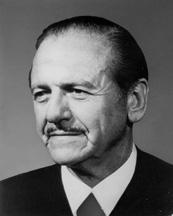
751 records where Sen. Moss, Frank E. [D-UT] is listed as a sponsor, author, or other actor. Search with topics and years
United States · United States Congress · 16 January 1975
Provides for the relief of John Oakason and H. F. Mulholland.
United States · United States Congress · 16 January 1975
Provides for the relief of Mrs. Helen Kuri George.
United States · United States Congress · 16 January 1975
Requires the President and the Vice President, each Member of the Senate and the House of Representatives (including Resident Commissioners and Delegates), candidates for such offices, each civil or military officer of the executive branch of any department or agency thereof, each judge or justice of a court of the United States, and each employee of the legislative, executive, or judicial branch of the Government of the United States or any department or agency thereof who is compensated at a rate in excess of $25,000 per year to file annually with the Comptroller General a financial report. Requires such report to contain a full and complete statement of: (1) the amount and source of each item of income, each item of reimbursement for any expenditure, and each gift or aggregate of gifts from one source which exceeds $100 in amount or value; (2) the value of each asset held by him, or by him and his spouse jointly, and the amount of each liability owned by him, or by him and his spouse jointly, as of the close of the preceding calendar year; (3) all dealings in securities or commodities by him, or by him and his spouse jointly, or by any person acting on his behalf or pursuant to his direction during the preceding calendar year; and (4) all purchases and sales of real property or any interest therein by him, or by him and his spouse jointly, or by any person acting on his behalf or pursuant to his direction, during the preceding calendar year. Provides that all reports filed under this Act shall be maintained by the Comptroller General as public records which, under such reasonable regulations as he shall prescribe, shall be available for inspection by members of the public. Sets forth penalties for violations of the provisions of this Act.
United States · United States Congress · 16 January 1975
Authorizes appropriations of $2,500,000 for each of fiscal years 1975, 1976, and 1977 to the Secretary of Commerce for the promotion of tourist travel.
United States · United States Congress · 16 January 1975
Provides for the relief of Guillermina Yolanda Abadillo.
United States · United States Congress · 16 January 1975
Net Worth Disclosure Act - Requires the President, the Vice President, each Member of the Senate, each Member of the House of Representatives (including Delegates and the Resident Commissioner from Puerto Rico), and each officer and employee of the United States within the executive and legislative branches of Government receiving compensation at an annual rate in excess of $30,000 to file annually with the Comptroller General of the United States a full and complete statement of net worth. Provides that such statement shall consist of: (1) a list of the identity and value of each asset held by him, or jointly by him and his spouse or by him and his child or children, and which has a fair market value in excess of $1,500 as of the end of the calendar year prior to that in which he is required to file a report under this Act; and (2) a list of the identity and amount of each liability owed by him, or jointly by him and his spouse or by him and his child or children, and which is in excess of $1,500 as of the end of the calendar year prior to that in which he is required to file a report under this Act. Provides penalties for violations of the provisions of this Act.
United States · United States Congress · 16 January 1975
Provides for the relief of Rosa Amelia Alba Mauricio.
United States · United States Congress · 16 January 1975
Expresses the finding of Congress and makes it the policy of the United States to continue experimentation with satellite systems for the remote sensing of the Earth's resources, through January 1, 1980, unless a permanent operational system is established. Directs the President to: (1) take all practical steps to continue the availability of data on the satellite systems; (2) foster improvements in them; and (3) promote their widest possible use and understanding. Requires the President to transmit to Congress not later than April 15, 1975, a report containing recommendations for proposed actions to be taken to carry out the policy set forth in this Act and such revisions in the budget proposed by fiscal 1976 as the President deems necessary to do so. Requires the President to submit each year prior to 1980, as part of the Aeronautics and Space Report, a description of activities and evaluation of progress under this Act, and an evaluation of the desirability of establishing a permanent Earth resources satellite system.
United States · United States Congress · 16 January 1975
Authorizes additional expenditures of $16,000 by the Senate Special Committee on Aging for inquiries and investigations.
United States · United States Congress · 15 January 1975
Government in the Sunshine Act - Title I: Congressional Procedures - Requires each meeting of each standing, select, or special committee or subcommittee of the Senate and House of Representatives, including meetings to conduct hearings, to be open to the public. Provides that a portion or portions of such meetings may be closed to the public if the committee or subcommittee determines by vote of a majority of a quorum of the members present that the matters to be discussed or the testimony to be taken: (1) will disclose matters necessary to be kept secret in the interests of national defense or the confidential conduct of the foreign policy of the United States; (2) will relate solely to matters of committee staff personnel or internal staff management; or (3) will tend to charge with crime or misconduct, or to disgrace any individual, or will represent a clearly unwarranted invasion of the privacy of any individual (unless it relates to any government officer or employee with respect to his official duties or employment); (4) will disclose information pertaining to any investigation conducted for law enforcement purposes, with specified limitations; or (5) will disclose information relating to the trade secrets or financial or commercial information pertaining specifically to a given person. Directs each standing, select, or special committee or subcommittee of the Senate and House of Representatives to make a public announcement of the date, place, and subject matter of each meeting at least one week before such meeting unless the committee or subcommittee determines by a vote of the majority of a quorum that committee business requires that such meeting be called at an earlier date, in which case the committee shall make public announcement of the date, place and subject matter of such meeting at the earliest practicable opportunity. Provides that a complete transcript shall be made of each meeting of each standing, select, or special committee or subcommittee. Provides that a copy of each such transcript shall be made available for public inspection within seven days and additional copies shall be furnished to any person at the actual cost of duplication. Provides that all the aforegoing requirements and exceptions applicable to the meetings of the committees and subcommittees of the House and Senate shall also be applicable to each meeting of a committee of conference. Establishes procedures to review and reverse any committee and subcommittee vote to close a meeting to the public or to delete from the publicly available copy a portion of a meeting transcript. Title II: Agency Procedures - Requires all meetings of any Federal agency to be open to the public unless a majority of the entire membership of an agency determines the meeting: (1) will disclose matters necessary to be kept secret in the interests of national defense or the confidential conduct of the foreign policy of the United States; (2) will relate solely to individual agency personnel or to internal agency office management and administration or financial auditing; (3) will tend to charge with crime or misconduct, or to disgrace, any person, or will represent a clearly unwarranted invasion of the privacy of any individual (unless it relates to any government officer or employee with respect to his official duties or employment); (4) will disclose information pertaining to any investigation conducted for law enforcement purposes, with specified limitations; or (5) will disclose information relating to the trade secrets or financial or commercial information pertaining specifically to a given person. Directs each agency to make public announcement of the date, place, and subject matter of each meeting (whether open or closed to the public) at least one week before each meeting unless the agency determines by a vote of the majority of its members that agency business requires that such meetings be called at an earlier date, in which case the agency shall make public announcement of the date, place, and subject matter of such meeting at the earliest practicable opportunity. Provides that a complete transcript, including a list of all persons attending and their affilations, shall be made of each meeting of each agency (whether open or closed to the public). Provides that a copy of each such meeting shall be made available to the public for inspection, and additional copies of any transcript shall be furnished to any person at the actual cost of duplication. Requires each agency to promulgate regulations to implement the requirements of this title. States that any citizen or person resident in the United States may bring a proceeding in the United States Court of Appeals for the District of Columbia Circuit: (1) to require an agency to promulgate such regulations if such agency has not done so within the time period specified herein; or (2) to set aside agency regulations that are not in accord with the requirements of this title and to require the promulgation of regulations that are in accord with such requirements. Gives the district courts of the United States jurisdiction to enforce the requirements of this title by declaratory judgment, injunctive relief, or otherwise. Provides that such actions shall be brought in the district wherein the plaintiff resides, or has his principal place of business, or where the agency in question has its headquarters. Sets forth provisions governing ex parte communications in agency proceedings.
United States · United States Congress · 15 January 1975
National Policy and Priorities for Science and Technology Act - Declares that it is the continuing policy and responsibility of the Federal Government to take appropriate measures directed toward achieving various goals, including: (1) a continuing Federal investment in science and technology adequate to the needs of the Nation; and (2) the strengthening of national capabilities for technological planning and policy formulation. Declares it to be the purpose of this Act to promote the effective application of science and technology to the furtherance of national goals by: (1) establishing a Council of Advisors on Science and Technology in the Executive Office of the President to provide a source of scientific and technological analysis and judgment to the President; (2) establishing an Intergovernmental Science and Technology Advisory Committee to foster the application of science and technology to State and regional needs; (3) establishing an Interagency Federal Coordinating Committee on Science and Technology to coordinate agency research and development efforts; and (4) having the President submit an annual Science and Technology Report to the Congress. Title I: Council of Advisors on Science and Technology - Establishes in the Executive Office of the President a Council of Advisors on Science and Technology. Directs the Council to annually appraise progress in science and technology in relation to the needs of the Nation and, taking account of the state of the economy through consultation with the Council of Economic Advisors, to determine the desired level of Federal investment in science and technology for the fiscal year immediately following the fiscal year in which such determination is made, and make appropriate recommendations to the President and Congress. States that the Council shall serve as a source of scientific and technological analysis and judgment for the President with respect to major policies, plans, and programs of science and technology of the Federal Government. Requires the President to transmit annually to the Congress, beginning October 15, 1976, a Science and Technology Report which shall set forth: (1) a review of development of national significance in science and technology; (2) the significant effects of current and foreseeable trends in science and technology on the social, economic, and other requirements of the Nation; (3) a review and appraisal of selected science and technology-related programs, policies, and activities of the Federal Government; (4) an inventory and projection of critical and emerging national problems the resolution of which might be substantially assisted by the application of science and technology; (5) the identification and assessment of scientific and technological measures that can contribute to the resolution of such problems, in light of the related social, economic, political, and institutional considerations; (6) the existing and projected scientific and technological resources, including specialized manpower, that could contribute to the resolution of such problems; (7) recommendations for legislation on science and technology-related programs and policies that will contribute to the resolution of such problems; and (8) recommendations with regard to Federal investment level and priorities in science and technology, as made by the Council pursuant to this Act. Title II: Federal Coordinating Committee for Science and Technology - Establishes the Federal Coordinating Committee for Science and Technology. States that the Committee shall consider problems and developments in the fields of science and technology and related activities affecting more than one Federal agency, and shall recommend policies and other measures: (1) to provide more effective planning and administration of Federal scientific and technological programs; (2) to identify research needs including areas of research requiring additional emphasis; (3) to achieve more effective utilization of the scientific and technological resources and facilities of Federal agencies, including the elimination of unnecessary duplication; and (4) to further international cooperation in science and technology. Abolishes the Federal Council for Science and Technology. Title III: National Science Foundation - Directs the National Science Foundation to recommend and encourage the pursuit of national policies designed to foster research and education in science and engineering, and the application of scientific and technical knowledge to the solution of national problems. Requires the Foundation to initiate an educational program of continuing education in science and engineering in order to enable scientists and engineers who have been engaged in their careers for at least five years to pursue courses of study designed to: (1) provide them with new knowledge, techniques, and skills in their special fields; or (2) acquire new knowledge, techniques, and skills in other fields which will enable them to render more valuable contributions to the Nation. Title IV: State and Regional Science and Technology Programs - Establishes, within the National Science Foundation, an Intergovernmental Science and Technology Advisory Committee. Provides that the Committee shall advise and assist the Foundation in: (1) identifying and defining civilian problems at the State, regional, and local levels and the environment in which solution to these problems ought to be provided; (2) identifying areas of highest priority for study, assessment, and development of policy alternatives by the Foundation under this title; and (3) identifying and fostering ways to facilitate the transfer and utilization of results of civilian research and development activities so as to maximize the application of science and technology to civilian needs. Authorizes the Director of the National Science Foundation to make grants not to exceed $100,000 to any State to pay a part of the cost of establishing an Office of State Science and Technology. Title V: General Provisions - Authorizes appropriations to carry out the various provisions and titles of this Act.
United States · United States Congress · 15 January 1975
Education for All Handicapped Children Act - States the findings of the Congress, including that: (1) the special educational needs of handicapped children are being fully met in only a few school systems; (2) one million of the handicapped children in the United States are excluded entirely from the public school system and will not go through the educational process with their peers; and (3) it is in the national interest that the Federal Government assist State and local efforts to provide programs to meet the educational needs of handicapped children in order to assure equal protection of the laws. Describes the purposes of this Act, including to insure that all handicapped children have available to them not later than 1978 special education and related services designed to meet their unique needs. Defines the terms used in this Act. Provides that during July 1, 1975, and September 30, 1980, the Commissioner of Education shall, in accordance with provisions of the Education of the Handicappped Act, make payments to State educational agencies for grants made for assistance in providing full educational opportunity to all handicapped children. Provides for State entitlement and eligibility under this Act. States that funds allocated under this Act shall be used by the State to initiate, expand, and improve special education and related services for handicapped children in accordance with the provisions of this Act. Sets forth requirements for eligibility including the following which a State must demonstrate to the Commissioner: (1) the State has in effect a policy that assures all handicapped children the right to a free appropriate public education; and (2) each local educational agency in the State will maintain an individualized written education program for each handicapped child and review at least annually and revise its provisions when appropriate with the agreement of the parents or guardian of the handicapped child. Requires that, as soon as practicable after the enactment of this Act, the Commissioner shall prescribe uniform categories and accounting procedures to be utilized by State agencies in submitting an application for assistance under this Act in order to assure equity among the States. Authorizes to be included for each fiscal year in the appropriation for the Department of Health, Education, and Welfare such sums as are necessary to administer provisions of this Act. States that in carrying out his responsibilities under this part, the Commissioner shall conduct directly, or by grant or contract such studies, investigations, and evaluations as are necessary to assure effective implementation of this Act. States that a maximum of 1 1/2 percent of the total of the grants paid under this Act for one year to a State agency or $75,000, whichever is greater, may be paid to such agency by the Commissioner for the administration of this Act. Authorizes appropriations for this purpose.
United States · United States Congress · 15 January 1975
Surface Mining Control and Reclamation Act - Title I: Statement of Findings and Policy - Declares that most of the nation's coal reserve can only be mined by underground methods. States the purposes of this Act, including to establish a nationwide program to prevent the adverse effects to society and the environment from surface coal mining. Title II: Office of Surface Mining Reclamation and Enforcement - Establishes in the Interior Department the Office of Surface Mining Reclamation and Enforcement with a director appointed by the President. States that such office shall administer the programs required by this Act and assist the States in development of State programs for surface coal mining and reclamation. Title III: State Mining and Mineral Resources Research Institute - Authorizes appropriation to the Secretary of the Interior of sums adequate to provide for each participating State $200,000 for fiscal year 1975, $300,000 for fiscal year 1976, and $400,000 for each fiscal year thereafter for 5 years, to assist the States in carrying on the work or a competent and qualified mining and mineral resources research institute or center agency at the school of mines of one public college or university of the State. Requires such monies to be matched dollar for dollar by the States. Authorizes appropriation of $15,000,000 for fiscal year 1975, such sum to be increased by $2,000,000 each fiscal year for 6 years thereafter, for specific projects in mining and mineral research in research institutes. Directs the Secretary to establish a center for cataloging current and projected scientific research in mining and mineral resources. Requires the Secretary to appoint an Advisory Committee on Mining and Mineral Research to advise him on all matters concerning mining and mineral resources research. Title IV: Abandoned Mine Reclamation - Creates the Abandoned Mine Reclamation Fund in the Treasury. Requires operators of coal mines to pay into the fund quarterly fees of $.35 per ton of coal produced by surface mining and $.25 per ton of coal produced by underground mining, or 10 percent of the value of the coal in the mine, whichever is less. Authorizes use of money in the Fund for acquisition and reclamation of abandoned and unreclaimed mined lands and for acquisitions and fillings of voids and sealing of tunnels and entryways in abandoned mines. Permits the Secretary to acquire land by condemnation for reclamation. Encourages States to acquire abandoned and unreclaimed land, and to transfer it to the Secretary for reclamation, and authorizes matching grants for such purpose, up to 90 percent of land price. Allows resale of reclaimed land by public bidding, and allows local public participation in determining use of reclaimed land. Title V: Control of the Environmental Impacts of Surface Coal Mining - Requires the Secretary of the Interior to implement within 135 days of enactment, a Federal program of enforcement of specified standards to remain in effect until State programs are approved. Directs publication within 180 days of enactment of regulations covering surface coal mining and reclamation, setting standards for State programs. States that such regulations must meet approval of the Environmental Protection Agency (EPA) Administrator. Requires States, within 18 months of enactment, to submit programs for carrying out this Act, such programs to include a State regulatory authority capable of regulating surface coal mining, state laws providing for sanctions for violations of regulations, and a permit system for surface coal mining regulation. Demands that such State programs meet the approval of the EPA Administrator. Subjects State programs to approval of Secretary of Interior within 6 months. Requires implementation of a Federal program of surface coal mining regulation where States fail in such implementation. Permits State laws and regulations that are more stringent than this Act. Requires, 30 months after enactment, that no surface coal mining shall take place except where a permit, good for 5 years, has been issued. States that permit applications must demonstrate ability and intent to comply with this Act and assurance that reclamation can be achieved. Requires permit applications to describe the method of mining and equipment proposed to be used, to describe by maps the land to be affected, and to contain a statement of results of test borings or core samplings of the affected land. States that permits must be accompanied by a mining and reclamation plan which shall include a description of present uses of the land, steps to be taken to prevent environmental damage, and a description of the reclamation activities. Requires the posting of performance bonds and possession of liability insurance by applicants for permits. Sets general performance standards for environmental protection in surface coal mining which permittees under this Act must meet. Imposes additional standards for steep-slope surface mining. Directs the Secretary to promulgate rules and regulations directed at the surface effects of underground mining, including specified requirements. Directs and authorizes inspection of surface coal mining and reclamation to determine compliance with this Act and regulations. Provides for requirement of record keeping and submittal and monitoring by mine operators. Requires surprise inspections by regulatory agencies not less than once a month. Requires civil penalties for violation of this Act or regulations under it. Provides that when an operator completes the backfilling, regrading, and drainage control of a bonded area, he may request a release of 60 percent of the bond. Provides that the remaining amount may be returned upon completion of all reclamation. Allows persons with a legal interest to file objections to release of bond, and for public hearings to follow. Permits any person to bring a civil suit against any person, including the United States, alleged to be in violation of this Act. Allows the court to award costs of litigation to parties in suits brought under this Act. Permits the Secretary to intervene in actions under this Act. Allows, where State regulatory authorities do not exist or fail to act, for Federal enforcement of this Act and of permit conditions. Permits issuance of an order to cease mining and reclamation. Provides for the Attorney General to institute civil suit for a restraining order or injunction to enforce this Act or regulations under it. Directs States to designate as unsuitable for surface coal mining those areas where reclamation is impossible or where land is fragile or of historical value. Prohibits existing mining operations from being declared unsuitable. Requires implementation of a Federal lands program applicable to all surface mining and reclamation operations on Federal land. Requires such program to, at least, adopt all requirements of this Act. Demands separate regulations for programs for special bituminous coal surface mines that meet speicified criteria, and for anthracite coal surface mines which are regulated by environmental protection standards of the States. Title VI: Designation of Lands Unsuitable for Noncoal Mining - Allows the Secretary to designate Federal lands unsuitable for mining materials other than coal, if they are predominantly urban or suburban in character or if such mining operations would have an adverse impact on lands used primarily for residential and related purposes. Title VII: Administrative and Miscellaneous Provisions - Defines the terms used in this Act. Prohibits discrimination against employees for filing suit under this Act and for testifying in a proceeding under this Act. Requires the Secretary to submit an annual report to the President and the Congress. Directs the President to minimize the adverse impact upon employment of any actions taken pursuant to this Act. Authorizes the Secretary of Labor to make grants to the States to provide cash benefits to individuals who have lost their jobs as a direct result of this Act and who are not eligible for unemployment assistance or who have exhausted their unemployment benefits. Directs the Secretary to contract with the National Academy of Sciences-National Academy of Engineering for a study of surface coal mining conditions in Alaska in order to determine which, if any, of the provisions of this Act should be modified with respect to such operations in Alaska. Directs the Chairman of the Council on Environmental Quality to contract with the National Academy of Sciences-National Academy of Engineering and other groups for a study of the technology for surface and open-pit mining and reclamation for minerals other than coal designed to assist in the development of regulation for such operations. Directs the Secretary to consult with Indian tribes in studying the regulation of surface mining on Indian lands. Authorizes appropriations to carry out this Act, as follows: (1) $10,000,000 for various contract authority immediately and for the next two fiscal years; (2) for administrative and other purposes, $10,000,000 for fiscal year 1975, $20,000,000 for fiscal 1976 and 1977, and $30,000,000 for fiscal years thereafter; (3) for research and demonstration projects, $35,000,000 for fiscal year 1976 and for each fiscal year thereafter, $250,000 for the Alaskan surface coal mine study; and (4) $500,000 for the study of surface mining of other minerals. Requires the written consent of the owner of the surface rights before the Secretary shall lease Federally-owned mineral rights, and requires compensation to be paid by the lessee to the surface owner.
United States · United States Congress · 15 January 1975
Provides for the coverage of clinical psychologists' services under the supplementary medical insurance benefits program established by title XVIII (Medicare) Act.
United States · United States Congress · 15 January 1975
Establishes the Lone Peak Wilderness Area in the State of Utah. Authorizes to be appropriated such sums as may be necessary to carry out the provisions of this Act.
United States · United States Congress · 15 January 1975
Coal Research Laboratory and Energy Research Fellowship Act - Title I: University Coal Research Laboratories - Authorizes the Director of the National Science Foundation, after consultation with the National Academy of Engineering, to designate five institutions of higher education at which university coal research laboratories will be established and operated. States that, in making designations under this Act, the Director shall consider the following criteria: (1) the institution of higher education shall be located in a State with abundant coal reserves; (2) the institution of higher education shall have experience in coal research, expertise in several areas of coal research, and currently active, outstanding programs in coal research; and (3) the institution of higher education has the capacity to establish and operate the coal laboratories to be assisted under this title. Provides that not more than one coal laboratory established pursuant to this title shall be located in a single State. Specifies information to be included in applications by institutions of higher education desiring to be designated under this title. Authorizes the Director to make grants to any designated institution of higher education to pay the Federal share of the cost of establishing and maintaining a coal laboratory. States that no institution of higher education may receive more than $4,000,000 for the construction of its coal research laboratory, including initially installed fixed equipment, nor may it receive more than $1,500,000 for initially installed movable equipment, nor may it receive more than $500,000 for new program startup expenses. Provides that no institution of higher education may receive more than $1,500,000 per year from the Federal Government for operating expenses. Establishes an Advisory Council on Coal Research. Stipulates that the Advisory Council shall advise the Director with respect to the general administration of this title, and furnish such additional advice as he may request. Authorizes appropriations of not to exceed $30,000,000 for fiscal year 1976 (including the cost of construction, equipment, and startup expenses) and $7,500,000 beginning with the fiscal year 1977 and for each fiscal year thereafter through fiscal year 1981, to carry out the provisions of this title. Title II: Energy Resource Graduate Fellowships - Authorizes the Director to award under the provisions of this title not to exceed one thousand five hundred fellowships for fiscal year 1976, and each of the five succeeding fiscal years. States that fellowships shall be awarded under the provisions of this title for graduate study and research in those areas of applied science and engineering that are related to the production, conservation, and utilization of fuels and energy. Provides that fellowships shall be awarded to students in programs leading to master's degrees. States that such fellowships may be awarded for graduate study and research at any institution of higher education, library, archive, or any other research center approved by the Director after consultation with the Commissoner of Education. Provides that recipients of fellowships under this title shall be: (1) persons who have been accepted by an institution of higher education for graduate study leading to an advanced degree or for a professional degree; and (2) persons who plan a career in the field of energy resources, production, or utilization. States that each person awarded a fellowship under this title shall receive a stipend of $4,000 for each academic year of study, and an additional amount of $500 for each such calendar year of study shall be paid to such person on account of each of his dependents. Authorizes appropriations of $11,000,000 for fiscal year 1976, and for each of the five succeeding fiscal years.
United States · United States Congress · 15 January 1975
Provides for the establishment of the Great Salt Lake National Monument, in the State of Utah. Authorizes appropriations of such sums as are necessary to carry out the purposes of this Act.
United States · United States Congress · 15 January 1975
Provides for inclusion of the services of licensed registered nurses under the medicare and medicaid programs of the Social Security Act.
United States · United States Congress · 15 January 1975
Provides that the charge to a household for its food stamp allotment under the Food Stamp Act of 1964 shall not exceed the lesser of (1) the level established as of January 1, 1975, or (2) 25 percent of the household's income. Provide that effective July 1, 1975, households in which all members receive supplemental security income benefits under the Aid to the Aged, Blind, or Disabled program of the Social Security Act, or households in which all members are included in a federally aided public assistance or general assistance grant shall be certified for participation in the food stamp program under this Act. States that certification of all other households shall be based on the uniform national standards for eligibility required to be established under this Act.
United States · United States Congress · 15 January 1975
Excludes gilsonite and those hydrocarbons determined by the Secretary of the Interior to be leased as coal or oil shale from being subject to disposition under the Mineral Leasing Act of 1920. Provides for the leasing of lands known to contain native asphalt, solid or semisolid bitumen, or bituminous rock, and that a lease for such minerals issued prior to the enactment of this Act may be exchanged for an "oil and gas" lease.
United States · United States Congress · 15 January 1975
Mining and Minerals Resources Research Act - Authorizes to be appropriated to the Secretary of the Interior sums adequate to provide for each participating State $200,000 for fiscal year 1975, $300,000 for fiscal year 1976, and $400,000 for each fiscal year thereafter for 5 years, to assist each State in carrying on the work of a qualified mining and mineral resources research institute at one public college or university in each state. Creates an Advisory Committee on Mining and Mineral Resources to determine whether a college or university is eligible for assistance. Provides that Federal funds used to support research institutes must be matched by non-Federal funds. States that it is the duty of each institute to plan and conduct competent research in relation to mining and mineral resources and to provide for the training of mineral engineers and scientists. Authorizes to be appropriated annually for 7 years to the Secretary of the Interior sums to be made available to institutes to meet necessary expenses. Provides that $15,000,000 is authorized to be appropriated in fiscal year 1975, such sum increased by $2,000,000 each fiscal year thereafter for 6 years. Directs the Secretary to utilize the institutes to perform special research. Requires an annual report to the Congress by the Secretary of the receipts, expenditures, and work of the institutes under the provisions of this Act. States that nothing in this Act be construed to modify college-State relations or to authorize Federal control of education at any college or university. Directs the Secretary of the Interior to obtain the continuing advice and cooperation of Federal agencies and State and local governments concerned with mining and mineral resources. Requires the Secretary to establish a center for cataloging scientific research on mining and mineral resources. Sets forth the composition of the Advisory Committee on Mining and Mineral Research.
United States · United States Congress · 15 January 1975
Department of Natural Resources and Environment Act - Establishes, as an executive department of the United States Government, the Department of Natural Resources and Environment headed by a Secretary of Natural Resources and Environment appointed by the President, by and with the advise and consent of the Senate. Transfers to and vests in the Secretary: (1) all of the functions of the Secretary of the Interior, the Department of the Interior, and all officers and components of that Department; (2) the functions of the Secretary of Commerce, the Department of Commerce, and officers and components of that Department, as relate to or are utilized by the National Oceanic and Atmospheric Administration; (3) the functions of the Secretary of Defense, the Secretary of the Army, the Assistant Secretary of the Army for Civil Works, and the Chief of Engineers and the Corps of Engineers of the Department of the Army, as relate to or are utilized for civil works and civil regulatory functions; (4) all of the functions of the Board of Engineers for Rivers and Harbors, Coastal Engineering Research Center, Board on Coastal Engineering Research, Mississippi River Commission, and California Debris Commission; (5) the functions of the Secretary of Agriculture, the Department of Agriculture, and officers and components of that Department, as relate to or are utilized by the Forest Services; (6) the functions of the Secretary of Agriculture, the Department of Agriculture, and officers and components of that Department, as relate to or are utilized by the Soil Conservation Service; (7) the functions of the Secretary of Agriculture, the Department of Agriculture, and officers and components of that Department, as relate to or are utilized by the Natural Resource Economics Division of the Economic Research Service; (8) the functions of the Secretary of Agriculture, the Department of Agriculture, and officers and components of that Department, as relate to or are utilized by the Soil and Water Conservation Division of the Agricultural Research Service; (9) the functions of the Secretary of Transportation, the Department of Transportation, and officers and components of the Department, as relate to or are utilized for pipeline safety; (10) the functions of the Water Resources Council; (11) the functions of the Energy Research and Development Administration; (12) the functions of the Nuclear Regulatory Commission; (13) the functions of the Federal Energy Administration; and (14) specified functions previously transferred to the Administrator of the Environmental Protection Agency. Provides that all functions of the Bureau of Indian Affairs in the Department of the Interior, and all functions of the Secretary of the Interior being administered through the Bureau of Indian Affairs, are transferred to the Secretary of Health, Education, and Welfare. States that the provisions of this Act shall not affect any proceedings pending at the time this Act takes effect before any Federal instrumentality. Provides that the provisions of this Act shall not affect suits commenced prior to the date this Act takes effect. Requires the Secretary to make an annual report to the President for submission to Congress on the activities of the Department during the preceding calendar year.
United States · United States Congress · 15 January 1975
Provides a tax credit under the Internal Revenue Code for 25 percent up to $250 ($125 in the case of a married individual filing separately) of the energy conserving residential expenditures incurred by a taxpayer during the taxable year. Authorizes the taxpayer to elect to deduct up to $1000 of such expenses in lieu of the credit provided by this Act.
United States · United States Congress · 15 January 1975
Constitutional Amendment - Provides for the direct popular election of the President and Vice President. Provides that each voter shall cast a single vote for two persons who shall have consented to the joining of their names as candidates for the offices of President and Vice President. States that the persons joined as candidates for President and Vice President having the greatest number of votes shall be elected President and Vice President, if such number be at least 40 percent of the total number of votes cast. Stipulates that if, after such election, none of the persons joined as candidates for President and Vice President is elected, the Congress shall assemble in special session and choose immediately, from the two pairs of persons joined as candidates for President and Vice President who received the highest numbers of votes cast in the election, one such pair by ballot. States that the Congress may by law provide for the case of the death, inability, or withdrawal of any candidate for President or Vice President before a President and Vice President have been elected, and for the case of the death of both the President-elect and Vice-President-elect.
United States · United States Congress · 15 January 1975
Authorizes the President to issue a proclamation designating September 17 of each year as "Constitution Day."
United States · United States Congress · 14 January 1975
Criminal Justice Reform Act - Title I: Codification, Revision, and Reform of Title 18 Part I: General Provisions and Principles - Chapter I: General Provisions - Defines conditions of criminal liability. Defines terms used in this Act. Chapter 2: Jurisdiction - Defines the general, special, and extraterritorial jurisdiction of the United States in criminal matters, and declares that Federal jurisdiction does not in itself preclude State or local jurisdiction. Chapter 3: Culpable States of Mind - Defines "state of mind," as used in this title, including the terms "intentional," "knowing," "reckless," and "negligent." Sets forth the required proof of a state of mind. Chapter 4: Complicity - Lists conditions of criminal liability for the offense of another person, including liability as a coconspirator, as an agent for an organization, and as an organization for an agent. Chapter 5: Bars and Defenses - Bars prosecutions, with specified exceptions, when time limitations have run and when the subject is less than 16 years of age. Defines defenses based on lack of culpability, including mistake of fact or law, insanity, and intoxication. States, regarding the insanity defense, that it is a defense to a prosecution under any Federal statute that the defendent, as a result of mental disease or defect, lacked the state of mind required as an element of the offense charged. States further that mental disease or defect does not otherwise constitute a defense. Defines additional defenses, including duress, exercise of public authority, protection of persons, protection of property, unlawful entrapment, and official misstatement of law. Part II: Offenses - Describes Federal offenses, defenses for them, grading of them, and jurisdiction over them. Chapter 10: Offenses of General Application - Makes a person guilty of criminal attempt if, acting with the state of mind required for the commission of a crime, he intentionally engages in conduct that, in fact, amounts to more than mere preparation for, and indicates his intent to complete, the commission of the crime. Makes a person guilty of criminal solicitation if, with intent that another person engage in conduct constituting a crime, he commands, entreats, induces, or otherwise endeavors to persuade such other person to engage in such conduct. Makes a persons guilty of criminal conspiracy if he agrees with one or more persons to engage in conduct, the performance of which would constitute a crime or crimes, and he or one of such persons in fact engages in any conduct with intent to effect any objective of the agreement. Chapter 11: Offenses Involving National Defense - Defines treason and related offenses, including armed rebellion or insurrection, instigating overthrow or destruction of the government, and engaging in para-military activity. States, regarding the offense of instigating overthrow or destruction of the government, that a person is guilty of such offense if, with intent to bring about the forcible overthrow or destruction of the government of the United States or of any State as speedily as circumstances permit, he: (1) incites other persons to engage in conduct that then or at some future time would facilitate the forcible overthrow or destruction of such government; or (2) organizes, leads, recruits members for, or participates as an active member in an organization or group that has as a purpose the incitement described in paragraph (1). Defines sabotage and related offenses, including impairing military effectiveness; violating an emergency regulation; impairing military effectiveness by a false statement; evading military or alternative civilian service; obstructing military recruitment or induction; inciting or aiding mutiny, insubordination, or desertion; and aiding escape of a prisoner of war or an enemy alien. Defines espionage and related offenses, including disclosing national defense information, mishandling national defense information, disclosing classified information, unlawfully obtaining classified information, failing to register as a person trained in a foreign espionage system, and failing to register as or acting as a foreign agent. Defines atomic energy offenses. Chapter 12: Offenses Involving International Affairs - Sets forth offenses involving foreign relations, including attacking a foreign power, conspiracy against a foreign power, entering or recruiting for a foreign armed force, violating neutrality by causing departure of a vessel or aircraft, disclosing a foreign diplomatic code or correspondence, and engaging in an unlawful international transaction. Sets forth offenses involving immigration, naturalization, and passports, including unlawfully entering the United States as an alien, smuggling an alien into the United States, hindering discovery of an alien unlawfully in the United States, fraudulently acquiring or improperly using evidence of citizenship, and fraudulently acquiring or improperly using a passport. Chapter 13: Offenses Involving Government Process - Defines offenses involving general obstructions of government functions, including obstructing a government function by fraud, by physical interference, and by impersonating an official. Defines offenses involving obstructions of law enforcement, including hindering law enforcement, bail jumping, escape, providing or possessing contraband in prison, and flight to avoid prosecution or appearance as a witness. Defines offenses involving obstruction of justice, including witness bribery, corrupting a witness or an informant, tampering with a witness or an informant, retaliating against a witness or an informant, tampering with physical evidence, improperly influencing a juror, monitoring jury deliberations, and demonstrating to influence a judicial proceeding. Makes a person guilty of the offense of tampering with a witness or an informant if he uses force, threat, intimidation, or deception with intent to: (1) influence the testimony of another person in an official proceeding; or (2) cause or induce another person to: (A) withhold testimony, or withhold a record, document, or other object, from an official proceeding; (B) evade legal process summoning him to appear as a witness, or to produce a record, document, or other object in an official proceeding; or (C) absent himself from an official proceeding to which he has been summoned by legal process; or (3) hinder, delay, or prevent the communication to a law enforcement officer of information relating to an offense or a possible offense. Defines contempt offenses, including criminal contempt, failing to appear as a witness, refusing to testify or to produce information, obstructing a proceeding by disorderly conduct, and disobeying a judicial order. Makes a person guilty of criminal contempt if he: (1) misbehaves in the presence of a court or so near to it as to obstruct the administration of justice; (2) disobeys or resists a writ, process, order, rule, decree, or command of a court; or (3) as an officer of a court, misbehaves in an official transaction. Defines perjury, false swearing, making a false statement, and tampering with a government record. Defines offenses involving official corruption and intimidation, including bribery, graft, trading in government assistance, trading in special influence, trading in public office, speculating on official action or information, tampering with a public servant, and retaliating against a public servant. Makes a person guilty of the offense of trading in special influence if he: (1) offers, gives, or agrees to give to another person; or (2) solicits, demands, accepts, or agrees to accept from another person anything of pecuniary value intended as consideration for exerting, or causing another person to exert, special influence upon a public servant with respect to his taking an official action or his performing a legal duty as a public servant. Chapter 14: Offenses Involving Taxation - Defines internal revenue offenses, including tax evasion, disregarding a tax obligation, and alcohol and tobacco tax offenses. States, regarding the offense of tax evasion, that a person is guilty of an offense if, with intent to evade liability for a tax or the payment of a tax, he: (1) files a tax return that understates the tax; (2) removes or conceals assets, knowing that the tax is due or may become due; (3) fails to account for, or to pay over when due, taxes previously collected or withheld, or payment received from or on behalf of another person with the understanding that it would be turned over to the United States for tax purposes; (4) alters, destroys, mutilates, conceals, or removes any property under the care, custody, or control of the United States; (5) otherwise acts in any manner to evade liability for, or payment of, the tax. Defines customs offenses, including smuggling, trafficking in smuggled property, and receiving smuggled property. Chapter 15: Offenses Involving Individual Rights - Sets forth offenses involving civil rights, including interfering with civil rights, interfering with civil rights under color of law, interfering with a Federal benefit, and unlawful discrimination, and interfering with speech or assembly related to civil rights activities. Makes it an offense if a person intentionally: (1) deprives another person of; or (2) injures, oppresses, threatens, or intimidates another person: (A) in the free exercise or enjoyment of; or (B) because of his having exercised a right, privilege, or immunity in fact secured to such other person by the Constitution or laws of the United States. Makes a person guilty of an offense if, by force or threat of force, he intentionally injures, intimidates, or interferes with another person because of such other person's race, color, sex, religion, or national origin and because such other person is or has been, or in order to intimidate any person from: (1) applying for, participating in, or enjoying, a benefit, privilege, service, program, facility, or activity provided or administered by a State or locality; (2) applying for or enjoying employment, or a perquisite thereof, by a State or local government agency; (3) serving as a grand or petit juror in a State or locality or attending court in connection with possible service as such a grand or petit juror; (4) enrolling in or attending a public school or public college; (5) applying for or enjoying the goods, services, privileges, or facilities of specified public accommodations; (6) applying for or enjoying the services, privileges, facilities, or accommodations of a common carrier utilizing any kind of vehicle; (7) traveling in or using a facility of interstate commerce; (8) applying for or enjoying employment, or a perquisite thereof, by a private employer or joining or using the services or advantages of a labor organization, hiring hall, or employment agency; or (9) selling, purchasing, renting, financing, or occupying a dwelling; contracting or negotiating for the sale, purchase, rental, financing or occupation of a dwelling; or applying for or participating in a service, organization, or facility relating to the business of selling or renting dwellings. Sets forth offenses involving political rights, including obstructing an election, registration, or political campaign; interfering with a Federal benefit for a political purpose; misusing authority over personnel for a political purpose; soliciting a political contribution as a federal public servant or in a Federal building; or making a political contribution as a foreign national. States, regarding the offense of obstructing a political campaign, that a person is guilty of an offense if, during a campaign preceding a primary, general, or special election to nominate or elect a candidate for a Federal office, and with intent to influence the outcome of such election, he: (1) engages in conduct constituting a crime under any section of this title; (2) engages in conduct constituting a felony under the law of the State in which the conduct occurs; or (3) publishes or distributes a statement concerning a candidate for Federal office that does not contain, or that misrepresents the name of the person or organization responsible for the publication or distribution. Defines offenses involving privacy, including eavesdropping, trafficking in an eavesdropping device, intercepting correspondence, and revealing private information submitted for a government purpose. States, regarding the offense of eavesdropping, that a person is guilty of an offense if he intentionally: (1) intercepts a private oral communication by means of an eavesdropping device without the prior consent of a party to the communication; or (2) discloses to another person, or uses, the contents of a private oral communication, knowing that such contents were obtained by conduct described in paragraph (1). Chapter 16: Offenses Involving the Person - Sets forth definitions of homicide offenses, including murder, manslaughter, and negligent homicide. Makes a person guilty of murder if: (1) he engages in conduct that knowingly causes the death of another person; (2) he engages in conduct that causes the death of another person under circumstances in fact manifesting extreme indifference to human life; or (3) in fact during the commission of an offense described in this title as treason, armed rebellion or insurrection, sabotage, espionage, escape, murder, maiming, kidnapping, aggravated restraint, aircraft hijacking, rape, arson, burglary, or robbery that he commits either alone or with one or more other participants, he or another person engages in conduct that in fact causes the death of a person other than one of the participants in such underlying offense. Makes a person guilty of the offense of manslaughter if: (1) he engages in conduct that causes the death of another person; or (2) he engages in conduct that knowingly causes the death of another person under circumstances that would constitute murder except for the existence of circumstances in fact constituting an affirmative defense as specified under the provisions of this title regarding murder. Makes a person guilty of negligent homicide if he engages in conduct that negligently causes the death of another person. Defines assault offenses, including maiming, aggravated battery, battery, menacing, terrorizing, communicating a threat, and reckless endangerment. Defines kidnapping and related offenses, including aggravated criminal restraint, and criminal restraint. Defines the offenses of hijacking and commandeering a vessel. Defines sex offenses, including, rape, sexual assault, sexual abuse of a minor, sexual abuse of a ward, and unlawful sexual contact. States, regarding the offense of rape, that a person is guilty of an offense if he engages in a sexual act with another person who is not his spouse, and (1) compels the other person to participate in such act by force or by threatening or placing the other person in fear that any person will imminently be subjected to death, serious bodily injury, or kidnapping; (2) has substantially impaired the ability of the other person to appraise or control conduct by administering or employing a drug or intoxicant, or by other means, without the knowledge or against the will of such other person; or (3) the other person is, in fact, less than twelve years old. Chapter 17: Offenses Involving Property - Defines: (1) arson and other property destruction offenses; (2) burglary and other criminal intrusion offenses; (3) robbery, extortion, and blackmail; (4) theft and related offenses; (5) counterfeiting, forgery, and related offenses; (6) commercial bribery and related offenses; and (7) investment, monetary, and antitrust offenses. Chapter 18: Offenses Involving Public Order, Safety, Health, and Welfare - Defines offenses involving organized crime, drugs, explosives and firearms, riots, gambling, obscenity, prostitution, and public health. States that the offense of operating a racketeering syndicate consists of organizing, owning, controlling, managing, directing, financing, or otherwise participating in a supervisory capacity in a racketeering syndicate. States, regarding the offense of disseminating obscene material, that a person is guilty of an offense if he: (1) disseminates obscene material: (A) to a minor; or (B) to any person in a manner affording no immediately effective opportunity to avoid exposure to such material; or (2) commercially disseminates obscene material to any person. Makes a person guilty of an offense if, with intent to alarm, harass, or annoy another person or in reckless disregard of the fact that another person is thereby alarmed, harassed, or annoyed, he: (1) engages in violent, tumultuous, or threatening conduct; (2) makes or causes unreasonable noise; (3) uses abusive or obscene language, or engages in obscene conduct, in a public place; (4) obstructs vehicular or pedestrian traffic, or the use of a public facility; (5) persistently follows a person in or about a public place or places; (6) solicits a sexual act, as defined in this Act, in a public place; or (7) engages for no legitimate purpose in any other conduct that creates a hazardous or physically offensive condition. Part III: Sentences - Chapter 20: General Provisions - Provides that an individual found guilty of an offense shall be sentenced to probation, a fine, a term of imprisonment, or death, or a fine in addition to any other sentence. Requires probation officers to make presentence investigations and report the results to courts before imposition of sentences. Permits the courts to request additional presentence investigations by the Bureau of Prisons and by psychiatrists. Permits the courts to require those convicted of offenses involving fraud or other deceptive practices to notify the class of persons affected by the conviction. Chapter 21: Probation - Sets forth factors of eligibility for probation, possible conditions to be met by the convicted, and revocation considerations. Chapter 22: Fines - Prescribes limitations on fine amounts and factors to be considered in imposing fines. Chapter 23: Imprisonment - Sets forth authorized terms of imprisonment for classes of offenses and factors to be considered in imposing terms. Provides that multiple sentences shall run concurrently unless the court specifies consecutive running, based upon a list of considerations. Chapter 24: Death Sentence - Allows, under qualified circumstances, imposition of the death penalty for the offenses of treason, sabotage, espionage, and for murder committed during an offense of treason, sabotage, espionage, kidnapping, or aircraft hijacking. Lists conditions where the death penalty, otherwise applicable, shall be precluded. Requires the courts to conduct separate hearings to determine the existence of factors requiring imposition of the death sentence. Requires disclosure to the defendant at such hearings, all information contained in presentence reports. Part IV: Criminal Justice Administration and Procedure - Chapter 30: Investigative and Law Enforcement Authority - Sets forth the responsibilities among various agencies for detecting and investigating the commission of offenses described in this title. Reposes such responsibility in the Federal Bureau of Investigation if no other agency is specifically assigned such responsibility. Delineates the varying authority of employees and officials of: the FBI, Drug Enforcement Administration, Department of the Treasury, Postal Service, United States Marshals, Federal Probation Service, Bureau of Prisons, Immigration and Naturalization Service, and the National Park Service to carry a firearm; execute orders, warrants, subpeonas and other process; make arrests without warrants; and offer and pay reward for services or information. Chapter 31: Ancillary Investigative Authority - Allows the interception of a private oral communication when authorized or approved by order of a court of competent jurisdiction, pursuant to this title if: (1) the filing of an application for such an order is authorized by: (A) the Attorney General; or (B) an Assistant Attorney General specifically designated by the Attorney General; (2) the application is filed, pursuant to this title, by a law enforcement officer of a government agency having responsibility for the investigation of the offense concerning which the application is made; and (3) the interception may provide or has provided evidence of the commission of an offense described in specified sections of this title. Requires an application for an order, or an extension of an order, authorizing or approving the interception of a private oral communication to be made in writing under oath or equivalent affirmation to a court of competent jurisdiction and to include, among other items, the following information: (1) the identity of the law enforcement officer making the application and of the officer authorizing the application; (2) the authority of the applicant to make the application; and (3) a complete statement of the facts relied upon by the applicant to justify his belief that an order should be issued. Permits, upon an application made pursuant to this title, the court to issue an ex parte order, as requested in the application or as found warranted by the court, authorizing or approving interception of a private oral communication within the geographic jurisdiction of such court if the court determines on the basis of the facts submitted by the applicant that specified conditions exist. Prescribes what such an order shall contain. Provides that such an order may authorize or approve the interception of a private oral communication for the period necessary to achieve the purposes of the authorization, or for thirty days, whichever is less, subject to extensions under specified conditions. Allows such interception without such an order in emergency situations, subject to qualified conditions, where application for an order is made within a stated period thereafter. Provides for protection of tapes of such interceptions from editing or alteration. Requires that intercepted parties be notified within a stated period. Sets forth permissible uses of such intercepted communications, including their use at trial. Bans use as evidence of unlawful interceptions. Requires an annual report by the Attorney General or State or local prosecuting officers of interception activities within their jurisdictions. Details the inclusions to be made in such reports. Disavows any limitation on the President in national security matters. Provides that if a person refuses, on the basis of his privilege against self-incrimination, to testify or to produce a record, document, or other object in an official proceeding conducted under the authority of: (1) a court of grand jury of the United States; (2) an agency of the United States; or (3) Congress or either House of Congress and the presiding officer informs the person of an order issued under this title, the person may not refuse to comply with the order on the basis of his privilege against self-incrimination. Excludes the testimony or production that is compelled under the order, and any information directly or indirectly derived from the testimony or production, from use against the person in a criminal case, with limited exceptions. Permits the Attorney General to provide for the security of government witnesses, potential government witnesses, and their immediate families, in official proceedings instituted against a person alleged to have engaged in racketeering activity or other offenses similar in nature. Permits the Attorney General to offer and pay an amount not to exceed $100,000 as a reward for the capture of, or for information leading to the arrest or conviction of, a person charged with the commission of a Federal or State offense. Chapter 32: Rendition and Extradition - Sets forth the Interstate Agreement on Detainers. Declares that the United States and the District of Columbia are parties to it, as are all jurisdictions joining it in substantially the same form. Requires that demand of the executive authority of one State to that of another for the return of a fugitive from justice be accompanied by an indictment returned or affidavit made, before a judge of the demanding State, charging such person with the commission of a State or local crime. States that extradition may be granted only pursuant to the provisions of an applicable treaty or other international agreement and of this title. Prescribes extradition procedures for arrests with and without documentation. Requires an extradition hearing, unless properly waived. Specifies prerequisites, which must be proved, and their method of proof, before an individual is extraditable. Requires a warrant of surrender, issued by the Secretary of State, for agents of the demanding government. Chapter 33: Jurisdiction and Venue - Grants the United States District Courts original jurisdiction, exclusive of the courts of the States overall offenses committed within the general, special or extraterritorial jurisdiction of the United States. Delineates the jurisdiction of magistrates over misdemeanors and infractions. Permits an accused subject to magistrates, to elect trial before a district court judge. Permits arrest anywhere within the United States by order of a Federal judge or State judicial officer of persons accused of an offense. Allows an offense begun in one judicial district and completed in another, or committed in more than one district, to be prosecuted in any district in which the offense was begun, continued, or completed. Chapter 34: Appointment of Counsel for Indigent Defendants - Requires each district court to effectuate a plan for furnishing representation for any person as specified financially unable to obtain adequate representation. Requires such representation to include counsel, investigative, expert, and other services necessary to an adequate defense. Makes rules for appointment of counsel and for their compensation, which is not to exceed $1,000 for each attorney in a felony case. Provides for establishment of Federal Public Defender Organizations in the judicial districts, to consist of salaried attorneys; and for establishment of Community Defender Organizations, to consist of nonprofit defense counsels. Chapter 35: Release and Confinement Pending Judicial Proceeding - Requires release of persons charged with non-capital offenses. Provides that persons charged with non-capital offenses shall be released on their own recognizance at the time of their appearance before a judge, unless the judge determines that other measures are required to assure their subsequent appearance. Sets forth such other measures to be employed in order of increasing severity, the last of which is execution of a bail bond. Allows appeal from a denial of release. Chapter 36: Disposition of Juvenile or Incompetent Offenders - Requires that juveniles arrested for acts of juvenile delinquency be immediately advised of their legal rights, and that parents be notified of such arrest. Requires release of juveniles pending trial, unless their safety or that of other persons is in question. Provides that a juvenile may be proceeded against only by information, and that no criminal prosecution may be instituted for the offense charged. States that if the court finds a juvenile to be a juvenile delinquent, it may, after a hearing, place him on probation or commit him to official detention. Sets limits on terms of detention. Requires that, if possible, the Bureau of Prisons shall detain a juvenile in a public or private agency or foster home located in or near his home community, but that in no case shall a juvenile be detained in adult facilities. Requires the courts to safeguard records of juvenile proceedings against disclosure. Provides that subsequent to the commencement of a prosecution and prior to the imposition of sentence, a motion may be filed for a hearing to determine mental competency of the defendant. Directs the court to order a hearing on the motion if there is reasonable cause to believe that the defendant may presently be suffering from a mental disease or defect rendering him mentally incompetent to the extent that he is unable to understand the nature of the proceedings against him or to assist properly in his defense. Sets forth procedures and instructions for psychiatric examination, reports and hearings thereon, hospitalization, and for standards of release from hospitalization, relating to persons acquitted by reason of insanity and of persons convicted who suffer from mental disease or defect. Disallows admission at trial of defendant's statements at psychiatric examinations, where such statements are offered on the issue of whether the defendant engaged in conduct constituting the offense. Chapter 37: Pretrial and Trial Procedure, Evidence, and Appellate Review - Permits the Supreme Court to prescribe amendments to the Federal Rules of Criminal Procedure. Permits it to prescribe amendments to the Federal Rules of Evidence, subject to specified deferral or disapproval by the Congress. Makes voluntary confessions admissible in criminal cases in district and magistrate courts. Details factors in determining voluntariness. Permits the Supreme Court to prescribe amendments to the Federal Rules of Appellate Procedure. Describes decisions, judgments, and orders from which the government may appeal. Sets forth standards and procedures for review of sentences, including the death sentence. Chapter 38: Post-Sentence Administration - Sets forth procedures for appointment of probation officers by district courts. Describes their duties. Provides that persons found guilty of drug offenses, with no prior drug convictions, may be placed on probation for one year without the entering of a judgment of conviction. Directs that fines shall be credited to the Criminal Victim Compensation Fund. States that fines are liens in favor of the United States upon all property belonging to the person fined. Prescribes procedures for the Bureau of Prisons in commiting a person to prison. Lists conditions, including reestablishing of family ties and specified employment situations, under which a prisoner can obtain temporary releases. Lists conditions of eligibility for and criteria for parole. Provides for preparole reports, access thereto by the prisoner, and for a parole interview and a record thereof. Directs the Parole Commission to set the terms and conditions of parole. Provides for a preliminary hearing and revocation hearing if revocation of parole is under consideration. Allows counsel to the prisoner at the parole interview and at the revocation hearing. Allows appeal from Parole Commission decisions to the National Appeals Board. Part V: Ancillary Civil Proceedings - Chapter 40: Ancillary Public Civil Proceedings - Allows initiation by the Attorney General of in rem civil proceedings to have seized and forfeited to the United States any property used, intended for use, or possessed in the course of an offense described in designated provisions of this title. Allows for, and defines the procedure for, the civil restraint and prevention of racketeering offenses. Allows for, and defines the procedure for, service of a civil investigative demand requiring production of relevant documentary materials for use in such a civil restraint of racketeering. Chapter 41: Ancillary Private Civil Remedies - Provides that a person injured in his business or property by reason of a racketeering offense shall have a civil cause of action in district court to recover three times the damages sustained and litigation costs. Provides for civil remedies for persons whose oral communication are illegally intercepted. Establishes the Criminal Victim Compensation Fund in the Treasury. Permits victims of offenses involving the person, and surviving dependents of such victims, to file claims with the United States Victim Compensation Board for up to $50,000 in compensation for actual pecuniary loss, loss of anticipated earnings, and loss of anticipated support to the victim's surviving dependent. Sets other conditions for receipt of compensation. Allows the Attorney General to subrogate against the convicted for such compensation. Federal Rules of Criminal Procedure for the United District Courts - I. Scope, Purpose, and Construction - States that these rules shall be construed to secure simplicity in procedure, fairness in administration, and elimination of unjustifiable expense and delay. II. Preliminary Proceedings - Prescribes the conditions of, procedure for, and form of arrest warrants and of summonses. States that probable cause may be based upon hearsay evidence in whole or in part. Allows a magistrate to require the appearance and examination under oath of complainants. Requires that arrested persons be brought without unnecessary delay before the nearest Federal magistrate. Sets forth what shall take place at and of what rights the arrested shall be apprised at this appearance. States the conditions under which a preliminary examination shall be held for the finding of probable cause. III. Indictment and Information - Requires district courts to order one or more grand juries to be summoned at such times as the public interest requires. States that disclosure of the matters occurring before the grand jury other than its deliberations and the vote of any juror may be made to the attorneys for the government for use in the performance of their duties. Prohibits other disclosure except by direction of the court. Allows for appointment of special grand juries in qualified circumstances to inquire into offenses to have been committed within the district. Allows submission of reports to the court by such special grand juries, and for temporary sealing of reports concerning noncriminal misconduct by public servants. Permits such public servants to file answers with the clerk of the court. Prescribes the use of indictments and information, including their contents and forms. Describes the conditions under which joinder of offenses and defendants will be permitted. IV. Arraignment and Preparation for Trial - Prescribes that arraignment shall consist of reading the indictment or information to the defendant, or stating the substance of the charge, and asking him to plead thereto. Requires that specified advice be given the defendant before a plea of guilty or nolo contendere is accepted. Allows plea bargaining, if the court does not participate in it, and if any plea agreements are disclosed in court at the time the plea is offered. Permits withdrawal of the plea if the court rejects the plea agreement. States that any defense, objection, or request which is capable of determination without the trial of the general issue may be raised before trial by motion. Sets forth rules and procedures pertaining to the disclosure by the prosecution and the defense as to specified types of evidence, including witnesses, they expect to use. Imposes a continuing duty of disclosure of such. Lists evidence which is not subject to disclosure. Prescribes rules for the taking and use of depositions. Establishes rules for the issuance and service of subpoenas. V. Venue - States that, in general, the prosecution shall be had in a district in which the offense was committed, and at a place convenient to the defendant and the witnesses. Allows transfer to another district where prejudice prevents a fair trial. VI. Trial - Directs that cases required to be tried by jury shall be so tried unless the defendant waives a jury trial in writing with the approval of the court and the consent of the government. Allows for juries of less than 12 upon stipulation by the parties. Prescribes procedures for jury examination and challenges. Allocates the burdens of proof or offenses, defenses, affirmative defenses, and of jurisdiction. Abolishes motions for directed verdict and places motions for judgment of acquittal in their place. Makes rules for closing arguments, instructions, and verdicts. VII. Judgment - Requires imposition of sentence without unreasonable delay, notice of right to appeal and of petition for review. Provides that a judgment of conviction shall set forth the pleas, the verdict or findings, and the adjudication and sentence. Provides for a presentence report, its contents, and disclosure to the defendant. Sets forth conditions allowing a new trial. VIII. Appeal - Permits a stay of the death sentence, imprisonment, and a fine, where an appeal or petition for review is taken. IX. Supplementary and Special Proceedings - Sets forth conditions and procedure for removal to another district. States, regarding search and seizure warrants, who may issue them, property which may be seized thereunder, their contents, their execution (including when force is permitted), and for a return. Prescribes rules for disposition of criminal contempt. X. General Provisions - Sets forth general rules relating to presence of the defendant, right to and assignment of counsel, time, release from custody, motions, dismissal, service and filing of papers, calendars, exceptions, harmless error and plain error, regulation of conduct in the courtroom, application and exception, courts and clerks, rules of court, forms, and title. Rules of Procedure for the Trial of Minor Offenses Before United States Magistrates - States that these rules govern the procedure and practice for the trial of minor offenses before United States magistrates and for appeals in such cases to judges of the district courts. Provides that to the extent that pretrial and trial procedure and practice are not specifically covered by these rules, the Federal Rules of Criminal Procedure apply as to minor offenses other than petty offenses. Governs all other proceedings in criminal matters, other than petty offenses, before United States magistrates by the Federal Rules of Criminal Procedure. Sets forth such rules covering scope, minor offenses other than petty offenses, petty offenses, warrant or summons, orders subject to rehearing by district judges, transfer of cases, new trial, appeal, payment of fixed sum in lieu of appearance, records, and rules of court. Title II: Technical and Conforming Amendment - Makes necessary conforming changes in the following titles of the United States Code to meet the provisions of this Act: Congress - title 2; President - title 3; Flag and Seal - title 4; Government Organization and Employees - title 5; Agriculture - title 7; Aliens and Nationality - title 8; Armed Forces - title 10; Bankruptcy - title 11; Banks and Banking - title 12; Census - title 13; Coast Guard - title 14; Commerce and Trade - title 15; Conservation - title 16; Copyrights - title 17; Customs Duties - title 19; Education - title 20; Food and Drugs - title 21; Foreign Relations and Intercourse - title 22; Hospitals, Asylums, and Cemeteries - title 24; Indians - title 25; Internal Revenue Code - title 26; Intoxicating Liquors - title 27; Judiciary and Judicial Procedure - title 28; Labor - title 29; Mineral Lands and Leasing - title 30; Money and Finance - title 31; Navigation and Navigable Waters - title 33; Patents - title 35; Patriotic Societies and Observances - title 36; Veteran's Benefits - title 38; Postal Service - title 39; Public Buildings, Property, and Works - title 40; Public Contracts - title 41; Public Health and Welfare - title 42; Public Lands - title 43; Public Printing and Documents - title 44; Railroads - title 45; Shipping - title 46; Telegraphs, Telephones, and Radiotelegraphs - title 47; Territories and Insular Possessions - title 48; Transportation - title 49; War and National Defense - title 50. Title III: General Provisions - Authorizes necessary sums to carry out this Act. Provides that this Act shall take effect on the first day of the first calendar month beginning 12 months after its enactment.
United States · United States Congress · 14 January 1975
Provides under the Standing Rules of the Senate, that if at any time a motion signed by sixteen Senators, to bring to a close the debate upon any measure, motion, or other matter pending before the Senate, or the unfinished business, is presented to the Senate, the Presiding Officer shall at once state the motion to the Senate, and one hour after the Senate meets on the following calendar day but one, he shall lay the motion before the Senate and direct that the Secretary call the roll, and upon the ascertainment that a quorum is present, the Presiding Officer shall, without debate, submit to the Senate by a yea-and-nay vote the question of whether it is the sense of the Senate that the debate shall be brought to a close. States that if that question be decided in the affirmative by three-fifths of the Senators present and voting, then said measure, motion, or other matter pending before the Senate, or the unfinished business, shall be the unfinished business to the exclusion of all other business until disposed of.
United States · United States Congress · 20 December 1974
Tenders the thanks of the Senate to the Acting President pro tempore, the Honorable Lee Metcalf, for the courteous, dignified, and impartial manner in which he has presided over the deliberations of the Senate.
United States · United States Congress · 20 December 1974
Appoints a committee of two Senators to notify the President concerning the proposed adjournment of the session.
United States · United States Congress · 18 December 1974
Consumer Fraud Act - Provides that whoever, in connection with the sale or distribution of goods, services, or other property by the use of any means or instrumentality of transportation or communication in or affecting interstate or foreign commerce or by use of the mails, willfully engages in or offers or attempts to engage in an unfair consumer practice, shall be fined not more that $10,000 or imprisoned for not more than 5 years, or both. Sets forth the definition of "unfair consumer practice", including: (1) offering goods or services intending not to sell them as offered; (2) advertising goods or services intending not to supply reasonably expectable public demands, unless the advertisement discloses a limitation; (3) knowingly making false or misleading statements concerning the need for, or necessity of, any goods, service replacements, or repairs; and (4) representing that the consumer will obtain any rights, privileges, or remedies knowing that the consumer will not in fact obtain them. States that any contract or agreement which provides for the purchase of goods or services in furtherance of an unfair consumer practice is void.
United States · United States Congress · 18 December 1974
Authorizes a technical correction in the enrollment of S. 356, an Act relating to consumer product warranties.
United States · United States Congress · 11 December 1974
Directs the Secretary of the Interior to extend for 2 years the lease on lands held for the production of mineral resources where such lease has expired solely because of the failure of the lessee to initiate actual drilling operations due to the pendency of an environmental impact statement.
United States · United States Congress · 5 December 1974
Authorizes the printing for the use of the Senate Special Committee on Aging of 2,500 additional copies of the Senate report entitled "Nursing Home Care in the United States: Failure in Public Policy (Introductory Report)".
United States · United States Congress · 4 December 1974
Intergovernmental Emergency Heating Fuel Assistance Act - Declares it to be the policy of the United States to provide financial assistance payments to the States to help them pay for assistance to low-income families who cannot afford the cost of heating their homes this winter. Authorizes the Administrator of the Federal Energy Administration to make grants to States for assisting families with annual incomes of $8,000 or less to meet the high cost of acquiring heating fuel during the present energy emergency. Authorizes appropriations of $75,000,000 for fiscal year 1975 for the purpose of making such grants. Directs the Administrator to allot to each State an amount equal to the amount appropriated under this Act multiplied by the ratio obtained by multiplying the temperature factor of the State by the number of eligible families in the State and then dividing that product by the sum of such products for all States.
United States · United States Congress · 4 December 1974
Prohibits the solicitation or acceptance of rebates by shippers of property in air transportation. Sets forth penalties for violations of the provisions of this Act.
United States · United States Congress · 4 December 1974
Emergency Unemployment Compensation Act - Provides that, for the purposes of the Federal-State Extended Unemployment Compensation Act of 1970, there is a State "emergency on" indicator for a week if there is a State or National "emergency on" indicator for such a week. Provides, for the same purposes, that there is a State "emergency off" indicator for a week if there is both a State and National "emergency off" indicator for such week. States that, with respect to the period which begins January 1, 1975, no emergency compensation shall be payable after a specified time pursuant to the provisions of the Federal-State Extended Unemployment Compensation Act of 1970 relating to the payment of extended compensation. Changes the rate of insured unemployment definitive of a national "on" indicator from 4.5 to 4 percent for all States. Provides that there shall be paid to the States 100 percent of the sharable extended compensation and sharable regular compensation paid to individuals under State law.
United States · United States Congress · 3 December 1974
Repeals, under the 1890 Act to protect trade and commerce against unlawful restraints and monopolies and under the Federal Trade Commission Act, exemptions in the antitrust laws relating to fair trade laws (also known as resale price maintenance or quality stabilization laws) which permit agreements prescribing minimum or stipulated prices for the resale of brand-name commodities.
United States · United States Congress · 26 November 1974
Congressional Election Financing Act - Adds to the Federal Election Campaign Act of 1971 a Title V: Public Financing of Congressional Elections. Sets forth the definitions of terms to be used in this Act. States that to be eligible to receive payments under this title, a candidate for election to Federal Office shall agree: (1) to obtain and to furnish to the Commission any evidence it may request about his campaign expenditures and contributions; (2) to keep and to furnish to the Commission information it may request; (3) to permit an audit and examination by the Commission and to pay any amounts required; and (4) to furnish statements of campaign expenditures and proposed campaign expenditures. Enumerates the eligibility certification requirements to be met by every candidate prior to receiving payments under this Act. Provides that every eligible candidate is entitled to payments in connection with his primary election campaign in an amount which is equal to the amount of contributions he accepts for that campaign. Describes the amounts which major party and minor party candidates are entitled to receive. Requires the Secretary of the Treasury to maintain in the Presidential Election Campaign Fund a separate account to be known as the Congressional Election Account. Directs the Secretary to deposit in the Account the amount available after payments for Presidential elections and nominating conventions have been set aside plus such additional amounts as may be authorized to be appropriated to carry out this title. Directs the Secretary to pay to candidates from this Account the amounts certified by the Federal Elections Commission. Requires that, after each congressional election, the Commission shall conduct a thorough examination and audit of the campaign expenditures of all candidates who received payments under this title. Provides for repayment of funds to the Account in the case of excess payments, the failure to make expenditures of any portion of the payments received, or the expenditure of such payments for purposes other than campaign expenses. Directs every candidate to furnish a detailed statement of expenditures and proposed expenditures whenever the Commission so requires, and directs the Commission to make available for public inspection summaries of all such statements. Requires the Commission to submit an annual report to Congress setting forth the expenditures of each candidate who received payments, the amounts certified for payment to each, and any amount required to be returned by a candidate. States that each such report submitted shall be printed as a Senate document. Imposes for violation of this title a fine of not more than $50,000, or not more than five years imprisonment, or both. Raises from $1 to $2 the amount which each individual may designate to be paid from his federal income taxes to the Presidential Election Campaign Fund.
United States · United States Congress · 11 October 1974
Extends until December 1, 1975, the time for submission of two studies (on: (1) the interrelationship of benefit programs for the elderly; and (2) the impact of taxes on the elderly), with recommendations, to the Congress by the Federal Council on Aging, as required under the Older Americans Act. (Amends P. L. 93-29).
United States · United States Congress · 4 October 1974
Increases the medicare inpatient hospital deductible from $40 to $84 under title XVIII (Medicare) of the Social Security Act.
United States · United States Congress · 3 October 1974
Social Services Amendments - Authorizes necessary appropriations each fiscal year for payments to States for provision of social services directed toward the goal of: (1) achieving or maintaining economic self-support to prevent, reduce, or eliminate dependency; (2) preventing or remedying neglect, abuse, or exploitation of children and adults unable to protect their own interests, or preserving, rehabilitating, or reuniting families; (3) preventing or reducing inappropriate institutional care by providing for community-based care, home-based, or other forms of less intensive care, or; (4) securing referral or admission for institutional care when other forms of care are not appropriate. Requires that 50 percent of such payments to States be for provision of services to individuals who are receiving (or are eligible to receive) aid under the Aid to Needy Families with Children, Supplemental Security Income, and Medicaid programs of the Social Security Act. Prohibits payments to States for aid to individuals with incomes above specified levels. Requires that expenditure by States under this Act for child day care services be for day care services which meet the Federal interagency day care requirements as approved by the Department of Health, Education, and Welfare and the Office of Economic Opportunity. Prohibits, with specified exceptions, State expenditures under this Act for services to individuals living in hospitals, skilled nursing facilities, intermediate care facilities, prisons, or foster homes. Prohibits such expenditures for services to individuals eligible for Medicare aid. Requires that States participating in the programs established under this Act report annually on the results of specified evaluations and audits of their participation. Allows suspension of payments to States failing to meet requirements under this Act. Requires States to provide hearings for individuals whose claims to services under this Act are denied, to restrict disclosure of information obtained on individuals pursuant to this Act, and to refrain from imposing durational residency or citizenship requirements upon individuals as a condition to participation in programs under this Act. States that comprehensive plans must be published by States setting forth their programs under this Act which will be pursued in the ensuing year. Requires that such plan include descriptions of objectives, individuals and geographic areas to be served, descriptions of implementation procedures, estimated expenditures, and services to be rendered. Requires annual evaluations of the programs under this Act by the Secretary of Health, Education, and Welfare.
United States · United States Congress · 30 September 1974
Net Worth Disclosure Act - Requires the President, the Vice President, each Member of the Senate, each Member of the House of Representatives (including Delegates and the Resident Commissioner from Puerto Rico), and each officer and employee of the United States within the executive and legislative branches of Government receiving compensation at an annual rate in excess of $30,000 to file annually with the Comptroller General of the United States a full and complete statement of net worth. Provides that such statement shall consist of: (1) a list of the identity and value of each asset held by him, or jointly by him and his spouse or by him and his child or children, and which has a fair market value in excess of $1,500 as of the end of the calendar year prior to that in which he is required to file a report under this Act; and (2) a list of the identity and amount of each liability owed by him, or jointly by him and his spouse or by him and his child or children, and which is in excess of $1,500 as of the end of the calendar year prior to that in which he is required to file a report under this Act. Provides penalties for violations of the provisions of this Act.
United States · United States Congress · 25 September 1974
Expresses the sense of the Senate that the well-being of the world and all of its people is gravely threatened by exorbitant or rigged foreign oil prices. States that it is further the sense of the Senate that Congress and the American people support President Ford and Secretary Kissinger in their call to the Organization of Petroleum Exporting Countries to lower the price of petroleum.
United States · United States Congress · 19 September 1974
Joint Committee on Intelligance Oversight Act - Establishes a Joint Committee on Intelligence Oversight, specifying the composition of such Committee and enumerating its duties, including to conduct a continuing study of the activites of the Central Intelligence Agency, the Federal Bureau of Investigation, the Secret Service, and other specified agencies of the Federal Government. States that no funds may be appropriated for the purpose of carrying out any intelligence or surveillance activity unless such funds have been specifically authorized by legislation enacted after this Act. Sets forth the administrative powers of the Committee, the procedures for classification of information, and the recordkeeping requirements.
United States · United States Congress · 5 September 1974
Provides that the Senate disapproves the alternative plan for pay adjustments for Federal employees under statutory pay systems recommended and submitted by the President to Congress on August 31, 1974.
United States · United States Congress · 21 August 1974
Extends coverage, under the supplementary medical insurance benefits program established by title XVIII (Medicare) of the Social Security Act, for one routine physical checkup, including diagnostic tests, each year and for preventive and maintenance care for individuals insured under such program.
United States · United States Congress · 20 August 1974
States that, notwithstanding any other provision for funds, each Member of the Senate shall have made available from the contingent fund of the Senate, until otherwise provided by law, an amount not to exceed $3,600 to hire additional employees to be known as United States Senate Student Interns, during the period July 1 to June 30, inclusive, each fiscal year.
United States · United States Congress · 16 August 1974
Records Management Act - Requires the establishment of standards and procedures to assure efficient and effective government records management. States that such standards and procedures shall seek to effectuate the following goals: (1) accurate and complete documentation of the policies and transactions of the Federal Government; (2) control of the quantity and quality of records produced by the Federal Government; (3) simplification of the processes through which records are created, stored, retrieved, and used; (4) the judicious preservation and disposal of records; (5) the establishment and maintenance of a system which focuses continuous attention upon records from their initial creation to their final disposition; (6) the establishment and maintenance of mechanisms of control with respect to records creation, in order to assure the prevention of unneccessary records; and (7) the establishment and maintenance of such other systems or techniques as the Administrator considers necessary to carry out the purposes of this Act. Provides that the Administrator shall provide guidance and assistance to Federal agencies with respect to records creation, records maintenance and use, and records disposition. Directs the Administrator of General Services to: (1) conduct inspections or paperwork studies, at regular intervals as determined to be necessary by the Administrator, of the records and records management practices and programs of every Federal agency; (2) require the head of every Federal agency to transmit a report to the Administrator with respect to the records management practices and programs of each such Federal agency during each period of two calendar years; (3) prescribe rules with respect to records management; and (4) order, to the extent he considers necessary, the head of any Federal agency to take specific action with respect to the records or records management practices of his agency. Establishes in the executive branch a Records Review Board to review any order issued by Administrator under the provisions of this Act upon appeal by any Federal agency. Directs the head of each Federal agency to make and preserve records containing adequate and proper documentation of the organization, functions, policies, decisions, procedures, and essential transactions of the Federal agency and designed to furnish the information neccessary to protect the legal and financial rights of the Federal Government and of persons directly affected by the activities of the Federal agency. Requires each agency head to establish safeguards against the removal or loss of records he determines to be necessary and required by the rules of the Administrator. Authorizes the establishment on the books of the Treasury of a Federal Records Management Fund which shall be available without fiscal year limitations to meet expenses, including personal services and such costs as are required to provide necessary assistance to the Federal agencies.
United States · United States Congress · 12 August 1974
Redefines the terms "widow" and "widower" for the purpose of survivors annuities paid to Federal employees. Allows the treatment as a widow or widower of one who was married to the Federal employee for a period of less than two years immediately prior to the employee's death if prior periods of marriage accumlate a period of two years. (Amends 5 U.S.C. 8341(a) (1)(A))
United States · United States Congress · 2 August 1974
National Institutions Act Title I: Executive Accountability: - Directs the President, at the beginning of each regular session of Congress, to report to the Congress on the Steps taken to faithfully execute the laws passed by Congress and enacted into law during its preceding session in accordance with the provisions of this section. Provides that, not later than thirty days after the report of the President is received by the Congress, the Committee on Rules and Administration of each House after consultation with the appropriate standing committee shall report to its House a joint resolution on the report of the President which approves or disapproves such report. States that any joint resolution of disapproval shall also specify in detail the steps to be taken by the President in order to execute any such laws in accordance with the intent of the congress. Specifies that each standing committee of the Senate shall: (1) review and study, on a continuing basis, the application, administration, and execution of the laws within its jurisdiction; (2) assign employees to carry out the above requirement; and (3) report, not less often than annually, on its studies and reviews including such comments and recommendations as may be appropriate. Title II: Congressional State of the Union: - Directs the Speaker of the House of Representatives to report to the Congress at the beginning of each regular session of the Congress on the State of the Union. Stipulates that such report shall include a statement of congressional legislative priorities and recommendations to the executive branch for action which may be required to implement those priorities. Title III: Financial Disclosure: - Requires the President, Vice President, each Member of Congress, and other specified Government employees to file annually, with the Comptroller General, a report containing a full and complete statement of: (1) amount of gross and taxable income, total deductions and tax liabilities, as well as tax paid reflected on his Federal income tax return for the preceding calender year, and for purposes of this paragraph; (2) the amount and source of income, each item of reimbursement for any expenditure, and each gift or aggregate of gifts from one source (other than gifts received from his spouse or any member of his immediate family) received by him or by him and his spouse jointly during the preceding calendar year which exceeds $100 in amount or value, including any fee or other honorarium received by him for or in connection with the preparation or delivery of any speech or address, attendance at any convention or other assembly of individuals, or the preparation of any article or other composition for publication, and the monetary value of subsistence, entertainment, travel, and other facilities received by him in kind; (3) the value of each asset held by him, or by him and his spouse jointly, which has a value in excess of $1,000, and the amount of each liability owed by him or by him and his spouse jointly, which is in excess of $1,000 as of the close of the preceding calendar year; (4) any transactions in securities of any business entity by him, or by him and his spouse jointly, or by any person acting on his behalf or pursuant to his direction, during the preceding calendar year if the aggregate amount involved in transactions in the securities of such business entity exceeds $1,000 during such year; (5) all transactions in commodities by him, or by him and his spouse jointly, or by any person acting on his behalf or pursuant to his direction, during the preceding calendar year if the aggregate amount involved in such transactions exceeds $1,000; and (6) any purchase or sale, other than the purchase or sale of his personal residence, of real property or any interest therein by him and his spouse jointly, or by any person acting on his behalf or pursuant to his direction, during the preceding calendar year if the value of property involved in such purchase or sale exceeds $1,000. Title IV: Office of Legal Counsel to the Congress: - Establishes in the legislative branch the Office of Legal Counsel to the Congress, which shall be under the direction and control of the Legal Counsel. Stipulates that any appointment as Legal Counsel shall be with the approval of the House of Representatives and the Senate, without regard to political affiliation and solely on the basis of fitness to perform the duties of the office. States that it shall be the duty of the Legal Counsel, subject to professional standards: (1) to render to committees, Members, and other officers of the Congress legal opinions upon questions arising under the Constitution and laws of the United States; (2) to render, upon request, to committees and Members of Congress advice with respect to the purpose and effect of provisions contained in existing or proposed laws; (3) to perform such other duties with respect to legislative review of executive actions as shall be prescribed by the Congress; (4) (A) upon the request of any Member and subject to the direction and control of that Member's House, to intervene or appear as amicus curiae in any action pending in any court of the United States, or of a State or political subdivision thereof, in which there is placed in issue the constitutional validity or interpretation of any law or regulation of the United States, or the validity of any official proceeding of, or official action taken by, either House of Congress, any committee of either House of the Congress, any joint commitee, Member, officer, employee, office, or agency of the Congress; and (B) to represent Congress, committees, Members, and employees of Congress. Title V: Miscellaneous: - States that specified provisions of this Act are enacted by the Congress: (1) as an exercise of the rulemaking power of the Senate and the House of Representatives, respectively, and as such they shall be considered as part of the rules of each House, respectively, or of that House to which they specifically apply, and such rules shall supersede other rules only to the extent that they are inconsistent therewith; and (2) with full recognition of the constitutional right of either House to change such rules (so far as relating to such House) at any time, in the same manner, and to the same extent as in the case of any other rule of such House. Authorizes appropriations of such sums as are necessary to carry out the provisions of this Act.