Bill· HRH.R. 3063 (118th)open
Retirement Fairness for Charities and Educational Institutions Act of 2023
United States · United States Congress · 2 May 2023
The world's political record
Person
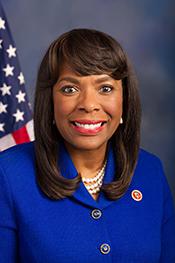
United States · Official source
3,343 records where Rep. Sewell, Terri A. [D-AL-7] is listed as a sponsor, author, or other actor. Search with topics and years
United States · United States Congress · 2 May 2023
United States · United States Congress · 2 May 2023
Closing the Meal Gap Act of 2023 This bill revises the requirements for calculating Supplemental Nutrition Assistance Program (SNAP) benefits. The bill increases the minimum SNAP benefit and requires benefits to be calculated using the value of a low-cost food plan. The Department of Agriculture (USDA) must determine the requirements for the low-cost food plan, which is the diet required to feed a family of four, consisting of a man and a woman ages 19-50 years, a child ages 6-8 years, and a child ages 9-11 years. USDA must (1) reevaluate and publish the market baskets of the plan by December 31, 2029, and every five years thereafter, based on current food prices, food composition data, consumption patterns, and dietary guidance; and (2) make adjustments to the plan to account for household size, changes in the cost of the diet, and the costs of food in specified areas. The bill modifies the requirements for calculating household income to determine SNAP eligibility by (1) authorizing a standard medical expense deduction for households containing an elderly or disabled member, and (2) eliminating the cap on the excess shelter expense deduction. The bill eliminates certain work requirements for SNAP; the requirements apply to able-bodied adults who are ages 18-49 and have no dependent children. The bill allows Puerto Rico to participate in SNAP. Currently, Puerto Rico receives a block grant instead of participating in SNAP. The bill also provides funding for Puerto Rico to receive a one-time USDA grant for the technology infrastructure necessary to implement SNAP.
United States · United States Congress · 2 May 2023
Community Mental Wellness and Resilience Act of 2023 This bill requires the Centers for Disease Control and Prevention to award competitive grants for planning and implementing community mental wellness and resilience programs through networks of schools, businesses, health and human services providers, and other community groups. These programs take a public health approach to build the capacity of the community to detect, prevent, and heal mental health, behavioral health, and psychosocial conditions.
United States · United States Congress · 2 May 2023
This resolution supports the designation of National Menstrual Health Awareness Month to educate people about menstrual health and eliminate period stigma.
United States · United States Congress · 2 May 2023
Medical Student Education Authorization Act of 2023 This bill provides statutory authority for the Medical Student Education Program, which provides matching grants for educating and training medical students and encouraging them to serve as primary care physicians in tribal, rural, or medically underserved communities. The Health Resources and Services Administration (HRSA) must award the grants to public institutions of higher education located in states that rank in the top quintile of states based on their projected shortage of primary care physicians. In awarding the grants, HRSA must give priority to recipients that (1) are located in states with two or more federally recognized Indian tribes, and (2) have established or plan to establish a public-private partnership to support the implementation of the grant.
United States · United States Congress · 2 May 2023
This resolution supports the designation of National Physical Fitness and Sports Month.
United States · United States Congress · 2 May 2023
Sunlight in Workplace Harassment Act This bill requires issuers of securities to annually disclose to the public information about certain alleged acts of sexual abuse, harassment, or discrimination in the workplace or between employees. Specifically, the issuer must disclose settlements, judgements, and active complaints regarding alleged acts of sexual abuse, harassment, or discrimination as defined by the bill. These disclosures must include the number of settlements, judgements, or active complaints; the number of these that involve acts committed by a corporate executive; the total dollar amount paid out; and the date on which the alleged act occurred. The bill limits the required disclosure by the issuer if the victim of the alleged act objects to its reporting.
United States · United States Congress · 28 April 2023
Federal Prison Oversight Act This bill establishes an inspections regime for the Bureau of Prisons (BOP). The Department of Justice (DOJ) Office of the Inspector General must conduct risk-based evaluations of BOP facilities. An inspection of a facility may be announced or unannounced. Higher risk facilities must receive more frequent inspections. The bill (1) provides for the establishment in DOJ of an Ombudsman who may receive complaints, make inquiries, and recommend actions, and decline to investigate or take action, as specified; and (2) prohibits BOP retaliation against any person or entity that has instituted or caused to be instituted any proceeding, investigation, or inspection under this bill. The ombudsman shall coordinate with the BOP to educate incarcerated people, their representatives, and the public about the existence and functions of the ombudsman.
United States · United States Congress · 28 April 2023
Federal Extreme Risk Protection Order Act of 2023 This bill authorizes and establishes procedures for federal courts to issue federal extreme risk protection orders. Additionally, the bill establishes grants to support the implementation of extreme risk protection order laws at the state and local levels, extends federal firearms restrictions to individuals who are subject to extreme risk protection orders, and expands related data collection. Extreme risk protection order laws, or red flag laws, generally allow certain individuals (e.g., law enforcement officers or family members) to petition a court for a temporary order that prohibits an at-risk individual from purchasing and possessing firearms. Among its provisions, the bill authorizes a family or household member, or a law enforcement officer, to petition for a federal extreme risk protection order with respect to an individual who poses a risk to themselves or others; directs the Department of Justice to establish a grant program to help states, local governments, Indian tribes, and other entities implement extreme risk protection order laws; extends federal restrictions on the receipt, possession, shipment, and transportation of firearms and ammunition to individuals who are subject to extreme risk protection orders; and requires the Federal Bureau of Investigation to compile records from federal, tribal, and state courts and other agencies that identify individuals who are subject to extreme risk protection orders.
United States · United States Congress · 28 April 2023
This resolution supports the designation of National Adult Hepatitis B Vaccination Awareness Day.
United States · United States Congress · 28 April 2023
EDUCATORS for America Act This bill provides resources to support the recruitment, retention, and preparation of educators. Specifically, the bill expands the Teacher Quality Partnership program to include training and professional development opportunities for principals and other school leaders. Additionally, the bill updates the Augustus F. Hawkins Centers of Excellence program to support underrepresented candidates in educator preparation programs. The bill establishes an education careers opportunity program to provide individuals from underrepresented backgrounds with education and training to become educators. Further, the bill revises the Teacher Education Assistance for College and Higher Education (TEACH) grant program to raise the maximum amount for TEACH grants. The bill also expands loan forgiveness for educators by revising the Teacher Loan Forgiveness Program, including by renaming the program as the Educator Loan Forgiveness Programs, making additional loan types eligible for benefits under the program (e.g., parent PLUS loans), and expanding program eligibility to early childhood educators and program directors serving in early childhood education programs and school leaders serving in public high-need schools. Next, the bill requires the Department of Education (ED) to (1) make monthly student loan payments on behalf of the educator during qualifying service (i.e., employment as a full-time qualifying educator in a high-need school or an early childhood education program), and (2) provide complete loan forgiveness after five years of qualifying service. ED must also carry out a program to provide loan credits to eligible educator borrowers enrolled in income-contingent or income-based repayment plans.
United States · United States Congress · 27 April 2023
Pioneering Antimicrobial Subscriptions To End Upsurging Resistance Act of 2023 or the PASTEUR Act of 2023 This bill authorizes the Department of Health and Human Services (HHS) to enter into subscription contracts for critical-need antimicrobial drugs, provides $6 billion in appropriations for activities under the bill, and contains other related provisions. A manufacturer of a Food and Drug Administration-approved antimicrobial drug may apply to HHS to have the drug designated as a critical-need antimicrobial, and HHS may enter into a subscription contract for such a critical-need antimicrobial. The bill imposes certain requirements related to such contracts, including a mechanism to lower payments under the contract in certain instances to limit the manufacturer's revenue from the drug. Furthermore, HHS and the Centers for Disease Control and Prevention (CDC) shall award grants to support efforts to encourage the appropriate use of antimicrobial drugs and efforts to combat antimicrobial resistance. The CDC shall also track and assess data relating to antibacterial resistance and human antibiotic use and make such data publicly available. HHS shall also establish a Committee on Critical Need Antimicrobials. The committee shall develop a list of prioritized infections for which new antimicrobial drug development is needed, among other duties. Within six years of the bill's enactment, the Government Accountability Office shall report to Congress a study on the bill's effectiveness in developing priority antimicrobial drugs.
United States · United States Congress · 27 April 2023
Living Donor Protection Act of 2023 This bill prohibits certain insurance carriers from discriminating against, and provides other protections for, living organ donors. Specifically, carriers may not deny, cancel, or otherwise impose conditions on policies for life insurance, disability insurance, or long-term care insurance based on an individual's status as a living organ donor. The bill also expressly specifies that recovery from organ-donation surgery constitutes a serious health condition that entitles eligible employees to job-protected medical leave. In addition, the Department of Health and Human Services must update educational materials on living organ donation to include information about the benefits of living organ donation and about access to insurance for living organ donors.
United States · United States Congress · 27 April 2023
Stop Institutional Child Abuse Act This bill establishes an interagency Federal Work Group on Youth Residential Programs to support and implement best practices regarding the health and safety, care, treatment, and appropriate placement of youth in youth residential programs. The work group must develop recommendations about a national database to aggregate information about processes and outcomes for youth in such programs. The work group also must support the education and training of professional and paraprofessional personnel in fields that service such youth. Further, the Department of Health and Human Services must contract with the National Academies of Sciences, Engineering, and Medicine to study and make recommendations about various aspects of federal and state oversight of youth residential programs.
United States · United States Congress · 27 April 2023
Election Mail Act This bill addresses the delivery and processing of election mail for federal elections, including by establishing certain standards for mail-in ballots. Specifically, the bill requires the U.S. Postal Service (USPS) to ensure (to the maximum extent practicable) same-day processing of mail-in ballots, postmark each ballot, carry election mail (e.g., voter registration applications and mail-in ballots) as first-class mail that is free of postage, appoint an election mail coordinator at each area office and district office, and consult annually with Indian tribes regarding barriers to voting for eligible voters living on Indian lands. The bill prohibits the USPS, within 120 days of a federal election, from making any operational change that would restrict the prompt and reliable delivery of election mail. Each state and jurisdiction must provide with each mail-in ballot a return envelope with an intelligent mail barcode. This requirement does not apply to a state or jurisdiction that uses an alternative system that enables voters to track the ballot through the mail. The bill requires election officials to count mail-in ballots that are postmarked by election day and arrive within seven days after the election.
United States · United States Congress · 27 April 2023
This resolution recognizes the significance of Community College Month as a celebration of over 1,000 community colleges throughout the United States that serve local and regional needs and strengthen the American economy.
United States · United States Congress · 27 April 2023
United States · United States Congress · 26 April 2023
Preventing Illegal Weapons Trafficking Act of 2023 This bill requires the Departments of Justice, Homeland Security, and the Treasury to develop and implement a strategy to prevent or intercept the importation or trafficking of machinegun conversion devices. The term machinegun conversion device means parts or combinations of parts designed and intended for use in converting a weapon into a machinegun. The bill also specifies that proceeds derived from the illegal trafficking of a machinegun are subject to seizure and forfeiture.
United States · United States Congress · 26 April 2023
Anti-Racism in Public Health Act of 2023 This bill establishes within the Centers for Disease Control and Prevention (CDC) a National Center on Antiracism and Health and a law enforcement violence prevention program. In particular, the new center must carry out various activities to address racism and its impact on health and well-being. This includes declaring racism a public health crisis, collecting and analyzing data, and administering research and grant programs. Additionally, the bill specifically directs the CDC's National Center for Injury Prevention and Control, in coordination with the Department of Justice and other relevant stakeholders, to implement the law enforcement violence prevention program by conducting research and supporting other activities pertaining to law enforcement violence and public health.
United States · United States Congress · 26 April 2023
Flight Education Access Act This bill increases federal student loan limits for students in undergraduate flight education and training programs. It also establishes a grant program to support the education of future pilots and to diversify the pilot training workforce. Specifically, the bill increases the maximum aggregate amount of Federal Direct Unsubsidized Stafford Loans to $111,000 for dependent students and $137,500 for independent students. It also increases the maximum aggregate amount of Federal Direct Stafford Loans to $65,000. The bill directs the Department of Education (ED) to collect data and annually calculate the completion rate of each undergraduate flight education and training program at each eligible institution. The bill also requires the Government Accountability Office to (1) examine and review the implementation of this bill, (2) develop recommendations for ED on any changes to improve the bill's implementation, and (3) submit a report to Congress on its findings and recommendations. The bill directs ED to award grants to eligible partnerships to (1) support the education of future airline and commercial pilots, (2) diversify the pilot training workforce, and (3) generate interest and support for a career as an airline and commercial pilot. An eligible partnership is a collaboration between at least one workforce partner (e.g., a labor organization representing aircraft pilots or an entity that employs pilots) and at least one educational partner (e.g., a local or state educational agency).
United States · United States Congress · 26 April 2023
United States · United States Congress · 26 April 2023
Raise the Age Act of 2023 This bill establishes new restrictions on the sale or transfer of certain semiautomatic firearms to individuals under 21 years of age. Specifically, this bill makes it unlawful for a licensed gun dealer, importer, manufacturer, or collector to sell or deliver a semiautomatic center-fire rifle or semiautomatic center-fire shotgun that has (or has the capacity to accept) an ammunition feeding device with a capacity of more than five rounds to an individual who the licensee knows or has reasonable cause to believe is under age 21. The prohibition does not apply if the individual under age 21 is a full-time law enforcement officer or active-duty member of the Armed Forces. The bill also requires the Federal Bureau of Investigation to report on the operation of its public access line, including a description of information sharing protocols and recommendations for improving such protocols.
United States · United States Congress · 26 April 2023
Right to Read Act of 2023 This bill expands access to school libraries and literacy skills support for elementary and secondary school students. It also outlines certain constitutional rights and liability protections related to school libraries. Specifically, the bill reauthorizes through FY2028 (1) the Comprehensive Literacy State Development Program, which provides grants to ensure high-quality instruction and effective strategies in reading and writing for children through 12th grade; and (2) the Innovative Approaches to Literacy Program, which provides grants to support the development of literacy skills in low-income communities. Additionally, the bill allows Supporting Effective Instruction State Grants to be used to assist local educational agencies (LEAs) and schools in recruiting, hiring, and retaining state-certified school librarians. Further, the bill authorizes states and LEAs to use Student Support and Academic Enrichment grants for programs and activities that promote the development of digital literacy and information literacy skills. The Department of Education (ED) must direct the National Center for Education Statistics to biennially collect data on school libraries. ED must require an assurance from each state and LEA receiving certain funds confirming that it will (1) protect the First Amendment rights of students in school libraries, and (2) provide equal protection in the conduct of school libraries in compliance with the requirements of the Fourteenth Amendment and nondiscrimination laws. The bill also provides liability protection to teachers, school librarians, school leaders, paraprofessionals, and other staff for actions that conform with state or local policies regarding the right to read.
United States · United States Congress · 25 April 2023
Expanding Care in the Home Act This bill establishes programs and requirements to support certain at-home services for Medicare beneficiaries. For example, the bill requires the Centers for Medicare & Medicaid Services (CMS) to allow Medicare primary care providers to opt to receive a monthly capitated payment for up to five years for certain services instead of on a fee-for-service basis. Covered services include home services and wellness visits. The CMS must also establish payments under Medicare for (1) home infusion services and equipment, including 24/7 nursing services; (2) staff-assisted home dialysis; and (3) travel and mailing costs associated with collecting specimens from at-home clinical laboratory tests. The bill also authorizes the Health Resources and Services Administration to award grants to nonprofit health care entities and state and local health agencies to develop the home-based care workforce through training, recruitment, and placement in home-care models.
United States · United States Congress · 25 April 2023
Partner with Korea Act This bill creates an E-4 treaty trader visa category for up to 15,000 nationals of South Korea each fiscal year who are coming to the United States solely to perform specialty occupation services, subject to various requirements. The 15,000 limit shall only apply to principal recipients of such visas and not their accompanying spouses or children. (A specialty occupation is one that requires the theoretical and practical application of highly specialized knowledge and a bachelor's degree or higher.)
United States · United States Congress · 24 April 2023
This bill designates the federal building located at 985 Michigan Avenue in Detroit, Michigan, as the John Conyers Federal Building.
United States · United States Congress · 20 April 2023
This bill revises and reauthorizes through FY2028 a program that provides financial assistance for rural water systems under the Consolidated Farm and Rural Development Act. Under the existing program, the Department of Agriculture may provide grants to nonprofit organizations that in turn must provide subgrants and loans to individuals for household water well systems or individually owned household decentralized wastewater systems in rural areas. This bill modifies the eligibility requirements for subgrants. To be eligible for a subgrant, an individual must be a member of a household with an annual combined income that is no more than 60% of the median nonmetropolitan household income for the area served by the nonprofit (currently, the state or territory in which the individual resides). The bill also allows a subgrant for a household decentralized wastewater system to include sufficient additional funding to cover the cost of a performance warranty with a duration of at least five years. In addition, the bill allows loans to be awarded to an individual who is a member of a household with an annual combined income that is 60% or more of the median nonmetropolitan household income for the area.
United States · United States Congress · 20 April 2023
Dignity for Detained Immigrants Act of 2023 This bill directs the Department of Homeland Security (DHS) to establish standards for facilities holding non-U.S. nationals ( aliens under federal law) in its custody, phases out using non-DHS facilities for such purposes, and addresses related issues. The standards must comply with the American Bar Association's Civil Immigration Detention Standards. The DHS Office of Inspector General (OIG) must conduct periodic unannounced inspections of each facility and take various actions against noncompliant facilities, including imposing fines, cancelling contracts, and closing facilities. DHS must report to Congress any death of an individual in its custody within 24 hours and conduct an investigation within 30 days that identifies policy changes that could reduce the likelihood of such a death. DHS may not contract with third parties to operate detention facilities or alternatives to detention programs and must terminate existing contracts within three years of the bill's enactment. The bill establishes that OIG facility inspection reports and contracts for an outside entity to operate a detention facility are records available to the public under the Freedom of Information Act. DHS must maintain certain information relating to immigration-related detention, including the detained individual's location and whether the individual was separated from family. The bill provides for various requirements and procedures related to immigration-related detention, including (1) prohibiting DHS from detaining children, (2) imposing a presumption that a detained individual should be released, and (3) establishing that individuals in custody shall be subject to the least restrictive conditions. The bill also abolishes mandatory detention for asylum seekers.
United States · United States Congress · 20 April 2023
School Meals during School Closures Act This bill allows states or eligible service providers (e.g., school districts) to request a waiver of certain requirements to continue providing no-cost and reduced-cost meals to students during certain school closures. The Department of Agriculture may provide a waiver, with exceptions, to provide meals and meal supplements during a school closure due to a strike or other labor-management dispute; inclement weather, a natural disaster, a public health emergency, unsafe facilities, construction, or repairs; or other unanticipated events.
United States · United States Congress · 19 April 2023
Elder Justice Reauthorization and Modernization Act of 2023 This bill reauthorizes, provides funding through FY2027 for, and otherwise makes changes to programs that address abuse, neglect, and exploitation of older adults and adults with disabilities. Specifically, the bill provides funding for states and localities to enhance adult protective services and long-term care ombudsman programs. Additionally, the bill modifies an existing long-term care workforce grant program, including by requiring that grant recipients use funds to provide employees with wage subsidies, educational assistance, and access to affordable child care and transportation. Furthermore, the bill establishes new grant programs for states to (1) link health care and social services for older adults and adults with disabilities, including through medical-legal partnerships and legal services hotlines; and (2) prevent and address social isolation among older adults and adults with disabilities. The bill also provides funding for reporting by the Department of Health and Human Services on the effectiveness of various programs and activities in addressing abuse, neglect, and exploitation of older adults and adults with disabilities.
United States · United States Congress · 19 April 2023
Keep Our Promise to America's Children and Teachers Act or the Keep Our PACT Act This bill provides funding through FY2033 for grant programs operated by local educational agencies to provide supplementary educational and related services to low-achieving students and other students who attend elementary and secondary schools with relatively high concentrations of students from low-income families. Additionally, the bill permanently reauthorizes the grant program to assist states and outlying areas in providing special education and related services to children with disabilities.
United States · United States Congress · 19 April 2023
United States · United States Congress · 18 April 2023
Workplace Violence Prevention for Health Care and Social Service Workers Act This bill requires the Department of Labor to address workplace violence in health care, social service, and other sectors. Specifically, Labor must issue an interim occupational safety and health standard that requires certain employers to take actions to protect workers and other personnel from workplace violence. The standard applies to employers in the health care sector, in the social service sector, and in sectors that conduct activities similar to those in the health care and social service sectors. In addition, Labor must promulgate a final standard within a specified time line.
United States · United States Congress · 18 April 2023
Fighting Trade Cheats Act of 2023 This bill increases penalties for, and establishes additional enforcement mechanisms related to, fraudulent and grossly negligent violations of U.S. customs laws. Specifically, the bill increases the maximum civil penalty for a fraudulent violation to three times the domestic value of the merchandise. Further, the bill prohibits a person who commits a fraudulent violation from importing merchandise into the United States for a five-year period. Additionally, the bill increases the maximum civil penalty for a grossly negligent violation to the lesser of (1) 3 times the domestic value of the merchandise; or (2) 10 times the lawful duties, taxes, and fees. It also prohibits a person who commits a grossly negligent violation from importing merchandise into the United States for a two-year period. Further, the bill applies these importation bans to an affiliated person (e.g., a family member, partner, or employee) of the person who committed the fraudulent or grossly negligent violation. The bill also establishes a private right of action for customs fraud or grossly negligent violations. In particular, the bill allows manufacturers, producers, wholesalers, labor unions, or trade associations to bring a civil action against a violator or any person that aids or abets a violator. The bill prohibits any person (or an affiliated person) who commits a fraudulent or grossly negligent violation from participating in the U.S. Customs and Border Protection's Importer of Record program, and further requires their importer of record numbers to be revoked.
United States · United States Congress · 18 April 2023
American Innovation and R&D Competitiveness Act of 2023 This bill eliminates the five-year amortization requirement for research and experimental expenditures, thus allowing continued expensing of such expenditures in the taxable years in which they are incurred.
United States · United States Congress · 18 April 2023
Supporting Safety Net Hospitals Act This bill delays reductions to Medicaid disproportionate-share hospital (DSH) allotments until FY2026. (DSHs are hospitals that receive additional payments under Medicaid for treating a large share of low-income patients.)
United States · United States Congress · 18 April 2023
Motorsports Fairness and Permanency Act of 2023 This bill makes permanent the accelerated depreciation (seven-year recovery period) of motorsports entertainment complexes.
United States · United States Congress · 17 April 2023
Collegiate Housing and Infrastructure Act of 2023 This bill allows tax-exempt charitable or educational organizations to make collegiate housing and infrastructure grants to certain tax-exempt social clubs (e.g., college fraternities and sororities) that apply such grants to their collegiate housing property. A collegiate housing and infrastructure grant is a grant to provide, improve, operate, or maintain collegiate housing property that may involve more than incidental social, recreational, or private purposes. The grant must be for purposes that would be permissible for a dormitory or other residential facility of the college or university with which the collegiate housing property is associated. The grant may not be used to provide physical fitness facilities.
United States · United States Congress · 13 April 2023
Increasing Access to Quality Cardiac Rehabilitation Care Act of 2023 This bill expands certain changes that are scheduled to take effect relating to the coverage of cardiac, intensive cardiac, and pulmonary rehabilitation programs under Medicare. Currently, such programs require physician supervision. Effective January 1, 2024, physician assistants, nurse practitioners, and clinical nurse specialists may also supervise these programs. The bill allows these practitioners to administer programs in their offices, prepare and sign treatment plans, and prescribe exercise.
United States · United States Congress · 13 April 2023
This resolution recognizes that Black women are experiencing high, disproportionate rates of maternal mortality and morbidity in the United States and that Black Maternal Health Week is an opportunity to deepen the national conversation about Black maternal health.
United States · United States Congress · 13 April 2023
Safety From Violence for Healthcare Employees Act or the SAVE Act This bill establishes a new criminal offense for knowingly assaulting or intimidating hospital personnel during the performance of their official duties in a manner that interferes with their performance of the duties or limits their ability to perform the duties. Additionally, the bill authorizes grants to reduce the incidence of violence at hospitals, including violence or intimidation against hospital personnel in the performance of their duties.
United States · United States Congress · 13 April 2023
Safe Step Act This bill requires a group health plan to establish an exception to medication step-therapy protocol in specified cases. A medication step-therapy protocol establishes a specific sequence in which prescription drugs are covered by a group health plan or a health insurance issuer. A request for such an exception to the protocol must be granted if (1) an otherwise required treatment has been ineffective, (2) such treatment is expected to be ineffective and delaying effective treatment would lead to irreversible consequences, (3) such treatment will cause or is likely to cause an adverse reaction to the individual, (4) such treatment is expected to prevent the individual from performing daily activities or occupational responsibilities, (5) the individual is stable based on the prescription drugs already selected, or (6) there are other circumstances as determined by the Employee Benefits Security Administration. The bill requires a group health plan to implement and make readily available a clear process for an individual to request an exception to the protocol, including required information and criteria for granting an exception. The bill further specifies timelines under which plans must respond to such requests.
United States · United States Congress · 10 April 2023
School Meals Expansion Act This bill expands eligibility for the Community Eligibility Provision (CEP) of the school lunch program. It also increases the reimbursement rate for schools under the CEP. (The CEP allows eligible schools, groups of schools, and school districts the option to offer breakfast and lunch at no cost to all enrolled students without collecting household applications.) This bill lowers the threshold for a school to participate in the CEP to an identified student percentage (ISP) of at least 25%, from 40%. The ISP is the percentage of students who are eligible for free school meals without a household application, primarily those who are directly certified through the Supplemental Nutrition Assistance Program (SNAP). The bill also increases the reimbursement multiplier for school meals to 2.5 from the current 1.6, effectively increasing the reimbursement rate for the CEP participating schools. The reimbursement multiplier is used to calculate how many meals will be reimbursed at the free meal rate. A higher multiplier means more meals will be reimbursed at this higher rate.
United States · United States Congress · 10 April 2023
This joint resolution proposes a constitutional amendment providing that the rights protected and extended by the Constitution are the rights of natural persons only. Artificial entities, such as corporations, shall have no rights under the Constitution and are subject to regulation. The amendment requires federal, state, and local governments to (1) regulate, limit, or prohibit election contributions and expenditures, including a candidate's own contributions and expenditures, to ensure equal access of citizens to the political process, regardless of economic status; and (2) require that any permissible contributions and expenditures be publicly disclosed. Additionally, the judiciary is prohibited from construing the spending of money to influence elections to be speech under the First Amendment.
United States · United States Congress · 6 April 2023
Nurse Staffing Standards for Patient Safety and Quality Care Act of 2023 This bill requires hospitals to implement and submit to the Department of Health and Human Services (HHS) a staffing plan that complies with specified minimum nurse-to-patient ratios by unit. Hospitals must post a notice regarding nurse-to-patient ratios in each unit and maintain records of actual ratios for each shift in each unit. The bill also requires hospitals to follow certain procedures regarding how ratios are determined, and other staff are prohibited from performing nurse functions unless specifically authorized within a state's scope of practice rules. HHS must adjust Medicare payments to hospitals to cover additional costs attributable to compliance with these ratios. Nurses may object to, or refuse to participate in, an assignment if it would violate minimum ratios or if they are not prepared by education or experience to fulfill the assignment without compromising the safety of a patient or jeopardizing their nurse's license. Hospitals may not (1) take adverse actions against a nurse based on the nurse's reasonable refusal to accept an assignment; or (2) discriminate against individuals for good faith complaints relating to the care, services, or conditions of the hospital or related facilities. HHS may impose civil monetary penalties on hospitals violating the ratio requirements and must publish the names of such hospitals. The bill provides stipends to the nurse workforce loan repayment and scholarship program and expands the nurse retention grant program to include nurse preceptorship and mentorship projects.
United States · United States Congress · 6 April 2023
This resolution expresses support for the goals and ideals of National Youth HIV & AIDS Awareness Day.
United States · United States Congress · 6 April 2023
Optimizing Postpartum Outcomes Act of 2023 This bill requires (1) the Centers for Medicare & Medicaid Services to issue guidance to support coverage of prenatal and postpartum pelvic health services under Medicaid and the Children's Health Insurance Program (CHIP), (2) the Government Accountability Office to study gaps in Medicaid coverage of these and other services for postpartum women, and (3) the Centers for Disease Control and Prevention to educate health professionals and postpartum women on pelvic health services.
United States · United States Congress · 6 April 2023
New Markets Tax Credit Extension Act of 2023 This bill makes the new markets tax credit permanent. It also modifies the credit to (1) provide for an inflation adjustment to the limitation amount for the credit after 2023, and (2) allow an offset against the alternative minimum tax for the credit (determined with respect to qualified equity investments initially made after 2022).
United States · United States Congress · 3 April 2023
Strengthening Medicare for Patients and Providers Act This bill modifies certain adjustments to payment amounts under the Medicare physician fee schedule. Payment amounts under the Medicare physician fee schedule are based on a service's relative value, a conversion factor, and a geographic adjustment factor. Current law provides for separate conversion factors for physicians that are qualifying participants in advanced alternative payment models (also known as qualifying APM participants) and for other physicians beginning in 2026, with an annual update of 0.75% and 0.25%, respectively. The bill replaces the separate conversion factors for qualifying APM participants and other physicians with a single conversion factor and provides for an update that is equal to the annual percentage increase in the Medicare Economic Index, beginning in 2024. (The Medicare Economic Index is a specialized index that is generally used to determine allowed charges for physician services based on annual price changes.)
United States · United States Congress · 30 March 2023
Nancy Gardner Sewell Medicare Multi-Cancer Early Detection Screening Coverage Act This bill allows for Medicare coverage and payment for multi-cancer early detection screening tests that are approved by the Food and Drug Administration and that are used to screen for cancer across many cancer types, if the Centers for Medicare & Medicaid Services determines such coverage is appropriate.