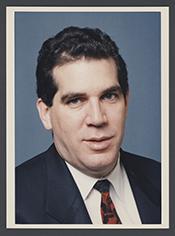
United States · United States Congress · 5 April 1995
Directs the Comptroller General to report to the House of Representatives the Comptroller General's opinion on whether the addition of a targeted tax benefit by the conferees to the conference report on H.R. 831 (amending the Internal Revenue Code to permanently extend the deduction for the health insurance costs of self-employed individuals and repealing the provision permitting nonrecognition of gain on sales and exchanges effectuating policies of the Federal Communications Commission) violates the requirement of the Constitution that all revenue measures originate in the House.
United States · United States Congress · 4 April 1995
Clinical Laboratory Improvement Act Amendments of 1995 - Exempts a physician clinical office laboratory from Public Health Service Act certification requirements, except when such laboratory performs a Pap Smear (Papanicolaous Smear) analysis.
United States · United States Congress · 4 April 1995
Requests the President to return H.R. 831 (amending the Internal Revenue Code to permanently extend the deduction for the health insurance costs of self-employed individuals) to the House of Representatives, to remove certain provisions regarding nonrecognition of gain on sales and exchanges effectuating policies of the Federal Communications Commission.
United States · United States Congress · 29 March 1995
Expresses the sense of the House of Representatives that the subsidized Stafford Loan Program (including the in-school interest exemption), the Perkins Loan Program, the Federal Work Study Program, the Pell Grant Program, the Federal Supplemental Educational Opportunity Grant Program, and the State Student Incentive Grant Program should not be reduced from their current and anticipated levels.
United States · United States Congress · 28 March 1995
Disadvantaged Minority Health Improvement Authorization Extension Act of 1995 - Amends the Public Health Service Act to authorize appropriations for: (1) the Office of Minority Health in the Office of the Assistant Secretary for Health; (2) health statistical and epidemiological activities of the National Center for Health Statistics; (3) grants for surveys or studies, data analysis, and research regarding ethnic and racial populations; (4) grants to States for demonstration programs to increase the availability of primary health care in health professional shortage areas; (5) grants to provide public housing residents with primary health services and health counseling and education services; (6) Federal capital contributions to student loan funds for individuals from disadvantaged backgrounds; (7) grants to schools of medicine, osteopathic medicine, and dentistry for scholarships for students of exceptional financial need; (8) grants to health professions schools for scholarships; (9) educational loan repayments for those agreeing to serve as members of the faculties of specified types of health professions schools; (10) grants and contracts with health or educational entities to assist in increasing the number of underrepresented minority faculty members; (11) grants to health professions schools to support programs of excellence in health professions education for minority individuals; and (12) grants and contracts to assist individuals from disadvantaged backgrounds to undertake education to enter a health profession. Declares that provisions of the National Health Service Corps Loan Repayment Program, except as inconsistent, shall apply to provisions regarding educational loan repayments of health professionals who agree to conduct clinical research as employees of the National Institutes of Health. (Current law applies some but not all of the provisions that would be applied under the amendment made by this Act.)
United States · United States Congress · 28 March 1995
Calls for: (1) the United States to use its influence with the Turkish Government and as a permanent member of the United Nations Security Council to suggest that the Turkish Government ensure the proper protection for the Patriarchate and all Orthodox faithful residing in Turkey, assure that positive steps are taken to reopen the Halki Patriarchal School of Theology, provide for the proper protection and safety of the Ecumenical Patriarch and the Patriarchate personnel, establish conditions that would prevent the recurrence of past terrorist activities and vandalism and other personal threats against the Patriarchate, establish conditions to ensure that the Patriarchate is free to carry out its religious mission, and do everything possible to find and punish the perpetrators of any provocative and terrorist acts against the Patriarchate; and (2) the Administration to report to the Congress the status and progress of such concerns on an annual basis.
United States · United States Congress · 24 March 1995
Expresses the sense of the Congress that: (1) the Government of India should be commended for its transition to a free market oriented economy with political stability by implementing economic reforms; (2) the United States should facilitate this transition by encouraging U.S. companies to invest in India; and (3) the U.S. Government should continue to foster the improved climate of relations with India since Prime Minister Rao's historic address before the joint session of Congress.
United States · United States Congress · 22 March 1995
Newborn Infant HIV Notification Act - Requires a State, if it requires that the results of the human immunodeficiency virus (HIV) testing of an infant be reported to it (or if the State conducts an HIV test of the infant), to disclose such results to: (1) the biological mother of the infant if the mother is the legal guardian; or (2) specified State agencies if the State is the legal guardian of the infant. Directs the State, in disclosing such results (other than to State agencies), to ensure that appropriate counseling on HIV is provided to the individual.
United States · United States Congress · 21 March 1995
War Crimes Disclosure Act - Requires disclosure under the Freedom of Information Act of any matter that relates to any individual who is listed in a Watch List as a participant in Nazi war crimes. Provides disclosure exceptions, such as for the protection of intelligence agents and informants or for compelling national security reasons. Requires disclosure of information that can be reasonably separated from excepted information. Amends the National Security Act of 1947 to provide that the exemption from public disclosure authorized under such Act for operational files of the Central Intelligence Agency shall not apply to information regarding Nazi war crimes participants.
United States · United States Congress · 21 March 1995
Corporate Welfare Reduction Act of 1995 - Amends the Internal Revenue Code, with respect to determining the foreign tax credit, to replace the formula for reducing the amount of oil and gas extraction taxes taken into account. Disallows as creditable amounts: (1) any taxes paid or accrued to a foreign country with respect to foreign oil and gas income (including extraction income) which are not imposed under the country's generally applicable income tax law; and (2) any other taxes on such income to the extent that the country's law is structured or operates so that the tax amount imposed will generally be materially greater, over a reasonable period, than the amount generally imposed on other income. Separates such income, for purposes of certain limitations on the application of the credit, into foreign oil and gas extraction income and foreign oil related income. Removes the deferral, for purposes of taxation of controlled foreign corporations, of tax on extraction income or income from consumption in the foreign country. Provides that the Secretary of the Treasury's authority, in allocating income, deductions, credits, and allowances among taxpayers owned or controlled by the same interests, shall not be limited by any restriction on the ability of the entities to transfer or receive money or property. Terminates, effective with taxable years beginning January 1, 1996, the exclusion of foreign earned income and the housing cost amounts of U.S. citizens or residents living abroad. Treats the gain or loss of a nonresident alien individual or foreign corporation that is a ten-percent shareholder in a domestic corporation upon disposition of such a corporation's stock as if the taxpayer were engaged during the taxable year in a trade or business within the United States and such gain or loss attributable to a permanent U.S. trade or business establishment. Imposes a 26-percent minimum tax on nonresident alien individuals. Provides for the withholding of tax on such dispositions, except in the case of stock which is not regularly traded. Excepts such gain from the branch profits tax imposed on foreign corporations. Requires notice to the Secretary upon distributions by a U.S. person to a foreign person in redemption of stock or complete liquidation of a subsidiary. Removes the exemption of ten-percent shareholders from the tax on interest of nonresident alien individuals received from portfolio debt investments. Redefines portfolio interest as only interest paid on obligations issued by governmental entities. Provides special rules for determining the source of income from the sale of inventory property.
United States · United States Congress · 16 March 1995
Reaffirms that the status quo on Cyprus is unacceptable and welcomes the appointment of a Special Presidential Emissary for Cyprus. Insists that all parties to the dispute regarding Cyprus agree to seek a solution based upon the relevant United Nations (UN) resolutions and reaffirms that all foreign troops should be withdrawn from the Republic of Cyprus. Encourages the UN Security Council and the U.S. Government to consider alternative approaches to promote a resolution of the dispute regarding Cyprus based upon relevant Security Council resolutions.
United States · United States Congress · 15 March 1995
Lowers the amounts under proposed offers to sell defense articles or services, design and construction services, and major defense equipment to Saudi Arabia that trigger a requirement by the President to notify the Speaker of the House and the chairman of the Senate Foreign Relations Committee under the Arms Export Control Act. Makes the lower thresholds that trigger such requirement inapplicable if the Secretary of State certifies to the Congress that the following unpaid claims of American firms against the Government of Saudi Arabia have been resolved satisfactorily: (1) those described in a specified June 30, 1993, report by the Secretary of Defense pursuant to the Department of Defense Appropriations Act, 1993; or (2) those that are otherwise outstanding before this Act's enactment date and have been litigated fully in the courts of Saudi Arabia but have not been resolved in accordance with standards of fairness as determined by the Secretary of State.
United States · United States Congress · 10 March 1995
Captive Exotic Animal Protection Act of 1995 - Amends the Federal criminal code to prohibit and set penalties for knowingly transferring, transporting, or possessing a confined exotic animal for purposes of allowing the killing or injuring of that animal for entertainment or the collection of a trophy.
United States · United States Congress · 9 March 1995
Procompetitiveness and Antiboycott Act of 1995 - Directs the U.S. Ambassador to the Organization for Economic Cooperation and Development (OECD) to discuss with representatives from other OECD member countries and to report to the Congress on: (1) the extent to which business enterprises comply with the boycott of Israel by Arab countries; (2) the effectiveness, with respect to the secondary boycott, of antiboycott laws of countries that have them; (3) the extent to which the secondary boycott has skewed trade and investment globally as well as in the Middle East; (4) the extent to which business enterprises not complying with the boycott are placed at a competitive disadvantage; (5) the extent to which the secondary boycott contradicts OECD trade and investment policy; and (6) the development of guidelines, comparable to the prohibitions set forth under the Export Administration Act of 1979, that OECD countries can agree on to eliminate compliance with the boycott. (Sec. 4) Requires the United States Trade Representative to enter into discussions with representatives from member and prospective member countries of the World Trade Organization (WTO) and to report to the Congress on the extent to which: (1) the secondary boycott of Israel has distorted trade; (2) members and prospective members of the WTO encourage actions, including the furnishing of information or entering into agreements, which support the boycott; (3) the WTO should work to eliminate the secondary boycott; and (4) General Agreement on Tariffs and Trade (GATT) articles can be used to eliminate compliance with such boycott. (Sec. 5) Requires the President to report to the Congress on progress made to end the boycott. (Sec. 6) Requires the Secretary of Commerce to report to the Congress on OECD countries that encourage or fail to discourage compliance with such boycott. (Sec. 7) Expresses the sense of the Congress that the Office of Antiboycott Compliance of the Department of Commerce should continue exercising its functions for at least two years after the Arab League renounces: (1) the boycott of Israel by Arab countries; (2) the secondary boycott; and (3) any requirement that a business enterprise comply with such boycott.
United States · United States Congress · 9 March 1995
Amends the Export Administration Act of 1979 to allow any person who is injured in his or her business or property by reason of a violation of the anti-boycott provisions of such Act to bring a civil action against the U.S. person who committed such violation. Provides a civil penalty for each violation.
United States · United States Congress · 9 March 1995
Prohibits: (1) specified military assistance or military education and training under the Foreign Assistance Act of 1961 to Bahrain, Yemen, Iran, Iraq, Kuwait, Lebanon, Libya, Oman, Qatar, Saudi Arabia, Syria, and the United Arab Emirates; (2) the sale or transfer of defense articles or services and design and construction services to such countries; and (3) the transfer to such countries by another foreign country of such assistance or U.S. defense articles or services. Makes such prohibition inapplicable if the President certifies to the Congress that: (1) a state of war does not exist between the country and Israel; and (2) such country has accorded formal recognition of Israel.
United States · United States Congress · 8 March 1995
Marine Resources Revitalization Act of 1995 - Amends the Marine Resources and Engineering Development Act of 1966 to authorize appropriations to carry out provisions of the National Sea Grant College Program relating to grants, contracts, and fellowships.
United States · United States Congress · 8 March 1995
Bosnia and Herzegovina Self-Defense Act of 1995 - Directs the President to terminate the U.S. arms embargo of the Government of Bosnia and Herzegovina on the date of receipt of a request from such government for assistance in exercising its right of self-defense under the United Nations Charter or on May 1, 1995, whichever comes first.
United States · United States Congress · 2 March 1995
Amends the Internal Revenue Code to allow an election to defer the commencement of distributions under deferred compensation plans of State and local governments and tax-exempt organizations. Provides a cost-of-living adjustment for the maximum deferral amount.
United States · United States Congress · 1 March 1995
Federal Election Law Reform Commission Act - Establishes the Federal Election Law Reform Commission to recommend Federal election law reform. Requires a Federal election bill to be introduced in the House and the Senate within a specified time of the Commission's submittal of draft legislation. Authorizes appropriations.
United States · United States Congress · 1 March 1995
Directs the Secretary of the military department concerned to pay an annuity to the qualified surviving spouse of any member of the armed forces who: (1) died before March 21, 1974, and was entitled to retired or retainer pay on the date of death; or (2) was a member of the reserves, died during the period beginning on September 21, 1972, and ending on October 1, 1978, and at the time of death would have been entitled to retired or retainer pay but for the fact that the member was under 60 years of age. Defines a qualified surviving spouse as one who has not remarried and who is not eligible for an annuity under the Survivor Benefit Plan. Provides the annuity amount and reduces such amount by the amount of any dependency and indemnity compensation to which the survivor is entitled.
United States · United States Congress · 28 February 1995
Amends part B (Supplemental Medical Insurance) of title XVIII (Medicare) of the Social Security Act to include within Medicare coverage the use of blood-testing strips for individuals with Type I or II diabetes. Requires such strips to be included within a payment methodology covering inexpensive and routinely purchased equipment.
United States · United States Congress · 28 February 1995
First-Time Homebuyers Assistance Act - Amends the Internal Revenue Code to set forth the conditions under which builders will be allowed to compute on the installment sales method income from the sale of newly constructed one-family residential real property.
United States · United States Congress · 24 February 1995
Colorectal Cancer Screening Act of 1995 - Amends title XVIII (Medicare) of the Social Security Act to prescribe frequency and payment limits under Medicare part B (Supplementary Medical Insurance) for screening fecal-occult blood tests, flexible sigmoidoscopies, barium enemas, and colonoscopy.
United States · United States Congress · 23 February 1995
Ricky Ray Hemophilia Relief Fund Act of 1995 - Establishes in the U.S. Treasury the Ricky Ray Hemophilia Relief Fund. Authorizes appropriations. Specifies that any individual who submits to the Attorney General written medical documentation that the individual has a human immunodeficiency virus (HIV) infection shall receive $125,000 from amounts available in the Fund if the individual: (1) has a blood-clotting disorder and was treated with blood-clotting agents between January 1, 1980, and December 31, 1987; (2) is the lawful spouse of such individual or the former lawful spouse and was the lawful spouse of the individual at any time after a date within such period on which the individual was treated; or (3) acquired the HIV infection through perinatal transmission from a parent who is such an individual. Requires that a claim for payment be filed with the Attorney General by or on behalf of such individual and that the Attorney General determine that the claim meets the requirements of this Act. Specifies that a claim under this Act shall not be assignable or transferable. Sets limits regarding the number of claims per victim. Prohibits the Attorney General from paying claims filed under this Act unless filed within three years after this Act's enactment.
United States · United States Congress · 23 February 1995
Amends the Nuclear Waste Policy Act of 1982 to revise and rename it the Integrated Spent Nuclear Fuel Management Act of 1995. (Sec. 1) Instructs the Secretary of Energy (the Secretary) to accept spent nuclear fuel and high-level radioactive waste by not later than January 31, 1998. Entitles contract holders to specified remedies for the Secretary's failure to meet service contract obligations, or to accept spent nuclear fuel and high-level radioactive waste as mandated under this Act. States that the Nuclear Waste Fund shall fund the execution of service contract and implementation of the Secretary's responsibilities, including the acceptance of spent nuclear fuel and high-level radioactive waste at contract holder sites and transporting such fuel or waste to a private storage facility. Establishes an integrated spent nuclear fuel management system for spent nuclear fuel and high-level radioactive waste, including its storage, transportation, and disposal. Prescribes procedural guidelines for the use of: (1) railroads; (2) transportation planning and requirements; (3) multi-purpose canister systems; (4) interim storage facilities; (5) permanent disposal; (6) land withdrawal; and (7) private storage facilities. Prescribes consultation and assistance guidelines between the Secretary and the State of Nevada. Prescribes budget priorities for purposes of annual requests for appropriations from the Waste Fund. Prescribes a fee schedule for electricity and nuclear fuel used to generate electricity in a civilian nuclear power reactor. Sets forth advance contract prerequisites for utilization or production facility license renewals. Reestablishes the Nuclear Waste Fund and the Office of Civilian Radioactive Waste Management. Directs the Secretary to: (1) establish by rule the appropriate portion of the costs of managing high-level radioactive waste and spent nuclear fuel allocable to the interim storage or permanent disposal of high-level radioactive waste and spent nuclear fuel from atomic energy defense activities; and (2) advise the Congress annually of the amount of high-level radioactive waste and spent nuclear fuel from atomic energy defense activities requiring management in the integrated spent nuclear fuel management system. Subjects the Secretary to all Federal, State, and local environmental or land use laws and regulations, with specified exceptions. Grants the U.S. courts of appeals original and exclusive jurisdiction over civil actions under this Act. Provides that upon a contract holder's request, the Secretary shall take title to or possession of spent nuclear fuel or high-level radioactive waste without removing it from the contract holder's designated storage site if the Secretary cannot accept such items within the contract's acceptance schedule. Requires the NRC to promulgate regulatory guidelines for: (1) financial assurances for low-level radioactive waste site closures; and (2) training and qualification of civilian nuclear powerplant personnel. Reestablishes the Nuclear Waste Technical Review Board. Authorizes appropriations. Directs the Secretary to take action as necessary to improve the management of the civilian radioactive waste management program to ensure that it is operated to the maximum extent like a private business. States that the program is not subject to civil service regulations. Abolishes the Interim Storage Fund, the Monitored Retrievable Storage Commission, the Office of Subseabed Disposal Research, and the Office of Nuclear Waste Negotiator. Repeals all references to the Yucca Mountain site. Requires the Secretary to report to the Congress whether particular milestones have been reached with respect to: (1) multi-purpose canister systems; (2) land withdrawals; (3) interim storage facilities; and (4) acceptance of spent nuclear fuel from contract holders. Directs the Secretary to: (1) create a value engineering function within the Office of Civilian Radioactive Waste Management; and (2) employ on an on-going basis, integrated performance modeling regarding site characterization. (Sec. 2) Sets forth transition provisions for the continuation of: (1) contracts; (2) Nuclear Waste Fund; (3) Office of Civilian Radioactive Waste Management; and (4) Nuclear Waste Technical Review Board. (Sec. 3) Mandates that amounts in the Nuclear Waste Fund be appropriated exclusively for certain authorized purposes cited in the Nuclear Waste Policy Act of 1982. Precludes such appropriations from being taken into account for any budget enforcement procedures under the Balanced Budget and Emergency Deficit Control Act of 1985. Amends such Act to provide that appropriations to the Nuclear Waste Fund are not subject to its discretionary spending limits or to a certain allocation of the Energy and Waster Development Subcommittee of the Appropriations Committee. Reduces specified discretionary spending limits under the Congressional Budget Act of 1974.
United States · United States Congress · 22 February 1995
Birth Defects Prevention Act of 1995 - Amends the Public Health Service Act to establish birth defects prevention and research programs. Authorizes the Secretary of Health and Human Services, acting through the Director of the Centers for Disease Control (CDC), to provide for collection, analysis, and reporting of birth defects statistics from birth certificates, infant death certificates, hospital records, or other sources and to collect and disaggregate such statistics by gender and racial and ethnic group. Directs the Secretary to establish at least five regional birth defects monitoring and research programs to collect and analyze information on the number, incidence, correlation, and causes of birth defects. Authorizes the Secretary, acting through the Director of CDC, to award grants or enter into cooperative agreements with specified entities to serve as Centers of Excellence for Birth Defects Prevention Research. Requires one of the Centers to focus on birth defects among ethnic minorities. Requires the CDC to establish a clearinghouse for the collection and storage of data generated from birth defects monitoring programs developed under this Act. Directs the Secretary, acting through the Director of the CDC, to provide for the evaluation, and implementation of prevention strategies designed to reduce the incidence and effects of birth defects. Directs the Secretary to establish an Advisory Committee for Birth Defects Prevention. Requires the Secretary to report biennially to the House Committee on Energy and Commerce and the Senate Committee on Labor and Human Resources regarding birth defects. Subjects the provisions of this Act to requirements of the Privacy Act. Authorizes appropriations.
United States · United States Congress · 21 February 1995
Morris K. Udall Wilderness Act of 1995 - Designates specified lands in Alaska as wilderness and components of the National Wilderness Preservation System.
United States · United States Congress · 21 February 1995
Amends title XVIII (Medicare) of the Social Security Act to limit Medicare coverage of chiropractic services to certain services for the treatment of spinal conditions that are conducted by State-licensed doctors of chiropractic legally authorized by the State to provide them.
United States · United States Congress · 15 February 1995
James P. Grant World Summit for Children Implementation Act of 1995 - Authorizes appropriations for FY 1996 and 1997 for contributions to the United Nations Children's Fund (UNICEF). Amends the Foreign Assistance Act of 1961 to authorize appropriations for FY 1996 and 1997 for the Child Survival Fund. Earmarks funds for activities that have a direct measurable impact on reducing rates of child morbidity and mortality. Expresses the sense of the Congress that authority should be granted to the President to exercise specified debt forgiveness for least developed countries that are pursuing economic policy reforms to promote long-term development. Earmarks development assistance funds for FY 1996 and 1997 for the Vitamin A Deficiency Program. Authorizes additional appropriations for FY 1996 and 1997 for: (1) iodine and iron fortification programs; (2) prevention, care, and control programs related to human immunodeficiency virus (HIV) and acquired immune deficiency syndrome (AIDS) in developing countries; and (3) population assistance programs. Earmarks development and economic assistance funds for FY 1996 and 1997 for programs in support of basic education. Expresses the sense of the Congress that specified amounts should be appropriated for FY 1996 and 1997 for migration and refugee assistance. Requires the President to call upon other governments to provide their share of resources required to achieve the World Summit for Children goals by the year 2000.
United States · United States Congress · 15 February 1995
Older Women's Breast Cancer Detection Act of 1995 - Amends part B (Supplemental Medical Insurance) of title XVIII (Medicare) of the Social Security Act to revise the breast cancer screening benefit to cover on an annual (currently, biennial) basis routine breast cancer screening for women age 65 and older (thus covering them on the same basis as those age 49 through 64).
United States · United States Congress · 14 February 1995
TABLE OF CONTENTS: Title I: Seeking Sanctions Against the Castro Government Title II: Assistance to a Free and Independent Cuba Title III: Protection of American Property Rights Abroad Cuban Liberty and Democratic Solidarity (LIBERTAD) Act of 1995 - Title I: Seeking Sanctions Against the Castro Government - Expresses the sense of the Congress that: (1) the President should instruct the U.S. Permanent Representative to the United Nations to seek within the Security Council a mandatory international embargo against the Cuban Government; and (2) efforts by any state to make the nuclear facility at Cienfuegos operational will have a detrimental impact on U.S. assistance to and relations with such state. (Sec. 102) Reaffirms a provision of the Cuban Democracy Act of 1992 that states that the President should encourage foreign countries to restrict trade and credit relations with Cuba. Urges the President to take steps to apply sanctions described by such Act against countries assisting Cuba. Declares that the President should instruct the Secretary of the Treasury and the Attorney General to enforce the Cuban Assets Control Regulations. (Sec. 103) Prohibits any U.S. person from extending any loan or other financing to a foreign person that traffics in property confiscated by the Cuban Government the claim to which is owned by a U.S. person. Terminates such prohibition upon termination of the economic embargo of Cuba. (Sec. 104) Directs the Secretary to instruct the U.S. executive directors of the international financial institutions to oppose the admission of Cuba as a member of such institutions until Cuba holds free and fair democratic elections. Requires the President to support Cuba's membership in such institutions during the period that a transition government is in power, subject to the membership taking effect after a democratically-elected government is in power. Reduces U.S. payments to institutions that approve assistance to Cuba over the opposition of the United States. (Sec. 105) Directs the President to report to the appropriate congressional committees on progress towards the withdrawal of personnel of any independent state of the former Soviet Union from the Cienfuegos nuclear facility. Amends the Foreign Assistance Act of 1961 to make ineligible for assistance any independent state that is providing assistance for, or engaging in nonmarket based trade with, Cuba. Withholds from assistance allocated for an independent state an amount equal to the assistance and credits provided by such state in support of military and intelligence facilities in Cuba. (Sec. 106) Requires the Director of the U.S. Information Agency to implement a conversion of television broadcasting to Cuba under the Television Marti Service to ultra high frequency broadcasting. (Sec. 107) Directs the President to report annually to the appropriate congressional committees on assistance and commerce received by Cuba from other foreign countries. (Sec. 108) Prohibits the importation into U.S. customs territory of any sugars, syrups, and molasses that are the product of a country that has imported Cuban sugar, syrups, or molasses. Makes such prohibition inapplicable if such country certifies to the President that it will not import Cuban sugar, syrups, or molasses until free and fair elections are held in Cuba. Authorizes the President to reallocate to other countries the quota of sugars, syrups, and molasses allocated to such a country during the period in which a prohibition is in effect. Title II: Assistance to a Free and Independent Cuba - Requires the President to develop a plan for providing economic assistance to Cuba at such time that a transition or a democratically-elected government is in power. Limits assistance for a transition government to humanitarian assistance, specified assistance comparable to that provided under the Foreign Assistance Act of 1961 for the economic and democratic development of the independent states of the former Soviet Union, and military adjustment assistance. Expands assistance to include development and agricultural assistance and export financing (as well as other specified assistance) when a democratically-elected government is in power. (Sec. 202) Requires the President to take steps to: (1) obtain the agreement of other countries, international financial institutions, and multilateral organizations to provide comparable assistance to Cuba; and (2) encourage the Organization of American States (OAS) to create a special emergency fund for deploying human rights observers and election support and observation in Cuba. Withholds up to $5 million of U.S. arrearages to the OAS until the OAS agrees to make available an equivalent amount for the special fund. Directs the President to determine whether to designate Cuba as a beneficiary country pursuant to the Caribbean Basin Economic Recovery Act. Permits such designation only after a democratically-elected government is in power. Amends such Act to make Cuba eligible for such designation. Requires the President, upon transmittal to the Congress of a determination that a democratically-elected government is in power, to: (1) enter into a preliminary agreement with Cuba providing for extension of the North American Free Trade Agreement or to seek the creation of an economic community with Cuba; and (2) designate a United States-Cuba Council to ensure coordination between the U.S. Government and private sector in responding to change and promoting market-based development in Cuba and to establish periodic meetings between the U.S. and Cuban private sectors for facilitating bilateral trade. (Sec. 204) Authorizes appropriations. (Sec. 205) Terminates the U.S. economic embargo against Cuba upon the President's transmittal to the Congress of a determination that a democratically-elected government is in power in Cuba. (Sec. 206) Sets forth conditions under which a government in Cuba will be considered transitional or democratic. Title III: Protection of American Property Rights Abroad - Amends the Immigration and Nationality Act to exclude from the United States aliens involved in the confiscation of property owned by U.S. persons. (Sec. 302) Sets forth provisions regarding liability for damages owed to U.S. persons by persons or governments trafficking in confiscated property. Grants U.S. district courts exclusive jurisdiction over such actions. (Sec. 303) Amends the International Claims Settlement Act of 1949 to authorize a U.S. national to bring a claim resulting from expropriation actions of the Cuban Government to the Foreign Claims Settlement Commission for certification of the amount and validity whether or not the U.S. national qualified as a U.S. national at the time of the action. Requires claimants to be U.S. nationals at the time of confiscation in the case of property confiscated after the date of enactment of this section.
United States · United States Congress · 10 February 1995
TABLE OF CONTENTS: Title I: Substantive Criminal Law Enhancements Title II: Immigration Law Improvements Title III: Controls Over Terrorist Fund-Raising Title IV: Convention on the Marking of Plastic Explosives Title V: Nuclear Materials Title VI: Procedural and Technical Corrections and Improvements Title VII: Antiterrorism Assistance Omnibus Counterterrorism Act of 1995 - Title I: Substantive Criminal Law Enhancements - Amends the Federal criminal code to establish penalties for acts of terrorism transcending national boundaries. Sets forth provisions regarding limits on prosecution, investigative responsibility, evidence, extraterritorial jurisdiction, the statute of limitations, detention, and wiretap authority. (Sec. 102) Sets penalties for conspiring to kill, kidnap, or maim people in (currently, limited to injuring property of) a foreign country. (Sec. 103) Makes penalties for an individual committing an offense on an aircraft in flight outside the special aircraft jurisdiction of the United States applicable regardless of whether such individual is later found in the United States. Grants jurisdiction over such an offense if: (1) a U.S. national was or would have been on board the aircraft; (2) an offender is a U.S. national; or (3) an offender is found in the United States. Provides that if the victim of specified offenses is an internationally protected person outside the United States, the United States may exercise jurisdiction if: (1) the victim is a representative, officer, employee, or agent of the United States; (2) an offender is a U.S. national; or (3) an offender is found in the United States. Title II: Immigration Law Improvements - Amends the Immigration and Nationality Act (INA) to establish procedures for the removal and expulsion of alien terrorists. Specifies that an alien subject to removal under these provisions shall have no right to discovery of information derived from electronic surveillance authorized for national security purposes, nor shall such alien have the right to seek the suppression of evidence. Authorizes the Government to use in removal proceedings the fruits of electronic surveillance, unconsented physical searches, or both, authorized under the Foreign Intelligence Surveillance Act. Sets forth provisions regarding the conduct of a special removal hearing. Specifies that each application shall require the approval of the Attorney General or the Deputy Attorney General based upon a finding that it satisfies specified criteria and requirements under this title. Sets forth provisions regarding the treatment of classified information, appeals, the right to counsel, standards of proof, the designation of judges, and deportation. Establishes penalties for reentry of an alien who was deported pursuant to this title. (Sec. 202) Revises INA provisions regarding the exclusion of an alien for terrorism activities. Considers an alien who is a representative of any terrorist organization designated by proclamation by the President as detrimental to the interest of the United States to be engaged in such activities. Defines: (1) "terrorist organization" to mean any organization engaged, or which has a significant subgroup engaged, in terrorism activity, regardless of any legitimate activities conducted by the organization or subgroups; and (2) "terrorism" to mean premeditated, politically motivated violence perpetrated against noncombatant targets. Limits the access of aliens to records, documents, and classified information under specified circumstances. (Sec. 203) Allows the Attorney General (and, in some cases, an employee or official of the Department of Justice or any bureau or agency thereof) to authorize an application to a Federal court of competent jurisdiction for, and allows a judge of such court to grant, an order authorizing disclosure of information contained in an alien's application for adjustment of status for: (1) identification of an alien believed to have been killed or severely incapacitated; or (2) criminal law enforcement purposes against the alien if the alleged criminal activity occurred after the legalization application was filed and such activity poses an immediate risk to life or national security or would be prosecutable as an aggravated felony, without regard to the length of sentence that could be imposed on the applicant. Title III: Controls Over Terrorist Fund-Raising - Amends the Federal criminal code to authorize the President to regulate or prohibit within the United States or by any person subject to U.S. jurisdiction: (1) fund-raising or the provision of funds for use by or for the benefit of any foreign organization that the President has designated as being engaged in terrorism activities; or (2) financial transactions with any such foreign organization. Permits the President to revoke such designation, in whole or in part, when conditions so warrant. Makes any finding made in such designation that a foreign organization engages in terrorism activity conclusive. Prohibits any person within, or subject to the jurisdiction of, the United States: (1) from raising, receiving, or collecting funds on behalf of, or providing funds to or for, an organization or person so designated; and (2) acting for or on behalf of any organization or person so designated, from transferring or disposing of any funds in which such organization or person has an interest. Directs the Secretary of the Treasury to publish regulations setting forth the procedures to be followed by persons seeking to raise or provide funds for an organization so designated. Requires any person within the United States or subject to its jurisdiction who seeks to solicit funds for or to transfer funds to any organization or person so designated to first obtain a license from the Secretary (and thereafter allows solicitation or transfer of funds to a designated organization or person only as permitted under the terms of a license issued by the Secretary). Directs the Secretary to grant a license only after the person establishes that: (1) the funds are intended to be used exclusively for religious, charitable, literary, or educational purposes; and (2) all recipient organizations in any fund-raising chain have effective procedures in place to ensure that the funds will be used exclusively for such purposes and will not be used to offset a transfer of funds for terrorist activity. Sets forth recordkeeping requirements. Requires any financial institution which becomes aware that it has possession of or control over any funds in which an organization or person so designated has an interest to retain possession of or maintain control over such funds and report to the Secretary the existence of such funds. Sets penalties for violations of this provision. Sets forth provisions regarding: (1) investigations; (2) recordkeeping and reporting requirements and civil procedures; (3) penalties; (4) injunctions; (5) extraterritorial jurisdiction; and (6) interlocutory appeals and the discovery and introduction of classified information in civil proceedings brought by the United States. Title IV: Convention on the Marking of Plastic Explosives - Marking of Plastic Explosives for Detection Act - Prohibits (with exceptions) the manufacture, importation, exportation, shipment, transport, transfer, receipt, or possession of any plastic explosive which does not contain a detection agent. Prohibits any person (other than a U.S. agency or the National Guard of any State) possessing any plastic explosive on the effective date of this Act from failing to report to the Secretary the quantity of such explosives possessed, the manufacturer or importer, any identification marks, and such other information as the Secretary may prescribe. (Sec. 405) Sets forth: (1) penalties for violations of this title; and (2) affirmative defenses. (Sec. 407) Directs the Attorney General to exercise authority over violations of this title only when they are committed by a member of a terrorist or revolutionary group (and, in such case, the Attorney General shall have primary investigative responsibility). Title V: Nuclear Materials - Amends the Federal criminal code to expand the scope of provisions regarding prohibited transactions involving nuclear materials (for example, to include nuclear byproduct material) and the jurisdictional bases (such as to cover a situation where an offender or a victim is a U.S. national or a U.S. corporation or other legal entity). Title VI: Procedural and Technical Corrections and Improvements - Amends the Federal criminal code to expand the provision regarding the use of weapons of mass destruction to cover threats to use such weapons. Subjects to the death penalty any U.S. national who, outside of the United States, uses or threatens, attempts, or conspires to use a weapon of mass destruction. (Sec. 603) Makes specified terrorist offenses predicates to a violation of the Racketeer Influenced and Corrupt Organizations Act. (Sec. 604) Adds terrorism offenses to the money laundering statute. (Sec. 605) Authorizes interceptions of communications in certain terrorism-related offenses. (Sec. 606) Revises provisions of the Federal criminal code to provide that there is U.S. jurisdiction over specified maritime violence: (1) regardless of whether the activity is prohibited by the State in which it takes place; and (2) committed by a U.S. national or by a stateless person whose habitual residence is in the United States regardless of whether the activity takes place on a ship flying the flag of a foreign country or outside the United States. (Sec. 607) Expands Federal jurisdiction over bomb threats. (Sec. 608) Increases the penalty for explosives-related conspiracies. (Sec. 609) Includes assaults, murders, and threats against former Federal officials on account of the performance of their official duties within the scope of provisions proscribing influencing, impeding, or retaliating against a Federal official by threatening or injuring a family member. (Sec. 610) Adds conspiracy to specified terrorism-related offenses. Title VII: Antiterrorism Assistance - Revises the Foreign Assistance Act of 1961 to: (1) authorize antiterrorism training services conducted outside the United States during a period of not more than 180 (currently, 30) days; and (2) require U.S. Government personnel authorized to advise foreign countries on antiterrorism matters to carry out their responsibilities within the United States when determined most effective or outside the United States for periods not to exceed 180 consecutive calendar days. Repeals a provision prohibiting funds made available for antiterrorism assistance from being used for personnel compensation or benefits.
United States · United States Congress · 9 February 1995
Helium Privatization Act of 1995 - Amends the Helium Act to authorize the Secretary of the Interior to: (1) enter into agreements with private parties for the recovery and disposal of helium on Federal lands; (2) grant leasehold rights to such helium; (3) store and transport crude helium; and (4) maintain and operate existing crude helium storage at the Bureau of Mines Cliffside Field. Directs the Secretary to: (1) cease producing, refining, and marketing refined helium; and (2) dispose of all facilities, equipment, and Federal property interests relating to refined helium activities. Requires the Secretary to impose fees for helium storage, withdrawal, or transportation services. Prescribes guidelines for: (1) the purchase of helium by Federal agencies from certain private persons; and (2) the sale of crude helium by the Secretary. Prohibits the Secretary from making crude helium sales in amounts that will disrupt the crude helium market price. Mandates that proceeds from helium sales be paid to the Treasury. Instructs the Secretary to eliminate helium stockpiles by a prescribed deadline. Repeals the Secretary's authority to borrow under the Helium Act. Directs the Inspector General of the Department of the Interior to prepare certain annual financial statements for the Helium Operations of the Bureau of Mines.
United States · United States Congress · 9 February 1995
Child Care Availability Incentive Act - Amends the Internal Revenue Code to allow a tax credit (as part of the general business credit) for employers who provide qualified day care centers for the use of their employees.
United States · United States Congress · 8 February 1995
Firefighters Pay Fairness Act of 1995 - Amends Federal law to provide that, for Federal fire fighters, the annual rate of basic pay shall be calculated on the basis of 26 administrative biweekly work periods of up to 106 hours each. Prescribes a formula for computing the basic biweekly pay of Federal employees who are not fire fighters but perform fire fighting duties. Extends existing biweekly pay period and pay computation requirements to Federal fire fighters and employees in and under the judicial branch. Removes employees of the District of Columbia government from coverage by such requirements. Repeals the current exception from such requirements for employees on the Isthmus of Panama in the service of the Panama Canal Commission. Requires compensation at time-and-a-half per hour for any hours worked in excess of 106 during a biweekly pay period by fire fighters subject to the Fair Labor Standards Act of 1938. Prescribes basic rates of pay for fire fighters: (1) promoted to a supervisory position; and (2) selected and assigned for training. Adds certain pay retention rights for Federal firefighters subject to a reduction or termination of a rate of pay established under this Act. Authorizes a Federal agency to pay cash awards of up to five percent of basic pay to fire fighters or other employees performing fire fighting duties who make substantial use of: (1) special skills, such as handling hazardous materials; or (2) a certification or license, such as certification as an emergency medical technician. Requires the Office of Personnel Management to report to the Congress with respect to transition and funding increase plans and regulatory or legislative modifications necessary to prevent diminution in retirement benefits under this Act.
United States · United States Congress · 8 February 1995
Amends the Fair Labor Standards Act of 1938 to exempt from coverage under such Act inmates of penal or other correctional institutions who participate in correctional work programs.
United States · United States Congress · 7 February 1995
Truth in Budgeting Act - Prohibits the receipts and disbursements of the Highway Trust Fund, the Airport and Airway Trust Fund, the Inland Waterways Trust Fund, and the Harbor Maintenance Trust Fund from being included in either the Federal budget as submitted by the President or in the congressional budget. Exempts such trust funds from any general statutory budget limitation. (Sec. 3) Amends Federal transportation law to require the Secretary of Transportation to estimate annually what, but for this Act, would be at the close of the next fiscal year: (1) the amount of unfunded aviation authorizations; and (2) the net aviation receipts. Requires the Secretary to: (1) determine the amount by which unfunded aviation authorizations does or does not exceed net aviation receipts; and (2) make appropriate adjustments to amounts authorized to be appropriated and the amounts available for obligation from the Airport and Airway Trust Fund based on the difference. (Sec. 4) Sets forth similar provisions with respect to the Inland Waterways and the Harbor Maintenance Trust Funds.
United States · United States Congress · 7 February 1995
Age Discrimination in Employment Amendments of 1995 - Amends the Age Discrimination in Employment Amendments of 1986 to repeal a provision which would have terminated an exemption for hiring and retirement plans applicable to State and local fire fighters and law enforcement officers. (This Act thereby preserves such exemption beyond 1993.) Amends the Age Discrimination in Employment Act of 1967 to set 55 years as the maximum hiring or minimum retirement age which States and localities may require for fire fighters and law enforcement officers unless there is an age of hiring and retirement in effect under applicable State or local law on March 3, 1983. Directs the Chairman of the Equal Employment Opportunity Commission to conduct a study in order to develop and issue, within four years after this Act's enactment, advisory guidelines for administering and using physical and mental fitness tests to measure the ability and competency of law enforcement officers and fire fighters to perform the requirements of their jobs. Requires opportunity for public comment. Requires the Chairman to propose, within two years after this Act's enactment, advisory standards for wellness programs for law enforcement officers and fire fighters. Authorizes appropriations.
United States · United States Congress · 6 February 1995
Lupus Research Amendments of 1995 - Amends the Public Health Service Act to require the Director of the National Institute of Arthritis and Musculoskeletal and Skin Diseases to expand and intensify research and related activities of the Institute with respect to lupus. Requires the Director to: (1) coordinate such activities with similar activities conducted by other national research institutes and agencies of the National Institutes of Health; and (2) conduct or support research to expand the understanding of the causes of, and to find a cure for, lupus, including research to determine the reasons underlying the elevated prevalence of the disease among African-American and other women. Authorizes appropriations.
United States · United States Congress · 3 February 1995
Spending Reduction Enforcement Act of 1995 - Establishes the Spending Reduction Commission to propose cost savings and changes in law to achieve at least $45 billion of budget outlay reductions for the budget year and each outyear until a balanced budget is reached. Subjects such reductions to the following guidelines: (1) elimination of redundant and outdated programs, including those whose missions can be accomplished by the private sector; (2) reduction of programs with excessive administrative costs or that can be consolidated with other programs; (3) elimination of programs that provide subsidies that benefit narrow special interest groups at the expense of the national interest; and (4) reduction or elimination of programs that have low priority in meeting a national interest criterion. Sets forth the procedure for implementation of the Commission's recommendations by the Office of Management and Budget, the President, and the Congress. Makes budget outlay reductions permanent. Establishes sequester provisions if the full amount of savings required by this Act have not been achieved in a session of the Congress.
United States · United States Congress · 3 February 1995
Superfund Recycling Equity Act of 1995 - Amends the Comprehensive Environmental Response, Compensation, and Liability Act of 1980 to absolve persons (other than owners or operators) who arranged for the recycling of recyclable material from liability for environmental response actions. Deems transactions involving scrap paper, plastic, glass, textiles, or rubber (other than whole tires) to be arranging for recycling if the person who arranged the transaction demonstrates that the following criteria were met: (1) the recyclable material met a commercial specification grade and a market existed for the material; (2) a substantial portion of the material was made available for use as a feedstock for the manufacture of a new saleable product; (3) the material (or product to be made from the material) could have been a replacement for a virgin raw material; and (4) with respect to transactions occurring 90 days after this Act's enactment, the person exercised reasonable care to determine that the facility where the material would be managed by another was in compliance with Federal, State, or local environmental laws or regulations. Deems transactions involving scrap metal to be arranging for recycling if the person who arranged the transaction demonstrates that: (1) the criteria for scrap materials were met; (2) he or she complied with applicable standards regarding activities associated with the recycling of scrap metals; and (3) the scrap metal was not melted prior to the transaction. Deems transactions involving spent lead-acid, nickel-cadmium, or other batteries to be arranging for recycling if the person involved demonstrates that: (1) the criteria for scrap materials were met; and (2) he or she complied with applicable Federal environmental regulations or standards regarding such batteries. Makes the exemptions from liability under this Act inapplicable if the person: (1) had an objectively reasonable basis to believe at the time of the recycling transaction that the recyclable material would not be recycled or would be burned as fuel or for energy recovery or incineration or that the consuming facility was not in compliance with Federal, State, or local environmental laws or regulations; (2) added hazardous substances to the material for purposes other than processing for recycling; or (3) failed to exercise reasonable care with respect to the management of the material. Makes such exemptions inapplicable if the recyclable material contained polychlorinated biphenyls in excess of 50 parts per million or any new Federal standard.
United States · United States Congress · 3 February 1995
Expresses the sense of the Congress that the current link should be maintained between: (1) the levels of earnings allowed for blind individuals entitled to disability insurance benefits; and (2) the exempt amounts allowed for purposes of the social security earnings test for individuals who have attained retirement age.
United States · United States Congress · 1 February 1995
Amends the Internal Revenue Code to allow an individual income tax deduction for contributions to a savings account established to pay the educational expenses (tuition, supplies, meals, and lodging) of the taxpayer's child or certain other relatives at an institution of higher education or a vocational school. Limits the deduction to $1,500 annually (adjusted for inflation) for each account. Disallows the deduction for contributions to an account maintained for any individual aged 19 or older. Requires any account balance to be distributed after the beneficiary attains age 30. Permits an exclusion from the gross income of the contributor or the beneficiary of account distributions used to pay educational expenses of the latter. Exempts an account from taxation (except for the tax on unrelated business income of a charitable organization), unless a contributor or the beneficiary engages in specified prohibited transactions. Imposes a ten percent surtax on distributions not used for educational purposes. Requires the account trustee to report to the Secretary of the Treasury and to the account's beneficiary concerning the account. Imposes a penalty for failure to report. Allows taxpayers who do not otherwise itemize deductions to deduct for contributions to an education savings account. Imposes penalty taxes in connection with excess contributions or prohibited transactions associated with an account. Exempts from annual contribution limitations distributions from education savings accounts into individual retirement accounts. Excludes from gross income distributions from individual retirement accounts into education savings accounts.
United States · United States Congress · 1 February 1995
Medicaid Mammography Coverage Act of 1995 - Amends title XIX (Medicaid) of the Social Security Act to provide Medicaid coverage of screening mammographies for women aged 35 and older. Varies the permissible frequency of such covered tests on the basis of a woman's age and her risk of developing breast cancer. Directs the Secretary of Health and Human Services to periodically review and revise permissible frequencies of such tests. Makes such coverage mandatory. Prohibits imposition of charges against beneficiaries for such services. Provides for a 100 percent Federal match for such screening mammography services.
United States · United States Congress · 1 February 1995
Equal Access to Annual Screening Mammography Act of 1995 - Amends part B (Supplementary Medical Insurance) of title XVIII (Medicare) of the Social Security Act to revise the breast cancer screening benefit to cover on an annual basis (currently, biennial) routine breast cancer screening for women aged 65 and older (thus covering them on the same basis as those aged 49 through 64).
United States · United States Congress · 31 January 1995
AIDS Cure Act - Requires the President to direct the Secretary of Health and Human Services to establish a project to develop a cure for acquired immune deficiency syndrome (AIDS). Prohibits the program from being administered by any officer or employee of the National Institutes of Health. Requires the Governing Council established in this Act to ensure that the project: (1) pursues comprehensive basic science investigations, based on diverse theories and schools of thought which elucidate the pathogenesis of AIDS; and (2) identifies, based on this work, all promising curatives and oversees their timely and adequate testing. Establishes a Governing Council to set policy and oversee research priorities, ethical standards, conflict of interest rules, and hiring of researchers and administrators. Establishes a coordinating committee to facilitate communication among the different scientists working on the project, evaluate the progress of its work, and convene the entire staff on a regular schedule (or when necessary) to evaluate the progress of the project as a whole, identify gaps in research, reevaluate its direction, and consider newly developed theories emanating from both within and outside the project. Requires the Secretary to convene a one-time national AIDS Congress solely to make recommendations to the President for selecting the Governing Council. Grants the Secretary extraordinary powers in carrying out such project, including the power to exercise the right of eminent domain to obtain samples of potential curatives and data on their development. Vests power in the Congress to reauthorize the project after five years of operation.
United States · United States Congress · 31 January 1995
Commercial Aviation Fuel Tax Repeal Act of 1995 - Amends the Internal Revenue Code to repeal the increase in tax on fuel used in commercial aviation scheduled to take effect after September 30, 1995.