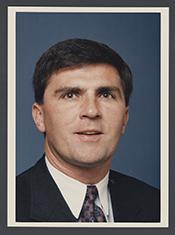
United States · United States Congress · 20 June 1995
Amends the Communications Act of 1934 to prohibit Federal Communications Commission (FCC) regulations from requiring an employer to replace or retrofit telephones to meet FCC hearing aid compatibility requirements if such telephones: (1) were in use before August 16, 1989; (2) are located in noncommon areas of the workplace; and (3) are not coin-operated telephones or telephones for emergency use purposes.
United States · United States Congress · 20 June 1995
Amends the Internal Revenue Code with respect to deferred compensation plans to treat length of service award plans for bona fide volunteers as not providing for the deferral of compensation. Specifies such volunteers as those providing fire fighting and prevention services, emergency medical services, and ambulance services. Exempts such deferred amounts from social security taxes.
United States · United States Congress · 16 June 1995
Amends rule XIII of the Rules of the House of Representatives to abolish the Consent Calendar and establish the Corrections Calendar. Sets forth procedures for consideration of bills on such Calendar on the second and fourth Tuesdays of each month. Requires a three-fifths vote to pass any bill called from such Calendar. Prohibits the sustaining of any point of order against or the rejection of such bill from causing it to be removed from the Union or House Calendar to which it was originally referred.
United States · United States Congress · 15 June 1995
Natural Disaster Protection Partnership Act of 1995 - Amends the Robert T. Stafford Disaster Relief and Emergency Assistance Act (the Act) to: (1) require a State to pay or agree to pay at least five dollars per resident, as determined by the latest official census, before such State or local government receives Federal assistance for the repair, restoration, reconstruction, or replacement of public facilities damaged or destroyed by a major disaster in the State; and (2) revise the formula used to determine the Federal share of such assistance as well as the Federal share for debris and wreckage removal from publicly and privately owned lands resulting from such disaster. Allows an increase of such assistance only upon the enactment of a joint resolution not designated as an emergency under provisions of the Balanced Budget and Emergency Deficit Control Act of 1985 (Gramm-Rudman-Hollings Act). (Sec. 5) Adds provisions concerning disaster mitigation. Requires the Director of the Federal Emergency Management Agency to establish and carry out natural disaster hazard mitigation (mitigation) programs that support natural disaster research, technology, and education. Gives the effect of law to a specified executive order relating to earthquake design and construction standards for federally leased, assisted, or regulated buildings. Requires the Director to enter into an arrangement with the National Academy of Sciences to study and report to the Congress on the feasibility of establishing: (1) national minimum building construction standards for residential and commercial building construction; and (2) standards for the training and licensing of home inspectors and for using such inspections as a means of promoting mitigation for residential property. Requires the Director to define which States should be classified as natural disaster-prone for purposes of the Act. Requires each natural disaster-prone State to either: (1) adopt multihazard building and safety codes for all new and substantially modified building construction in that State; or (2) certify that the State's local communities have adopted and are enforcing building codes which meet the appropriate minimum mitigation requirements of that State. Requires each State designated as flood-prone to either adopt relevant flood protection standards or certify that its flood-prone local communities are in compliance with appropriate State flood protection standards. Requires each natural disaster-prone State to either develop a multihazard mitigation plan or designate an existing plan which includes specified compliance and response requirements. Outlines provisions concerning State compliance with the establishment, adoption, and implementation of appropriate mitigation plans. Provides penalties for noncompliance. Requires the Director, after crediting premiums from the Natural Disaster Insurance Corporation (established under this Act), to allocate funds from a Mitigation Account (established under this Act) to States which comply with all mitigation requirements under this Act. Provides an allocation formula. Requires such funds to be used to support mitigation activities, especially those necessary to bring a State into compliance with building and safety code requirements enumerated under this Act. Requires audits of fund uses. Exempts a State, under specified conditions, from a particular mitigation requirement if it receives inadequate funds from the Account to cover the costs of complying with such requirement. Encourages each private insurer that participates in the Natural Disaster Insurance Corporation to take mitigation measures into account in setting rates and deductibles for its property insurance. Establishes the Natural Disaster Insurance Corporation as a not-for-profit membership corporation to provide primary insurance coverages and reinsurance coverage for hurricanes, earthquakes, volcanic eruptions, and tsunamis. Requires the Corporation's Board of Directors (Board) to: (1) develop a plan of operation describing the Corporation's administration and the provision of the insurance coverages it provides; and (2) develop and adjust, when necessary, actuarially sound rates for such coverages. Establishes an independent Natural Disaster Insurance Board of Actuaries (Independent Board) to review and approve such plan and rates. Requires the Board to file with each State insurance regulator information copies of the initial material and future revisions to its insurance rates, terms, or conditions. Requires the Corporation to establish and maintain a: (1) primary insurance coverage trust account to pay qualifying claims and loss adjustments expenses to private insurers acting as service providers of the primary insurance coverages; and (2) reinsurance coverage trust account to pay qualifying claims to private insurers which purchased such coverage. Outlines provisions concerning the Corporation's use of funds from other accounts and funds to pay for losses in excess of trust account funds or funds raised by issuing obligations in the private market (requiring repayment of funds borrowed from such accounts or funds). Requires the trust accounts to be kept separate. Prohibits: (1) the borrowing of monies between such accounts; and (2) the authorization or appropriation of Federal funds for Corporation activities. Requires the Comptroller General to audit and report to the Congress on Corporation and Independent Board activities. Requires the Corporation to: (1) issue primary insurance coverages that insure against physical damages and losses to residential property, including debris removal, additional living expenses incurred as a result of direct damage to such property, and ordinance and law coverages, resulting from the natural disasters enumerated in this Act that meet specified terms and conditions; and (2) make, under certain conditions, excess reinsurance coverage available to private insurers and State insurance pools for residential losses (including quota-share amounts retained by the private insurers under this Act not already insured by the Corporation under the primary insurance coverage policies) and commercial losses that are proximately caused by specified natural disaster perils. Prohibits making or renewing any federally-related mortgage loan secured by residential property located in an earthquake, volcanic eruption, tsunami, or hurricane-prone State unless the property is covered by: (1) primary insurance coverages; or (2) coverage issued by a private insurer which has equivalent terms, conditions, and rates as such coverages for seismic perils and that meets such terms and conditions as those required for the hurricane peril. Provides an escrow requirement with respect to insurance premiums for such coverage. Outlines requirements that must be met by residential property owners in natural disaster-prone States before the owners can receive any financial assistance under the Act or any similar Federal disaster assistance. Requires the Director and the Corporation to jointly report to the Congress on any additional sanctions or other measures deemed necessary to assure that policyholders purchase Federal flood insurance pursuant to the National Flood Insurance Act of 1968. Requires private insurers which exclude coverage for physical damage caused by flooding to include in the contract a specified warning statement to that effect (or an appropriate alternative warning statement). Establishes in the Treasury the Natural Disaster Protection Fund. Establishes within the Fund a separate Private Loss Account, Public Loss Account, and Mitigation Account. Requires the three accounts to be kept separate and prohibits the borrowing of monies between them. Requires the Private Loss Account to provide direct Federal loans to cover shortfalls in the Corporation's primary insurance and reinsurance accounts. Requires the Public Loss Account to: (1) retain reserve funds sufficient to cover the anticipated costs resulting from natural disasters up to the annual ten-year historical average of disaster relief provided by the Director; and (2) provide grants to States for the repair or restoration of critical facilities and lifelines, public facilities, and infrastructure damaged or destroyed by natural disasters and for pre-natural disaster mitigation. Allows the Federal share of such grants to be increased only upon the enactment of a joint resolution not designated as an emergency under provisions of the Balanced Budget and Emergency Deficit Control Act of 1985. Requires: (1) the Mitigation Account to provide funds to States for appropriate mitigation efforts described in this Act; and (2) the Corporation to pay a specified percentage of the annual net premiums collected for the primary insurance coverages and the reinsurance coverages for mitigation purposes. Provides for appropriate transfers and credits to the Public Loss Account and the Mitigation Account. Authorizes appropriations to such Accounts.
United States · United States Congress · 9 June 1995
Minerals Management Service Organic Act - Establishes the Minerals Management Service within the Department of the Interior and under the charge of a Director who shall report to the Assistant Secretary for Land and Minerals Management. Directs the Service to: (1) promote and regulate the use of lands on the Outer Continental Shelf; and (2) administer a program for the collection, distribution, accounting for and auditing of revenues owed by holders of mineral leases on federal, offshore, and Indian lands.
United States · United States Congress · 7 June 1995
Black Revolutionary War Patriots Commemorative Coin Act - Directs the Secretary of the Treasury to mint and issue one-dollar silver coins emblematic of the Black Revolutionary War Patriots Memorial in Washington, D.C. Directs that coin sale surcharges be paid to the Black Revolutionary War Patriots Foundation for raising an endowment to support construction of the Memorial.
United States · United States Congress · 24 May 1995
Homesteading and Neighborhood Restoration Act of 1995 - Directs the Secretary of Housing and Urban Development to make equal grants to Habitat for Humanity International and other national or regional organizations or consortia for the construction of new, safe, and sanitary dwellings in the United States, including land acquisitions and infrastructure improvement. Amends the Housing Act of 1949 to extend the time period in which the Secretary is authorized to insure and make commitments to insure loans made under the multifamily rural housing program. Allows any interest in the ownership of a project for which a loan is made or insured under to be transferred only if the Secretary determines that such a transfer would be in the best interest of the tenants of the housing. Repeals provisions which prohibit the Secretary from denying loans because an area is excessively remote. Requires the Secretary to establish objective procedures to identify the counties and communities that have the greatest need for rental housing assistance and designate those counties and communities to receive assistance. Amends the Housing Act of 1949 to deny equity loans to extend low income use unless the Secretary determines that other incentives available are not adequate to provide a fair return on the investment of the borrower, to prevent prepayment of the loan, or to prevent displacement of tenants of the housing for which the loan was made. Authorizes the Secretary to make commitments to nonprofit organizations, an agency or body of any State government, or a private entity to guarantee loans from lenders approved by the Secretary for the development costs of housing and related facilities that consists of five or more adequate dwellings available for occupancy only by low or moderate income families or persons, and will remain available according to commitments required by the Secretary. Terminates guarantee authority after September 30, 1995. Authorizes appropriations.
United States · United States Congress · 24 May 1995
TABLE OF CONTENTS: Title I: Organization of Corporation Title II: Business of Corporation Title III: Provisions Relating to Government National Mortgage Association and Office of Federal Housing Enterprise Oversight Title IV: FHA Improvements Federal Mortgage Insurance Corporation Charter Act - Title I: Organization of Corporation - Establishes the Federal Mortgage Insurance Corporation (the Corporation) as a tax-exempt, self-supporting, wholly owned Government corporation to promote the single family housing market through expanded opportunities for full mortgage insurance and housing credit. (Sec. 104) Charges the Director of the Office of Federal Housing Enterprise Oversight (OFHEO) with regulatory supervision over the financial safety and soundness of the Corporation. Requires the Corporation to submit an annual budget and business plan to OFHEO. (Sec. 109) Places the Corporation within the purview of the Inspector General of the Department of Housing and Urban Development. Requires the Corporation to establish an annual business plan for review by the Congress and the President. (Sec. 112) Directs the Comptroller General to report to the President and the Congress on the impact upon the Corporation of statutory limitations and safety and soundness requirements. (Sec. 113) Authorizes appropriations in an amount each fiscal year equal to the amount of net income from Corporation operations. Title II: Business of Corporation - Limits Corporation authority to provide mortgage insurance or credit enhancement to property that is a one- to four-family dwelling located in the United States. (Sec. 202) Prescribes guidelines for the Corporation to implement a mortgage insurance program under the same statutory limitations applicable to family dwellings carried out by the Secretary of Housing and Urban Development. Prescribes guidelines under which the Secretary shall transfer to the Corporation all assets and obligations relating to the mortgage insurance program for family dwellings. Sets a termination date for the Secretary's mortgage insurance authority. (Sec. 203) Authorizes the Corporation to: (1) provide full mortgage insurance for family dwellings that is not subject to the National Housing Act strictures; and (2) engage in any other method of enhancing credit for mortgages involving family dwellings. (Sec. 204) Subjects the Corporation to certain limitations on business activity. Title III: Provisions Relating to Government National Mortgage Association and Office of Federal Housing Enterprise Oversight - Amends the National Housing Act to make technical changes reflecting the provisions of this Act. (Sec. 302) Amends the Housing and Community Development Act of 1992 to provide for the supervision and regulation of the Corporation. Vests the OFHEO Director with exclusive supervisory and regulatory authority over the safety and soundness of the Corporation, including a mandate to review any proposed new business activity to determine any potential for undercapitalization. Sets forth the Director's supervisory and enforcement parameters. Title IV: FHA Improvements - Amends the National Housing Act to: (1) modify the mortgage insurance eligibility formula for family dwellings; and (2) prescribe guidelines under which the Secretary may delegate the authority to insure mortgages for family dwellings to a mortgagee.
United States · United States Congress · 18 May 1995
Waives certain time limitations with respect to the posthumous award of the Congressional Medal of Honor to Doris Miller for acts of heroism while serving in the Navy during World War II.
United States · United States Congress · 17 May 1995
Historic Homeownership Assistance Act - Amends the Internal Revenue Code to allow a tax credit for 20 percent of the qualified rehabilitation expenditures made by a taxpayer with respect to a certified historic structure which has been substantially rehabilitated and which is owned by the taxpayer and used as his or her principal residence. Allows the credit for such expenditures to be taken by a purchaser of the rehabilitated home. Permits, in lieu of the credit, a historic rehabilitation mortgage credit certificate, which shall be transferred to a lender in exchange for a reduction in the rate of interest on the loan secured by the building.
United States · United States Congress · 12 May 1995
TABLE OF CONTENTS: Title I: Cancellation and Suspension Title II: Minor Use Crop Protection Act of 1995 Title III: Data Collection Activities to Assure the Health of Infants and Children and Other Measures Title IV: Amendments to the Federal Food, Drug, and Cosmetic Act Food Quality Protection Act of 1995 - Title I: Cancellation and Suspension - Amends provisions of the Federal Insecticide, Fungicide, and Rodenticide Act (FIFRA) relating to cancellations, changes in classifications, or other terms of registration with respect to the authority of the Administrator of the Environmental Protection Agency. Requires that a rulemaking under such provisions be based on a validated test or other significant evidence raising prudent concerns of unreasonable adverse effects to man or to the environment. Denies registration applications that are not in compliance with this Act. Title II: Minor Use Crop Protection Act of 1995 - Minor Use Crop Protection Act of 1995 - Amends FIFRA to define "minor use" as the use of a pesticide on an animal or commercial agricultural crop or site or for public health protection where: (1) the total U.S. acreage for the crop is less than 300,000 acres; or (2) the Administrator determines that the use does not provide sufficient economic incentive to support the initial or continuing registration of a pesticide for such use and there are insufficient alternatives available for the use, the alternatives pose greater environmental or health risks, or the pesticide plays or will play a significant part in managing pest resistance or in an integrated pest management program. Extends the period of exclusive data use for data submitted to support original registration applications for pesticides for an additional year for each three minor uses registered after this Act's enactment and before the expiration of the period of exclusive use, up to a total of three additional years for all minor uses registered by the Administrator if the Administrator determines that: (1) there are insufficient alternatives available for the use or the alternatives pose greater environmental or health risks; or (2) the pesticide plays or will play a significant part in managing pest resistance or in an integrated pest management program. Requires the Administrator, upon the request of a registrant, to extend the deadline for the production of residue chemistry data required solely to support a minor use subject to specified conditions. Applies the same extension conditions to data for reregistrations. Authorizes the Administrator to modify or revoke such extensions if the use may cause unreasonable adverse environmental effects. Permits the Administrator, in handling the registration of a pesticide for a minor use, to waive applicable data requirements if the absence of data will not prevent the Administrator from determining the risk presented by the pesticide and that the risk would not have an adverse environmental effect. Provides for expedited review (within one year of submission) of applications to support minor use pesticide registrations. Sets forth conditions for extensions of registrations for unsupported minor uses. Provides a procedure for meeting data requirements where a registrant has voluntarily cancelled a registration and another application is pending for registration of a pesticide that is for a minor use and is identical or substantially similar to, or for an identical or substantially similar use as, the cancelled pesticide. Directs the Administrator to establish a minor use program. Directs the Secretary of Agriculture to establish a Department of Agriculture minor use program and a separate matching fund program. Requires the matching fund program to be utilized to ensure the continued availability of minor use crop protection chemicals. Authorizes appropriations. Title III: Data Collection Activities to Assure the Health of Infants and Children and Other Measures - Directs the Secretary of Agriculture, in consultation with the Administrator and the Secretary of Health and Human Services, to coordinate the development and implementation of survey procedures to ensure collection of adequate data on food consumption patterns of infants and children. Requires residue surveillance activities of the Department of Agriculture to provide for the improved surveillance of pesticide residues, including increased sampling of foods most likely consumed by infants and children. Directs the Secretary of Agriculture to: (1) collect pesticide use data of statewide or regional significance for all the major crops and crops of dietary significance; and (2) in cooperation with the Administrator, implement research, demonstration, and education programs to support adoption of integrated pest management. Requires Federal agencies to use and promote integrated pest management techniques. Title IV: Amendments to the Federal Food, Drug, and Cosmetic Act - Amends the Federal Food, Drug, and Cosmetic Act (FDCA) to redefine "pesticide chemical," subject to exception, as any substance that is a pesticide, or any active ingredient thereof, within the meaning of FIFRA. Defines "pesticide chemical residue," subject to exception, as a residue in or on a raw agricultural commodity or processed food of a pesticide chemical or any other added substance present as a result of a pesticide chemical's metabolism or other degradation. Deems a processed food not to be adulterated, within the meaning of FDCA, if there are present pesticide chemical residues at tolerance levels not considered unsafe. (Current law treats only raw agricultural commodities in this manner.) Sets forth requirements relating to tolerances and exemptions from tolerances for pesticide chemical residues in food, including residues of degradation products, which allow the presence in processed food at the tolerance applicable to the raw agricultural commodity from which the processed food is made. Prohibits establishment of a tolerance that is more stringent than a level the Administrator determines is adequate to protect the public health (i.e., if the dietary risk posed by such level of residues is negligible). Allows a greater than negligible dietary risk if: (1) use protects from greater adverse health effects to humans or the environment; (2) use avoids greater risks from another pesticide; or (3) the unavailability of the pesticide would reduce the availability of an adequate, wholesome, and economical domestic supply of the food. Prohibits issuance of a final rule that revokes, modifies, or suspends a tolerance or exemption until the Administrator has taken any necessary action under FIFRA with respect to the registration of the pesticide involved. Requires the Administrator, where a pesticide is labeled for use on a particular food, to: (1) revoke any tolerance or exemption that allows the presence of a particular chemical or its residue in or on such food if the Administrator cancels the registration of each pesticide that contains the chemical or modifies it to prohibit the pesticide's use in connection with such food; and (2) suspend any such tolerance or exemption upon the suspension of the use of each pesticide that contains the chemical. Provides for: (1) tolerances for unavoidable residues in the case of a residue of a canceled or suspended pesticide chemical that will unavoidably persist in the environment and be present in or on a food; and (2) residues resulting from an application which was lawful at the time of application but with respect to which the tolerance or exemption has since been revoked, suspended, or modified. Prohibits, subject to exception, a State from enforcing any limit on a qualifying pesticide chemical residue (as defined in this Act) in or on any food which is not identical to Federal requirements. Prohibits a State, absent an unreasonable dietary risk, from enforcing a limit on the level of residues in any food if the sale of such food containing such residue level was lawful at the time of application of the pesticide. Authorizes appropriations for increased monitoring of pesticide residues in imported and domestic food.
United States · United States Congress · 9 May 1995
Expresses the sense of the Congress that economically targeted investments violate specified provisions of the Employee Retirement Income Security Act of 1974 (ERISA) relating to a fiduciary's responsibility to serve the interests of employee benefit plan participants and beneficiaries exclusively. Requires that the application of such ERISA provisions to employee benefit plan asset investments be determined without regard to a specified Department of Labor (DOL) interpretive bulletin or any other similar directive regarding economically targeted investments. Prohibits DOL officers or employees from traveling, lecturing, or otherwise expending DOL resources to promote, directly or indirectly, economically targeted investments. Amends ERISA to prohibit Federal agencies or instrumentalities from establishing or maintaining any clearinghouse or other database relating to economically targeted investments for employee benefit plans. Directs Federal agencies and instrumentalities to immediately terminate contracts or other arrangements which violate this Act.
United States · United States Congress · 2 May 1995
Amends the Federal criminal code to increase the penalty imposed upon a person who escapes from the custody of a Federal institution or officer to up to ten years' imprisonment (currently, up to five years).
United States · United States Congress · 1 May 1995
Condemns the bombing at the Alfred P. Murrah Federal Building in Oklahoma City, Oklahoma. Sends condolences to the families. Commends rescue and volunteer workers, law enforcement officials, and the President. Urges the President to use all necessary means to find and punish the perpetrators. Supports the President's and Attorney General's position that Federal prosecutors will seek the maximum penalty allowed by law, including the death penalty, for those responsible. Declares that the House of Representatives will expeditiously approve legislation to strengthen the authority and resources of all Federal agencies involved in combating such acts of terrorism.
United States · United States Congress · 7 April 1995
Amends the Internal Revenue Code to allow individuals who do not itemize deductions a charitable contribution deduction to the extent the amount claimed exceeds $1,000 ($2,000 in the case of a joint return). Excepts charitable contribution deductions from the overall limitation on itemized deductions.
United States · United States Congress · 7 April 1995
Expresses the sense of the Congress that: (1) Taiwan deserves full participation, including a seat, in the United Nations (UN) and its related agencies; and (2) the U.S. Government should immediately encourage the UN to take action by considering the unique situation of Taiwan in the international community and adopting a comprehensive solution to accommodate Taiwan in the UN and its related agencies.
United States · United States Congress · 6 April 1995
Morris K. Udall Parkinson's Research, Assistance, and Education Act of 1995 - Amends the Public Health Service Act to mandate a program for the conduct and support of research and training, the dissemination of health information, and other programs regarding Parkinson's disease. Establishes the Interagency Coordinating Committee on Parkinson's Disease. Requires Core Center Grants to encourage the development of innovative multidisciplinary research and provide training concerning Parkinson's, designating each grant recipient as a Morris K. Udall Center for Research on Parkinson's Disease. Authorizes establishment of the National Parkinson's Disease Data System to collect, store, analyze, retrieve, and disseminate data. Establishes: (1) the National Parkinson's Disease Information Clearinghouse; (2) a grant program to support scientists who have distinguished themselves in Parkinson's research; and (3) a national education program to foster a national focus on Parkinson's and the care of those with Parkinson's. Authorizes appropriations.
United States · United States Congress · 6 April 1995
Authorizes an addressee or commercial mail receiving agency to file a change-of-address order with the Postal Service upon termination of an agency relationship between the addressee and the agency. Requires the Postal Service to forward mail to the addressee which is marked for forwarding by the commercial mail receiving agency in the same manner as, and subject to the same terms and conditions as apply to, mail forwarded directly by the Postal Service to such addressee.
United States · United States Congress · 4 April 1995
Clinical Laboratory Improvement Act Amendments of 1995 - Exempts a physician clinical office laboratory from Public Health Service Act certification requirements, except when such laboratory performs a Pap Smear (Papanicolaous Smear) analysis.
United States · United States Congress · 3 April 1995
Truth in Lending Class Action Relief Act of 1995 - Amends the Truth in Lending Act to declare a moratorium between the enactment of this Act and October 1, 1995, on court certifications of any class in any action brought under such Act with respect to any credit transaction: (1) not under an open end credit plan secured by a first lien on real property or a dwelling, which constitutes a refinancing or consolidation of an existing extension of credit; and (2) based on the alleged failure of a creditor to include in the disclosed finance charge a charge actually incurred in connection with the transaction, or to properly make any other required disclosure as a result of such failure, or to provide proper notice of rescission rights owing to selection by the creditor of the incorrect form from among prescribed model forms (or forms based on them). Specifies exceptions to such moratorium.
United States · United States Congress · 30 March 1995
TABLE OF CONTENTS: Title I: Reductions in Government Overregulation Subtitle A: The Home Mortgage Process Subtitle B: Community Reinvestment Act Amendments Subtitle C: Consumer Banking Reforms Subtitle D: Equal Credit Opportunity Act Amendments Subtitle E: Consumer Leasing Act Amendments Subtitle F: Federal Home Loan Bank Amendments Title II: Streamlining Government Regulations Subtitle A: Regulatory Approval Issues Subtitle B: Streamlining of Government Regulations; Miscellaneous Provisions Title III: Lender Liability Financial Institutions Regulatory Relief Act of 1995 - Title I: Reductions in Government Overregulation - Subtitle A: The Home Mortgage Process - Amends the Real Estate Settlement Procedures Act (RESPA) to transfer regulatory authority to the Board of Governors of the Federal Reserve System (the Board) from the Secretary of Housing and Urban Development. Eliminates redundant regulators by adding certain administrative enforcement provisions. (Sec. 102) Amends the Truth in Lending Act (TILA) and RESPA to provide for comparability of terms. (Sec. 103) Provides for increased regulatory flexibility and exemptive authority for the Board under TILA. (Sec. 104) Provides for reductions in RESPA regulatory burdens with respect to: (1) lenders' disclosures to federally related mortgage loan applicants relating to assignment, sale, or transfer of loan servicing; (2) second mortgages; and (3) consistency of RESPA and TILA exemption of business loans. (Sec. 105) Provides for alternative disclosures for adjustable rate mortgages under TILA. (Sec. 106) Amends TILA with respect to treatment of certain charges, including third party fees, taxes on security instruments or evidences of indebtedness, preparation of loan documents, and fees relating to pest infestations, inspections, and hazards. (Sec. 107) Exempts from rescission, under TILA, certain transactions (other specified types of mortgages) which constitute refinancings or consolidations of existing extensions of credit and which are secured by a first lien. (Sec. 108) Adds to TILA provisions relating to tolerances for accuracy and to the basis of disclosure for per diem interest. (Sec. 109) Amends TILA to establish certain limitations on liability, including: (1) limitations on liability for disclosures relating to certain fees and charges other than finance charges; and (2) an exemption from liability for finance charge disclosures within tolerance limits. (Sec. 111) Sets forth a limitation on the rescission period under TILA. (Sec. 112) Revises TILA provisions for the calculation of actual damages. (Sec. 113) Makes assignees liable, under specified TILA provisions, only if violations are apparent on the face of transaction documents. Provides that a servicer of a consumer credit transaction shall not be treated as: (1) an assignee for liability purposes unless the servicer is the owner of the obligation; or (2) the owner on the basis of an assignment for administrative convenience. (Sec. 114) Revises certain TILA provisions for recovery of fees. (Sec. 115) Repeals a provision of the Housing and Urban Development Act of 1968 for homeownership debt counseling notification. (Sec. 116) Amends the Home Mortgage Disclosure Act of 1975 to revise exemption provisions. Exempts from coverage under such Act specified types of institutions with total assets, in their last full fiscal year, of $50 million or less (currently $10 million or less). Authorizes the Board to exempt those with greater assets where the burden of compliance outweighs the usefulness of the information required to be disclosed. Provides that a depository institution satisfies certain public availability of information requirements if: (1) such information is kept at the home office; (2) notice that such information is available through request to the home office is posted at the specified branch locations; and (3) the information is supplied to the requester in a paper copy or, if acceptable to the requester, via a form of electronic medium. Subtitle B: Community Reinvestment Act Amendments - Amends the Community Reinvestment Act of 1977 (CRA) to revise the expression of congressional intent. (Sec. 122) Exempts a regulated financial institution from the examination requirements of, or any regulations issued under, CRA if: (1) its main office (and each branch) is located in a local government unit with a population of not more than 30,000, which is not part of a metropolitan statistical area; and (2) the institution and its parent bank holding company have aggregate assets of not more than $100 million (to be adjusted annually by the annual percentage increase in the consumer price index for urban wage earners and clerical workers). (Sec. 123) Provides for self-certification of CRA compliance by qualifying financial institutions, with certain public notice requirements. (Sec. 124) Adds provisions for community input and conclusive rating, including requirements for publication of exam schedule, opportunity for comment, evaluation by the appropriate Federal financial supervisory agency, and procedures for requests for reconsideration of rating. (Sec. 125) Directs Federal financial supervisory agencies, in conducting certain CRA assessments, to develop compliance standards consistent with the specific nature of special purpose banks (which do not generally accept retail deposits, such as credit card banks and trust banks). (Sec. 126) Gives institutions credit, for purposes of satisfying CRA requirements, for investments in, and loans, to: (1) minority or women's depository institutions; and (2) joint ventures or other entities or projects providing benefits to distressed communities (whether such institutions or communities are located within or outside of the regulated financial institution's service area. (Sec. 127) Prohibits regulations requiring certain additional recordkeeping and reporting under CRA. (Sec. 128) Applies a requirement of metropolitan area distinctions only to institutions that maintain domestic branches in two or more States. (Sec. 129) Amends the Federal Home Loan Bank Act to make certain reporting requirements inapplicable to members receiving an outstanding or satisfactory grade under specified CRA provisions. Subtitle C: Consumer Banking Reforms - Amends the Truth in Savings Act (TISA) to prohibit depository institutions or deposit broker from making misleading or inaccurate advertisements or disclosures. Repeals TISA provisions relating to disclosure of interest rates and terms of accounts, account schedules, disclosure requirements for certain accounts, distribution of schedules, periodic statements, civil liability, and effect on State law. Revises provisions for regulations and definitions. (Sec. 132) Amends the Electronic Fund Transfer Act (EFTA) to revise provisions relating to unauthorized electronic fund transfers. (Sec. 133) Amends TILA to add provisions relating to cardholder liability for unauthorized use of credit cards. (Sec. 134) Amends the Federal Deposit Insurance Act to revise provisions for regulations governing insured banks to allow depository institutions or their affiliates or subsidiaries to transfer information among themselves without any restriction or limitation if such possible information sharing is disclosed and the consumer is given the opportunity to direct that such information not be so communicated, prior to initial communication. (Sec. 135) Revises EFTA definitions of: (1) accepted card or other means of access; and (2) account. Subtitle D: Equal Credit Opportunity Act Amendments - Equal Credit Opportunity Act Amendments of 1995 - Combines and simplifies the adverse action notification requirements of the Equal Credit Opportunity Act (ECOA) and the Fair Credit Reporting Act (FCRA). (Sec. 143) Revises ECOA requirements for written notifications of, and statements of reasons for, adverse actions to be given to credit applicants. Exempts from liability for a violation of such requirements any persons who show by a preponderance of the evidence that at the time of the alleged violation they maintained reasonable procedures to assure compliance with such requirements. (Sec. 144) Revises specified FCRA requirements on users of consumer reports to eliminate coverage of credit denials and of adverse actions based on reports of persons other than consumer reporting agencies. (Sec. 145) Amends ECOA and the Fair Housing Act to add incentives for self-testing. (Sec. 146) Provides that creditors shall be deemed in compliance with ECOA nondiscrimination requirements with respect to any credit decision based solely on the use of an empirically derived, demonstrably and statistically sound, credit scoring system if such system does not use: (1) any protected category; or (2) any criterion so directly associated as to be a functional equivalent of such a category. (Does not preclude using age as a factor in such a system as otherwise permitted under ECOA.) Subtitle E: Consumer Leasing Act Amendments - Consumer Leasing Act Amendments of 1995 - Amends the Consumer Credit Protection Act (CCPA) to direct the Board to: (1) write regulations or staff commentary to update and clarify requirements and definitions for lease disclosures, contracts, and other issues related to consumer leasing which would carry out the purposes of the Consumer Leasing Act; and (2) publish model disclosure forms and clauses to facilitate compliance with such disclosure requirements and aid the consumer in understanding the transaction. (Sec. 154) Revises CCPA provisions for consumer lease disclosures to require prior separate leasing disclosures of specified items in a tabular format. (Sec. 155) Revises CCPA provisions relating to consumer lease advertising. Subtitle F: Federal Home Loan Bank Amendments - Amends the Federal Home Loan Bank Act (FHLBA) to revise an FHLB system membership eligibility location requirement to allow institutions to apply for membership in an adjoining district, for the institution's convenience, with Federal Housing Finance Board (FHFB) approval. (Sec. 162) Revises FHLBA audit provisions to: (1) prohibit the FHFB from participating in the hiring of external auditors by banks; (2) permit the FHFB to establish requirements for external audit contracts and accounting standards; and (3) require all 12 banks to contract for an annual audit with a single provider. Title II: Streamlining Government Regulations - Subtitle A: Regulatory Approval Issues - Amends the Bank Holding Company Act (BHCA) to revise and streamline notice and other requirements relating to both nonbanking and bank acquisitions by well-capitalized and well-managed banking organizations. (Sec. 203) Amends the Federal Deposit Insurance Act to eliminate: (1) Bank Merger Act filing and approval requirements for insured depository institutions already controlled by the same holding company; and (2) redundant approval requirements for "Oakar" transactions (generally, conversion, by acquisition or similar means, of a Bank Insurance Fund member to a Savings Association Insurance Fund member, or vice versa). (Sec. 205) Amends the Home Owners' Loan Act to eliminate duplicative requirements imposed on bank holding companies. (Sec. 206) Eliminates a BHCA requirement that approval be obtained for divestitures. (Sec. 207) Eliminates specified requirements for certain branch applications by: (1) national banking associations, under the Revised Statutes relating to banks and banking; (2) State member banks, under the Federal Reserve Act (FRA); and (3) State nonmember banks, under the Federal Deposit Insurance Act (FDIA). (Sec. 208) Eliminates branch applications and requirements for automatic teller machines (ATMs) and similar facilities, under the Revised Statutes and FDIA. (Sec. 209) Eliminates a requirement for approval of investments in bank premises for well-capitalized and well-managed banks. (Sec. 210) Eliminates specified filing requirements under FDIA for officer and director appointments. (Sec. 211) Streamlines the BHCA process for determining new nonbanking activities. Subtitle B: Streamlining of Government Regulations; Miscellaneous Provisions - Eliminates the per-branch capital requirement for national banks and State member banks under the Revised Statutes. (Sec. 222) Revises FDIA requirements relating to notification of branch closures to exempt specified entities under certain conditions. (Sec. 223) Amends the Depository Institutions Management Interlocks Act to exempt management officials of depository institutions or holding companies with small market shares from prohibitions against dual service with unaffiliated institutions or companies in the same area, town, or village. Revises provisions relating to dual service among larger organizations. Extends a specified grandfather exemption which allows certain management officials to continue to serve despite interlocks prohibitions. (Sec. 224) Abolishes the Appraisal Subcommittee established under the Federal Financial Institutions Council Act of 1978, and consolidates its functions into the Financial Institutions Examination Council. Amends the Financial Institutions Reform, Recovery and Enforcement Act of 1989 (FIRREA) to revise provisions relating to rosters of State certified or licensed appraisers. Provides for reduction of assessments on appraisers. (Sec. 225) Eliminates certain recordkeeping and reporting requirements relating to loans to executive officers under FRA and BHCA. Permits extensions of credit made under certain FRA provisions pursuant to a benefit or compensation program widely available to employees of the member bank. (Sec. 226) Amends FDIA to provide for expanded regulatory discretion for small bank examinations. (Sec. 227) Amends the Right to Financial Privacy Act to revise cost reimbursement provisions to specifically include corporate customers under references to customer records. (Sec. 228) Amends specified Federal law relating to money and finance to eliminate certain provisions requiring depository institutions to identify their nonbank financial institution customers. (Sec. 229) Requires each appropriate Federal banking agency to conduct a paperwork reduction review. (Sec. 230) Repeals certain reporting requirements under the Federal Deposit Insurance Corporation Improvement Act of 1991. (Sec. 231) Directs the Secretary of the Treasury to revise a specified regulation under the Securities Exchange Act of 1934 to provide for daily confirmations for hold-in-custody repurchase transactions. (Sec. 232) Requires the Financial Institutions Examining Council to carry out, and report to the Congress on, a regulatory review of regulations. (Sec. 233) Amends the International Lending Supervision Act to: (1) grant Federal banking agencies discretion in imposing certain country risk requirements with respect to reserves; and (2) repeal certain additional country risk reserve requirements. (Sec. 234) Revises specified FDIA audit provisions with respect to exemptions due to costs. Authorizes the Federal Deposit Insurance Corporation and the appropriate Federal banking agency to designate certain information in such audits as privileged, confidential, and not available to the public. (Sec. 235) Sets forth certain due process protections under FDIA and the Federal Credit Union Act. (Sec. 236) Revises FDIA provisions relating to: (1) culpability standards for outside directors; and (2) rules on deposit taking. (Sec. 238) Amends the Riegle Community Development and Regulatory Improvement Act of 1994 to revise the transition period for new regulations. (Sec. 239) Amends the International Banking Act of 1978 to revise provisions relating to foreign bank applications and examinations. (Sec. 241) Amends TILA to revise provisions relating to second mortgages. Title III: Lender Liability - Amends FDIA to add provisions relating to lender, fiduciary, and Government agency environmental liabilities.
United States · United States Congress · 15 March 1995
Highway Mandates Repeal Act of 1995 - Amends the Intermodal Surface Transportation Efficiency Act of 1991 to repeal provisions relating to the use of asphalt pavement containing recycled rubber.
United States · United States Congress · 9 March 1995
Truth in Lending Act Amendments of 1995 - Amends the Truth in Lending Act pertaining to consumer credit cost disclosure to exclude from the determination of finance charges: (1) charges imposed by third parties not affiliated with the creditor (including settlement agents, attorneys, and escrow and title companies) if the creditor does not expressly require the imposition of such charges and does not retain them; (2) taxes levied on security instruments or evidences of indebtedness if payment is a precondition for recording such an instrument; (3) fees, for preparation of loan-related documents and attending or conducting settlement in extensions of credit secured by interest in real property; and (4) fees related to pest infestation on premises, structural inspections, and flood hazards. (Sec. 3) Excludes from a consumer's statutory right of rescission certain refinancings or consolidations of debt secured by a first lien. (Sec. 4) Increases the allowable tolerances for accuracy pertaining to the annual percentage rate disclosure requirements on consumer credit transactions. Provides that the disclosure for per diem interest shall be deemed to be accurate if it is based on information actually known to the creditor at the time that the disclosure documents are being prepared for the consummation of the transaction. (Sec. 5) Sets forth liability limitations for: (1) a creditor's treatment, for disclosure purposes, of specified taxes, fees, and charges other than finance charges; and (2) a creditor's finance charge disclosures within specified tolerance limits. (Sec. 7) Provides that the statute of limitations on a consumer's right of rescission is absolute and acts as a bar to any subsequent assertion of such rescission in State or Federal court. (Sec. 8) Narrows the civil liability guidelines for consumer credit disclosures to: (1) declare a creditor liable for actual damages sustained by a person to the extent such person demonstrates reliance on the inaccurate disclosure which prevented the person from accepting better credit terms actually available from another creditor; (2) revise the general rules for liability of a creditor's voluntary assignee for a violation apparent on the face of the disclosure statement; and (3) declare that a servicer of a consumer obligation shall not be treated as an assignee unless the servicer is the owner of the obligation.
United States · United States Congress · 2 March 1995
Provides that, in the administration of the child labor provisions of the Fair Labor Standards Act of 1938, minors under age 18 shall be permitted to load materials into balers or compactors that meet specified safety standards of the American National Standards Institute.
United States · United States Congress · 1 March 1995
Directs the Secretary of the military department concerned to pay an annuity to the qualified surviving spouse of any member of the armed forces who: (1) died before March 21, 1974, and was entitled to retired or retainer pay on the date of death; or (2) was a member of the reserves, died during the period beginning on September 21, 1972, and ending on October 1, 1978, and at the time of death would have been entitled to retired or retainer pay but for the fact that the member was under 60 years of age. Defines a qualified surviving spouse as one who has not remarried and who is not eligible for an annuity under the Survivor Benefit Plan. Provides the annuity amount and reduces such amount by the amount of any dependency and indemnity compensation to which the survivor is entitled.
United States · United States Congress · 28 February 1995
Amends part B (Supplemental Medical Insurance) of title XVIII (Medicare) of the Social Security Act to include within Medicare coverage the use of blood-testing strips for individuals with Type I or II diabetes. Requires such strips to be included within a payment methodology covering inexpensive and routinely purchased equipment.
United States · United States Congress · 23 February 1995
Amends the Nuclear Waste Policy Act of 1982 to revise and rename it the Integrated Spent Nuclear Fuel Management Act of 1995. (Sec. 1) Instructs the Secretary of Energy (the Secretary) to accept spent nuclear fuel and high-level radioactive waste by not later than January 31, 1998. Entitles contract holders to specified remedies for the Secretary's failure to meet service contract obligations, or to accept spent nuclear fuel and high-level radioactive waste as mandated under this Act. States that the Nuclear Waste Fund shall fund the execution of service contract and implementation of the Secretary's responsibilities, including the acceptance of spent nuclear fuel and high-level radioactive waste at contract holder sites and transporting such fuel or waste to a private storage facility. Establishes an integrated spent nuclear fuel management system for spent nuclear fuel and high-level radioactive waste, including its storage, transportation, and disposal. Prescribes procedural guidelines for the use of: (1) railroads; (2) transportation planning and requirements; (3) multi-purpose canister systems; (4) interim storage facilities; (5) permanent disposal; (6) land withdrawal; and (7) private storage facilities. Prescribes consultation and assistance guidelines between the Secretary and the State of Nevada. Prescribes budget priorities for purposes of annual requests for appropriations from the Waste Fund. Prescribes a fee schedule for electricity and nuclear fuel used to generate electricity in a civilian nuclear power reactor. Sets forth advance contract prerequisites for utilization or production facility license renewals. Reestablishes the Nuclear Waste Fund and the Office of Civilian Radioactive Waste Management. Directs the Secretary to: (1) establish by rule the appropriate portion of the costs of managing high-level radioactive waste and spent nuclear fuel allocable to the interim storage or permanent disposal of high-level radioactive waste and spent nuclear fuel from atomic energy defense activities; and (2) advise the Congress annually of the amount of high-level radioactive waste and spent nuclear fuel from atomic energy defense activities requiring management in the integrated spent nuclear fuel management system. Subjects the Secretary to all Federal, State, and local environmental or land use laws and regulations, with specified exceptions. Grants the U.S. courts of appeals original and exclusive jurisdiction over civil actions under this Act. Provides that upon a contract holder's request, the Secretary shall take title to or possession of spent nuclear fuel or high-level radioactive waste without removing it from the contract holder's designated storage site if the Secretary cannot accept such items within the contract's acceptance schedule. Requires the NRC to promulgate regulatory guidelines for: (1) financial assurances for low-level radioactive waste site closures; and (2) training and qualification of civilian nuclear powerplant personnel. Reestablishes the Nuclear Waste Technical Review Board. Authorizes appropriations. Directs the Secretary to take action as necessary to improve the management of the civilian radioactive waste management program to ensure that it is operated to the maximum extent like a private business. States that the program is not subject to civil service regulations. Abolishes the Interim Storage Fund, the Monitored Retrievable Storage Commission, the Office of Subseabed Disposal Research, and the Office of Nuclear Waste Negotiator. Repeals all references to the Yucca Mountain site. Requires the Secretary to report to the Congress whether particular milestones have been reached with respect to: (1) multi-purpose canister systems; (2) land withdrawals; (3) interim storage facilities; and (4) acceptance of spent nuclear fuel from contract holders. Directs the Secretary to: (1) create a value engineering function within the Office of Civilian Radioactive Waste Management; and (2) employ on an on-going basis, integrated performance modeling regarding site characterization. (Sec. 2) Sets forth transition provisions for the continuation of: (1) contracts; (2) Nuclear Waste Fund; (3) Office of Civilian Radioactive Waste Management; and (4) Nuclear Waste Technical Review Board. (Sec. 3) Mandates that amounts in the Nuclear Waste Fund be appropriated exclusively for certain authorized purposes cited in the Nuclear Waste Policy Act of 1982. Precludes such appropriations from being taken into account for any budget enforcement procedures under the Balanced Budget and Emergency Deficit Control Act of 1985. Amends such Act to provide that appropriations to the Nuclear Waste Fund are not subject to its discretionary spending limits or to a certain allocation of the Energy and Waster Development Subcommittee of the Appropriations Committee. Reduces specified discretionary spending limits under the Congressional Budget Act of 1974.
United States · United States Congress · 21 February 1995
National Language Act of 1995 - Makes English the official language of the U.S. Government. Requires the Government to conduct its official business in English, including publications, income tax forms, and informational materials. Provides that this Act shall not apply to the use of a language other than English for religious purposes, for training in foreign languages for international communication, to programs in schools designed to encourage students to learn foreign languages, or by persons over age 62. Permits the Government to provide interpreters for persons over age 62. Repeals the Bilingual Education Act. Terminates the Office of Bilingual Education and Minority Languages Affairs in the Department of Education. Sets forth provisions regarding the recapture of unexpended funds and transitional provisions. Repeals provisions of the Voting Rights Act of 1965 regarding bilingual election requirements and regarding congressional findings of voting discrimination against language minorities, prohibition of English-only elections, and other remedial measures. Amends the Immigration and Nationality Act to require that all public ceremonies in which the oath of allegiance is administered pursuant to such Act be conducted solely in English. Specifies that this Act shall not preempt the law of any State.
United States · United States Congress · 21 February 1995
Regulatory Sunset and Review Act of 1995 - Provides that the effectiveness of a regulation issued by a Federal agency shall terminate on the applicable termination date (specified in this Act) unless the head of the agency: (1) reviews the regulation; (2) submits to the Congress and publishes in the Federal Register a preliminary report on findings and proposed recommendations; (3) reviews and considers comments regarding the preliminary report that are transmitted to the agency by the Administrator of the Office of Information and Regulatory Affairs in the Office of Management and Budget and by appropriate congressional committees; and (4) submits to the Congress and publishes a final report on the review and a notice extending the effectiveness of the regulation, with or without modifications, within a specified time frame. Sets forth termination dates of regulations (seven years after this Act's enactment for existing regulations, three years after the regulation takes effect for new regulations, and seven years after publication of a notice for an extension for a regulation that is extended under this Act). Provides for temporary extensions. Requires the head of each agency to: (1) conduct thorough and systematic reviews of all regulations issued by the agency to determine if those regulations are obsolete, inconsistent, or duplicative or impede competition; (2) issue reports on the findings of those reviews, with recommendations for terminating, extending, modifying, or consolidating regulations; and (3) solicit comments from the public (including the private sector) before making determinations and sending a report regarding a regulation. Sets forth provisions regarding: (1) criteria for review; (2) preliminary and final reports on reviews of regulations; (3) reports on the schedule for reviewing existing regulations; (4) functions of the Administrator; (5) designation of agency Regulatory Review Officers; and (6) judicial review. Prohibits an agency from modifying, terminating, or extending a regulation unless the agency head, within specified time frames: (1) submits to the Congress notice of the proposal and notice of the final determination to take that action; and (2) reviews and considers comments submitted to the agency by appropriate congressional committees.
United States · United States Congress · 15 February 1995
Missing Service Personnel Act of 1995 - Requires the military commander of the unit, facility, or area to which the following persons are assigned to conduct an investigation as to their whereabouts after receiving factual information that their status is uncertain: (1) military personnel who disappear during a period of war, national emergency, or hostilities; and (2) any civilian Federal employee (including an employee of a Federal contractor) who serves with or accompanies an armed force in the field during such a period. Requires such persons to be placed in a missing status and requires notification of such status to either the officer having general court-martial authority over the person (for military personnel) or the Secretary of the military department employing such person (for civilian and contractor employees). Requires such officials to be kept informed (specifies deadlines) as to all information and inquiries concerning efforts to locate such missing personnel. Requires such officials to appoint a board to conduct an inquiry into the whereabouts and status of such persons. Provides for: (1) board composition, activities, and access to information; (2) inquiry proceedings (requiring the appointment of counsel, with specified duties, to represent the missing person); (3) a board recommendation as to the official status of a person following such an inquiry; (4) board reports to the officials involved as to board conclusions (prohibiting public availability of such reports for a one-year period); (5) report review by the official; (6) a report from such official to interested persons; and (7) an additional investigation and inquiry by an additional board upon receipt of new information within one year after the date of the first official notice of a person's disappearance. Allows interested persons (family members, dependents, next of kin) to participate at the proceedings of the board during such additional inquiry. Provides for the availability of appropriate information to board personnel conducting investigations and inquiries. Provides similar procedures for the second board with respect to meetings (open to the public, with exceptions), recommendations, reports, review by the Secretary of the military department concerned, and reports to interested persons. Directs the Secretary concerned: (1) if information becomes available on the whereabouts or status of a missing person within three years after the first official notice of the person's disappearance, to appoint a board to conduct an inquiry into such information; and (2) to appoint a board to conduct an inquiry as to the status of any missing person on or about three years after the first official notice of the disappearance of such person and not later than every three years thereafter until a total of 12 years after the first official notice. Allows certain interested persons to request the Secretary to appoint a board to review the status of a person declared dead before five years after the enactment of this Act. Limits the review subjects to those whose deaths were declared to have occurred on or after December 7, 1941. Provides for the conditions under which an appointed board may recommend that a person be declared dead. Requires the Secretary concerned to ensure that the personnel file of each person covered contains all information in possession of the Government relating to the disappearance and whereabouts or status of such person. Provides for judicial review of a person's declared status under this Act. Requires a person in a missing status or previously declared dead who is subsequently found alive to be paid for the full time of their absence. Requires the Secretary concerned, upon the enlistment of a person in an armed force, to require such person to specify in writing the individual(s) to whom information on their whereabouts or status shall be provided in the event of an investigation under this Act. Allows for revision of such choice by the enlisting individual.
United States · United States Congress · 10 February 1995
Directs the Secretary of the Navy to provide for the retroactive award of the Navy Combat Ribbon with respect to participation in ground or surface combat during any period after July 4, 1943, and before March 1, 1961.
United States · United States Congress · 9 February 1995
Helium Privatization Act of 1995 - Amends the Helium Act to authorize the Secretary of the Interior to: (1) enter into agreements with private parties for the recovery and disposal of helium on Federal lands; (2) grant leasehold rights to such helium; (3) store and transport crude helium; and (4) maintain and operate existing crude helium storage at the Bureau of Mines Cliffside Field. Directs the Secretary to: (1) cease producing, refining, and marketing refined helium; and (2) dispose of all facilities, equipment, and Federal property interests relating to refined helium activities. Requires the Secretary to impose fees for helium storage, withdrawal, or transportation services. Prescribes guidelines for: (1) the purchase of helium by Federal agencies from certain private persons; and (2) the sale of crude helium by the Secretary. Prohibits the Secretary from making crude helium sales in amounts that will disrupt the crude helium market price. Mandates that proceeds from helium sales be paid to the Treasury. Instructs the Secretary to eliminate helium stockpiles by a prescribed deadline. Repeals the Secretary's authority to borrow under the Helium Act. Directs the Inspector General of the Department of the Interior to prepare certain annual financial statements for the Helium Operations of the Bureau of Mines.
United States · United States Congress · 8 February 1995
Firefighters Pay Fairness Act of 1995 - Amends Federal law to provide that, for Federal fire fighters, the annual rate of basic pay shall be calculated on the basis of 26 administrative biweekly work periods of up to 106 hours each. Prescribes a formula for computing the basic biweekly pay of Federal employees who are not fire fighters but perform fire fighting duties. Extends existing biweekly pay period and pay computation requirements to Federal fire fighters and employees in and under the judicial branch. Removes employees of the District of Columbia government from coverage by such requirements. Repeals the current exception from such requirements for employees on the Isthmus of Panama in the service of the Panama Canal Commission. Requires compensation at time-and-a-half per hour for any hours worked in excess of 106 during a biweekly pay period by fire fighters subject to the Fair Labor Standards Act of 1938. Prescribes basic rates of pay for fire fighters: (1) promoted to a supervisory position; and (2) selected and assigned for training. Adds certain pay retention rights for Federal firefighters subject to a reduction or termination of a rate of pay established under this Act. Authorizes a Federal agency to pay cash awards of up to five percent of basic pay to fire fighters or other employees performing fire fighting duties who make substantial use of: (1) special skills, such as handling hazardous materials; or (2) a certification or license, such as certification as an emergency medical technician. Requires the Office of Personnel Management to report to the Congress with respect to transition and funding increase plans and regulatory or legislative modifications necessary to prevent diminution in retirement benefits under this Act.
United States · United States Congress · 7 February 1995
Truth in Budgeting Act - Prohibits the receipts and disbursements of the Highway Trust Fund, the Airport and Airway Trust Fund, the Inland Waterways Trust Fund, and the Harbor Maintenance Trust Fund from being included in either the Federal budget as submitted by the President or in the congressional budget. Exempts such trust funds from any general statutory budget limitation. (Sec. 3) Amends Federal transportation law to require the Secretary of Transportation to estimate annually what, but for this Act, would be at the close of the next fiscal year: (1) the amount of unfunded aviation authorizations; and (2) the net aviation receipts. Requires the Secretary to: (1) determine the amount by which unfunded aviation authorizations does or does not exceed net aviation receipts; and (2) make appropriate adjustments to amounts authorized to be appropriated and the amounts available for obligation from the Airport and Airway Trust Fund based on the difference. (Sec. 4) Sets forth similar provisions with respect to the Inland Waterways and the Harbor Maintenance Trust Funds.
United States · United States Congress · 3 February 1995
Expresses the sense of the Congress that the current link should be maintained between: (1) the levels of earnings allowed for blind individuals entitled to disability insurance benefits; and (2) the exempt amounts allowed for purposes of the social security earnings test for individuals who have attained retirement age.
United States · United States Congress · 1 February 1995
Fairness in Musical Licensing Act of 1995 - Revises Federal copyright law to provide that communication by electronic device of a transmission embodying a performance or display of a work by the reception of a broadcast, cable, satellite, or other transmission shall not be a copyright infringement unless an admission fee is charged to see or hear the transmission or the transmission is not properly licensed. Provides that a performance or display in a commercial establishment shall not be considered infringement if incidental to the main purpose of the establishment. Specifies that, if a general music user and a performing rights society are unable to agree on the appropriate fee to be paid for the user's past or future performance of musical works in the society's repertoire, the user shall be entitled to binding arbitration of such disagreement pursuant to the rules of the American Arbitration Association in lieu of any other dispute-resolution mechanism established by any judgment or decree governing the operation of such society. Requires the arbitrator to determine a fair and reasonable fee for the user's past and future performance of works in such society's repertoire and to impose a penalty for infringement if the user's past performance infringed the copyright of such works. Makes an arbitrator's determination binding on both parties. Sets forth provisions regarding civil actions for infringement that may be submitted to arbitration if the license fee for a performance is contested. Requires a performing rights society, at the request of any radio broadcaster, to offer the broadcaster a per programming license to perform nondramatic musical works in its repertoire. Directs that such license be offered on terms and conditions that provide an economically and administratively viable alternative to blanket licenses. Sets forth provisions regarding prices of such licenses. Requires, beginning January 1, 1998, the performance of nondramatic musical works by broadcasters under any per programming period license to be determined on the basis of statistically reliable sampling or monitoring by the society and prohibits the society from requiring the broadcaster to report such performance to the society. Authorizes such broadcasters to bring actions to require compliance with such requirements. Directs each performing rights society to make available free online computer access to copyright and licensing information for each work in its repertoire as well as a semiannual printed directory of each title in its repertoire. Requires such society, upon request, to provide to any person who may perform musical works in its repertoire, copies of documentation establishing the society's right to license the public performance of such works. Bars a society from instituting or being a party to any action alleging infringement in, or charging a fee under any per programming period license for, any work in the repertoire that is not identified or documented as described above, with exceptions. Requires the Attorney General to report annually to the Congress on the activities of the Department of Justice relating to the continuing supervision and enforcement of specified consent decrees of the American Society of Composers, Authors, and Publishers and Broadcast Music, Inc. Sets forth conditions under which landlords, organizers of conventions, or others making space available to another party are exempt from liability under any theory of vicarious or contributory infringement with respect to an infringing public performance of a copyrighted work by a tenant, lessee, or other user of such space. Provides that the transmission of religious services or the recording of copies or phonorecords of a transmission program embodying such services shall not be a copyright infringement.
United States · United States Congress · 31 January 1995
Commercial Aviation Fuel Tax Repeal Act of 1995 - Amends the Internal Revenue Code to repeal the increase in tax on fuel used in commercial aviation scheduled to take effect after September 30, 1995.
United States · United States Congress · 30 January 1995
Declaration of Official Language Act of 1995 - Declares English to be the official language of the U.S. Government. States that English is the preferred language of communication among U.S. citizens. Requires the U.S. Government to promote and support the use of English for communications among U.S. citizens. Requires communications by officers and employees of the U.S. Government with U.S. citizens to be in English. Directs the Immigration and Naturalization Service to : (1) enforce the established English language proficiency standard for all applicants for U.S. citizenship; and (2) conduct all naturalization ceremonies entirely in English. Allows anyone injured by a violation of such provisions to obtain appropriate relief in a civil action. Authorizes the court in any such action to allow a prevailing party, other than the U.S. Government, a reasonable attorney's fee as part of costs. Repeals the Bilingual Education Act (title VII of the Elementary and Secondary Education Act of 1965). Amends the Voting Rights Act of 1965 to repeal bilingual election ballot requirements.
United States · United States Congress · 23 January 1995
Declares that, for the purposes of any constitutional amendment requiring a balanced budget, the appropriate committees of the House and the Senate shall report to their respective Houses implementing legislation to achieve a balanced budget without increasing the receipts or reducing the disbursements of the Federal Old-Age and Survivors Insurance Trust Fund and the Federal Disability Insurance Trust Fund to achieve that goal.
United States · United States Congress · 20 January 1995
States Rights Empowerment Act of 1995 - Repeals provisions requiring the withholding of certain Federal aid highway funds for noncompliance by States with: (1) a program requiring the use of safety belts and motorcycle helmets; (2) national maximum speed limit provisions; and (3) a minimum drinking age of 21 requirement.
United States · United States Congress · 19 January 1995
Amends title XVIII (Medicare) of the Social Security Act and other Federal law to make any managed health care plan established by the Secretary of Defense in the Military Health Services System eligible for payments by the Secretary of Health and Human Services on behalf of any plan enrollees entitled to Medicare benefits.
United States · United States Congress · 17 January 1995
United States One Dollar Coin Act of 1995 - Amends Federal currency law to prescribe the color and content of one-dollar coins. Prohibits a Federal reserve bank from placing into circulation any one-dollar Federal Reserve note after the date that the one-dollar coins are first placed in circulation. Directs the Secretary of the Treasury to cease regular production of one-dollar Federal Reserve notes (except for such quantities as are required to meet collectors' needs).
United States · United States Congress · 17 January 1995
Church Retirement Benefits Simplification Act of 1995 - Amends the Internal Revenue Code to recodify and revise qualifications for church retirement and pension plans. Makes employee contributions to such plans nonforfeitable. Requires the plan to meet minimum vesting requirements. Recodifies the authority of a church or a convention or association of churches to be treated as an employer making contributions to retirement income accounts. Subjects church-related hospitals and universities to certain coverage and related rules in the case of a contract purchased by a church. Requires distributions from retirement income accounts provided by churches to be in accordance with distributions under cash or deferred arrangements. Provides for determining the beginning date for such distributions. Allows self-employed ministers and chaplains who work for non-church employers to participate in their church plans. Provides that certain rules aggregating employees do not apply to churches. Restores qualified voluntary employee contributions to church plans. Treats self-employed ministers as employees for purposes of certain welfare benefit plans and retirement income accounts. Allows a deduction for contributions to retirement income accounts by such ministers. Provides that a church plan maintained by more than one employer shall not be treated as a single plan. Provides that accounting methods of deferred compensation plans of State and local governments and tax-exempt organizations do not apply to a church plan. Exempts a church plan from the requirement to maintain separate accounts for medical benefits for key employees. Provides that the special rules for computing employee contributions to pension plans do not apply to certain foreign missionaries. Repeals the elective deferral catch-up limitation for church retirement income accounts. Allows church plans to annuitize benefits and increase benefit payments. Provides that rules for self-insured medical reimbursement plans are not applicable to church plans. Provides that retirement benefits of ministers are not subject to the tax on net earnings from self-employment.
United States · United States Congress · 9 January 1995
Regulatory Transition Act of 1995 - Establishes a moratorium on Federal regulatory rulemaking actions from November 9, 1994, through June 30, 1995, with certain emergency exceptions for presidentially designated imminent threats to health or safety, or actions necessary for enforcement of criminal laws. Suspends until July 1, 1995, starting 30 days after enactment of this Act, the effectiveness of any such action taken or made effective after November 9, 1994, but before enactment of this Act. Extends for five months or until July 1, 1995, whichever is later, any statutory, regulatory, or judicial deadline for, relating to, or involving any action dependent upon, any regulatory rulemaking actions authorized or required to be taken before the end of the moratorium period. Requires the President to inventory and publish in the Federal Register a list of all covered regulatory rulemaking actions taken or made effective during the moratorium period but before the date of enactment of this Act. Excludes from the meaning of rule: (1) the approval or prescription, on a case-by-case or consolidated basis, for the future of rates, wages, corporation, or financial structures or reorganizations thereof, prices, facilities, appliances, services or allowances therefor, or of valuations costs, or accounting, or practices bearing on any of the foregoing; and (2) the granting of an application for a license, registration, or similar authority, the granting or recognition of an exception, the granting of a variance or petition for relief from a regulatory requirement, or other action relieving a restriction, or any action necessary to permit new or improved applications of technology. Authorizes civil actions by anyone adversely affected by any conduct of a Federal agency in violation of this Act.
United States · United States Congress · 4 January 1995
Amends provisions of the Uruguay Round Agreements Act that revise Federal patent law to provide that a patent term shall be the later of 17 years from the date the patent is granted or 20 years from the date the application was filed in the United States. Provides that if the application contains a reference to an earlier application, the term shall be 20 years from the date the earliest application was filed. Removes provisions that provide for extensions of patent terms under certain conditions. Provides for public disclosure and inspection of original and continuing patent applications in cases where a continuing patent application is filed that claims the benefit of the filing date of a prior application that was filed more than 60 months earlier. Requires the term of a patent that is in force or results from an application filed within six months after the Uruguay Round Agreements Act enactment date to be the term provided in this Act.
United States · United States Congress · 4 January 1995
Amends the Internal Revenue Code to provide that the burden of proof with respect to all issues, in the case of any court proceeding, is on the Secretary of the Treasury. Requires the Secretary to identify in writing the specific kind or type of tax, and its specific implementing regulations, within 14 days upon the written request from any person made liable for such tax. Increases the limitation on the amount of recovery for civil damages for unauthorized collection actions by the Internal Revenue Service. Excludes such damages from gross income.