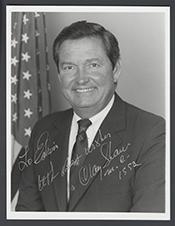
United States · United States Congress · 17 May 1995
Historic Homeownership Assistance Act - Amends the Internal Revenue Code to allow a tax credit for 20 percent of the qualified rehabilitation expenditures made by a taxpayer with respect to a certified historic structure which has been substantially rehabilitated and which is owned by the taxpayer and used as his or her principal residence. Allows the credit for such expenditures to be taken by a purchaser of the rehabilitated home. Permits, in lieu of the credit, a historic rehabilitation mortgage credit certificate, which shall be transferred to a lender in exchange for a reduction in the rate of interest on the loan secured by the building.
United States · United States Congress · 16 May 1995
Medicare Dependent Hospital Relief Act of 1995 - Directs the Prospective Payment Assessment Commission to: (1) develop separate applicable percentage increases for Medicare dependent and certain non-Medicare dependent hospitals to ensure that the average annual Medicare margins of the two hospitals are equalized while ensuring budget neutrality; and (2) include in each of its March reports to the Congress the percentage increases for the upcoming fiscal year, as well as recommendations on methods for ensuring that Medicare beneficiaries who receive Medicare dependent hospital services have the same access and quality of care as those beneficiaries furnished with certain non-Medicare dependent hospital services.
United States · United States Congress · 11 May 1995
National Senior Citizens Pet Ownership Protection Act - Amends the Housing and Urban-Rural Recovery Act of 1983 to prohibit owners and managers of federally assisted rental housing from preventing elderly and disabled tenants from owning or having household pets.
United States · United States Congress · 10 May 1995
Working Families Health Access Act of 1995 - Amends the Internal Revenue Code to impose an excise tax on a health insurance policy issuer (or, in the case of a self-insured plan, the sponsor) equal to a specified percentage of premiums received (or, in the case of a self-insured plan, of expenditures) under the policy or plan during the calendar year for failure to meet the standards specified in this Act. Prohibits the establishment or imposition by group health plans or carriers offering health insurance coverage in connection with a plan, or for individuals with qualifying previous coverage, of eligibility, continuation, enrollment, or contribution requirements based on factors directly related to health status, medical condition, claims experience, receipt of health care, medical history, disability, or evidence of insurability. Requires the use of preexisting condition limitations or exclusions to be limited to a three-month period before the date of enrollment during which the condition was diagnosed or treated. Limits the period of limitation or exclusion relating to treatment of the condition to no more than six months and credits periods of qualifying previous coverage to reduce that period. Makes exceptions to the limitation or exclusion period for treatment related to pregnancy, newborns, and adopted children. Prohibits a carrier from refusing to renew health insurance coverage except for specified reasons, including premium nonpayment or fraud by the insured. Details allowable nondiscriminatory conditions for discontinuation of coverage, geographic limitations, and minimum participation requirements. Allows States to establish, implement, or continue in effect health insurance coverage standards that are at least as stringent as those established by this Act. Qualifies, for purposes of the provisions imposing an excise tax for the failure of group health plans to meet continuation coverage requirements, coverage that meets certain general availability and preexisting condition limitation requirements and that has an actuarial value of at least two-thirds or one-half of the costliest continuation coverage available under the plan (excluding that in which an insignificant proportion of eligible individuals is enrolled) at respectively reduced premiums. Treats, with certain exceptions, divorce (or annulment) or separation of a covered employee from the employee's spouse, if the employee disenrolls a qualified beneficiary within the 12-month period preceding the date of such divorce or separation, as a qualifying event (allowing the election of continuation coverage) and the loss of coverage a result (and by reason) of such event. Excludes eligibility under part B of Medicare on the basis of end stage renal disease as a condition that terminates continuation coverage (under current law, becoming eligible under Medicare terminates such coverage).
United States · United States Congress · 9 May 1995
Jerusalem Embassy Relocation Implementation Act of 1995 - Declares it is U.S. policy that: (1) Jerusalem should be recognized as the capital of the State of Israel; and (2) construction of the U.S. Embassy in Jerusalem should begin no later than December 31, 1996, and officially open no later than May 31, 1999. States that not more than 50 percent of the funds appropriated for FY 1997 and 1999 to the Department of State for "Acquisition and Maintenance of Buildings Abroad" may be obligated in the respective fiscal year until the Secretary of State determines, and reports to the Congress, that (for FY 1997) such construction has begun and that (for FY 1999) the Embassy has opened. Limits the availability of specified amounts of such funds in certain fiscal years until they are expended for: (1) costs associated with relocating the U.S. Embassy to Jerusalem; and (2) the costs for its construction. Requires the Secretary of State to report to the Speaker of the House of Representatives and the Committee on Foreign Relations of the Senate on: (1) the Department of State's plan to implement this Act; and (2) progress made toward opening the U.S. Embassy in Jerusalem.
United States · United States Congress · 3 May 1995
False Identification Act of 1995 - Amends the Federal criminal code to reduce the minimum number of documents to three (currently, five) for certain offenses involving fraud and related activity in connection with identification documents. Sets criminal penalties for knowingly sending through the mails or producing, with the intention or knowledge that it will be deposited for mailing, any unverified identification document that bears a birth date showing the individual named in the document to be 21 years of age or older, when in fact that individual has not attained age 21.
United States · United States Congress · 7 April 1995
Consumer Fraud Prevention Act of 1995 - Amends the Federal criminal code to subject to civil forfeiture any property constituting, derived from, or traceable to any proceeds obtained as a result of telemarketing fraud. Directs that any such property or proceeds be used to the extent needed, as determined by the Attorney General, for the national telemarketing fraud information hotline (established under the Violent Crime Control and Law Enforcement Act of 1994) and other enforcement of telemarketing fraud provisions. Directs the court, in sentencing for telemarketing fraud, to order that the offender forfeit to the United States any property constituting or derived from proceeds obtained as a result of the offense. Specifies that the payment of an amount due pursuant to mandatory restitution for telemarketing fraud shall have priority over the payment of fines or the forfeiture of property under criminal forfeiture provisions. Directs the U.S. Sentencing Commission to amend the sentencing guidelines to increase by two levels: (1) the vulnerable victim adjustment; and (2) the level for any fraud offense if the defendant conducted activities to further the fraud from a foreign country in order to impede prosecution. Requires any presentence report required under the Federal Rules of Criminal Procedure to include information about the age of each victim of each fraud offense for which a defendant is convicted.
United States · United States Congress · 5 April 1995
Prohibits the shipment in interstate or foreign commerce of steel jaw leghold traps and of articles of fur derived from animals trapped in such traps. Prescribes criminal penalties for violations of this Act. Directs the Secretary of the Interior to reward nongovernment informers for information leading to a conviction under this Act. Empowers enforcement officials to detain, search, and seize suspected merchandise or documents and to make arrests with and without warrants. Subjects seized merchandise to forfeiture.
United States · United States Congress · 5 April 1995
George C. Marshall Commemorative Coin Act - Directs the Secretary of the Treasury to mint and issue one-dollar silver coins and half-dollar clad coins in commemoration of the 50th anniversary of the Marshall Plan and George C. Marshall, its author. Directs the Secretary to pay surcharges received from coin sales to: (1) the George C. Marshall Foundation to be used to support its educational and outreach programs; and (2) the Friends of George C. Marshall to be used solely for the construction of the George C. Marshall Memorial and Vistor Center in Uniontown, Pennsylvania.
United States · United States Congress · 4 April 1995
Clinical Laboratory Improvement Act Amendments of 1995 - Exempts a physician clinical office laboratory from Public Health Service Act certification requirements, except when such laboratory performs a Pap Smear (Papanicolaous Smear) analysis.
United States · United States Congress · 30 March 1995
Amends the Internal Revenue Code, with respect to the United Mine Workers of America Combined Benefit Fund, to provide: (1) a means for transferring surpluses between the Fund's accounts to reduce shortfalls in the entire Fund; and (2) a formula to reduce or increase operators' premiums according to the Fund's aggregated surplus or shortfall, respectively. Sets the amount of the per beneficiary health benefit premium. Directs the Trustees of the Combined Fund to disclose to contributors, upon written request, all documents showing its financial and operational status and all documents prepared at trustee or staff request that form the basis for the Fund's actions or reports.
United States · United States Congress · 22 March 1995
Newborn Infant HIV Notification Act - Requires a State, if it requires that the results of the human immunodeficiency virus (HIV) testing of an infant be reported to it (or if the State conducts an HIV test of the infant), to disclose such results to: (1) the biological mother of the infant if the mother is the legal guardian; or (2) specified State agencies if the State is the legal guardian of the infant. Directs the State, in disclosing such results (other than to State agencies), to ensure that appropriate counseling on HIV is provided to the individual.
United States · United States Congress · 21 March 1995
National Right-to-Work Act - Amends the National Labor Relations Act and the Railway Labor Act to repeal those provisions that require employees to pay union dues or fees as a condition of employment.
United States · United States Congress · 10 March 1995
Captive Exotic Animal Protection Act of 1995 - Amends the Federal criminal code to prohibit and set penalties for knowingly transferring, transporting, or possessing a confined exotic animal for purposes of allowing the killing or injuring of that animal for entertainment or the collection of a trophy.
United States · United States Congress · 8 March 1995
Marine Resources Revitalization Act of 1995 - Amends the Marine Resources and Engineering Development Act of 1966 to authorize appropriations to carry out provisions of the National Sea Grant College Program relating to grants, contracts, and fellowships.
United States · United States Congress · 2 March 1995
Provides that, in the administration of the child labor provisions of the Fair Labor Standards Act of 1938, minors under age 18 shall be permitted to load materials into balers or compactors that meet specified safety standards of the American National Standards Institute.
United States · United States Congress · 1 March 1995
Amends the Internal Revenue Code to provide a special rule for persons with a deceased parent for purposes of the generation-skipping transfer tax. Makes such rule inapplicable to an individual who is not a lineal descendant if there is a living lineal descendant.
United States · United States Congress · 23 February 1995
Ricky Ray Hemophilia Relief Fund Act of 1995 - Establishes in the U.S. Treasury the Ricky Ray Hemophilia Relief Fund. Authorizes appropriations. Specifies that any individual who submits to the Attorney General written medical documentation that the individual has a human immunodeficiency virus (HIV) infection shall receive $125,000 from amounts available in the Fund if the individual: (1) has a blood-clotting disorder and was treated with blood-clotting agents between January 1, 1980, and December 31, 1987; (2) is the lawful spouse of such individual or the former lawful spouse and was the lawful spouse of the individual at any time after a date within such period on which the individual was treated; or (3) acquired the HIV infection through perinatal transmission from a parent who is such an individual. Requires that a claim for payment be filed with the Attorney General by or on behalf of such individual and that the Attorney General determine that the claim meets the requirements of this Act. Specifies that a claim under this Act shall not be assignable or transferable. Sets limits regarding the number of claims per victim. Prohibits the Attorney General from paying claims filed under this Act unless filed within three years after this Act's enactment.
United States · United States Congress · 23 February 1995
TABLE OF CONTENTS: Title I: Interdiction Title II: Alien Smuggling Title III: Employment Title IV: Government Benefits Title V: Criminal Aliens Title VI: Terrorist Aliens Title VII: Inspections Title VIII: Asylum Illegal Immigration Control Act of 1995 - Title I: Interdiction - Directs the Attorney General to install additional physicial barriers in high illegal-entry border areas. (Sec. 102) Authorizes appropriations for additional Border Patrol personnel. (Sec. 103) Directs the Attorney General and the Commissioner of the Immigration and Naturalization Service (INS) to implement an interior repatriation program for illegal aliens who have been deported at least three times. (Sec. 104) Directs the Attorney General and the Commissioner of INS to increase border detention facilites. Authorizes the transfer of closed military bases to be used as Federal incarceration facilities for illegal aliens. (Sec. 105) Authorizes the Attorney General to require vessels to provide INS with port of entry notification. Title II: Alien Smuggling - Amends the Immigration and Nationality Act (the Act) to expand INS forfeiture authority for smuggling or harboring illegal aliens. (Sec. 202) Brings alien smuggling operations under the purview of the Racketeer Influenced and Corrupt Organizations (RICO) provisions. (Sec. 203) Amends the Act to increase penalties for certain alien smuggling offenses. (Sec. 204) Amends Federal law to authorize INS wiretaps for alien smuggling investigations. Title III: Employment - Amends the Act to revise alien employment documentation and employer verification provisions, including social security card enhancements. (Sec. 302) Authorizes appropriations for additional INS investigators. Title IV: Government Benefits - Prohibits direct Federal benefits (except for emergency medical care) or housing assistance to an alien who is not a permanent resident, a refugee, an asylee, or a parolee. (Sec. 402) Prohibits unemployment benefits to an alien who has not been granted INS work authorization. (Sec. 404) Authorizes appropriations for the Save System. (Sec. 405) Reduces Federal assistance by 20 percent to any locality that refuses to cooperate in the arrest and deportation of illegal aliens. (Sec. 406) Establishes a uniform vital statistics pilot program for three States with high numbers of undocumented aliens. Authorizes appropriations. Title V: Criminal Aliens - Amends the Act to include aliens on criminal probation or criminal parole among the categories of aliens subject to special registration. (Sec. 502) Restricts specified deportation defenses. (Sec. 503) Authorizes electronic or telephonic deportation proceedings. (Sec. 504) Directs the Commissioner to operate a criminal alien tracking center. Authorizes appropriations. (Sec. 505) Directs the Secretary of State and the Attorney General to study the use and effectiveness of the Prisoner Transfer Treaty with Mexico to remove convicted aliens from the United States. (Sec. 506) Expedites deportation proceedings for specified criminal aliens. Title VI: Terrorist Aliens - Amends the Act to establish procedures for the removal of alien terrorists, including a special court to hear such cases. (Sec. 602) Makes membership in a terrorist organization a basis for U.S. exclusion. Title VII: Inspections - Directs the Attorney General to establish: (1) specified numbers of preinspection stations at foreign airports identified as last departure points for the greatest numbers of U.S.-arriving passengers and at those with the greatest numbers of U.S.-arriving undocumented aliens; and (2) an air carrier consultant program. (Sec. 702) Provides for the training of airline personnel in fraudulent document detection. Title VIII: Asylum - Amends the Act to revise asylum procedures. (Sec. 802) Sets forth mandatory and discretionary conditions for granting provisional asylum.
United States · United States Congress · 23 February 1995
Amends the Nuclear Waste Policy Act of 1982 to revise and rename it the Integrated Spent Nuclear Fuel Management Act of 1995. (Sec. 1) Instructs the Secretary of Energy (the Secretary) to accept spent nuclear fuel and high-level radioactive waste by not later than January 31, 1998. Entitles contract holders to specified remedies for the Secretary's failure to meet service contract obligations, or to accept spent nuclear fuel and high-level radioactive waste as mandated under this Act. States that the Nuclear Waste Fund shall fund the execution of service contract and implementation of the Secretary's responsibilities, including the acceptance of spent nuclear fuel and high-level radioactive waste at contract holder sites and transporting such fuel or waste to a private storage facility. Establishes an integrated spent nuclear fuel management system for spent nuclear fuel and high-level radioactive waste, including its storage, transportation, and disposal. Prescribes procedural guidelines for the use of: (1) railroads; (2) transportation planning and requirements; (3) multi-purpose canister systems; (4) interim storage facilities; (5) permanent disposal; (6) land withdrawal; and (7) private storage facilities. Prescribes consultation and assistance guidelines between the Secretary and the State of Nevada. Prescribes budget priorities for purposes of annual requests for appropriations from the Waste Fund. Prescribes a fee schedule for electricity and nuclear fuel used to generate electricity in a civilian nuclear power reactor. Sets forth advance contract prerequisites for utilization or production facility license renewals. Reestablishes the Nuclear Waste Fund and the Office of Civilian Radioactive Waste Management. Directs the Secretary to: (1) establish by rule the appropriate portion of the costs of managing high-level radioactive waste and spent nuclear fuel allocable to the interim storage or permanent disposal of high-level radioactive waste and spent nuclear fuel from atomic energy defense activities; and (2) advise the Congress annually of the amount of high-level radioactive waste and spent nuclear fuel from atomic energy defense activities requiring management in the integrated spent nuclear fuel management system. Subjects the Secretary to all Federal, State, and local environmental or land use laws and regulations, with specified exceptions. Grants the U.S. courts of appeals original and exclusive jurisdiction over civil actions under this Act. Provides that upon a contract holder's request, the Secretary shall take title to or possession of spent nuclear fuel or high-level radioactive waste without removing it from the contract holder's designated storage site if the Secretary cannot accept such items within the contract's acceptance schedule. Requires the NRC to promulgate regulatory guidelines for: (1) financial assurances for low-level radioactive waste site closures; and (2) training and qualification of civilian nuclear powerplant personnel. Reestablishes the Nuclear Waste Technical Review Board. Authorizes appropriations. Directs the Secretary to take action as necessary to improve the management of the civilian radioactive waste management program to ensure that it is operated to the maximum extent like a private business. States that the program is not subject to civil service regulations. Abolishes the Interim Storage Fund, the Monitored Retrievable Storage Commission, the Office of Subseabed Disposal Research, and the Office of Nuclear Waste Negotiator. Repeals all references to the Yucca Mountain site. Requires the Secretary to report to the Congress whether particular milestones have been reached with respect to: (1) multi-purpose canister systems; (2) land withdrawals; (3) interim storage facilities; and (4) acceptance of spent nuclear fuel from contract holders. Directs the Secretary to: (1) create a value engineering function within the Office of Civilian Radioactive Waste Management; and (2) employ on an on-going basis, integrated performance modeling regarding site characterization. (Sec. 2) Sets forth transition provisions for the continuation of: (1) contracts; (2) Nuclear Waste Fund; (3) Office of Civilian Radioactive Waste Management; and (4) Nuclear Waste Technical Review Board. (Sec. 3) Mandates that amounts in the Nuclear Waste Fund be appropriated exclusively for certain authorized purposes cited in the Nuclear Waste Policy Act of 1982. Precludes such appropriations from being taken into account for any budget enforcement procedures under the Balanced Budget and Emergency Deficit Control Act of 1985. Amends such Act to provide that appropriations to the Nuclear Waste Fund are not subject to its discretionary spending limits or to a certain allocation of the Energy and Waster Development Subcommittee of the Appropriations Committee. Reduces specified discretionary spending limits under the Congressional Budget Act of 1974.
United States · United States Congress · 15 February 1995
Airliner Cabin Air Quality Act of 1995 - Amends Federal transportation law to prohibit smoking on all scheduled airline flight segments (currently, just on certain airline flight segments) in interstate or intrastate air transportation. Directs the Secretary of Transportation to require all domestic and foreign air carriers to prohibit smoking on any scheduled airline flight within the United States or between a place in the United States and a place outside of it.
United States · United States Congress · 14 February 1995
TABLE OF CONTENTS: Title I: Seeking Sanctions Against the Castro Government Title II: Assistance to a Free and Independent Cuba Title III: Protection of American Property Rights Abroad Cuban Liberty and Democratic Solidarity (LIBERTAD) Act of 1995 - Title I: Seeking Sanctions Against the Castro Government - Expresses the sense of the Congress that: (1) the President should instruct the U.S. Permanent Representative to the United Nations to seek within the Security Council a mandatory international embargo against the Cuban Government; and (2) efforts by any state to make the nuclear facility at Cienfuegos operational will have a detrimental impact on U.S. assistance to and relations with such state. (Sec. 102) Reaffirms a provision of the Cuban Democracy Act of 1992 that states that the President should encourage foreign countries to restrict trade and credit relations with Cuba. Urges the President to take steps to apply sanctions described by such Act against countries assisting Cuba. Declares that the President should instruct the Secretary of the Treasury and the Attorney General to enforce the Cuban Assets Control Regulations. (Sec. 103) Prohibits any U.S. person from extending any loan or other financing to a foreign person that traffics in property confiscated by the Cuban Government the claim to which is owned by a U.S. person. Terminates such prohibition upon termination of the economic embargo of Cuba. (Sec. 104) Directs the Secretary to instruct the U.S. executive directors of the international financial institutions to oppose the admission of Cuba as a member of such institutions until Cuba holds free and fair democratic elections. Requires the President to support Cuba's membership in such institutions during the period that a transition government is in power, subject to the membership taking effect after a democratically-elected government is in power. Reduces U.S. payments to institutions that approve assistance to Cuba over the opposition of the United States. (Sec. 105) Directs the President to report to the appropriate congressional committees on progress towards the withdrawal of personnel of any independent state of the former Soviet Union from the Cienfuegos nuclear facility. Amends the Foreign Assistance Act of 1961 to make ineligible for assistance any independent state that is providing assistance for, or engaging in nonmarket based trade with, Cuba. Withholds from assistance allocated for an independent state an amount equal to the assistance and credits provided by such state in support of military and intelligence facilities in Cuba. (Sec. 106) Requires the Director of the U.S. Information Agency to implement a conversion of television broadcasting to Cuba under the Television Marti Service to ultra high frequency broadcasting. (Sec. 107) Directs the President to report annually to the appropriate congressional committees on assistance and commerce received by Cuba from other foreign countries. (Sec. 108) Prohibits the importation into U.S. customs territory of any sugars, syrups, and molasses that are the product of a country that has imported Cuban sugar, syrups, or molasses. Makes such prohibition inapplicable if such country certifies to the President that it will not import Cuban sugar, syrups, or molasses until free and fair elections are held in Cuba. Authorizes the President to reallocate to other countries the quota of sugars, syrups, and molasses allocated to such a country during the period in which a prohibition is in effect. Title II: Assistance to a Free and Independent Cuba - Requires the President to develop a plan for providing economic assistance to Cuba at such time that a transition or a democratically-elected government is in power. Limits assistance for a transition government to humanitarian assistance, specified assistance comparable to that provided under the Foreign Assistance Act of 1961 for the economic and democratic development of the independent states of the former Soviet Union, and military adjustment assistance. Expands assistance to include development and agricultural assistance and export financing (as well as other specified assistance) when a democratically-elected government is in power. (Sec. 202) Requires the President to take steps to: (1) obtain the agreement of other countries, international financial institutions, and multilateral organizations to provide comparable assistance to Cuba; and (2) encourage the Organization of American States (OAS) to create a special emergency fund for deploying human rights observers and election support and observation in Cuba. Withholds up to $5 million of U.S. arrearages to the OAS until the OAS agrees to make available an equivalent amount for the special fund. Directs the President to determine whether to designate Cuba as a beneficiary country pursuant to the Caribbean Basin Economic Recovery Act. Permits such designation only after a democratically-elected government is in power. Amends such Act to make Cuba eligible for such designation. Requires the President, upon transmittal to the Congress of a determination that a democratically-elected government is in power, to: (1) enter into a preliminary agreement with Cuba providing for extension of the North American Free Trade Agreement or to seek the creation of an economic community with Cuba; and (2) designate a United States-Cuba Council to ensure coordination between the U.S. Government and private sector in responding to change and promoting market-based development in Cuba and to establish periodic meetings between the U.S. and Cuban private sectors for facilitating bilateral trade. (Sec. 204) Authorizes appropriations. (Sec. 205) Terminates the U.S. economic embargo against Cuba upon the President's transmittal to the Congress of a determination that a democratically-elected government is in power in Cuba. (Sec. 206) Sets forth conditions under which a government in Cuba will be considered transitional or democratic. Title III: Protection of American Property Rights Abroad - Amends the Immigration and Nationality Act to exclude from the United States aliens involved in the confiscation of property owned by U.S. persons. (Sec. 302) Sets forth provisions regarding liability for damages owed to U.S. persons by persons or governments trafficking in confiscated property. Grants U.S. district courts exclusive jurisdiction over such actions. (Sec. 303) Amends the International Claims Settlement Act of 1949 to authorize a U.S. national to bring a claim resulting from expropriation actions of the Cuban Government to the Foreign Claims Settlement Commission for certification of the amount and validity whether or not the U.S. national qualified as a U.S. national at the time of the action. Requires claimants to be U.S. nationals at the time of confiscation in the case of property confiscated after the date of enactment of this section.
United States · United States Congress · 13 February 1995
Volunteer Protection Act of 1995 - Prescribes circumstances under which volunteers working for nonprofit organizations or government entities shall be immune from personal financial liability for acts on behalf of the organization or entity. Sets forth exceptions and conditions that a State may impose on the granting of such immunity. Requires the Secretary of Health and Human Services to increase by one percent the fiscal year allotment which would otherwise be made to a State to carry out the Social Services Block Grant Program under title XX of the Social Security Act if such State has, within two years, certified to the Secretary that it has enacted a State law which provides such immunity. Provides for the continuation of such increase based on an annual recertification.
United States · United States Congress · 8 February 1995
American Farm Protection Act of 1995 - Amends the Internal Revenue Code to exclude from the gross estate tax the value of land subject to a qualified conservation easement (less the amount of any indebtedness secured by such land). Includes in the gross estate tax the value of each development right retained by the donor in the conveyance of the easement. Makes such tax due upon the disposition of the property. Provides that such land subject to the exclusion will have a carryover basis for purposes of determining gain or loss. Excludes from the gift tax transfers by gift of land subject to a conservation easement. Declares that for purposes of the alternative estate valuation method: (1) a qualified conservation contribution is not a disposition; and (2) land subject to a conservation easement is not disqualified.
United States · United States Congress · 7 February 1995
Truth in Budgeting Act - Prohibits the receipts and disbursements of the Highway Trust Fund, the Airport and Airway Trust Fund, the Inland Waterways Trust Fund, and the Harbor Maintenance Trust Fund from being included in either the Federal budget as submitted by the President or in the congressional budget. Exempts such trust funds from any general statutory budget limitation. (Sec. 3) Amends Federal transportation law to require the Secretary of Transportation to estimate annually what, but for this Act, would be at the close of the next fiscal year: (1) the amount of unfunded aviation authorizations; and (2) the net aviation receipts. Requires the Secretary to: (1) determine the amount by which unfunded aviation authorizations does or does not exceed net aviation receipts; and (2) make appropriate adjustments to amounts authorized to be appropriated and the amounts available for obligation from the Airport and Airway Trust Fund based on the difference. (Sec. 4) Sets forth similar provisions with respect to the Inland Waterways and the Harbor Maintenance Trust Funds.
United States · United States Congress · 31 January 1995
TABLE OF CONTENTS: Title I: Interdiction Title II: Alien Smuggling Title III: Employment Title IV: Government Benefits Title V: Criminal Aliens Title VI: Terrorist Aliens Title VII: Inspections Title VIII: Asylum Illegal Immigration Control Act of 1995 - Title I: Interdiction - Directs the Attorney General to install additional physicial barriers in high illegal-entry border areas. (Sec. 102) Authorizes appropriations for additional Border Patrol personnel. (Sec. 103) Directs the Attorney General and the Commissioner of the Immigration and Naturalization Service (INS) to implement an interior repatriation program for illegal aliens who have been deported at least three times. (Sec. 104) Directs the Attorney General and the Commissioner of INS to increase border detention facilites. Authorizes the transfer of closed military bases to be used as Federal incarceration facilities for illegal aliens. (Sec. 105) Authorizes the Attorney General to require vessels to provide INS with port of entry notification. (Sec. 106) Directs the Commissioner to collect a user fee for each U.S. land entry. (Sec. 107) Establishes a Border Control Trust Fund. Title II: Alien Smuggling - Amends the Immigration and Nationality Act (the Act) to expand INS forfeiture authority for smuggling or harboring illegal aliens. (Sec. 202) Brings alien smuggling operations under the purview of the Racketeer Influenced and Corrupt Organizations (RICO) provisions. (Sec. 203) Amends the Act to increase penalties for certain alien smuggling offenses. (Sec. 204) Amends Federal law to authorize INS wiretaps for alien smuggling investigations. Title III: Employment - Amends the Act to revise alien employment documentation and employer verification provisions, including social security card enhancements. (Sec. 302) Authorizes appropriations for additional INS investigators. Title IV: Government Benefits - Prohibits direct Federal benefits (except for emergency medical care) or housing assistance to an alien who is not a permanent resident, a refugee, an asylee, or a parolee. (Sec. 402) Prohibits unemployment benefits to an alien who has not been granted INS work authorization. (Sec. 404) Authorizes appropriations for the Save System. (Sec. 405) Reduces Federal assistance by 20 percent to any locality that refuses to cooperate in the arrest and deportation of illegal aliens. (Sec. 406) Establishes a uniform vital statistics pilot program for three States with high numbers of undocumented aliens. Authorizes appropriations. Title V: Criminal Aliens - Amends the Act to include aliens on criminal probation or criminal parole among the categories of aliens subject to special registration. (Sec. 502) Restricts specified deportation defenses. (Sec. 503) Authorizes electronic or telephonic deportation proceedings. (Sec. 504) Directs the Commissioner to operate a criminal alien tracking center. Authorizes appropriations. (Sec. 505) Directs the Secretary of State and the Attorney General to study the use and effectiveness of the Prisoner Transfer Treaty with Mexico to remove convicted aliens from the United States. (Sec. 506) Expedites deportation proceedings for specified criminal aliens. Title VI: Terrorist Aliens - Amends the Act to establish procedures for the removal of alien terrorists, including a special court to hear such cases. (Sec. 602) Makes membership in a terrorist organization a basis for U.S. exclusion. Title VII: Inspections - Directs the Attorney General to establish: (1) specified numbers of preinspection stations at foreign airports identified as last departure points for the greatest numbers of U.S.-arriving passengers and at those with the greatest numbers of U.S.-arriving undocumented aliens; and (2) an air carrier consultant program. (Sec. 702) Provides for the training of airline personnel in fraudulent document detection. (Sec. 703) Amends Federal law to increase specified passport and visa penalties. Title VIII: Asylum - Amends the Act to revise asylum procedures. (Sec. 802) Sets forth mandatory and discretionary conditions for granting provisional asylum.
United States · United States Congress · 31 January 1995
Shenandoah Valley National Battlefields Partnership Act of 1995 - Establishes the Shenandoah Valley National Battlefields in Virginia. Directs the Secretary of the Interior to protect, manage, and administer the Battlefields for the purposes of preserving and interpreting their natural, cultural, and historical resources and of providing for public understanding and appreciation of the Battlefields in such a manner as to perpetuate these qualities and values for future generations. Authorizes the Secretary to acquire lands within the boundaries of the Battlefields, subject to specified requirements. Directs the Secretary to allow at Battlefield locations any living history demonstrations and battlefield reenactments that occurred during the 12 months prior to enactment of this Act or that are otherwise determined appropriate. (Sec. 6) Requires that the Battlefields be managed by the Secretary pursuant to this Act and the Shenandoah Valley National Battlefields plan (plan) to be developed by the Shenandoah Valley National Battlefields Commission (to be established under this Act) and approved by the Secretary. (Sec. 7) Authorizes the Secretary to establish partnerships and enter into cooperative agreements concerning lands within the Battlefields and historic core areas with other Federal, State, or local agencies and private persons and organizations. (Sec. 8) Authorizes the Secretary: (1) to award grants and provide technical assistance to owners of property located within the battlefields and historic core areas to provide for the preservation and interpretation of natural, cultural, and historical resources; and (2) to award grants and provide technical assistance to governmental entities to assist with the planning, development, and implementation of comprehensive plans, land use guidelines, regulations, ordinances, or other appropriate documents that are consistent with and designed to protect the historic character of the Battlefields and historic core areas. Directs the Commission to conduct a regular review of approved plans, guidelines, regulations, ordinances, or documents (documents), and where appropriate, to recommend that the Secretary withdraw approval and suspend any grant authority pursuant to this section. Terminates the Commission 45 days after plan approval by the Secretary. Directs the Secretary to suspend grants awarded upon determining that such documents are modified in a manner that is inconsistent with the protection of the historic character of the Battlefields and historic core areas. Specifies that the Federal share of any grant made under this section may not exceed the amount of the non-Federal funds provided. (Sec. 10) Directs the Commission to: (1) advise the Secretary on the administration of the Battlefields; (2) assist Virginia or any political subdivision thereof in the management, protection, and interpretation of the natural, cultural, and historical resources within the historic core areas; and (3) take appropriate action to encourage protection of the natural, cultural, and historical resources within the Battlefields and historic core areas by landowners, local governments, organizations, and businesses. Authorizes the Commission to assist any nonprofit organization in the management, protection, and interpretation of the natural, cultural, and historical resources within the historic core areas. (Sec. 11) Authorizes appropriations.
United States · United States Congress · 31 January 1995
Commercial Aviation Fuel Tax Repeal Act of 1995 - Amends the Internal Revenue Code to repeal the increase in tax on fuel used in commercial aviation scheduled to take effect after September 30, 1995.
United States · United States Congress · 30 January 1995
Amends the Internal Revenue Code to allow a limited deduction of partnership investment expenses for purposes of computing the alternative minimum tax.
United States · United States Congress · 26 January 1995
Crime Victims Restitution Act of 1995 - Amends the Federal criminal code to require (current law authorizes) the court to order restitution of the victim when a convicted defendant is being sentenced for specified offenses. Authorizes a court to order restitution of any person who, as shown by a preponderance of the evidence, was harmed physically, emotionally, or pecuniarily by unlawful conduct of the defendant during the offense or during the course of a scheme, conspiracy, or pattern of unlawful activity related to the offense. Directs the court to: (1) order restitution in the full amount of the victim's losses without consideration of the economic circumstances of the offender or the fact that a victim is entitled to receive compensation from insurance or any other source; and (2) upon determination of the amount owed to each victim, specify in the restitution order the manner of, and schedule for, restitution in consideration of the financial resources and other assets, projected earnings and other income, and financial obligations of the offender. Specifies that: (1) a restoration order may direct the offender to make a single, lump-sum payment, partial payments at specified intervals, or such in-kind payments as may be agreeable to the victim and the offender; and (2) such in-kind payments may be in the form of the return or replacement of property, or services rendered to the victim or another person or organization. Provides that when the court finds that more than one: (1) offender has contributed to the loss of a victim, the court may make each offender liable for payment of the full amount or may apportion liability among the offenders to reflect the level of contribution and economic circumstances of each offender; and (2) victim has sustained a loss requiring restitution by an offender, the court shall order full restitution of each victim but provide for different payment schedules to reflect the economic circumstances of each victim. Sets forth provisions regarding: (1) compensation with respect to losses from insurance or other sources; (2) set-offs against amounts later recovered as compensatory damages by the victim in Federal and State civil proceedings; and (3) payment by the offender to an entity designated by the Director of the Administrative Office of the United States Courts for accounting and payment in accordance with this Act. Specifies that a restitution order shall constitute a lien against all property of the offender. Makes compliance with a restitution order a condition of any probation, parole, or other form of release of an offender. Specifies actions the court may take, including revocation of probation or supervised release, if a defendant fails to comply. Provides for enforcement of restitution orders. Authorizes: (1) a victim or the offender to petition the court to modify a restitution order in view of a change in the economic circumstances of the offender; and (2) the court to refer any issue arising in connection with a proposed restitution order to a magistrate or special master for proposed findings of fact and recommendations as to disposition, subject to a de novo determination of the issue by the court.
United States · United States Congress · 26 January 1995
Amends the Internal Revenue Code to restore the 25-percent deduction for health insurance costs of self-employed individuals for the taxable year 1994.
United States · United States Congress · 26 January 1995
A to Z Spending Cuts Plan - Reduces discretionary spending limits for FY 1995 in amounts equal to rescissions under this Act. Declares that reductions in outlays shall not be taken into account for sequestration purposes of the Balanced Budget and Emergency Deficit Control Act of 1985 (Gramm-Rudman-Hollings Act). Reduces discretionary spending limits for FY 1995 through 1998 by the amount of rescissions and additional savings under this Act. Expresses the sense of the Congress that each reduction in the discretionary spending caps caused by the spending cuts of this Act shall result in reduction in future spending for that particular program only.
United States · United States Congress · 24 January 1995
Housing for Older Persons Act of 1995 - Amends the Fair Housing Act to revise the definition of housing for older persons (thus modifying the exemption from certain familial status discrimination prohibitions). Makes a good faith attempt at compliance a defense against civil money damages.
United States · United States Congress · 23 January 1995
Amends the Internal Revenue Code to prohibit the imposition of any excise tax on air transportation for the purpose of providing medical care if such transportation is not scheduled and is not along regular routes. (Current tax law refers to such air transportation by helicopter.)
United States · United States Congress · 20 January 1995
Fairness in Medicaid Funding Act of 1995 - Amends title XIX (Medicaid) of the Social Security Act to revise the State percentage factor and related factors in the Federal medical assistance percentage used under the Medicaid program. Bases payments to the States for administration costs on the Federal medical assistance percentage.
United States · United States Congress · 19 January 1995
Amends title XVIII (Medicare) of the Social Security Act and other Federal law to make any managed health care plan established by the Secretary of Defense in the Military Health Services System eligible for payments by the Secretary of Health and Human Services on behalf of any plan enrollees entitled to Medicare benefits.
United States · United States Congress · 18 January 1995
TABLE OF CONTENTS: Title I: Relationship of NAFTA Implementation to the Operation of the Caribbean Basin Initiative Title II: Related Provisions Caribbean Basin Trade Security Act - Title I: Relationship of NAFTA Implementation to the Operation of the Caribbean Basin Initiative - Amends the Caribbean Basin Economic Recovery Act (the Act) to accord certain textile and apparel articles and certain other articles (including canned tuna and petroleum) from Caribbean beneficiary countries, for a specified transition period, the same tariff and quota treatment (lower tariffs or duty-free treatment) accorded any such articles imported from Mexico under the North American Free Trade Agreement (NAFTA). (Sec. 102) Directs the President to: (1) monitor the effects, if any, that implementation of NAFTA has on the access of beneficiary countries to U.S. markets for sugars, syrups, and molasses; and (2) take or propose any actions necessary to ameliorate any adverse effects such implementation may have on them. (Sec. 103) Grants duty-free treatment of Canadian liqueurs and spirituous beverages made from Caribbean rum. Title II: Related Provisions - Requires the President to meet with trade ministers of beneficiary countries in order to negotiate for their accession to the NAFTA, or to enter into free trade agreements with the United States that contain comparable provisions with those in the NAFTA and that would make progress in achieving certain trade negotiating objectives under the NAFTA. (Sec. 202) Directs the United States Trade Representative (USTR) to make an assessment of the economic development efforts and market oriented reforms in each beneficiary country, including each country's ability to undertake the obligations of the NAFTA. Requires the USTR, if such countries accede to the NAFTA or the United States negotiates a comparable free trade agreement with them, to provide to specified congressional committees a report on the economic impact of the new trade relationship on beneficiary countries.
United States · United States Congress · 17 January 1995
Church Retirement Benefits Simplification Act of 1995 - Amends the Internal Revenue Code to recodify and revise qualifications for church retirement and pension plans. Makes employee contributions to such plans nonforfeitable. Requires the plan to meet minimum vesting requirements. Recodifies the authority of a church or a convention or association of churches to be treated as an employer making contributions to retirement income accounts. Subjects church-related hospitals and universities to certain coverage and related rules in the case of a contract purchased by a church. Requires distributions from retirement income accounts provided by churches to be in accordance with distributions under cash or deferred arrangements. Provides for determining the beginning date for such distributions. Allows self-employed ministers and chaplains who work for non-church employers to participate in their church plans. Provides that certain rules aggregating employees do not apply to churches. Restores qualified voluntary employee contributions to church plans. Treats self-employed ministers as employees for purposes of certain welfare benefit plans and retirement income accounts. Allows a deduction for contributions to retirement income accounts by such ministers. Provides that a church plan maintained by more than one employer shall not be treated as a single plan. Provides that accounting methods of deferred compensation plans of State and local governments and tax-exempt organizations do not apply to a church plan. Exempts a church plan from the requirement to maintain separate accounts for medical benefits for key employees. Provides that the special rules for computing employee contributions to pension plans do not apply to certain foreign missionaries. Repeals the elective deferral catch-up limitation for church retirement income accounts. Allows church plans to annuitize benefits and increase benefit payments. Provides that rules for self-insured medical reimbursement plans are not applicable to church plans. Provides that retirement benefits of ministers are not subject to the tax on net earnings from self-employment.
United States · United States Congress · 11 January 1995
National Gambling Impact and Policy Commission Act - Establishes the National Gambling Impact and Policy Commission to: (1) study gambling in the United States and existing governmental policies and practices with respect to the legalization or prohibition of gambling activities; and (2) formulate and propose appropriate changes in such policies and practices for a report to the President and the Congress.
United States · United States Congress · 11 January 1995
Directs the Secretary of the Interior to make corrections to specified maps of the Coastal Barrier Resources System as necessary to ensure that: (1) those maps are consistent with other maps on file with the Secretary; and (2) the System does not include any area that, before enactment of this Act, was part of unit Q01 of the System.
United States · United States Congress · 11 January 1995
Amends the Omnibus Budget Reconciliation Act of 1990 to: (1) make permanent the Medicare select policy program; and (2) allow access to Medicare select policies in all States. Amends title XVIII (Medicare) of the Social Security Act to revise the Medicare select policy program and provide for a civil penalty for misrepresentations made in connection with a Medicare select policy.
United States · United States Congress · 5 January 1995
Expresses the sense of the House of Representatives that: (1) obstetrician-gynecologists should be designated as primary care providers for women in Federal laws relating to the provision of health care; and (2) legislative proposals that define primary care should include services performed by obstetrician-gynecologists in such definition.
United States · United States Congress · 4 January 1995
Permits certain veterans with service-connected disabilities who are retired members of the uniformed services to receive compensation concurrently with retired pay, without deduction from either.