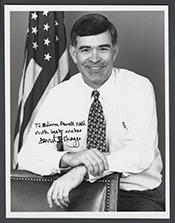
United States · United States Congress · 1 April 1987
University Research Facilities Revitalization Act of 1987 - Directs the National Science Foundation (NSF) to establish and carry out a new university research laboratory modernization program, making awards to institutions of higher education for the repair, renovation, or replacement of such institutions' laboratories and research facilities. Grants awards in response to specific proposals on the basis of the quality of the research and how such research relates to the future research mission of the NSF and the institution. Authorizes appropriations for FY 1988 through 1997.
United States · United States Congress · 18 March 1987
Employee Educational Assistance Act of 1987 - Amends the Internal Revenue Code to make permanent the income tax exclusion for employee educational assistance programs. (Present law terminates such exclusion as of December 31, 1987.) Requires, for every taxable year beginning after 1988, an annual cost of living adjustment of the maximum excludable amount. Waives the maximum excludable amount for any educational assistance furnished by certain educational institutions to graduate students engaged in teaching or research activities for such organization.
United States · United States Congress · 18 March 1987
WIC Food for Life Resolution - Expresses the sense of the Congress that: (1) the Special Supplemental Food Program for Women, Infants, and Children (WIC) should receive increasing appropriations until all eligible persons are being served; and (2) an outreach program should be conducted to identify persons eligible for WIC assistance.
United States · United States Congress · 17 March 1987
Small Business Prompt Payment Act Amendments of 1987 - Revises Federal law to deem the head of a Federal agency to have received an invoice on the later of: (1) the date on which the designated office or employee of an agency actually receives it; or (2) the fifth day after the date on which a property is actually delivered, or final performance of a service is actually completed, unless the contract specifies otherwise. Makes Federal prompt payment provisions applicable to the United States Postal Service. Makes the Postmaster General responsible for issuing procurement regulations, solicitation provisions, and contract clauses. Reduces the 15-day grace period for payment of interest penalties to eight days for solicitations (other than meat products and agricultural commodities) issued before October 1, 1990. Eliminates such grace period for procurement solicitations issued on or after October 1, 1990. Requires an agency to pay a double interest penalty if: (1) the agency owes the interest penalty; (2) the interest penalty is not paid to the business concern on or after the date the penalty is due; (3) the agency does not pay the penalty within ten days after such payment is made; and (4) a written demand is made within 40 days after such payment is made. Requires regulations on interest penalties, in the case of construction contracts, to provide for the payment of interest on: (1) progress payments due for more than seven days, or a longer period if the prevailing practice in private construction contracts is to provide such longer period; and (2) amounts retained during the performance of a contract, if such amounts are not paid by the required payment date. Requires regulations on interest penalties to provide for periodic payments in the case of supply or service contracts upon: (1) the submission of an invoice for supplies delivered or services performed; and (2) acceptance of supplies or services by an authorized employee or certification of performance by such an employee. Requires Government construction contractors to include a payment provision in their agreements with their subcontractors which provides for payment in accordance with prevailing industry standards. Requires the contractor to pay a late payment interest penalty to the subcontractor at the rate applicable between the prime contractor and the Government. Specifies the calculation of time for interest penalties on discount payments. Revises agency reporting requirements on interest penalty payments to include: (1) a description of agency payment practices; and (2) an analysis by the Office of Small and Disadvantaged Business Utilization for each of the various Federal agencies on the impact of such payments on small and disadvantaged businesses. Requires the Chief Counsel for Advocacy of the Small Business Administration to report to the congressional committees on Small Business on current Government compliance with the payment of interest penalties and the impact on small business. Requires the Chief Counsel to monitor the compliance of all agencies and of the Director of the Office of Management and Budget with interest penalty payments. Requires the modification of the Federal acquisition regulation to implement Federal prompt payment provisions.
United States · United States Congress · 17 March 1987
Amends the Export Administration Act of 1979 to direct the Secretary of Commerce to establish a western regional office with the authority to issue export licenses.
United States · United States Congress · 12 March 1987
Defense Savings Act - Establishes the Bipartisan Commission on the Consolidation of Military Bases (the Commission) to: (1) review the military importance of all major military installations; and (2) identify which such installations can be closed or realigned without impairing the security of the United States. Outlines administrative procedures concerning membership, staff, meetings, and powers of the Commission. Directs the Commission, within 180 days after the enactment of this Act, to submit to the President, the Secretary of Defense, and each House of the Congress a final report on the findings and conclusions of the Commission. Terminates the Commission 30 days after the submission of such report. Authorizes the Secretary of Defense to take certain specified action with respect to the implementation of the Commission's recommendations.
United States · United States Congress · 10 March 1987
Tongass Timber Reform Act - Amends the Alaska National Interest Lands Conservation Act to repeal the ongoing appropriations for timber utilization in the Tongass National Forest, Alaska. Repeals the requirement for identifying lands unsuitable for timber production in such forest. Repeals the reporting requirement on the adequacy of timber supply from such forest lands. Requires the biennial report on such Forest to include the impact of timber management on subsistence resources, wildlife, and fisheries habitats.
United States · United States Congress · 10 March 1987
Aircraft Collision Avoidance Act of 1987 - Amends the Federal Aviation Act of 1958 to require that civil aircraft with a maximum passenger capacity of more than 30 seats be equipped with a collision avoidance system developed by the Federal Aviation Administration (TCAS-II). Mandates that an altitude-encoding transponder be installed on each civil aircraft operating in a high traffic density area if such aircraft is not required to be equipped with the TCAS-II. Directs the Administrator of the Federal Aviation Administration to complete, as soon as possible, the research, development, and certification of the collision avoidance system known as TCAS-III. Authorizes appropriations.
United States · United States Congress · 5 March 1987
Expresses the sense of the Congress that: (1) the promotion of unrestricted family visits between related people of the United States and the Soviet Union is an essential part of American policy toward the Soviet Union; and (2) the President, the Secretary of State, and other administration members should raise the issue of family visitation at all appropriate opportunities in discussions with leaders of the Communist Party and the Government of the Soviet Union.
United States · United States Congress · 25 February 1987
Interstate Sales Tax Collection Act of 1987 - Allows any State or political subdivision to require retailers engaged in business in that State to collect a State and local sales or use tax on the sale or use of tangible personal property shipped or delivered into that State or political subdivision. Amends the Internal Revenue Code to require interstate retailers to file information returns with the Internal Revenue Service for the purpose of assisting States in the collection of such sales or use taxes. Authorizes disclosure of such information to State tax officials. Imposes penalties for failure to file such information returns.
United States · United States Congress · 25 February 1987
Authorizes the President, on behalf of the Congress, to present a gold medal to Mrs. Jesse Owens in recognition of the late Jesse Owens' athletic achievements and humanitarian contributions to public service, civil rights, and international goodwill. Authorizes appropriations. Authorizes the Secretary of the Treasury to sell bronze duplicates of the medal.
United States · United States Congress · 24 February 1987
Civil Rights Restoration Act of 1987 - Amends title IX (Prohibition of Sex Discrimination) of the Education Amendments of 1972 to define the phrase "program or activity" and the term "program" to mean all of the operations of the following entities, any part of which is extended Federal financial assistance: (1) a department, agency, special purpose district, or other instrumentality of a State or local government; (2) a State or local government agency which distributes such assistance and the agency or department to which such assistance is extended; (3) a college, university, or other postsecondary institution, or public system of higher education; (4) a local educational agency, system of vocational education, or other school system; and (5) a corporation, partnership, or other private organization. States that such terms do not include any operation of an entity which is controlled by a religious organization. Amends the Rehabilitation Act of 1973, the Age Discrimination Act of 1975, and the Civil Rights Act of 1964 to define the phrase "program or activity" to mean all of the activities of the aforementioned entities.
United States · United States Congress · 18 February 1987
Immigration Exclusion and Deportation Amendments of 1987 - Amends the Immigration and Nationality Act to make only the following classes of aliens ineligible to receive visas and be permitted admission into the United States: (1) any alien with a communicable disease of public health significance; (2) any alien with a record of behavior or mental impairment that poses a threat to property or safety; (3) any alien convicted of a crime involving moral turpitude, with specified exceptions; (4) any alien convicted of two or more offenses for which the aggregate sentences actually imposed were five years or more; (5) any alien convicted of specified drug violations; (6) any alien who has engaged in terrorist activity; (7) any alien who participated in Nazi persecutions; (8) any alien deemed by the Attorney General as a probable security risk for certain specified reasons, including terrorist activity; (9) any alien who is likely to become a public economic burden; (10) any alien seeking to enter the United States for the purpose of performing skilled or unskilled labor, with certain qualified exceptions; (11) any alien who is a graduate of a medical school not accredited by a body approved for such purpose by the Secretary of Education, with certain exceptions; (12) any excluded or deported alien who seeks readmission within one year of the event, unless such readmission is consented to by the Attorney General; (13) any alien seeking to enter the United States by fraud or the willful misrepresentation of a material fact; (14) any stowaway alien; (15) any alien who aids any other alien in illegal entry; (16) any immigrant not in possession of a valid immigrant visa and passport at the time of admission; (17) any nonimmigrant not in possession of a valid passport authorizing the alien to return to the country from which he or she came; (18) any alien ineligible for U.S. citizenship, including a person who left or remained outside the United States to avoid U.S. military service in time of war or national emergency; and (19) any alien who is a narcotic drug addict. Repeals the ideological grounds for exclusion. Permits a U.S. citizen or permanent resident denied an opportunity to meet with or hear in person an alien excluded from the United States on security grounds to seek judicial review of such denial in U.S. district court. Repeals provisions dealing with bond and conditions for admission for permanent residence for retarded, tubercular, and mentally ill aliens. Makes deportable by the Attorney General only those aliens within one of the following classes: (1) any alien who at the time of entry was within one or more of the classes of aliens excludable by then existing law; (2) any alien entering the United States without inspection or at a time and place other than as designated by the Attorney General; (3) any alien admitted as a nonimmigrant who has failed to maintain such status; (4) any alien admitted as a temporary agricultural worker (H-2A visa) whose status has been terminated (with family hardship exceptions); (5) any alien who within five years of entry knowingly and for gain has aided another alien to illegally enter the United States; (6) any alien admitted as an additional special agricultural worker who fails to show the necessary number of seasonal work days; (7) any alien convicted of a crime involving moral turpitude committed within five years from the date of entry and who is either sentenced or confined for a term of one year or longer; (8) any alien who at any time after entry is convicted of two or more crimes involving moral turpitude; (9) any alien who at any time after entry is convicted of a violation of certain drug laws; (10) any alien who is a narcotic drug addict; (11) any alien who at any time after entry is convicted under weapons-possession laws; (12) any alien who at any time is convicted on any of various specified loyalty laws (e.g. sabotage, treason and sedition, selective service, etc.); (13) any alien who fails to comply with alien registration laws or foreign agent registration laws; (14) any alien convicted of fraud or misuse of visas or other entry documents; (15) any alien engaging in activity which endangers the public safety or national security, including terrorist activity; (16) any alien who within five years after entry has become a public economic burden; (17) any alien who has engaged in terrorist activity; or (18) any alien who participated in Nazi persecutions.
United States · United States Congress · 11 February 1987
Amends the Federal Aviation Act of 1958 with respect to air carrier mergers or acquisitions to require the Secretary of Transportation to impose, as a condition of approval of such transactions, labor protective conditions that are calculated to mitigate possible adverse effects upon air carrier employees' employment, wages, or working conditions.
United States · United States Congress · 5 February 1987
Designates August 12, 1988, as National Civil Rights Day and requests the President to issue a proclamation calling for the ringing of church bells during a moment of silence.
United States · United States Congress · 4 February 1987
Child Care Opportunities for Families Act - Title I: Increasing the Supply of Child Care - Amends title XX (Block Grants to States for Social Services) of the Social Security Act to increase the amount of appropriations authorized for FY 1987 through 1990 and succeeding fiscal years for title XX allotments to States. Reserves specified amounts from such title XX funds for FY 1988 through 1990 and succeeding fiscal years for use only for the provision of qualified child day care services. Directs the Secretary of Health and Human Services (HHS) to allot such reserved funds in the same proportions as regular title XX allotments. Defines qualified child day care services, for such purposes, as child day care services which are provided to: (1) children who are abused or neglected children, or at risk of being abused or neglected, or in families receiving child protective services; (2) children of eligible families who are recipients of aid to families with dependent children (AFDC); and (3) children (handicapped or nonhandicapped) of low-income parents (including legal guardians or primary caretakers) who are adolescents, or working, or enrolled in education or training programs, or seeking employment. Provides that such child day care services funds shall be: (1) only supplementary to funds from other sources (including other title XX funds); (2) separately accounted for in reports and audits; and (3) not transferable for purposes of other Federal block grant programs. Requires States, as a condition of eligibility for title XX block grants, to provide a State share of the total expenditures made by the State during any fiscal year (in cash or kind) for the provision of services directed at the goals set forth under title XX. Sets such State share to be provided from non-Federal public or private sources, at 25 percent of such total expenditures. Establishes a school-based early childhood education and child care services pilot program. Directs the Secretary of Education to make grants to States to assist local educational agencies (LEAs) to establish and expand such education and services for children aged four and five. Permits such pilot program funds to be used to: (1) extend half-day kindergarten to a full school day or typical working day to meet the needs of working parents; (2) contract with community-based child care organizations to provide part-day child day care to complement existing half-day or full school day school-based kindergarten or early childhood education programs; and (3) establish, or contract with community-based child care organizations to provide, pre-kindergarten or early childhood education programs and child day care services for children four years of age for a typical working day. Sets forth provisions for State applications for such pilot program grants, including requirements for: (1) State and LEA advisory panels; (2) encouragement of participation of severely handicapped children; and (3) priority consideration to programs serving substantial proportions of children from low-income families. Directs the Secretary of Education, in considering such applications to: (1) give preference to applicants whose programs provide services for the typical working day; and (2) ensure an equitable distribution of grants among States. Sets forth requirements for such pilot programs, including parent involvement, sliding scale fee scales, and no fees charged to families with incomes less than 150 percent of the poverty level. Sets forth matching requirements for such pilot programs. Limits the Federal share to 75 percent in the first year of assistance, 60 percent in the second year, and 40 percent in the third and any subsequent year. Limits administrative costs to five percent of the grant to the State or five percent of assistance to any LEA. Requires that at least ten percent of the total enrollment opportunities in each LEA in such pilot programs shall be available for handicapped children, with services to meet their special needs. Sets forth requirements for reports on, and evaluation of, such pilot programs. Defines community-based child care organization, for purposes of such pilot program provisions, as a private organization which is representative of the community and which has experience in providing child care services to low-income families. Authorizes appropriations for FY 1988 through 1990 for the pilot program of school-based early childhood education and child care services. Title II: Upgrading State Child Care Standards - Amends title XX (Block Grants to States for Social Services) of the Social Security Act to add a further increase (above that already provided under title I of this Act) in the amount of appropriations authorized for FY 1988 through 1990 and succeeding fiscal years for title XX allotments to States. Reserves specified amounts from such title XX funds for FY 1988 through 1990 and succeeding fiscal years for incentive grants to States for improvements in their child care licensing, regulatory, and monitoring systems. Directs the Secretary of Health and Human Services (HHS) to initially allot such reserved funds in the same proportions as regular title XX allotments. Requires that any remaining part of such reserved funds be used for making further grants to States which require additional assistance to carry out their State plans for such purpose. Requires that, for years after FY 1988, priority be given in distributing such additional funds to those States which have developed plans that will lead to their meeting or exceeding the recommended standards established by the National Advisory Committee on Child Care Standards pursuant to this Act. Requires the Governor of each State, as a condition of the State's eligibility for receiving title XX Federal payments, to establish or designate a State Advisory Committee on Child Care Standards which shall: (1) examine, investigate, and study the State's laws, regulations, and procedures for licensing, regulating, and monitoring child care services and programs within the State; and (2) prepare a report outlining the committee's findings and recommendations, including a description of the current status of child care licensing, regulating, or monitoring within the State to be submitted to each State's Governor for transmittal, along with the Governor's comments, to the Secretary of HHS. Establishes a National Advisory Committee on Child Care Standards in order to assist and provide guidance to the States in improving the quality of child care services. Requires each State Advisory Committee and the National Advisory Committee to review the options for child care standards published by the Department of HHS in January 1985 and the final 1980 HEW Day Care Regulations. Directs the National Advisory Committee to issue recommended standards for child care programs, after first publishing proposed standards and receiving comments. Terminates the National Advisory Committee 90 days after the publication of the final recommended standards. Directs the Secretary of HHS, from the title XX funds reserved and allotted to the States for such purpose, to make incentive grants to assist States in carrying out their plans to correct deficiencies in, or otherwise improving, the licensing, regulating, and monitoring of their child care programs. Requires that State applications for such grants include such plans. Requires a detailed explanation if the State plan omits carrying out any recommendation contained in the State advisory committee's report. Title III: Expanding Private Sector Initiatives - Directs the Secretary of Health and Human Services (HHS) to establish a demonstration program of grants to local private nonprofit organizations to improve and expand child care services in the community by establishing and administering community funds for child care, in partnership with private for-profit businesses. Requires that such grants be used to provide: (1) child care scholarships on a sliding fee scale for low-income families through vouchers or by purchasing slots in child care programs; (2) partial scholarships of such sort to families ineligible for child care under title XX of the Social Security Act and whose income does not exceed $30,000; and (3) loans and grants to local nonprofit organizations (especially those serving significant proportions of low-income children) for start-up or renovation costs for community child day care services. Sets the maximum Federal share of the cost of expenditures from such community funds at 50 percent in the first year of Federal assistance, 40 percent in the second year, and 25 percent in the third and any subsequent year. Sets forth grant application requirements, including: (1) establishment of local advisory boards; and (2) obtaining of at least half of the local share of such community funds from for-profit private businesses. Directs the Secretary of HHS, in considering such applications, to: (1) ensure an equitable distribution of assistance among States and among urban and rural areas; and (2) give preference to organizations that have received such assistance in the previous year. Sets forth requirements for annual reports, evaluations, and audits of such community child care funds. Authorizes appropriations for FY 1988 through 1990 for such community child care funds program. Title IV: Training Child Care Personnel - Amends title XX (Block Grants to States for Social Services) of the Social Security Act to add a further increase (above that already provided under titles I and II of this Act) in the amount of appropriations authorized for FY 1988 through 1990 and succeeding fiscal years for title XX allotments to States. Reserves specified amounts from such title XX funds for FY 1988 through 1990 and succeeding fiscal years for use by States in providing child care personnel training and retraining (including training in child development and in prevention of child abuse in day care settings). Provides that such training may be given to: (1) providers of licensed or registered child care services; (2) operators and staffs of facilities where such services are provided; (3) State licensing and enforcement officials; and (4) parents. Gives priority in such training to infant care providers, family day care providers, and providers of care for children with handicapping conditions. Directs the Secretary of Health and Human Services (HHS) to initially allot such reserved funds in the same proportions as regular title XX allotments. Requires that any remaining part of such reserved funds be used for making further payments to States on the basis of their respective needs and other factors which the Secretary of HHS considers appropriate. Amends the Omnibus Budget Reconciliation Act of 1981 to revise provisions for grants to States for planning and development of dependent care programs. Adds an authorization of appropriations for FY 1988 for allotments to States to carry out the family day care training and technical assistance grants program added by this Act. Prohibits a project under such program from duplicating any services already provided by the State or locality to be served. Permits such program funds for FY 1988 to be used for grants to eligible nonprofit community-based organizations to provide: (1) training to family day care providers and individuals involved in training such providers (including child development and infant care training); and (2) technical assistance to family day care sponsors, providers, and individuals involved in training such providers, on laws and regulations applicable to the provision of family day care services. Allows training and technical assistance relating to the provision of family day care for handicapped children to be included under such grants. Makes nonprofit community-based organizations eligible for such grants if they: (1) have experience with working with such providers; and (2) agree to give training and technical assistance to such providers serving low-income families. Defines family day care as the care of children provided outside their residences, for a fee and on a part-day basis, by an individual in that individual's residence. Title V: Child Care Services for Special Groups - Part C (sic): Comprehensive Service Centers - Directs the Secretary of HHS to establish a program of grants to State and local health departments and nonprofit agencies to establish and operate school-located comprehensive health service centers. Requires such programs to be administered through the health resources and services administration of the Department of HHS. Requires such centers to provide, or arrange for the provision of, comprehensive health care services, child care sufficient to enable a student to continue education or enter employment, family life and parenting education, and academic and employment counseling and placement. Makes such services available to any student, but requires that priority attention be given the needs of any student who is an adolescent parent, pregnant, or a potential dropout. Requires such programs to provide or arrange provision of: (1) such services on school campuses to the extent practicable; and (2) transportation of students to and from agencies supplying such services, and of eligible adolescent parents and their children to and from child care services. Sets forth provisions for fee schedules for such services. Prohibits discrimination on the basis of inability to provide full payment for such services. Requires grant recipients to collect reimbursement, where possible, for the Medicaid and title XX child care services programs under the Social Security Act. Limits State or local administrative costs to ten percent, and Federal administrative costs to one percent, of program funds. Sets forth grant application requirements. Directs the Secretary of HHS, in reviewing such applications, to: (1) consider the equitable geographic distribution of grants among States, and among urban and rural areas; and (2) give preference to recipients who will provide services in schools with the highest adolescent birth rate and the highest concentrations of low-income students and potential dropouts. Requires that Federal funds for such programs be supplementary to State and local funds, and that such programs provide services which are in addition to, rather than in substitution for, comparable services previously provided without Federal assistance. Sets the maximum Federal share of assistance to a center at 100 percent in the first year, 75 percent in the second year, and 50 percent in the third and any subsequent year of assistance. Sets forth annual reporting requirements for grant recipients. Directs the Secretary of HHS, after the second year of such assistance, to provide for an independent evaluation of a representative sample of such programs. Defines comprehensive health care services to include: (1) primary and preventive health services, including prenatal, delivery, and postpartum care; (2) pregnancy testing and maternity counseling; (3) nutrition counseling and referral; (4) screening and treatment of sexually transmitted diseases; (5) appropriate pediatric care; (6) pediatric services for infants born to adolescents; (7) mental health services and referral; (8) family planning services; (9) dental services and referral; and (10) such other services as the Secretary of HHS provides by regulation. Defines child care services,for purposes of this part, as services that: (1) are provided by a school-based or community-based child care organization; (2) at a minimum include the provision of child care services to any child of an adolescent parent from birth through age 30 months; and (3) meet applicable State licensing standards. Authorizes appropriations for FY 1988 through 1990 for the grants program for school-located comprehensive health service centers under this part. Part D: Child Care Expenses for AFDC Recipients - Amends Social Security Act provisions relating to aid to families with dependent children (AFDC) to allow an increased amount of child care expenses to be taken into consideration in determinations of AFDC eligibility.
United States · United States Congress · 2 February 1987
Self-Sufficiency for the Poor Act of 1987 - Amends the Foreign Assistance Act of 1961 to require the President to use the foreign currencies paid by the government of a developing country (pursuant to the low interest loan program established by this Act) to make grants to intermediaries that provide credit and other assistance directly to the poorest people in that country for locally chosen self-help investment activities and small-scale private enterprise activities. Sets forth the types of assistance that may be provided by such intermediaries, including limited amounts of credit for individuals, training, and grants for small-scale projects. Describes the types of locally chosen self-help investment activities and small scale enterprises to be supported by such grants. Provides that organizations that have demonstrated effectiveness in providing assistance to the poorest people are eligible for such grants. Requires the local currencies to be disbursed as grants to the intermediaries as quickly as possible. Provides for the administration of the grants. Authorizes the President, in order to provide such grants, to use economic assistance funds to provide economic assistance to developing countries on a loan basis. Requires that a specified minimum amount of the economic assistance funds shall be used for such loans each year. Sets forth the terms of the loans. Provides for notification of the Congress of the reprogramming of economic assistance funds for such loans.
United States · United States Congress · 29 January 1987
Declares that the Congress: (1) protests continued Soviet violations of international human rights, especially its restrictive emigration regulations; (2) states that such human rights abuses seriously affect negotiations between the United States and the Soviet Union; (3) calls upon the Soviet authorities to release all "Prisoners of Conscience" and permit all "refuseniks" and other specified people to emigrate; and (4) dedicates itself to support, as a priority during the 100th Congress, the restoration of internationally recognized human rights to all Soviet citizens, especially restoration of the right to emigrate to Soviet Jews and others who have requested exit visas.
United States · United States Congress · 28 January 1987
National Quality Improvement Award Act of 1987 - Amends the Stevenson-Wydler Technology Innovation Act of 1980 to establish a National Quality Improvement Award to be evidenced by a medal. Directs the President or a designee to periodically make the award, on the basis of recommendations from the Secretary of Commerce, to companies and other organizations which have substantially benefited the economic or social well-being of the United States through improvements in the quality of their goods and services resulting from the effective practice of quality management. Sets forth categories in which the award may be given. Sets forth criteria for qualification for the award. Directs the Director of the National Bureau of Standards to provide information about the awards and the successful quality improvement strategies and programs of the award-winning participants to all participants and to other appropriate groups. Provides that funding for the award program shall be from gifts from public and private sources and from fees imposed upon organizations applying for the award.
United States · United States Congress · 22 January 1987
Expresses the sense of the Congress that: (1) no Medicare (title XVIII of the Social Security Act) physician payment methodology should be implemented which is based on hospital discharge classifications or requires mandatory assignment; and (2) no drastic change in the Medicare physician payment methodology should be undertaken without the receipt of reports required by legislation enacted in the 99th Congress and a detailed analysis of the long-range impact of such change on the provision of health care.
United States · United States Congress · 21 January 1987
Prohibits making any funds available for assistance for the Nicaraguan democratic resistance during the period between the date of enactment of this Act and November 15, 1987, unless the President and the Congress take specified actions.
United States · United States Congress · 21 January 1987
Designates January 28, 1987, as National Challenger Center Day. (The Challenger Center is an institution offering children and teachers activities and information derived from American space research.)
United States · United States Congress · 20 January 1987
Title I: General Accounting Office Investigation and Report - Directs the Comptroller General to: (1) within 60 days of enactment of this Act, begin an investigation concerning displaced nationals of El Salvador and Nicaragua; and (2) report to the Speaker of the House and to the President of the Senate within one year of initiating such investigation. Requires determinations to be made, with respect to displaced Salvadorans and Nicaraguans living in El Salvador, Nicaragua, Honduras, Guatemala, or Mexico of: (1) the number and location of such persons; (2) their place of origin in El Salvador or Nicaragua and the period of, and reason for, their displacement; (3) their current living conditions, with particular attention to questions of personal safety and the availability of food and medical assistance; (4) current efforts to provide such necessities; and (5) the impact of the wars in El Salvador and Nicaragua. Requires assessments to be made, in the case of Salvadorans and Nicaraguans returned from the United States to their country, of: (1) their conditions upon return, with particular attention to any human rights violations; and (2) the extent to which these persons have become displaced persons in their country. Requires the investigation, with respect to Salvadorans and Nicaraguans unlawfully in the United States, to: (1) compare the situation in El Salvador and Nicaragua with previous cases of administrative grants of extended voluntary departure under the immigration laws; (2) describe U.S. policies respecting the treatment of other aliens in the United States in similar circumstances; and (3) describe the policies of all other countries in which Salvadorans or Nicaraguans have sought refuge as those policies concern the return of such persons to their country. Title II: Congressional Review - Provides for the referral of such report to the appropriate congressional committees for committee hearings (within 90 days of continuous session after the referral of such report) and committee reports (within 270 days of continuous session after the referral of such report). Title III: Temporary Stay of Deportation - Prohibits the Attorney General from detaining or deporting aliens until the Congress completes its review of the Comptroller General's report of those aliens who: (1) are nationals of El Salvador or Nicaragua; (2) have been continuously present in the United States since before January 20, 1987; (3) are deportable on specified noncriminal grounds; and (4) have signed an agreement to voluntarily leave the United States at the end of such stay of deportation period. States that such period of stay of deportation shall not count as a period of physical presence in the United States for purposes of deportation suspension and status adjustment. States that during such stay of deportation period the alien: (1) shall not be considered to be permanently in the United States; (2) shall not be eligible for public assistance; and (3) may be deemed ineligible for public assistance by a State or any of its political subdivisions.
United States · United States Congress · 8 January 1987
Freedom From Vertical Price Fixing Act of 1987 - Provides that in a civil antitrust action relating to price fixing under the Sherman Act, evidence that a seller terminated the sale or supply of goods or services to a dealer after receiving a communication about price competition from a competitor of such dealer shall be sufficient to raise the inference that such manufacturer and competitor engaged in price fixing. Provides that evidence that the seller and a purchaser of goods or services agreed to establish the resale price of such good or service shall be sufficient to establish that such seller and purchaser engaged in price fixing.
United States · United States Congress · 8 January 1987
Suspends all U.S. aid for the Nicaraguan democratic resistance until the Congress enacts a joint resolution declaring that: (1) specified Select Committees have completed their investigations into the arms sales to Iran and U.S. aid to the Nicaraguan resistance; and (2) the Comptroller General has been able to account for all of the "humanitarian assistance" provided to the Nicaraguan resistance by the Supplemental Appropriations Act, 1985.
United States · United States Congress · 8 January 1987
Amends the Internal Revenue Code to allow an income tax deduction for interest paid or incurred on a qualified educational loan. Defines "qualified educational loan" as any indebtedness incurred to pay the educational expenses of the taxpayer or the taxpayer's spouse or dependent. (Present law requires that such a loan be secured by an interest in real property.)
United States · United States Congress · 8 January 1987
Amends the Internal Revenue Code to allow homeowners to deduct the full amount of prepaid interest in connection with the refinancing of their principal residences for the taxable year in which paid.
United States · United States Congress · 6 January 1987
Civil Liberties Act of 1987 - Title I: Recognition of Injustice and an Apology on Behalf of the Nation - States that the Congress recognizes that a grave injustice was done to both citizens and resident aliens of Japanese ancestry by the evacuation, relocation, and internment of civilians during World War II. Title II: United States Citizens of Japanese Ancestry and Resident Japanese Aliens - Requests the President to offer pardons of those convicted of violating laws during the internment period whose violation was based on a refusal to accept racially discriminatory treatment. Provides that Federal departments and agencies that review applications for restitution of positions, status, or entitlement lost during the internment period shall review such applications giving full consideration to the findings of the Commission on Wartime Relocation and Internment of Civilians. Establishes within the Treasury a Civil Liberties Public Education Fund. Authorizes appropriations for the Fund. Requires the Attorney General to pay $20,000 from the Fund to each surviving internee. Establishes a Board of Directors which shall be responsible for making disbursement from the Fund. Provides that disbursement from the Fund shall be used to: (1) sponsor research and public educational activities dealing with the internment; (2) fund studies of similar civil liberties abuses; (3) prepare and distribute hearings and findings of the Commission; and (4) promote the general welfare of the ethnic Japanese community in the United States. Title III: Aleutian and Pribilof Islands Restitution - Aleutian and Pribilof Islands Restitution Act - Establishes within the Treasury the Aleutian and Pribilof Islands Restitution Fund. Directs the Administrator of the Fund (the Aleutian/Pribilof Islands Association) to make restitution for certain Aleut losses sustained in World War II. Requires the Administrator to establish a trust of $5,000,000 and to distribute the interest of such trust for: (1) the benefit of the elderly, disabled, or seriously ill; (2) students in need of scholarship assistance; (3) preservation of Aleut cultural heritage and historical records; (4) the improvement of community centers of affected Aleut villages; and (5) other purposes to improve Aleut life. Authorizes the Administrator to rebuild and restore churches and church property damaged or destroyed in Aleut villages during World War II. Requires the Secretary of the Treasury to make payments of $12,000 from the fund to each eligible Aleut for any uncompensated personal property loss. Authorizes the Secretary of the Army to implement a program for the removal and disposal of live ammunition, obsolete buildings, abandoned machinery, and other hazardous debris remaining in populated areas of the lower Alaska Peninsula and the Aleutian Islands. Authorizes the Secretary of the Interior to convey to the Aleut Corporation all right, title, and interest of the United States in Attu Island, Alaska. Authorizes appropriations. Title IV: Miscellaneous Provisions - Provides that all documents, personal testimony, and other material collected by the Commission on Wartime Relocation and Internment of Civilians shall be deposited in the National Archives of the United States.
United States · United States Congress · 6 January 1987
Limits the obligation or expenditure of funds for the deployment and maintenance of launchers for U.S. nuclear weapons and MIRVs on an individual ballistic missile unless the President certifies to the Congress that the Soviet Union has deployed strategic forces in excess of the numerical sublimits established by the SALT II agreement.
United States · United States Congress · 6 January 1987
Requires that $40,000,000 in aid to the Nicaraguan democratic resistance shall be withheld until the special congressional committees that are investigating the arms sales to Iran, the alleged diversion of proceeds from those sales to the Nicaraguan democratic resistance, and related matters have completed their investigations. Reduces the amount of aid made available to the resistance following completion of such investigations by the amount of the proceeds from the arms sales, if any, that were illegally used for aid to the resistance.
United States · United States Congress · 6 January 1987
National Appliance Energy Conservation Act of 1987 - Amends the Energy Policy and Conservation Act to add to the list of products covered under the Act: (1) freezers which can be operated by alternating current electricity (with specified exceptions); (2) central air conditioning heat pumps; (3) direct heating equipment; and (4) pool heaters. Deletes from specific coverage: (1) humidifiers; and (2) dehumidifiers. Excludes from such coverage consumer products designed solely for use in recreational vehicles and other mobile equipment. Authorizes the Secretary of Energy (the Secretary) to amend Federal energy efficiency test procedures for appliances under specified guidelines. Prohibits manufacturers from making any representations regarding the energy efficiency of appliances covered by this Act unless such appliances have been tested in accordance with the Federal test procedures, and the manufacturer's representations fairly disclose the results of such testing. Sets forth specific Federal energy conservation standards for products covered by this Act and manufactured after certain dates. Establishes deadlines by which the Secretary must issue rules regarding such standards. Details the criteria to be applied if such standards are revised. Revises the information requirements with which manufacturers must comply to provide that the Secretary shall exercise authority in a manner designed to minimize unnecessary burdens on manufacturers of covered products. Revises the rules under which State regulations are superseded by the Federal regulations for testing and labeling requirements and energy conservation standards. Permits the waiver of Federal preemption if the Secretary finds that such waiver is needed to meet compelling and unusual local energy conditions. Prescribes procedural guidelines for such a waiver. Details conditions under which State and local building code requirements regarding energy conservation standards are not superseded by the standards promulgated under this Act. Permits the commencement of a citizen's suit against the Secretary for failure to comply with a nondiscretionary duty to issue rules according to prescribed schedules. Directs the courts to expedite the disposition of such suits. Vests jurisdiction in the Federal district courts over actions brought by any adversely affected person to determine whether a State or local government is complying with the requirements of this Act. Declares that the required submission by the Secretary of an annual report regarding Federal energy efficiency standards does not constitute a defense or justification for a failure by such Secretary to comply with the nondiscretionary duty provided for in this Act.
United States · United States Congress · 6 January 1987
National Individual Training Account Act of 1987 - Title I: Individual Training Accounts - Establishes the national individual training account program to be administered by the Secretary of Labor and the Secretary of the Treasury in cooperation with the States. Authorizes the Secretary of Labor to enter into agreements whereby States or State unemployment compensation agencies shall: (1) issue and redeem vouchers to pay training and relocation expenses; (2) accept contributions from employees and employers for deposit into individual training accounts and distribute any amount in any such account at such times as any distribution is authorized; (3) provide individual counseling or job and training referral services to any participant in the program; and (4) cooperate with officers of the Federal Government or of any other State in carrying out this Act. Directs the Secretary of Labor, upon the request of a State, to provide information and to detail, on a reimbursable basis, personnel to assist in establishing a State individual training account program. Sets forth the duties of the Secretary of Labor and the Secretary of the Treasury in administering the program established by this Act. Sets forth provisions for distributions from individual training accounts. Sets forth provisions for eligible training programs and for certification of such programs by the Secretary of Labor. Sets forth provisions for qualified relocation expenses and for approval of such expenses by the Secretary of Labor. Provides that individual training and related accounts are to be established as separate book accounts in the Unemployment Trust Fund. Title II: Amendments to the Internal Revenue Code of 1954 Relating to Individual Training Accounts - Amends the Internal Revenue Code to revise provisions for approval of State unemployment compensation laws to require that a State have a State individual training account program which has been approved by the Secretary of Labor. Applies such requirement to certifications of such State laws for 1988 and subsequent years. Revises Federal unemployment tax provisions to add requirements relating to State individual training account programs. Revises provisions relating to itemized Federal income tax deductions for individuals and corporations to allow such deductions for employee or employer contributions to individual training accounts made after December 31, 1986. Prohibits any reduction (through an additional credit allowance) in Federal unemployment tax in the case of any large employer which refuses to participate in the national individual training account program. Defines "large employer" as one which during the calendar year employed an average of not less than 25 employees. Makes such denial of reduction applicable to calendar years beginning after December 31, 1988. Appropriates to the Secretary of Labor, for the expense of administering the Federal-State employment service, for each fiscal year ending after January 1, 1988, an amount determined by the Secretary of the Treasury to be equivalent to an unspecified portion of the amounts received in the general fund in the Treasury which are attributable to the operation of such denial of reduction in the unemployment tax rate of such large employers who refuse to participate in the national individual training account program.
United States · United States Congress · 6 January 1987
Requires the President to withhold U.S. assistance for the Nicaraguan democratic resistance until the Congress has completed its investigation into the arms shipments to Iran and the possible illegal use of U.S. funds for aid for the Nicaraguan democratic resistance. Provides that the Congress shall signal completion of its investigation by enactment of a joint resolution declaring that it has completed those investigations. Reduces the amount of aid to the Nicaraguan resistance by the amount, if any, that the Congress determines to have been used illegally.