Law· HJRESH.J.Res. 398 (103rd)enacted
To establish the fourth Sunday of July as "Parents' Day".
United States · United States Congress · 5 August 1994
Establishes the fourth Sunday of every July as Parents' Day.
The world's political record
Person
United States · Official source
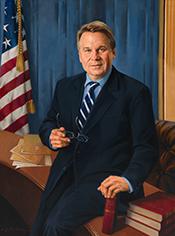
8,597 records where Rep. Smith, Christopher H. [R-NJ-4] is listed as a sponsor, author, or other actor. Search with topics and years
United States · United States Congress · 5 August 1994
Establishes the fourth Sunday of every July as Parents' Day.
United States · United States Congress · 5 August 1994
Condemns the Cuban Government for deliberately sinking the "13th of March," a tugboat carrying 72 unarmed Cuban citizens, on July 18, 1994, causing the death of approximately 40 Cuban citizens, including over 20 children. Urges the President to direct the U.S. Representative to the United Nations to urge the Security Council to adopt a resolution that condemns the sinking and provides for a full internationally supervised investigation. Urges the Cuban Government to release from prison and cease intimidation measures against all survivors, identify all individuals missing, recover the bodies of the dead, and return such bodies to their families.
United States · United States Congress · 4 August 1994
Sexually Violent Predators Act - Directs the Attorney General to: (1) establish guidelines for State programs to require a sexually violent predator (a person convicted of a sexually violent offense who suffers from a mental abnormality or personality disorder (condition) that makes the person likely to engage in predatory sexually violent offenses) to register a current address with a designated State law enforcement agency (agency) upon being released from prison, being placed on parole, or being placed on supervised release; and (2) approve each State program that complies with the guidelines. Makes a State that does not implement and maintain such a program ineligible to receive ten percent of the funds that would otherwise be allocated to it under the Drug Control and System Improvement Grant Program. Provides for reallocation of such funds to States in compliance. Requires: (1) the sentencing court to make the determination that a person is or is no longer a sexually violent predator after receiving a report by a board of experts on sexual offenses; and (2) each State to establish such a board. Directs a State prison officer, if a person required to register is anticipated to be released from prison, paroled, or placed on supervised release, to: (1) inform the person of the duty to register and to provide any change of address to a designated State agency in writing; (2) obtain the person's name, identifying factors, anticipated future residence, and offense history and documentation of any treatment received for the condition; and (3) require the person to read and sign a form stating that the duty to register has been explained. Requires the officer to forward the information to a designated State agency which shall enter the information into the appropriate State law enforcement record system, notify the appropriate agency with jurisdiction over the area in which the person expects to reside, and transmit the information to the Identification Division of the Federal Bureau of Investigation. Sets forth provisions regarding: (1) quarterly address verification; (2) notification of local agencies of address changes; (3) penalties for failing to register and keep registration current; (4) termination of the obligation to register; (5) community notification; and (6) immunity for good faith conduct under this Act.
United States · United States Congress · 4 August 1994
Expresses the sense of the Congress that legislation providing for a national program for health care reform which would restrict the freedom of any individual State in setting its own course toward health care reform that is reflective of the unique experience of such State, should provide for the inclusion of such State only upon approval by a majority of the voters in a State referendum.
United States · United States Congress · 1 August 1994
Expresses the sense of the House of Representatives that: (1) a more proportionate share of funds appropriated for homeless programs should be appropriated to the Secretary of Veterans Affairs for homeless veterans programs; and (2) funds appropriated for any fiscal year for homeless programs should be administered by all agencies in a proportional manner to aid homeless veterans.
United States · United States Congress · 29 July 1994
Waste Flow Control Consensus Act of 1994 - Authorizes each State and qualified political subdivision to direct, regulate, or prohibit: (1) the transportation, management, or disposal of municipal solid waste generated from household sources within the boundaries of the State or subdivision and designate waste management facilities to which such waste shall be transported; (2) the transportation, management, or disposal of municipal solid waste, incinerator ash, and construction and demolition debris, and designate facilities to which such waste shall be transported, managed, or disposed if, before May 15, 1994, the State or political subdivision adopted a law or legally binding provision that regulated such waste or the law or provision identified the use of a waste management method that will be necessary for such activities with respect to municipal solid waste; and (3) transportation of recyclable materials generated within such boundaries and designate facilities to which such materials shall be transported. Permits States and subdivisions described in (2) above to direct, regulate, or prohibit the transportation, management, and disposal of municipal solid waste from any existing or future waste management facility to any other waste management facility without making findings that such authority is necessary to meet current or anticipated solid waste management needs. Deems any contract, law, or legally binding provision of a State or qualified political subdivision that directs, regulates, or prohibits the transportation, management, or disposal of municipal solid waste as a reasonable regulation of commerce and provides that such contracts, laws, and provisions shall not be considered as impairing, restraining, or discriminating against interstate commerce. Permits such authority with respect to recyclable materials only if: (1) the generator or owner of the materials voluntarily made the materials available to the State or subdivision and relinquished any rights to, or ownership of, such materials; and (2) the State or subdivision assumes such rights or ownership. Permits the authority with respect to municipal solid waste from household sources or recyclable materials only if the State or subdivision: (1) establishes a program to separate or divert specified materials for purposes of recycling, reclamation, or reuse before exercising such authority; and (2) finds on the basis of public hearings that it is necessary to exercise such authority to meet current or anticipated solid waste management needs. Grants the authority under this Act only if the State or political subdivision implements a competitive designation process with respect to waste management or recyclable materials facilities. Authorizes State Governors to certify that State laws and regulations in effect on May 15, 1994, satisfy requirements for the competitive designation process. Retains the applicability of certain existing laws and contracts.
United States · United States Congress · 28 July 1994
Extends the condolences of the House of Representatives to the families and friends who lost loved ones in the bombings of the Delegation of Argentine Israeli Associations on July 18, 1994, and the Panamanian commuter plane on July 20, 1994. Condemns such attacks on innocent people and calls for worldwide cooperation in bringing the perpetrators to justice. Condemns anti-Semitism, neo-Nazi activities, and terrorism wherever they occur and urges all members of the world community to do the same. Expresses support for the Jewish communities in Argentina, Panama, and the United Kingdom for their efforts to attain safety and security in their own countries. Urges the Governments and people of Argentina and Panama to continue to work to stamp out anti-Semitism and neo-Nazism.
United States · United States Congress · 25 July 1994
Amends the Racketeer Influenced and Corrupt Organizations Act to revise the definition of "pattern of racketeering activity" to require a profit-seeking purpose.
United States · United States Congress · 25 July 1994
Designates August 1, 1994, as Helsinki Human Rights Day. Authorizes the President to reassert America's commitment to the Helsinki Accords and requests him to: (1) convey to all signatories of the Accords that respect for human rights and fundamental freedoms is a vital element of further progress in the ongoing Helsinki process; and (2) develop new proposals to advance the human rights objectives of such process to address the major problems that remain.
United States · United States Congress · 20 July 1994
Amends the Communications Act of 1934 to prohibit a calling party from being charged for a call to, or information provided by, an 800 number by means of a charge included on, or transmitted with, a bill for telephone exchange service or telephone toll service.
United States · United States Congress · 19 July 1994
Veterans' Health Care Eligibility Reform Act of 1994 - Defines "continuum of health care" and "noninstitutional long-term care" under veterans' health care provisions. Directs the Secretary of Veterans Affairs to provide a continuum of health care to veterans eligible for veterans' benefits. (Sec. 2) Directs the Secretary to provide institutional nursing home care to certain disabled veterans or those in receipt of a veterans' pension. Allows for recovery of nursing home care costs by the Secretary if the veteran is also eligible for such care through a State plan under title XIX (Medicaid) of the Social Security Act. Designates a Department of Veterans Affairs facility as a Medicare provider for purposes of any program administered by the Secretary of Health and Human Services (HHS) under title XVIII (Medicare) of the Social Security Act. Declares a Department medical center as a Medicare HMO. Directs the HHS Secretary to reimburse a Department facility or medical center for providing services as a Medicare provider in the case of care for a non-service-connected disability of a veteran eligible for Medicare benefits. (Sec. 3) Directs the Secretary to develop a plan to implement the provision of institutional long-term care for veterans who: (1) have a service-connected disability of less than 50 percent; (2) have an annual income below a formulated amount; (3) have a catastrophic nonservice-connected disability; or (4) require such care as a follow-up to inpatient care. Outlines, with respect to such care, provisions concerning: (1) premiums and copayments for covered veterans; (2) the issuance of a long-term care insurance contract; and (3) a report from the Secretary to the Congress on the costs of the plan and the insurance contract and legislation required for plan implementation. (Sec. 4) Directs the Secretary to administer a program of health insurance known as the VA Group Health Plan as a managed-care plan meeting specified requirements. Allows any eligible veteran and his or her spouse or child to be enrolled in the Plan. Provides Plan enrollment requirements. Prohibits the Plan from imposing a limitation or exclusion of benefits relating to treatment for certain preexisting conditions. Directs the Secretary to administer the Plan so that no appropriated funds are required for Plan operation. Requires an annual report to the Congress by the Secretary on Plan operation, as well as an initial report. (Sec. 5) Directs the Secretary to administer the health programs of the Veterans Health Administration (VHA) through use of a managed care medical practice model, with limitations. Directs the Secretary to organize the VHA health care delivery and resources into geographic regions known as veterans service areas. (Sec. 6) Authorizes appropriations to the Secretary for FY 1995 through 1999 for: (1) acquiring medical equipment to relieve existing medical equipment backlogs in Department facilities; and (2) infrastructure improvement, patient care amenities, primary care services and personnel, and medical facility construction projects.
United States · United States Congress · 19 July 1994
Designates September 17, 1994, as Constitution Day.
United States · United States Congress · 19 July 1994
Expresses the sense of the Congress that the United States should not undertake any military action against Haiti unless the President first certifies to the Congress that there exists a clear and present danger to the citizens of the United States and that U.S. interests require such action.
United States · United States Congress · 14 July 1994
Recognizes the anniversaries of the Warsaw uprising and the Polish resistance to the invasion of Poland during World War II.
United States · United States Congress · 14 July 1994
Expresses the sense of the House of Representatives that the Justice Department should accept the June 9, 1994, decision of the Third Circuit U.S. Court of Appeals in United States v. Knox as a proper interpretation of the law and as binding authority, should exercise its prosecutorial discretion, and should not aid any effort on the part of the defendant to overturn the decision.
United States · United States Congress · 12 July 1994
Congratulates: (1) the people of Germany on the unification of the nation and the city of Berlin; and (2) the U.S. armed forces, civilian administrators, and American people for five decades of sacrifice and support for Berlin. Recognizes and salutes the contribution of British and French allies in the defense of Berlin. Reaffirms the North Atlantic Treaty Organization obligations of the United States and America's continued support for a free, democratic, and united Germany. Welcomes the further enrichment of the relationship between the United States and Berlin based on fostering new traditions in economic and cultural links.
United States · United States Congress · 30 June 1994
Establishes a congressional commission to assess the humanitarian, political, and diplomatic conditions in Haiti and to report to the Congress on policy options with respect to Haiti.
United States · United States Congress · 28 June 1994
Flow Control Act of 1994 - Authorizes each State and qualified political subdivision to direct, regulate, or prohibit: (1) the transportation of municipal solid waste generated from household sources within the boundaries of the State or subdivision and designate waste management facilities to which such waste shall be transported; (2) the transportation or disposal of municipal solid waste, including incinerator ash or construction or demolition debris, and designate facilities to which such waste shall be transported or disposed if, before May 15, 1994, the State or political subdivision adopted a law that regulated or prohibited the transportation or disposal of such waste; and (3) transportation of recyclable materials generated within such boundaries and designate facilities to which such materials shall be transported. Permits States and subdivisions described in (2) above to direct, regulate, or prohibit the transportation and disposal of municipal solid waste from any existing or future waste management facility to any other waste management facility without regard to the following conditions on authority. Permits such authority with respect to recyclable materials only if: (1) the generator or owner of the materials voluntarily made the materials available to the State or subdivision and relinquished any rights to, or ownership of, such materials; and (2) the State or subdivision assumes such rights or ownership. Permits the authority with respect to municipal solid waste from household sources or recyclable materials only if the State or subdivision: (1) establishes a program to separate or divert specified materials for purposes of recycling, reclamation, or reuse before exercising such authority; (2) develops and implements a competitive designation process for facilities; and (3) finds on the basis of public hearings that it is necessary to exercise such authority to meet current or anticipated solid waste management needs. Retains the applicability of certain existing laws and contracts and provides that such laws and contracts shall be considered a reasonable regulation of commerce.
United States · United States Congress · 27 June 1994
Designates September 13, 1994, as Commodore John Barry Day.
United States · United States Congress · 21 June 1994
Multiple Sclerosis Home Treatment Equity Act of 1994 - Amends title XVIII (Medicare) of the Social Security Act (SSA) to provide coverage and payment for self-administered betaseron (Interferon beta-1b) for patients with multiple sclerosis.
United States · United States Congress · 17 June 1994
Commemorates June 22, 1994, as the 50th anniversary of the Servicemen's Readjustment Act of 1944.
United States · United States Congress · 16 June 1994
United States-China Act of 1994 - Declares that if nondiscriminatory treatment (most-favored-nation treatment) is not granted to China by reason of the enactment of a congressional disapproval resolution, such treatment shall continue to apply to goods that are produced by a person that is not a state-owned Chinese enterprise, but not apply to any goods that are produced by a state-owned Chinese enterprise. Provides that if nondiscriminatory treatment is granted to China for a 12-month period on July 3, 1994, such treatment shall not apply to: (1) any good that is produced by the People's Liberation Army or a Chinese defense industrial trading company; or (2) any nonqualified good that is produced by a state-owned Chinese enterprise. Provides that in order for such treatment to be granted to China, the Secretary of the Treasury shall consult with American businesses that have significant trade with or investment in China, to encourage them to adopt a voluntary code of conduct that: (1) follows internationally recognized human rights principles; (2) ensures the employment of Chinese citizens is not discriminatory in terms of sex, ethnic origin, or political belief; (3) ensures that no convict, forced, or indentured labor is knowingly used; (4) recognizes the rights of workers to freely organize and bargain collectively; and (5) discourages mandatory political indoctrination on business premises. Requires the Secretary to determine, and publish in the Federal Register, which persons are state-owned Chinese enterprises and Chinese defense industrial trading companies. Authorizes the President to waive any condition or prohibition imposed under this Act if he determines and reports to the Congress that its continued imposition would have a serious adverse effect on vital U.S. national security interests. Declares that if the President recommends in 1995 that the waiver of human rights and emigration requirements for nondiscriminatory treatment for China be continued, he shall state in a specified report to the Congress the extent to which China has made progress with respect to: (1) adhering to the provisions of the Universal Declaration of Human Rights; (2) ceasing the exportation to the United States of products made with convict, forced, or indentured labor; (3) ceasing unfair and discriminatory trade practices which restrict and unreasonably burden American businesses; and (4) adhering to the guidelines of the Missile Technology Control Regime and the controls adopted by the Nuclear Suppliers Group and the Australia Group.
United States · United States Congress · 16 June 1994
Amends the Clean Air Act to authorize a State in which all or part of a Severe ozone nonattainment area is located to submit a plan revision requiring employers in such area to implement programs to reduce work-related vehicle trips and miles by employees. (Current law requires such States to submit such revision within two years of the enactment of the Clean Air Act Amendments of 1990). Authorizes such revision to require employers in such areas to increase average passenger occupancy per vehicle in commuting trips between home and workplace during peak travel periods. (Current law requires specified increases in average passenger occupancy.) Authorizes (currently, requires) the revision to require employers subject to a vehicle occupancy requirement to submit a compliance plan.
United States · United States Congress · 9 June 1994
Expresses the sense of the Congress against reducing FY 1995 assistance for certain housing for low-income elderly persons.
United States · United States Congress · 8 June 1994
Disapproves the recommendation of the President to extend nondiscriminatory treatment (most-favored-nation treatment) to the products of China.
United States · United States Congress · 26 May 1994
TABLE OF CONTENTS: Title I: Protection of Consumer Choice Title II: Certification of Managed Care Plans and Utilization Review Programs Title III: Choice Requirements for Point of Service Plans Title IV: Choice of Health Plans for Enrollment Patient Protection Act of 1994 - Title I: Protection of Consumer Choice - Declares that this Act shall not be construed as prohibiting either: (1) an individual from purchasing health care services with his own funds, whether such services are covered within the individual's standard benefit package or from another provider; or (2) an employer from providing benefit coverage in addition to the comprehensive benefit package. Title II: Certification of Managed Care Plans and Utilization Review Programs - Sets forth a certification scheme for managed care plans and for qualified utilization review programs. Title III: Choice Requirements for Point of Service Plans - Sets forth choice and payment disclosure requirements for point of service plans. Title IV: Choice of Health Plans for Enrollment - Requires each health benefit plan sponsor and each voluntary health insurance purchasing cooperative or sponsor to provide a choice among the health plans offered.
United States · United States Congress · 26 May 1994
Newborn Infant HIV Notification Act - Requires a State, if it requires that the results of the human immunodeficiency virus (HIV) testing of an infant be reported to it (or if the State conducts an HIV test of the infant), to disclose such results to: (1) the biological mother of the infant if the mother is the legal guardian; or (2) specified State agencies if the State is the legal guardian of the infant. Directs the State, in disclosing such results (other than to State agencies), to ensure that appropriate counseling on HIV is provided to the individual.
United States · United States Congress · 26 May 1994
Firefighters Pay Fairness Act of 1994 - Amends Federal law to extend existing biweekly pay period and pay computation requirements to Federal fire fighters and employees of the judicial branch. Repeals the current exception from such requirements of employees on the Isthmus of Panama in the service of the Panama Canal Commission. States that, for fire fighters, the annual rate of basic pay shall be calculated on the basis of 26 administrative biweekly work periods of up to 106 hours each. Prescribes a formula for computing the basic biweekly pay of Federal employees who are not fire fighters but perform fire fighting duties. Requires compensation at time-and-a-half per hour for any hours worked in excess of 106 during a biweekly pay period by fire fighters subject to the Fair Labor Standards Act of 1938. Specifies limits on the payment of other premium pay to such fire fighters. Prescribes basic rates of pay for fire fighters: (1) promoted to a supervisory position; and (2) selected and assigned for training. Authorizes a Federal agency to pay cash awards of up to five percent of basic pay to fire fighters or other employees performing fire fighting duties who possess and make substantial use of special skills or certifications, including handling hazardous materials or certification as an emergency medical technician.
United States · United States Congress · 26 May 1994
Expresses the sense of the House of Representatives that for purposes of issuing final guidelines under title VII of the Civil Rights Act of 1964 relating to unlawful harassment in employment, the Equal Employment Opportunity Commission should exclude harassment based on religion.
United States · United States Congress · 25 May 1994
Authorizes the President to present, on behalf of the Congress, to the Lubavitcher rebbe, Rabbi Menachem Mendel Schneerson, a gold medal in recognition of his outstanding and enduring contributions toward world education, morality, and acts of charity. States that no appropriations are authorized to implement this Act. Declares that the medals struck pursuant to this Act are national medals.
United States · United States Congress · 24 May 1994
Designates September 16, 1994, as National POW/MIA Recognition Day. Requires the display of the National League of Families POW/MIA flag at: (1) all national cemeteries and the National Vietnam Veterans Memorial on May 30, 1994 (Memorial Day), September 16, 1994 (National POW/MIA Recognition Day), and November 11, 1994 (Veterans Day); and (2) the White House and the buildings containing the primary offices of the Secretaries of State, Defense, and Veterans Affairs and the Director of the Selective Service System on September 16, 1994 (National POW/MIA Recognition Day).
United States · United States Congress · 24 May 1994
Instructs the House Committees on Agriculture; Banking, Finance and Urban Affairs; Government Operations; the Judiciary; and Small Business to commence hearings on issues within their jurisdiction relating to Madison Guaranty Savings and Loan Association, Whitewater Development Corporation, Capital Management Services Inc., Ray E. Friedman and Company, Lasater and Company, and such appropriate related issues by August 15, 1994, and to submit written findings concerning such matter to the House by the sine die adjournment of the Congress. Directs the respective committees to work to accommodate the work of Special Counsel Robert B. Fiske, Jr., and to not grant immunity, under specified provisions of the Federal criminal code, over the objection of the Special Counsel to any witness called to testify at these hearings. Instructs the Speaker and the majority and minority leaders to meet to determine the appropriate timetable, procedures, and other relevant issues relating to congressional oversight.
United States · United States Congress · 23 May 1994
Expresses the sense of the Congress that the President should report to the Congress on: (1) the situation in Kosova, including the manner in which Serbia's policies have affected the economic, social, and cultural rights of the majority in Kosova; (2) measures to provide humanitarian assistance to the population of Kosova and to Kosovar refugees; and (3) his recommendations on what modalities may be pursued to implement international protection of the rights of the people of Kosova, to reestablish an international presence in Kosova to monitor more effectively the situation there, and to secure for such people their right to democratic self-government.
United States · United States Congress · 16 May 1994
Directs the Secretary of Veterans Affairs to ensure that the Department of Veterans Affairs maintains its current capacity to provide for the specialized treatment and rehabilitative needs of disabled veterans in a manner that affords those veterans reasonable access to such care and services. Requires the Secretary to ensure that the current Department capacity to provide such services is not reduced. Allows the Secretary to expand such facilities beyond their current level.
United States · United States Congress · 16 May 1994
TABLE OF CONTENTS: Title I: Construction Authorization Title II: Health Care Planning and Programs Title III: Medical Facilities Acquisition Title IV: State Home Program Title V: Miscellaneous Title I: Construction Authorization - Authorizes the Secretary of Veterans Affairs to carry out the major medical facility (MMF) projects and leases for the Department of Veterans Affairs for which funds are requested in the President's budget for FY 1995, with the exception of the construction of research additions at Huntington, West Virginia, and Portland, Oregon. Authorizes the Secretary to carry out additional MMF projects, in specified amounts, and additional MMF projects for which funds were appropriated in the Emergency Supplemental Appropriations Act of 1994. Authorizes FY 1995 appropriations for such purposes. Title II: Health Care Planning and Programs - Directs the Secretary to: (1) prescribe a specific, detailed statement of the mission of, and the clinical programs to be operated at, each Department health care facility; (2) review current Department health care missions; and (3) report on mission implementation timetables. (Sec. 202) Extends through FY 1997 (currently FY 1994) the pilot program for determining noninstitutional alternatives to nursing home care. Extends eligibility for such pilot program to all veterans eligible for nursing home care. (Currently, there are further requirements of being treated for, or having a certain degree of, a service-connected disability.) Extends certain report deadlines under the Department of Veterans Affairs Nurse Pay Act of 1990. Title III: Medical Facilities Acquisition - Specifies additional information to be included within a prospectus of a proposed medical facility to be acquired by the Department for use in providing veterans' medical care. (Sec. 302) Directs the Secretary to review the Department methodology for establishing the priority for major construction projects under consideration. Requires such methodology to be revised to give additional weight to projects intended to expand long-term care and ambulatory care programs. Requires a report. (Sec. 303) Directs the Secretary to submit semiannually to the veterans' committees a report showing the current Department priorities for major medical construction projects, with the highest 20 projects specifically identified. (Sec. 304) Includes within the definition of a major medical facility project a project for providing additional ambulatory care involving a total expenditure of more than $5 million. Title IV: State Home Program - Directs the Secretary to pay to each State a per diem amount for each veteran receiving adult day health care in a State home if the veteran is eligible to receive such care in a Department facility. Provides the rate for such care and increases the per diem rate for domiciliary, nursing home, and hospital care (currently authorized). (Sec. 402) Includes the construction of adult day health care facilities in the provision by the Department of financial assistance to States for the construction of medical facilities for veterans. Title V: Miscellaneous - Designates specified veterans' research advisory committees that the Secretary may not terminate unless determined to be no longer needed, with a 120-day prior notification of such a finding to the veterans' committees by way of a report. (Sec. 502) Authorizes the Secretary to provide for the operation of child care centers at Department facilities. Provides a priority for such services to employees of the Department, followed by employees of other Federal departments and agencies. Allows the Secretary to provide child care services to members of the public when necessary to assure the center's financial success. Directs the Secretary to establish reasonable charges for such services with the proceeds to be used by such centers for staffing and other expenses. Outlines related authority of the Secretary with respect to establishing and operating such centers. (Sec. 503) Authorizes the Secretary to: (1) enter into contracts for the provision of utilities to the Audie L. Murphy Memorial Hospital in San Antonio, Texas; (2) during the period from February 28 through June 1, 1994, contract with facilities in the Republic of the Philippines other than the Veterans Memorial Medical Center to furnish hospital care and medical services to veterans for nonservice-connected disabilities if such veterans are unable to defray the cost of such care; and (3) undertake an administrative reorganization of the Department medical center in Sepulveda, California, without regard to a required waiting period.
United States · United States Congress · 12 May 1994
Condemns the death sentence issued against Salman Rushdie. Calls for the immediate withdrawal of such sentence and any associated reward. Calls upon the President to: (1) request that the United Nations Security Council condemn Iran for issuing the edict against Rushdie; (2) call upon the Government of Iran to respect international principles of human rights and lift such sentence; and (3) inform such Government that the House of Representatives has adopted this resolution, that the Iranian Government will be held liable in case an attempt is made on Rushdie's life, and that such Government should attempt to prevent the spread of propaganda promoting Rushdie's assassination. Commends those people of all nations who have firmly stood for freedom of expression despite threats and intimidation. Reaffirms: (1) the commitment of the Congress to the promotion and protection of the right of freedom of expression; and (2) congressional support for basic human rights in the world community.
United States · United States Congress · 11 May 1994
Veterans' Persian Gulf War Benefits Act - Directs the Secretary of Veterans Affairs to: (1) develop and expeditiously implement a uniform case assessment protocol that will ensure thorough assessment, diagnosis, and treatment of all Persian Gulf War veterans suffering from illnesses attributed to service in the Persian Gulf theater of operations during the Persian Gulf War; (2) expedite efforts to develop case definitions or diagnoses for illnesses associated with such service; and (3) develop and implement a comprehensive outreach program to inform such veterans and their families of health-care services, including comprehensive medical evaluations, that may be available through the Department of Veterans Affairs or the Department of Defense. Directs the Secretary to pay compensation to Persian Gulf War veterans suffering from a chronic disability resulting from an undiagnosed illness that became manifest to a degree of ten percent or more within one year after completion of active duty in the Gulf War, with exceptions. Terminates compensation payments three years after the date of enactment of this Act. Authorizes appropriations to the Department of Veterans Affairs for: (1) FY 1995 through 1997 for conducting research of the health risk and effects of service during the Gulf War and the treatment of such effects; and (2) FY 1995 for a survey of Persian Gulf veterans as to the incidence and nature of health problems occurring in such veterans and their families.
United States · United States Congress · 11 May 1994
Designates October 16 through 22, 1994, as National Character Counts Week.
United States · United States Congress · 11 May 1994
Expresses the sense of the House of Representatives that Members of Congress should have the opportunity to offer, debate, and vote on an amendment striking any employer mandate in any legislation to reform our health care system.
United States · United States Congress · 4 May 1994
Expresses the sense of the Congress that any U.S. national conducting a commercial cooperation project in Vietnam should adhere to specified principles regarding: (1) nondiscrimination in employment; (2) worker and environmental safety; (3) partnerships with businesses not controlled by the Vietnamese Government; (4) prohibitions on a military presence and political indoctrination programs on project premises; (5) freedoms of association and expression; and (6) the promotion of a full accounting of all Americans missing in action from the Vietnam conflict. Directs the Secretary of State to encourage member nations of the Organization for Economic Cooperation and Development to promote similar principles. Requires U.S. nationals conducting commercial cooperation projects in Vietnam to: (1) register with the Secretary and indicate whether they agree to implement such principles; and (2) report annually to the Department of State on adherence to such principles. Permits Federal agencies to intercede with a foreign government or national on behalf of such a U.S. national regarding export marketing activities in Vietnam only if such individual adheres to the principles.
United States · United States Congress · 4 May 1994
Restricted Explosives Control Act of 1994 - Prohibits the distribution or receipt of restricted explosives without a Federal permit. Defines "restricted explosives" to mean high explosives, blasting agents, detonators, and more than 50 pounds of black powder. Requires applications for such permits to include the applicant's photograph and fingerprints, which shall be taken and transmitted to the Secretary of the Treasury by the chief law enforcement officer of the applicant's place of residence.
United States · United States Congress · 21 April 1994
Instructs the Secretary of Health and Human Services to revise Medicare regulations governing payment of anesthesia services to compensate: (1) certified registered nurse anesthetists (CRNAs) for their services; and (2) physician supervision of CRNAs. Amends title XVIII (Medicare) of the Social Security Act to provide guidelines for split payments for anesthesia services furnished jointly by a physician and a CRNA.
United States · United States Congress · 20 April 1994
Worker Rights and Labor Standards Trade Act of 1994 - Directs the President to seek the establishment of: (1) a working party within the General Agreement on Tariffs and Trade (GATT) to examine the relationship of fundamental internationally-recognized worker rights to specified articles of the GATT; and (2) a standing committee within the World Trade Organization to perform the functions of the working group.
United States · United States Congress · 20 April 1994
Designates September 18 through 24, 1994, as Iron Overload Diseases Awareness Week.
United States · United States Congress · 19 April 1994
Revolutionary War Historic Preservation Study Act of 1994 - Establishes the Revolutionary War Sites Advisory Commission to: (1) prepare a study of Revolutionary War sites which shall identify their significance, determine threats to their integrity, and provide alternatives for their preservation and interpretation; and (2) report to the Secretary of the Interior and specified congressional committees. Requires the Commission to research and propose innovative open space and land preservation techniques such as designation as units of the National Park System (NPS) or as affiliated areas. Allows the study to include existing NPS units. Authorizes appropriations.
United States · United States Congress · 18 April 1994
Designates 1995 as the Year of the Grandparent.
United States · United States Congress · 14 April 1994
NATO Expansion Act of 1994 - Expresses the sense of the Congress with respect to NATO membership of Poland, Hungary, the Czech Republic, and Slovakia. Authorizes the President to establish a program to assist the transition to full NATO membership for Poland, Hungary, the Czech Republic, Slovakia, and other European countries emerging from communist domination designated pursuant to this Act. Permits the President to provide specified security assistance to such countries, including excess defense articles, economic support fund assistance, international military education and training, and foreign military financing. Authorizes the President to provide additional assistance from the Nonproliferation and Disarmament Fund and Countries in Transition accounts. Permits the President to designate other European countries emerging from communist domination to receive assistance under this Act if he reports to the appropriate congressional committees that such countries: (1) have made significant progress toward establishing democratic institutions, free market economies, civilian control of their armed forces, and the rule of law; and (2) are likely to be in a position to further the principles of the North Atlantic Treaty and to contribute to the security of the North Atlantic area. Authorizes the President to confer, pursuant to agreement with any country eligible to participate in the Partnership for Peace, rights with respect to the military and related civilian personnel and activities of that country in the United States comparable to those conferred by that country with respect to the United States.
United States · United States Congress · 13 April 1994
Elderly Housing Tax Relief Act - Amends the Internal Revenue Code to provide a tax credit for an individual who maintains a household which includes a qualified elderly relative.
United States · United States Congress · 24 March 1994
Humanitarian Aid Corridor Act - Prohibits foreign assistance funds from being used to provide assistance to any country for any portion of a fiscal year during which the country prohibits or restricts the transport or delivery of U.S. humanitarian assistance to any other country. Makes such prohibition inapplicable if the President determines and notifies the Congress that providing assistance: (1) is in the national interest; or (2) will benefit directly non-military personnel who are in immediate danger resulting from a natural or manmade disaster (provided that such assistance is humanitarian assistance distributed directly to such personnel or through international relief organizations).