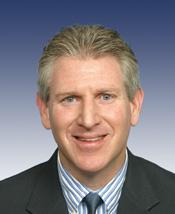
United States · United States Congress · 22 July 2009
Alzheimer's Breakthrough Act of 2009 - Authorizes appropriations for conducting and supporting research on Alzheimer's disease in FY2010-FY2014. Amends the Public Health Service Act to require the Director of the National Institute on Aging to: (1) give priority to conducting and supporting Alzheimer's disease research; (2) increase the emphasis on the need to conduct Alzheimer's disease prevention trials within the National Institutes of Health (NIH); (3) ensure that Alzheimer's disease is maintained as a high priority for NIH's neuroscience initiative; and (4) conduct and support cooperative clinical research regarding Alzheimer's disease. Requires the Director to conduct research related to: (1) the early detection, diagnosis, and prevention of Alzheimer's disease and its potential precursors; (2) early onset Alzheimer's disease and related dementias; (3) the relationship of vascular disease and Alzheimer's disease; and (4) interventions designed to help caregivers and improve patient outcomes. Authorizes the Director to establish a National Alzheimer's Coordinating Center to facilitate collaborative research among the Alzheimer's Disease Centers and Alzheimer's Disease Research Centers. Expands the research of Alzheimer's Disease Centers to include outcome measures and disease management. Directs the Secretary of Health and Human Services (HHS) to convene a National Summit on Alzheimer's Disease. Requires the Secretary, acting through the Director of the Centers for Disease Control and Prevention (CDC), to conduct activities related to risk factors and early recognition of Alzheimer's disease and other dementias. Requires the Secretary, acting through the Administration on Aging, to award a cooperative grant for the establishment and operation of an Alzheimer's Call Center. Extends and expands demonstration projects relating to Alzheimer's disease.
United States · United States Congress · 20 July 2009
Establishing Grants for College Access and Completion Act of 2009 - Directs the Secretary of Education to award competitive five-year grants to certain nonprofit organizations for the provision of mentoring, support, outreach, and other services that encourage disadvantaged students to attend institutions of higher education. Prohibits a grant from covering more than 85% of the cost of the services the grant supports. Requires nonprofit applicants to have met certain requirements, including that they have provided scholarship and support programs to students in more than one state, and have a business plan in place to expand into other states.
United States · United States Congress · 20 July 2009
Directs the Secretaries of Defense (DOD) and Veterans Affairs (VA) to jointly establish the Wounded Warrior K-9 Corps program for the awarding of grants to nonprofits to assist them in establishing programs to provide assistance dogs to certain members of the Armed Forces and veterans who have certain disabilities. Defines the term "assistance dog" to mean a dog specifically trained to perform physical tasks to mitigate the effects of such a disability, except that such term does not include a dog specifically trained for comfort or personal defense.
United States · United States Congress · 17 July 2009
Advanced Vehicle Technology Act of 2009 - Authorizes appropriations to the Secretary of Energy for research, development, demonstration, and commercial application of vehicles and related technologies for FY2010-FY2014. Directs the Secretary to: (1) conduct a program of basic and applied research, development, demonstration, and commercial application activities on materials, technologies, and processes with the potential to substantially reduce or eliminate petroleum use and related emissions of the nation's automotive and commercial vehicle sectors; (2) ensure that the Department of Energy continues to support activities and maintains competency in mid- to long-term transformational vehicle technologies with potential to achieve deep reductions in petroleum use and emissions; (3) carry out activities under this Act in collaboration with automotive manufacturers, heavy commercial and transit vehicle manufacturers, vehicle and engine equipment and component manufacturers, manufacturing equipment manufacturers, advanced vehicle service providers, fuel producers and energy suppliers, electric utilities, universities, national laboratories, and independent research laboratories; (4) conduct research, development, and demonstration activities on connectivity of vehicle and transportation systems; and (5) carry out a research, development, demonstration, and commercial application program of advanced vehicle manufacturing technologies and practices. Directs the Secretary to: (1) carry out a program of cooperative research, development, demonstration, and commercial application activities on advanced technologies for medium- to heavy-duty commercial and transit vehicles; (2) conduct a competitive grant program to demonstrate the integration of multiple advanced technologies on long-haul Class 8 truck and trailer platforms with a goal of improving overall freight efficiency by 50%; and (3) develop standard testing procedures and technologies for evaluating the performance of advanced heavy vehicle technologies under a range of representative duty cycles and operating conditions. Authorizes the Secretary to undertake a pilot program of research, development, demonstration, and commercial applications of technologies to improve total machine or system efficiency for heavy duty nonroad equipment.
United States · United States Congress · 17 July 2009
Supports granting temporary protected status to Haitian nationals currently residing in the United States. Acknowledges that it is in U.S. economic and security interests for Haiti to be a safe and productive country.
United States · United States Congress · 16 July 2009
Adult Education and Economic Growth Act of 2009 - Amends the Workforce Investment Act of 1988 to revise requirements for statewide and local workforce investment systems to include adult education activities. Revises member composition of: (1) state workforce investment boards to include state representatives responsible for implementing adult education, literacy, and workplace skills programs under the Adult Education and Family Literacy Act (AEFLA); and (2) youth councils established by local workforce investment boards to include representatives of adult education. Revises requirements for five-year state and local worker investment plans. Authorizes the use of funds for: (1) statewide and local youth activities to provide opportunities for career pathways for eligible youth as well as dual enrollment opportunities; and (2) training services for local adult and dislocated workers to include integration of adult education and training. Requires the Secretary to carry out specified employment and training demonstration and pilot projects. Amends the AEFLA to include among adult education and literacy services programs activities to assist adults with limited English proficiency through postsecondary education and training to improve their English and mathematical skills and to acquire an understanding of the American system of government and responsibilities of citizenship. Revises requirements for the allocation and reservation of AEFLA funds. Revises state distribution requirements with respect to grants and contracts to eligible providers of activities for adult education and literacy and corrections education of institutionalized individuals. Expands an eligible agency's use of funds for corrections education and education for other institutionalized individuals to include academic programs for: (1) integrated education and training; (2) career pathways; (3) dual enrollment; and (4) preparation for postsecondary education and training. Replaces the National Institute for Literacy with the National Institute for Adult Education, Literacy, and Workplace Skills (Institute). Requires national leadership activities to include activties to improve workplace skills programs nationwide. Requires the Secretary of Education to allocate grants to states for integrated English literacy and civics education programs. Requires the Secretary to award grants to assist states in developing a 21st century delivery system for adult education, literacy, and workplace skills services as well as adults in developing technology literacy. Requires the Institute to establish the National Adult Learning and Technology Resource Center. Requires the Secretary of Education to direct the Commissioner for Education Research of the National Center for Education Research to establish a national research and development center for adult education, literacy, and workplace skills. Amends the Internal Revenue Code to allow an employer educational assistance program credit for 50% of the qualified educational assistance expenses (up to $5,250) paid per taxable year on behalf of an employee.
United States · United States Congress · 16 July 2009
Honors the People's Democratic Republic of Algeria, the Arab Republic of Egypt, the State of Israel, the Hashemite Kingdom of Jordan, the Kingdom of Morocco, and the Tunisian Republic for their participation in the Organization for Security and Cooperation in Europe (OSCE) as Mediterranean Partners for Cooperation. Welcomes the representatives of the OSCE Mediterranean Partners for Cooperation to Washington, DC, on the occasion of the July 2009 Commission on Security and Cooperation in Europe Seminar on OSCE Mediterranean Partner Engagement. Encourages the OSCE Mediterranean Partners for Cooperation to continue to work with the OSCE participating states to enhance trade, economic development, security, and stability in the Mediterranean region.
United States · United States Congress · 15 July 2009
Student Aid and Fiscal Responsibility Act of 2009 - Amends the Higher Education Act of 1965 to increase the maximum Pell Grant amount and tie future increases to increases in the Consumer Price Index, plus 1%. Increases funding for the College Access Challenge Grant program. Creates two new competitive grant programs that: (1) assist states, educational entities, and nonprofit organizations in implementing innovative programs that promote students' persistence in, and completion of, postsecondary education; and (2) assist states in developing information systems to track student progress in graduating and finding employment. Extends funding for grants to historically Black colleges and universities and other minority-serving institutions. Authorizes additional funding for Cooperative Education programs that provide students with alternating or parallel periods of study and employment. Alters title IV student aid need analyses, including by establishing an asset cap for need-based aid and excluding employee pension benefit plans from assets. Preserves the student aid eligibility of students convicted of possessing, rather than selling, controlled substances. Prohibits any new loans from being made or insured under the part B Federal Family Education Loan program after June 2010. Directs the Secretary of Education to award loan servicing contracts under the part D Direct Loan program to not-for-profit servicers that meet federal standards and agree to service such loans at competitive market rates. Makes graduate and professional students ineligible for subsidized Direct Stafford loans after June 2015. Establishes variable interest rates on Direct Loans made to undergraduate students after June 2012. Replaces the Perkins Loans program under part E, after June 2010, with a Direct Perkins Loans program under part D that provides loans that continue to carry a 5% interest rate, but have terms and conditions similar to those on Direct Unsubsidized Stafford loans. Requires the Secretary of Education to make: (1) grants to states and, through them, local educational agencies (LEAs) for the modernization, renovation, or repair of public schools; (2) grants to LEAs in Louisiana, Mississippi, and Alabama for the construction, modernization, renovation, or repair of public schools, on the basis of each LEA's share of school damage inflicted by Hurricane Katrina or Rita; and (3) grants to states for the construction, modernization, renovation, or repair of community college facilities. Directs grantees to use specified portions of such funding for construction, modernization, renovation, or repair that meets certain environmental or energy standards. Directs the Secretary to establish an Advisory Council on Green, High-Performing Schools to provide the Secretary with advice on the academic, health, energy, and environmental impact of such schools and assistance in facilitating their creation. Requires the Secretary to award competitive: (1) Quality Pathways grants to states to implement quality initiatives that increase the number of disadvantaged children in high-quality early learning programs and improve program oversight; and (2) Development grants to states to develop the components of a standards-based early learning system that will allow them to compete for Quality Pathways grants. Establishes two new competitive grant programs for states and junior and community colleges to improve graduation rates and employment-related outcomes for junior and community college students through activities that: (1) facilitate the transfer of credits between schools; (2) enhance student support services; and (3) blend academics and job training in a manner that equips students for high-wage occupations in high-demand industries. Authorizes the Secretary to fund the creation of: (1) free high-quality online training, high school, and postsecondary courses; (2) a Learning and Earning Research Center to research and evaluate junior and community colleges; and (3) cooperative agreements among states to develop, implement, and expand junior and community college longitudinal data systems.
United States · United States Congress · 15 July 2009
Amends the Internal Revenue Code to: (1) make permanent the tax deduction for charitable contributions of food inventory by certain noncorporate taxpayers; (2) set forth rules for determining the basis and fair market value of contributed food; and (3) limit the reduction of such deduction in 2009 and 2010 to the amount by which the fair market value of the contributed food exceeds twice the basis of such food.
United States · United States Congress · 14 July 2009
Water Protection and Reinvestment Act of 2009 - Amends the Internal Revenue Code to establish in the Treasury the Water Protection and Reinvestment Trust Fund (Trust Fund) to support investments in clean water and drinking water infrastructure. Imposes through 2015: (1) an excise tax on the sale of containers of water-based beverages, water disposal products, and pharmaceutical products; and (2) a clean water tax on corporations. Appropriates revenues raised from such taxes to the Trust Fund. Directs the Administrator of the Environmental Protection Agency (EPA) to allocate amounts from the Trust Fund for specified clean and safe drinking water programs. Amends the Federal Water Pollution Control Act and the Safe Drinking Water Act to: (1) expand the types of projects eligible for funding by state revolving loan funds; and (2) set forth additional criteria for states in developing priorities for assistance under such Acts; and (3) provide for technical assistance to community water systems and small water treatment works. Authorizes the Administrator to make grants to: (1) increase the security of community water systems and water treatment works; (2) hire certified wastewater treatment operators; and (3) control sewer overflow. Requires the Administrator to make grants to: (1) support efforts by water systems to increase energy efficiency, reduce greenhouse gas emissions, and mitigate the impacts of climate change; (2) establish a national water infrastructure research, development, and demonstration program and regional university water research centers; and (3) take back and dispose of prescription and over-the-counter drugs in an environmentally sound manner.
United States · United States Congress · 14 July 2009
Recognizes the 60th anniversary of the founding of Radio Free Europe/Radio Liberty (RFE/RL) and honors its contribution to promoting freedom and liberty around the world. Commends the employees and reporters of RFE/RL for their commitment to provide fair and unbiased news to people living under oppressive regimes.
United States · United States Congress · 13 July 2009
Federal Firefighter Pay Equity Act - Includes in the determination of a federal firefighter's average pay for purposes of computing retirement and annuity benefits one-half of a firefighter's basic hourly rate times the number of overtime hours included in such firefighter's regular tour of duty for a year.
United States · United States Congress · 13 July 2009
Recognizes Turkey as one of the most important U.S. strategic partners. Commends the government and people of Turkey for strengthening democracy and becoming a source of regional stability. Expresses appreciation for Turkey's efforts to combat international terrorism. Congratulates the government and people of Turkey as they celebrate Republic Day.
United States · United States Congress · 10 July 2009
Recognizes the importance of sport as a way to promote peace. Supports the use of sport to promote a healthy lifestyle. Recognizes the important work and international contributions of the United Nations Office on Sport for Development and Peace.
United States · United States Congress · 9 July 2009
Wind Energy Research and Development Act of 2009 - Directs the Secretary of Energy to carry out a research and development program to: (1) improve the energy efficiency, reliability, and capacity of wind turbines; (2) optimize the design and adaptability of wind energy systems to the broadest practical range of atmospheric conditions; and (3) reduce the cost of construction, generation, and maintenance of wind energy systems. Requires the program to focus on research and development of specified areas, including: (1) new materials and designs to make larger, lighter, less expensive, and more reliable rotor blades; (2) technologies to improve gearbox performance and reliability; (3) automation, materials, and assembly of large-scale components to reduce manufacturing costs; (4) advanced generators; (5) wind technology for offshore applications; (6) methods to assess and mitigate the effects of wind energy systems on radar and electromagnetic fields; and (7) wind turbines with a maximum electric power production capacity of 100 kilowatts or less. Directs the Secretary to conduct a wind energy demonstration program that: (1) is of sufficient size to measure wind energy system performance under the full productive range of wind conditions in the United States; and (2) includes demonstration projects conducted in collaboration with industry that yield data that is useful for the research and development program. Requires the Secretary to carry out such demonstration program in compliance with provisions of the Energy Policy Act of 2005 regarding cost sharing and merit review of proposals.
United States · United States Congress · 26 June 2009
Consumer Product and Food Safety Information Act of 2009 - Requires the head of each federal product safety enforcement agency to design and implement a public information plan to use agency and media resources to provide information to the public concerning: (1) the role of the agency in ensuring product safety; (2) steps consumers can take to enhance their safety while using regulated products; (3) product recalls; and (4) additional information to enhance consumer safety. Requires such plan to include procedures for developing and distributing product safety information to the public. Requires the Consumer Product Safety Commission (CPSC) to establish: (1) a clearinghouse to collect and distribute product recall and safety information to government entities and the public; (2) a toll-free number for such information; and (3) a public website to provide recall information to the public. Requires the head of each enforcement agency to issue: (1) national public service announcements that contain information on the public safety role of the agency, available resources, and product safety information; and (2) posters and other printed material on the public safety role of the agency. Sets forth requirements for product recall notifications and quarterly reporting. Requires any manufacturer or distributor of a product who voluntarily initiates a product recall as a result of safety concerns to provide notice of such recall to the relevant enforcement agency within 10 days.
United States · United States Congress · 26 June 2009
Obesity Treatment and Wellness Act of 2009 - Amends title XIX (Medicaid) of the Social Security Act to require Medicaid coverage of medical nutrition therapy to treat or prevent the progression of a chronic condition or disease which an individual is considered as having, or at risk of developing, as the result of being overweight and obese.
United States · United States Congress · 26 June 2009
DMF Free Act of 2009 - Makes it unlawful for any person to manufacture for sale, offer for sale, or distribute in commerce any consumer product containing dimethylfumarate (DMF). Treats any consumer product containing DMF as a banned hazardous substance under the Federal Hazardous Substance Act and treats a violation of this Act as a violation of the Consumer Product Safety Act.
United States · United States Congress · 26 June 2009
Expresses the sense of the Senate that: (1) Mikhail Khodorkovsky and Platon Lebedev are prisoners who have been denied basic due process rights under international law for political reasons and that new criminal charges brought against them should be withdrawn; and (2) the Russian Federation is encouraged to take these actions to support democratic principles and human rights in furtherance of a more positive U.S.-Russian relationship.
United States · United States Congress · 24 June 2009
Employment Non-Discrimination Act of 2009 - Prohibits employment discrimination on the basis of actual or perceived sexual orientation or gender identity by covered entities (employers, employment agencies, labor organizations, or joint labor-management committees). Prohibits preferential treatment or quotas. Allows only disparate treatment claims. Prohibits related retaliation. Makes this Act inapplicable to: (1) religious organizations; and (2) the relationship between the United States and members of the Armed Forces. Declares that this Act does not repeal or modify any federal, state, territorial, or local law creating a special right or preference concerning employment for a veteran. Provides for the construction of this Act regarding: (1) enforcement by employers of rules and policies; (2) sexual harassment; (3) certain shared facilities such as showers or dressing facilities; (4) construction of new or additional facilities; (5) dress and grooming standards; and (6) provision of employee benefits to married vs. unmarried couples. Declares that, in this Act, "married" refers to a legal union between one man and one woman. Prohibits the Equal Employment Opportunity Commission (EEOC) from collecting statistics from covered entities on actual or perceived sexual orientation or gender identity or compelling the collection by covered entities of such statistics. Provides for enforcement, including giving the EEOC, the Librarian of Congress, the Attorney General, and U.S. courts the same enforcement powers as they have under specified provisions of the Civil Rights Act of 1964, the Government Employee Rights Act of 1991, and other specified laws. Allows actions and proceedings, subject to exception, against the United States and the states.
United States · United States Congress · 23 June 2009
Success in the Middle Act of 2009 - Directs the Secretary of Education to make grants to states, based on their proportion of poor children aged 5 to 17, to: (1) implement state middle grades needs analyses and, on the basis of such analyses, improvement plans that describe what students must master to complete successfully the middle grades and succeed in academically rigorous high school coursework; and (2) award competitive subgrants to local educational agencies (LEAs) or partnerships of LEAs and institutions of higher education, educational service agencies, or educational nonprofit organizations to implement a comprehensive middle school improvement plan for each eligible school. Favors LEAs, or partnerships that include LEAs, that serve high proportions of poor children and children attending eligible schools. Defines "eligible schools" as those where: (1) a high proportion of middle grade students matriculate to high schools with graduation rates below 65%; (2) more than 25% of the students who finish grade six, or the school's earliest middle grade level, exhibit key risk factors for failure; and (3) a majority of middle grade students are not rated proficient on required state assessments in mathematics, reading, or language arts. Permits states to make subgrants to LEAs and partnerships that did not receive a competitive subgrant to assist them in applying for competitive subgrants and developing comprehensive middle school improvement plans. Provides the Secretary with funding to: (1) contract for studies that identify promising practices for, and review existing research to identify factors that might lead to, the improvement of middle grades education; (2) create a national clearinghouse in best middle grade educational practices and a national database identifying factors that facilitate or impede middle grade student achievement; (3) require certain educational field research designed to enhance the performance of middle grade schools and students; (4) create a research and development center that addresses topics pertinent to the middle grades; and (5) provide grants to entities that partner with states and LEAs to develop, adapt, or replicate effective models for turning around low-performing middle grades.
United States · United States Congress · 19 June 2009
Cure and Understanding through Research for Alzheimer's Act of 2009 or La Cura Act of 2009 - Amends the Public Health Service Act to require the Director of the National Institutes of Health (NIH) to ensure sufficient resources for activities relating to Alzheimer's disease and Hispanic communities, including by: (1) increasing efforts in epidemiological work in Hispanic subgroups; (2) allocating resources to the National Institute on Aging Alzheimer's disease research centers and other academic centers involved in such research to increase participation of Hispanics and other underrepresented ethnic groups in research and clinical trials in sufficient numbers to draw valid conclusions; and (3) conducting social, behavioral, and health services research to understand the underlying reasons why Hispanic individuals delay diagnosis and underutilize services, to identify culturally and linguistically appropriate approaches to address such delays and underutilization, and to identify approaches for providing, and improving the quality of, culturally competent care. Requires the Director to expand and intensify NIH efforts to educate communities about the importance of research relating to Alzheimer's disease and to respond effectively to cultural concerns about participation in such research. Authorizes appropriations for a program of grants to states to carry out demonstration programs related to Alzheimer's disease. Requires the Secretary of Health and Human Services (HHS), acting through the Centers for Disease Control and Prevention (CDC), to conduct an aggressive, evidence-based education and outreach program to promote public awareness and risk reduction with respect to Alzheimer's disease, particularly to Hispanic populations.
United States · United States Congress · 18 June 2009
Amends the Public Health Service Act to extend through FY2012 the current authorization of appropriations for the national public awareness campaign for gynecologic cancers (Johanna's law). Authorizes appropriations in subsequent fiscal years at levels necessary to carry out such campaign. Requires the Secretary of Health and Human Services (HHS) to: (1) collaborate with nonprofit gynecologic cancer organizations to determine the best practices for providing gynecologic cancer information and outreach services to varied populations; and (2) make grants to nonprofit private entities to carry out demonstration projects to test outreach and education strategies to increase the awareness and knowledge of women and health care providers regarding gynecologic cancers.
United States · United States Congress · 18 June 2009
Travel Promotion Act of 2009 - Establishes the Corporation for Travel Promotion as a nonprofit corporation that is not an agency or establishment of the U.S. government. Makes the Corporation subject to the provisions of the District of Columbia Nonprofit Corporation Act. Expresses the sense of Congress that the Corporation should not engage in lobbying activities. Requires the Corporation, among other things, to provide useful information to people interested in traveling to the United States, identify and address perceptions regarding U.S. entry policy, and promote U.S. travel. Establishes in the Treasury the Travel Promotion Fund. Amends the Immigration and Nationality Act to require (under current law, authorize) the Secretary of Homeland Security to establish and collect a fee for the use of an electronic data sharing system concerning the admissibility of certain aliens into the United States that will ensure recovery of the full costs of providing and administering such system. Terminates such fee following FY2014. Authorizes the Corporation to impose an annual assessment on U.S. members of the travel and tourism industry. Amends the International Travel Act of 1961 to: (1) revise the membership of the Tourism Policy Council; and (2) require the Council to provide the Corporation with certain information concerning U.S. admission procedures and travel promotion strategies. Directs the Government Accountability Office (GAO) to conduct a study to assess barriers to entry into the United States by foreign travelers.
United States · United States Congress · 17 June 2009
Statutory Pay-As-You-Go Act of 2009 - Requires the Congressional Budget Office (CBO), as soon as practicable after Congress completes action on any Pay-As-You-Go (PAYGO) legislation, to provide an estimate of its budgetary effects to the Office of Management and Budget (OMB). Requires OMB to maintain and make publicly available a document containing a PAYGO ledger and, within seven days (excluding weekends and legal holidays) after the enactment of any PAYGO legislation, record on such ledger its estimate of the legislation's budgetary effects in each fiscal year, applying the look-back and averaging requirements of this Act. Exempts from the requirements of this Act any PAYGO legislation designated as an emergency requirement by the President and enacted by Congress. (Requires OMB to display the budgetary effects of such legislation as an addendum in the document containing the PAYGO ledger but not record the budgetary effects in it.) Requires OMB: (1) to make publicly available an annual PAYGO report and publish a notice of it in the Federal Register, including information on how it can be obtained; and (2) if such report shows a debit on the PAYGO ledger for the budget year, to prepare and the President to issue a sequestration order for submission to Congress. Prescribes requirements for calculating a sequestration for certain nonexempt and Medicare mandatory programs. Sets forth a special temporary rule to address the scoring of legislation affecting current policy for: (1) payments made under title XVIII (Medicare) of the Social Security Act for physician services; (2) the Estate and Gift Tax and the Alternative Minimum Tax (AMT) under the Internal Revenue Code; and (3) provisions of the Economic Growth and Tax Relief Reconciliation Act of 2001 or the Jobs and Growth Tax Relief and Reconciliation Act of 2003 that amended the Code extending middle-class tax cuts for individuals (or provisions in later statutes further amending such amendments). Makes such rule effective through December 31, 2010, or, in specified circumstances, until December 31, 2011. Amends the Balanced Budget and Emergency Deficit Control Act of 1985 (Gramm-Rudman-Hollings Act) to modify the assumptions used to calculate the baseline. Requires: (1) temporary mandatory funding and tax provisions related to major natural or man-made disasters to be assumed to expire on schedule, and discretionary funding for them to not be projected; and (2) the baseline to include a disaster allowance that is not designated as mandatory or discretionary and is not allocated to any congressional committee. Amends the Gramm-Rudman-Hollings Act to specify additional Social Security, veterans, Tier I Railroad Retirement benefits and other programs and activities exempt from a sequestration order as well as certain economic recovery programs.
United States · United States Congress · 17 June 2009
Urges: (1) the government of the Democratic People's Republic of Korea to grant clemency to Laura Ling and Euna Lee and return them to the United States; and (2) other nations to encourage North Korea to free Ms. Ling and Ms. Lee. Supports efforts by President Obama, Secretary of State Clinton, and others to secure the release of the journalists.
United States · United States Congress · 17 June 2009
Reiterates condemnation of the 1994 attack on the Argentine Jewish Mutual Association (AMIA) Jewish Community Center in Buenos Aires, Argentina, honors the victims of the attack, and expresses sympathy to the victims' relatives. Applauds the government of Argentina for its onging investigative efforts. Expresses concern regarding the government of Saudi Arabia's failure to detain certain Iranian officials in connection with the AMIA case. Urges: (1) all nations to cooperate fully with the AMIA investigation; and (2) governments in the Western Hemisphere to designate Hezbollah as a terrorist organization and to penalize those providing support for Hezbollah and other Islamist terrorist organizations. Encourages the President to direct U.S. law enforcement agencies, upon Argentine request, to cooperate in the AMIA investigation.
United States · United States Congress · 16 June 2009
Voter Confidence and Increased Accessibility Act of 2009 - Amends the Help America Vote Act of 2002 (HAVA) to revise requirements for the audit capacity of voting systems, particularly those for a permanent paper record. Requires the voting system to require the use of an individual, durable, voter-verified paper ballot of the voter's vote that shall be marked and made available for inspection by the voter before the voter's vote is cast and counted, and which shall be counted by hand or read by an optical scanner or other counting device. Requires the voting system to provide the voter with an opportunity to correct any system-made error in the voter-verified paper ballot before it is permanently preserved. Requires each paper ballot used to be: (1) suitable for a manual audit; and (2) counted by hand in any recount or audit conducted with respect to any federal election. Sets forth a special rule for treatment of disputes when paper ballots have been shown to be compromised. Requires the Director of the National Science Foundation (NSF) to make grants to eligible entities to study, test, and develop accessible ballot voting, verification, and casting mechanisms and devices and best practices to enhance the accessibility of paper ballot voting and verification mechanisms for individuals with disabilities, for voters whose primary language is not English, and for voters with difficulties in literacy. Specifies additional voting system requirements and prohibitions. Requires the NSF Director to make grants to eligible entities to conduct research on the development of election-dedicated voting system software. Makes available additional funding to enable states to meet the costs of the requirements imposed by this Act. Provides for complaints to the Attorney General by persons aggrieved by violations of HAVA. Requires each state to administer audits of federal election results, without advance notice to the precincts selected, consisting of random hand counts of the voter-verified paper ballots. Makes an exception from this requirement for elections in which the winning candidate had no opponent or received 80% or more of the vote total. Prescribes requirements for determination of the number of ballots counted under the audit. Prescribes the process for administering audits. Requires the Election Auditor of a state, as soon as practicable after the completion of an audit, to submit the results to the Election Assistance Commission (EAC) for publication. Prohibits certification of the results of any election until completion of audits. Provides for payments to states for the costs of conducting audits. Exempts from this Act any election for which a recount under state law will commence before certification of the election results. Repeals the EAC's exemption from certain federal government contracting requirements.
United States · United States Congress · 16 June 2009
High School Athletics Accountability Act of 2009 - Amends the Elementary and Secondary Education Act of 1965 (ESEA) to direct coeducational elementary and secondary schools that participate in any ESEA program to annually: (1) report certain information on equality in their school athletic programs to the Commissioner for Educational Statistics; and (2) make such information available, upon request, to their students, potential students, and the public. Directs the Commissioner to ensure that such data are posted on the Department of Education's Web site within a reasonable period of time.
United States · United States Congress · 16 June 2009
Recognizes the Day of the African Child. Salutes the health professionals and community health workers in Africa who are extending health care and hope to families across the continent. Reaffirms the importance of U.S. partnership with African leaders and communities in reducing child, newborn, and maternal deaths.
United States · United States Congress · 15 June 2009
Improving Access to Clinical Trials Act of 2009 - Amends title XVI (Supplemental Security Income) (SSI) of the Social Security Act to disregard for SSI income eligibility purposes any compensation in the amount of the first $2,000 per year received by an individual for participation in clinical trials for rare diseases or conditions.
United States · United States Congress · 15 June 2009
Honors the sacrifice of Special Police Officer Stephen Tyrone Johns in his defense of the staff and visitors of the United States Holocaust Memorial Museum and views this special relationship as an opportunity for dialogue for all people who seek ways of fighting injustice and securing dignity for all. Expresses the sense of Congress that: (1) the African-American and Jewish-American communities should continue to work together to combat all forms of hate-inspired violence; and (2) leaders and individuals in both communities should make an increased effort to meet regularly to discuss matters of mutual interest and concern.
United States · United States Congress · 12 June 2009
Expresses support for Olympic Day. Encourages the International Olympic Committee to select Chicago, Illinois, as the host city for the 2016 Olympic and Paralympic Games.
United States · United States Congress · 11 June 2009
Young Adult Healthcare Coverage Act of 2009 - Amends the Employee Retirement Income Security Act of 1974 (ERISA) and the Public Health Service Act to require a group health plan that provides coverage for dependent children to make available such coverage, at the option of the participant involved, to a participant's child who (but for age) would be treated as a dependent child and who: (1) is under 30 years of age; (2) is not married; (3) has no dependents; (4) is a citizen or national of the United States; and (5) is not provided coverage as a participant, beneficiary, or enrollee under any other creditable coverage. Applies such requirement to individual health insurance coverage.
United States · United States Congress · 11 June 2009
Medical Marijuana Patient Protection Act - Transfers marijuana from schedule I to schedule II of the Controlled Substances Act. Provides that no provision of the Controlled Substances Act or the Federal Food, Drug, and Cosmetic Act shall prohibit or otherwise restrict, in a state in which marijuana may, under state law, be prescribed or recommended by a physician for medical use: (1) a physician from prescribing or recommending marijuana for medical use; (2) an individual from obtaining, possessing, transporting, manufacturing, or using marijuana in accordance with such a prescription or recommendation; (3) an individual authorized under state law to do so from obtaining, possessing, transporting, or manufacturing marijuana on an authorized patient's behalf; (4) a pharmacy or other entity authorized to do so from obtaining, possessing, or distributing marijuana to such patients; or (5) an entity established by such a state or local government thereof to do so from producing, possessing, or distributing marijuana for such a prescription or recommendation.
United States · United States Congress · 11 June 2009
Recidivism Reduction Act - Amends title XVI (Supplemental Security Income for Aged, Blind, and Disabled) (SSI) of the Social Security Act (SSA) to require the reinstatement upon release of an otherwise eligible disabled inmate for SSI benefits which were terminated owing to the inmate's incarceration in a jail, prison, penal institution, or correctional facility for a period of 12 or more consecutive months. Requires the inmate to apply for reinstatement and resumption of such benefits within 36 months after release. Allows application for reinstatement even before release. Permits provisional benefits to such an individual until the application is acted upon. Requires the reinstatement of SSI benefit eligibility for such an individual's spouse if the spouse was previously an SSI-eligible spouse. Amends SSA title II (Old-Age, Survivors, and Disability Insurance Benefits) (OASDI) to direct the Commissioner of Social Security to develop a system for prerelease application for resumption of suspended OASDI disability insurance benefits, or other benefits based on disability. Amends SSA title XIX (Medicaid) to require state Medicaid plans to provide that in the case of any individual enrolled for medical assistance immediately before becoming an inmate of a public institution: (1) the enrollment shall be reinstated upon the individual's release from such institution unless and until there is a determination that the individual is no longer eligible to be so enrolled; and (2) any period of continuous eligibility in effect on the date the individual became such an inmate shall be reinstated as of the release date and the duration of such period shall be determined without regard to the period in which the individual was such an inmate. Increases from 90% to 95% the federal matching rate for any state implementing a Medicaid reinstatement system. Authorizes case management services in order to engage in planning for services following an individual's release from a public institution.
United States · United States Congress · 11 June 2009
Condemns the violent attack on the U.S. Holocaust Memorial Museum on June 10, 2009. Honors the bravery and dedication of the employees and security personnel at the U.S. Holocaust Memorial Museum. Offers condolences to the family of Officer Stephen Tyrone Johns who was killed in the line of duty. Urges Americans to join the House of Representatives in condemning this act of hateful violence and intolerance.
United States · United States Congress · 10 June 2009
Amends the federal criminal code to add the constrictor snake of the species Python genera to the list of injurious species that are prohibited from being shipped or imported into the United States.
United States · United States Congress · 9 June 2009
Helping Fill the Medicare Rx Gap Act of 2009 - Amends part D (Voluntary Prescription Drug Benefit Program) of title XVIII (Medicare) of the Social Security Act (SSA), with respect to the annual out of pocket threshold, to count costs incurred in providing prescription drugs by the Indian Health Service, a federally-qualified health center, an AIDS drug assistance program, certain hospitals, or a pharmaceutical manufacturer patient assistance program. Amends SSA title XI, with respect to criminal penalties for certain illegal remunerations, to exclude from prohibited remunerations (provide safe harbor for) any remuneration paid by a pharmaceutical manufacturer patient assistance program, either in cash or through the distribution or donation of covered Part D drugs, to an individual enrolled in a Part D plan or a Medicare Advantage Prescription Drug (MA-PD) plan under SSA title XVIII part C.
United States · United States Congress · 9 June 2009
Fracturing Responsibility and Awareness of Chemicals Act of 2009 - Amends the Safe Drinking Water Act to: (1) repeal the exemption from restrictions on underground injection of fluids near drinking water sources granted to hydraulic fracturing operations under such Act; and (2) require oil and gas companies to disclose the chemicals used in hydraulic fracturing operations.
United States · United States Congress · 4 June 2009
Reuniting Families Act - Amends the Immigration and Nationality Act (INA) to establish the fiscal year worldwide level of employment-based immigrants at 140,000 plus: (1) the previous year's unused visas; and (2) the number of unused visas from FY1992-FY2007. Establishes the fiscal year worldwide level of family-sponsored immigrants at 480,000 plus: (1) the previous year's unused visas; and (2) the number of unused visas from FY1992-FY2007. Revises the definition of "immediate relative" to: (1) mean a child, spouse, or parent of a U.S. citizen or lawful permanent resident (and for each family member of a citizen or resident, such individual's accompanying spouse or child), except that in the case of parents such citizens shall be at least 21 years old; (2) permit a widow or widower of a U.S. citizen or resident to seek permanent resident status if married at least two years at the time of the citizen's or resident's death or, if married less than two years, by showing through a preponderance of the evidence that the marriage was entered into in good faith and not solely to obtain an immigration benefit; and (3) include an alien who was the child or parent of a U.S. citizen or resident at the time of the citizen's or resident's death if the alien files a petition within two years after such date or prior to reaching 21 years old. Increases immigration visas for: (1) unmarried sons and daughters of U.S. citizens; and (2) brothers and sisters of U.S. citizens. Provides a 60,000 visa allocation for the unmarried sons and daughters of permanent resident aliens. Increases annual per country (10% of annual total) and dependent area (5% of annual total) limits for employment-based and family-sponsored immigrant visas. Expands specified family-unity exceptions to unlawful presence-based inadmissibility. Provides specified relief for orphans and spouses regarding: (1) petitions for immediate relative status; (2) parole eligibility; (3) permanent resident status adjustment; and (4) processing of immigrant visas. Filipino Veterans Family Reunification Act - Exempts children of naturalized Filipino World War II veterans from worldwide or numerical immigrant limitations. Makes a minor child of an alien fiancee/fiance or of an alien spouse of a U.S. citizen eligible for derivative K-visa status provided that the child's age is determined using such child's age at the date that the petition to classify such child's parent as a K-visa alien is filed with the Secretary of Homeland Security. Authorizes the Secretary or the Attorney General to adjust the status of a finacee/fiance or alien spouse and any minor children (K-visa) to conditional permanent resident status if such alien marries the petitioner within three months after U.S. admission. Redefines "child" for purposes of titles I and II of the Act to include a stepchild under 21 years old. (Current law includes a stepchild who has not reached 18 years old at the time the marriage creating the status of stepchild occurred.) Uniting American Families Act of 2009 - Amends INA to include a "permanent partner" within the scope of such Act. Defines "permanent partner" as an individual 18 or older who: (1) is in a committed, intimate relationship with another individual 18 or older in which both individuals intend a lifelong commitment; (2) is financially interdependent with the other individual; (3) is not married to, or in a permanent partnership with, anyone other than the individual; (4) is unable to contract with the other individual a marriage cognizable under this Act; and (5) is not a first, second, or third degree blood relation of the other individual. Defines "permanent partnership" as the relationship existing between two permanent partners. Defines "alien permanent partner" as the individual in a permanent partnership who is being sponsored for a visa.
United States · United States Congress · 4 June 2009
IDEA Fairness Restoration Act - Amends the Individuals with Disabilities Education Act to include expert witness fees, including the reasonable costs of any test or evaluation necessary for the preparation of the parent or guardian's case in the action or proceeding, within the definition of "attorneys' fees" that may be awarded to the prevailing party in a civil action brought under such Act.
United States · United States Congress · 4 June 2009
Enhancing Science, Technology, Engineering, and Mathematics Education Act of 2009 - Requires the President to establish, in the Office of Science and Technology Policy, a Committee on Science, Technology, Engineering, and Mathematics Education (STEM education) within the National Science and Technology Council. Establishes an Office of Science, Technology, Engineering, and Mathematics Education in the Department of Education, to be administered by an Assistant Secretary. Requires the Assistant Secretary to conduct at least every five years an evaluation of the STEM education programs administered by the department. Requires the Secretary of Education to award a grant to establish a voluntary State Consortium on STEM Education and a grant to the National Science Digital Library to establish the STEM Education Resource Alliance.
United States · United States Congress · 4 June 2009
Prescription Coverage for Now Act of 2009 - Amends part D (Voluntary Prescription Drug Benefit Program) of title XVIII (Medicare) of the Social Security Act (SSA) to direct the Commissioner of Social Security, through certain information requests to the Secretary of the Treasury, to provide for the identification of individuals potentially eligible for low-income subsidies (LIS) and transmit them low-income subsidy applications if they are also part D eligible. Requires the Secretary of Health and Human Services, jointly with the Commissioner, to develop a model, simplified low-income subsidy application and process. Amends the Internal Revenue Code to require the Secretary of the Treasury, upon the Commissioner's request, to disclose tax return information to facilitate identification of individuals likely to be eligible for Medicare prescription drug program low-income subsidies. Entitles low-income subsidy beneficiaries to retroactive reimbursement for previously incurred covered drug costs. Prescribes requirements for enhanced oversight and enforcement relating to such reimbursements. Establishes an asset standard for LIS eligibility for 2011 of $27,500 (or $55,000 in the case of the combined value of the individual's assets or resources and the assets or resources of the individual's spouse), increased in subsequent years by the annual percentage increase in the consumer price index. Exempts retirement benefits from resources under the LIS programs. Increases the income eligibility to 150% of the federal poverty level (FPL) for full benefits and 200% of the FPL for partial benefits under the LIS program. Authorizes indexing of deductible and cost-sharing above the annual out-of-pocket threshold for individuals with incomes below 200% of FPL. Prohibits the treating of LIS premium and cost-sharing subsidies as benefits, or otherwise taking them into account, in determining an individual's eligibility for, or amount of benefits under, any other federal program. Requires individuals eligible for Medicare Savings Programs to be deemed subsidy eligible individuals under LIS. Establishes a special enrollment period for subsidy eligible individuals under LIS.
United States · United States Congress · 4 June 2009
Offers the condolences of the House of Representatives to the family of Dr. George Tiller. Declares that the House commits to the American principle that tolerance must always be superior to intolerance, and that violence is never an appropriate response to a difference in beliefs.
United States · United States Congress · 2 June 2009
Expresses the House of Representatives' support for Hillel's mission of service to Jewish college students and partnership with the campus community. Congratulates the students, lay leaders, and professionals of the Hillel movement on reaching its 85th birthday.
United States · United States Congress · 21 May 2009
Homeowners' Defense Act of 2009 - Establishes the National Catastrophe Risk Consortium as a nonprofit, nonfederal entity to: (1) maintain an inventory of catastrophe risk obligations held by state reinsurance funds, state residual insurance market entities, and state-sponsored providers of natural catastrophe insurance; (2) issue, on a conduit basis, securities and other financial instruments linked to catastrophe risks insured or reinsured through Consortium members; (3) coordinate reinsurance contracts; (4) act as a centralized repository of state risk information accessible by certain private-market participants; and (5) establish a database to perform research and analysis that encourages standardization of the risk-linked securities market. Authorizes the Secretary of the Treasury to guarantee holders of debt against loss of principal or interest, or both, on any such debt issued by eligible state programs for purposes of promoting the availability of private capital to provide liquidity and capacity to state catastrophe insurance programs and expediting the payment of claims under such programs and better assist the financial recovery from significant natural catastrophes. Provides separate limits on the total principal amount of such obligations for programs that cover earthquake peril and those that cover all other perils. Directs the Secretary to make contracts for reinsurance coverage available for purchase by eligible state programs. Provides pricing guidelines and a limit on aggregate potential federal liability. Establishes a Federal Natural Catastrophe Reinsurance Fund in the Treasury to be funded by amounts received from the sale of reinsurance coverage contracts, amounts appropriated for liability for claims payment, and earnings on investments. Directs the Secretary of Housing and Urban Development (HUD) to establish and carry out a program of grants to eligible entities to develop, enhance, or maintain programs to prevent and mitigate losses from natural catastrophes. Requires a study of the need for and impact of expanding the programs established by this Act to apply to insured losses of eligible state programs for losses arising from commercial insurance policies that provide coverage for properties composed predominantly of residential rental units.