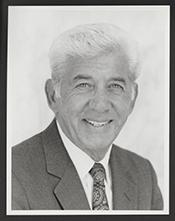
United States · United States Congress · 26 April 1989
Amends Internal Revenue Code provisions governing the income tax deduction for the health insurance costs of self-employed individuals to: (1) make the deduction permanent (under current law it will expire after tax year 1989); and (2) phase in an increase in the allowable deduction, reaching 100 percent for taxable years beginning in 1994 and thereafter.
United States · United States Congress · 26 April 1989
Expresses the sense of the House of Representatives that the Bankruptcy Court and all involved parties should facilitate the prompt restoration of Eastern Airlines to full operations through appropriate action which may include appointment of a trustee, pending the sale of the company.
United States · United States Congress · 25 April 1989
Amends the Internal Revenue Code to extend the targeted jobs income tax credit through 1992 (under current law the credit will expire after December 31, 1989). Amends the Economic Recovery Tax Act of 1981 to authorize appropriations through FY 1992 in connection with the targeted jobs credit. Raises from 23 to 25 years the age limitation with respect to economically disadvantaged youth targeted for credit purposes. Adds as a targeted group under the credit economically disadvantaged individuals who have completed a qualified drug rehabilitation program.
United States · United States Congress · 18 April 1989
Live Performing Arts Labor Relations Amendments - Amends the National Labor Relations Act to exclude specified types of employers and performers in the live performing arts from coverage under unfair labor practice provisions: (1) prohibiting specified contracts or agreements between employers and labor organizations; and (2) prohibiting specified actions of labor organizations to force or require cessation of dealings with others, joining of labor or employer organizations, or recognition of or negotiation with labor organizations not certified as representative. Permits such employers to: (1) agree with a labor organization to make membership in it a condition of performing arts employment; and (2) make agreements with a labor organization covering performing artists even if its majority status has not yet been established. Defines "employer" to include purchasers of live musical performance services. Defines "employee" to include independent contractors engaged to perform live musical services.
United States · United States Congress · 18 April 1989
Employee Educational Assistance Act of 1989 - Repeals provisions of the Internal Revenue Code that: (1) terminated the income tax exclusion of amounts paid under employee educational assistance programs as of tax year 1989; and (2) deny benefits in connection with graduate work.
United States · United States Congress · 17 April 1989
Increases the veterans' non-Federal cemetery plot allowance from $150 to $250 for burial of eligible veterans who die in Veterans Administration (effective March 1989, Department of Veterans Affairs) or other authorized facilities.
United States · United States Congress · 13 April 1989
Amends the Omnibus Budget Reconciliation Act of 1986 to extend, from June 30, 1989, to June 30, 1990, the waiver of certain Medicare (title XVIII of the Social Security Act) and Medicaid (title XIX of the Act) requirements for a Massachusetts demonstration project providing alternatives to hospital care for Medicaid-eligible nursing home patients.
United States · United States Congress · 13 April 1989
Authorizes the Raoul Wallenberg Tribute Committee to establish a work to honor Raoul Wallenberg on Federal land in the District of Columbia or its environs. Prohibits the United States from paying any expense of the establishment of the work.
United States · United States Congress · 12 April 1989
Amends the Motor Vehicle Information and Cost Savings Act to repeal the authority of the Secretary of Transportation to reduce the average fuel economy standard below the level set by such Act. Declares certain regulations pertaining to such standards ineffective as of 90 days after the date of enactment of this Act.
United States · United States Congress · 12 April 1989
Community Housing Partnership Act - Title I: Housing Education and Organizational Support Grants for Community Based Housing Projects - Authorizes the Secretary of Housing and Urban Development to provide housing education and organizational support grants directly to nonprofit organizations or indirectly to States and cities to assist such organizations. Authorizes permanent appropriations beginning with FY 1989. Title II: Community Housing and Partnership Grants - Authorizes the Secretary to provide community partnership grants directly to nonprofit organizations or indirectly to States and cities to assist such organizations. Divides appropriations among: (1) urban community housing partnership grants; (2) State community housing partnership grants; and (3) direct community housing partnership grants. Sets forth the following eligible activities: (1) technical assistance and site control loans; (2) seed-money loans; (3) matching grants or loans; and (4) technical and management assistance for nonprofit sponsors. Sets forth rental project and home ownership eligibility provisions, including: (1) occupancy by lower income families; (2) profit limitations; (3) funding coordination; (4) tax treatment; and (5) affirmative action requirements. Authorizes permanent appropriations beginning with FY 1989. Title III: General Provisions - Defines specified terms for purposes of this Act.
United States · United States Congress · 11 April 1989
Coast Guard License Verification Act - Amends the National Driver Register Act of 1982 to authorize applicants for new and renewed merchant seamen licenses and certificates of registry to serve on or operate a commercial vessel to request the chief State driver licensing official to transmit to the Commandant of the Coast Guard information regarding such applicants' motor vehicle driving records. Prescribes the use of such information by the Commandant. Precludes access to information that was entered more than three years before the date of request unless it relates to revocations or suspensions which are still in effect on the date of request. Directs the Commandant to initiate a rulemaking to require each applicant to make available to the Commandant information regarding the motor vehicle driving record of the applicant.
United States · United States Congress · 11 April 1989
Minority Business Development Act of 1989 - Redesignates the Minority Business Development Agency in the Department of Commerce as the Minority Business Development Administration, to be headed by an Assistant Secretary of Commerce appointed by the President, with the advice and consent of the Senate. Requires the Secretary of Commerce to report to the Congress on the organizational structure within the Administration and its organizational position in the Department of Commerce. Title I: Market Development - Empowers the Administration to: (1) assist disadvantaged businesses in penetrating domestic and foreign markets by making available to them management and technological assistance, a skilled labor pool, and financial and marketing services; and (2) encourage disadvantaged firms to establish joint ventures and projects to increase their share of the market. Allows the Assistant Secretary of the Administration, if certain conditions are met, to approve any agreement between disadvantaged firms or public or private sector organizations providing for a joint program for market development. Exempts from the antitrust laws and the Federal Trade Commission Act any act within the scope of any approved joint program for approved market development. Requires that at least one party to each agreement be a small business concern and that the majority of parties be small businesses if there are more than two parties to an agreement. Authorizes the Administration to provide financial assistance to public and private sector organizations to carry out this Act, unless the assistance is intended primarily to facilitate the use by disadvantaged businesses of federally-administered programs not established under this Act. Requires the Administration to consult with State and local governments for the purpose of leveraging local resources and recommending local administrative and legislative initiatives to promote the position of disadvantaged businesses. Authorizes the Administration to provide financial assistance to States and cities. Requires the Administration to publish in the Federal Register: (1) amounts available for financial assistance and proposed allocations; (2) responses to public comments in connection with the allocation scheme; and (3) changes in allocation methodology. Title II: Capital Formation - Authorizes the Administration to defray all or part of the costs of pilot projects conducted by public or private organizations and designed to assist disadvantaged businesses in obtaining equity capital. Directs the Securities and Exchange Commission to cooperate with the Administration to promote access to securities markets for disadvantaged businesses. Directs the Administration to study and report to the congressional Small Business Committees on alternatives for providing capital formation assistance to qualified disadvantaged businesses, including the possibility of a revolving fund and a surety bond referral assistance program. Title III: Management Educational Development - Requires the Administration to: (1) encourage universities, business leaders, and other public and private entities to offer scholarships, sponsor seminars, and provide internships for the benefit of disadvantaged individuals; and (2) accelerate curriculum design in support of disadvantaged business development. Title IV: Research and Information - Requires the Administration to submit to the Congress a report describing the resources needed to advance and represent disadvantaged businesses in all levels of the economic system in numbers that would have existed were it not for past discrimination. Authorizes the Administration to: (1) provide financial assistance to public and private organizations to assist the Administration in collecting data on the causes for success and failure of disadvantaged businesses and in conducting research on how economic conditions affect their development; (2) develop and maintain a data bank on disadvantaged businesses; and (3) establish an information clearinghouse for data pertinent to disadvantaged businesses. Title V: Administrative and Miscellaneous Powers of the Administration - Sets forth the administrative powers of the Administration. Requires: (1) recipients of assistance to keep records for audit purposes; (2) the Comptroller General to review and report to the Congress on programs authorized by this Act; and (3) the Assistant Secretary to submit to the Congress an annual report on the Administration's activities. Excludes the Administration from the coordination functions of the Small Business Administration's Associate Administrator for Minority Small Business and Capital Ownership Development. Authorizes appropriations.
United States · United States Congress · 6 April 1989
Missing Service Personnel Act of 1989 - Requires the responsible uniformed service commander, after receiving notice that a person under his command is missing, to conduct an informal investigation to determine such person's whereabouts and, if appropriate, to place such person in a missing status. Requires the commander, if a person has been placed in such status, to notify the officer holding general court-martial authority over such person (or, in the case of a missing civilian, the Secretary concerned), who shall convene a board of initial inquiry within 45 days. Requires such board to: (1) investigate evidence relating to the disappearance of such person; (2) recommend whether to continue such person in a missing status or make a finding that such person has deserted, is absent without leave, or is dead; and (3) report its recommendations and findings. Provides for the convening of a board of further inquiry, if a board of initial inquiry recommends that such person be continued in a missing status, within one year of such recommendation. Requires such board to analyze any information which has become available since the board of initial inquiry issued its report, to determine whether such person should be continued in a missing status or declared dead, and to report its findings. Directs the Secretary concerned, upon the written request of a member of the immediate family of a missing person who, before the date of the enactment of this Act, was determined by the Secretary to be dead, to: (1) convene a board of further inquiry to determine whether such finding of death should be upheld or such person should be placed in a missing status; and (2) report its findings. Requires the Secretary, within three years after a board of further inquiry recommends a missing status for any person, to reconvene such board to review such status. Specifies the composition of such boards. Directs the Secretary to invite each member of the immediate family of the missing person to the meetings of a board of initial inquiry unless attendance would place such member in danger. Requires the Secretary to: (1) invite family members of missing persons to meetings of boards of further inquiry; (2) schedule such meetings at convenient locations and times; (3) provide such family members with reasonable notice of such meetings; and (4) open such meetings to the general public. Authorizes each board to hold meetings, take testimony, receive evidence, and secure directly from any U.S. department or agency any information necessary to carry out its duties. Provides for the appointment of counsel by the officer or Secretary concerned to represent the missing person. Requires that, if a board determines that a missing person is dead, it shall include in its report a detailed description of the location and date of death, whether the body has been recovered, and whether a licensed practitioner of forensic medicine determined that the body recovered is that of the missing person. Prohibits any such board from declaring a missing person dead unless: (1) evidence other than the passage of a period of less than 50 years suggests that such person is dead; (2) no evidence which reasonably suggests that such person is alive is in the possession of the Government; (3) representatives of the Government have made a complete search of the area where such person was last seen (unless the United States is not granted access to such area); and (4) Government representatives have checked the records of the government or entity having control over the area where such person was last seen (unless the Government is not granted access to such records). Provides for judicial review of determinations of death upon the filing of a written petition by any member of the missing person's immediate family. Directs the Secretary of the uniformed service in which a missing person serves to make certain that such person's personnel file contains all information in the possession of Federal departments and agencies pertaining to the disappearance or whereabouts of such person. Requires the Secretary to make certain that, if classified information is withheld, such file contains: (1) a notice that the information exists; and (2) a notice of the date of the most recent review of the classification status of the information. Sets forth penalties for knowingly withholding information pertaining to the disappearance or whereabouts of a missing person from that person's personnel file. Requires the Secretary concerned to make the contents of such file available to a member of the immediate family of such person upon written request.
United States · United States Congress · 5 April 1989
Authorizes the President to present a gold medal, on behalf of the Congress, to each of the following individuals in recognition of their contributions to this Nation's cultural heritage: (1) Frank Capra; (2) James Stewart; and (3) Fred Zinnemann. Requires the Secretary of the Treasury to design a different gold medal for each such individual. Authorizes appropriations. Authorizes the Secretary to strike and sell bronze duplicates of such medals at a price sufficient to cover the costs of such duplicates and the gold medals. Requires the appropriations to be reimbursed out of the sales proceeds. Designates all such medals as National Medals.
United States · United States Congress · 5 April 1989
Amends the Federal criminal code to prescribe penalties for the unauthorized use of the name Visiting Nurse Association or Visiting Nurse Service or of the name or insignia of the Visiting Nurse Association of America.
United States · United States Congress · 5 April 1989
Consumer Products Safe Testing Act - Prohibits Federal department or agency heads from considering LD50 test results when determining product safety, labeling, or transportation requirements for purposes of Federal regulation. (LD50 is a procedure whereby toxicity is measured in terms of the median dose that will kill 50 percent of the test animals within a specified time.) Requires Federal department and agency heads to: (1) review and evaluate directives that call for the use of an animal toxicity test; and (2) promulgate regulations specifying the use of nonanimal alternatives. Requires that animal toxicity testing regulations be subject to periodic agency review and to public comment in certain cases.
United States · United States Congress · 5 April 1989
Refuge Wildlife Protection Act of 1989 - Amends the National Wildlife Refuge System Administration Act to require that any wildlife management or other activity which affects wildlife in any area of the System be conducted in the most humane manner possible. Permits the Secretary of the Interior to authorize any killing of a member of a wildlife species within any area of the System, based upon evidence that such killing is necessary for the health and habitat of wildlife species within the area, to protect public health and safety, and that non-lethal management alternatives are not available. Requires the Secretary to provide the scientific information upon which the authorization is based as well as details such as the numbers to be killed. Authorizes public hearings on such decisions unless an emergency exists. Authorizes the Secretary to contract out such killing. Authorizes the Secretary to donate the carcass to a charitable organization for a charitable purpose.
United States · United States Congress · 5 April 1989
Expresses the sense of the Congress that: (1) there should be a significant increase in Federal funding for programs authorized under the Education of the Handicapped Act; and (2) appropriations made by the 101st Congress to assist States and localities in providing education to children and youth with handicaps should equal at least 15 percent of the national average per pupil expenditure.
United States · United States Congress · 4 April 1989
Employee Pension Protection Act of 1989 - Amends the Employee Retirement Income Security Act of 1974 (ERISA) to revise fiduciary standards applicable to pension plan assets to account for duties with respect to assets of terminated plans. Establishes fiduciary standards to apply to employer reversions upon plan termination, requiring an employer to establish and maintain a complete replacement plan or a substantial replacement plan in connection with the termination. Prescribes requirements to govern both types of plans. Links the establishment of either of these new plans to the amount of any employer reversion, requiring the new plans to have assets sufficient to pay all liabilities to participants and their beneficiaries. Considers any plan fiduciary or sponsor to be jointly and severally liable for violation of ERISA if requirements regarding complete replacement or substantial replacement plans upon plan termination are not met at any time during the five-year period beginning on the date of final distribution of assets from the terminated plan. Describes fiduciary duties to govern the distribution of plan assets to participants and beneficiaries upon plan termination in cases when the employer does not set up a replacement or substantial replacement plan. Institutes fiduciary duties with respect to distributions of plan assets upon termination in direct trustee-to-trustee transfers to individual retirement plans. Directs the Secretary of Labor to prescribe reporting requirements in connection with these transfers.
United States · United States Congress · 23 March 1989
Emergency Refugee Act of 1989 - Authorizes additional FY 1989 refugee admissions from the Soviet Union, Eastern Europe, Vietnam, the Near East, and East Asia First Asylum countries. Transfers unused FY 1989 State legalization impact assistance grant (SLIAG) funds to cover specified costs related to such admissions. Authorizes additional SLIAG FY 1990 and 1991 appropriations. Authorizes FY 1990 and 1991 appropriations for anti-discrimination in employment activities. Authorizes SLIAG funds to be used for: (1) employment training and educational outreach programs for legalized aliens; and (2) State enforcement of anti-discrimination activities. Establishes an administrative appeals process for States applying for SLIAG assistance. Gives education priority under such grants to basic citizenship skills (English language and United States history and government).
United States · United States Congress · 22 March 1989
National African-American Heritage Memorial Museum Act - Establishes within the Smithsonian Institution the National African-American Heritage Memorial Museum to be operated as a center and location for education, research, events, and collection and display of items and materials relating to the historical, cultural, economic, political, and other aspects of the scope of experiences of African-Americans. Requires the Board of Trustees of the National African-American Heritage Memorial Museum to report to the Congress and the President annually on its activities and operations. Authorizes appropriations.
United States · United States Congress · 22 March 1989
International Security and Satellite Monitoring Act of 1989 - Establishes the Commission on International Security and Satellite Monitoring. Requires the Commission to: (1) study areas in which the sharing of information collected by civilian remote-sensing satellites could increase international security and stability, including environmental monitoring, disaster preparedness, drug trafficking, and weapons monitoring; (2) review the status of U.S. civilian remote-sensing programs to recommend development of a coordinated policy; and (3) determine how a revised open skies policy could enhance the national security strategy of the United States. Sets forth specific factors for the Commission to consider in conducting such study. Requires the Commission to transmit a report to the President and to the Congress containing a detailed statement of its findings, conclusions, and recommendations. Terminates the Commission two years after this Act's enactment. Authorizes appropriations.
United States · United States Congress · 21 March 1989
Title I: Statehood Centennial Coin - Statehood Centennial Commemorative Coin Act of 1989 - Directs the Secretary of the Treasury to mint and issue not more than a specified number of one-dollar silver coins and five-dollar palladium coins in commemoration of the 100th anniversary of the statehood of Idaho, Montana, North Dakota, South Dakota, Washington, and Wyoming. Sets forth certain features of such coins and provides for their design, issuance, and sale. Requires the Secretary to provide a specified amount of all surcharges to the Documents West exhibition program with the remaining amount of surcharges to be deposited in the Treasury to be used to reduce the national debt. Requires the Secretary to obtain silver for the one-dollar coins only from stockpiles established under the Strategic and Critical Materials Stock Piling Act. Requires the Secretary to obtain palladium for the five-dollar coins by purchase of palladium mined and refined in the United States. Grants the Comptroller General the right to examine records and other data of the Idaho Centennial Commission. Title II: Silver Proof Sets - Silver Coin Proof Set Act - Authorizes the Secretary to mint and issue silver coin proof sets. Sets forth certain specified features of such coins and provides for their sale to the public. Requires the Secretary to obtain silver for such coins by purchase from stockpiles established under the Strategic and Critical Materials Stock Piling Act and from Treasury stocks on hand.
United States · United States Congress · 21 March 1989
National Affordable Housing Act - Title I: General Provisions and Policies - Sets forth a national housing goal and the objectives of a national housing policy. Requires State and local entities receiving direct assistance to submit to the Secretary of Housing and Urban Development a comprehensive housing affordability strategy. Title II: Homeownership - Subtitle A: FHA Amendments - Amends the National Housing Act to base Federal Housing Administration (FHA) first-time homebuyer loan ceilings on regional median home prices. Authorizes the insurance of industry accepted mortgages under specified conditions. Requires the Secretary to report annually to the Congress regarding mortgage insurance categories. Subtitle B: Savings for a Downpayment - Amends the Internal Revenue Code to: (1) authorize certain retirement plans (401(k) plans) to make equity investments in a participant's principal residence; and (2) authorize individual retirement account funds to be used as loans to purchase a home by a first-time homebuyer. Title III: Investment in Affordable Housing - HOME Corporation Act - Establishes the Government National HOME Corporation in the Department of Housing and Urban Development (HUD). Authorizes FY 1990 and 1991 appropriations for activities under this title. Subtitle A: Housing Opportunity Partnerships (HOP) - Authorizes the Secretary, acting through the HOME Corporation, to make funds available for investment in order to expand the affordable housing supply. Directs the HOME Corporation to develop model programs designed to carry out the purposes of this title. Requires participating jurisdictions to target housing for very low- and low-income families. Sets forth affordable housing qualification provisions. Allocates resources by a housing need-based formula and by incentives. Directs the HOME Corporation to establish a housing investment trust fund for each participating jurisdiction. Requires participant matching funds. Sets aside funds for nonprofit community organization housing. Provides penalties for misuse of funds. Subtitle B: Mortgage Credit Enhancement - Authorizes the HOME Corporation to guarantee affordable housing mortgage loan pools. Subtitle C: Other Support for State and Local Housing Strategies - Directs the HOME Corporation to develop the capacity of State and local agencies and profit and nonprofit entities to identify and meet the needs for increased affordable housing, including related housing research. Subtitle D: General Authority of the HOME Corporation - Sets forth operating and authority provisions for the HOME Corporation. Subtitle E: General Provisions - Sets forth administrative provisions for the HOME Corporation. Title IV: Affordable Rental Housing - Subtitle A: Preservation of Affordable Rental Housing - Amends the Department of Housing and Urban Development Act to establish in HUD an Office of Affordable Housing Preservation. Subtitle B: Low-Income Rental Assistance - Amends the United States Housing Act of 1937 to revise the section 8 rental assistance program. Increases FY 1990 and 1991 budget authority for such assistance. Title V: Housing For Persons With Special Needs - Subtitle A: Assistant Secretary for Supportive Housing - Amends the Department of Housing and Urban Development Act to establish in HUD a position of Assistant Secretary for Supportive Housing to administer programs serving elderly, handicapped, or homeless persons, or others with special housing needs. Subtitle B: Supportive Housing for the Elderly - Amends the Housing Act of 1959 to authorize assistance to expand the supply of supportive housing for the elderly. Authorizes FY 1990 and 1991 appropriations. Authorizes assistance to adapt federally assisted housing for the elderly to better meet the needs of frail elderly, handicapped, or temporarily disabled residents. Authorizes FY 1990 and 1991 appropriations. Subtitle C: Supportive Housing for the Handicapped - Authorizes assistance to expand the supply of supportive housing for the handicapped. Authorizes FY 1990 and 1991 appropriations. Subtitle D: Supportive Housing for the Homeless - Amends the Stewart B. McKinney Homeless Assistance Act to authorize grants to States and local government units for homeless housing assistance. Sets forth grant allocation provisions. Permits States and local units to use such assistance for approved activities. Requires grantees to provide matching funds. Authorizes FY 1991 and 1992 appropriations. Requires an annual report to the Congress. Sets forth the following approved activities: (1) emergency shelter; (2) transitional housing for the homeless; (3) permanent housing for the handicapped homeless; and (4) supplemental assistance for facilities to assist the homeless. Increases FY 1990 and 1991 budget authority for the section 8 single room occupancy program. Title VI: Public and Indian Housing - Subtitle A: Public Housing Development - Amends the United States Housing Act of 1937 to authorize the development of new and replacement public housing. Subtitle B: Authorization - Amends the United States Housing Act of 1937 to authorize FY 1990 and 1991 public housing appropriations. Increases FY 1990 and 1991 budget authority for rental rehabilitation and development grants. Obligates FY 1990 and 1991 funds for: (1) Indian housing; and (2) the comprehensive improvement assistance program. Subtitle C: Project Independence - Amends the United States Housing Act of 1937 to provide public housing residents with greater access to employment, day care, educational, and other services. Obligates FY 1990 and 1991 funds for such purposes. Subtitle D: National Commission on Severely Distressed Public Housing - Establishes the National Commission on Severely Distressed Public Housing to identify severely distressed public housing projects, evaluate strategies to eliminate unfit housing conditions, and develop a national plan to achieve such objectives. Authorizes FY 1990 and 1991 appropriations. Title VII: Rural Housing - Amends the Housing Act of 1949 to reauthorize through FY 1991: (1) rural housing insured or guaranteed loans; (2) rental assistance payment contract authority; (3) rental housing loan authority; and (4) mutual and self-help housing grant and loan authority. Authorizes deferred mortgage repayments under specified conditions. Sets aside FY 1990 and 1991 funds for targeted underserved areas. Title VIII: Amendment to the Internal Revenue Code - Amends the Internal Revenue Code to make permanent the low-income housing credit ceiling. Title IX: Repeals and Conforming Amendments - Sets forth specified conforming and other related amendments.
United States · United States Congress · 21 March 1989
Anti-Terrorism Sanctions Act of 1989 - Requires the President to revoke the most-favored-nation trade status of certain foreign countries that repeatedly support international terrorism. Prohibits duty-free treatment for the products of such countries under the Trade Act of 1974 or the Caribbean Basin Economic Recovery Act. Prohibits the Secretary of Commerce from consulting with the governments of such countries regarding international travel and tourism. Allows the President to waive any sanction under this Act with respect to any foreign country if such waiver would be in the best interests of the United States. Requires the President to give 30 days' notice to the Congress concerning any waiver.
United States · United States Congress · 16 March 1989
Acid Deposition Control Act of 1989 - Title I: Stationary Sources - Amends the Clean Air Act to require each Governor to submit to the Administrator of the Environmental Protection Agency for approval a two-phased plan establishing emission limitations and compliance schedules for sulfur dioxide and oxides of nitrogen emissions from fossil fuel fired electric utility steam generating units in the State. Requires reductions in sulfur dioxide emissions by 1994 (phase I) and reductions in oxides of nitrogen and further reductions in sulfur dioxide by 1998 (phase II). Directs each Governor to submit to the Administrator for approval an emissions limitations plan for such units, other than electric utilities' units, requiring both sulfur dioxide and oxides of nitrogen emissions reductions by 1998. Requires the Administrator to conduct and update an annual inventory of sulfur dioxide and oxides of nitrogen emissions from stationary sources. Directs the Administrator to identify the total statewide potential reductions in such emissions and to transmit such information to the State. Requires each Governor to submit to the Administrator a plan for establishing emission limitations from stationary sources of industrial process emissions to achieve such State's potential reductions by 1998. Requires the Administrator to study and report to the Congress by June 30, 1994, on the reductions achieved during phase I, granting the Congress an opportunity to legislate by the start of 1995 against the implementation of phase II. Grants States an opportunity to modify disapproved plans. Establishes emissions standards and Administrator-promulgated plans for States without an approved plan. Requires units in such States to submit a compliance plan and schedule to the Administrator. Directs the Administrator to impose fees on the generation and importation of electric energy if a utility is eligible for Federal subsidies to cover rate increases attributable to emission reduction requirements. Limits such fee to a maximum of 1/2 mill per kilowatt hour and makes it inapplicable to the generation of electric energy within the United States by hydroelectric or nuclear power. Prohibits the application of such fees after December 31, 1997. Prescribes civil penalties for violations in connection with such fees. Establishes the Acid Deposition Control Fund to provide for subsidies to electric utilities to cover rate increases attributable to emission reduction requirements. Prohibits the payments of subsidies to any utility, unless the State's Governor has assured that such rate increases are: (1) equivalent for residential electric utility ratepayers throughout the State; and (2) made level over the period during which such requirements are in effect. Prohibits costs for any technological system of emission reduction from being attributed to such requirements, unless such system meets specified conditions. Authorizes the Administrator to provide financial assistance to the owners or operators of stationary sources to promote the use of innovative technologies to control sulfur dioxide, nitrogen oxides, and other emissions from fossil fuels covered under the Clean Air Act. Sets forth eligibility and evaluation requirements. Allows State plans to provide for the use of innovative technology if contingent emission limitations are included in such plans. Authorizes the Administrator to impose fees on the generation of electric energy in such States to promote the use of innovative technologies. Prescribes civil penalties for violations in connection with such fees. Directs the Administrator to revise standards for emissions of nitrogen oxides for electric utility steam generating units burning bituminous or subbituminous coal. Requires the Administrator to promulgate standards for such emissions from nonelectric utility units which are new sources over a certain capacity. Title II: Emissions from Mobile Sources - Establishes emission standards for: (1) oxides of nitrogen from passenger cars and trucks manufactured after model year 1990; and (2) hydrocarbons from trucks manufactured after model year 1991. Directs the Administrator to promulgate regulations setting a maximum percentage for the sulfur content of motor vehicle diesel fuel. Prohibits any manufacturer or processor of diesel fuel from selling or introducing into commerce any fuel not in compliance with such regulations after January 1, 1991. Directs the Administrator to promulgate regulations to require the use of either hydrocarbon control technology by motor vehicles manufactured after model year 1991, or gasoline vapor recovery of hydrocarbon emissions emanating from the fueling of motor vehicles, or both.
United States · United States Congress · 16 March 1989
Establishes the National Park System Review Board to maintain a continuing review of National Park Service programs and of existing and proposed National Park System units. Requires the Board to transmit annually to the President and the Congress: (1) a report containing the results of such review, together with recommendations for the management of the National Park System or any proposed additions; and (2) budget recommendations for the Service and the Board. Establishes a Director of the National Park Service within the Department of the Interior, to be appointed by the President, by and with the advice and consent of the Senate. Sets forth the functions of the Director. Mandates a five-year term of office.
United States · United States Congress · 16 March 1989
National Global Warming Policy Act - Declares that it is U.S. policy to: (1) reduce the generation of greenhouse gases in the United States, with an initial goal of reducing carbon dioxide emissions from 1988 levels by 20 percent by the end of the year 2000; (2) host, in 1989, an international summit meeting on global warming and environmental concerns; (3) encourage, and develop multilateral agreements with, other nations to reduce the generation of such gases; (4) assist in the worldwide protection of tropical rainforests; (5) require Federal agencies to determine the impacts of global warming on their activities and propose greenhouse gas reduction policies; and (6) develop technologies that will provide reliable energy and services while reducing the generation of such gases.
United States · United States Congress · 15 March 1989
Marine Research Act of 1989 - Amends the Marine Protection, Research, and Sanctuaries Act of 1972 to support and implement regional marine research programs to plan, coordinate, and support research, monitoring, and assessment activities concerned with the quality of the marine environment. Directs the Regional Marine Research Oversight Board (Board) to consider proposals for such programs if the chief executive officers of a majority of States in a marine research region submit a proposal identifying the research organizations which will participate in the program and the goals of such program. Requires proposals for such programs to be developed by a Regional Marine Research Organizing Committee consisting of the Director of the Sea Grant Program in each State in the region. Identifies the marine research regions as the Gulf of Maine, Greater New York Bight, Mid-Atlantic Bight, Tropical, Gulf of Mexico, Southern California Bight, North Pacific, Gulf of Alaska and Arctic Seas, Insular Pacific, and Great Lakes Regions. Requires each program to develop and submit to the Board a three-year marine research and assessment plan which: (1) identifies research needs and priorities in the region over the next ten years; (2) inventories all projects regarding the marine environment expected to be conducted in the region; (3) describes each project expected to be assisted by grants made available under this Act; (4) reviews and discusses coordination of research and assessment projects which address issues common to neighboring regions; and (5) lists the equipment and supplies commonly used for projects in the region. Authorizes the Board to make annual administrative, research, and equipment grants to programs which submit applications for such grants. Limits and establishes preferences for such grants. Sets forth reporting requirements. Requires each program to support baseline monitoring of fundamental marine environmental conditions and submit periodic reports on the status of marine environmental quality and resources in the region to the Board. Requires such reports to be made available to the public, State chief executive officers, and local, State, and Federal agencies. Establishes a Regional Marine Research Oversight Board at the Federal level to manage and coordinate the efforts of the programs and report periodically to the Congress on the activities and findings of such programs. Establishes the Regional Marine Research Trust Fund. Authorizes and allocates appropriations from the Fund to carry out this Act. Amends the Outer Continental Shelf Lands Act Amendments of 1978 to make moneys from the Offshore Oil Pollution Compensation Fund available for transfer to the Regional Marine Research Trust Fund.
United States · United States Congress · 15 March 1989
Waste Reduction Act - Makes it the national policy to reduce or prevent pollution at its source whenever feasible. Directs the Administrator of the Environmental Protection Agency (EPA) to establish an office within the EPA which will be independent of the EPA's single-medium program offices and have the authority to review and advise such offices on their activities to promote a multi-media approach to source reduction. Directs the Administrator to develop and implement a strategy to promote source reduction. Identifies several review, coordination, outreach, and organizational actions that the Administrator must take as part of such strategy. Requires the Administrator to: (1) make matching grants to States for programs promoting the use of source reduction techniques by businesses; and (2) establish a Source Reduction Clearinghouse to compile information generated by States receiving grants on management, technical, and operational approaches to source reduction. Requires that such information be made available to the public. Requires filings of annual toxic chemical release forms required under the Superfund Amendments and Reauthorization Act of 1986 to include toxic chemical source reduction and recycling reports for toxic chemicals which are the subject of such filings. Includes in such reports information, on a facility-by-facility basis, as to: (1) the amounts and disposition of each toxic chemical; (2) the source reduction practices used with respect to such chemicals; (3) measurements of changes from past to anticipated levels of chemical reduction and recycling; and (4) the techniques used to identify source reduction opportunities. Makes such information available to the public. Directs the Administrator to report to the Congress within one year of this Act's enactment and biennially thereafter on the results of actions taken to implement source reduction strategies. Authorizes appropriations.
United States · United States Congress · 15 March 1989
Research and Experimental Credit Extension and Reform Act of 1989 - Amends the Internal Revenue Code to make permanent the income tax credit for qualified research expenditures by repealing the provisions that would terminate the credit for expenses incurred or paid after 1989. Revises the method for computing: (1) base period research expenses, adding a factor reflecting the gross national product growth rate; and (2) the tax credit, adding an alternative computation component. Applies the credit to in-house research expenses that the taxpayer pays or incurs for the principal purpose of using the research results in the active conduct of a future trade or business.
United States · United States Congress · 14 March 1989
Amends the National Labor Relations Act to make it an unfair labor practice for an employer to hire, or threaten to hire, permanent replacement workers during the first ten weeks of any strike (or to enter into agreements for such purposes).
United States · United States Congress · 14 March 1989
Eliminates post-1968 service in the National Guard as a prerequisite to civil service retirement credit for former National Guard technicians. Amends the National Guard Technicians Act of 1968 to eliminate post-1968 service as a prerequisite for National Guard technicians for receipt of credit in the determination of length of Federal civil service for purposes of leave, Federal employees' death and disability compensation, group life and health insurance, severance pay, tenure, and status. Sets forth rules for applying provisions of this Act to affected individuals.
United States · United States Congress · 14 March 1989
Expresses the sense of the Congress that: (1) the number of refugees admitted into the United States and the related resettlement program appropriations should be increased; and (2) the Department of Justice should reestablish the presumption that Jews and other religious minorities emigrating from the Soviet Union qualify for refugee admission status.
United States · United States Congress · 9 March 1989
Kangaroo Protection Act - Provides that any administrative exception made under the Endangered Species Act of 1973 permitting the importation of kangaroos, their parts, and products shall not apply to kangaroos removed from the wild in accordance with an Australian management plan.
United States · United States Congress · 9 March 1989
Expresses disapproval of the refusal of the U.S.S.R. to recognize the sovereignty of the Baltic Republics. Designates June 14, 1989, as Baltic Freedom Day. Authorizes and requests the President to call upon the Soviet Union, the Federal Republic of Germany, and the Democratic Republic of Germany to renounce the acquisition or absorption of the Baltic Republics by the Soviet Union as a result of the Molotov-Ribbentrop Pact.
United States · United States Congress · 8 March 1989
General Aviation Standards Act of 1989 - Amends the Federal Aviation Act of 1958 (with respect to aviation accident investigations) to apply such Act, with specified exceptions, to any action for damages for harm arising out of a general aviation accident brought against a manufacturer, owner, or operator of a general aviation aircraft, or a person who supports or maintains such aircraft or any other person or governmental entity. Establishes guidelines for uniform standards of liability of general aviation manufacturers for such accidents. States that all actions for harm arising out of a general aviation accident shall be governed by the principles of comparative responsibility. Establishes, with specified exceptions, a limitation of actions period of 12 years from delivery of aircraft or harm-causing part to the purchaser for general aviation civil liability brought against a general aviation manufacturer. Declares admissible as evidence certain income tax and payroll tax liability for purposes of establishing financial harm arising out of a general aviation accident. Permits the award of punitive damages if a claimant establishes by clear and convincing evidence that the harm suffered was the direct result of conduct manifesting conscious, flagrant indifference to safety. Establishes a two-year limitation of actions period for actions arising out of such an accident. Confers original jurisdiction upon the Federal district courts, concurrently with State courts, for all civil actions for harm arising out of a general aviation accident. Provides procedures for removal from State to Federal district courts of such actions. Declares that this Act supersedes any State law regarding recovery of damages for harm arising out of a general aviation accident. Declares the intent of the Congress that sanctions be strictly enforced for violations of Rule 11 of the Federal Rules of Civil Procedure, including orders to pay to the other party the reasonable costs of legal fees. Requires the Secretary of Transportation to report to the Congress, within one year after the date of enactment of this Act, the results of a study determining whether persons awarded damages for general aviation accidents under this Act are unable to collect such damages, and the amount of any uncollectible damages.
United States · United States Congress · 8 March 1989
Nuclear Decommissioning Reserve Fund Act of 1989 - Amends the Internal Revenue Code to: (1) decrease from 34 percent to 15 percent the rate of the tax imposed on the income of any Nuclear Decommissioning Reserve Fund; and (2) remove restrictions on permitted investments of Fund monies.
United States · United States Congress · 8 March 1989
Amends the Internal Revenue Code to make a technical correction to provisions governing the exclusion from gross income of certain allowances to Federal civilian officers and employees working in foreign areas to extend it to certain allowances of intelligence officers not already explicitly covered.