Bill· SJRESS.J.Res. 80 (102nd)referred
A joint resolution to proclaim the year 1992 as the "Year of Discover Florida".
United States · United States Congress · 28 February 1991
Designates 1992 as the Year of Discover Florida.
The world's political record
Person
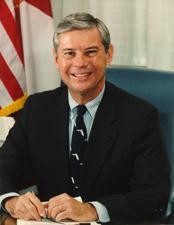
United States · Official source
2,765 records where Sen. Graham, Bob [D-FL] is listed as a sponsor, author, or other actor. Search with topics and years
United States · United States Congress · 28 February 1991
Designates 1992 as the Year of Discover Florida.
United States · United States Congress · 28 February 1991
Applauds and expresses the appreciation of the Nation to President George Bush, Secretary of Defense Dick Cheney, Armed Forces Chief of Staff Colin Powell, Desert Storm Commander Norman Schwarzkopf, the American forces deployed in the Persian Gulf region, the forces from our coalition partners, and the families of American service men and women participating in Operation Desert Storm. Sends condolences to the families of those killed during such operation. Demands from Saddam Hussein: (1) the immediate release of all prisoners of war held by Iraq; (2) a complete accounting for all American and coalition forces listed as missing in action or otherwise unaccounted for; and (3) the immediate and unconditional release and return of all Kuwaiti citizens held by Iraqi forces. Urges all relevant authorities to seriously examine the issue of possible war crimes by Hussein and other Iraqi military leaders and forces and to hold Iraq responsible in principle for reparations for the destruction caused by the invasion and occupation of Kuwait.
United States · United States Congress · 27 February 1991
Designates the month of November in 1991 and 1992 as National Hospice Month.
United States · United States Congress · 26 February 1991
Water Research Act of 1991 - Declares it U.S. policy to provide for: (1) the development of a means of producing, from saline or biologically impaired waters, water of a quality suitable for agricultural, industrial, municipal and other uses; and (2) related research on a scale sufficient to determine the feasibility of large scale development. Defines "saline water" to mean sea water, brackish water, and other mineralized or chemically impaired water. Directs the Secretary of the Interior to conduct a basic research and development program as Phase I of the water research program established by this Act. Specifies the activities to be included in Phase I, including activities involving research grants and contracts. Directs the Secretary to endeavor to obtain results in Phase I, within three years after enactment of this Act, sufficient to support recommendations to the Congress. Authorizes the Secretary to conduct additional basic research and development concurrently with Phase II demonstration activities. Directs the Secretary to conduct a demonstration program as Phase II of the water research program established by this Act. Specifies the activities to be included in Phase II. Requires the results of research under this Act, with exceptions for national defense and patent rights, to be available to the public. Applies specified provisions of the Federal Nonnuclear Energy, Research and Development Act of 1974 (FNERDA) relating to patents and inventions to any invention conceived in the course of any contract under this Act, but states that such application does not affect the application of the Stevenson-Wydler Technology Innovation Act to research under this Act that is performed at a Federal laboratory. Applies provisions of FNERDA relating to antitrust laws to activities under this Act. Authorizes the Secretary to: (1) accept technical and administrative assistance from public or private agencies in connection with work relating to the desalting of water; (2) enter into contracts or agreements; and (3) provide for cost sharing. Authorizes the Secretary to take other actions in carrying out this Act, including making grants and contracts. Directs the Secretary to dispose of water and byproducts resulting from operations under this Act consistent with environmental law. Requires, notwithstanding other law, moneys received from the dispositions to be deposited in a separate account in the Treasury, to be known as the Water Research Fund. Makes amounts from the Fund available as provided in appropriations Acts. Directs the President to instruct the Agency for International Development (AID) to sponsor an international desalination conference. Allows funding for the conference to come from operating or program funds of AID. Requires AID to encourage financial and other support from other nations, including those that have desalination technology and those that might benefit from it. Authorizes appropriations for Phase I.
United States · United States Congress · 26 February 1991
Comprehensive Maternal and Early Childhood Health Care Act - Amends the Public Health Service Act to provide for the use of certain funds appropriated for migrant health centers (MHCs) and community health centers (CHCs) for: (1) the development and operation of Comprehensive Perinatal and Early Childhood Health Programs (CPECHPs); and (2) expanding services for pregnant women and children where MHCs and CHCs are already operating Comprehensive Perinatal Care Programs. Provides for grants to MHCs and CHCs for the CPECHPs. Limits the amount of funds appropriated for CHCs which may be used to plan and develop CHCs. Authorizes appropriations for immunizing individuals without charge and for related research, demonstration projects, public information and education, and professional training. Directs the Secretary of Health and Human Services, through the Centers for Disease Control (CDC), to provide vaccines to the health department of each State, spending a specified minimum amount. Amends the Vaccine and Immunization Amendments of 1990 to direct the Secretary, through the CDC, to: (1) make grants to States (currently, to public and nonprofit private entities) for demonstration projects to provide, without administrative charge (currently, without charge), immunizations to children not over two years old; and (2) provide immunizations related to certain programs under the Public Health Service Act and the Child Nutrition Act of 1966; and (3) maintain private physician participation in immunization services and to encourage private physicians to provide such services to infants and children enrolled under title XIX (Medicaid) of the Social Security Act. Authorizes appropriations. Amends the Public Health Service Act to add substance abuse treatment and prevention services to the list of supplemental health services with regard to MHCs and CHCs. Replaces provisions mandating model drug and alcohol abuse projects for pregnant and postpartum women and their infants with provisions directing the Secretary, through the Director of the Office for Substance Abuse Prevention, to make demonstration grants for substance abuse prevention, education, and treatment projects serving pregnant and postpartum women and their infants. Includes in the services to be offered outreach, prenatal and postpartum health care, pediatric health care, support services such as child care and transportation, referrals, employment counseling, and case management. Requires that services covered by title XIX (Medicaid) of the Social Security Act be provided by an entity qualified to receive Medicaid payments. Requires non-Federal matching contributions in a specified ratio. Limits grants to five years; allows renewal. Directs the Secretary to assist the prenatal clinics in the United States in implementing smoking cessation programs to decrease rates of smoking during pregnancy. Authorizes the Secretary to make grants to or contracts with public entities for programs and policies to prevent and encourage cessation of tobacco use during pregnancy. Authorizes appropriations.
United States · United States Congress · 26 February 1991
Older Americans Health Promotion and Disease Prevention Act - Amends the Older Americans Act of 1965 to expand the preventive health services program to include disease prevention and health promotion services and information provided at congregate meal sites and through home-delivered meals programs, as well as senior centers. Authorizes appropriations for FY 1992 through 1995 for the preventive health services program.
United States · United States Congress · 26 February 1991
Prevention Impact Evaluation Act of 1991 - Amends the Standing Rules of the Senate to require reports accompanying certain bills and resolutions to contain an assessment by the Office of Technology Assessment (OTA) on the extent to which the bill or resolution addresses specified areas related to disease and disability prevention and health promotion. Requires the OTA to develop a standard format to be applied to comply with the Senate Rule and to conduct an annual review of all bills and resolutions for which an evaluation has been completed. Directs the Secretary of Health and Human Services to establish the Task Force on Disease Prevention and Health Promotion to: (1) review the annual OTA report; (2) evaluate and coordinate federally supported disease prevention and health promotion programs; and (3) make policy and budget recommendations to the Congress.
United States · United States Congress · 26 February 1991
Osteoporosis and Related Bone Disorders Research, Education, and Health Services Act of 1991 - Amends the Public Health Service Act to require the Director of the National Institute of Arthritis and Musculoskeletal and Skin Diseases (NIAMSD), the Director of the National Institute on Aging (NIA), and the Director of the National Institute of Diabetes and Digestive and Kidney Diseases (NIDDKD) to expand and intensify research on osteoporosis and related bone disorders. Requires, with respect to osteoporosis and related bone disorders: (1) the NIAMSD Director to increase the number of Specialized Centers of Research; (2) the NIA Director to increase the number of program project grants devoted to creating centers of excellence; and (3) the NIDDKD Director to increase the number of grants in osteoporosis. Authorizes appropriations. Establishes in the Department of Health and Human Services the Interagency Council on Osteoporosis and Related Disorders and the Advisory Panel on Osteoporosis and Related Disorders. Authorizes appropriations for the Advisory Panel. Requires the NIAMSD Director to make grants or enter into contracts to establish a Resource Center on Osteoporosis and Related Disorders to: (1) disseminate information about research results, services, and educational materials to health professionals, patients, and the public; and (2) coordinate leadership training for the development of health professional resource networks. Requires grant and contract recipients to establish: (1) a central computerized information system to, among other matters, translate scientific and technical information into information readily understandable by the general public; and (2) a national toll-free telephone information line. Requires the grant or contract recipient to charge fees for providing information, but allows exceptions for individuals and organizations unable to pay. Authorizes appropriations.
United States · United States Congress · 26 February 1991
National Presidential Debates Act of 1991 - Amends the Internal Revenue Code to require as a condition of eligibility to receive payments from the Presidential Election Campaign Fund that presidential candidates agree to participate in at least four debates, sponsored by a nonpartisan or bipartisan entity. Requires a corresponding agreement by vice-presidential candidates, but for a minimum of only one debate.
United States · United States Congress · 26 February 1991
Medicare Bone Mass Measurement Coverage Act of 1991 - Amends title XVIII (Medicare) of the Social Security Act to provide Medicare coverage of bone mass measurements.
United States · United States Congress · 26 February 1991
Condemns the Government of Cuba for its violations of internationally recognized human rights. Calls upon such government to: (1) release from prison all human rights monitors, independent activists, and other political prisoners; (2) respect internationally recognized human rights; and (3) allow the International Committee of the Red Cross access to Cuban prisons. Commends: (1) the United Nations Human Rights Commission for its attention to the human rights situation in Cuba; and (2) the U.S. delegation to such Commission for its diligence in pursuing this issue. Urges all member states of such Commission to support the continued investigation of Cuban human rights violations by the appointment of a special rapporteur or working group on Cuba.
United States · United States Congress · 22 February 1991
Professional and Amateur Sports Protection Act - Prohibits a State, or any political subdivision, from sponsoring, operating, advertising, authorizing, licensing, or promoting any lottery, sweepstake, or other betting, gambling, or wagering scheme based, directly or indirectly, on any game or games engaged or conducted or scheduled by any professional or amateur sports organization, or on any performance or performances in such games.
United States · United States Congress · 20 February 1991
Consumer Protection Against Price-Fixing Act of 1991 - Amends the Sherman Act to set forth evidentiary standards for price-fixing actions. Requires the court to allow the issue of concerted action to fix prices to be decided by the trier of fact if there is sufficient evidence from which a trier of fact could reasonably conclude that: (1) the supplier of a good or service received from a competitor of a reseller an express or implied suggestion, request, or demand that the supplier take steps to curtail or eliminate price competition; and (2) such communication was the major reason that the supplier terminated sales or supplies to the reseller. Prohibits the court from allowing the trier of fact to consider whether an individual and a competitor engaged in concerted action to set prices in violation of this Act if the court determines that the trier of fact could only find concerted action by making implausible inferences. Provides that the fact that a supplier and a reseller entered into an agreement to establish the resale price of a good or service shall be sufficient to constitute a price fixing violation, except when the agreement is to establish the maximum resale price of a good or service. Specifies that an agreement between the seller and the purchaser of a good or service to terminate another purchaser as a dealer or to refuse to supply such other purchaser because of that purchaser's pricing policies violates this Act, regardless of whether or not a specific price or price level is agreed upon.
United States · United States Congress · 20 February 1991
Grants a Federal charter to the Retired Enlisted Association, Incorporated.
United States · United States Congress · 20 February 1991
Designates the week beginning July 21, 1991, as Lyme Disease Awareness Week.
United States · United States Congress · 19 February 1991
Designates October 1991 as National Domestic Violence Awareness Month.
United States · United States Congress · 19 February 1991
Designates September 15 through 21, 1991, as National Rehabilitation Week.
United States · United States Congress · 7 February 1991
Designates April 15, 1991, as National Recycling Day.
United States · United States Congress · 7 February 1991
Designates the week of May 5 through 11, 1991, as National Correctional Officers Week.
United States · United States Congress · 7 February 1991
Expresses the sense of the Senate that it should be U.S. policy to specify reductions in the national emissions of carbon dioxide and other greenhouse gases by a date certain and to assume a leadership position in negotiating an international climate protection treaty that contains specific commitments to reduce carbon dioxide emissions, including: (1) achieving agreements by industrialized nations to reduce current carbon dioxide emissions, by developing nations to limit their growth in emissions from fossil fuel combustion, and by all countries to limit the release of carbon dioxide due to deforestation and to take steps to cut emissions of other greenhouse gases; (2) establishing an international fund to help developing countries achieve such objectives, a mechanism for continuing international cooperation for development of efficient policies for future emissions reductions, and institutional mechanisms to facilitate cooperation in research, observation, and analysis, information exchange and reporting, technology development and transfer, and technical training and public education. Urges the United States to support, at the February 1991 negotiating session of the Intergovernmental Negotiating Committee for a Framework Convention on Climate Change, the establishment of a process that will allow negotiations of substantive provisions to accomplish each of these elements for inclusion in the convention that is to be concluded in June 1992.
United States · United States Congress · 6 February 1991
Persian Gulf War Veterans' Assistance Act of 1991 - Includes the Persian Gulf War under the definition of "period of war" for purposes of eligibility for various veterans' benefits for war veterans, their spouses, and their dependents. Makes veterans of the Persian Gulf War and their spouses eligible for veterans' pension benefits. Deems Persian Gulf War veterans who develop an active psychosis within two years after termination of that war to have incurred such disability in active military service for purposes of medical care provided through the Department of Veterans Affairs. Makes veterans of the Persian Gulf War (the War) eligible for drugs and medicines required due to being permanently housebound or in need of regular aid and attendance. Directs the Secretary of Veterans Affairs to furnish readjustment counseling to any veteran who served on active duty after May 7, 1975, in an area at a time during which hostilities occurred in such area. Defines "hostilities" as an armed conflict comparable to the danger members are subjected to in combat with enemy forces during a period of war. Allows the survivors of veterans of the War who die before the date of enactment of this Act to file a claim for reimbursement for burial and funeral expenses with the Department within two years after the enactment of this Act. Authorizes veteran representatives of the War to be included on the Veterans' Advisory Committee on Education. Makes each veteran who served on active duty for his or her required duty period eligible for housing loan benefits under the veterans' home loan program. Provides for the waiver of an annuity reduction for individuals reemployed as health-care specialists within the Veterans Health Services and Research Administration of the Department. Limits such waivers to only those individuals recruited to replace health-care specialists serving in the War or needed to serve members of the armed forces injured during the War. Includes as health-care specialists physicians, dentists, podiatrists, optometrists, nurses, physician assistants, dental auxiliaries, medical technicians, and medical support personnel. Directs the Secretary to establish an information and referral system by means of a toll-free telephone number to provide information and referrals for counseling relating to readjustment counseling, general counseling, and other mental health services to veterans of the War, as well as their spouses and dependents, with regard to the psychological consequences of such War. Authorizes appropriations. States that all direct or discretionary spending contained in this Act is to be considered emergency expenditures for purposes of the Balanced Budget and Emergency Deficit Control Act of 1985 (Gramm-Rudman-Hollings Act).
United States · United States Congress · 6 February 1991
Military Reservists Small Business Relief Act - Amends the Small Business Act to direct the Small Business Administration (the Administration) to defer, upon request, repayment on any direct loan incurred by a member of a reserve component of the armed forces prior to being ordered to active duty. Provides that during the deferral period repayment of principal and interest on the loan shall not be required, and no interest will accrue thereon. Prescribes guidelines for economic injury disaster loan assistance for military reservists' small businesses. Directs the Administration to: (1) utilize all its business development and management assistance programs (including State and private sector partners) to provide business counseling and training to small businesses adversely affected by the deployment of armed forces units in military or emergency situations; and (2) publicize such programs. States that for purposes of the Balanced Budget and Emergency Deficit Control Act of 1985 (Gramm-Rudman-Hollings Act) all direct and discretionary spending contained in this Act are emergency expenditures related to Operation Desert Shield, Operation Desert Storm, or any successor thereto.
United States · United States Congress · 6 February 1991
CHAMPUS Mental Health Benefit Restoration Act - Amends the National Defense Authorization Act for Fiscal Year 1991 to provide that a scheduled reduction in the amount of inpatient mental health services provided to veterans under the Civilian Health and Medical Program of the Uniformed Services (CHAMPUS) shall not take effect until one year after the end of the Persian Gulf conflict, as declared by presidential proclamation or by law. States that all direct or discretionary spending contained in this Act is to be considered emergency expenditures related to Operation Desert Storm or Desert Shield for purposes of the Balanced Budget and Emergency Deficit Control Act of 1985 (Gramm-Rudman-Hollings Act).
United States · United States Congress · 6 February 1991
High Medicare Hospital Relief Act of 1991 - Amends title XVIII (Medicare) of the Social Security Act to provide, for FY 1992 and 1993, an additional Medicare payment to a hospital when at least 65 percent of its inpatient days or discharges are attributable to Medicare beneficiaries.
United States · United States Congress · 6 February 1991
Commemorates, from January 1 through 31, 1991, the centennial of the Immigration and Naturalization Service.
United States · United States Congress · 5 February 1991
Authorizes and requests the President to designate the last Friday of April as National Arbor Day.
United States · United States Congress · 5 February 1991
Designates June 14, 1991, as Baltic Freedom Day.
United States · United States Congress · 5 February 1991
Designates April 15, 1991, as National Recycling Day.
United States · United States Congress · 31 January 1991
Omnibus Export Amendments Act of 1991 - Title I: Export Administration Act Amendments - Export Administration Act Amendments of 1991 - Amends the Export Administration Act of 1979 (the Act) with respect to the export of U.S. goods and technology to foreign countries. Requires the Secretary of Commerce (Secretary) to grant an export distribution license primarily on the basis of the reliability of an applicant and foreign consignees to prevent the diversion of items to an unauthorized use or consignee. (Currently, refers to "controlled countries" only). Requires the Secretary to modify each item on the control list to specify performance and other identifying characteristics of technical data subject to national security and foreign policy controls, or to export controls under the Nuclear Non-Proliferation Act of 1978. Requires any such data that is subject to licensing requirements to be included on such control list concurrent with implementation of the Core List agreed to by the Coordinating Committee (CoCom). Declares that no later than December 31, 1991, no permission may be required for the export of goods or technology to, or reexport of such items from, a country which maintains export controls on such items cooperatively with the United States pursuant to the agreement with CoCom. Authorizes the Secretary to require permission for export or reexport of such items (including supercomputers, nuclear sensitive technology, and devices for surreptitious interception of wire or oral communications) to unreliable end users. Authorizes the Secretary to require permission to export or reexport such items pursuant to special multilateral control arrangements agreed to by CoCom, if all countries in which such items are produced agree to equivalent licensing requirements. Requires the Secretary, if he or she determines a country is noncompliant with the CoCom or other applicable control agreement, to require permission to export or reexport such items to such country, and to reexport them from that country. Declares that no permission may be required to reexport U.S. technology from a country when the technology to be reexported is incorporated in other technology, and other specified conditions are met. Requires the Secretary, with respect to the definition of "supercomputer," to establish and publish in the Federal Register a performance-based indexing system to ensure that such definition and all controls and security safeguard procedures on supercomputer exports and reexports are commensurate with technological advances. Sets forth circumstances under which such safeguards are not required. Requires the Secretary to revise the "Processing Data Rate" which is used to determine licensing requirements for computers (other than supercomputers). Declares it is U.S. policy that licensing treatment of controlled countries should be revised for those countries that: (1) represent a lesser strategic threat; and (2) implement an effective export control system. Requires the Secretary to issue regulations implementing the agreement reached in the Coordinating Committee High Level Meeting of June 6 and 7, 1990, relating to removal of controls, national discretion, and favorable consideration of export licenses. Directs the Secretary of State to seek the approval of CoCom with respect to the proposal that no permission be required to export computers (the export of which to China would require only notification of CoCom members) to any country. Requires the Secretary to submit to specified congressional committees a report describing the implementation of the agreement reached at the CoCom Meeting. Prohibits items from being included on both the Commodity Control List and the United States Munitions List. Terminates such prohibition on June 30, 1992. Requires the Secretary of State to propose to the CoCom as part of the U.S. "Core List" proposal that countries of a lesser strategic threat should, in the case of telecommunications exports, be accorded the CoCom's least restrictive control procedures. Directs the United States, with respect to such countries, to propose to the CoCom that exports of computer network software and related equipment for civilian end use shall be accorded the same licensing treatment as that permitted for computer systems exported for interconnection to such networks, and shall be treated in accordance with telecommunications controls established by the CoCom. Requires the President to submit to specified congressional committees a study of the national security implications of the transfer of telecommunications equipment and technology to controlled countries under the Act. Requires the Secretary, in implementing the national discretion and favorable consideration procedures agreed to by CoCom, to: (1) consider the actions of other CoCom members in approving or denying export licenses that are subject to such procedures; and (2) seek to ensure that U.S. exports are not placed at a competitive disadvantage. Sets forth requirements with respect to the issuance or denial of a license for the export of goods and technology subject to such CoCom procedures. Declares it to be U.S. policy: (1) in considering the submission of general exception cases to CoCom, to ensure consistency in the treatment of U.S. exporters and exporters from CoCom countries, and to support democrary and economic development in Eastern Europe and the Soviet Union; and (2) to provide specific guidelines to U.S. exporters with respect to goods, sectors, and end users eligible for such exceptions, and to notify such exporters of all agreements adopted by CoCom with respect to such exceptions. Requires the control list to reflect multilateral control agreements reached by CoCom. Requires the Secretary to: (1) review for removal, at least once each year, all goods and technology on the control list; and (2) make such review the basis for proposed revision of the International Industrial List. Terminates, as of September 30, 1992, and as of the end of each two-year period thereafter, all national security controls on the export of goods and technology to countries other than a controlled country, unless the Secretary determines that such items would make a significant contribution to the military potential of another country and would prove detrimental to U.S. security. Requires the United States to propose a policy to CoCom for termination of all controls on exports to any controlled country, except in certain circumstances. Requires the Secretary of State, no later than November 1, 1992, and not later than the end of each two-year period thereafter, to submit to CoCom a proposal to terminate such controls on controlled countries. Declares that an export control shall be considered to be unilaterally maintained by the United States if it is a restriction, condition, or interpretation imposed by the Secretary upon goods or technology, or upon a license application for the export of such items, that is not imposed in similar circumstances by other governments of CoCom. Requires the Secretary to ensure that no new unilateral controls are created. Declares that, in specified circumstances, approval shall be presumed for license for export to a country of any controlled goods, without regard to their technical specifications, for trade show purposes. Declares that any license for the export of goods or technology shall also authorize the export of operation technical data related to such items, whether or not such data is referenced in such license, if the technical level of the data does not exceed the minimum level necessary to install, repair, or use such items. Changes from discretionary to mandatory the Secretary's authority to establish indexing procedures which provide for automatic increases (instead of the currently authorized annual increases) in the performance levels of certain goods or technology subject to export licensing controls. Requires removal of goods or technology which no longer meet the performance levels increased pursuant to such procedures from the commodity control list, unless the Secretary determines that removal of controls will permit exports detrimental to U.S. national security, and reports that determination to specified congressional committees. Directs the Secretary to require technical advisory committees to recommend indexing procedures for certain goods or technology. Requires the Secretary to review, and report to the Congress on, the goods and technology available from newly industrialized countries to determine if such items are of such sophistication that they warrant multilateral export controls. Requires the Secretary of State to propose to CoCom to initiate negotiations with such countries to reach agreements with respect to the restriction of exports or to obtain their participation in CoCom if the Secretary determines that such multilateral controls are warranted. Requires the Secretary of State to submit to CoCom any U.S. proposal that would apply a final determination affecting U.S. exports to controlled countries. Makes the Secretary a member of the permanent U.S. delegation to CoCom. Requires the Secretary to terminate licensing benefits to countries that fail to maintain export restrictions comparable to those maintained by CoCom. Requires the Secretary to publish the full text of CoCom's three International Control Lists, together with all notes and understandings concerning the list agreed to by CoCom. Provides for the confidentiality of such matter if it is determined that its publication would be contrary to national or international security, or inconsistent with U.S. obligations to CoCom. Authorizes the Secretary to approve, only after consulting with the Secretary of Defense and the Secretary of State, license applications for the export of goods and technology to: (1) countries of concern regarding missile and chemical and biological weapons proliferation; and (2) Iran, Iraq, Libya, Syria or other country which has supported international terrorism. Requires the Secretary of State to maintain a list of such countries. Sets forth requirements with respect to the approval or denial of license applications. Increases the criminal and civil penalties for violations of the national security and foreign policy export control laws of the United States. Requires the President to apply specified economic sanctions against foreign persons who violate negotiated agreements to restrict exports for national security purposes or an export control system maintained by a controlled country that is receiving licensing benefits from CoCom because of its status as a lesser strategic threat. Includes as a sanction against foreign violators the revocation of any issued export license and the entry of an order by the Secretary denying all export privileges to such person. Declares that all goods or technology seized for violation of the export laws shall be forfeited to the United States. Makes sums for export enforcement under the Act available for undercover investigative operations for the detection and prosecution of violations of such Act by the Office of Export Enforcement of the Department of Commerce. Provides for the judicial review of specified determinations made under the Act. Urges the U.S. representative to CoCom to oppose preferential treatment in the licensing of exports to China because of its human rights abuses. Urges the denial of permission to export goods and technology (chemical weapons and missile technology) to China unless it gives adequate assurances regarding end-use and nontransfer of such items to a country or project of concern. Prohibits the export of U.S. satellites that are intended for launch from a Chinese launch vehicle. Authorizes the President to waive this ban on a case-by-case basis. Expresses the sense of the Congress that no exports to the Soviet Union may be licensed: (1) until the President certifies to the Congress that such country has entered into negotiations with Lithuania with respect to its self-determination; and (2) if it restricts the emigration of Jews. Amends Federal law to prohibit the issuance of a license to U.S.-owned firms (subsidiaries) to carry on certain trade activities with Cuba. Amends the Act to authorize appropriations to the Department of Commerce for FY 1991. Extends the Act through June 30, 1992. Title II: Export Promotion - Amends the Export Enhancement Act of 1988 to increase from eight to 12 the number of missions that the Secretary may designate abroad and for which senior Commercial Service Officers will be able to use the diplomatic title of Minister-Counselor. Requires the Secretary to report to the Congress on the adequacy of the training of officers and employees of the United States and Foreign Commercial Service in areas of writing commercial reports, language skills, cultural awareness, and public speaking. Includes within the definition of "multilateral development bank" the European Bank for Reconstruction and Development. Directs the Secretary to increase the number of Commercial Service Officers by two in each of the five countries with which the United States had the greatest trade deficit in calendar year 1990. Revises the qualifications of participants in the Market Development Cooperator Program to include expertise in the area of methods of distribution of goods and services. Requires the Secretary of State, not later than May 31 of each year (currently, every January 31), to report to specified congressional committees on the economic policy and trade practices of every country the United States has as a trading partner. Requires the Secretary to submit, not later than May 31 of each year, a report on the international economic position of the United States. Requires the Comptroller General, not later than June 30, 1991, to transmit to specified congressional committees a report that: (1) analyzes ways to promote U.S. exports; and (2) addresses the progress of Federal and State coordination of export promotion activities. Amends the Export Administration Amendments Act of 1985 to authorize appropriations for FY 1991 for the Department of Commerce for export promotion programs. Amends the Export-Import Bank Act of 1945 to require the Export-Import Bank to expend all amounts appropriated to the interest subsidy payment program for payments to commercial lending institutions and other lenders with respect to loans made by such lenders to support the export of U.S. goods and services. (Currently, the Bank has only discretionary authority to expend such amounts.) Extends such program through FY 1992. Authorizes appropriations. Requires the President to report to specified congressional committees about why Export-Import Bank funding for exports to Yugoslavia has not been restricted because of its human rights violations. Amends the International Development and Finance Act of 1989 to repeal provisions regarding: (1) the reimbursement of travel and subsistence expenses incurred by Export-Import Bank employees; and (2) limitations on the authorization of appropriations for FY 1990 through 1992 to the Tied Aid Credit Fund. Title III: Missile Technology - Declares it to be U.S. policy to take appropriate measures to discourage the proliferation of technology to produce or acquire missiles of mass destruction. Amends the Act to require the Secretary of State to negotiate with other foreign countries, including member countries of CoCom, the Missile Technology Control Regime (MTCR), the Australia Group, and the Nuclear Suppliers' Group, with respect to their cooperation in restricting the export of goods and technology that can be used in making chemical, biological, nuclear, and other weapons systems. Requires the Secretary to establish, as part of the control list, a list of all dual use goods and technology on the MTCR Annex (which may also include goods and technology that would provide an impact on the development of missile delivery systems and are not included in the MTCR Annex but which the United States is proposing to include on such Annex). Declares that the Secretary shall require a license for the export of listed items: (1) to another country; and (2) that the exporter knows is destined for a project or facility for the design, development, or manufacturer of a missile in a country that is not an MTCR coherent. Provides for the denial of such licenses if the ultimate consignee of such items is a facility in a country that: (1) is not an adherent to the MTCR and the facility is designed to develop missiles; and (2) has repeatedly provided support for terrorism. Requires the Secretary to establish a procedure for sharing information with appropriate intelligence officials that will ensure effective monitoring of transfers of MTCR equipment or technology and other missile technology. Directs the President to impose certain sanctions against persons who export, transfer, or otherwise engage in the trade of any MTCR item in violation of the U.S. export control laws. Declares such sanctions to include: (1) the denial of an export license; and (2) other appropriate penalties. Provides for the waiver of such sanctions. Amends the Arms Export Control Act to require the Secretary of State to establish, as part of the U.S. Munitions List, a list of all MTCR items that are not controlled under a specified section of the Act. Provides for sanctions against U.S. or foreign persons who export, transfer, or otherwise engage in the trade of MTCR items in violation of the U.S. export control laws. Directs the President to report to the Congress on international transfers of aircraft the Secretary of State has reason to believe may be intended for use in delivery of nuclear, biological, or chemical weapons. Title IV: Chemical and Biological Weapons Proliferation - Chemical and Biological Weapons Control and Warfare Elimination Act of 1991 - Subtitle A: Measures to Prevent the Proliferation of Chemical and Biological Weapons - Declares it is U.S. policy to: (1) seek multilaterally coordinated efforts with other countries to control the proliferation of chemical and biological weapons; and (2) strengthen efforts to control chemical agents, precursors, and equipment. Requires the President to use the U.S. export control laws to control the export of defense articles, defense services, goods, and technologies that he determines would assist a country in acquiring the capability to produce or use such weapons. Amends the Act to require the Secretary to establish a list of goods and technology that would assist a foreign government or group in acquiring chemical or biological weapons. Requires a validated export license for the export of such items to another country. Requires the President to impose certain sanctions against foreign persons if he determines that they knowingly contributed to the efforts of a country to acquire, use, or stockpile chemical or biological weapons. Declares such sanctions to include: (1) denial of U.S. procurement contracts for goods or services from such foreign persons; and (2) prohibition against importation of products from such persons. Authorizes the President to waive imposition of such sanctions if he determines that is in the national security interests of the United States. Amends the Arms Export Control Act to set forth similar provisions. Subtitle B: Sanctions Against the Use of Chemical and Biological Weapons - Requires the President to make a determination with respect to whether a country has used chemical or biological weapons in violation of international law or has used lethal chemical or biological weapons against its own nationals. Authorizes specified congressional committees to request the President to make such determination with respect to the use of such weapons. Requires the President to impose certain sanctions against foreign countries that have been found to have used such weapons. Declares such sanctions to include: (1) termination of assistance under the Foreign Assistance Act of 1961 (except humanitarian assistance and agricultural commodities); (2) termination of arms sales and arms sales financing; (3) opposition to the extension of multilateral development bank assistance; (4) denial of U.S. credit; (5) prohibition of U.S. bank loans (except for loans for purchasing agricultural commodities); (6) prohibition of the export of certain goods and technology; (7) restriction on the import of such country's goods, including petroleum products; (8) suspension of diplomatic relations; and (9) termination of air carrier landing rights. Provides for the removal and waiver of such sanctions. Subtitle C: Reporting Requirements - Requires the President to submit to the Congress annual reports on the efforts of countries to acquire chemical or biological weapons. Title V: Sanctions Against Iraq - Iraq International Law Compliance Act of 1990 - Subtitle A: Response to Iraq's Invasion of Kuwait - Requires the President to consult with the Congress with respect to Iraq's invasion of Kuwait, including U.S. actions. Requires the President to continue to impose the trade embargo (except humanitarian assistance) and other economic sanctions against Iraq and Kuwait. Requires the Congress to be notified with respect to exceptions to and termination of such sanctions. Authorizes the President to prohibit the importation of the products of a foreign country that has not prohibited the importation or exportation of products to or from Iraq if he determines such action would promote the effectiveness of U.N. economic sanctions against Iraq and is consistent with the national interest. Sets forth both civil and criminal penalties for violations of the embargo. Subtitle B: Response to Iraq's Long-Standing Violations of International Law - Urges the President to seek multilateral cooperation to: (1) deny dangerous technologies to Iraq; (2) induce it to respect internationally recognized human rights; and (3) induce it to allow international humanitarian and human rights organizations to have access there and in Kuwait, including northern Iraq traditionally inhabited by Kurds. Requires the imposition of certain sanctions against Iraq, including: (1) denial of arms sales and arms sales financing; (2) prohibition on the export of goods and technology; (3) denial of licenses for the export of nuclear material; and (4) denial of certain economic assistance. Authorizes the President to waive such sanctions if he makes a specified certification to the Congress. Title VI: Miscellaneous Provisions - Expresses the sense of the Congress that the Soviet Union should cease military assistance to Cuba. Requires the President to submit to the Congress an analysis of the impact on efforts to achieve peace in the Middle East of specified Palestine Liberation Organization (PLO) attacks against Israelis. Directs the Secretary of the Treasury to submit to the Congress a report on illegal activities of the PLO in the United States.
United States · United States Congress · 31 January 1991
Directs the Secretary of Veterans Affairs to provide outpatient medical services to a former prisoner of war for any disability.
United States · United States Congress · 31 January 1991
Soldiers' and Sailors' Civil Relief Act Amendments of 1991 - Amends the Soldiers' and Sailors' Civil Relief Act of 1940 to prohibit an eviction or distress from being made during a period of military service with respect to a premise for which the agreed rent does not exceed $1,200 (currently, $150) per month, when such premise is occupied chiefly by the dependents of the person in military service, except upon leave of the court granted upon application or in a proceeding affecting the rights of possession. Extends the power of attorney coverage under such Act to include a power of attorney that by its terms expires after July 31, 1990. Provides professional liability protection for persons ordered to active duty after July 31, 1990, who, prior to such date, were engaged in the furnishing of health care services or other services determined by the Secretary of Defense to be professional services and who had in effect a professional liability insurance policy that does not continue coverage during the period of active duty. Specifies that an insurance carrier shall have no liability with respect to any claim that is based on professional conduct of a person that occurs during a period of suspension of such person's professional liability insurance under this Act. Requires an insurance carrier to suspend and to reinstate coverage of such affected person upon receipt of a written request from such person. Requires such person to request reinstatement within 30 days after release from active duty. Provides a minimum period of required coverage by the carrier following reinstatement, without an increase in the insurance premiums charged. Provides for the stay of a civil or administrative action for damages on the basis of professional liability of a person whose insurance has been suspended under these provisions if: (1) the action is based on an act or omission that occurred before the suspension was effective; and (2) the suspended insurance would, on its face, cover the alleged professional misconduct. States that the period of such stay shall not be included in any statute-of-limitations period. Outlines provisions concerning the death of a person whose professional liability insurance has been suspended and the consequences with respect to the suspended insurance coverage on previous or suspended (stayed) claims. Provides that any person employed and covered under an employer-offered health insurance policy who enters into active military service or training and is reemployed upon returning may not be subject to a waiting period or exclusion of coverage imposed in connection with coverage of a qualifying health or physical condition if: (1) the condition arose before or during such person's period of training or service; (2) no exclusion or waiting period would have been imposed for the condition during a period of coverage resulting from participation by such person in the insurance; and (3) the condition of such person has not been determined by the Secretary of Veterans Affairs to be service-connected. Provides that any person who, by reason of military service, is entitled to the rights and benefits of the Act shall be entitled upon release from such military duty to reinstatement of any health insurance which: (1) was in effect on the day before such service commenced; and (2) was terminated during the period of such service. Prohibits any exclusion or waiting period from being imposed in connection with reinstatement of health insurance coverage of a health or physical condition covered by the Act if: (1) the condition arose before or during such person's period of training or service; (2) no exclusion or waiting period would have been imposed for the condition during a period of coverage resulting from participation by such person in the insurance; and (3) the condition of such person has not been determined by the Secretary to be a disability incurred or aggravated in the line of duty. Requires a court, upon application, to stay a judicial action or proceeding involving any member of the armed forces serving on active duty outside the State in which the court is located until after June 30, 1991. Provides that an application by a person in military service for a stay, postponement, or suspension of the payment of any tax, fine, penalty, insurance premium, or other civil obligation shall not provide that basis for denial or revocation of, or a change in, credit by creditors, a presumption that such individual cannot pay his or her debts due and owing, or refusal of an insurer to insure such individual. Amends existing law which allows reservists ordered to active duty for not more than 90 days to reemployment rights by removing the 90-day limitation.
United States · United States Congress · 31 January 1991
National Teacher Act of 1991 - Title I: Recruitment - Part A: Loan Forgiveness for Teachers Demonstration Program - Directs the Secretary of Education (the Secretary) to assume the obligation to repay specified portions of a Stafford loan (a student loan made, insured, or guaranteed under specified provisions of the Higher Education Act of 1965) for any borrower employed as a full-time teacher: (1) in a school which qualifies for loan cancellation for Perkins loan recipients who teach in such schools; and (2) of mathematics, science, foreign languages, special education, bilingual education, or any other field of expertise where the State educational agency (SEA) determines there is a shortage of qualified teachers. Provides for cancellation of increasing portions of such student loans for a one- to five-year period of such teaching service. Provides also for forgiveness of portions of student loans for borrowers who return to higher education after graduation to obtain a teaching certificate. Provides for repayment of such specified portions of principal and interest by the Secretary to the eligible lender or holder. Part B: Paul Douglas Teacher Scholarships - Amends the Higher Education Act of 1965 (HEA) to extend through FY 1995 the authorization of appropriations for the Paul Douglas Teacher Scholarships program. Part C: Teacher Corps - Authorizes a new Teacher Corps program. Authorizes the Secretary to: (1) make grants to SEAs to conduct teacher corps activities; and (2) award scholarships to teacher corps members. Bases the amounts of such grants to SEAs on school-age population. Directs the Secretary to: (1) disseminate information about availability of teacher corps scholarships; and (2) foster communication among teacher corps members. Specifies authorized uses of grant money by SEAs. Allows local educational agencies (LEAs) to use grant funds to: (1) carry out induction programs for new teacher corps members (and other new teachers); and (2) ensure that teacher corps members participate in one for at least one year, including work with a designated mentor teacher. Requires the SEA, in cooperation with the State higher education agency, to select teacher corps members according to its own criteria. Requires special consideration for those who intend to teach students with disabilities, limited English proficient students, or preschool age children. Requires priority consideration for those from disadvantaged backgrounds, including racial and ethnic minorities and individuals with disabilities, who are underrepresented in the teaching profession or in the curricular areas in which they are preparing to teach. Sets forth individual application requirements. Sets forth SEA and LEA grant application requirements. Requires descriptions of teacher shortages, corps members' employment placement, and induction programs for corps members and other new teachers. Makes individuals eligible to receive such scholarships for up to three years during enrollment in any of the following programs of study: (1) a baccalaureate or associate degree; (2) one or two post-baccalaureate years of a masters or specialist degree or teaching certificate; or (3) two years of an associate's degree in early childhood education or development, or one year of a child development associate credential program. Makes individuals pursuing the aforementioned kinds of post-baccalaureate study eligible to receive such a scholarship during any of the first three years they are employed as a teacher, in order to defray the costs of such study. Makes individuals with a bachelor's degree who wish to enter teaching from another profession eligible for such a scholarship for the instruction necessary to enter the teaching profession in the State where they wish to teach. Allows such instruction to be provided while the individual is employed as a provisional teacher, at the discretion of the SEA and LEA. Limits the amount of such a scholarship to an individual to the lesser of $5,000 per year or the cost of attendance for a maximum of three years. States that such scholarship shall be considered in determining eligibility for student assistance under title IV of the Higher Education Act of 1965. Requires scholarship agreements to include assurances of: (1) satisfactory academic progress and participation in teaching-related activities during a course of study which meets State requirements for teacher preparation; and (2) teaching for five years in a school which qualifies for Perkins loan cancellation for its teachers. Allows members to transfer to another such school in an LEA within the State or to another State with a program, upon approval of the sending or receiving LEA or State. Prescribes additional assurances such agreements must include. Provides for repayment of scholarships and for cancellation of such obligation under specified conditions. Provides for publication of, and recruitment for, the teacher corps scholarship program, particularly for minority students. Authorizes appropriations for such new Teacher Corps program for FY 1992 through 1996, but conditions such funding upon the attainment of a specified minimum funding level for the Paul Douglas Teacher Scholarships program. Limits the portion of Teacher Corps program funds which may be used for LEA induction and mentor programs for new corps members and other new teachers. Part D: Foreign Language Competence for the Future - Foreign Language Competence for the Future Act of 1990 - Amends the Star Schools Program Assistance Act (title IX of the Education for Economic Security Act) to authorize appropriations in necessary amounts for FY 1993 to carry out Star Schools program assistance. Requires applications for such assistance for instructional programming to provide assurances that such programming will be designed in consultation with teachers of the applicable subject matter and grade level. Authorizes the Secretary to make grants to eligible consortia to: (1) operate critical languages and area studies programs; (2) develop and acquire educational equipment and materials; and (3) develop teacher training programs, texts, curricula, and other activities designed to improve and expand the instruction of foreign languages at elementary and secondary schools. Limits the maximum amount of such a demonstration grant to an eligible consortium in any single fiscal year. Requires that a consortium eligible for such demonstration grants consist of a cooperative effort between entities in one or more States that must include at least: (1) one institution of higher education; (2) one secondary school with experience in teaching critical foreign languages; and (3) one secondary school in which at least 25 percent of the students are eligible to be counted under certain provisions for education of disadvantaged students (under Chapter 1 of title I of the Elementary and Secondary Education Act of 1965). Allows such consortia to include a not-for-profit organization to provide services not otherwise available from the other entities. Authorizes appropriations for FY 1992 through 1996. Part E: Miscellaneous Provision - Amends HEA provisions for Perkins loan cancellation to allow: (1) the Secretary to use the previous year's list of eligible schools if a new list is not available before May 1 of any year; and (2) any teacher to continue to receive loan forgiveness in subsequent years of service at a school that loses such eligibility. Title II: Teacher Enhancement - Part A: National Teacher Academies - Authorizes the Secretary to make grants to institutions of higher education, private nonprofit education organizations, or combinations of such entities to establish and operate national teacher academies. Requires one such academy in each of the following subject areas commonly taught in elementary and secondary schools: (1) mathematics; (2) National Writing Project; (3) civics and government; (4) basic skills and literacy instruction; (5) the arts, including art, music, and the performing arts; (6) history, geography, and sociology; (7) economics; (8) life sciences; (9) physical sciences; and (10) foreign languages. Requires academy staff to be selected from the most accomplished and prominent scholars in the relevant fields and methodologies. Provides that such grants shall be for five years, and awarded under a competitive bidding process. Requires special consideration for eligible recipients that have demonstrated effectiveness in establishing and administrating a national network of individuals who assist in teacher training programs at State and local levels. Limits such awards to eligible applicants who have demonstrated expertise in both the subject area and in-service teacher training. Requires grant funds to be used for: (1) in-service training for teachers and administrators; (2) summer institutes; (3) leadership team training for professional development schools; and (4) support services for professional development schools, including national networks of individuals, counseling assistance, and information services. Requires that school administrators and teachers from each congressional district, including the leadership team, participate in summer institutes. Sets forth grant application requirements, with a special rule for the National Academy on Basic Skills and Literacy Instruction. Authorizes the Secretary to award a grant to the National Writing Project to establish and operate one such teaching academy. Sets forth requirements for such grant, the Federal share, teacher training programs, and classroom teacher grants. Requires the National Writing Project to establish and operate a National Advisory Board. Authorizes appropriations for FY 1992 through 1996. Part B: Professional Development Schools - Directs the Secretary to allot to each State educational agency an equal amount for each congressional district in the State to establish and operate professional development schools. Requires that one such school be established in each congressional district. Allows the State educational agency to combine several of the authorized schools into a single school in States where several congressional districts are served by a local educational agency, or in States receiving small allotments. Provides that such grants shall be for five years, and renewable, and awarded under a competitive bidding process. Provides that professional development schools for specified U.S. territories and possessions in the Pacific are to be combined into a single school and administered by the Center for the Advancement of Pacific Education, in Honolulu, Hawaii, or its successor. Requires that such grant funds shall be used to: (1) provide professional development programs for teachers; and (2) pay costs of release time, stipends, college or university credit, curricular materials, and other expenses. Requires such professional development programs under this part to include individuals who have participated in the parallel program under part A. Requires each professional development school funded under this part whose teachers are served by a national academy funded under part A to conduct an in-service training program each year in each of the course content areas for which teachers receive training at the national academy. Requires each eligible grant recipient under this part to establish a ten-member steering committee. Requires each such committee to establish a three-person leadership team for each national teacher academy assisted under part A. Requires that Christa McAuliffe Career Teacher Corps participants be encouraged, upon return from their award period, to assist in the development and operation of the appropriate professional development school. Authorizes appropriations for FY 1992 through 1996. Part C: Christa McAuliffe Career Teacher Corps - Amends HEA to rename and revise the Christa McAuliffe Fellowship Program as the Christa McAuliffe Career Teacher Corps (Career Corps), which is to be a national fellowship program for experienced teachers and a complement to the Teacher Corps program for new teachers established under title I. Provides for: (1) grants to SEAs to conduct Career Corps activities and award fellowships to Career Corps members, with grant amounts based on school-age population of the State; (2) fellowship award distribution, amounts, and authorized uses; (3) selection of Career Corps members; (4) application evaluation by a statewide panel; (5) special consideration for individuals intending to use awards to improve or acquire skills in science or mathematics or to teach or provide related services to students with disabilities, limited English proficient students, or preschool age students; (6) fellowship agreements and repayments for noncompliance; (7) State applications; and (8) State use of program funds. Requires fellowship recipients to agree to spend up to a one-year period during which the Career Corps member is released from teaching responsibilities to participate in: (1) sabbaticals for study, research, or academic improvements; (2) consultation with or assistance to other school districts or private school systems, or development of special innovative programs for in-service teacher training or student achievement; or (3) expansion or replication of model programs of staff development. Requires that the Career Corps member be encouraged, during the two years following the award period through professional development school, if one exists, to: (1) participate in an induction program for new teachers by acting as a mentor to new Teacher Corps members or other new teachers, in their same substantive field of expertise where practicable, or make some other contribution to Teacher Corps programs; and (2) assist in developing in-service training programs through the professional development school, if it exists. Requires that Career Corps members be given the opportunity to participate in activities developed by the Secretary and SEA to foster communication among Career Corps members. Authorizes appropriations for FY 1992 through 1996. Title III: Demonstrations - Amends the Fund for the Improvement and Reform of Schools and Teaching Act to provide for the following demonstration programs: (1) class size research; (2) new careers for teachers; (3) minority teacher recruitment; and (4) restructuring of schools and school-based management. Directs the Secretary to make demonstration grants to LEAs having elementary and secondary schools with large classes in order to demonstrate the advantages of reducing the size of classes. Provides for the Federal share of such program payments. Gives priority to projects involving young students and at-risk students. Authorizes the Secretary to make grants to eligible recipients to pay the Federal share of costs of establishing and operating programs to attract minority candidates to teaching careers. Makes eligible for such grants consortia of institutions of higher education and LEAs working with the State educational agency and the appropriate State or local teacher credentialing body. Provides that such grants shall be for two years, with up to three years of renewals, and awarded under a competitive bidding process. Allows grant funds to be used to pay tuition, release time, and child care stipends for program participants. Gives priority to programs focusing on recruitment of minorities, and special consideration to programs recruiting speakers of non-English languages who have been trained as teachers in their home countries or individuals already employed in an LEA. Authorizes the Secretary to pay the Federal share of making grants to carry out programs and activities to: (1) improve recruitment and training opportunities for minority, including language minority, individuals in education; and (2) increase the number of minority, including language minority, teachers in elementary and secondary schools. Sets forth application requirements and authorized uses of such funds by LEAs, higher education institutions, SEAs, State higher education agencies, and community-based organizations. Establishes a program of grants for planning and implementing the restructuring of school organization, school management, or instructional programs in elementary and secondary schools. Authorizes the Secretary to make such grants, on a competitive basis and for a three-year period, to such schools, LEAs, and consortia of such schools or LEAs (with or without nonprofit organizations with relevant experience). Requires grant applications to include a plan for widespread consultation with parents, community members, school system employees, and the private sector in planning and implementing such school restructuring. Requires a school restructuring implementation plan prior to the second grant year. Requires broad geographic distribution in grant awards with special consideration for restructing plans which benefit: (1) students or a school with below-average academic performance; and (2) eligible entities serving a large number of minority or disadvantaged students. Sets the Federal share at 50 percent, and requires that at least 50 percent of the non-Federal share come from nongovernmental sources. Authorizes appropriations in increased amounts for FY 1992 through 1996 to carry out the Fund for the Improvement and Reform of Schools and Teaching Act. Sets a maximum limit on the reservation of a portion of such funds to carry out family-school partnership programs. Title IV: Studies and Evaluations - Part A: Teacher Job Bank Study and Demonstration - Directs the Secretary, through the Office of Educational Research and Improvement (OERI), to study the feasibility of establishing: (1) a clearinghouse to operate a national teacher job bank; and (2) regional clearinghouses composed of several SEAs to test the teacher job bank concept. Directs the Secretary, through OERI, to contract with one or more State entities, nonprofit organizations, or institutions of higher education to pay the Federal share of the costs of establishing a Teacher Job Bank Clearinghouse as a national demonstration on a regional basis. Part B: Study of Pension Portability - Directs the Secretary, through OERI, to conduct a pension portability study of the feasibility of permitting teachers and administrators to transport pension benefits among States and LEAs. Part C: Study of Alternative Ways to Increase Minority Participation in the Teaching Profession - Directs the Secretary to study, and report on, alternative ways to increase minority participation in the teaching profession, focusing on: (1) barriers to entry into the profession for qualified minority group members; (2) options for addressing such barriers; (3) alternative assessment mechanisms; and (4) possibilities for increasing the supply of minority teachers. Part D: Miscellaneous Provisions - Requires evaluations of and reports on the following programs: (1) the student loan forgiveness for teachers demonstration; (2) Teacher Corps; (3) national teacher academies; (4) professional development schools; (5) the class size research and demonstration project; (6) the new careers for teachers demonstration; (7) the minority teacher recruitment demonstration; and (8) the restructuring of schools and school-based management demonstration. Part E: Authorization of Appropriations - Authorizes appropriations for FY 1992 through 1996 to carry out this title.
United States · United States Congress · 31 January 1991
National Energy Policy Act of 1991 - Establishes as national goals: (1) the identification of an appropriate mix of policies that have the potential of stabilizing and reducing the generation of carbon dioxide and other greenhouse gases in the United States; and (2) the promotion of international cooperation in addressing potential global climate change through the establishment of an international framework convention on global climate change. Title I: Energy Policy Initiatives - Mandates that the first National Energy Policy Plan submitted by the President to the Congress (and each subsequent Plan) include a least-cost energy strategy prepared by the Secretary of Energy (the Secretary). Prescribes strategy guidelines. Amends the Energy Security Act to repeal energy target provisions. Directs the Secretary to appoint a Director of Climate Protection within the Department of Energy to participate in: (1) global climate change policy considerations; and (2) least-cost energy strategy considerations. Requires the Director to contract with the National Research Council for the National Academy of Sciences and the National Academy of Engineering (the Academies) to review and report to the Congress on trends in greenhouse gases and global climate change. Requires a report to the Office and the Congress. Requires the President to transmit to the Congress his assessment of such report. Title II: Energy Efficiency Initiatives - Requires the Secretary to: (1) submit periodic evaluations to the Congress regarding energy efficiency policy options necessary to produce certain percentage decreases in U.S. energy use; (2) pursue a research and development program intended to improve energy efficiency and productivity in energy-intensive industries and industrial processes; (3) undertake joint ventures to encourage commercialization of technologies developed from such program; and (4) conduct competitive solicitation for joint venture proposals and provide financial assistance to such ventures. Authorizes appropriations for FY 1992 through 1994. Amends the National Energy Conservation Policy Act (NECPA) to set a deadline by which each Federal agency must: (1) install energy conservation measures in its Federal buildings with specified payback periods; (2) submit a list of projects to the Secretary which meets such payback criterion and indicates total energy and cost savings involved; and (3) have substantially completed at least 25 percent of such projects as would account for 25 percent of total energy savings. Directs the Secretary to develop guidelines in consultation with the Secretary of Defense and the Administrator of the General Services Administration with respect to the selection of energy service contractors. Sets forth a deadline by which: (1) each Federal agency must consider the energy efficiency of all potential building space at the time of lease renewal or entering into a lease; and (2) all federally owned and leased space under construction must meet model Federal building standards for energy efficiency. Amends the Renewable Energy and Energy Efficiency Technology Competitiveness Act of 1989 to direct the Secretary to solicit proposals and provide financial assistance for joint ventures in fuel cell technology to demonstrate critical enabling technologies to accelerate commercialization of electric energy production from fuel cells. Authorizes appropriations. Amends the NECPA to repeal the prohibition against the supply and installation of residential energy conservation measures by utilities. Directs the Secretary to provide financial assistance to support a voluntary, national window rating program to develop window energy ratings and labels. Directs the Federal Trade Commission to prescribe labeling rules for windows and window systems. Authorizes appropriations for FY 1992 through 1994. Directs the Administrator of the Energy Information Administration to report to the Congress regarding the acquisition of energy efficiency information. Requires the Secretary to: (1) submit a feasibility report to the Congress regarding the mandatory use in Federal facilities of compact fluorescent lamps instead of incandescent lamps; and (2) submit a plan to the Congress for the demonstration in Federal facilities of energy efficiency technologies that are ready for commercial demonstration but are not widely available commercially. Amends the NECPA to direct the Secretary to: (1) promulgate procedural guidelines enabling the States to assign energy efficiency ratings to residential buildings; and (2) establish a technical assistance program to State and local governments adopting energy efficiency rating systems or building codes. Amends the Public Utility Regulatory Policies Act of 1978 (PURPA) to mandate that State regulatory commissions consider a least-cost ratemaking standard under which utility investments in demand-side measures shall be as profitable as investments in new generation facilities (thus creating an economic incentive for utilities to promote residential energy conservation measures). Requires the Secretary to report to the President and the Congress an evaluation of: (1) the results of least-cost planning methodologies implemented by electric utilities; and (2) the extent to which ratemaking methodologies implementing least-cost planning take into account the impact of such measures on electric utilities' profitability. Amends the NECPA to require the Secretary to: (1) conduct a fuel cell systems demonstration program in Federal buildings; and (2) report to the Congress on the program's implementation. Authorizes appropriations for FY 1992 through 1994. Title III: Energy Research and Development Initiatives - Requires the Secretary to: (1) consider specified criteria when establishing research and development priorities; (2) biennially submit to the Congress a management plan for research, development, and commercialization of energy technologies; (3) implement an engine and vehicle fuel research and demonstration program on systems that offer a potential reduction in the generation of greenhouse gases, and that improve transportation energy uses; and (4) emphasize advanced gas turbine cycles (and their incorporation of energy efficient materials for high efficiency electric and automotive power generation) when implementing a high efficiency heat engine research, demonstration, and commercialization program. Authorizes appropriations for FY 1992 through 1994. Directs the Secretary to conduct a natural gas cofiring research, development, and demonstration program with respect to electric utility units and large industrial boilers. Authorizes appropriations. Requires the Secretary to establish within the Department of Energy a program to develop technologies to a point where private industry will undertake further commercial development. Authorizes appropriations. Directs the Secretary to conduct demonstration programs regarding: (1) magnetic and inertial confinement fusion for the production of electricity; and (2) coal-based technologies. Authorizes appropriations for FY 1992 through 1994. Authorizes the Secretary to enter into cooperative agreements or joint ventures with certain urban area transit authorities to demonstrate the feasibility of using natural gas or other alternative mass transit fuels. Authorizes appropriations for FY 1992 through 1994. Directs the Secretary to implement and finance a fleet vehicle program for the commercialization of natural gas and other alternative fuels. Authorizes appropriations for FY 1992 through 1994. Directs the Secretary of Labor to implement a technician training and certification program for the conversion of conventionally fueled vehicles to natural gas and alternative fuels. Authorizes appropriations for FY 1992 through 1994. Directs the Secretary to conduct or expand the following demonstration programs: (1) specified aspects of improved natural gas and alternative fueled vehicle technology; (2) increased availability of natural gas from specified sources; (3) natural gas and electric heating and cooling technologies for residential and commercial buildings; and (4) electric vehicle and battery technology. Authorizes appropriations for FY 1992 through 1994. Requires the Secretary to report to the Congress the results of an assessment of the statutory, economic, and regulatory barriers to expanded hydroelectric capacity development at existing dams. Electric Vehicle Technology Development and Demonstration Act of 1991 - Requires the Secretary to: (1) identify by a specified deadline the nonattainment areas in which conventionally fueled vehicles contribute significantly to that nonattainment and in which the use of electric vehicles could contribute to attainment of National Air Quality Standards; (2) designate nonattainment areas eligible to participate in a specified electric vehicle research and demonstration program; (3) report to the Congress on the program's status; and (4) report to the Congress on the extent to which nuclear fission generated electricity can safely and reliably supply electricity and reduce greenhouse gases. Authorizes appropriations for FY 1992 through 1994. Title IV: Miscellaneous - Requires the Secretary to report to the Congress on: (1) specified aspects of methane generation; (2) measures that could reduce atmospheric methane concentrations from sources within the United States; and (3) methane emissions from countries other than the United States. Amends the Energy Policy and Conservation Act to establish an interagency working group known as the Committee on Renewable Energy Commerce and Trade (CORECT) to recommend coordinated Federal actions and programs promoting the export of U.S. renewable energy and energy efficiency products and technologies. Authorizes the Committee to establish renewable energy industry information outreach offices in the Pacific Rim and the Caribbean Basin. Mandates that a program established by the Secretary of Commerce for enhancing commerce in renewable energy technologies shall provide for an information program regarding: (1) the specific energy technology needs of lesser developed countries; (2) the technical and economic competitiveness of various renewable energy and energy efficiency resources technologies; and (3) the status of ongoing technology assistance programs. Requires the Secretary to report biennially to the Congress concerning the range of environmental and energy technologies necessary to meet the energy needs of developing countries. Mandates that a certain management plan required under the Renewable Energy and Energy Efficiency Technology Competitiveness Act of 1989 include a five-year implementation plan for joint ventures with U.S. manufacturers (including assistance to smaller manufacturers) for the development and marketing of energy efficient and renewable energy technologies in key lesser-developed countries. Authorizes appropriations for FY 1992 through 1994. Directs the Secretary to report to the Congress the results of a comparative fuel cycle cost analysis with respect to the United States, Europe, and Asia. Authorizes appropriations for FY 1992 to establish a secretariat within the Department of State to prepare for the 1992 United Nations Conference on Environment and Development. Title V: Natural Resource Policy - Directs the Secretary of the Interior to conduct a study of ecological and environmental resources that could be affected by global climate change. Directs the Secretary of Agriculture to report to the President and the Congress on the feasibility of a National Reforestation Initiative. Directs the Secretary of Energy to transmit to the Congress a study of the potential for reducing carbon dioxide emissions by undertaking targeted urban tree and vegetative plantings, including landscaping and the use of natural windbreaks designed to reduce the air conditioning and heating needs of buildings.
United States · United States Congress · 31 January 1991
Amends the Internal Revenue Code to permanently extend the low-income housing credit.
United States · United States Congress · 31 January 1991
Designates March 25, 1991, as Greek Independence Day: A National Day of Celebration of Greek and American Democracy.
United States · United States Congress · 31 January 1991
Designates March 4, 1991, as Vermont Bicentennial Day.
United States · United States Congress · 31 January 1991
Demands that Iraq permit the International Committee of the Red Cross to visit all American and other prisoners of war (POWs) at the earliest possible time. Condemns the Iraqi Government for brutal mistreatment of American and other POWs, for deliberately placing their lives in danger, and for other violations of the Third Geneva Convention.
United States · United States Congress · 31 January 1991
Commends the President and the Secretary of State for their diplomatic initiative whereby representatives of the Governments of the United States, the Soviet Union, Portugal, the People's Republic of Angola, and the Union for the Total Independence of Angola met on December 13, 1990, with the goal of achieving a multiparty democracy in Angola. Supports the six principles agreed to in the talks. Expresses hope that the six principles will encourage the Angolan parties to seek an early ceasefire and guarantee free and fair elections at the earliest possible date.
United States · United States Congress · 30 January 1991
Amends the Internal Revenue Code to require that payment under a life insurance contract on the life of an insured who is terminally ill be treated as a death benefit, making such payment eligible for tax exclusion from gross income. Provides that any reference to life insurance shall be treated as referring to a qualified terminal illness rider. Provides for the tax treatment of such riders. Describes such a rider as one which provides for payments to an individual upon the insured's becoming terminally ill. Provides that applicants for or recipients of assistance under the Social Security Act may not be required to elect to receive accelerated death benefits under life insurance policies.
United States · United States Congress · 30 January 1991
Indian Anti-Drug Abuse Amendments of 1991 - Amends the Indian Alcohol and Substance Abuse Prevention and Treatment Act of 1986 to authorize appropriations for: (1) grants to Indian tribes to establish Tribal Action Plans; (2) publication of an alcohol and substance abuse newsletter; (3) pilot programs for Indian youth relating to alcohol and substance abuse prevention and treatment; (4) emergency shelters and halfway houses for Indian youth who are alcohol or drug abusers; (5) investigation and control of illegal narcotics traffic on the Makah Indian Reservation in Washington (State) arising from its proximity to international waters; (6) eradication of marijuana cultivated within Indian country; (7) Bureau of Indian Affairs law enforcement and judicial training; (8) construction and renovation of juvenile detention centers and regional treatment centers for detoxification and rehabilitation of Indian youth who are alcohol and substance abusers; (9) Indian Health Service (IHS) programs, including rehabilitation and aftercare services, and local residential or regional alcohol and substance abuse treatment centers in federally owned structures for such Indian youth; (10) training and community education; and (11) grants to urban Indian organizations for the treatment and prevention of alcohol and substance abuse. Grants authority to the Secretary to establish and implement programs for the interdiction, investigation, and control of illegal narcotics trafficking in Indian country. Directs the Secretary, in carrying out the IHS program, to provide assistance to Indian tribes to develop criteria for the certification of alcohol and substance abuse service providers and accreditation of service facilities which meet the minimum standards. Authorizes the Secretary to make funds available to the Tanana Chiefs Conference, Incorporated, for leasing, constructing, renovating, operating, and maintaining a residential youth treatment facility in Fairbanks, Alaska. Requires that not less than ten percent of the funds appropriated for rehabilitation and follow-up services for Indian youth who are alcohol or substance abusers be used for related outpatient care of adult family members. Directs the Secretary of Health and Human Services to study and report to the Congress on the incidence and prevalence of abuse of multiple forms of drugs, including alcohol, among Indian youth residing on Indian reservations and in urban areas and the interrelationship of such abuse with mental illness among such youth. Authorizes appropriations. Directs the Secretary to: (1) make grants to Indian tribes to establish fetal alcohol syndrome programs; and (2) assist Indian tribes in developing, printing, and disseminating educational and prevention materials on such syndrome. Authorizes appropriations. Requires that ten percent of the funds appropriated be used for grants to urban Indian organizations. Directs the Secretary of Health and Human Services, acting through IHS, to establish a regional youth alcohol and substance abuse prevention and treatment center in Sacaton, Arizona, on the Gila River Indian Reservation. Requires the center to be established within facilities leased by IHS from the Gila River Indian Tribe. Directs the Secretary of Health and Human Services, acting through IHS, to establish, as a unit of the regional center, a youth alcohol and substance abuse prevention and treatment facility in Schurz, Nevada. Authorizes appropriations for such center and facility. Makes permanent the Navajo alcohol abuse demonstration program in Gallup, New Mexico for the purpose of providing comprehensive residential treatment for alcohol and substance abuse for adult and adolescent members of the Navajo Nation and neighboring tribes. Authorizes the Najavo Nation to enter into a contract with an accredited Gallup area institution to provide such treatment. Authorizes appropriations. Directs the Secretary of Health and Human Services, acting through IHS, to make grants to the Alaska Native Health Board for the conduct of a community-based demonstration project to reduce drug and alcohol abuse in Alaska Native villages and to rehabilitate families afflicted by such abuse. Authorizes appropriations. Directs the Secretary of Health and Human Services, acting through IHS, to make a grant to the Thunderchild Treatment Center at Sheridan, Wyoming, to match funds already received by the Center through private contributions to complete construction of a multiple approach substance abuse treatment center which specializes in the treatment of alcohol and drug abuse of American Indians. Authorizes appropriations.
United States · United States Congress · 30 January 1991
Amends the Federal Election Campaign Act of 1971 to revise the definition of "independent expenditure" to exclude expenditures during congressional elections by a political committee affiliated with an organization that lobbies Congress. Deems such an expenditure to be a contribution subject to the limitations of that Act.
United States · United States Congress · 30 January 1991
Money Laundering Enforcement Amendments of 1991 - Title I: Termination of Charters and Insurance - Amends the Revised Statutes, the Home Owners' Loan Act, and the Federal Credit Union Act to prescribe procedures for revoking the charters of national banks, savings associations, and credit unions convicted of certain money laundering or cash transaction reporting offenses. Amends the Federal Deposit Insurance Act and the Federal Credit Union Act to: (1) prescribe procedures for terminating the insured status of State depository institutions or credit unions convicted of certain money laundering or cash transaction reporting offenses; and (2) revise procedures to remove institution-affiliated parties and personnel involved in currency reporting violations. Amends Federal law to authorize access by State financial institution supervisors to currency transactions reports. Title II: Money Laundering Enforcement - Amends Federal law to direct the Secretary of the Treasury (the Secretary) to: (1) prescribe regulations requiring each depository institution to report to the Secretary certain non-bank financial institution customers for identification purposes; and (2) transmit such reports to appropriate State financial institution regulatory agencies. Authorizes a civil money penalty for violation of such reporting requirements. Amends Federal criminal law to prescribe seizure and forfeiture procedures (including imprisonment) for parties involved in an illegal money transmitting business. Amends the Anti-Drug Abuse Act of 1988 to prohibit financial institutions and their employees from disclosing the existence of a special reporting order to any person except as prescribed by the Secretary. Amends the Federal Deposit Insurance Act to promulgate regulations requiring businesses that engage in funds transfers to maintain (and make available to the Secretary upon request) records of payment orders (including international transactions). Amends the Right to Financial Privacy Act of 1978 to authorize a Federal agency to transfer financial records to the Secretary solely for criminal investigative or prosecutive purposes related to money laundering. Directs the Secretary to report to certain congressional committees the advantages and disadvantages of changing the size, denomination, or color of U.S. currency for money laundering enforcement purposes. Requires the Attorney General to report to the Congress the extent to which compliance with money laundering controls would be enhanced by issuing prosecutorial guidelines. Directs the Secretary of the Treasury to establish a team of experts to assist and train foreign governments in expanding their capabilities for investigating and prosecuting money laundering violations and related laws.
United States · United States Congress · 30 January 1991
Designates April 9, 1991, and April 9, 1992, as National Former Prisoner of War Recognition Day.
United States · United States Congress · 30 January 1991
Designates March 10 through March 16, 1991, as Deaf Awareness Week.
United States · United States Congress · 29 January 1991
Motor Vehicle Fuel Efficiency Act - Amends the Motor Vehicle Information and Cost Savings Act to establish average fuel economy standards for passenger automobiles and automobiles other than passenger automobiles (light trucks) (for model years 1996 and thereafter). Authorizes the Secretary of Transportation (Secretary), to modify such standards for model year 1996 and thereafter. Directs the Secretary, in response to petitions filed at least 12 months in advance of the model year, to conduct a rulemaking proceeding to determine whether to increase or decrease such standard to a level that is the maximum feasible average fuel economy for that model year, except that such standard shall not be reduced below a level equal to the average fuel economy achieved by the manufacturer of such vehicle for model year 1988, as multiplied by a specified percentage. Requires the Administrator of the Environmental Protection Agency to report annually to specified congressional committees on a study which: (1) examines the accuracy of fuel economy testing of passenger automobiles and light trucks; and (2) assesses the extent to which fuel economy deteriorates during the lifetime of such vehicles. Directs the Secretary of Energy to distribute at least 100 explanatory booklets each year to every dealer and additional numbers if requested. Requires the Secretary to provide for a review and report to the Congress by the National Academy of Sciences on the current state of research and development in light truck fuel economy and passenger automobile fuel economy and an assessment of the potential for improving the fuel efficiency and reducing the energy consumption of passenger automobiles and light trucks. Requires the Secretary of Energy to study and report to the Congress on the future options for regulating the fuel efficiency of such vehicles beyond 2001. Provides for the judicial review of average fuel economy standards (including modifications thereof) established under this Act. Doubles the civil penalty for repeated violations of the fuel economy standard. Requires such penalty to be adjusted for inflation.
United States · United States Congress · 29 January 1991
Title I: Approval of Deposit Insurance - Amends the Federal Deposit Insurance Act to set forth certification procedures by which noninsured national nonmember banks and noninsured State banks shall become insured depository institutions, or shall be denied insurance, upon application to the Federal Deposit Insurance Corporation (FDIC). Authorizes the FDIC Board of Directors to deny insurance to federally chartered banks and Federal Reserve System members. Title II: Risk Based Premiums - Authorizes the FDIC to establish criteria for determining the degree to which an insured depository institution poses a risk to either the Bank Insurance Fund or the Savings Association Insurance Fund. Sets forth guidelines for risk-based assessments against an insured depository institution.
United States · United States Congress · 29 January 1991
Designates the months of April 1991 and 1992 as National Child Abuse Prevention Month.
United States · United States Congress · 24 January 1991
Amends Federal law to prohibit any State from imposing an income tax on the pension income of any individual who is not a resident or domiciliary of that State.
United States · United States Congress · 23 January 1991
Older Americans Act Reauthorization Amendments of 1991 - Reauthorizes and extends the Older Americans Act of 1965 through FY 1995.